Ask anyone who has worked in a Japanese office about after-hours rituals, and you’ll likely get a story. It might involve a cramped, smoky izakaya, endless rounds of beer, a boss suddenly singing karaoke with surprising passion, and a blurry train ride home well after midnight. From the outside, it looks like a simple case of letting off steam. Colleagues unwinding, the pressures of the workday dissolving in a warm haze of alcohol. But that’s only the surface. What you’re actually witnessing is one of the most crucial, complex, and unwritten pillars of Japanese corporate culture in action: nominication.
It’s a clever Japanese portmanteau, blending nomu (飲む), the verb “to drink,” with the English word “communication.” The term itself is a confession. It openly states that in Japan, drinking isn’t just a social activity that happens after work; it is a form of work. It’s a second, unofficial shift where the real business of building relationships, gauging intentions, and securing consensus takes place. The fluorescent-lit office is for tasks and formal reports. The lantern-lit izakaya is for understanding people.
For decades, participation wasn’t really optional. An invitation from your boss wasn’t a friendly suggestion; it was a summons. To decline was to signal a lack of commitment, not just to your job, but to the team, to the company as a whole. This is where careers were subtly made or broken, where trust was forged, and where the unspoken truths of the office were finally allowed to surface. Understanding this ritual is essential to grasping the invisible currents that dictate so much of professional life in Japan. It’s a deep dive into the psychology of group dynamics, a masterclass in reading the air, and a lesson in why the most important conversations often happen when no one is taking notes.
The subtle bonding achieved through nominication finds a parallel in the meticulous kodawari in Japanese hobbies that permeates everyday life.
The Birth of a Corporate Ritual
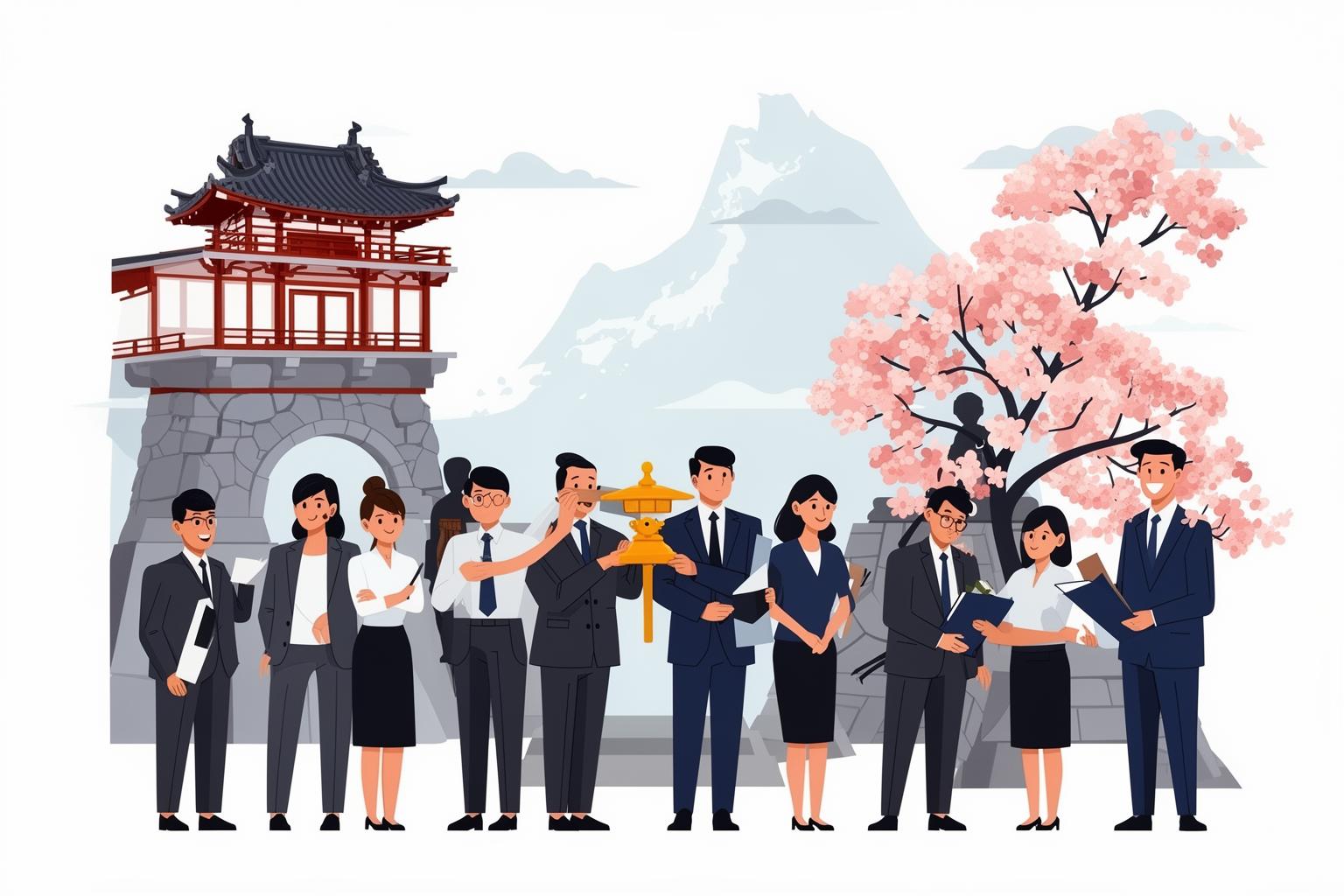
To understand why a few beers after work became a cornerstone of corporate strategy, one must look back to the foundations of modern Japan’s economic miracle. The post-war boom gave rise to a distinctive corporate structure built on two main pillars: lifetime employment (shūshin koyō) and a seniority-based wage system (nenkō joretsu). Joining a company wasn’t just taking a job; it was joining a family for life. Colleagues were not merely coworkers but people you would grow old with. In return, the company promised to support you through every stage of life, from your wedding to your retirement.
This system cultivated an extraordinary sense of loyalty and group identity. The corporation became a modern-day village—an all-encompassing social universe. This was more than just a metaphor. The underlying logic was directly inherited from Japan’s agrarian past, where the success of the entire village depended on cooperation, harmony, and a shared sense of purpose. In the rice paddies, people worked together, celebrated harvests together, and weathered storms together. Dissent or overt individualism could jeopardize the survival of the group. The highest social value was wa (和), a concept of group harmony where the collective’s needs outweighed those of the individual.
In the new corporate villages of Tokyo and Osaka, this same ethos held strong. The company’s success was paramount. However, this created a challenge. The office environment—governed by rigid hierarchies and a profound emphasis on politeness and indirect communication—was ill-suited for building the deep, personal bonds that the “corporate family” model required. How could you trust the man in the cubicle next to you if you only ever exchanged polite greetings and formal business language? How could a manager truly understand the concerns of his team if they were too deferential to speak frankly?
A different space was needed—a liminal zone where the strict rules of the office could temporarily be lifted. This space was found in the izakaya. The traditional Japanese pub, with communal tables, shared plates, and free-flowing alcohol, became the unofficial clubhouse of the Japanese salaryman. Here, eased by beer and sake, rigid social barriers could be relaxed. It became the modern equivalent of the village festival—a necessary, sanctioned release valve that allowed the community to bond, resolve tensions, and reaffirm its shared identity before returning to the structured order of the next day.
The Unspoken Rules of the Game
Entering a corporate drinking party in Japan feels like stepping onto a stage for a play without ever having seen the script. Every action, from where you sit to how you hold a bottle, carries significant meaning. It’s a complex dance of hierarchy, respect, and social awareness. While the aim is to relax and connect, doing so successfully demands mastering a sophisticated set of unwritten rules. This is not simply a casual gathering; it’s a performance.
The Sacred Art of Pouring Drinks
One of the first things you’ll observe is that no one pours their own drink. Your glass should rarely be empty but will always be filled by someone else. This ritual, called o-shaku (お酌), is the essence of nominication—a continuous, flowing ballet of social attentiveness.
The rules are exact. Junior team members must remain alert, constantly scanning the table for glasses running low. Upon spotting one belonging to a senior, they approach with a bottle of beer or a sake flask. The bottle is held with both hands—the right hand on the neck and the left supporting the base—to show respect. When pouring, the bottle’s label faces upward so the recipient can see what’s being served. The recipient should also hold their glass with both hands or at least touch the bottom with their free hand to reciprocate the respect.
Once a senior’s glass is full, they often reciprocate by pouring for the junior. This exchange is not merely about quenching thirst; it is a fundamental act of respect and acknowledgment. For the junior employee, pouring for their boss demonstrates deference and attentiveness. For the boss, pouring back signals recognition and inclusion. This simple ritual opens a channel for communication. While pouring, small talk, questions, or compliments are expected. It creates many individual interactions throughout the evening, weaving a network of connections within the team. Ignoring this duty marks one as lazy or aloof, while mastering it shows an understanding of the delicate mechanics of Japanese social etiquette.
The Power of Seating Arrangements
Before anyone takes a sip, the social hierarchy has already been arranged within the physical space. This is dictated by the concepts of kamiza (上座) and shimoza (下座). The kamiza, or “upper seat,” is the seat of honor, typically the furthest from the door, often backed by a wall or placed before an alcove (tokonoma). It is reserved for the most senior person—be that a department head, section chief, or an esteemed guest. Seats then decrease in status, with the most junior employees taking the shimoza, or “lower seats,” closest to the door.
This is not a matter of personal preference but a deeply ingrained social protocol. The person in the kamiza is the evening’s focal point, meant to be honored and attended to. The person in the shimoza has a functional role: positioned near the door, they are best placed to summon servers, place orders, and manage the party’s logistics. They act as the event’s stage manager, ensuring everything runs smoothly so seniors can relax and engage in conversation.
The seating arrangement does more than reflect office hierarchy; it actively reinforces it. It offers a clear visual representation of everyone’s rank within the group. For newcomers, quickly identifying the kamiza and guiding the most senior to it is a crucial test of social awareness. Mistakes here can be a significant, though unspoken, faux pas, revealing a lack of understanding of one of Japanese social organization’s fundamental rules.
The Myth of Bureikō
At some point during the evening, usually after a few rounds of drinks, a senior manager might stand, raise their glass, and declare the party to be bureikō (無礼講). Literally meaning “lack of courtesy,” it signals that for the rest of the night the usual hierarchy and etiquette are suspended. Ranks are set aside. Everyone is encouraged to speak freely without fear of repercussions. It appears to be a revolutionary invitation to complete honesty.
However, it is a carefully controlled illusion. Bureikō is not a free license to criticize your boss’s management or loudly complain about company policies—such behavior would be career suicide. The invisible boundaries of propriety remain very much intact; they’re just slightly blurred. It tests emotional intelligence—the ability to navigate this ambiguous social space with skill.
What bureikō truly allows is a shift in communication style, not a complete collapse of the social order. Casual language is permitted. You can ask your boss about hobbies or family, topics off-limits at work. Jokes or showing a playful side are welcomed. It’s a chance to build personal connections and demonstrate you are more than just your job title. You may express opinions, but they must be framed respectfully and constructively. The common saying is that everything said during bureikō will be forgotten by the next morning—nomi no seki no hanashi (drunken talk). In reality, it is remembered. A thoughtful comment may earn respect; an inappropriate complaint or overly familiar gesture will also be noted. Bureikō is less about speaking truth to power and more about showing social grace—being informal without disrespect.
The Ritual Progression: Nijikai and Sanjikai
The main dinner seldom marks the night’s end; it is merely the first act. Once plates are cleared and the official part concludes, someone will inevitably ask, “So, where to for the nijikai?” The nijikai (二次会), or second party, is a key part of nominication. The group, often smaller as some head home, moves to a new venue—another bar, a cozy pub, or famously, a karaoke box.
This change of setting is significant, breaking the initial seating order and allowing fresh conversations and smaller groups to form. Often, the most meaningful bonding occurs here. At a noisy karaoke box, inhibitions drop further. Watching a stoic manager sing a cheesy pop ballad from their youth fosters a different kind of relationship based on shared, slightly embarrassing human moments. It’s a powerful way to break down formal office personas.
For the truly committed, there may be a sanjikai (三次会), or third party. This is a smaller, self-selected group, often ending in a late-night ramen shop, slurping noodles into the early morning hours. This final stage cements the camaraderie built throughout the long night. By its close, you haven’t merely shared a meal with colleagues; you’ve experienced a journey together. Each phase filters and intensifies the group’s bonding, ensuring by the time everyone stumbles home, the team is more tightly knit than ever.
The Function Behind the Form
These elaborate rituals are more than mere performance; they fulfill a crucial role in a society that navigates a complex duality between public persona and private thought. Nominication endures because it remains the most effective means to bridge the gap between spoken words and true intent, fostering the deep, trust-based relationships that keep the Japanese corporate system functioning seamlessly.
Tatemae and Honne: The Two Faces of Communication
To grasp Japan, one must understand the concepts of tatemae (建前) and honne (本音). Tatemae is the public facade, the image presented to the world—comprising opinions and behaviors adopted to meet social expectations and preserve harmony. It reflects what you say because it’s what’s expected to be said. Conversely, honne embodies one’s genuine, private feelings and thoughts.
In Japanese workplaces, communication is predominantly shaped by tatemae. Meetings often serve as performances to publicly endorse decisions already made behind closed doors. Openly opposing a superior or criticizing a colleague’s idea in a group setting is a serious social faux pas, risking loss of face and disrupting the group’s wa. While this system effectively prevents conflict, it is inefficient for encouraging innovation, eliciting honest feedback, or truly understanding colleagues’ motivations.
Herein lies the indispensability of nominication. The izakaya provides a socially accepted space for honne. Under the influence of alcohol and within the relaxed boundaries of bureikō, employees can share their authentic opinions, concerns, and ideas without the threat of formal confrontation. Managers gain a genuine sense of team morale, and junior staff can propose creative, risky ideas without formalities. This environment is crafted for the cautious unveiling of truth. Alcohol acts as an ideal social lubricant, offering a convenient excuse for blunt honesty. If a boundary is crossed, it can conveniently be attributed to the effects of beer the following day. Nominication thus serves as the essential link between the office’s public script and the employees’ private realities.
Building the “Wet” Relationships
Japanese business culture is often characterized by “wet” relationships, contrasting with the “dry,” transactional relationships typical in the West. A dry relationship is contractual and task-focused, where one collaborates with another solely based on skill requirements for a project, with personal feelings largely irrelevant. By contrast, a wet relationship is holistic and deeply personal, founded on mutual trust, loyalty, and obligation, built over time through shared experiences.
Nominication is the key method for nurturing these wet relationships. It transforms colleagues into something deeper. When you’ve poured drinks for another, listened to stories about family, and sung off-key karaoke together, you create a network of personal obligations and shared history. This emotional investment pays significant dividends within the office. The team operates more cohesively, no longer just individuals fulfilling roles but a unit bonded by personal loyalty. This profound trust enables smoother collaboration, faster decision-making, and a readiness to go beyond the call of duty for one another.
The Art of Nemawashi
Nominication also plays a vital role in facilitating nemawashi (根回し). Literally meaning “to turn the roots,” a term borrowed from gardening where roots are carefully dug around before transplanting to avoid harm, nemawashi in business describes the informal, behind-the-scenes consensus-building undertaken before formal decisions are made.
Rather than introducing a new idea abruptly in a formal meeting—an approach that might provoke public opposition and cause people to lose face—a manager engages informal channels to prepare the ground. They speak one-on-one with key stakeholders, explain the proposal, listen to concerns, and gently secure support. The after-hours drinking party offers the perfect setting for nemawashi. Over drinks, a manager can casually present an idea to a colleague from another department, assess their honest reaction (honne), and address objections in a low-pressure, non-confrontational context. By the time the formal meeting occurs, all major parties have been consulted and quietly agreed, with the meeting itself serving merely as a formality that preserves harmony and ensures smooth implementation. Nominication is where the genuine, invisible consensus work truly happens.
The Times They Are A-Changin’
For decades, the culture of nominication was an unbreakable, non-negotiable aspect of corporate life. However, today its foundations are showing notable signs of erosion. The once unquestioned ritual is now being challenged by significant economic changes, a new generation with different values, and a global pandemic that forced a major reset in how people work and interact.
The Cracks in the Foundation
The lifetime employment system that once made the company a surrogate family is largely a relic of the past. Younger Japanese workers now expect to change jobs several times throughout their careers. This shift has fundamentally altered the cost-benefit calculation of after-hours socializing. The motivation to spend countless hours and evenings building deep, lifelong bonds with colleagues at a single company has greatly diminished when one might be working for a competitor within a few years.
Additionally, a growing awareness of workplace rights has prompted a reassessment of compulsory drinking. The concept of “power harassment” (pawa hara) is now firmly ingrained in public and legal discourse. Forcing subordinates to attend drinking parties or pressuring them to drink beyond their comfort level is no longer viewed as acceptable team-building; it is recognized as a potential abuse of power. Companies are increasingly cautious of the legal and reputational risks tied to these old practices.
Japan’s prolonged economic stagnation has also contributed to this shift. The era of lavish, company-funded parties with extensive budgets is mostly over for many firms. The financial burden has shifted more onto individuals, making frequent, mandatory drinking sessions an unwelcome strain on personal finances.
A New Generation’s Perspective
Younger Japanese workers, in particular, are driving a substantial cultural change. Having grown up in a different economic environment, they tend to draw a clearer line between their professional and private lives. They value their personal time for hobbies, friends, and family, often viewing obligatory nominication not as a bonding experience, but as unpaid overtime. The expectation to sacrifice personal evenings for the company feels outdated to many.
The rise of remote work, accelerated sharply by the COVID-19 pandemic, dealt a major blow to the traditional model. For two years, the izakayas were silent. Teams that once depended on after-hours drinking to function had to adapt, discovering new ways to communicate and build cohesion through digital tools. Although many have returned to offices, the spell was broken. It demonstrated that companies could, in fact, survive and even thrive without the nightly ritual.
Nominication 2.0: Evolving or Dying?
So, is nominication dead? The answer is no, but it is undergoing a profound transformation. The old, coercive, all-hands-on-deck model is certainly fading. Yet the core needs it addressed—the need for a space to express honne, build trust, and reach consensus—have not disappeared.
What is emerging instead is a more modern, flexible version. “Lunch-munication” has grown popular as a way to connect with colleagues without sacrificing personal evenings. Drinking parties remain common but are often smaller, more focused, and, most importantly, voluntary. The emphasis is shifting from mandatory, performative participation to genuine, optional connection. Teams might gather to celebrate a specific success rather than on a weekly basis.
The ritual is adapting to survive. Its core functions are too valuable to abandon completely. The need for a space to navigate the complexities of tatemae and honne is deeply embedded in Japanese society. The izakaya may no longer be the sole venue for this, but the fundamental principles of nominication—nurturing close relationships and engaging in careful nemawashi—will continue to influence Japanese corporate life, even if its form changes significantly.
To dismiss nominication as merely “going for drinks” misses the point entirely. It offers a window into the Japanese soul. It is a complex social technology developed to manage the delicate balance between group harmony and individual expression, between public duty and private truth. While the all-night, mandatory sessions may be fading, the art of communicating over shared meals and drinks remains a powerful force. It serves as a reminder that in Japan, the most important work often begins after everyone has clocked out.