
Imagine sitting in a Tokyo conference room. You’re the foreign consultant, brought in for your expertise. The big meeting to decide the project’s fate is about to begin. The senior manager, Tanaka-bucho, enters, bows slightly, and sits. The project leader presents the final proposal. You brace for a heated debate, for PowerPoint slides to be picked apart, for budgets to be challenged. But instead… there are murmurs of assent. Nods. A few clarifying questions, politely phrased. Within fifteen minutes, Tanaka-bucho says, “Yoroshiku onegaishimasu,” a formal go-ahead. The decision is made. Everyone bows, and the meeting is over.
To a Western mindset, this can be utterly baffling. Was there no critical thinking? No discussion? Did anyone even read the proposal? It feels like a rubber-stamp pantomime, a ceremony devoid of actual decision-making. But you’d be wrong. The decision wasn’t made in those fifteen minutes. It was made in the dozens of hours, days, and sometimes weeks before anyone ever set foot in that room. The real work was invisible to you. This invisible work has a name: nemawashi.
Literally translated, nemawashi (根回し) means “turning the roots” or “root-binding.” It’s an old gardening term. Before you transplant a valuable tree, you don’t just rip it out of the ground and shove it in a new hole. That would send the tree into shock, killing it. Instead, you carefully dig around the base, exposing the roots. You gently prune and bind them, preparing the tree for its move. You give it time to acclimate. You ensure the new soil is ready. You do all the preparation necessary so that when the time comes to move it, the transition is seamless and the tree thrives. Nemawashi in the social and business world is exactly this. It is the careful, quiet, and deliberate process of preparing the groundwork for a proposal or change, ensuring it can be transplanted into the organization without shock or rejection. It is the art of building consensus before a decision is ever formally announced.
Understanding the subtle yet powerful role of nemawashi in shaping decision-making further illuminates why this preparatory process remains indispensable in Japanese business culture.
The Roots of the Word: More Than Just Business Jargon
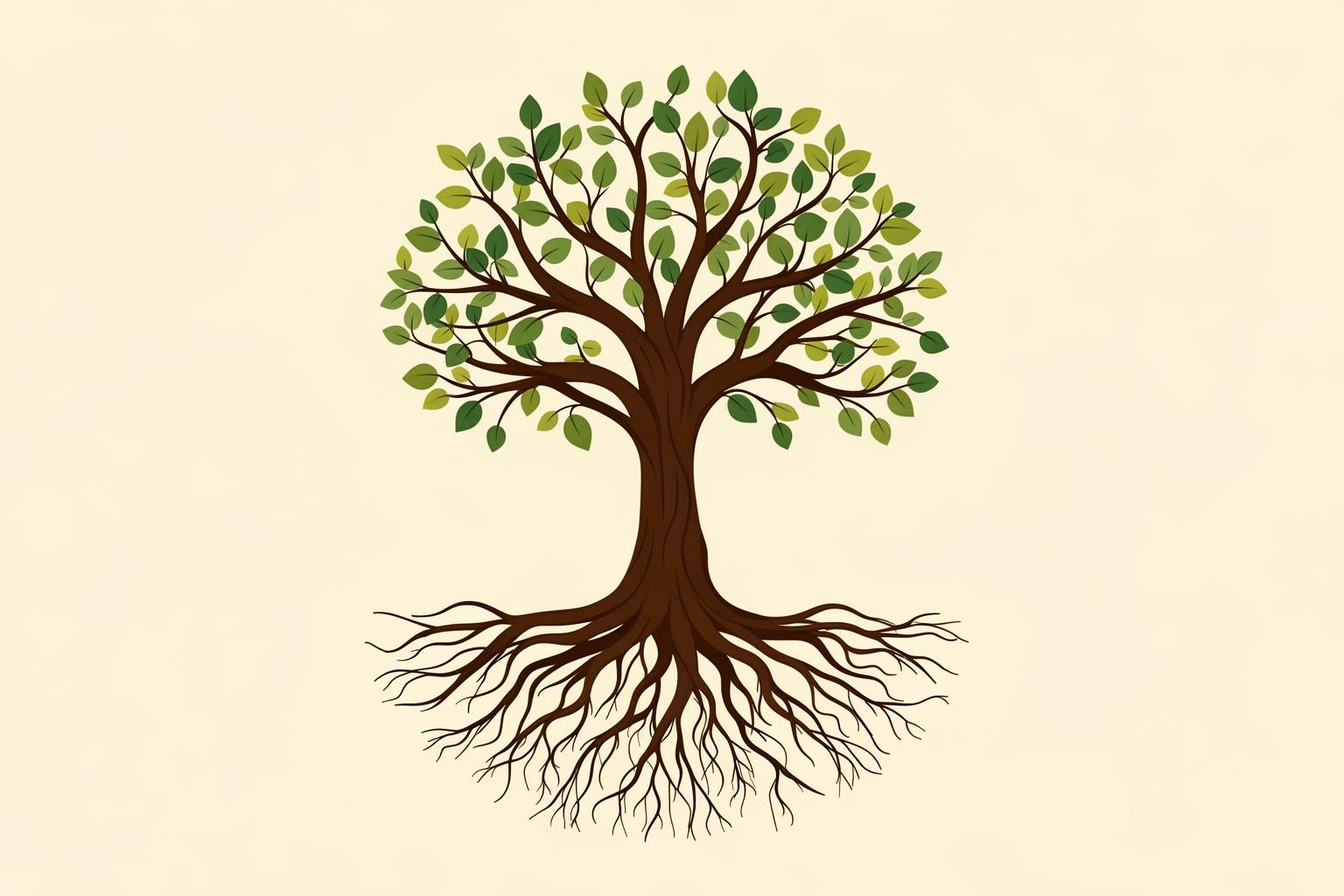
The gardening metaphor is not merely a charming linguistic relic; it serves as the philosophical foundation of the entire concept. It presents a worldview that regards ideas and organizations not as machines with interchangeable components, but as living entities. A sudden, top-down directive acts as a form of violence against this organism. It disrupts the fragile ecosystem of relationships, roles, and responsibilities essential for the company’s operation. The harmony, or wa (和), is unsettled.
Consider the tree once more. Each root has a role. Some are large and anchoring; others are small and nutrient-absorbing. Successfully transplanting the tree requires attending to every root. In a Japanese company, these roots represent the people: the section chiefs, veteran employees familiar with the company’s history, engineers in other departments whose work will be impacted, and the finance team that must approve the budget. Nemawashi involves tending to each of these roots individually. It’s about understanding their concerns, gaining their support, and integrating their feedback into the proposal itself.
By the time the idea is formally presented, it is no longer a single person’s idea. It has been cultivated, pruned, and molded by the collective. It has absorbed the nourishment of diverse perspectives and been fortified against potential objections. The formal meeting, therefore, is not when the decision is made but when it is confirmed. It is the final, careful planting of a well-prepared tree into its new, welcoming environment. The public agreement serves as a ceremony to celebrate the harmony painstakingly established behind the scenes.
How Nemawashi Actually Works: The Unspoken Dance
Nemawashi is not a single action but a multi-stage process of informal communication. It’s a delicate interplay of social intelligence, patience, and strategic conversation. While the specific steps may differ, the process generally follows a recognizable pattern, progressing from informal to formal, and from the bottom up.
Step One: The Informal Sounding Board
It starts quietly. For instance, a mid-level manager, Suzuki-san, has an idea for a new marketing strategy. He doesn’t write a 50-page proposal and send it to his boss. Instead, his first step is to test the idea with a trusted peer at a similar level, perhaps during lunch or a cigarette break. The conversation remains casual and hypothetical. “I was thinking,” he might say, “what if we tried to reach a younger demographic through social media? Just a thought.”
He’s not seeking approval yet. He’s collecting raw, unfiltered feedback in a low-pressure setting. His colleague might highlight a potential issue he hadn’t considered: “Interesting idea, but wouldn’t the product team need to create entirely new packaging for that audience?” This feedback is invaluable. Most importantly, the exchange is private. If the idea is fundamentally flawed, it can be quietly dropped here without any loss of face for Suzuki-san. No public failure, no formal rejection. This is a key function of the initial nemawashi phase: protecting one’s social standing by managing risk.
Step Two: Building a Coalition of the Willing
After incorporating the initial feedback, Suzuki-san refines his idea. He then reaches out to individuals in other departments who would be affected. He talks with someone from the product team, a member of sales, and possibly a junior finance staffer. The setting remains informal—a brief hallway chat, coffee after work, or increasingly, a private company messenger conversation.
His pitch is customized for each person. To the product team member, he might say, “I’m exploring a way to increase sales among younger customers, and I think your team’s design skills would be perfect. Do you think new packaging could be ready in six months?” He’s not directing them; he’s soliciting their expertise, inviting them to be part of the solution. He’s turning his idea into our idea. He listens carefully to their concerns, respects their areas of responsibility, and incorporates their input. Gradually, he builds a network of supporters. These people now have a vested interest in the idea’s success. When the proposal ultimately reaches their superiors, those bosses will hear from trusted subordinates that the idea has merit.
Step Three: Securing the Senior Blessing
Only after Suzuki-san has secured support at the ground level does he approach his own boss, the kacho (section chief), and possibly the bucho (department head). This is a more formal, though still private, meeting. But he doesn’t come empty-handed. He presents the refined proposal along with essential social proof: “I’ve spoken with Sato-san in Sales, and he’s confident we can move the new units. Tanaka-san in Product Development has already drafted some preliminary designs.”
He demonstrates to his manager that the idea isn’t a risky, solo effort. It’s a well-vetted, collaborative project with momentum and backing from key players. This makes it easier for the manager to support the proposal. The manager’s reputation is safeguarded. By endorsing it, the manager is not taking a gamble but backing a pre-validated consensus. This informal pre-approval from relevant authorities is the most crucial step. Without it, the idea is dead on arrival.
The Meeting: A Ceremony of Consensus
Finally, we reach the formal meeting introduced earlier. It all becomes clear. The meeting isn’t for debating Suzuki-san’s idea—that discussion is already complete. The meeting serves as a public ritual to formalize the agreement achieved through nemawashi. It officially records the decision in the company’s memory, aligns all departments publicly, and grants the final, authoritative approval. Everyone present already knows the outcome. Their role is to show their agreement with the group and the decision. The harmony is on display for all to see, and the project proceeds with the organization’s full, unified support.
The Cultural DNA of Nemawashi
To genuinely understand nemawashi, you must view it not merely as a business procedure but as a reflection of core Japanese cultural values. It is a system meticulously crafted to support a society that highly values group unity and the avoidance of direct confrontation.
Harmony (Wa 和) as the Ultimate Goal
The key concept here is wa (和), commonly translated as harmony. Wa emphasizes that the smooth and peaceful operation of the group takes precedence over the expression of individual opinions. A Western-style meeting, characterized by open debate and confrontational questioning, can threaten wa. Participants are compelled to publicly take sides, disagreements are aired openly, and someone inevitably “loses” the argument. This outcome creates winners and losers, breeding resentment and harming relationships. Nemawashi acts as the countermeasure. It enables concerns and disagreements to be addressed privately, one-on-one, allowing resolution without public disputes. The objective is to identify and resolve all potential conflicts before they disrupt the group’s harmony.
The Group Over the Individual
Japan’s culture is well-known for its collectivism. The primary social unit is the group—be it family, company, or nation—rather than the individual. Within this framework, an idea proposed by a single person remains just that: one person’s viewpoint. To gain value, it must be embraced and owned by the group. Nemawashi is precisely the process through which this occurs. Through numerous small conversations, an individual’s idea is gradually shared and shaped by others, evolving to reflect the collective insight and consensus. When the decision is finally formalized, it is not “Suzuki-san’s project” but “our project.” This breeds a strong sense of shared ownership and accountability, which is why implementation following a nemawashi-based decision tends to be so swift and effective.
The Fear of Losing Face (Mentsu)
Maintaining one’s face, or mentsu (面子), is a potent social motivator. To be publicly contradicted or have your proposal rejected in front of colleagues and superiors is a significant cause of shame. It suggests unpreparedness, disrespect for the group, or simply being wrong. Nemawashi serves as an ingenious face-saving mechanism for all parties. The proposer can test their idea without risking public embarrassment. Colleagues can voice concerns or criticism without being viewed as obstructive or disrespectful. Managers can avoid endorsing flawed ideas and appearing incompetent. The entire process is structured to manage conflicts and failures privately, enabling everyone to preserve their dignity and social standing in public.
The Ringi System: Nemawashi on Paper
In many traditional companies, nemawashi has a formalized, paper-based equivalent called the ringi seido (稟議制度). An idea that has been successfully through verbal nemawashi is documented in a formal proposal known as a ringi-sho. This document is then physically circulated among all relevant managers and department heads in a predetermined order. Each person indicates their approval by stamping it with their personal seal, or hanko. By the time the document reaches the final decision-maker, it is covered in red ink from approval stamps—a tangible demonstration of the consensus achieved. The final stamp is not a bold decision but rather the last step in a long, collective process.
The Outsider’s Dilemma: Navigating Nemawashi

For foreigners working in a Japanese environment, nemawashi can be the primary source of professional frustration until they fully grasp its nature. They perceive it as slow, opaque, and inefficient, often wondering why no one gives them a straightforward “yes” or “no.”
Why Your “Brilliant Idea” Died in the Meeting
A common mistake is reserving your brilliant, well-researched idea for a dramatic reveal during the big meeting. You expect to impress everyone with your logic and data, win the debate, and be hailed as an innovator. Instead, your proposal is met with polite silence, non-committal murmurs, and vague postponements. The idea then vanishes, never to be discussed again. What went wrong? You broke the unspoken social contract. By surprising everyone, you put them on the spot and forced them to evaluate something unprepared. You made your boss look bad for not anticipating the idea and threatened the meeting’s harmony. From a Japanese viewpoint, your behavior wasn’t bold; it was socially awkward and almost arrogant. You tried to plant a tree without first preparing its roots.
Learning to Play the Game
To succeed, you need to learn the dance. Don’t view meetings as the place to make decisions; see them as the moment to ratify decisions already reached. The real work happens outside the conference room.
- Identify the stakeholders. Who will be impacted by your idea? Who must approve it? Who are the informal influencers without formal titles but whose opinions carry weight?
- Start with informal conversations. Invite people for coffee or lunch. Don’t present, but engage in dialogue. Seek their advice and perspective. Frame it as asking for their wisdom: “I’m facing this challenge, and with your experience in sales, I was wondering how you might approach it.”
- Listen more than you speak. Early on, your goal is to gather information and build relationships, not to win an argument. Understand their concerns and show you’re listening by incorporating their feedback into your idea.
- Be patient. Nemawashi requires time. Building consensus across departments can take weeks or months. What feels like frustratingly slow progress is actually the careful, necessary work of laying a solid foundation.
Is Nemawashi Inefficient?
The most common Western criticism is that nemawashi slows decision-making and suppresses bold, disruptive innovation. There’s some truth to this. The process is inherently conservative; truly radical ideas challenging the status quo struggle to survive the consensus-building phase. Companies needing to pivot quickly in fast-moving global markets often find the traditional nemawashi process to be a hindrance.
However, a strong counter-argument exists. While Japanese decision-making can be slow, execution is remarkably swift. Because every stakeholder is consulted and every potential objection addressed during nemawashi, once the decision is finalized, the whole organization acts together with united force and minimal internal resistance. In contrast, many Western companies may decide quickly through a single executive, but then endure months or years of delay during implementation, undermined by resentful departments that felt excluded. The choice often comes down to taking your time before the decision or enduring friction and delays afterward. Nemawashi opts for the former.
Nemawashi Beyond the Boardroom
Although nemawashi is most commonly linked to the corporate world, its spirit extends throughout many areas of Japanese society. It reflects a deeply rooted cultural preference for planning and pre-consultation.
Consider a neighborhood association organizing its annual summer festival. A chairperson won’t simply announce the dates and events. Instead, they will spend weeks consulting with shop owners, elderly residents, and parents from the local school, gathering opinions on everything from food stalls to musical performers. The final plan results from this community-wide nemawashi, ensuring everyone feels involved and supportive.
This process can also take place within a family. A husband wanting to buy a new car won’t just make a sudden announcement. He might casually mention that the old car is having engine trouble, then a week later leave a car brochure on the coffee table. He might ask his wife about her preferred color “if they were ever to get a new car.” By doing this, he lays the groundwork and quietly builds consensus so that when he eventually suggests visiting the dealership, the decision has, in a way, already been made together.
Ultimately, nemawashi is about showing respect—respect for the group, for established relationships, and for the delicate social harmony that enables society to function smoothly. While it may seem frustratingly indirect and time-consuming to an outsider, it is the unseen engine of consensus in Japan. It is the patient, careful work of nurturing the roots so that when change arrives, it is not a shock but a welcomed and nourishing step in a collective journey. It teaches a lesson in social botany: the strongest trees are not those planted by force, but those grown with care.