
Every now and then, a Japanese concept drifts into the global consciousness, gets filtered through the wellness industry, and lands on a list of life hacks somewhere between intermittent fasting and bulletproof coffee. A few years ago, that concept was shinrin-yoku. Translated literally as “forest bathing,” it sounded lovely, intuitive, and maybe a little bit twee. The international interpretation was simple: go for a walk in the woods, feel better. It’s a nice idea, and not entirely wrong, but it misses the entire point. It’s like describing a formal tea ceremony as just “drinking tea.”
In Japan, shinrin-yoku isn’t a fleeting wellness trend; it’s a medically recognized, government-promoted, and deeply researched form of preventative healthcare. It’s a practice rooted in ancient cultural reverence for nature and backed by decades of serious scientific inquiry. It’s a direct response to the pressures of a hyper-modern, densely urbanized society. This isn’t about getting your steps in or conquering a summit. It’s a deliberate, slow, and sensory immersion into the atmosphere of the forest. It’s about letting the forest in, not just passing through it.
To understand shinrin-yoku is to understand something fundamental about the Japanese mindset—a worldview where humans are not separate from nature, but a small part of it. It’s a relationship built on respect, reciprocity, and a quiet acknowledgment that the ancient world of trees holds a kind of wisdom our buzzing, digital lives have caused us to forget. Forget the hashtag-driven version for a moment. Let’s talk about what it really is, where it comes from, and why it’s considered potent medicine in one of the most technologically advanced nations on Earth.
This deep-seated reverence for nature is also evident in how forest bathing is prescribed as a cure for modern life.
Unplugging the Mind: What Shinrin-yoku Is (and Isn’t)
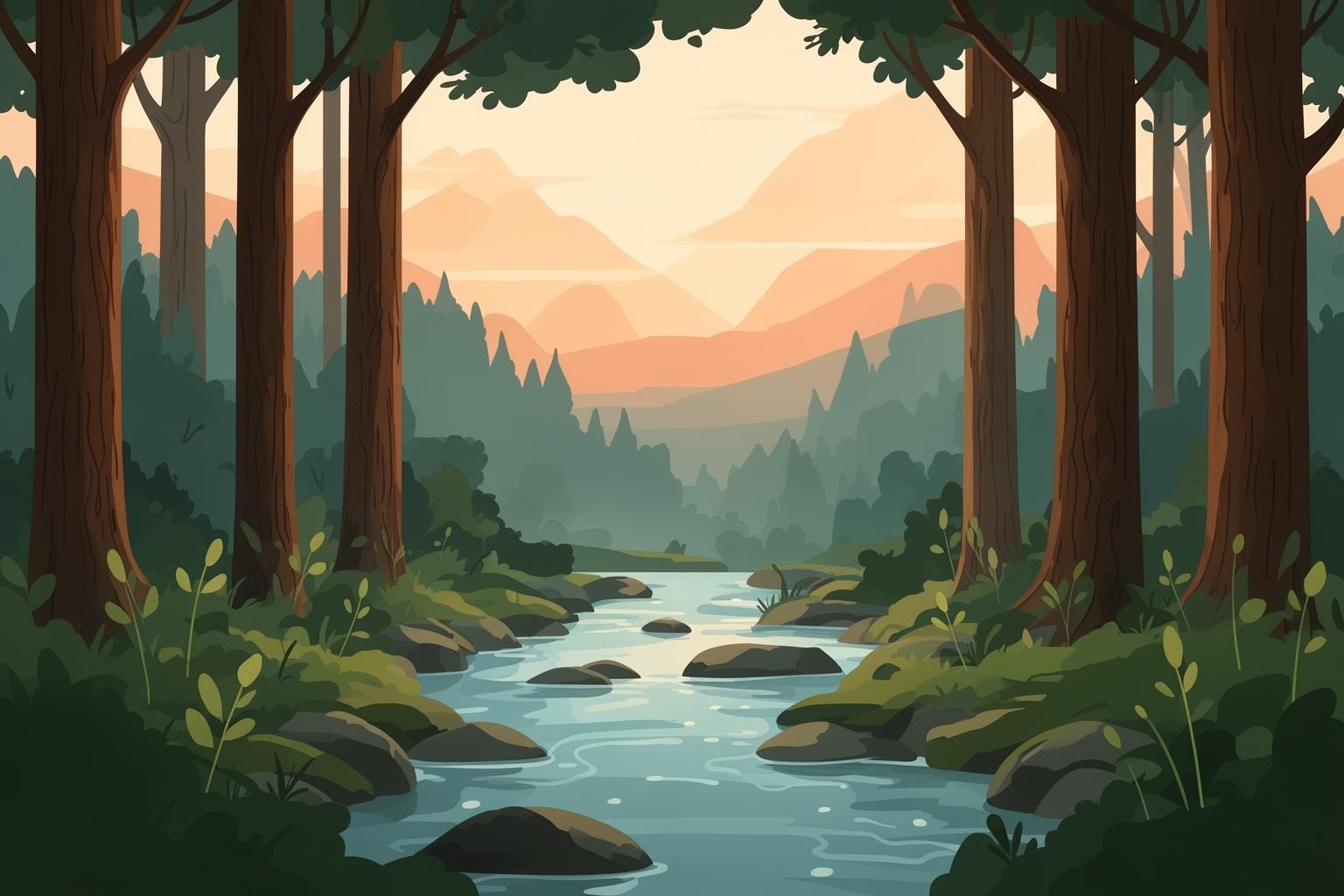
First, let’s address the biggest misconception: shinrin-yoku is not hiking. It’s neither trail running nor a naturalist’s outing to identify plants and animals. There is no destination, no physical challenge to overcome, and no achievement measured by distance traveled. In fact, a proper shinrin-yoku session might span just a kilometer or two over several hours. The aim is not to conquer the path but to yield to the surrounding environment.
At its heart, shinrin-yoku is the intentional practice of connecting with the forest through all five senses. It’s about being fully present. This may sound simple, but in a world that constantly fragments our attention, it’s a radical act. It’s a form of unplugged mindfulness where the focus shifts away from your own breath or an internal mantra to the vibrant, living world around you.
Imagine leaving your phone, camera, and expectations behind in the car. You step into the forest with the sole task of wandering without purpose. You’re encouraged to walk slowly, pause often, and sit whenever you feel inclined. You’re invited to observe—not in a forceful or academic way, but with gentle, open curiosity.
Engaging the Senses
This sensory awareness is central. You begin with sight. You’re not merely looking at trees; you notice the intricate bark patterns, the vast spectrum of greens in the leaves, the way sunlight filters through the canopy—a phenomenon the Japanese beautifully call komorebi. You observe the dance of light and shadow on the forest floor, the subtle movements of insects, and the gentle sway of ferns in the breeze.
Then, you tune into hearing. You move beyond a generic “nature” soundscape and start to isolate individual noises: the rustling leaves beneath your feet, the distant call of a bird, the creak of a branch overhead, the hum of an insect. If you’re fortunate, you might catch the sound of a small stream or a delicate waterfall. Without traffic, notifications, or human chatter, the forest’s soundscape unfolds in rich complexity.
Next, you engage your sense of smell. You breathe deeply. Forest air is not just air; it’s a complex blend of aromas: the damp, earthy scent of soil and decomposing leaves, the fresh, sharp fragrance of pine or cedar, the subtle perfume of hidden wildflowers. These scents are more than pleasant—they carry potent chemical compounds, as we will explore.
Touch is often neglected. Shinrin-yoku invites you to physically connect with your surroundings. You might run your fingers over the rough bark of an oak, the cool, smooth surface of a river stone, or the soft, mossy carpet on a fallen log. You might remove your shoes to feel the earth beneath your feet. It’s about restoring a tactile bond with nature.
Lastly, taste. Often the most subtle sense involved, it can be as simple as noticing the clean, fresh flavor of forest air as you breathe it in. Some guided sessions may involve foraging for edible plants or brewing tea with gathered leaves, but the essence lies in being mindful of the atmosphere you are inhaling.
This slow, intentional, multi-sensory process distinguishes shinrin-yoku from a basic walk. It’s an exercise in presence. The goal is to silence the persistent internal chatter—the endless loop of worries and tasks—and let your awareness be completely filled by the forest. It’s a bath, not in water, but in the very spirit of the woods.
The Roots of Reverence: Why This Idea Blossomed in Japan
Shinrin-yoku may have been officially named and studied in the 1980s, but its philosophical roots are ancient. The practice didn’t arise from nowhere; it developed from Japan’s deep and enduring spiritual and cultural connection to nature. To truly grasp why forest bathing is so inherently Japanese, one must consider the fundamental beliefs of Shinto and the aesthetic principles of Buddhism.
Shinto: The Way of the Gods
Shinto, Japan’s native religion, is a form of animism. It does not teach of a singular, omnipotent creator deity separate from the physical world. Rather, it holds that deities, or kami, dwell within all things—rocks, rivers, mountains, and most profoundly, within ancient trees and dense forests. A twisted, centuries-old camphor tree is not merely wood; it might be the home of a powerful spirit. A majestic waterfall is not just falling water; it is a place of sacred power.
This belief fosters a deep and lasting reverence for the natural world. Forests are not simply resources to be used; they are sacred places, the cathedrals of the kami. This is physically evident throughout Japan. Shrines are almost always set within groves of trees known as chinju no mori (sacred forests). The entrance to these sacred areas is marked by a torii gate, signifying a passage from the ordinary world into the spiritual realm. The very act of walking through the forest to reach the shrine serves as a form of purification.
This cultural imprint runs deeply. Even among the most secular modern Japanese individuals, there remains an intrinsic understanding that forests are special, powerful places demanding respect. The notion of seeking comfort and renewal in a forest is not a new-age creation; it echoes an age-old spiritual tradition.
Buddhist Influences and Aesthetics
When Buddhism came to Japan in the 6th century, it did not supplant Shinto but instead blended with it, adding another dimension to the appreciation of nature. Zen Buddhism, especially, stresses enlightenment through direct experience, meditation, and a profound appreciation for the fleeting beauty of the natural world. Ideas such as mono no aware (a gentle sadness over the impermanence of things) and wabi-sabi (embracing beauty in imperfection and simplicity) are closely connected to observing nature’s cycles.
Consider the classic Japanese garden. It is not a manicured, symmetrical European-style park, but a stylized, idealized interpretation of nature crafted to inspire tranquility and reflection. Every rock, moss patch, and carefully trimmed tree is deliberately placed to form a harmonious whole. This aesthetic appreciation—recognizing deep beauty in the quiet, unassuming details of nature—is exactly what a shinrin-yoku practitioner learns to cultivate.
This dual spiritual heritage forged a culture in which the boundary between humanity and nature is fluid. The forest is not an “other” place to visit; it is an extension of the self, a source of spiritual sustenance and aesthetic inspiration. The contemporary practice of shinrin-yoku is simply the secular, scientific expression of this ancient cultural insight.
The Science of the Forest: More Than Just a Feeling

Although the cultural origins of shinrin-yoku run deep, its contemporary form is firmly rooted in science. In the early 1980s, Japan was experiencing its post-war economic boom. People were moving en masse to cities, enduring long, grueling hours in high-pressure office settings, and becoming increasingly disconnected from nature. The government observed a rise in stress-related illnesses and what would come to be known as karoshi, or death from overwork. In 1982, the Forest Agency of Japan introduced shinrin-yoku as a natural remedy, a preventative health practice designed to offset the harmful effects of urban living.
This approach was based on more than intuition. They began financing rigorous scientific studies to measure the physiological and psychological impacts of spending time in a forest. Guided by researchers such as Dr. Qing Li from Nippon Medical School in Tokyo, scientists aimed to precisely understand what happens to the human body when immersed in a forest environment.
Phytoncides: The Forest’s Hidden Medicine
A key finding was the importance of phytoncides. These are antimicrobial volatile organic compounds released by trees and plants to defend themselves against germs, insects, and fungi. When in a forest, we inhale these airborne substances. They represent the forest’s very scent—the aroma of pine, cedar, and cypress.
Dr. Li’s research revealed that inhaling phytoncides profoundly affects the human immune system. His studies, published in esteemed medical journals, showed that spending time in a forest significantly raises the number and activity of Natural Killer (NK) cells, a type of white blood cell. NK cells are crucial to our immune defense, able to detect and destroy virally infected cells and early cancer cells. Remarkably, elevated NK cell activity from a three-day, two-night forest bathing trip was found to last for over thirty days.
In short, trees are bathed in their own protective chemical shield, and by immersing ourselves in their surroundings, we effectively borrow that protection. It’s the forest’s immune system lending ours a strong, measurable boost.
Stress Reduction and Calming the Nervous System
The research extended further. Scientists ran numerous field experiments, sending some participants to forests and others to urban areas as controls. They measured a broad range of biomarkers before, during, and after exposure.
The findings were consistently significant. Those who bathed in forests showed remarkable decreases in stress hormones, especially cortisol. Their blood pressure and heart rates dropped. Saliva tests confirmed reduced adrenaline and noradrenaline levels. The data indicated a fundamental shift in the autonomic nervous system.
Our nervous system has two main components: the sympathetic system, responsible for “fight-or-flight” reactions, and the parasympathetic system, which oversees “rest-and-digest” functions. Constant stress from modern life keeps the sympathetic system overactive. The studies showed that shinrin-yoku stimulates the parasympathetic system, drawing the body out of high alert into a state of calm and recovery.
Psychological assessments supported these findings. Participants reported less anxiety, depression, anger, and confusion, alongside enhanced feelings of vitality and well-being after spending time in the forest. This was not just subjective; it was a measurable physiological and psychological improvement. The forest was actively healing them.
The Modern Practice: Forest Therapy as Healthcare
Equipped with this extensive scientific data, Japan has incorporated shinrin-yoku into its national health and wellness system. This is not a marginal activity; it is a mainstream, evidence-based therapy. The government has established over sixty official “Forest Therapy Bases and Roads” throughout the country. These are not just ordinary patches of woodland but forests that have been scientifically evaluated and certified for their therapeutic benefits.
To receive certification, a forest must satisfy specific standards. Researchers assess the air quality, the levels of phytoncides, trail accessibility, and even the visual appeal of the surroundings. The aim is to create an ideal environment for healing.
The Role of the Guide
On these certified trails, you can often hire a trained and certified Forest Therapy Guide. These guides are more than just hiking leaders; they are knowledgeable in the science of shinrin-yoku and skilled in fostering a profound connection with nature. They serve as a link between the individual and the forest.
A guide won’t give lectures about tree species or local history. Rather, they offer gentle prompts to slow down and engage your senses. They might invite you to lie on your back and watch the clouds through the canopy, an experience known as “tree-napping.” They might prepare a simple tea ceremony using a portable stove, allowing you to savor the forest atmosphere in a cup of warm tea. They may lead you through breathing exercises or encourage you to find a “sit spot” where you can quietly observe for twenty minutes.
Their purpose is to create a safe and structured environment where you can release your urban mindset and immerse yourself in the slower, quieter pace of the forest. They help you notice details you might otherwise overlook and give you permission to do whatever feels most restorative—which often means simply doing nothing at all.
This formalization of the practice—with certified forests, trained guides, and ongoing research—is what transforms shinrin-yoku from a pleasurable activity into a recognized therapeutic approach in Japan. It is prescribed by doctors and incorporated into corporate wellness programs, reflecting how seriously the country regards the health of both its people and its natural environment.
Beyond Japan: The Forest as a Universal Remedy
Although shinrin-yoku is a uniquely Japanese invention, its insight is universal. Humans evolved in natural surroundings, and our brains and bodies are naturally attuned to respond positively to the patterns, sounds, and chemistry of the natural world. The chronic stress, attention fatigue, and sensory overload of modern urban life are, from an evolutionary perspective, a significant anomaly.
Shinrin-yoku provides a way back to ourselves. It reminds us that we are biological beings who need a connection to the living world in order to flourish. It is a practice of remembrance.
Its beauty lies in its simplicity. You don’t require a certified forest or a trained guide to begin. The principles can be practiced anywhere there is a patch of green—a city park, a botanical garden, or even a single tree on your street can serve as a point of connection. The essential factor is the intention you bring to the experience.
It’s about putting aside your phone. It’s about slowing your pace to a drift. It’s about consciously opening your senses—feeling the texture of a leaf, smelling the earth after the rain, hearing the wind’s sound. It’s about giving yourself moments to be part of the world, rather than merely an observer passing through it en route to something else.
In a world that constantly urges us to be more productive, move faster, and optimize every moment, shinrin-yoku is a quiet act of rebellion. It suggests that sometimes the most productive thing we can do is to be still. The most efficient journey is one without a destination. And the deepest connection we can make is not online, but with the ancient, living world that sustains us all. It is not a trend to consume, but a mindset to nurture—a quiet, green, and powerful therapy freely offered by the Earth itself.