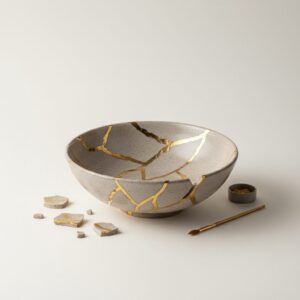
Yo, what’s up, fellow travelers and culture heads. It’s Li Wei, coming at you straight from the heart of where tradition gets a fresh, new-gen glow up. Today, we’re diving deep into something that’s been blowing up my feed and my mind: Kintsugi. You’ve probably seen the pics—gorgeous pottery with shimmering gold lines crisscrossing its surface like a roadmap of its own history. It’s the Japanese art of repairing broken ceramics with lacquer dusted with powdered gold, silver, or platinum. But let me spill the real tea: it’s so much more than just DIY pottery repair. It’s a whole philosophy, a full-on aesthetic, and a seriously meditative experience that’s been reimagined for our modern, minimalist-loving souls. We live in a world that’s obsessed with perfection, with hiding flaws and chasing the unattainable flawless filter life. We toss out what’s broken and replace it in a heartbeat. Kintsugi flips that script entirely. It doesn’t just fix what’s broken; it celebrates the damage. It makes the scars the most beautiful part of the object. It’s giving… resilience. It’s giving… radical acceptance. And honestly, in this crazy, fast-paced world, that’s a vibe we could all use a little more of. We’re not just talking about dusty, old-school craft rooms here. We’re on a hunt for the new wave of Kintsugi workshops—bright, airy, minimalist studios in Tokyo and Kyoto where ancient techniques meet contemporary design. These are spaces that feel more like art galleries or tranquil cafes, places where you can breathe, focus, and create something uniquely, beautifully imperfect. It’s a chance to slow down, to connect with a 500-year-old tradition, and to walk away with not just a stunning piece of repaired pottery, but a new perspective on life, beauty, and your own personal journey. This is about finding the beauty in the breaks and letting your own golden scars shine. It’s a total game-changer, for real.
To truly understand this philosophy of celebrating imperfections, you should explore the deeper history and meaning behind the ancient art of Kintsugi.
The Philosophy: More Than Just Superglue and Sparkles
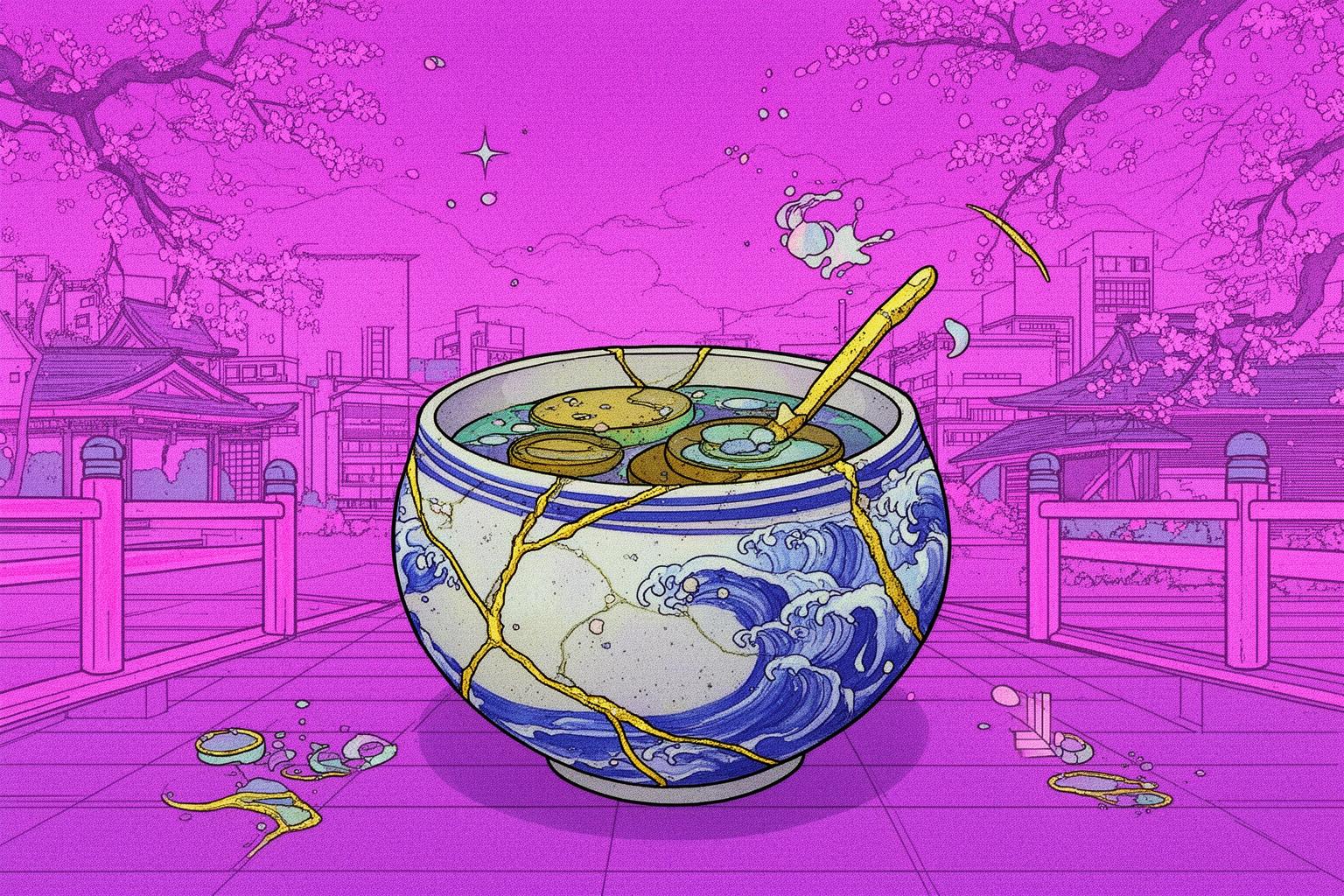
Before we even enter the studio, we need to discuss the ‘why.’ Because Kintsugi is profound. Honestly, it’s one of the most meaningful art forms I’ve ever encountered. The entire practice is grounded in the Japanese aesthetic of wabi-sabi, a worldview centered on embracing transience and imperfection. Picture the beauty of a moss-covered stone, the charm of a slightly asymmetrical tea bowl, or the bittersweet appeal of a fading autumn leaf. Wabi-sabi finds elegance in things that are imperfect, impermanent, and incomplete. It stands as the ultimate opposite of our modern obsession with polished, mass-produced perfection. Kintsugi is wabi-sabi brought to life. It takes a catastrophic event—a broken bowl—and transforms it into a story. Each crack, filled with gold, becomes a testament to the object’s resilience. It doesn’t pretend it was never broken. Instead, it proudly showcases its history, suggesting that the journey through damage and repair has made it even more valuable, more beautiful, and more interesting than it was in its original, flawless state. This idea hits differently, you know? It’s a strong metaphor for our own lives. We all carry scars, failures, and heartbreaks. Society often tells us to hide them, to be ashamed. Kintsugi teaches us to embrace them, to see them as part of our unique story, as golden lines tracing where we’ve been and how we’ve healed. It’s a form of emotional and spiritual repair reflected in a physical object. From my perspective, growing up steeped in East Asian philosophies, it also echoes ideas from Daoism—the concept of flowing with the natural course of things, finding strength in what might seem like weakness. The broken ceramic is not a failure; it’s simply entered a new phase of its existence. The artisan doesn’t force it back to its former self but works with its new form, creating something original. This is also deeply tied to Zen Buddhism, which has greatly influenced Japanese culture. Practicing Kintsugi demands immense patience, mindfulness, and deep, focused presence. It can’t be rushed. The process itself is a meditation. As you carefully assemble the fragments, you’re not just thinking about the pottery; you enter a state of ‘mushin,’ or ‘no-mind,’ where the noise of daily worries fades, and you become fully absorbed in the task. This is the Zen of craft, a tangible way to practice mindfulness that feels far more accessible than sitting quietly trying to clear your mind. It’s about doing, not just being. And its history is rich, intertwined with the legendary tea ceremony. The story goes that in the late 15th century, the shogun Ashikaga Yoshimasa sent a damaged Chinese tea bowl back to China for repairs. It returned with ugly metal staples, the standard repair method of that era. Dissatisfied, he challenged Japanese craftsmen to find a more aesthetically pleasing solution. Their answer was Kintsugi. They didn’t just repair the bowl; they elevated it, turning it into a treasured object. Tea masters, who were the ultimate tastemakers of their time, began to value these golden-seamed bowls for their unique character, embodying the very essence of wabi-sabi they upheld. A repaired bowl wasn’t just functional; it was a conversation piece, a philosophical object you could hold in your hands. So, when you’re in that workshop, you’re not merely working with glue. You’re participating in a centuries-old cultural dialogue about beauty, resilience, and the meaning of perfection. It’s a deep, beautiful thought that enriches the entire experience.
The Modern Minimalist Studio: A Vibe Check
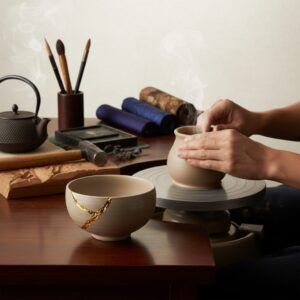
Now, let’s focus on the space itself, since the environment plays a huge role in the experience. Forget any notion you have of a cramped, dusty workshop. The new wave of Kintsugi studios in cities like Tokyo and Kyoto represent the pinnacle of modern minimalist elegance. They’re an entire vibe. Imagine this: you stroll down a quiet side street in a trendy area like Daikanyama in Tokyo or a peaceful lane near the Philosopher’s Path in Kyoto. You discover a modest storefront with clean lines, perhaps accompanied by a single, graceful bonsai tree by the entrance. You slide open the door, and the outside world simply fades away. The first thing that strikes you is the light. These studios often boast soft, natural light flooding in from large windows, brightening a deliberately sparse and soothing space. The color scheme is muted and earthy—think raw concrete walls, warm-hued natural wood floors, and simple, exquisitely crafted wooden workbenches. There’s no clutter. Every tool, every material, is arranged with purpose, like an art installation. The spatulas, brushes, bowls of powdered gold—they’re perfectly organized on a clean surface, awaiting your touch. The atmosphere exudes calm focus. It’s quiet, but not an awkward, library-like silence. Instead, there’s a gentle, creative murmur in the air. You might catch the soft, rhythmic sound of an instructor carefully sanding a repaired seam or hear the quiet, concentrated breathing of fellow students. The scent is subtle and natural—the faint, earthy aroma of clay from pottery shards, the distinctive, slightly sharp scent of urushi lacquer, and perhaps a hint of green tea being served nearby. The instructors themselves often reflect the aesthetic. Calm and kind, they move with quiet confidence that immediately relaxes you. They speak softly, guiding you through each step with patience and precision. They embody the philosophy they teach—not just technicians, but more like Zen guides on your creative journey. The people you meet in these workshops contribute equally to the vibe. You’ll encounter a mix of locals and travelers, young and old, all drawn here for a moment of peaceful creation. There’s an unspoken camaraderie in the room. You’re all here to mend something, which fosters a truly beautiful, shared sense of purpose. It’s a stark contrast to the sensory overload of a city like Tokyo. It’s a sanctuary. These minimalist spaces are crafted to eliminate distractions, allowing you to fully immerse yourself in the craft. The simplicity of the surroundings helps clear your mind. You’re not worried about your phone, your to-do list, or the noise outside. For a few hours, your whole universe shrinks to the broken pieces before you, the tools in your hands, and the instructor’s gentle voice. This minimalist setting serves as a modern take on the traditional Japanese tea room, which was also designed as a simple, unadorned space to deepen appreciation for the tea ceremony and enhance connection with others. Similarly, these Kintsugi studios are carefully curated environments intended to lift the experience from a basic craft class to a truly mindful, nearly spiritual practice. It’s a space that not only lets you create art but helps you feel it. The entire aesthetic is incredibly photogenic, too—let’s be honest. The contrast of gleaming gold against rustic ceramic shards, resting on a clean, light-wood table bathed in perfect lighting? It’s an Instagram dream. But the beauty is that the experience is so absorbing, you’ll probably forget to take photos until it’s almost over. That’s when you know it’s genuine.
The Process: A Slow-Burn Glow Up for Your Pottery

Alright, let’s dive into the details—the step-by-step process of bringing a broken piece of pottery back to life. This is not a quick repair. Traditional Kintsugi is slow, intentional, and demands a patience you didn’t realize you possessed. It’s a masterclass in delayed gratification, with every step serving as a meditative practice. Let’s break it down, because the journey matters just as much as the outcome.
Step One: Gathering the Shards
The process starts with the broken pieces. In beginner workshops, you’re usually given a pre-broken ceramic tile or simple cup, so you don’t have to risk a cherished family heirloom on your first try. The instructor will help you lay out the fragments like a 3D puzzle. This first step is about examination and intention. You carefully study each edge, figuring out how they once fit together. You then clean each piece thoroughly, removing any dust or oils. Surprisingly, this cleaning is calming. It’s both preparation and a ritual to honor the object and the process ahead. You’re getting acquainted with the object in its broken form, appreciating the unique shapes created by the break. You’re not mourning its previous wholeness but readying it for its more interesting, future self.
Step Two: Mixing the Magic—Urushi Lacquer
Next, you meet the heart of Kintsugi: urushi. This natural lacquer, made from the sap of the Japanese lacquer tree, is tough, waterproof, and safe for food once fully cured. But here’s a crucial warning: raw, uncured urushi is potent and can cause serious skin rashes similar to poison ivy. That’s why gloves are provided, and you’re taught to handle it with the utmost care and respect. It reminds you that powerful, healing materials often come with risks and require mindfulness. You’ll learn to mix the first binding agent, called ‘mugi-urushi’—a paste made from raw urushi and flour, sometimes with a bit of water. Your instructor will show you how to mix it on a palette with a special spatula until it reaches the perfect honey-like consistency. The steady motion of mixing is your first real hands-on meditation, demanding focus to create a smooth, lump-free medium for rejoining the pieces.
Step Three: The Reunion—Carefully Piecing It Back Together
With your mugi-urushi paste ready, it’s time for the crucial step: uniting the fragments. Using a thin spatula or bamboo skewer, you apply a thin, even layer of paste to the broken edges. This is no casual glue job. It requires precision—too little means a weak bond; too much causes messy seepage. You must be deliberate. Then, gently press the pieces together and hold firm. This step truly tests your patience. You feel the fragments wanting to pull apart, but you maintain steady pressure to keep them aligned. Once joined, you secure them with masking tape to ensure perfect alignment as the urushi slowly cures. Repeat this piece by piece until the whole object is reconstructed. It’s slow and meticulous, but with each bond, you experience a small victory—a real resurrection in action.
Step Four: The Art of Waiting and Filling
Now comes the challenge for modern impatience: waiting. Urushi doesn’t dry by evaporation; it cures, needing a humid, warm environment to harden properly—a process that can take days or weeks. Beginners often work with faster-curing lacquers or pieces at various stages ready for them to progress. After the initial glue cures, you fill any chips or gaps with ‘sabi-urushi,’ a thicker paste made from urushi and fine clay powder. This filling is applied layer by layer, then sanded smooth between applications. The process is repeated until the repaired areas are perfectly flush with the original surface. This stage teaches perseverance—it’s a slow, careful rebuilding. The rhythmic applying and sanding of sabi-urushi is almost hypnotic, deepening your mindful focus.
Step Five: The Final Polish—Preparing the Perfect Canvas
With cracks and chips filled and the surface smooth, the structure is restored. But the seams remain a dull dark brown or black from the lacquer. Next, you apply a final smooth coat of black or red urushi lacquer over the repaired lines. This sealant also acts as the adhesive for the gold powder. The lacquer must be applied in a flawless, even stroke following the crack precisely. This demands a steady hand and great concentration. This flawless layer becomes your canvas for the gold. Traditionally, red lacquer is used beneath the gold because it lends the gold a warmer, richer glow. This subtle detail is uniquely Japanese and utterly beautiful.
Step Six: The Golden Moment—The Maki-e Finale
Now for the moment everyone waits for—the grand finale. While the final lacquer coat is still wet and tacky, you delicately sprinkle powdered gold along the lacquered seams using a special brush or fine tube. This technique, called ‘maki-e’ (meaning ‘sprinkled picture’), transforms the dull lines into brilliant, shimmering rivers of gold. It’s a breathtaking transformation—the ultimate glow-up. The instructor shows you how to gently brush away the excess powder, revealing clean, sharp, radiant golden seams. In that moment, the object is reborn—not merely repaired but elevated in beauty and complexity. Its history shines as its most stunning feature. Holding the finished piece is an incredible feeling; you haven’t just repaired a cup, you’ve meditated, focused, persevered, and brought a tangible piece of philosophy to life. You nailed it.
Finding Your Zen Zone: Locating the Perfect Workshop
So, you’re convinced by the idea. You’re ready to dive in and create some golden beauty yourself. The next question is: where should you go? Japan has many craft workshops, but finding one that perfectly captures a modern, minimalist, English-friendly atmosphere might require some searching. The two main hubs to consider are, unsurprisingly, Tokyo and Kyoto. Each city offers a unique flavor for your Kintsugi experience.
Kintsugi Workshops in Tokyo
Tokyo is a city of contrasts, and its Kintsugi scene mirrors that. You’ll find workshops that are sleek, ultra-modern, and look like they’ve jumped straight out of a design magazine. These are usually located in trendy, creative neighborhoods that are enjoyable to explore on their own. Look for workshops in areas like:
- Daikanyama and Ebisu: These neighborhoods are famed for their stylish boutiques, art galleries, and chic cafes. A Kintsugi studio here is likely design-forward, with a strong focus on aesthetics. After your workshop, you can browse the stunning Daikanyama T-Site bookstore, enjoy a craft coffee, or explore local designer shops. The entire area feels like a mood board of contemporary Japanese style.
- Yanaka and Nezu: For a contrasting atmosphere, head to Yanaka. This quieter, more traditional part of Tokyo escaped the WWII bombings, preserving a charming old-town ‘shitamachi’ ambiance. Workshops here might be held in beautifully renovated traditional Japanese houses, blending old architecture with minimalist interiors, offering a calm, almost nostalgic experience. A post-workshop walk through Yanaka Ginza for street food or a visit to the peaceful Yanaka Cemetery is highly recommended.
- Shimokitazawa: Known for vintage shops, independent theaters, and a bohemian vibe, Shimokitazawa is ideal for a laid-back, artsy Kintsugi experience. Studios here often feel more rustic and personal, run by young artists putting a unique spin on the craft. It’s a great spot to connect with Tokyo’s creative youth culture.
When looking for Tokyo workshops, try keywords like “Kintsugi workshop Tokyo English,” “modern Kintsugi experience,” or “minimalist craft studio.” Many top studios maintain a strong online presence, frequently on Instagram, giving you a good sense of their style. Booking well in advance is crucial, especially for English-language sessions, as they are very popular with international visitors. Workshops range from short two-hour “taster” sessions focusing on the final gold-dusting stage on pre-prepared pieces, to more intensive multi-day courses covering the entire process.
Kintsugi Workshops in Kyoto
If Tokyo embodies modern energy, Kyoto represents deep-rooted tradition and serene beauty. Taking a Kintsugi workshop here feels especially meaningful, as the city itself is a living museum of Japanese aesthetics. Kyoto workshops often have a profound sense of place, directly connecting you to the city’s artistic heritage.
- Gion and Higashiyama: Imagine practicing Kintsugi in a quiet studio tucked away on a stone-paved street in historic Gion. Studios here might be set in traditional ‘machiya’ townhouses with views of a small private garden. The atmosphere is rich with history, and you can almost sense the presence of artisans and tea masters who have walked these streets for centuries. After your class, you might explore the stunning Kiyomizu-dera Temple or stroll through the narrow lanes of Ninenzaka and Sannenzaka.
- Arashiyama: On Kyoto’s western outskirts, the scenic Arashiyama district offers a nature-infused Kintsugi experience. Studios here might feature large windows overlooking bamboo groves or mountains. The connection to nature—a key element of wabi-sabi—is much more tangible here. Combining your workshop with visits to the famous Arashiyama Bamboo Grove or Tenryu-ji Temple makes for a serene and inspiring day.
- Northern Kyoto (near Kinkaku-ji): This area houses many temples and traditional crafts. Workshops here often take a more academic or purist approach, run by families practicing these crafts for generations. It’s a chance to receive a truly authentic, no-frills lesson in the art form, with less emphasis on trendy aesthetics and more on the pure craft itself.
In Kyoto, the experience often intertwines with other famous local crafts like ceramics (Kiyomizu-yaki) and tea. Some workshops even collaborate with local potteries, letting you work on pieces crafted in Kyoto itself. Booking ahead is just as important as in Tokyo. Look for workshops that mention ties to the tea ceremony or other traditional arts for a richer cultural experience. The pace in Kyoto tends to be slower, often reflected in workshops that encourage a more contemplative and unhurried approach to the craft.
The Practical Sitch: What You Gotta Know Before You Go

Alright, you’re excited and you’ve chosen your city. Before you hit that ‘book’ button, let’s cover the practical details to ensure your experience is smooth, stress-free, and truly amazing. A little preparation makes a big difference.
Booking and Timing
This is crucial: book well in advance. Seriously, way ahead of time. These workshops, especially the popular ones offering classes in English, fill up quickly. We’re talking weeks or even a month or two before, particularly if you visit during peak seasons like cherry blossom or autumn. Most studios have online booking systems on their websites, making it simple. Note the class length. Typically, beginner or tourist-oriented workshops run about 90 minutes to 2.5 hours. In these shorter sessions, you won’t complete the entire traditional curing process (which can take weeks). Instead, you’ll often work with modern, faster-drying materials or on a piece already prepped for the final and most rewarding step: applying the gold powder. This is perfect for sampling the art. If you want a more immersive experience, look for multi-day workshops. While more of a commitment, they offer a far more authentic and thorough understanding of the whole urushi process.
What to Wear
Since this is a hands-on art class, leave your designer clothes at home. Though most workshops provide aprons (‘samue’ or work clothes in more traditional studios), it’s wise to wear clothes you won’t mind getting a bit stained. Go for comfortable and casual. The key tip here concerns urushi lacquer. As noted, raw urushi can cause skin reactions. Studios take safety seriously and usually provide gloves, but wearing long sleeves is a smart precaution against any accidental splashes. Better to be safe!
What to Bring
Generally, just bring yourself and an open mind. Workshops supply everything: the broken pottery, tools, lacquer, gold powder, and aprons. However, some studios allow you to bring your own broken ceramic to repair. This can be deeply meaningful, letting you mend a piece with personal value. But you must check with the studio beforehand—they need to approve your piece to ensure the material suits the Kintsugi process (porcelain and earthenware usually work) and that the break is manageable for a beginner. If you bring your own item, be aware you might not finish it in one session and may need to take materials home or book another class.
The Cost
Workshop prices vary depending on city, class length, and materials. A short, 2-hour introductory session typically costs between 5,000 and 10,000 JPY. More intensive full-day or multi-day courses are considerably pricier. While it may seem costly for a craft class, remember you’re paying for expert instruction in a specialized, ancient art using high-quality (sometimes expensive, like real gold powder) materials in a thoughtfully curated setting. Most importantly, you leave with a unique, handmade keepsake imbued with your own effort and a beautiful philosophy. It’s an investment in a memorable experience, not just an object.
A Note on Authenticity
Many short workshops aimed at tourists use modern synthetic resins and glues instead of traditional urushi lacquer. These materials are easier and safer to handle and dry much faster, enabling a one-day workshop. They achieve a similar look, and the philosophical, meditative qualities remain intact. However, if you’re a craft purist seeking the fully authentic experience with real urushi, you’ll need to find and book a multi-day course. These are rarer and require more time but are essential for those truly devoted to the craft. For most visitors, the modern method workshops offer a fantastic and rewarding introduction to the world of Kintsugi.
Leaving Inspired: Your Golden Souvenir
As your workshop draws to an end, you’ll carefully wrap up your newly restored creation. It’s a surreal moment. What was once a collection of sad, broken shards is now whole again—more than whole, truly radiant. Its golden seams shimmer in the light, telling a story of transformation. This isn’t just another souvenir from a gift shop. It’s something you helped create. Your focus, patience, and touch are literally woven into it. Bringing it home feels like carrying a tangible piece of Japanese philosophy with you. Every time you see it on your shelf, it will quietly remind you of what you learned in that calm, light-filled studio. It’s a reminder that breaks don’t have to mean endings; they can be beautiful, glittering new beginnings. It encourages you to be kinder to yourself, to accept your imperfections, and to see your scars not as flaws to hide but as golden seams narrating your unique story of resilience. In a world that constantly demands perfection, your little Kintsugi pot stands as a quiet rebellion. It proves that through our cracks, the light—and the gold—truly shines through. So find a workshop, get your hands a little dirty, and create something beautifully, perfectly imperfect. You won’t just be repairing a bowl; you may also mend a small piece of your own soul. It’s a powerful experience, one that will stay with you long after you’ve left Japan. Truly.