
Alright, let’s talk. You’ve done Tokyo. You’ve seen the big-ticket temples in Kyoto, snapped a selfie with the deer in Nara, and maybe even got lost in the neon dream of Osaka. You’ve got the highlight reel down. But now you’re back for round two, and that little voice in your head is asking, “Okay, but what’s really going on here?” You’ve scrolled past pictures of a place that looks like a lost world, a carpet of impossible green that seems to glow from within. It’s Kokedera, the Moss Temple. And your first thought is probably, “Cute. It’s… moss. Is that it? Why is it so famous? And why is it harder to get into than a VIP club?”
That feeling right there? That’s the starting line. Because Kokedera isn’t just a place you see. It’s a place you have to unpack. It’s the ultimate answer to the question, “Why is Japanese beauty so… quiet?” We’re so used to beauty being loud—fireworks, vibrant flower fields, jaw-dropping canyons. But in Japan, sometimes the most profound beauty is in the whisper, not the shout. Kokedera is the whisper. It’s a full-blown masterclass in a concept that’s key to understanding the entire Japanese aesthetic: finding the universe in the subtle, the overlooked, and the imperfect. It’s not about what’s been built, but what’s been allowed to grow. It’s a garden that became legendary not because of a grand design, but through centuries of benign neglect, of nature just doing its thing until people realized, “Whoa, this is it. This is perfect.” So, if you’re ready to graduate from just seeing Japan to actually starting to feel it, this is your spot. But first, you gotta know the rules of the game, because this ain’t your average tourist trap. This is a whole mood, a whole philosophy, disguised as a garden.
If you’re captivated by this quiet, profound aesthetic, you might also be interested in exploring how to craft a similar Zen atmosphere with Japanese incense.
The Vibe Check: So, What’s the Big Deal with Moss?
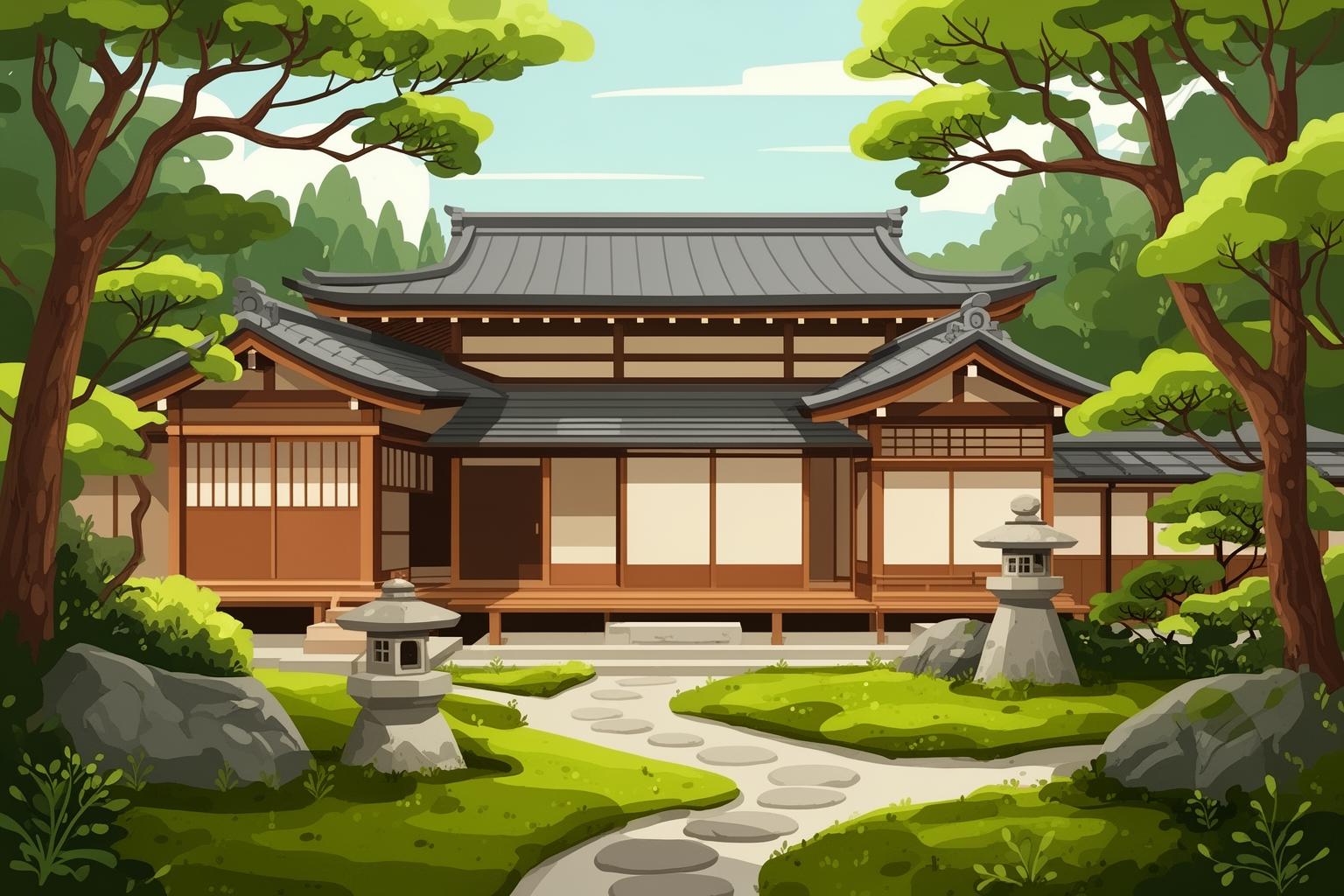
First and foremost, let’s clarify our understanding of gardens. If your idea of a garden comes from European traditions, you’re likely envisioning places like Versailles. These gardens emphasize control, symmetry, and human dominance over nature, with hedges trimmed into precise geometric forms and flowerbeds arranged in dazzling, color-coordinated designs. They are spectacles meant to inspire awe at the power and artistry of their creators. Such gardens are statements of wealth and authority, unmistakably beautiful because they are perfect, orderly, and man-made.
Now, erase that entire concept. A Japanese garden, particularly Kokedera, follows an entirely different philosophy on a completely distinct playing field. It doesn’t seek to impose order on nature but to discover the inherent order within nature and create a space that showcases it. The aim isn’t to proclaim “Look what I created!” but to quietly say, “Look at what has always been here.” This is where moss becomes significant. In many Western cultures, moss is often seen as a problem—something to be scrubbed off patios, a sign of dampness and decay. Yet in Japan, moss symbolizes something deeply meaningful.
Meet Wabi-Sabi, Your New Aesthetic Ally
To truly appreciate Kokedera, you need to understand wabi-sabi (侘寂). You might have heard the term before. It’s often translated as “imperfect beauty” or “the beauty of impermanence,” but those descriptions barely scratch the surface. Wabi refers to a rustic simplicity, a peacefulness, living harmoniously with nature, and finding contentment in less. It’s the sensation of holding a simple, handcrafted tea bowl that fits perfectly in your hand. Sabi reflects the beauty that comes with aging: the patina on aged metal, the smoothness of worn wood, the character developed through enduring life’s challenges.
Together, wabi-sabi forms a worldview—an acceptance of the natural cycles of growth, decay, and death. It recognizes life’s transience and finds a profound, gentle beauty in that impermanence. It opposes extravagance and perfection, embracing authenticity instead. Moss embodies wabi-sabi in living form. Consider this: moss isn’t flashy like a rose or a cherry blossom. It doesn’t seek attention. It is humble, ancient, and patient. Growing slowly and quietly in the shade, it covers rocks and trees, softening edges and unifying the landscape with a quiet green blanket. It prospers where other plants might not, symbolizing endurance measured not in days or years but centuries. Gazing at moss in Kokedera is to witness time itself manifested physically. That is its true significance.
This aesthetic extends beyond gardens—it’s a golden thread woven throughout much of Japanese culture. It’s evident in kintsugi, the art of repairing broken pottery with gold lacquer, highlighting cracks as part of the object’s story rather than concealing them. It’s present in the tea ceremony, where simple, unadorned utensils and the mindful act of making tea take center stage. It appears in ikebana, the art of flower arrangement, where empty space and the natural form of a single branch matter as much as the flower. Kokedera is more than a garden; it is a pilgrimage site for embracing this entire philosophy.
A History Moment: Kokedera Isn’t Just an Insta Spot
To truly appreciate the vibe, you need to know the backstory. This place didn’t simply emerge as a moss garden. Its official name is Saiho-ji (西芳寺), and its history is a wild rollercoaster of glory, decline, and accidental brilliance. The temple was originally founded way back in the Nara Period (around the 8th century) by a monk named Gyoki. For centuries, it remained just another temple. But then, in 1339, a genuine superstar of Japanese Zen Buddhism and garden design, Muso Soseki, was commissioned to restore it.
Muso Soseki is basically the G.O.A.T. of Zen garden designers. He wasn’t just a monk; he was an artist, a poet, and a philosopher. He believed a garden could serve as a tool for meditation and enlightenment. He had the ability to arrange rocks in a way that encourages contemplation of the universe. He designed many of Kyoto’s most famous gardens, including those at Tenryu-ji and Ginkaku-ji. When he got to work on Saiho-ji, he created a masterpiece. He crafted a two-level garden: a lower one centered around a pond shaped like the Chinese character for “heart” or “mind” (心), meant for strolling and reflection, and an upper, dry-landscape rock garden (karesansui) on the hillside, designed for pure, seated meditation.
But here’s the twist: Muso Soseki did not create a moss garden. His garden likely consisted of white sand, carefully chosen rocks, and trimmed trees. So where did all the moss come from? The answer is the best kind of accident. Kyoto, for all its beauty, has endured a rough history. The Onin War in the 15th century devastated the city, and Saiho-ji entered a prolonged period of decline. It was also struck by major floods. The temple simply lacked the funds or manpower to maintain the gardens at their original, pristine condition. The meticulously raked sand was washed away. The carefully tended grounds were left to nature’s course.
In Kyoto’s damp, shady climate, nature took over. Moss, which had always lingered in the background, began to spread—more and more. It crept over the rocks Muso Soseki had carefully placed. It covered the ground where white sand had once been. It swarmed the roots of ancient trees. For centuries, the garden existed in a state of beautiful, overgrown ruin. Then, at some point, the monks and temple patrons looked upon this wild, accidental landscape and experienced a collective moment of enlightenment. They didn’t see a ruin to be restored; they saw a new kind of perfection. They witnessed the principles of wabi-sabi come to life before them. This wasn’t a failure of maintenance—it was a partnership with time and nature. So they stopped fighting it and began preserving it. The garden we see today results from that deliberate choice to embrace the accident. It stands as a living testament to the idea that sometimes the most beautiful things arise when we relinquish control.
The Steve Jobs Connection
For anyone still doubtful about the temple’s allure, here’s a little crossover episode for you. Steve Jobs loved Japan, and Kyoto in particular. He visited Kokedera several times. He was captivated by its simplicity, meticulous attention to detail, and profound sense of tranquility. It’s widely believed that the aesthetic philosophy of Kokedera—the beauty in simplicity, the focus on essentials, and the harmony between form and nature—deeply influenced his own design principles at Apple. Think about an Apple product: nothing extraneous, just clean, intuitive design with quiet confidence. That’s the Kokedera vibe translated into technology. For a man who revolutionized the modern world to find such profound inspiration in a garden of moss and rocks speaks volumes about its power. It’s a bridge that helps our tech-saturated minds understand the appeal of this ancient, analog beauty.
The Gatekeeping is Real: The Kokedera Application Process

Alright, so you’re captivated by the vibe and ready to have your mind blown by moss. You open Google Maps…and realize you can’t just show up. There’s no “Buy Tickets” button. You discover that you must apply for a reservation weeks or even months in advance, and the cost is much higher than your typical temple ticket. What’s going on? Is this some sort of exclusive club for garden enthusiasts? The confusion and frustration are understandable, but there’s an important reason behind it.
This system isn’t about elitism. It’s about preservation. The moss is the centerpiece, but it’s extremely delicate. It’s a fragile living organism—or more accurately, a collection of over 120 different fragile species. It lacks deep roots and can be easily harmed by footsteps, touch, or even excessive noise and commotion. In the 1960s and 70s, during Japan’s tourism boom, Kokedera became overwhelmingly popular. The temple was flooded with visitors. The constant foot traffic was literally killing the garden. The moss was being trampled, the peacefulness shattered, and the spiritual essence drowned out by the noise of a tourist spot.
So, in 1977, the temple made a bold choice. They closed public access and established a strict reservation-only policy. The goal was to drastically reduce visitor numbers and, more importantly, to change the type of visitor. The process itself acts as a filter. It weeds out casual tourists looking to check off a list and snap photos. It selects those willing to make a conscious effort, plan ahead, and truly invest in the experience. It asks, “Are you here for the right reasons?”
Think of it as a form of cultural respect. The temple asserts its identity not as a public park, but as a place of active worship and meditation. The high entrance fee (typically around ¥3,000 or more) supports the meticulous upkeep of the garden. The application process encourages you to slow down and be intentional before stepping onto the grounds. In our age of instant gratification, Kokedera demands patience. The journey to the garden begins long before you reach the gate—it starts with requesting permission to enter. For visitors within Japan, this traditionally involved sending a special round-trip postcard (ofuku-hagaki). For international guests, this has been updated to an online application system, but the principle remains: you must plan, commit, and be accepted. This isn’t a flaw in the system; it’s its most vital feature. It’s what protects the very essence you’ve come to experience: profound, soul-stirring tranquility.
The Main Event: It’s More Than Just a Walk in the Park
So, you’ve arrived. Your application was approved, you’ve found this tranquil corner of Kyoto, and now you stand at the gate. This is when you realize the experience is even more deliberate and thoughtfully designed than you expected. Visiting Kokedera is a two-stage ritual, with the garden walk actually being the second step. The first step is intended to completely reset your mind.
Part 1: The Spiritual Warm-Up, Sutra-Copying (Shakyo)
Before entering the sacred garden, you are guided into the main hall, the hondo. You remove your shoes and sit at a low wooden desk alongside the other visitors in your time slot. The air feels cool and carries the faint scent of aged wood and ink. In front of you are a brush, an inkstone, and a sheet of translucent paper printed with the pale grey outline of Buddhist scripture. This is the Heart Sutra (Hannya Shingyo), one of Zen Buddhism’s most important texts. You are there to practice shakyo (写経), the meditative art of tracing the sutra.
For many visitors, this moment can spark anxiety. “I don’t know Japanese! My handwriting is awful! Am I going to fail?” But it’s important to understand that calligraphy skill is irrelevant here. Nobody is grading you. The purpose of shakyo is not to produce a masterpiece but to still your mind. It’s a form of forced meditation. In everyday life, we constantly multitask, our thoughts scattered in all directions. Shakyo makes that impossible. You must concentrate on the simple, physical act of dipping your brush into ink and tracing the intricate characters. Your breathing slows. The constant mental noise quiets. The concerns about your itinerary, unanswered emails, and photos to post—all dissolve. For twenty, thirty, perhaps forty minutes, you exist solely in that hall, with the brush, the ink, and ancient words.
At the end, you write your name and a wish on the paper and present it at the temple altar. This ritual is brilliantly designed. It serves as a mental palate cleanser, washing away the tourists’ frantic energy and replacing it with the calm, receptive energy of a pilgrim. It prepares you, body and soul, to experience the garden not as a spectacle but as a sanctuary. By the time you step outside, your senses are sharpened, and you are ready to truly see.
Part 2: The Walk in the Emerald World
Emerging from the temple hall onto the garden path is a revelation. After the focused, monochrome world of ink and paper, the sudden immersion in an endless spectrum of green is almost overwhelming. The light here is different, filtered through a canopy of maple and cedar, dappling the moss-covered ground in shifting patterns. The air is cool and moist, filled with the scent of earth and life. The silence is deep, broken only by birdsong or the gentle murmur of a stream.
Because visitor numbers are so limited, you often feel you have the garden all to yourself. The path leads you along a designated route, first circling the central Golden Pond (Ogonchi). This is the core of Muso Soseki’s original strolling garden. The pond is adorned with small islands symbolizing cranes and turtles (emblems of longevity), surrounded by carefully positioned rocks and trees whose reflections shimmer on the water. Small wooden bridges and stone walkways guide you through different scenes. You pass quaint, rustic teahouses like Shonan-tei, seemingly floating above the moss—a perfect example of wabi-sabi design.
Everywhere you look reveals another texture, another hue of green. There’s the velvety deep green of moss on a rock, the bright, almost neon green of new growth near the pond, the silvery-green moss clinging to tree bark. It’s a living tapestry. You notice the fine details: a single red maple leaf resting on a green carpet, the intricate moss patterns, the way light catches dew drops. Your mind, calmed by the shakyo, is able to absorb this subtle beauty without the usual restless urge to move on. You are fully present.
The path then ascends to the hillside upper garden, the karesansui rock garden. This area feels older and more primordial. Massive rock formations are arranged to evoke waterfalls and mountains—a dry landscape designed to inspire the imagination. This section was created for seated Zen meditation. From here, you can glimpse Kyoto below, but it feels a world apart. The entire walk is a journey, a moving meditation that builds on the stillness you cultivated in the temple hall.
Wabi-Sabi in Real Life: Reading the Garden’s Story
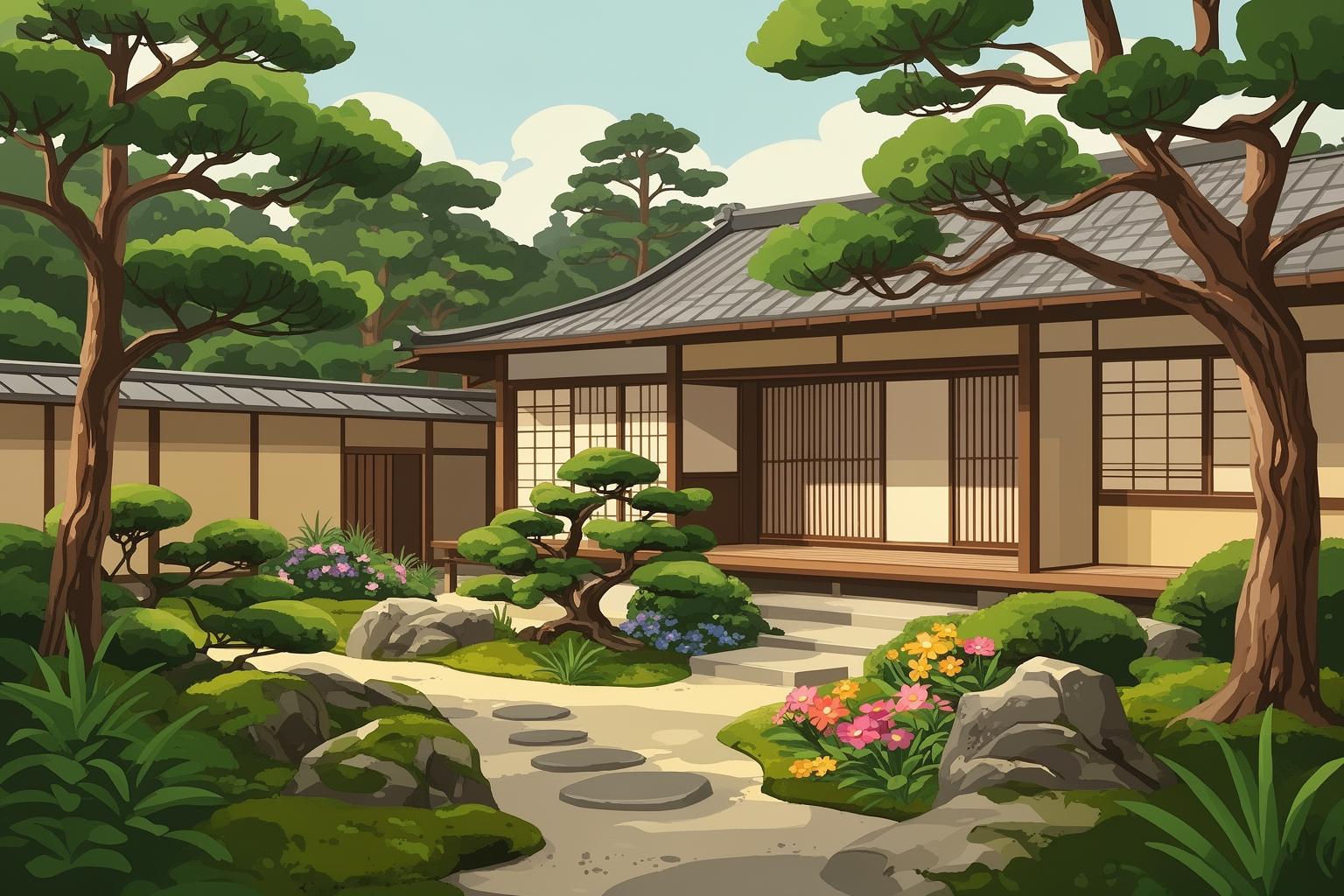
As you walk through the garden, you begin to notice how every element works in harmony to narrate a story about nature and time. It’s more than just a random assortment of beautiful features; it’s a profoundly symbolic landscape, a miniature reflection of the natural and spiritual worlds.
The Moss
Moss represents the soul of the garden. It serves as the unifying force that blurs the boundaries between earth, stone, and wood. It softens the sharp edges of the rocks, making them appear as if they are naturally growing from the ground. It evokes a sense of great age and the slow, unstoppable power of nature to reclaim all things. In a sense, moss acts as a teacher, demonstrating that true strength lies not in hardness and resistance but in softness, patience, and adaptability.
The Rocks
In Japanese garden design, rocks are never simply rocks. They are the ‘bones’ of the garden, providing both structure and permanence. Muso Soseki was a master at placing rocks—a practice deeply rooted in Shintoism, where large, uniquely shaped stones were often believed to be homes of kami, or nature spirits. The rocks at Kokedera are arranged to recall famous landscapes or mythological scenes, inviting you to engage your imagination. They remain the unchanging element in a garden that shifts with the seasons.
The Water
The Golden Pond acts as the garden’s mirror. It reflects the sky, trees, and light, creating an impression of endless space and linking the earthly realm with the heavens. The constant motion and reflection of the water symbolize the unceasing flow of life and time. The sound of water—whether from a small waterfall or the gentle ripple against the pond’s edge—is regarded as purifying in both Shinto and Buddhist traditions. It cleanses the mind and calms the spirit.
The Borrowed Scenery (Shakkei)
This classic Japanese garden technique deliberately incorporates the landscape beyond the garden’s boundaries into its design. From certain viewpoints within Kokedera, you can see the surrounding mountains of Arashiyama. These distant peaks are framed by the garden’s trees, making them appear as part of the garden itself. This method expands the sense of space, making the garden feel larger than it is, and emphasizes that the garden is not a separate, enclosed area but part of a broader, interconnected natural world.
Together, these elements create an environment that feels both carefully crafted and effortlessly natural. It’s a place designed to symbolize the Buddhist Pure Land, or paradise on Earth—a space intended to quiet the ego and connect visitors to the greater rhythms of the cosmos.
Is It Worth the Hype (and the Price Tag)?
This is the million-yen question. Considering the high fee and the hassle of the application process, is Kokedera truly worth it? My answer is a firm and clear: it entirely depends on what you are seeking.
If you’re on a whirlwind tour of Japan, aiming to see as many highlights as possible in a limited time, then honestly, no. It probably isn’t for you. The time commitment, the cost, and the quiet, contemplative nature of the experience might feel frustrating or even dull. If your goal is a striking, easy-to-capture photo for your Instagram feed, there are better places. Fushimi Inari Shrine with its thousands of red gates or the Arashiyama Bamboo Grove offer more immediate visual impact.
However, if you’re a returning visitor or a traveler searching for something deeper, then yes. Absolutely yes. It is unquestionably worth it. What you’re paying for is not merely an entrance ticket; you’re investing in an experience that’s becoming increasingly rare in our hyper-connected, over-touristed world: genuine tranquility. You’re paying for the privilege of experiencing a cultural masterpiece as intended—in peace and quiet. The gatekeeping, which may seem like a barrier, is precisely what preserves its magic.
Compare Kokedera with a visit to, say, Kinkaku-ji (the Golden Pavilion). Kinkaku-ji is stunning, but you often view it alongside hundreds of others, moving along a crowded path, trying to snap a clean shot amid a sea of selfie sticks. It’s hard to find any sense of peace. At Kokedera, silence is the main attraction. The limited number of visitors means you can truly hear the wind in the trees and the sound of your footsteps on the path. You can pause and gaze at a patch of moss for ten minutes without being jostled. It’s a rare and precious luxury.
It’s not a sight to be rushed through, but an atmosphere to be fully inhabited. It’s a lesson in a different way of seeing. It offers a chance to participate, even briefly, in a monastic tradition of mindfulness. If that sounds like what you’re longing for, then the price and effort are a small investment for a lasting memory that will stay with you long after you’ve left Japan.
Post-Moss Musings: How Kokedera Changes Your POV
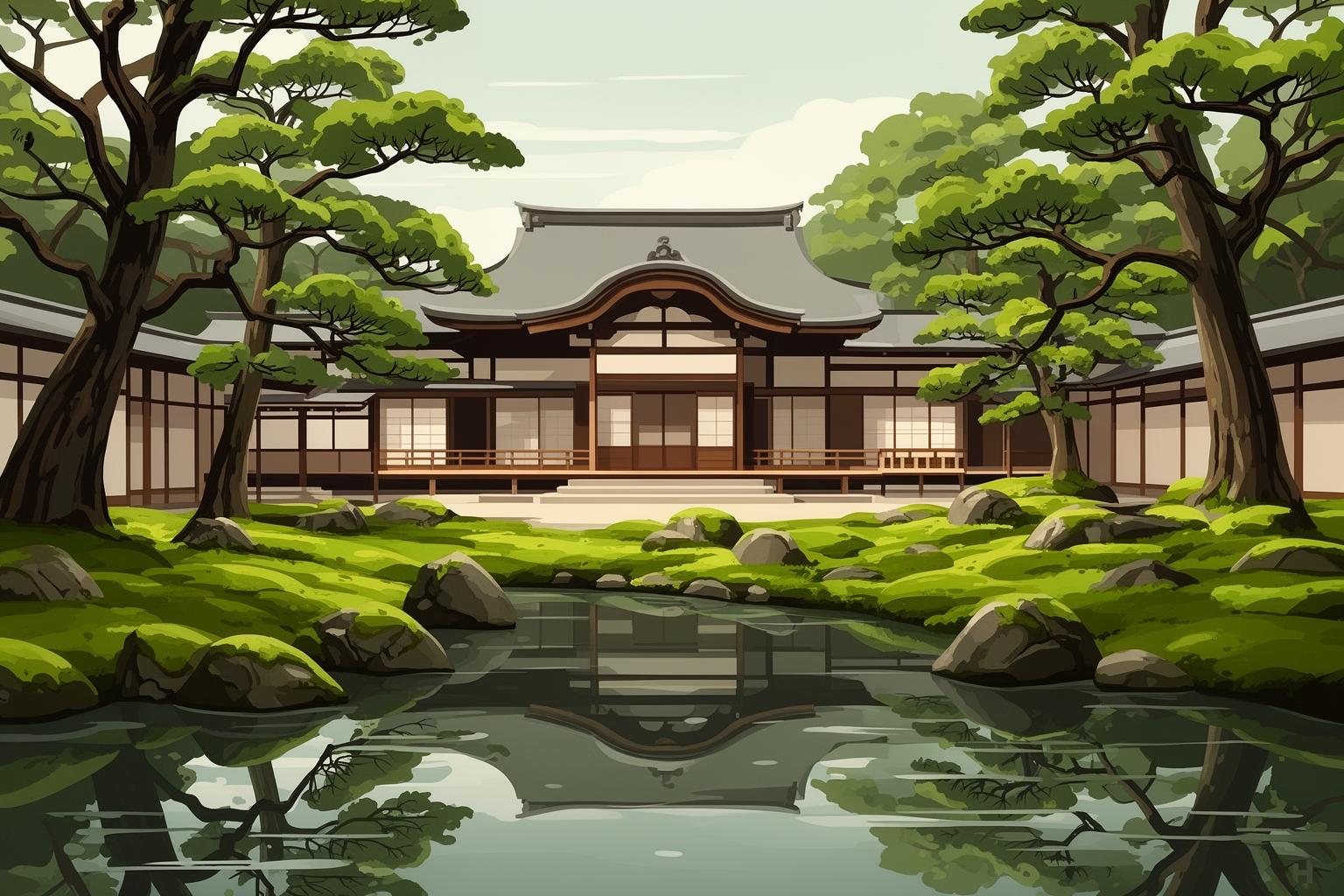
A visit to Kokedera leaves a lasting impression. It’s one of those experiences that gently recalibrates your senses. For days and weeks afterward, you find yourself viewing the world through a Kokedera lens. As you walk down a random street in Kyoto, you might notice a small, vibrant patch of moss growing on an old stone wall and actually pause to appreciate it. You begin to recognize the profound beauty of a simple, unadorned tea cup. You start to grasp the Japanese concept of ma (間), the artistic appreciation of empty space, realizing that the space between things is often as significant as the things themselves.
Kokedera teaches you to discover beauty in the small, the aged, and the overlooked. It retrains your mind to value subtlety over spectacle. It serves as a powerful reminder that in a world continuously clamoring for our attention, the most meaningful experiences are often found in the quietest places. You come seeking a famous garden, and you leave with a piece of its philosophy embedded in your mind. And that, more than any photograph or souvenir, is the true reason to make the pilgrimage.