Alright, let’s get into it. You’ve scrolled through the ‘gram, seen those aesthetic reels of people jumping from a steaming wooden hut into a shockingly cold, crystal-clear river, surrounded by nothing but trees. Your first thought is probably, “Cool, but wait… isn’t Japan the land of onsen? The OG of chill, volcanic hot springs?” You’re not wrong. For centuries, Japan has perfected the art of the soak. So why, all of a sudden, is there this massive, almost cult-like boom for saunas? And not just any saunas, but these rustic, off-grid, middle-of-the-forest type deals that you have to trek to. It feels like a plot twist in the nation’s wellness narrative. Is this just a fleeting trend for the Tokyo crowd, or is there something deeper going on? The whole thing seems a bit extra, frankly. You’re trading a serene, geothermally heated pool for a sweaty box and a heart-stopping plunge into icy water. Why? The answer, fam, is a full-on vibe shift. It’s a deep dive into Japanese philosophy, a modern reinterpretation of ancient rituals, and a quest for a specific kind of mental clarity that’s become a seriously hot commodity. This isn’t just about getting warm; it’s about a complete system reboot, a physical and spiritual reset button hidden deep within the mountains. Forget what you think you know about relaxing in Japan. We’re about to unpack why this intense cycle of hot, cold, and chill is the new spiritual pilgrimage for a generation searching for something more. It’s a whole mood, and once you get it, you get it.
This intense cycle of hot, cold, and chill is a modern form of spiritual reset, much like the minimalist philosophy of Danshari, which teaches the art of letting go.
The Great Un-Soakening: Deconstructing Japan’s Sauna Boom
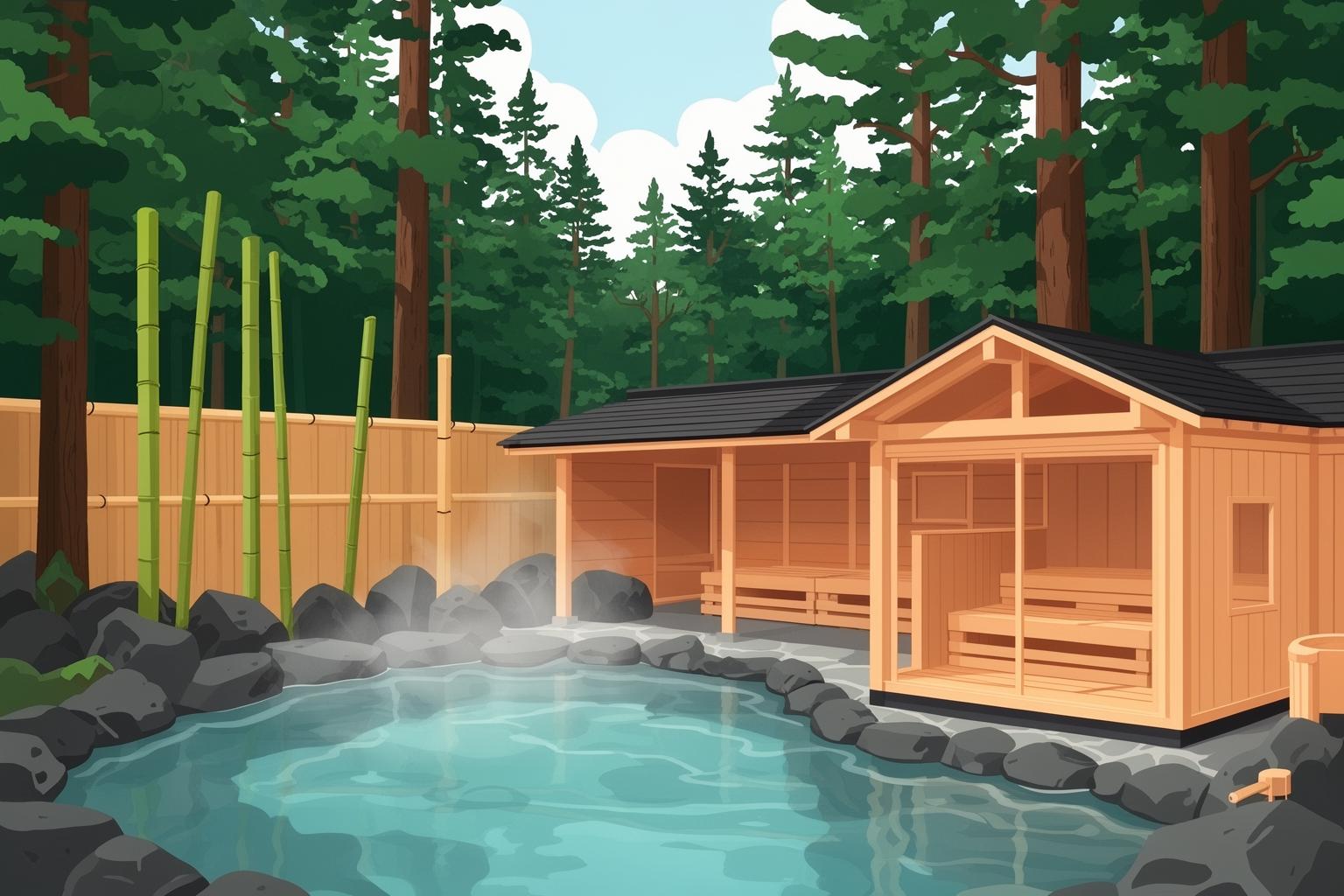
So, what’s behind this sauna boom? Saunas haven’t just suddenly appeared—they’ve been part of Japan for decades, usually hidden away in capsule hotels or traditional health spas, regarded as a somewhat grim, practical space where middle-aged men sweat off the previous night’s sake. The atmosphere was less about wellness retreats and more like a locker room. They were dry, intensely hot, and often accompanied by a TV showing a baseball game in the corner. It was a utilitarian space, not an experience. The major change happening now is a complete reinvention—a revolution in the way saunas are perceived. This new trend is driven by younger generations and surprisingly inspired by a manga. Yes, a comic called Sa-dou (The Way of the Sauna) by Katsuki Tanaka has become the bible for this movement. It shifted saunas from a test of endurance to a practice of mindfulness, formalizing the ritual and giving it a purposeful name.
Introducing the ‘Totonoü’ Mindset
This is the key term, the ultimate goal of the modern Japanese sauna experience: totonoü (ととのう). There’s no perfect English equivalent, but it essentially refers to a state of complete bliss—a trance-like balance where your mind clears, your body feels weightless, and everything seems perfectly harmonized. It’s that light, serene sensation after intense physical effort. The manga outlined the steps to reach totonoü: a precise three-part ritual. First, the sauna itself, where you push your core temperature to the limit. Second, the mizuburo (水風呂), the cold plunge, essential and refreshingly brutal. This shock silences your restless mind. Third, the magical part, the gaikiyoku (外気浴), or outdoor air bath. Here you sit quietly outside, allowing your body to rebalance as blood rushes back to your extremities, triggering a tingling, euphoric feeling. This is when totonoü arrives. It’s both a physical and mental phenomenon given a name, a method, and cultural weight. It’s more than just relaxation; it’s a structured path to a distinct mental state. The old approach focused on tolerating heat. The new approach embraces the entire cycle. This framework gives the experience a purpose beyond cleanliness or sweating, transforming it into an active meditation deeply resonant in a culture that honors process and ritual.
The Finnish Influence, with a Japanese Twist
This trend draws heavily on Finnish traditions, moving away from the old dry, high-heat saunas toward the lower-temperature, high-humidity löyly style. Löyly refers to the steam that arises when water hits hot stones. In Japan, this has been elevated into an art form. The water isn’t just plain; it’s often infused with aromatic oils like birch, hinoki cypress, or native herbs, turning the sauna into a rich sensory experience. The ritual of creating steam, or having an ‘Aufguss Master’ wave hot, scented air through the room, adds a ceremonious layer uniquely Japanese. It’s the process of taking a foreign concept and perfecting it, meticulously refining every detail until it becomes a distinct cultural expression. This same drive has given rise to Japanese whisky or denim. They spot a good idea and passionately enhance it. So while the sauna infrastructure might be Finnish, the ritual—the intention and the relentless pursuit of totonoü—is fundamentally Japanese.
The Forest is the Point: Shinrin-yoku as a Prerequisite
Alright, we’ve clarified the ‘what’ and the ‘why’ of the ritual. Yet, that still leaves unanswered why these new-wave saunas are located in remote areas. Why travel hours from the city, trek through a forest, just to sweat inside a small enclosure? This is where the sauna trend merges with another deeply rooted Japanese concept: shinrin-yoku (森林浴), or ‘forest bathing.’ This term is more than a poetic way to describe a woodland stroll. It’s an established therapeutic practice, developed in the 1980s, based on the idea that immersing yourself in nature offers scientifically validated health benefits. These include reduced cortisol levels, decreased blood pressure, and a strengthened immune system, thanks to airborne compounds known as phytoncides that trees emit.
Beyond a Scenic Backdrop
For the modern Japanese sauna enthusiast, the journey to the sauna forms a vital part of the overall experience. Leaving behind the concrete jungle and the city’s sensory barrage to step into the calm, green sanctuary of the forest marks the ritual’s initial phase. The air is purer, sounds are gentler, and light filters softly through the foliage. You begin relaxing long before the sauna comes into view. The forest awakens your senses and calms your mind, deepening the sauna’s impact. This transition is a purposeful shift from modern chaos to a more elemental, primal state. The sauna is not merely a structure in the woods; the forest itself is integral to the sauna. The two coexist inseparably. This stands in stark contrast to the Western spa model, where nature is often something viewed through expansive glass windows from a climate-controlled room. Here, nature actively participates—you breathe its air, listen to its sounds, and ultimately immerse yourself in its waters.
Nature as the True Luxury
In a country where urban spaces are famously compact and nature is carefully curated in parks and gardens, access to wild, untamed nature is the ultimate indulgence. These remote saunas provide an escape that’s both physical and psychological, embodying a rejection of the artificial and a return to authenticity. The appeal isn’t convenience; it’s quite the opposite. The inconvenience and isolation are features, not flaws. They serve as a filter, ensuring that those who arrive are genuinely invested in the full experience. This concept ties into a subtle form of Japanese minimalism—not only in style but in lived experience. It’s about peeling away the superfluous—the noise, the notifications, the concrete—to reach the essence of being. The forest journey is the first step in this process of shedding.
The Ritual in Action: Water, Wood, and Wabi-Sabi
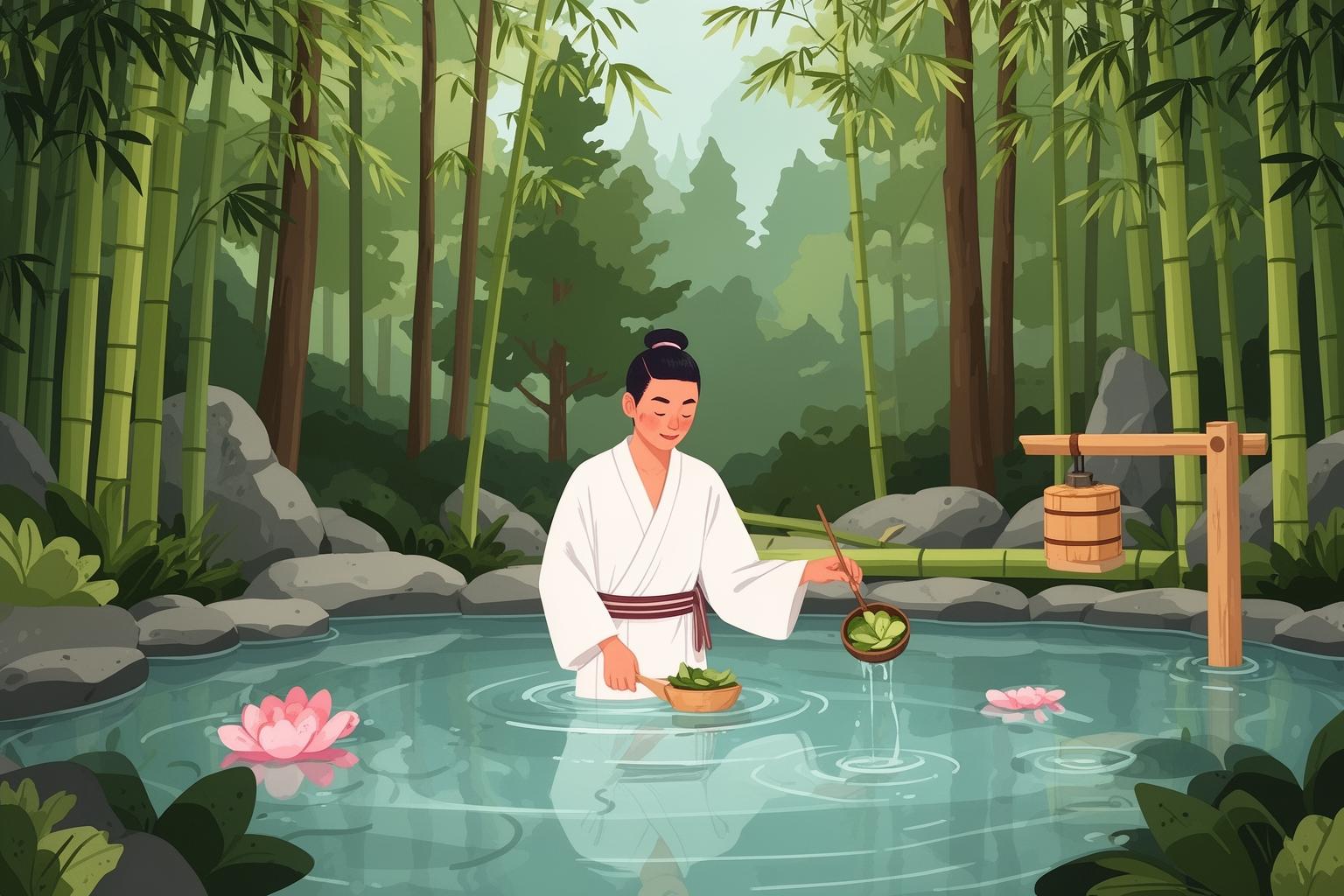
So, what does this look like in practice? It’s a sensory deep dive. You arrive at a cluster of modest wooden buildings. The air carries the scent of damp earth and woodsmoke. There’s no grand lobby or uniformed staff eager to take your bags. It’s understated, deliberately so. This aesthetic choice is rooted in the concept of wabi-sabi (侘寂), the appreciation of beauty in imperfection, transience, and simplicity. These saunas are often hand-built using local timber, with charming irregularities that reflect craftsmanship rather than mass production. They are designed to blend into the landscape, not dominate it. The beauty lies in the grain of the wood, the moss on the stones, the way light filters through the small windows.
The Holy Trinity: Sauna, Mizuburo, Gaikiyoku
The experience follows the totonoü ritual with monastic devotion. You enter the sauna. The heat is enveloping yet gentle and humid. It’s not the harsh, blazing heat of a traditional dry sauna. Often, a wood-fired stove forms the heart of the room, glowing with primal energy. You focus on your breath, feeling sweat bead on your skin. After 10 to 15 minutes, once you feel you’ve reached your limit, you step out. Then comes the moment of truth: the mizuburo. Here, these forest saunas truly elevate the experience. The cold plunge isn’t a tiled, chlorinated tub—it’s a living body of water. You walk down a short path and immerse yourself in a rushing river, a tranquil lake, or a natural spring-fed pool. The water is achingly cold, pure, and alive. The shock is electric. It clears every thought from your mind. For a solid 30 seconds, there is nothing but the raw sensation of cold. It is a forced meditation, a hard reboot of the nervous system. You emerge, gasping, feeling more alive than you have in years. Then you move to the final stage: gaikiyoku. You find an outdoor chair, a hammock, or simply a flat rock. You sit. You don’t speak. You don’t scroll. You just exist. You watch steam rise from your skin, listen to the wind in the trees, and feel the blood pulsing through your body. This is it. This is the totonoü state. A profound peace washes over you. The world sharpens. Colors grow brighter, sounds clearer. It’s a natural high, and utterly addictive. You repeat this cycle three or four times, each round drawing you deeper into meditative calm.
A Deeper Connection: Shintoism and Purification
On a subconscious level, this ritual taps into something ancient within the Japanese psyche. Shinto, the indigenous religion of Japan, is animistic, believing that gods (kami) inhabit natural objects and elements—in the trees, the rocks, the rivers, the wind. Nature is sacred. A core Shinto practice is misogi (禊), purification by washing in a natural body of water such as a river or waterfall. While no one explicitly states they are performing a religious ritual, the act of heating the body to purity and then immersing it in cold, natural water carries a strong cultural echo of misogi. It’s a secular pilgrimage. You cleanse not only your body of sweat but also your mind of stress and your spirit of the grime of daily life. This is why a natural water source is essential. A concrete pool could never offer the same sense of connection to place and history. Plunging into a river is plunging into the realm of the kami, connecting with the land’s life force itself. It’s a modern way of engaging with an ancient tradition of nature worship.
Case Study: The Mecca of the Movement – The Sauna at Lake Nojiri
To make this concrete, let’s focus on the epicenter of this movement: The Sauna in Shinanomachi, Nagano, situated right on the shores of Lake Nojiri. This spot is legendary among Japanese sauna enthusiasts. It’s more than just a sauna; it’s a destination, a community, and the very embodiment of the philosophy behind it all. The journey there is part of the appeal—a scenic drive into the mountains where the air grows cooler and crisper. The sauna complex consists of rustic yet stylish wooden cabins, all designed to appear as though they have naturally emerged from the forest floor.
The Atmosphere is Impeccable
What distinguishes The Sauna is its steadfast dedication to an authentic Finnish-Japanese experience. Founded by a group of sauna aficionados aiming to craft the perfect setting for achieving totonoü, it offers several sauna cabins, each with its unique character. Some are large and communal, while others are cozy and intimate. The heat comes from enormous wood-burning stoves, producing exceptional löyly. Staff members regularly perform the ‘Aufguss’ ritual, gently beating your back with birch branch whisks (vihta), which releases a wonderful aroma and enhances circulation. It’s a multi-sensory experience that invigorates and deeply relaxes at the same time.
The Iconic Plunge
The true highlight at The Sauna is the mizuburo. After heating up, you follow a wooden path down to the shores of Lake Nojiri, a vast, deep, and surprisingly cold mountain lake. In winter, a hole is cut in the ice for the plunge. The extraordinary natural beauty of the surroundings intensifies the experience immensely. Immersing yourself in that pristine water, with the mountains mirrored on the surface, is a moment of pure, unfiltered presence—a baptism by nature. Afterwards, you unwind in one of the many Adirondack chairs along the shore, wrapped in a poncho, watching the lake’s light shift. There’s a strong sense of community here—people are quiet and respectful, all participating in this shared ritual. It’s not a party venue; it’s a sanctuary of steam and water. Is it worth the hype and the challenge of securing a reservation? For anyone seeking to truly understand this culture, the answer is an emphatic yes. This place is the source code behind the entire Japanese sauna boom.
Beyond the Mecca: Variations on a Theme
While The Sauna may be the most well-known, the movement has spread rapidly, with remarkable new locations emerging across the country, each presenting its own distinct take on the forest sauna concept. This is not a uniform trend; it’s a creative surge, with each sauna embodying the unique character of its surroundings.
Koti Private Sauna, Okayama: Architectural Zen
In Okayama Prefecture, places like Koti offer a more architectural, design-focused experience. Here, the atmosphere is more private, with individual cabins available for group rentals. The emphasis is on harmonious integration with nature, featuring large windows that frame forest views and blur the boundary between indoors and outdoors. The mizuburo might be an elegantly crafted stone pool fed by a mountain stream, and the gaikiyoku area could be a minimalist wooden deck acting as a natural stage for observing the environment. This approach attracts those seeking a curated, controlled, and intimate experience. It prioritizes personal meditation over communal rituals, demonstrating the core concept’s versatility. The essential elements of hot, cold, and rest remain, but they are enveloped in a sleek, modern, and highly private design.
Ochiairo Murakami, Izu: Tradition Meets Trend
Another intriguing evolution is how this emerging sauna culture is being incorporated into traditional Japanese inns, or ryokan. For example, Ochiairo Murakami on the Izu Peninsula—a stunning ryokan designated as a Tangible Cultural Property—has added brand-new, world-class sauna facilities to its grounds. Here, you enjoy the best of both worlds: exceptional hospitality, exquisite kaiseki multi-course dinners, and the renowned traditional onsen, alongside the opportunity to experience the contemporary sauna ritual. Their sauna might overlook a river gorge, with a mizuburo directly supplied by the river. This blend is brilliant, illustrating that the sauna boom aims not to replace onsen culture but to complement it. It provides an alternative form of relaxation suited to a different mood. One day, you can indulge in a long, gentle onsen soak; the next, you can engage in an intense, clarifying sauna session. This indicates the trend is evolving and becoming an integral part of the wider Japanese wellness scene.
So, Is It Actually Worth It? A Skeptic’s Guide
Let’s be honest for a moment. These experiences are neither cheap nor particularly convenient. For a tourist on a tight schedule, dedicating an entire day to travel to a remote sauna might seem like a questionable use of time, especially when there are incredible, easily accessible onsens in every town. So, is it truly worth giving up a day that could be spent visiting temples in Kyoto or exploring Tokyo’s streets?
Onsen vs. Sauna: Two Paths to Relaxation
It really depends on what you’re seeking. An onsen is essentially a passive experience. You get in, sit down, and soak. The magic lies in the minerals in the water and the gentle, steady heat. It’s about unwinding, letting go, and basking in tranquility. It’s like a slow-release capsule of relaxation. In contrast, a forest sauna is more active. It’s a dynamic cycle of extremes, where you play an active role in reaching a relaxed state. It’s intense, challenging, and the reward is a euphoric clarity rather than sleepy calm. Think of it this way: an onsen is like listening to a soothing ambient album, while a forest sauna is akin to seeing your favorite band perform live. Both experiences are amazing, but their energy is completely different. The onsen embodies history and tradition, while the forest sauna represents a modern pursuit of mindfulness. If you find it hard to switch off, with a mind that never stops racing, the sauna ritual can be more effective because its intensity forces you to be present. The shock of cold water acts as a powerful reset for anxiety and overthinking.
The Final Verdict
For first-time visitors to Japan, an onsen is an essential and non-negotiable cultural experience. But for repeat visitors, or for those genuinely curious about the forefront of Japanese wellness and contemporary culture, a visit to a forest sauna is definitely worth it. It offers insight into the modern Japanese mindset: a profound respect for nature, a love for refined ritual, and a quest to find new ways to balance a high-stress world. It’s more than just an activity; it’s a cultural statement. It’s an IYKYK experience that deepens your understanding of what modern Japan truly is. Sometimes, the most profound relaxation isn’t in gentle warmth but in the exhilarating, life-affirming dance between fire and ice, deep in the heart of a silent forest.