Alright, let’s get real for a sec. When you picture Japan, what’s the first thing that pops into your head? For most of us, it’s a high-octane montage of pure, uncut efficiency. It’s the Shinkansen bullet train blasting past Mount Fuji, a silent testament to punctuality. It’s the Shibuya Scramble, a mesmerizing, chaotic ballet of humanity where thousands of people cross a street without a single collision. It’s robots serving you dinner, vending machines selling everything from hot noodles to fresh eggs, and a work culture so legendary it has its own (slightly terrifying) vocabulary. Japan, in the Western imagination, is the land of perpetual motion, a society that has optimized every second for maximum productivity. It’s a place where hustle isn’t just a culture; it’s practically a religion.
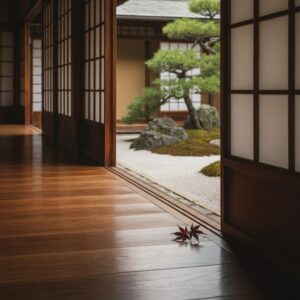
But then you see it. Tucked away on a travel blog or in the background of an artsy anime, there’s another image that just doesn’t compute. It’s an old man in a simple yukata, sitting silently on a polished wooden porch. He’s holding a cup of green tea, his gaze lost in the meticulously raked gravel of a small garden. He’s not reading. He’s not scrolling on a phone. He’s not even talking. He is, for all intents and purposes, doing absolutely nothing. This space he occupies, this sun-drenched strip of wood that’s neither inside nor out, is called an engawa. And it feels like a glitch in the matrix of hyper-efficient Japan. It’s a full stop in a sentence that never seems to end.
This is where the confusion kicks in. In a country that famously values diligence and purpose, what is the purpose of this… idleness? Is this some kind of sacred retirement ritual? A forgotten relic from a slower, pre-industrial past? Or is it something more profound? Are we, with our addiction to busyness and our deep-seated fear of boredom, totally missing the point? Is it possible that this ‘art of doing nothing’ is actually an incredibly sophisticated form of doing something? This is the paradox of the engawa. It’s a quiet space that asks a very loud question: What is the true value of a moment when it’s not filled with activity? We’re about to dive deep into that question, to decode the cultural DNA of the engawa and unpack the philosophy of intentional emptiness that it represents. This isn’t just about a cool piece of architecture; it’s about a fundamentally different way of experiencing time, space, and self. Forget everything you thought you knew about Japanese productivity. The real secret to zen might just be found in the art of sitting still.
To further explore the unique atmosphere and architectural significance of this transitional space, consider reading about the engawa vibe.
What Even Is an Engawa? Deconstructing the Porch Life
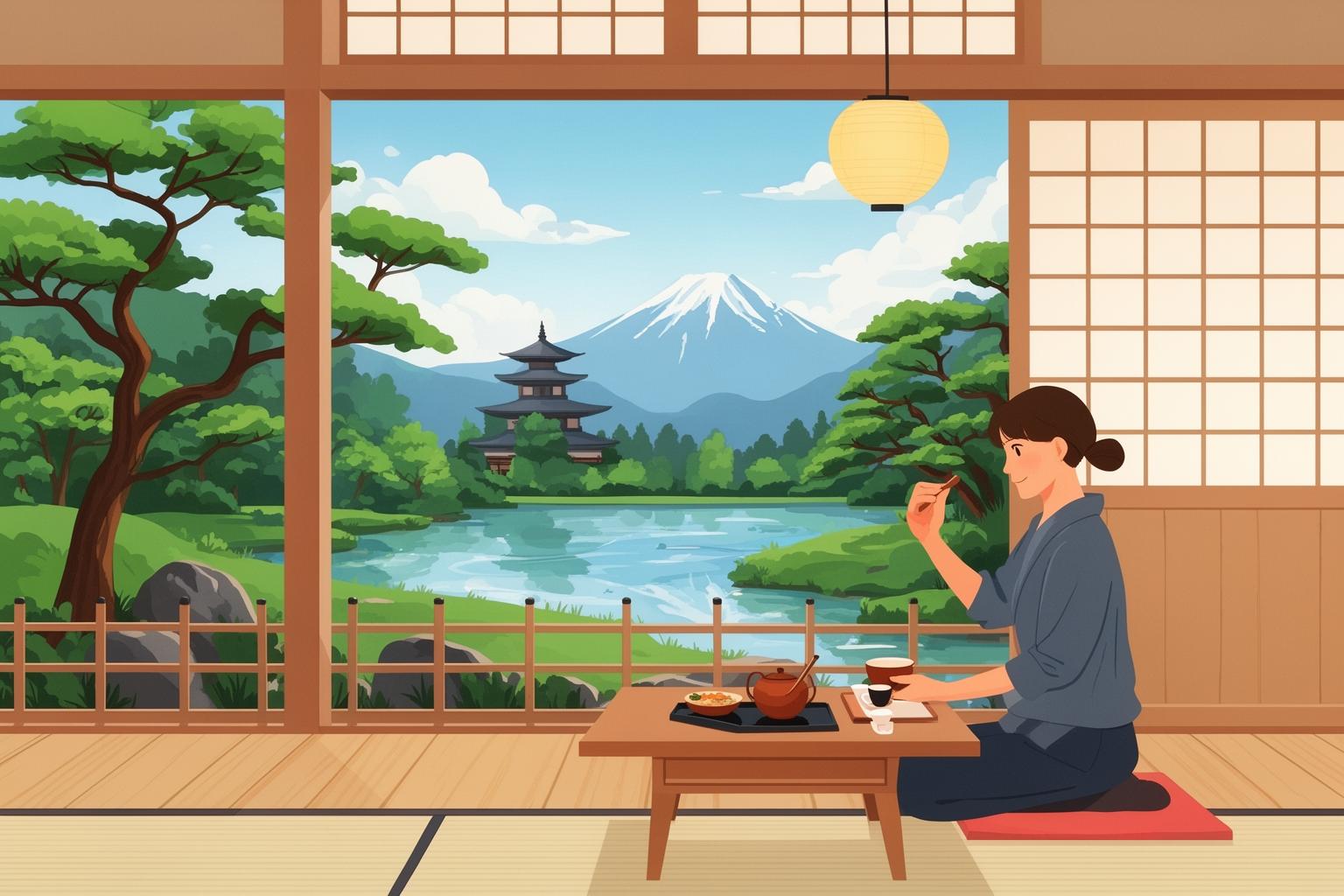
Before diving into the philosophical depths, let’s clarify exactly what we’re discussing. At first glance, an engawa seems straightforward—it’s a veranda or a porch. But calling an engawa merely a porch is like calling a katana just a knife. While technically accurate, it overlooks the rich cultural significance and subtlety that make it unique. This isn’t your typical front porch with rocking chairs and a welcome mat. The engawa is a distinctive architectural and social construct, a stage for a particular way of life deeply rooted in Japanese culture.
More Than Just a Veranda: The Architectural Breakdown
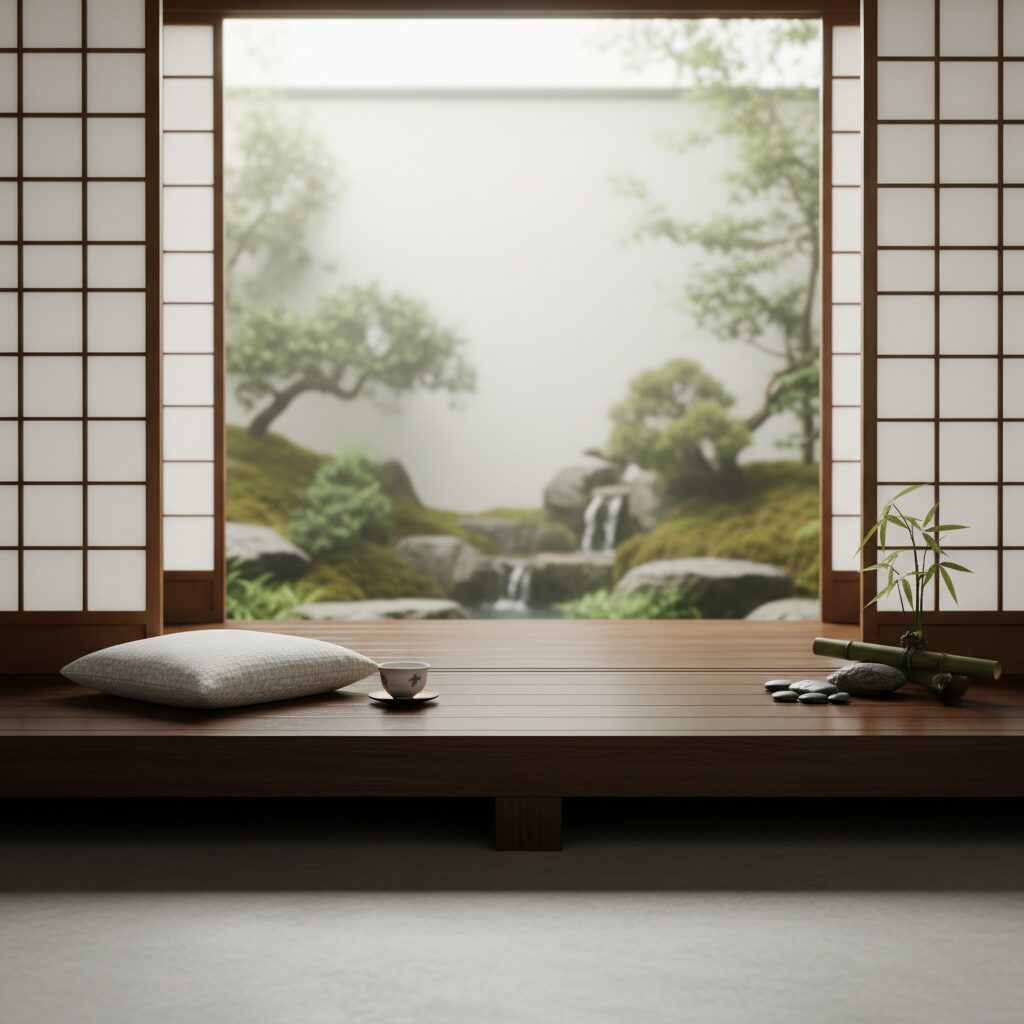
First, let’s examine its physical characteristics. An engawa is a narrow strip of flooring, almost always crafted from smooth, polished wood such as hinoki (cypress) or sugi (cedar), running along the exterior of a traditional Japanese house. It is usually elevated to the same level as the interior floor, creating a continuous surface. Importantly, it is typically sheltered by the roof’s overhanging eaves, shielding it from heavy rain and intense summer sun, yet it remains exposed to the outside air on at least one side. This is the crucial distinction: it exists in a liminal space. It is inherently in-between.
This in-betweenness is essential. In traditional Japanese architecture, the boundary between inside (uchi) and outside (soto) is not rigid or sharply defined. It is a soft, permeable threshold. The engawa physically embodies this concept. A traditional Japanese room facing a garden will have large sliding panels—either translucent paper screens (shoji) or opaque painted doors (fusuma). When opened, the room doesn’t just look out onto the garden; the room, the engawa, and the garden merge into one continuous, fluid space. The boundary disappears. This design philosophy contrasts sharply with typical Western homes, which are designed as fortresses against the outside world, with solid walls, sealed windows, and heavy doors that clearly mark where the house ends and nature begins. The engawa suggests a gentler relationship with nature, based on dialogue rather than separation.
The character of the engawa itself contributes to its role. The wood is worn smooth by generations of footsteps and hands. In summer, it provides a cool place to sit and enjoy the breeze. In spring and autumn, warmed by sunlight, it invites you to lie down for a rest. It is not intended for specific furniture or a fixed purpose like a dining room. Instead, it’s a blank canvas for living. It is a space to sit, stand, lie down, watch, think, and simply be. Its freedom from prescribed function is its greatest asset.
The Engawa in the Japanese Mindset: A Stage for Life
Because of its unique position, the engawa has become a potent cultural symbol, a recurring setting in literature, film, and especially anime. Consider how often characters in Studio Ghibli films, such as Satsuki and Mei in My Neighbor Totoro, are shown sitting on the engawa, dangling their feet with a plate of sliced watermelon between them. This imagery instantly conjures feelings of nostalgia, summer, and an idyllic, simple childhood.
This is more than an artistic device; it mirrors the engawa’s actual role. It was the social heart of the traditional home. It’s where one might sit in the morning, sipping tea and watching the day begin. It’s where grandmothers would prepare vegetables for dinner, chatting as they worked. It’s where neighbors would drop by for informal visits without the ceremony of stepping fully inside. A guest could sit on the edge of the engawa, while the host sat just inside the open shoji, maintaining a comfortable, relaxed distance. This space elegantly navigates the complex Japanese social dynamics of inside/outside groups (uchi-soto).
Additionally, the engawa serves as a vantage point for observing the seasons, a cornerstone of Japanese aesthetics. From the engawa, you have a front-row seat to cherry blossoms in spring, lush greenery in summer, fiery maples in autumn, and the serene cover of snow in winter. This seasonal awareness is an active engagement with nature’s rhythms, not a passive one. On hot, humid summer evenings, the ritual of yusuzumi (evening cool-down) would unfold on the engawa, where families gathered to enjoy the slight temperature drop, listen to cicadas, and sometimes light delicate fireworks (senko hanabi). The engawa was more than part of the house; it was where the pulse of domestic life beat most vividly.
The Philosophy of “Ma”: Why Nothing is Everything
Alright, so we’ve established that the engawa is both an architecturally and socially important space. But to truly grasp why ‘doing nothing’ there is so profound, we need to step back and examine a fundamental concept in the Japanese aesthetic world: ma (間). This is where it gets fascinating, because ma is a concept without a neat, direct English equivalent. It’s like a ghost in our language system, and understanding it unlocks the full essence of the engawa experience.
“Ma” – The Artful Emptiness You Never Realized You Needed
At its simplest, ma is often translated as ‘negative space,’ but that’s as reductive as calling the ocean ‘wet.’ While true, it misses the richness. Ma is more than mere absence—it is the interval, the gap, the pause, the space between things. In Japanese culture, this space isn’t empty or void. It’s an active, vital presence that shapes, gives meaning to, and sets the rhythm for everything around it.
Let’s clarify with examples. Western music tends to emphasize the notes—the melody, the harmony. Traditional Japanese music, however, places equal importance on the silence between notes. It’s the ma that generates tension, emotion, and timing. Think of the dramatic pause just before a taiko drum hits. The power lies in the waiting, the anticipation filling that silent space.
Consider a traditional Japanese ink wash painting (sumi-e). A Western viewer might see large stretches of ’empty’ white paper. But the artist didn’t simply neglect those areas. The unpainted parts are intentional, representing mist, sky, or water, giving room for painted elements—a single branch, a mountain peak—to breathe and exist. The ma is what lends those painted details their significance. The same applies to conversation. In many Western cultures, a lengthy pause can feel uncomfortable, a silence that must be filled immediately. In Japan, a pause can show thoughtfulness, respect, or allow a point to resonate. The ma within dialogue communicates meaning.
This principle permeates all aspects of life. In interior design, it’s the uncluttered, minimalist style. The room isn’t ’empty’; it’s infused with the potential of ma. In martial arts, ma is the critical distance between opponents—a space pregnant with potential where the next move is born. The Western mindset often views emptiness as a problem needing resolution, a vacuum to fill. Ma suggests the opposite: emptiness is a resource to be nurtured, a presence in itself.
The Engawa as the Physical Expression of “Ma”
Now, returning to the wooden porch—the engawa is the architectural embodiment of ma. It is pure, functional, tangible ma. It’s the space between the structured, private world of the house (uchi) and the wild, public world of nature and society (soto). It belongs to neither, yet connects both. It serves as a transitional zone, a pause between two distinct realms.
When someone sits on an engawa ‘doing nothing,’ they are not simply idle. They are actively inhabiting and engaging with the ma. Their intention is not to accomplish any task—not to read, respond to emails, or even meditate with a formal goal. Their purpose is to simply be in that in-between space and take in whatever it offers. They become a vessel for sensory input flowing through the ma: the rustling wind in bamboo leaves, the scent of damp earth after rain, the sight of a cat stretching in sunlight, the faint clink of a wind chime (furin).
Here lies the profound mental shift. To a Western observer shaped by hustle culture, this seems like wasted time. Yet, within a culture that grasps ma, it is an essential activity. It’s an act of tuning in, a recalibration of the senses to the subtle rhythms of the world. It’s a form of mindfulness that long predates any app or wellness guru. You’re not emptying your mind; you’re allowing the world to fill it gently, without structure. The ‘nothing’ being done is the act of creating space for ‘everything’ to be noticed. And the engawa is the perfect platform for this practice—a space designed for no-thing, and therefore, for everything.
The Anti-Hustle: Wabi-Sabi and Finding Zen in the Imperfect
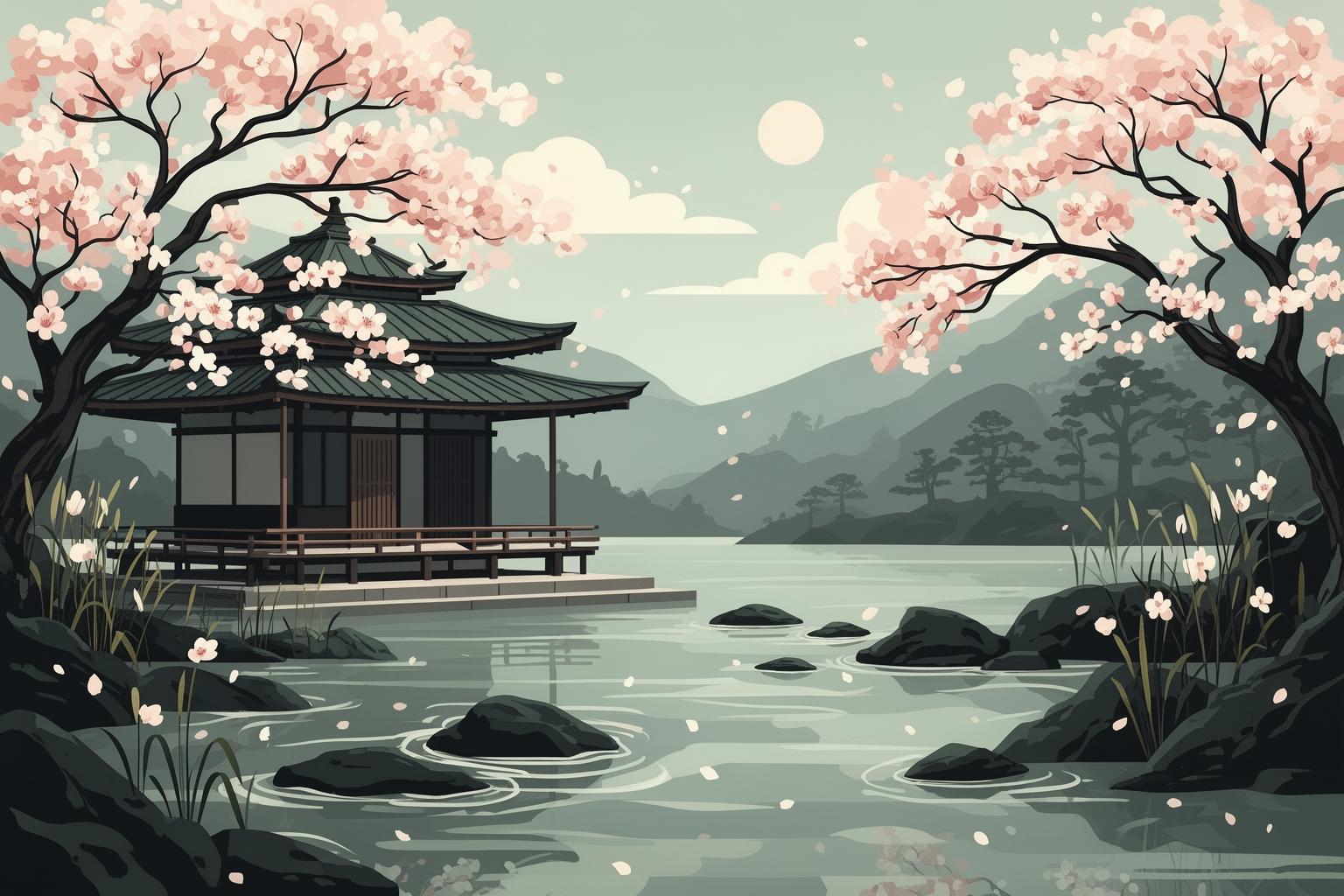
If ma represents the ‘where’ and ‘what’ of the engawa experience, then the guiding aesthetic principle, the ‘how’ you should feel, is wabi-sabi (侘寂). This is another Japanese concept frequently mentioned in Western design magazines, often oversimplified as ‘rustic chic’ or ‘perfectly imperfect.’ However, like ma, its true meaning is far deeper, more philosophical, and essential to grasping the art of doing nothing on an engawa.
Your Perfectionism is Canceled: Enter Wabi-Sabi
Wabi-sabi is a worldview that embraces transience and imperfection. It’s about discovering a profound, quiet beauty in things that are flawed, temporary, and incomplete. This stands in stark contrast to the classical Greek ideal of beauty, which emphasizes symmetry, perfection, and enduring permanence. Wabi-sabi finds beauty in the asymmetrical, weathered, cracked, and humble.
Let’s explore its two components. Wabi originally referred to the loneliness experienced while living in nature, away from society. Over time, it evolved to mean rustic simplicity, quietness, and an understated, unpretentious beauty. It’s exemplified by a simple, handmade ceramic bowl with a slightly uneven shape. It signifies freedom from materialism and a contentment found in humility. Sabi conveys the serenity and beauty that emerge with age, when an object’s impermanence is revealed through its patina, wear, or visible repairs. It’s seen in a moss-covered stone lantern in a garden or the softened texture of weathered wood.
Together, wabi-sabi embodies an intuitive reverence for the fleeting beauty of the physical world, mirroring life’s irreversible flow. It gently acknowledges that all things, including ourselves, are in constant flux, growing and decaying. Crucially, this recognition is not a source of sorrow but one of profound beauty. In a society obsessed with anti-aging, flawless appearances, and curated lives, wabi-sabi offers a radical acceptance. It invites you to appreciate things—and yourself—as they are, with all their imperfections and histories.
The Engawa as a Wabi-Sabi Training Ground
Now, picture yourself on the engawa—an ideal place to cultivate a wabi-sabi mindset. The whole experience is a practice in appreciating imperfection and transience. Here, you are not waiting for a breathtaking sunset to photograph and share; you are attuned to the subtle, fleeting moments of beauty.
Engage your senses through the lens of wabi-sabi. What do you see? The engawa’s wood, weathered by sun and rain, its grain darkened with age; a garden that is not a precisely maintained French formal garden, but a Japanese one where nature is revered. A stone may be moss-covered, a leaf could have an insect hole, a branch might be twisted and gnarled—this natural imperfection is the source of beauty. You might watch a single camellia blossom fall, poignantly reminding you of impermanence (mono no aware).
What do you hear? Not a curated playlist, but the authentic ambient sounds: the buzz of a lone bee, the irregular clack of a shishi-odoshi (a bamboo water fountain designed to scare deer), the distant rumble of a passing train. These transient, uncontrolled sounds are life unfolding, not a polished soundtrack. The wind chime doesn’t play a tune; it rings erratically whenever the breeze moves it.
What do you feel? The subtle texture of the aged wood beneath your hands; the gentle warmth of a patch of sunlight slowly shifting across the floor as the day advances. You hold a simple, handmade tea bowl (chawan), its glaze uneven, its shape comfortably fitting your hands. Unlike a slick, mass-produced mug, its imperfections tell a story and connect you to the artisan who created it.
Sitting on the engawa is an immersion into wabi-sabi. It teaches you to lower your stimulation expectations and instead heighten your sensitivity to what already exists. It rebels against the relentless pursuit of bigger, better, newer, and more perfect experiences. It invites you to find contentment in the simple, the quiet, the overlooked, and the beautifully flawed essence of the present moment.
So, Can I Actually Do This? The Engawa Experience in Modern Japan
At this stage, you might be convinced. The idea of embracing ma and appreciating wabi-sabi while sitting on a sunlit wooden porch seems like the perfect escape from modern life. But then reality sets in. You board a plane to Tokyo, explore the streets of Shinjuku or Akihabara, and find yourself surrounded by concrete, steel, and glass skyscrapers. So where exactly are all those idyllic engawas? This is where the ideal meets the complexities of contemporary Japan.
The Reality Check: The Vanishing Engawa
Let’s be honest: the engawa is becoming a rare sight. Traditional Japanese houses, or kominka, featuring an engawa are increasingly scarce, especially in large cities. There are several reasons for this. Most importantly is space. In one of the world’s most densely populated countries, land is extremely limited. The traditional design of a home encircled by a garden is a luxury few can afford. Urban Japanese housing today mostly consists of apartments (manshon) or compact, multi-story houses built right up to the edges of their lots. These are designed for vertical efficiency rather than a horizontal flow into a garden.
Architectural styles have also shifted significantly. After World War II, particularly during the economic boom, Japan rapidly adopted Western construction methods and styles. Homes began emphasizing privacy and insulation, with solid walls and sealed windows replacing the permeable system of sliding screens. The semi-public, community-facing nature of the engawa, where neighbors might casually drop by, no longer fits the more anonymous lifestyle of the modern city.
That’s not to say engawas have disappeared altogether. In rural areas, in older neighborhoods of cities like Kyoto, and in homes where space allows, engawas still exist and are treasured. But for the average visitor or even many modern Japanese people, the classic engawa experience isn’t a routine part of life. It’s something to be sought out—a destination, not the norm.
How to Capture Your Engawa Vibe (Without an Actual Porch)
So, if you can’t simply stumble upon one, how do you satisfy your craving for this profound ‘nothingness’? The good news is the spirit of the engawa endures in other forms and places, accessible to anyone willing to seek it out.
Start with temples and shrines. Many Buddhist temples, especially Zen ones, feature large halls with wooden verandas overlooking carefully maintained gardens. While you may not be able to dangle your feet off the main hall at Kiyomizu-dera in Kyoto, lots of temples have sub-temples or tea houses within their grounds that offer a more intimate engawa-like setting. Places like Ryoan-ji, renowned for its rock garden, are designed for quiet contemplation. Visitors are invited to sit on the polished wooden veranda of the Hojo (the former residence of the head priest) and simply observe, letting the garden’s silent composition wash over them. It’s a public enactment of the private act of reflection the engawa encourages.
Another wonderful choice is the rise of kominka cafes and inns (ryokan). There’s a growing movement in Japan to preserve old traditional houses by restoring them and giving them new life. These gems are treasures. You might find a café in a renovated Meiji-era home where you can enjoy coffee and cake, then settle onto an engawa overlooking a small, lovingly cared-for garden. Spending a night in a traditional ryokan often offers the most authentic experience: waking up, sliding open the shoji screens of your room, and stepping out onto your own private engawa to greet the morning. It’s living the experience, not just observing it.
Don’t overlook museums and public gardens either. Many museums dedicated to Japanese art are housed in buildings that integrate traditional architectural elements. The Nezu Museum in Tokyo, for example, features a stunning modern building with expansive glass walls opening onto a traditional Japanese garden complete with tea houses. The Adachi Museum of Art is famous for its gardens, regarded as ‘living Japanese paintings,’ designed to be viewed from inside through windows that act as frames. Although more formal, sitting in these designated viewing areas and gazing out at the perfectly composed nature invites the same core experience: finding zen through quiet observation.
The DIY Engawa: A Mindset Beyond a Place
Ultimately, the key insight is that the ‘Art of Doing Nothing’ doesn’t depend on having access to a century-old cypress porch. The engawa serves as a physical trigger for a mental state. It’s a mindfulness tool. And you can cultivate that mindset anywhere. The essential practice is creating a transitional space in your own life—a ma in your day.
Discover your modern engawa. It might be the balcony of your apartment. Step outside for ten minutes without your phone. Just sit, watch the city, listen to its sounds, feel the air. Maybe it’s a particular bench in a park where you regularly go. Instead of listening to a podcast while walking there, walk silently. Sit down. Observe. Notice what you perceive when you aren’t trying to distract yourself. Or it might be a window in your home. Take five minutes to look out, watch the clouds drift, observe how the light changes on the building across the street.
The secret is to let go of any objective. The goal is to have no goal. The purpose is to be purposeless for a brief moment. You’re not ‘meditating to reduce stress’ or ‘practicing mindfulness to boost productivity.’ You’re simply creating a gap. You’re stepping onto your own mental engawa—the space between the uchi of your internal thoughts and the soto of the outside world—and letting them coexist without judgment. It’s about finding wabi-sabi within your own imperfect reality.
The Final Takeaway: It’s Not Lazy, It’s Legendary
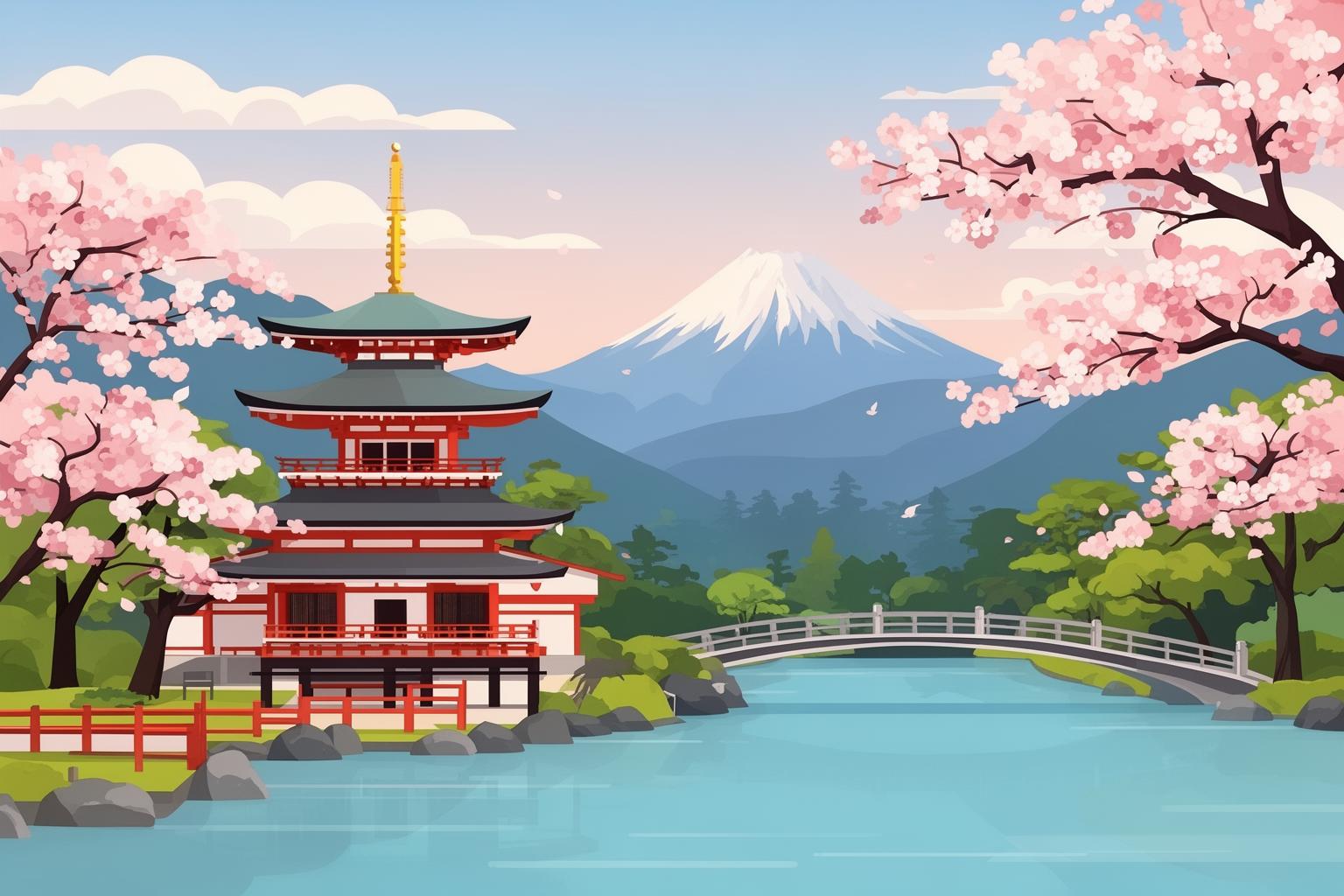
Let’s revisit that initial confusion: the image of someone sitting quietly on an engawa, seemingly idling away time in one of the world’s most industrious nations. Now, it’s clear that this is not a contradiction but rather the flip side of the same coin. A society that relentlessly pursues efficiency, precision, and collective effort also holds a deep, innate appreciation for its opposite: stillness, quiet reflection, and a connection to the subtle natural world.
The engawa does not represent laziness. Instead, it symbolizes a sophisticated, deeply rooted cultural wisdom that understands true productivity, creativity, and well-being don’t arise from nonstop activity. They emerge from the pauses in between. Within the ma, the empty space, we find the opportunity to process, reflect, and recharge. By embracing wabi-sabi, the beauty of imperfection in the world, we can release ourselves from the stressful pursuit of an unattainable ideal.
In a Western context, where ‘doing nothing’ often connotes unproductivity and provokes guilt, the engawa presents a powerful alternative narrative. It shows that moments of quiet observation are far from empty; they are filled with sensory richness, fleeting beauty, and a calm connection to the world. This is an act of mental and spiritual upkeep as vital as any item on your to-do list.
So next time you encounter that image of Japan—the tranquil porch, the silent figure, the serene garden—don’t interpret it as inaction. Recognize it for what it truly is: a masterclass in the art of presence. They aren’t simply “chilling”; they are actively engaging in a cultural tradition of mindfulness that is potent, profound, and arguably more essential than ever. It’s not laziness; it’s a legendary life hack. And that, my friends, is a vibe we could all do well to embrace. Bet.