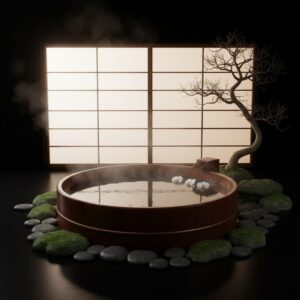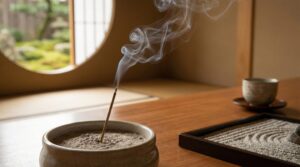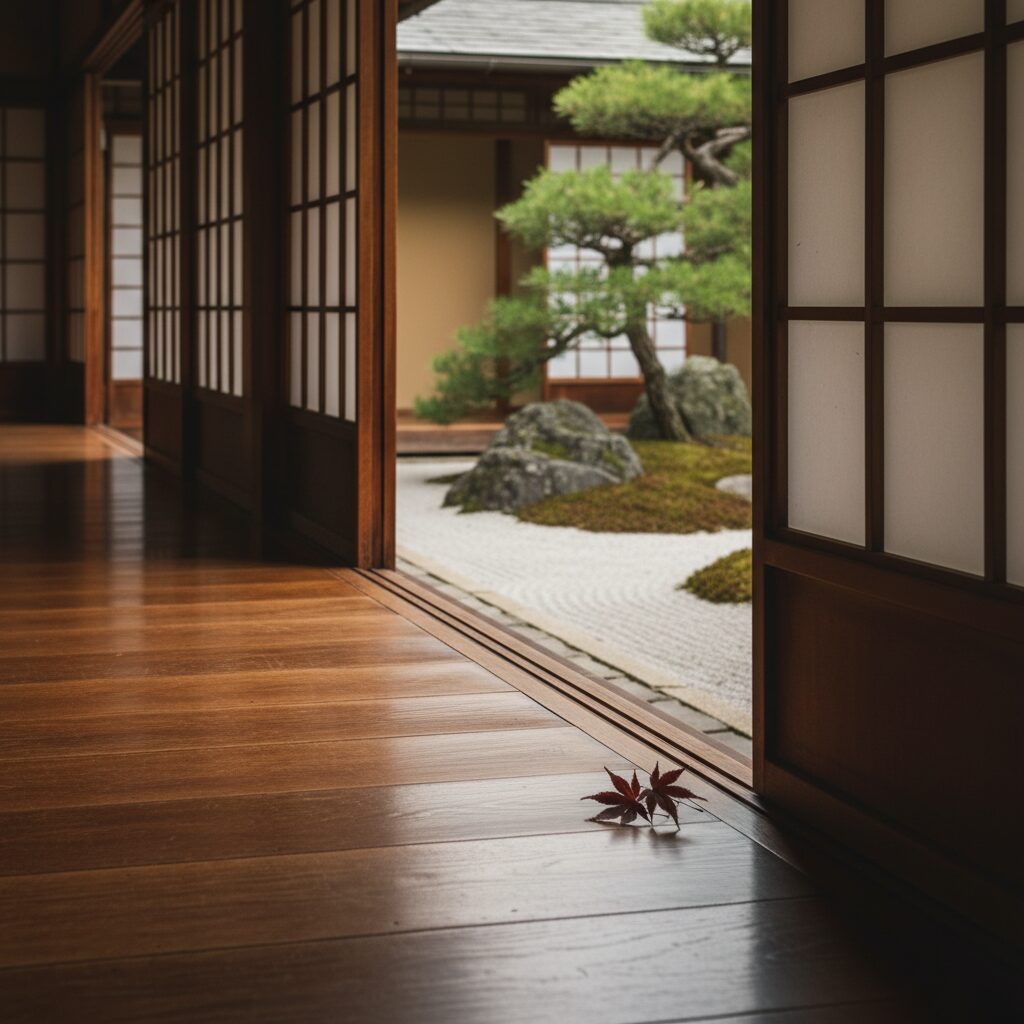
Yo, what’s the deal with all those pics you see from Japan? You know the ones. Someone’s sitting on a polished wooden ledge, feet dangling just above a pristine garden, maybe with a cup of tea, looking mad contemplative. It’s a whole aesthetic. It’s serene, it’s #goals, but also… what are they actually doing? Is just sitting there the entire event? In a world of constant content and chaotic energy, the Japanese art of doing absolutely nothing, but doing it with style, can seem kinda sus. It feels like there’s a piece of the puzzle missing, a cultural inside joke we’re not privy to. You might think, “Okay, it’s a porch. A veranda. We have those.” But nah, fam, this ain’t your grandma’s front porch with a rocking chair and a welcome mat. This is an `engawa` (縁側), and low-key, it’s one of the most profound keys to understanding the entire Japanese mindset about space, nature, and human connection. It’s not just a feature of a house; it’s a state of being. It’s a physical space that blurs every line you thought was solid: inside vs. outside, private vs. public, human vs. nature. It’s an architectural cheat code for finding Zen in a world that tells you to hustle. So, let’s break down the fourth wall of the traditional Japanese house and get the real tea on why this simple wooden strip is the epicenter of the ultimate ‘Engawa Chill.’ It’s about to make so much sense why just sitting there is, in fact, the whole vibe. Before we dive deep, let’s get our bearings and see where you might find such a place, like the legendary Kennin-ji Temple in Kyoto, a prime spot for experiencing this vibe firsthand.
To fully embrace this state of being, consider how other Japanese traditions, like the restorative practice of visiting onsen towns, offer a similar path to profound relaxation and clarity.
The OG Open-Plan Living: Deconstructing the Engawa
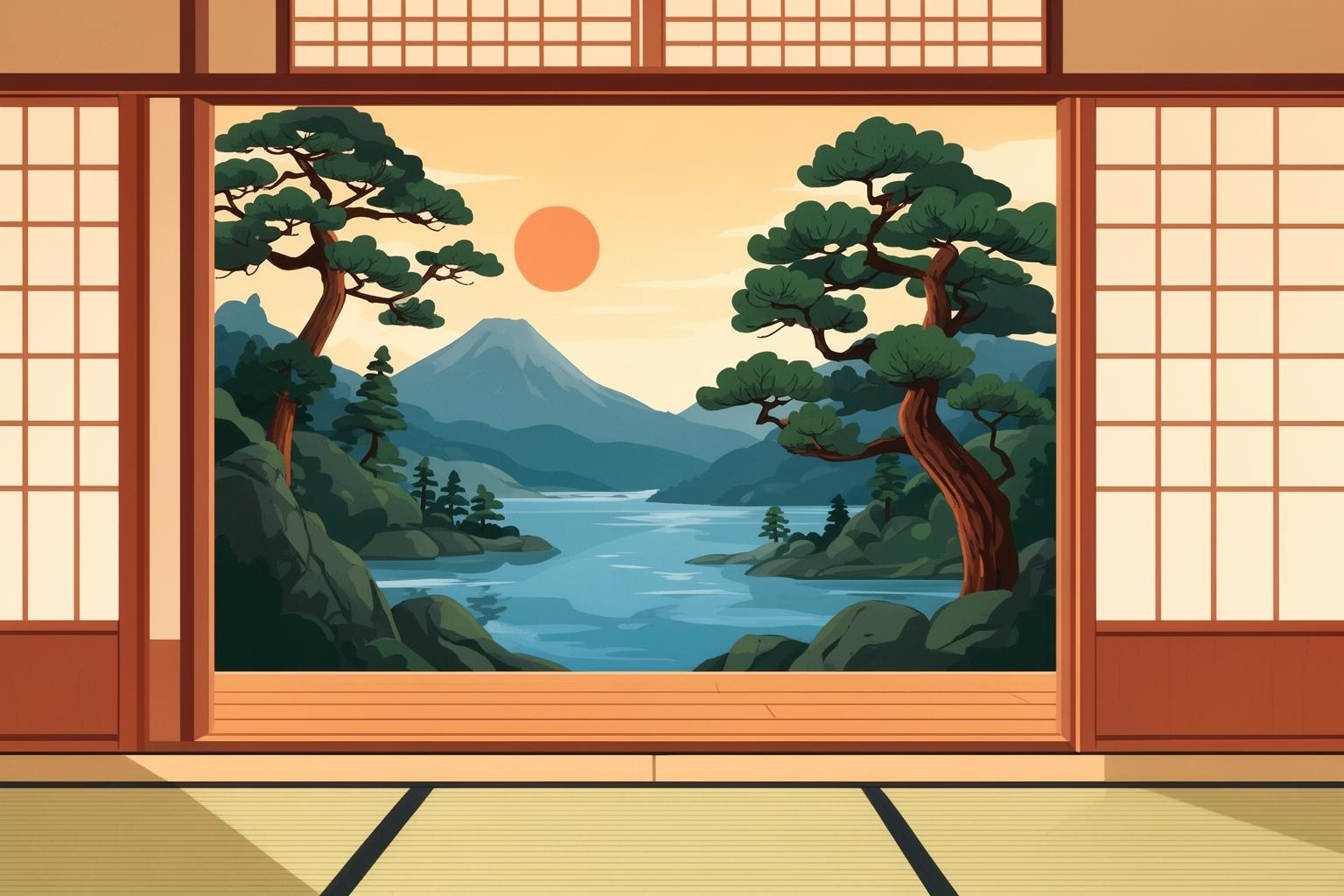
First, let’s cover the technical details, since the reasoning is inherent in the design. An engawa is neither an afterthought nor a mere decorative element. It is a fundamental, integrated feature of traditional Japanese architecture, rooted in a profound understanding of climate and a philosophical commitment to coexist with nature rather than dominate it. From a Chinese cultural viewpoint, this resonates differently yet familiarly. The idea of living in harmony with nature and viewing the home as a small element within a vast cosmic landscape is a shared East Asian value. The engawa physically embodies this philosophy.
Form Follows Function, and the Function is Flow
Consider a typical Western house: it acts like a fortress, with solid walls, sealed windows, and a clear, rigid boundary between inside and outside. The Japanese `washitsu` (traditional room) represents the opposite approach. It’s designed for flow. The walls aren’t fixed solid barriers; they consist of sliding screens. There are the `fusuma` (襖), opaque paper-covered screens that partition rooms, and the iconic translucent `shoji` (障子), which form the ‘wall’ between the interior and the engawa. On a warm day, you can slide open or remove the shoji entirely. Suddenly, your living room doesn’t just view the garden; it merges with the garden. The engawa serves as the bridge and gradient that enables this seamless transition.
This design brilliantly addresses Japan’s famously hot, humid summers. The entire house can open to catch even the slightest breeze. The deep eaves extend over the engawa, shading it from the high summer sun, while in winter, the lower sun shines beneath to warm the wooden floor and interior. It’s a passive climate control system, perfected long before air conditioning was conceived. Then there are the `amado` (雨戸), or storm shutters—wooden or metal panels that slide along the outermost track beyond the engawa, fully enclosing the house at night or during typhoons. So, the layers consist of the inner room, the shoji, the engawa, and the amado—creating permeable boundaries rather than a single solid wall.
Not All Engawa Are Created Equal
Delving deeper, there are two primary types of engawa, with subtle but significant differences. The `kure-en` (くれ縁) lies inside the amado shutters, making it more protected and interior-like. The `nure-en` (濡れ縁), or “wet veranda,” sits outside the storm shutters and is exposed to the elements. It’s typically built from more weather-resistant wood and feels more like a garden space extending toward the house. This distinction underscores the engawa’s essence as a transitional space—leaning inward or outward but always occupying a liminal zone. The wood—often hinoki (cypress) or sugi (cedar)—is carefully selected, smoothed by time and touch, cool in summer and retaining warmth in colder months. The experience is tactile, intended to be felt with bare feet and hands, connecting occupants directly with the natural materials of the home.
This architectural ethos contrasts sharply with modern obsessions over airtight, climate-controlled boxes. It asserts that a house shouldn’t bar nature out but frame it for deeper appreciation. It welcomes the cicadas’ songs, the scent of rain-damp earth, and the feel of a cool evening breeze into the domestic environment. The engawa is more than a vantage point to view the garden; it’s the threshold where the garden begins to flow into the home.
It’s Not Just a Ledge, It’s a Vibe: The “Ma” (間) of Engawa
Alright, we’ve grasped the architecture. But that alone doesn’t fully capture why sitting on one feels so deeply meaningful. To understand that, you need to grasp one of the most fundamental—and honestly most captivating—concepts in all of Japanese aesthetics: `Ma` (間). Often translated as “negative space,” `Ma` is much more than that. It’s not mere emptiness; it’s the space between things that gives them form and significance. It’s the pause between musical notes, the unpainted silk in a calligraphy scroll, the silence between words during a weighty conversation. `Ma` is the pregnant pause. It’s potential. And the engawa? The engawa is the architectural expression of `Ma`.
The Purpose is No Purpose
Consider this: a kitchen is for cooking. A bedroom is for sleeping. But what is an engawa for? Both nothing and everything. It has no prescribed function. It isn’t a room; it’s an interval. A space defined by what it is not. And in that lack of definition lies its strength. By not telling you what to do, it invites you simply to be. This is why the typical “activity” on an engawa is often passive observation. You sit and watch the koi swim in the pond. You listen to the shishi-odoshi (the bamboo water fountain) clack in rhythm. You feel the shifting light as clouds drift overhead. You’re not consuming entertainment; you’re absorbing the atmosphere. You align your own rhythm with the world’s around you. This is the essence of ‘Engawa Chill.’ It’s a deliberate choice to engage with `Ma`, finding richness in the still, quiet moments.
This idea is radical in a world that continually demands our attention and productivity. We’re conditioned to fill every idle moment with podcasts, scrolling, or planning. The engawa gently resists that. It provides a designated space for what the West now awkwardly calls ‘mindfulness.’ But here, it’s not a trendy self-help concept; it’s a principle woven into the very structure of the house. It’s the ultimate ‘touch grass’ zone—without ever needing to put on shoes. The vibe is one of pristine inactivity. It’s about letting the world come to you instead of constantly chasing it. From a broader East Asian perspective, this aligns with Taoist ideas of wu wei (無為), or effortless action—where sometimes the best way to act is simply to do nothing.
A Sensory Amplifier
The engawa’s simplicity—a flat wooden plane—works as a sensory amplifier. With no furniture or ornamentation to divert your attention, your awareness naturally turns both outward and inward. In summer, you hang a `fuurin` (風鈴), a glass wind chime, from the eaves. Its delicate sound doesn’t merely signal a breeze; it makes you feel the breeze, appreciate its cooling touch. You might have a plate of watermelon and a small ceramic `kayari-buta` (蚊遣り豚), a pig-shaped incense holder for mosquito coils, its gentle smoke curling into the humid air. These aren’t just objects; they serve as sensory cues that define the season. In autumn, you watch a single red maple leaf drift onto the polished wood. In spring, you see cherry blossoms reflected on its surface. The engawa doesn’t create these moments; it creates the space for you to notice them. It elevates the ordinary to poetic heights. It’s a front-row seat to nature’s slow, beautiful, and sometimes harsh theater—a constant reminder that you’re part of that cycle, not separate from it.
The Social Life of a Veranda: More Than Just Zen Selfies
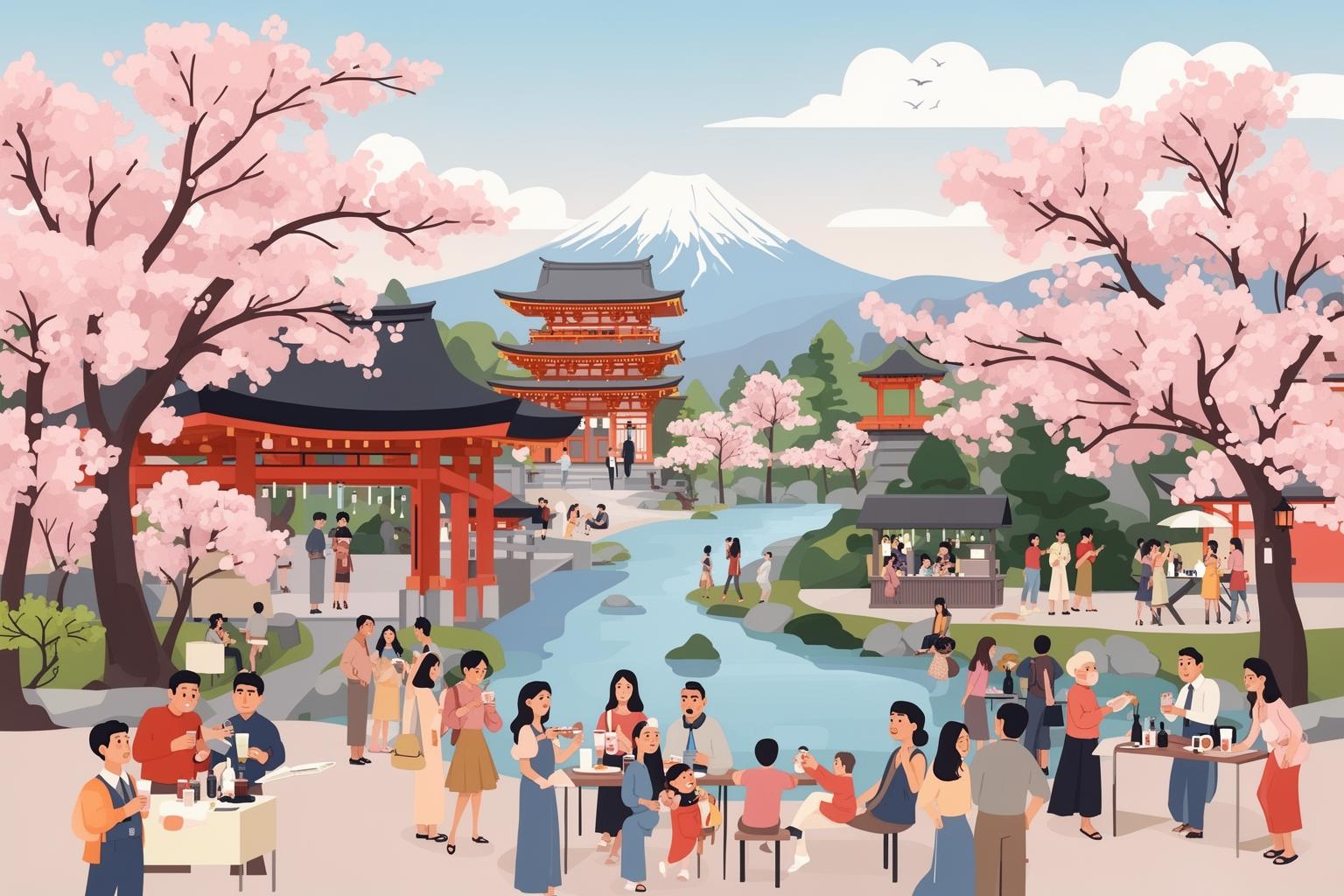
While the engawa serves as an ideal spot for solitary reflection, that is only part of its significance. Viewing it merely as a personal meditation space overlooks its crucial function as a social interface—a unique form of social technology that shaped community life in Japan for centuries. It is where the deeply private realm of the Japanese home (`uchi`, 内) met the public sphere of the village or neighborhood (`soto`, 外). Yet, the engawa itself was neither fully one nor the other; it was a gray area, a buffer zone where interactions could occur with a subtle, unspoken nuance.
The Ultimate Casual Hangout Spot
Imagine this: a neighbor stops by. They don’t need to knock on the front door or formally ask to come in, which can feel like a big commitment. Instead, they can simply approach the garden’s edge, greet you from there, and sit on the engawa’s edge. You can then step outside to join them. Both of you are technically outside the ‘house,’ yet still within its domain. You can have a conversation, share tea and snacks, and they can leave without ever crossing the formal threshold of the `genkan` (玄関), or entryway. This informal, low-commitment interaction is brilliant; it fostered a kind of ambient community awareness, serving as a pre-digital equivalent to noticing when a friend is ‘online’ and available to chat.
This is a recurring scene in classic Japanese films by directors like Yasujiro Ozu or in anime such as My Neighbor Totoro. The engawa is the setting for much of daily life: where children play, grandparents observe the passing world, and gossip is exchanged. It is a flexible, multi-purpose social space that adapts to the moment’s needs. This reflects a cultural preference for indirectness and maintaining a comfortable interpersonal distance, or `maai` (間合い), a term borrowed from martial arts describing the appropriate spacing between opponents. The engawa is the perfect architectural device for managing `maai` in social contexts, enabling connection without intrusion.
The Decline of a Social Hub
If the engawa was so valuable, why has it disappeared? Walk through a modern Japanese suburb and you’ll notice more walls, fences, and Western-style homes with balconies instead of verandas. The decline of the engawa parallels Japan’s modernization. After World War II, rapid urbanization and the adoption of Western architectural styles took hold. Land in cities became exceedingly expensive, making the spacious layout of traditional homes with gardens and engawa a luxury only a few could afford. Instead, `danchi` (団地), or large public housing complexes, became the dominant living model—efficient, concrete structures that emphasized density and privacy over community and nature connectivity. These were the architectural opposite of engawa-centered homes.
The change was cultural, too. The nuclear family replaced multi-generational households. The close-knit neighborhood community, where everyone knew each other’s affairs, began to unravel. Privacy came to be valued more in the Western sense. The engawa, with its semi-public character, started to be viewed as a liability rather than an asset. Why invite neighbors to casually perch on the edge of your home? As a result, walls went up. This shift is essential to understanding modern Japan. The disappearance of the engawa from mainstream architecture is not just an aesthetic evolution; it signals a fundamental transformation in social dynamics—from a collective, porous society to a more individualistic and private one. When you see an old `kominka` (古民家), or traditional house, with its inviting, open engawa, you are glimpsing a relic of a different lifestyle and way of relating to one another.
How to Find Your Engawa Chill: The Real vs. The ‘Gram
Alright, so you’re convinced. You get the feeling. You want to immerse yourself in this profound state of doing nothingness. The next question is: where? Let’s be honest—you won’t find an authentic engawa at your typical business hotel in Shinjuku. This experience calls for a bit of a treasure hunt, but the reward is immense. It’s about managing expectations and knowing where to search for the genuine experience, not just a picturesque backdrop for your socials.
Level 1: The Temple & Shrine Circuit
This is the most classic and accessible way to enjoy a top-tier engawa. Many Buddhist temples, especially those of the Zen sect, were designed with contemplation in mind, with the engawa playing a central role. For a modest entrance fee, you can enter a realm of serene beauty. Kyoto and Kamakura are prime destinations for this.
- In Kyoto: Visit Tenryu-ji in Arashiyama. Its vast engawa overlooks a breathtaking stroll garden that’s a UNESCO World Heritage site. You can sit along the edge with numerous others, all quietly absorbing the atmosphere. Another standout is Kennin-ji, Kyoto’s oldest Zen temple located in the heart of Gion. Its engawa surrounds a simple yet stunning dry landscape garden (`karesansui`), offering a masterclass in the beauty of `Ma`.
- In Kamakura: Hokoku-ji is renowned for its bamboo forest, but the real highlight is the small teahouse where you can sip matcha while seated on an engawa overlooking the dense greenery. Engaku-ji, near Kita-Kamakura station, also features several buildings with beautiful engawa providing tranquil spots to escape the crowds.
The etiquette is straightforward: remove your shoes before stepping onto tatami or wood, lower your voice, and don’t treat the space like your personal lounge. You’re a guest in a sacred place. Sit, breathe, and simply observe—that’s the essence.
Level 2: Kominka Cafes and Guesthouses
For a more relaxed, casual experience, the `kominka` scene is the place to be. Across Japan, especially in rural areas, young entrepreneurs are rescuing beautiful old farmhouses from demolition and transforming them into stylish cafes, restaurants, and guesthouses. This offers a chance to experience a domestic engawa—a space that was truly lived in. You can enjoy craft coffee or a farm-to-table lunch with your feet dangling over the edge, gazing out at a vegetable patch or rice paddy. It’s less about silent meditation and more about relaxed, rustic charm. Search for “古民家カフェ” (kominka cafe) in the area you’re visiting. This trend brilliantly preserves architectural heritage while making it accessible to a new generation, connecting past and present in a living, breathing way.
Level 3: The Ryokan Experience
This is the premium, full-immersion option. Staying at a high-end `ryokan` (traditional inn) often means having a private engawa or similar veranda attached to your room. This is the ultimate luxury. Imagine sliding open the shoji screens in the morning to reveal a private garden, still misty from the night. You can sit there in your `yukata` (light cotton kimono) with a cup of green tea, completely undisturbed. It doesn’t get better than that. Though it’s a splurge, staying at a ryokan offers the most intimate and personal way to understand how this architecture was meant to be experienced. It connects you not only to the space but to the rhythm of a more gracious, slower-paced lifestyle.
It’s important to remember that for most Japanese people, the engawa is now a special occasion rather than an everyday reality. It’s a cultural ideal, a nostalgic dream. So when you find one, cherish it as the rare gem it truly is.
A Space Between Worlds

In the end, that simple wooden ledge is far more than just a porch. It represents a philosophical statement. The engawa exemplifies the Japanese appreciation for ambiguity. In a world that prefers clear definitions and sharp boundaries, the engawa honors the beauty of the in-between. It is neither inside nor outside, neither fully private nor completely public. It is a space of pure transition, where boundaries fade away. It serves as a physical expression of the cultural value placed on reading the air (kuki o yomu)—being attuned to subtle changes in context and atmosphere. The engawa is a tool designed to cultivate that sensitivity.
It reminds us that nature is not something to be observed through a window like a painting hung on a wall; it is a living presence to be engaged with and welcomed into our lives. It suggests that community goes beyond formal invitations and planned gatherings; it can arise from casual, spontaneous interactions in those comfortable gray areas. Most importantly, it proposes that some of life’s most profound moments occur not through action, but through the quiet pauses we allow ourselves. It is the space where you can finally hear your own thoughts—or better yet, let your mind rest entirely.
The next time you encounter that image—the polished wood, the tranquil garden, the solitary figure lost in thought—you’ll understand. It is not boredom. It is not emptiness. It is a deep, meaningful engagement with the world, taking place in a space perfectly designed for it. It’s about discovering the universe in a grain of sand—or, in this case, in the grain of a wooden plank. It is not merely an architectural feature. It answers a question we hardly know how to ask anymore: how do we find our place between the chaos of our minds and the quiet beauty of the outside world? The answer, it seems, is simply to relax on the engawa.