
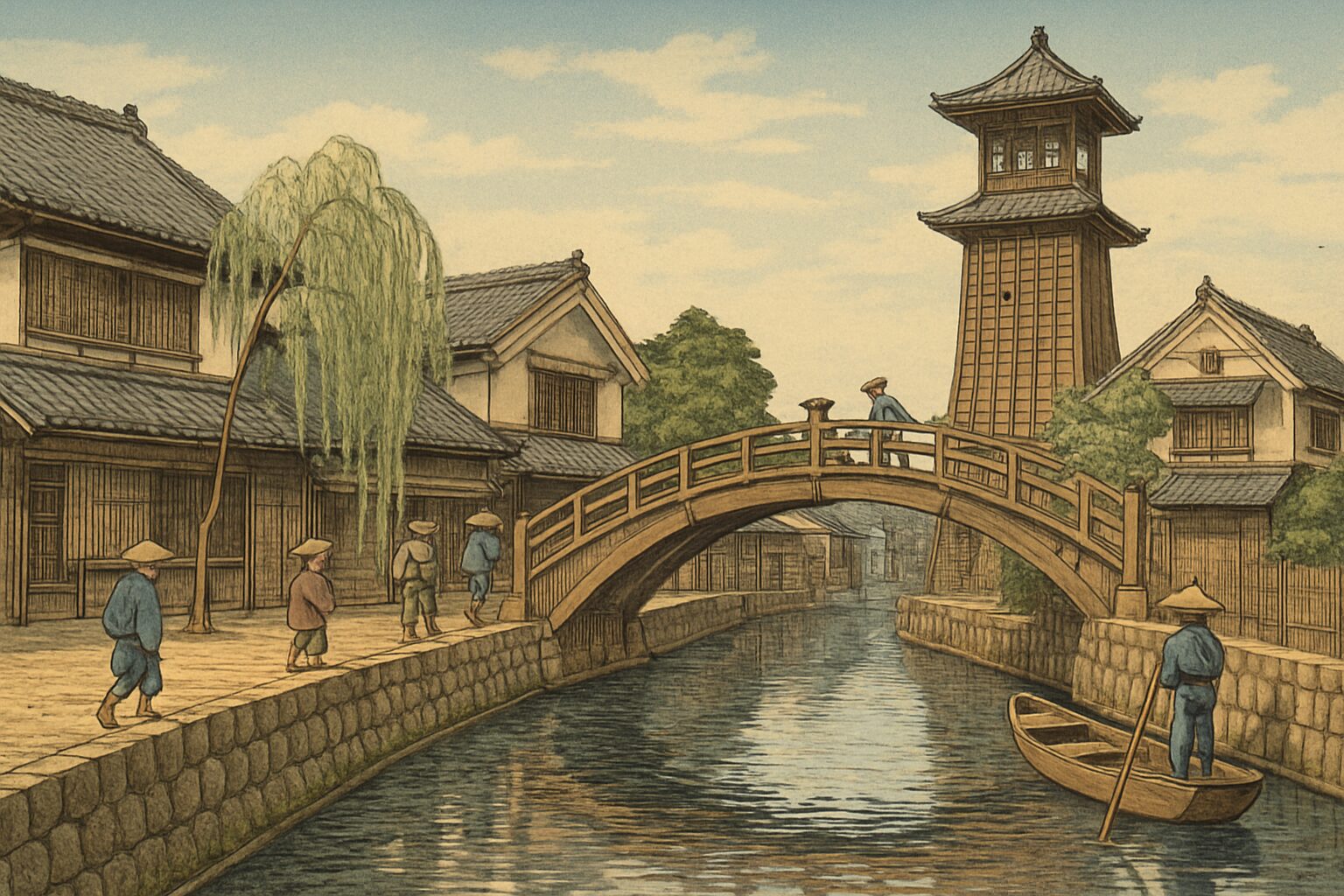
Yo, what’s the move? It’s Mia, your go-to guide for all things Japan, especially when it’s got that main character energy you can’t find anywhere else. Today, we’re ditching the neon chaos of Tokyo for a sec and teleporting back in time. I’m talking about a place so authentically old-school it feels like you’ve walked straight onto the set of a historical anime. We’re heading to Sawara, a merchant town in Chiba Prefecture that’s earned the legendary title of ‘Ko-Edo’ or ‘Little Edo.’ And let me tell you, it’s not just a nickname; it’s a whole vibe. Forget the tourist-trap versions of ‘old Japan’—Sawara is the real deal, a living, breathing town where the past isn’t just preserved in a museum, it’s in the water, in the wood of the buildings, and in the spirit of the people. This isn’t just a day trip; it’s a full-on immersion into the world that built modern Tokyo, a place where you can literally cruise down a canal that was once the equivalent of an Edo-period superhighway. It’s where history feels less like a lesson and more like a story you get to walk through. So, grab your comfiest kicks, charge your phone for a million aesthetic shots, and get ready to explore the town that time decided to leave just as it was. This is Sawara, and trust me, the vibe check is immaculate.
The Vibe Check: Stepping into a Living Ukiyo-e
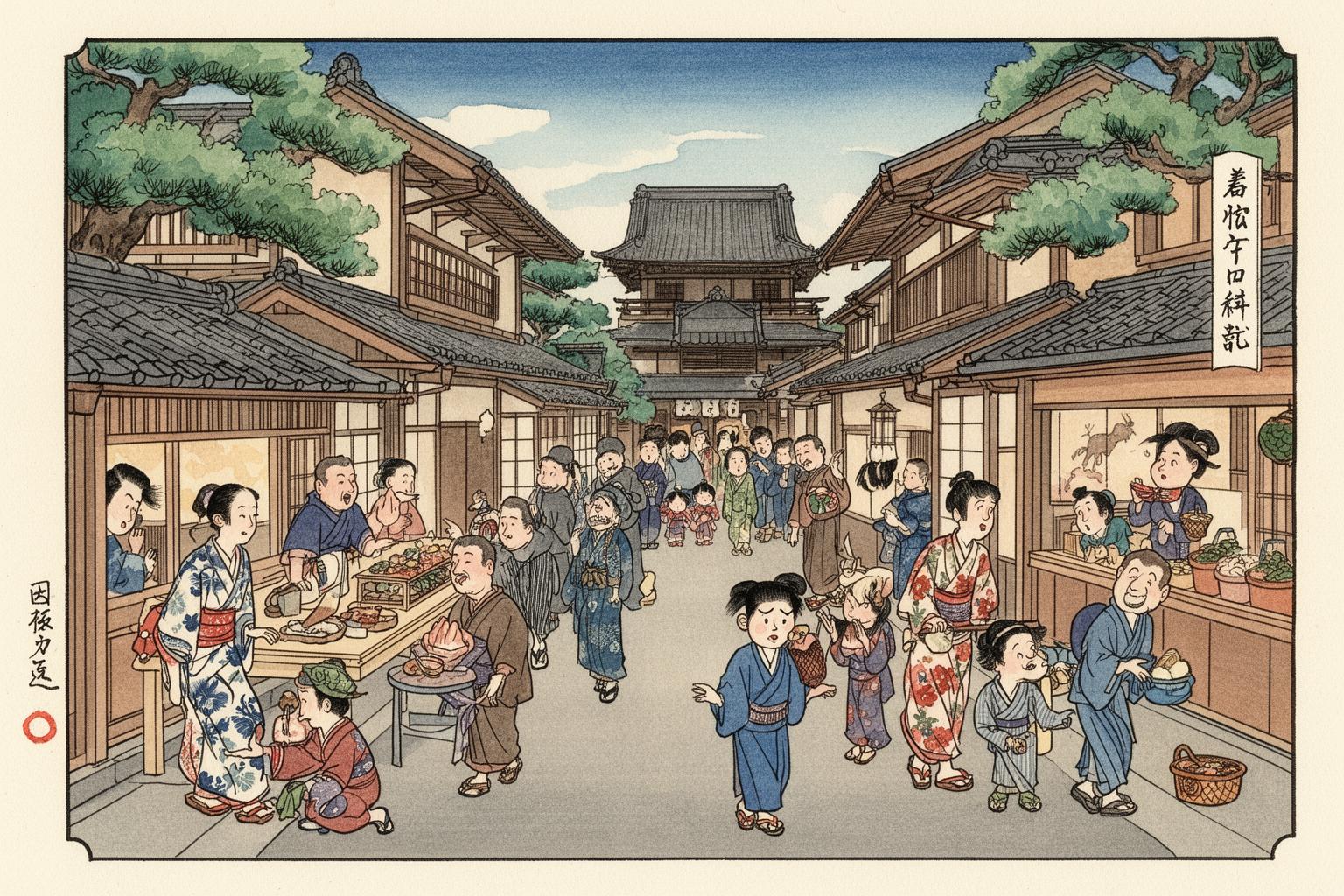
The moment you step off the train at JR Sawara Station, you notice a subtle shift. The air becomes a bit quieter, the pace slows down. While the station itself is fairly modern, it serves as the gateway. Your true journey begins as you walk the ten minutes to the Ono River, the very heart of historic Sawara. At first, the streets resemble those of a typical Japanese town—some convenience stores, local businesses, and modern houses. You might even question if you’re in the right place. But then, you catch a glimpse—perhaps a dark, wooden lattice window or a gracefully curved tile roof. The change is gradual, then sudden. It’s like a visual fade-in, where the 21st century slowly fades as the 19th century steps into the spotlight.
You turn a corner and suddenly, you’ve arrived. The historic preservation district opens up before you, centered around the willow-lined banks of the Ono River. This isn’t a theme park—no gates, no admission fees. It’s a living neighborhood where people reside and work, and that authenticity strikes you immediately. The buildings are a striking collection of machiya (traditional townhouses) and kura (earthen-walled storehouses), their dark wood and white plaster walls forming a dramatic, monochrome contrast against the sky. Many date back to the Edo and Meiji periods, surviving fires and the relentless push of modernization that erased much of old Tokyo.
Walking along the stone-paved streets feels surreal. You tread the same path once traveled by merchants, samurai, and artisans centuries ago. The atmosphere is thick with history. You almost hear the ghostly sounds of wooden carts clattering over stones and the calls of boatmen on the river. The air carries scents of wood, damp earth from the riverbank, sometimes the sweet smell of roasting sweet potatoes, or the sharp, clean aroma of sake coming from a nearby brewery. It’s a rich sensory experience. The buildings are the main attraction. Look closely at the details: the heavy, intricate roof tiles known as onigawara (demon tiles) meant to ward off evil spirits; the delicate wooden latticework known as koshi on the windows; and family crests proudly displayed on noren curtains hanging in the doorways. Each structure tells its own story, its own character. Some are impeccably preserved, now home to chic cafes, artisan shops, or small museums. Others wear their age gracefully, wooden beams smoothed by time and hands. It’s this blend of preservation and everyday life that makes Sawara uniquely special. It’s not a sterile exhibit; it’s a community proudly wearing its history.
The soundscape contributes significantly to the atmosphere. Instead of the constant noise of a big city, you hear the gentle lap of the Ono River, the rustle of willow leaves in the breeze, and the distant toll of a temple bell. The most iconic sound in Sawara comes from the Toyohashi Bridge, lovingly called the ‘Ja-Ja Bashi.’ Every 30 minutes, waterfalls cascade from both sides of the bridge into the river below, creating a sound locals liken to ‘jaa jaa.’ It’s a charming, whimsical detail that perfectly captures the town’s playful yet respectful bond with its past. Standing on that bridge, feeling the cool mist and hearing that unique sound, you understand that Sawara isn’t just showing you its history—it’s inviting you to experience it fully.
Riding the Current of History: The Ono River Chronicles
The Ono River is the heart of Sawara. It’s far more than a scenic canal; it’s the very foundation that allowed this town to flourish into a commercial hub, earning it the nickname ‘Little Edo.’ To truly grasp Sawara’s essence, you need to be on the water. Riding one of the small, traditional wooden boats, or sappa-bune, on a tour is absolutely essential. This is the best way to see the town through the eyes of the merchants who built it.
The Little Boat That Could
Stepping into the low-slung boat, you instantly feel connected to the past. A boatman, usually a local with deep knowledge of Sawara’s history, stands at the stern wielding a single long pole, expertly steering the craft. As you push off from the dock, your surroundings shift. Viewing the town from the water offers a completely different perspective. Historic buildings appear more imposing, their reflections shimmering on the water’s surface. The willow trees lining the canal, a hallmark feature, dip their long, delicate branches into the water, forming a tranquil, green corridor.
The ride is a slow, contemplative drift. The boatman highlights important buildings, sharing stories about the families who owned them and the businesses they operated. You’ll pass by old soy sauce breweries, sake distilleries, and merchant homes, each showcasing distinct architectural styles. Seen from the river, their designs take on new meaning. You’ll spot old docks and loading points, clear evidence of the bustling trade that once thrived here. The boatman’s gentle commentary in Japanese adds an oral history layer that you simply can’t get from strolling on foot. Even if you don’t catch every word, the tone and gestures convey a profound local pride and affection for the town’s heritage.
The highlight of the journey is drifting under the bridges. Each one frames the scenery ahead in its own unique way. And of course, there’s the approach to ‘Ja-Ja Bashi.’ As you near, the sound of rushing water grows louder. If timed right, you’ll be directly beneath the waterfall as it begins—a surprisingly dramatic and utterly charming moment. This experience is more than sightseeing; it’s about matching the river’s slow pace and fully immersing yourself in this historic setting. The 30-minute ride feels like a journey through centuries.
Why a River Made a Town
So, why did this small town in Chiba become so important? The answer lies in geography and water. During the Edo period (1603-1868), the Tone River, one of Japan’s largest, was rerouted. This vast engineering project connected it directly to Edo Bay, creating a vital inland waterway network. Sawara, located on the Ono River flowing into the Tone, found itself in a crucial logistical spot. It became a key hub for gathering and shipping goods to the rapidly growing capital, Edo (modern Tokyo).
Picture the Ono River crowded with boats carrying rice from the fertile Kanto plains, barrels of locally brewed sake and soy sauce, and other essential supplies for Edo’s million-plus residents. While sea travel was often risky and slow, this inland river route offered a safer, more efficient alternative. As a result, Sawara’s merchants grew immensely wealthy—they were the logistics and shipping magnates of their time. This wealth funded the construction of grand homes and fireproof kura storehouses that remain impressive to this day. A popular saying emerged: ‘If you want to see Edo, come to Sawara; Sawara’s prosperity surpasses even that of Edo,’ reflecting the town’s remarkable riches and influence.
This history is evident throughout the town’s architecture. The kura storehouses, with their thick earthen walls, heavy doors, and tiled roofs, were more than storage—they were status symbols. They protected merchants’ valuable goods—and their fortunes—from the frequent fires that devastated Japanese towns. The more kura a merchant owned, the greater their success. Walking Sawara’s streets, you’re essentially exploring a living showcase of Edo-period commercial achievement. The whole town stands as a testament to the power of water, trade, and the ambition of its merchant class.
Meet the OG Mapmaker: The Legend of Tadataka Ino
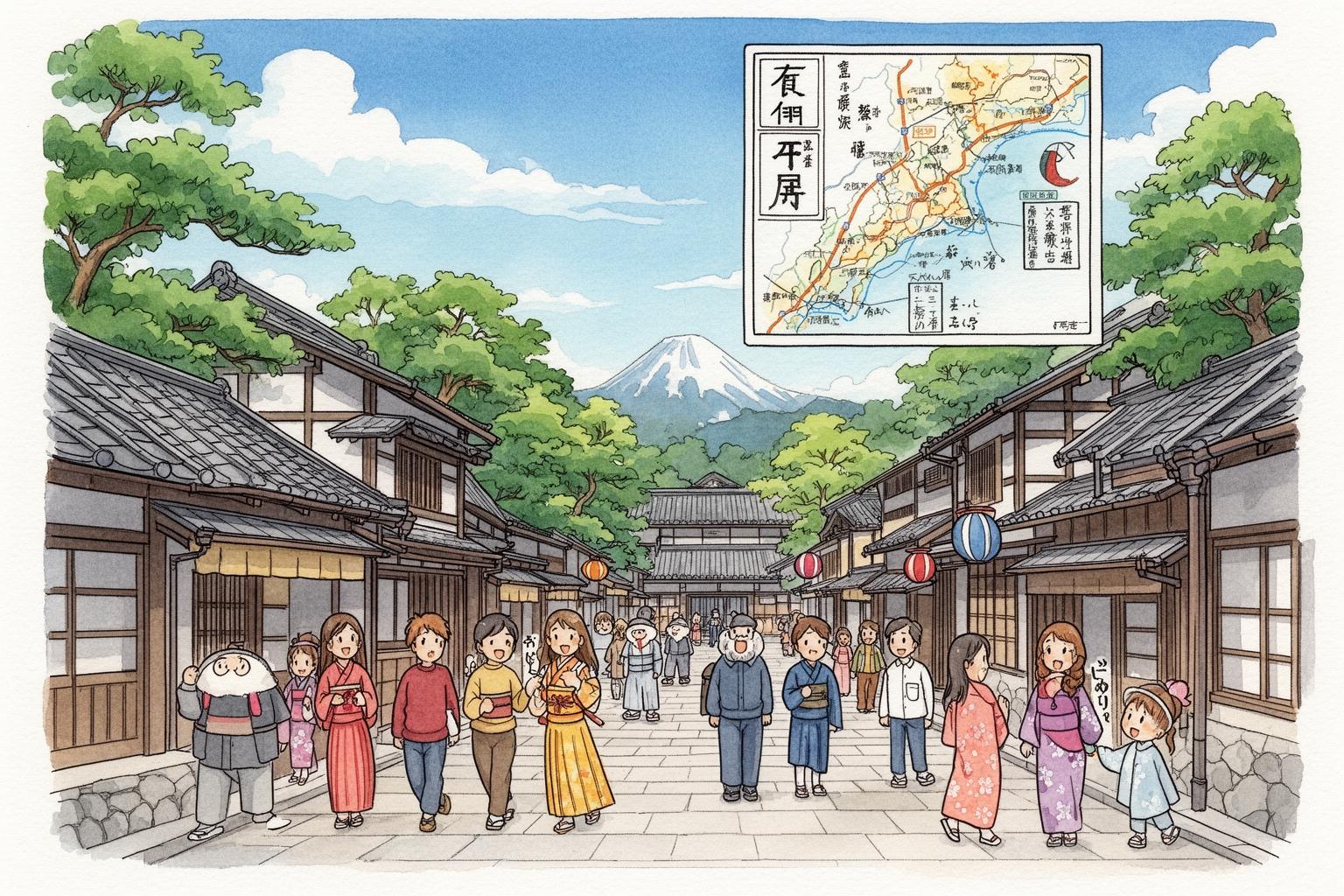
Beyond its commercial legacy, Sawara is renowned as the birthplace of one of Japan’s most extraordinary historical figures: Tadataka Ino. He is a true legend, and his story serves as a genuine source of inspiration. Not a samurai or a lord, Ino was a local merchant who, after retiring, took up a remarkable new pursuit: mapping the entire country of Japan. Remarkably, he accomplished this feat on foot and with incredible precision.
From Sake Brewer to Master Cartographer
Tadataka Ino was born in 1745 and was adopted into the prosperous Ino family, who operated a thriving sake brewing and rice-trading enterprise in Sawara. A shrewd and respected businessman, he successfully managed the family business, which prospered under his guidance. However, his true passion was the stars—he was deeply fascinated by astronomy, mathematics, and surveying. At 49, Ino did something almost unheard of at the time: he handed over control of the family business to his son and officially retired. But his retirement was far from idle. At 50, he relocated to Edo to study under the renowned astronomer Yoshitoki Takahashi.
Driven by newfound knowledge and boundless curiosity, Ino began his life’s masterpiece at 55—setting out to create the first complete, scientifically accurate map of Japan. For the next 17 years, he and his team of surveyors traversed the entire country, primarily on foot. They measured distances carefully, calculated latitudes through star observations, and meticulously documented coastlines and major roads. The endeavor was physically demanding, intellectually rigorous, and personally costly, as Ino financed much of the early expeditions himself. He walked an estimated 40,000 kilometers—roughly equivalent to circling the globe. Though he passed away in 1818 before the map’s completion, his dedicated team finalized the project, presenting the remarkable Dai Nihon Enkai Yochi Zenzu (Maps of Japan’s Coastal Area) to the shogunate in 1821. His maps were so precise that they served as the foundational reference for Japanese cartography for nearly a century.
Inside the Ino Residence & Museum
In Sawara, visitors can immerse themselves in Tadataka Ino’s world. His former residence, a designated National Historic Site, sits along the Ono River. This beautifully preserved home offers an intimate look into the life of a prosperous Edo-period merchant. Visitors can explore the rooms where Ino lived and managed his family business before embarking on his monumental adventure. The building’s storefront faces the street, with living quarters situated toward the back, overlooking a serene garden. The traditional wooden beams and classic architecture make the house a historical treasure, but knowing it was the starting point for one of Japan’s greatest scientific feats imbues it with a special aura, making one truly sense the presence of a brilliant and determined mind.
Just across the river lies the Tadataka Ino Museum, a modern facility essential to fully appreciating the scale of his achievement. The museum showcases many of his original surveying tools—astrolabes, compasses, measuring chains—all impressively low-tech compared to today’s instruments, which makes his precision even more astonishing. Reproductions of his handwritten field notes, complete with detailed sketches and exact calculations, are on display. Yet the highlight is unquestionably the maps themselves. Viewing the enormous, meticulously detailed maps in sections is truly awe-inspiring; they represent both scientific triumph and artistic accomplishment. The museum excellently explains his techniques and the obstacles he faced, vividly bringing his extraordinary journey to life. Learning about Tadataka Ino adds a profound depth to one’s visit. Sawara is far more than a quaint old town; it is the home of a national hero and a powerful reminder that it is never too late to follow your passion and make a lasting impact.
The Soul of Sawara: The Grand Festival (Sawara no Taisai)
If you truly want to experience Sawara at its most spectacular, you need to visit during the Sawara Grand Festival. This event is not merely local; it ranks among the three major float festivals in the Kanto region and is recognized by UNESCO as an Intangible Cultural Heritage of Humanity. Here, Sawara turns up the excitement to the highest level, offering a breathtaking showcase of tradition, community pride, and pure, unfiltered enthusiasm. The festival takes place twice a year: the Yasaka Shrine Gion Festival in summer (July) and the Suwa Shrine Shuki Festival in autumn (October).
More Than Just a Parade
This festival has a history that stretches back more than 300 years. It’s a tradition deeply embedded in the community’s identity, a time when the whole town unites to honor its heritage and culture. Organizing the festival is a tremendous effort, managed by the town’s various districts, each of which preserves its own stunning float—a symbol of immense pride and friendly competition. Preparations span the entire year, with skills and duties passed down through generations. This isn’t a staged event for tourists; it’s a living tradition that represents the true heart and soul of Sawara.
During the festival, the usually peaceful streets of the historic district erupt into a lively, crowded, and noisy celebration. The atmosphere is electric. The air buzzes with festival music, the rhythmic chants of those pulling the floats, and the excitement of thousands of spectators. Food stalls line the streets, offering festival favorites such as takoyaki, yakisoba, and candy apples. People of all ages—from toddlers to the elderly—dress in their yukata or festival attire, immersing themselves in the incredible energy. It’s a time when Sawara’s quiet, historic charm gives way to a rowdy and joyful celebration of life.
Giants on Wheels: The Dashi Floats
The main attraction is the dashi, the enormous and intricately decorated floats. And when I say enormous, I mean huge. These are two-story wooden structures, often weighing several tons and requiring dozens of people to haul them through narrow streets. The craftsmanship is stunning. The base of each float is covered with elaborate, gilded carvings depicting mythical creatures, historical scenes, and local legends. Many of these carvings were crafted by renowned Edo-period artists and are considered priceless works of art.
Atop each float sits the most dramatic element: a gigantic, larger-than-life doll representing a figure from Japanese history or mythology. These dolls can be as tall as five meters and are incredibly detailed and expressive. They may portray legendary samurai like Minamoto no Yoshitsune, mythical heroes such as Yamato Takeru, or characters from epic stories. Each district’s float features its own unique hero, and watching these giants glide through the streets is an unforgettable experience. The scale and artistry of the dashi reflect the wealth and pride of the Sawara merchants who originally commissioned them centuries ago.
The Sound and the Fury: Experiencing the Festival Vibe
What makes the festival truly special is the music and the movement. The procession of floats is accompanied by a distinctive style of festival music called Sawara-bayashi. Performed on flutes, drums, and gongs by musicians riding on the lower level of the floats, it’s one of Japan’s three great festival orchestras. The melodies are intricate, haunting, and incredibly catchy, providing a hypnotic soundtrack for the event. As the floats move, participants chant in unison, their voices rising and falling with the exertion of pulling the massive structures. The real excitement happens when the districts maneuver their floats. Navigating the tight corners of the historic streets demands extraordinary skill and teamwork. One of the most thrilling maneuvers is the ‘no-no-ji mawashi,’ where the float spins tightly in a circle, its wheels screeching loudly against the pavement in a dramatic display of controlled chaos. At night, the floats are illuminated by hundreds of paper lanterns, creating a dreamlike, almost magical procession against the dark sky. Being in Sawara during the festival means witnessing a community at its most vibrant, a powerful and moving connection between past and present.
A Taste of Edo: Fueling Your Sawara Adventure
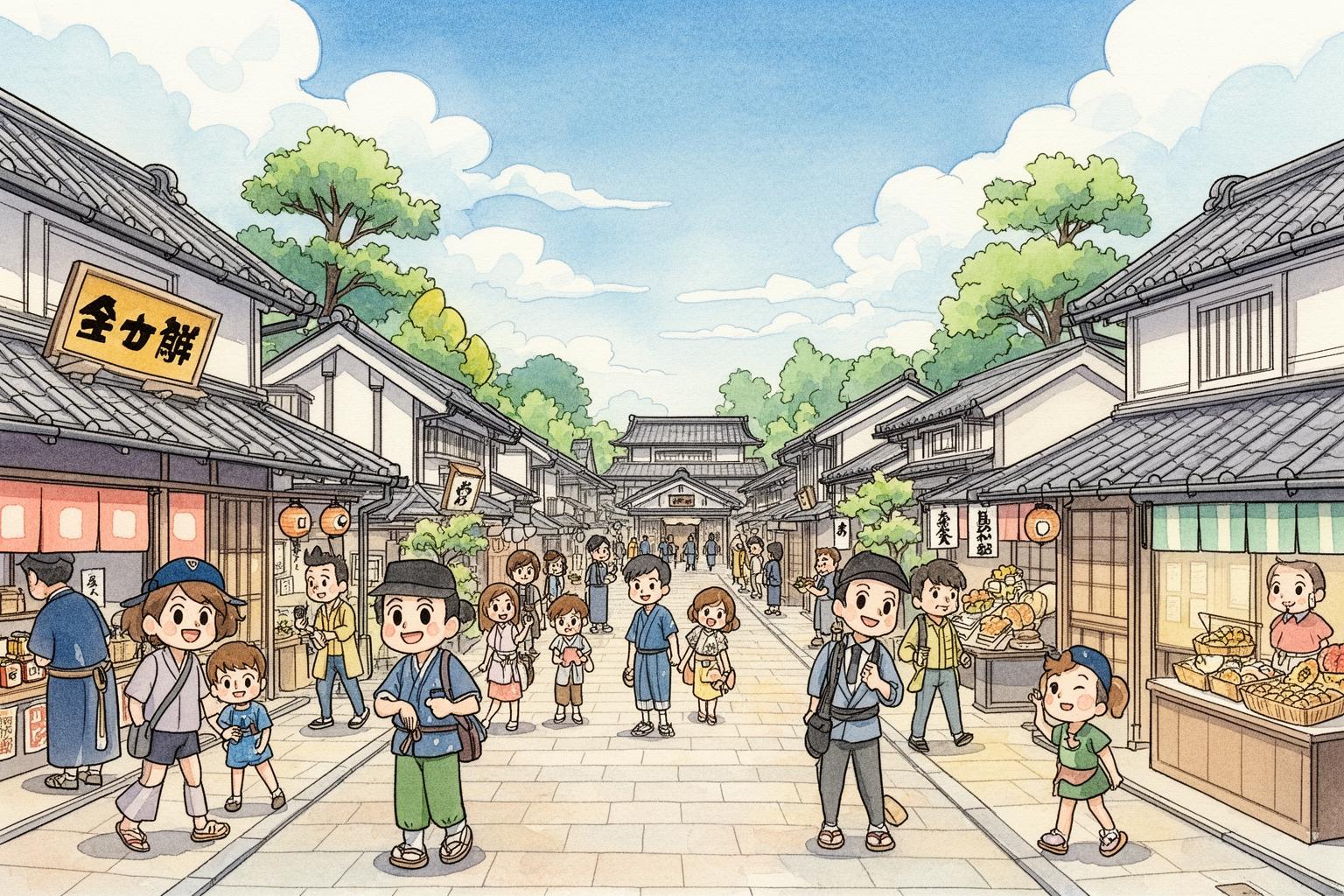
A journey back in time is sure to stir up an appetite, and Sawara satisfies with a culinary scene as deeply intertwined with its history as its architecture. The town’s wealth was founded on food and drink—rice, soy sauce, and especially sake—and that heritage is evident everywhere you go. From historic breweries to cozy cafes tucked into renovated warehouses, dining and drinking in Sawara are essential parts of the experience.
Sippin’ on History: Local Sake Breweries
Situated in the heart of the fertile Kanto Plain, with its premium rice and abundant fresh water from the Tone River system, Sawara naturally became a hub for sake brewing. Several historic breweries remain operational today, preserving centuries-old practices. Visiting one of these, such as Tokun Shuzo or Baishinji, is highly recommended. Many offer tours or tasting rooms where you can sample their brews. Tokun Shuzo, established in 1825, even has a small museum attached to its shop, showcasing old brewing tools and explaining the process. Upon entering, the air is thick with the sweet, fruity scent of fermenting rice. Tasting the sake here, in the very town where it’s crafted, connects you directly to its merchant past. The flavors are often clean, crisp, and reflect the local terroir. It’s an ideal souvenir to take a taste of Sawara home.
Cafe Hopping, Edo-Style
One of Sawara’s greatest charms is how beautifully its old buildings have been repurposed. Many historic kura and machiya have been transformed into atmospheric cafes and eateries. This is your chance to relax inside a piece of history. Imagine sipping a matcha latte in a building that once served as a bustling soy sauce warehouse, its thick earthen walls keeping the space cool even on hot days. These cafes often feature menus that blend contemporary flavors with traditional ingredients. A popular local delight is anything made with sweet potato, a regional specialty. Look for shops selling imogashi (sweet potato snacks) or soft-serve ice cream drizzled with kuromitsu (a rich, dark sugar syrup). Finding a cafe with a window overlooking the Ono River, watching tour boats drift by, is the perfect way to pause and soak in the town’s timeless atmosphere.
Savory Staples
For a heartier meal, Sawara is famous for its delicious unagi (freshwater eel). The nearby Tone River guaranteed a steady supply of top-quality eel. Several long-established restaurants specialize in unagi, grilling it to perfection over charcoal, glazing it with a sweet and savory soy-based sauce, and serving it atop steaming rice. The rich, smoky taste is an iconic flavor of old Japan. Another local favorite is soba noodles. You’ll find charming soba shops tucked away on side streets, offering handmade noodles in hot broth or chilled with dipping sauce. A simple, elegant soba meal in a traditional setting perfectly complements a day exploring Sawara’s serene beauty. Dining here is about more than just food; every meal feels like a connection to the town’s rich and flavorful history.
The Practical Play-by-Play: Getting to Sawara and Nailing the Trip
Alright, so you’re convinced by the Sawara vibe. Now, let’s dive into the logistics. The good news is that for a place that feels so detached from the modern world, it’s surprisingly easy to reach, especially from Tokyo or Narita International Airport, making it ideal for a day trip or a relaxing overnight stay.
The Journey from the Concrete Jungle
From Tokyo, your best option is to take a train from Tokyo Station. You can board the JR Sobu Line Rapid service to Chiba Station, then transfer to the JR Narita Line heading toward Choshi. Sawara is a major stop on this route. The entire trip takes about 90 minutes to two hours, depending on connections. Another choice is the Limited Express Shiosai train, which travels this route as well and is somewhat faster and more comfortable, though it costs a bit more. Just sit back, watch Tokyo’s urban sprawl melt into the rice paddies and peaceful countryside of Chiba, and prepare for a sense of time slipping away.
If you’re arriving at Narita Airport (NRT), you’re in luck. Sawara is very close. You can catch the JR Narita Line directly from the airport terminals. The journey lasts only around 30 minutes, making Sawara a perfect first stop to unwind after a long flight or a wonderful final stop before departure. It offers a gentle introduction to traditional Japan or a last cultural experience before heading home. Using a Japan Rail Pass is a smart choice for these routes, but even without it, fares remain quite reasonable. A Suica or Pasmo IC card works throughout the trip.
Timing is Everything
Sawara is lovely all year round, but your experience may differ depending on when you visit. Spring (March-May) and autumn (September-November) bring the most pleasant weather for strolling. The willow trees along the canal are especially stunning in the fresh green of spring. Early summer (June) is the time to visit Sawara Ayame Park, a short bus ride from town center, featuring a breathtaking display of over a million blooming iris flowers. The absolute peak times to visit are during the Grand Festivals in July and October. To see the town at its most vibrant and lively, these are the best times to come—though be prepared for large crowds.
For a more tranquil visit, weekdays are ideal. You’ll likely have the streets and canals mostly to yourself, allowing for a more reflective and immersive experience. One full day is enough to cover the main sights, take a boat tour, visit the Ino Tadataka Museum, and enjoy a leisurely lunch. If possible, consider spending the night. Waking up in Sawara and having the historic streets all to yourself in the early morning light is a truly magical experience.
Pro Tips for First-Timers
First and foremost: wear comfortable shoes. You’ll be walking on old stone pavements and uneven paths, so heels are not recommended. Second, although many shops and restaurants now accept credit cards, numerous smaller, family-owned places still operate on a cash-only basis. It’s wise to have some yen on hand. Upon arriving at Sawara Station, make your first stop the Tourist Information Center nearby. You can pick up an English map of the historic district, which will be invaluable for navigating the winding streets. They can also provide the boat tour schedule and details on local events. For a different way to explore, consider renting a bicycle. It lets you cover more ground and discover areas just outside the main historic district. Finally, allow yourself to get lost. The best parts of Sawara are often found by wandering down narrow alleys or stumbling upon small, hidden shrines. Don’t rush—the whole point of being here is to slow down and savor the atmosphere.
A Vibe That Stays With You

Leaving Sawara feels like awakening from a beautiful dream. As you walk back toward the station and the modern world gradually reappears, the enchantment of ‘Little Edo’ slowly fades. Yet, the feeling lingers. It’s the tranquility of the willow-lined canal, the echo of festival music, the taste of history in a sip of sake, and the inspiring tale of a man who chose to map the world. Sawara is more than just a well-preserved town; it’s a vivid reminder that beneath modern Japan’s surface, centuries of history, culture, and human stories continue to flow, much like the Ono River itself. It’s a place that reveals the beauty of what has been carefully preserved, the pride of a community rooted in its heritage, and the quiet strength of a lifestyle that cherishes tradition. This is a side of Japan you won’t find in the big cities—a deep, authentic experience that rejuvenates the soul. So, next time you plan a trip, be sure to set aside a day to wander the timeless streets of Sawara. It’s a journey back in time that will undoubtedly become a cherished memory of your Japan adventure.
