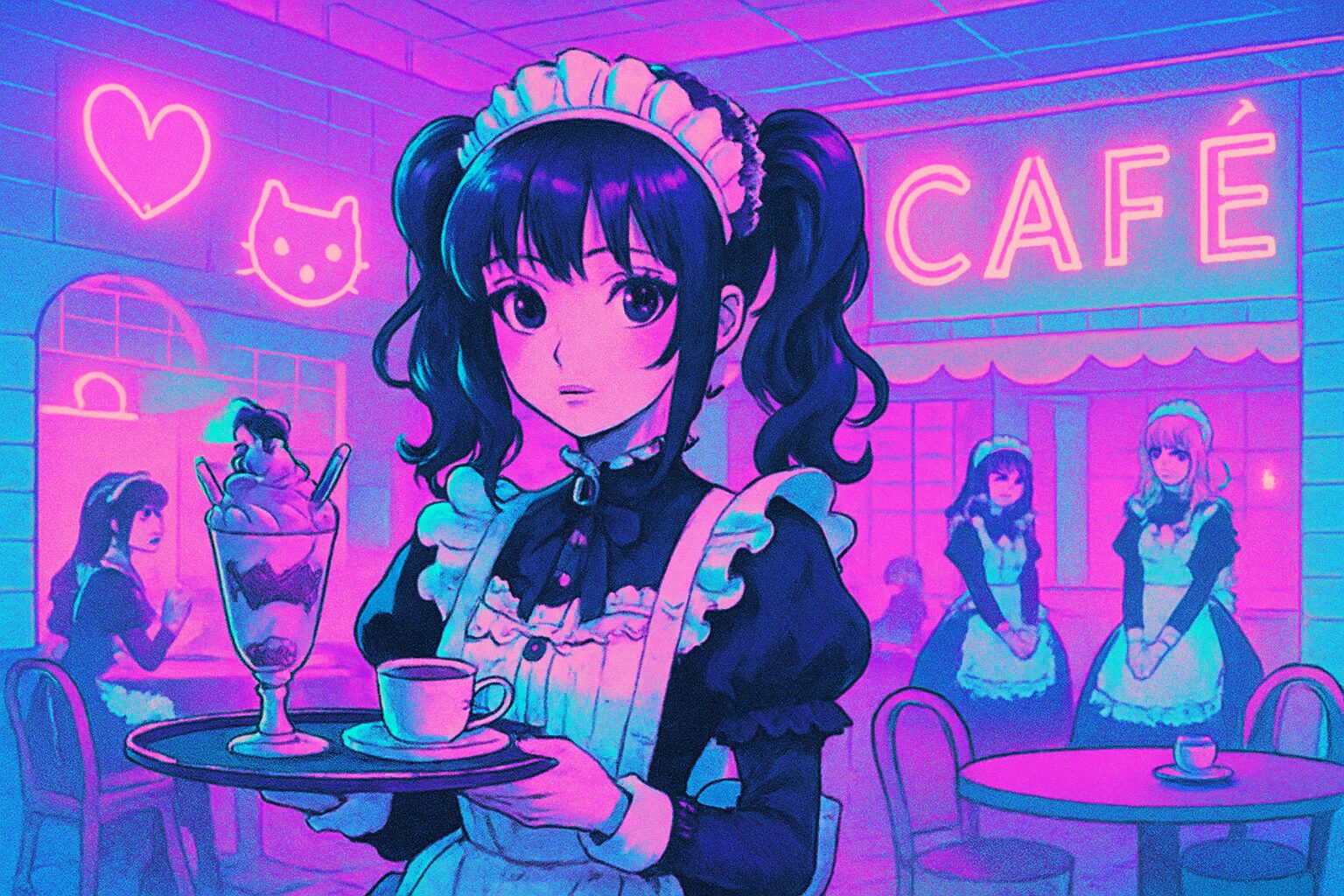
Yo, what’s the vibe? When you picture Japan’s iconic maid cafes, your mind probably jumps straight to Akihabara’s electric streets, buzzing with energy. You’re thinking bright, pastel-colored dresses, super-genki greetings of “Okaerinasaimase, Goshujin-sama!” (Welcome home, Master!), and ketchup art of cute bunnies on your omurice. It’s a whole mood, a total sugar rush of moe culture, and honestly, it’s a must-do. But what if your soul craves something a little less sunshine and a little more moonlight? What if you prefer the elegance of a bygone era, the allure of the mysterious, the beauty in the macabre? If you’re nodding along, then you’re in for a treat. We’re about to peel back the lacy, pink layers of the typical maid cafe scene and descend into the velvet-draped, candelabra-lit world of Gothic Lolita maid cafes. This ain’t your average Akiba experience; this is a full-on theatrical immersion into a world of dark fantasy, where elegance meets the eerie, and every moment is dripping with a kind of beautiful, tragic romance. It’s a whole different side of kawaii, one that finds its aesthetic in the shadows, and it’s absolutely epic. Forget the high-energy J-pop; here, the soundtrack is more likely to be a haunting harpsichord melody or some epic symphonic metal. Before we step through the wrought-iron gates into this enchanting darkness, let’s get our bearings in the heart of it all.
If you’re captivated by this darker, more atmospheric side of Japan’s cafe culture, you might also find the enchanting, nature-inspired world of Mori Girl cafes to be a fascinating parallel.
The Weaving of the Shadow: Where Did Gothic Lolita Even Come From?
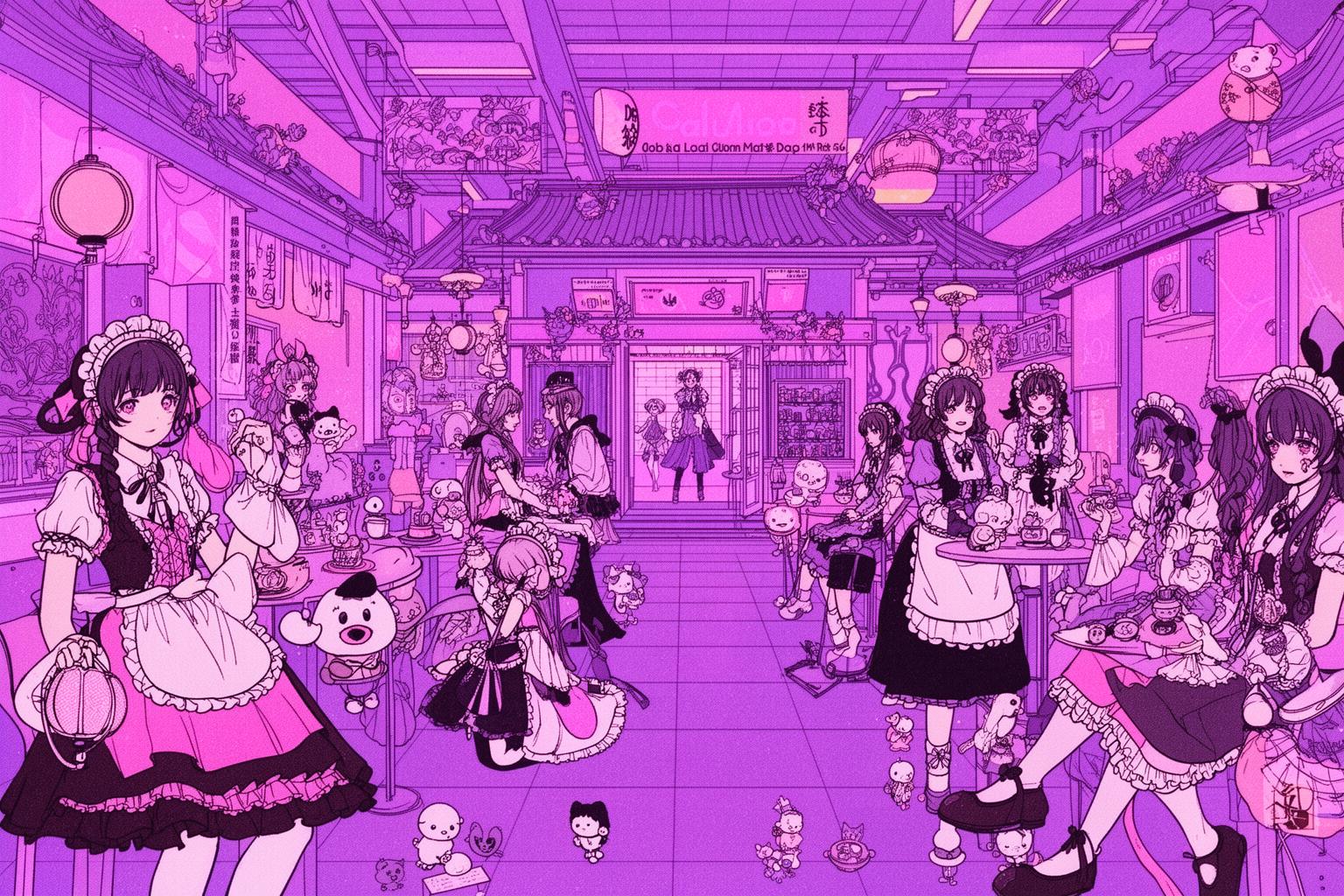
To truly grasp the vibe of a Gothic Lolita maid cafe, you first need to understand its origins. This isn’t just a random trend that suddenly appeared. The aesthetic is a rich and complex blend, woven from elements of music, fashion, and a rebellious yearning for an alternative kind of beauty. The story begins in the late 80s and 90s with the rise of Japan’s Visual Kei music scene. Bands like X Japan and Malice Mizer were about more than just music—they were about spectacle. They developed elaborate, androgynous, and historically-inspired personas. Mana, the iconic guitarist of Malice Mizer, is essentially the godfather of the Gothic Lolita movement. Drawing inspiration from Victorian dolls, French rococo, and gothic horror, he translated this into his fashion brand, Moi-même-Moitié. He even coined the terms “Elegant Gothic Lolita” (EGL) and “Elegant Gothic Aristocrat” (EGA) to define the style: dark, elegant, modest, and exquisitely detailed. This was the initial spark.
This fresh style found its home in the dynamic, ever-changing fashion scene of Harajuku. On the streets and in influential magazines like the “Gothic & Lolita Bible,” the fashion subculture blossomed. It’s crucial to understand this: Lolita fashion is not cosplay. Cosplay involves adopting a specific, pre-existing character from anime, manga, or games. Lolita is a fashion style in its own right, with unique silhouettes, rules, and sub-genres. The core silhouette takes inspiration from Victorian and Rococo children’s clothing, featuring a bell-shaped skirt (supported by a petticoat), a modest blouse, knee-high socks or stockings, and elegant headwear. From this base came numerous sub-styles. Sweet Lolita focuses on pastels, cute prints, and a playful vibe. Classic Lolita offers a more mature look with muted color schemes and historical A-line shapes. And the one we’re here for: Gothic Lolita.
Gothic Lolita, or “GothLoli,” takes the core silhouette and drapes it in darkness. It replaces pastel pinks with deep blacks, burgundies, and royal purples. Cute animal prints give way to motifs like crosses, bats, coffins, and decaying cathedrals. The aesthetic draws heavily on Western gothic influences—Victorian mourning attire, Edgar Allan Poe’s dark romantic poetry, and the melancholic beauty in Tim Burton’s films. It aims to create a look that is simultaneously beautiful and somber, elegant and eerie. It’s a statement, rejecting mainstream trends in favor of a self-contained world of intricate, dark beauty. When this richly aesthetic, immersive subculture merged with the role-playing experience of a maid cafe, something truly magical and unique was born. It created a space where fans of the fashion could live out their dark fairy tale dreams—not just as a style, but as a full experience.
A Requiem for the Mundane: What’s the Vibe Inside?
Stepping into a Gothic Lolita maid cafe feels like crossing into another realm. The moment the door closes behind you, the neon frenzy of modern Tokyo fades away, replaced by a carefully crafted world of shadows and elegance. You are no longer just a customer; you become a “Goshujin-sama” (Master) or “Ojou-sama” (Princess), yet in this setting, you resemble a weary traveler who has stumbled upon a haunted mansion, a vampire’s castle, or a secret gathering of alchemists.
The Atmosphere is Everything
The interior design is the first thing to make an impression. It offers a fully immersive sensory experience. Forget bright, open spaces—think dimly lit rooms with heavy velvet curtains in deep crimson or black that block out sunlight, and ornate wrought-iron chandeliers casting a warm, flickering glow that mimics real candlelight. The furniture is often antique or styled to appear so, featuring dark wood, intricate carvings, and plush upholstery. You might find yourself seated at a table decorated with a candelabra, a single wilting rose in a vase, or even a prop skull. The walls could be adorned with gothic artwork, ornate mirrors framed in tarnished silver, or faux stained-glass windows illustrating scenes from dark fairytales. The air might carry a subtle, sweet scent of incense or aged books. Music plays a vital role here. Instead of the high-energy idol pop common to many Akiba cafes, the soundtrack consists of haunting classical pieces, somber Gregorian chants, dramatic symphonic metal, or ethereal darkwave waltzes. Every element is carefully orchestrated to transport you, to evoke the sensation of leaving the 21st century behind and stepping into a storybook.
The Maids of the Manor
The maids are the soul of this dark fantasy. Their attire is worlds apart from the typical French maid costume. These are elaborate, exquisite Gothic Lolita fashion ensembles. The dresses are usually black but layered with intricate details—imagine delicate Chantilly lace trims, corset-style bodices that cinch the waist, and dramatic bell-shaped skirts supported by voluminous petticoats. Sleeves may be long and flowing, ending in elegant trumpet cuffs. Their headwear is equally important; you might see lace headdresses, miniature top hats cocked just so, bonnets tied with silk ribbons, or delicate veils adding to their mysterious charm. Their makeup is often striking, with dark lipstick, smoky eyes, and a pale complexion reminiscent of a Victorian porcelain doll. Each maid embodies a particular character within the cafe’s overarching theme. She’s not merely a waitress; she could be a vampire noble’s handmaiden, a ghost haunting the manor’s halls, a cursed doll brought to life, or an apprentice to a powerful sorceress. Her movements are graceful and deliberate, her speech formal and refined, sometimes with an archaic flair. The bubbly, high-pitched energy typical of maids is replaced by a cool, enigmatic elegance or gentle, melancholic grace. This isn’t aloofness; it’s maintaining character to preserve the immersive fantasy for guests. The classic “moe” appeal is transformed—it’s not about sudden bursts of cuteness but a slow-burning enchantment found in their mysterious smiles and the depth of their role-play.
The Dark Incantations
One of the most iconic rituals at a maid cafe is the “o-majinai,” the magical spell the maid casts over your food to make it taste better. In a GothLoli cafe, this tradition takes on a delightfully dark twist. Rather than a cute chant like “Moe Moe Kyun!,” the incantation might be a solemn, pseudo-Latin phrase or a rhyming couplet about shadows and secrets. The maid might make a gesture such as drawing a pentagram over your dish or pretending to infuse it with a secret potion. The aim remains the same—to make the experience interactive and magical—but the tone is entirely different. It’s not about adorning your omurice with kawaii flair; it’s about performing a ritual to “awaken the dormant flavors from the abyss” or bestow a “delightful curse of deliciousness” upon your parfait. The ritual is theatrical, entertaining, and draws you even further into the cafe’s distinctive world.
Feasting in the Shadows: A Look at the Macabre Menu
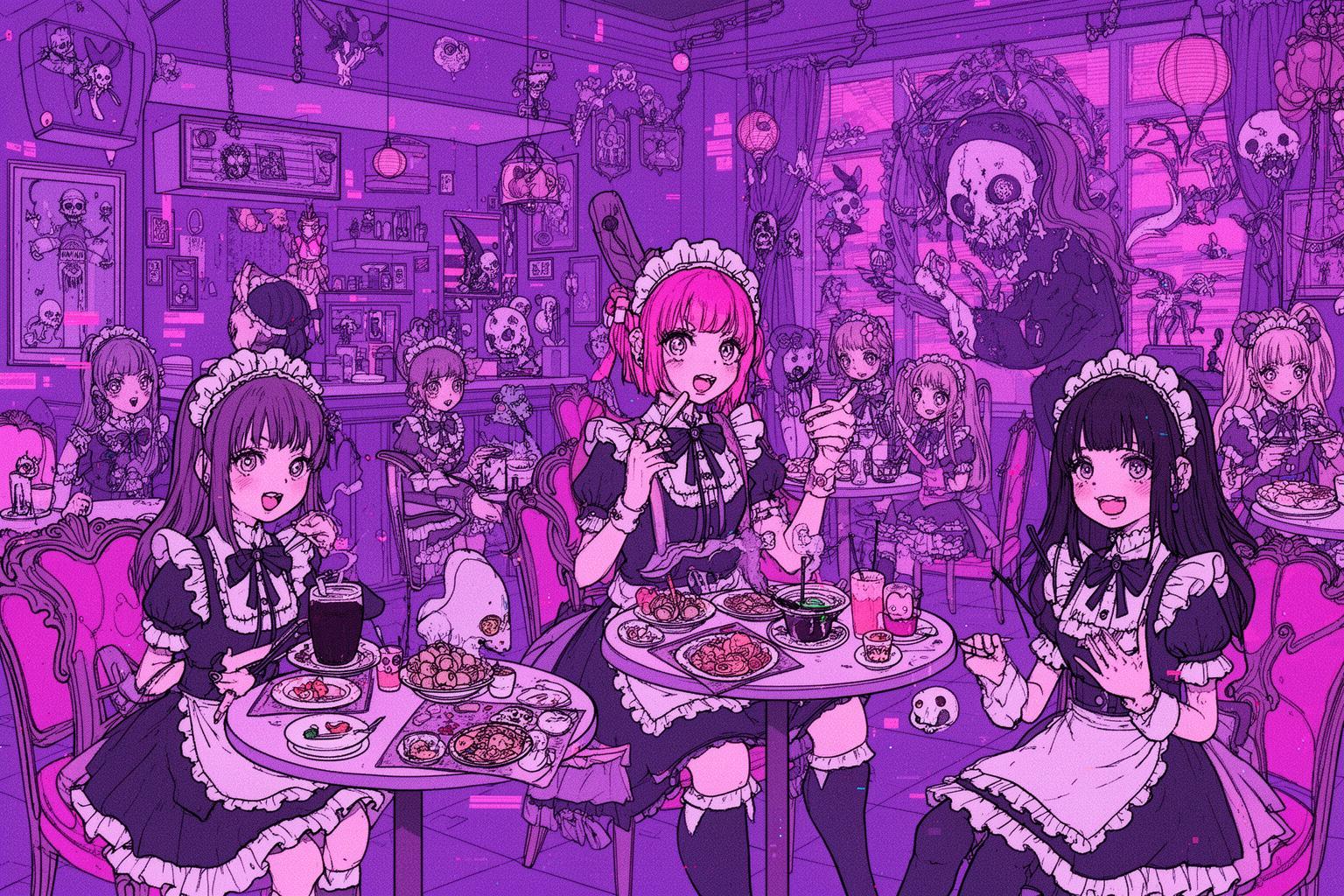
The dedication to the theme is fully reflected in the food and drinks, turning the menu into a grimoire of gothic delights. The dishes are not merely named with thematic flair; they are culinary masterpieces crafted to be as visually captivating as they are delicious. This is where the cafe’s creativity truly comes alive, transforming an ordinary meal into an unforgettable experience.
Savory Secrets
The classic omurice, a staple in any maid cafe, serves as a perfect canvas for gothic artistry. Instead of playful ketchup drawings like cheerful cats or smiley faces, the maids skillfully create intricate spiderwebs, elegant bats, crumbling crosses, or even bloody handprints. The striking contrast of bright red ketchup against the yellow egg amplifies the dramatic effect. Pasta dishes also embrace a darker theme. You might encounter “Abyssal Void Spaghetti,” where squid ink dyes the noodles an eerie black, topped with red tomato sauce and meatballs for a gruesome yet appetizing presentation. Hamburg steaks, another popular choice, may come smothered in a rich, dark demi-glace called “Dragon’s Blood,” shaped creatively rather than as a simple patty, sometimes with melted cheese resembling a ghostly shroud. Even a simple curry can be served with rice molded into skulls or tombstones. The inventive names, like “The Count’s Last Supper” or “Witch’s Brew Stew,” spark your imagination well before the first bite.
Desserts to Die For
If the savory dishes are imaginative, the desserts are simply spectacular. Here, the gothic aesthetic is unleashed in full force. Parfaits stand tall as darkly beautiful creations, with layers of dark chocolate ice cream, blackberry sorbet, and crumbled Oreo “dirt.” Topping these might be a tombstone-shaped cookie, Pocky sticks arranged as dead trees, and a drizzle of raspberry coulis for a splash of “blood.” Cakes often steal the show, adorned with edible black roses with delicate petals or small, detailed white chocolate skulls. Cheesecakes might feature cracked surfaces oozing red jam, aptly named “Broken Heart Cheesecake.” The color palette is expertly employed, blending blacks, deep reds, and purples, offset by stark whites to make the designs pop. Each dessert tells a story—a miniature edible tableau of a hauntingly beautiful nightmare.
Potions and Elixirs
The drink menu is equally dramatic. Non-alcoholic cocktails take center stage, served in distinctive glassware like laboratory beakers, ornate goblets, and flasks. They come with evocative names such as “Vampire’s Kiss,” “Midnight Requiem,” and “Alchemist’s Philter.” Often, the magic unfolds at your table as a maid pours one component into another, triggering a dramatic color change. Dry ice is frequently used to create bubbling, smoking concoctions that cast a mysterious fog over your table. Garnishes are elaborate, featuring intricate sugar spiders, fresh blackberries, and blood oranges. Even a simple latte is given a gothic twist, with foam art depicting bats, crescent moons, or delicate roses instead of the usual hearts or leaves. Every sip becomes part of a performance—a potion that binds you to the cafe’s enchanting atmosphere.
A Guest in the Haunted House: Rules of Engagement
Navigating a Gothic Lolita maid cafe, or any maid cafe, comes with a set of expectations and rules. Knowing them is essential to having a great time while showing respect for the performers and the world they’ve created. It’s not complicated; it’s simply about being a good sport and joining in with the fantasy.
The Unspoken Rules
The key guidelines are largely consistent across themed cafes in Japan. First and foremost: no touching the maids. This is non-negotiable. They are performers, and their personal space must be honored. Likewise, don’t ask for personal details such as their real name, contact information, or where they live. They are portraying characters, and breaking that fourth wall is a serious breach of etiquette. Photography is another important rule. You can generally take pictures of your food and drinks, but snapping photos of the maids or the cafe’s interior is usually prohibited unless you have clear permission. If you want a photo with a maid, that’s what the “cheki” system is designed for. These rules protect the staff and preserve the magical ambiance for all guests. Most cafes operate on a time-based system—typically requiring a seating charge for a set period, usually between 60 and 90 minutes. You’re often also expected to order at least one item per person, usually a food and a drink. The staff will notify you when your time is almost up, so you don’t need to keep track yourself.
Playing Your Role
The best way to enjoy the visit is to fully embrace the experience. You’re a guest in their world, so play along! Address the maids by their character names if you know them. Respond to their greetings and stories. If they treat you like the noble master of a castle, behave accordingly! A bit of role-playing on your part goes a long way and makes the experience more enjoyable for everyone. The maids are trained professionals who can read the room—if you’re shy, they’ll be gentle and guide the interaction; if you’re enthusiastic and engage with the fantasy, they’ll elevate the theatrics. Your enjoyment depends largely on your willingness to suspend disbelief and have fun with the concept.
Capturing the Moment: The Cheki
One of the most popular keepsakes from a maid cafe is the “cheki,” an instant photo taken with your favorite maid using a Fujifilm Instax camera. This add-on service can be ordered from the menu. When you request a cheki, the maid will come to your table, and you can pose together. In a gothic-themed cafe, the poses are often more dramatic and thematic than simple peace signs. You might pose back-to-back like duelists, pretend to be vampires, or enact a spell with dramatic hand movements. After taking the photo, the maid will briefly take it away to decorate it. This is where the magic happens. Using colorful permanent markers, she’ll add the date, her name, a message to you (like “Thank you for visiting my mansion, Master!”), and embellish the borders with detailed, themed doodles such as bats, spiders, roses, and crosses. It becomes a fully personalized, unique memento of your visit—more than a photo, it’s a tangible piece of the fantasy you experienced.
As you finally step out of the dimly lit sanctuary and back into the bright, bustling reality of Tokyo, the spell might be broken, but the feeling lingers. A visit to a Gothic Lolita maid cafe is far more than just a meal. It’s immersive theater, a deep dive into a fascinating and beautiful subculture, and an opportunity to experience a darker, elegant side of Japan’s vibrant pop culture. It’s an invitation to leave the everyday behind and spend an hour or two in a world of velvet, lace, and refined shadows. You walk away not just with a full stomach but with a story to share and the enchanting memory of a beautiful, melancholic world just beyond the veil.