You’ve probably seen them if you’ve ever taken a train deep into the Japanese countryside. Tucked away in a mountain valley or looming over a forgotten stretch of coastline, you spot a massive, incongruous structure. It might look like a misplaced French château or a concrete behemoth of a hotel, with rows of darkened windows staring out like empty eyes. You ask yourself, “What is that doing all the way out here?” You’ve just stumbled upon a ghost of the Bubble.
These are not just abandoned buildings; they are monuments. They are the silent, crumbling tombs of a uniquely Japanese strain of ambition and excess that defined the late 1980s. This was the Bubble Era, a time when Japan’s economy felt invincible, when Tokyo real estate was legendarily worth more than all of California, and when it seemed the good times would never end. Fueled by cheap credit and dizzying confidence, developers embarked on a nationwide building spree, throwing up lavish resort hotels in places that, in hindsight, made absolutely no sense. They were temples of leisure built for a future that never arrived.
When the economic bubble spectacularly burst in the early 1990s, the music stopped. The corporate expense accounts vanished, the land values cratered, and the champagne dreams went flat overnight. The resorts, saddled with impossible debt and located far from sustainable tourist traffic, were left to die. Today, they stand frozen in time, slowly being reclaimed by nature. Exploring what’s left behind isn’t just about looking at ruins; it’s about performing an autopsy on a national dream. It’s a lesson in architecture, economics, and the poignant beauty of failure, all wrapped up in a decaying package.
Amid the crumbling remains of a once-unbridled era, nature’s reclaiming force finds a kindred spirit in Japanese gardens, where cultivated artistry merges with the wild reclaiming of space.
The Anatomy of a Bubble-Era Dream
To grasp why a steel company might choose to develop a Swiss-themed ski resort in a remote part of Niigata, you must first appreciate the intense mania that gripped Japan in the late 1980s. It was a time of boundless optimism. The prevailing belief was “Japan as Number One,” and the booming economy seemed to confirm it. The Nikkei stock index was skyrocketing, and tales of ordinary salarymen turning into millionaires overnight through real estate speculation were widespread.
Money was practically free. Banks were issuing massive loans with minimal collateral, encouraging companies to invest and expand. Yet, with the domestic market saturated, these investments had to be directed elsewhere. Much of it went into vanity projects, and nothing symbolized success quite like a luxury resort. It was a tangible emblem of achievement. The reasoning wasn’t grounded in solid hospitality principles but rather in corporate peer pressure and speculative frenzy. If a rival manufacturing company was building a golf course, you had to construct a bigger one, complete with a hotel and a water park.
This gave rise to a distinct architectural and design philosophy: maximalism. The key principle was overt, unapologetic extravagance. These venues were not intended for quiet reflection; they were stages for indulgence.
Grandiosity as a Feature
The first thing that stands out about a Bubble-era resort is its scale. Everything was designed to overwhelm the senses. Lobbies were immense, cavernous spaces, often centered around multi-story atriums with glass ceilings and panoramic elevators gliding up the walls. Sweeping, dramatic staircases worthy of a Hollywood film were common, crafted for guests to make a grand entrance. Having a pool wasn’t sufficient; you needed an Olympic-sized indoor pool with a wave machine, a separate outdoor pool with a swim-up bar, and perhaps a network of hot tubs for good measure. Chandeliers weren’t mere lighting fixtures; they were glittering, multi-ton crystal and brass sculptures that loudly proclaimed wealth.
The European Fantasy on a Japanese Mountain
Another hallmark was a peculiar obsession with European pastiche. Developers believed domestic travelers sought a foreign experience without a passport. This led to bizarre architectural Disneyland-esque resorts scattered nationwide. Some were meticulously modeled after Bavarian villages, complete with timber-framed buildings and staff dressed in lederhosen. Others replicated French châteaux, with manicured gardens and ornate fountains. Mediterranean themes were also popular, featuring white stucco walls and terracotta roofs suddenly appearing in snowy northern regions.
This was more than a design choice; it reflected the aspirational spirit of the time. Europe symbolized a kind of old-world elegance and sophistication that Japanese companies eagerly adopted. The names of these resorts often reflected this, with grand, vaguely foreign-sounding titles like “Royal Meadow” or “Grand Phénix.” It was a form of cultural cosplay, allowing guests to enter a fantasy realm far removed from their everyday urban lives.
The Self-Contained Universe
The business model aimed to create an all-in-one destination, a self-sufficient leisure ecosystem. The objective was to capture guests and their spending, ensuring they never needed to leave the property. A typical Bubble resort featured a dizzying range of amenities. Multiple restaurants were standard, serving Japanese, French, and Chinese cuisine. There was always a karaoke bar, alongside a bowling alley, video game arcade filled with the latest machines, and indoor tennis courts.
Most resorts centered around a primary activity. Mountain locations had their own ski lifts and slopes, while milder climates boasted sprawling 18-hole golf courses. These were not mere hotels; they were self-contained cities of pleasure, designed to cater to every possible desire of Japan’s emerging leisure class.
When the Music Stopped: The Inevitable Collapse
For a few remarkable years, the party was in full swing. Corporations reserved entire floors for employee retreats, rewarding their teams with ski trips and golf weekends. Families, flush with cash, crowded the resort pools and restaurants. Yet, the foundation of this extravagance rested on speculative ground.
In 1990, the Bank of Japan, alarmed by the runaway asset bubble, sharply increased interest rates. The impact was immediate and devastating. The stock market plummeted, erasing trillions of yen in value. Land prices, which had soared to absurd levels, began a long and painful descent. The Bubble had burst, plunging Japan into what became known as the “Lost Decade.”
The blow to the resort industry was severe. The corporate clients, once the foundation of these establishments, vanished overnight. Companies shifted focus from lavish retreats to mere survival. Ordinary families, facing economic uncertainty, tightened their spending. The steady flow of money sustaining these large, inefficient operations suddenly stopped.
Several factors came together to make their failure not just probable, but unavoidable.
The Hazard of Poor Location
The speculative craze pushed developers to build in ever more remote and ill-considered sites. They purchased cheap mountain land, confident they could create destinations out of nothing. But when the economy soured, this flaw became obvious. These resorts were often a long drive from the nearest train station or highway exit, making them inconvenient for solo travelers. They depended on a critical mass of visitors to thrive, but their isolation turned fatal. The winding mountain roads that once promised glamour now led nowhere.
Overwhelmed by Debt
These resorts were funded with massive loans, secured against land that was grossly overvalued. When land values collapsed, the resorts were worth barely a fraction of their debt. With income drying up, they couldn’t meet loan payments. Banks, facing their own crises, showed no mercy. Foreclosures and bankruptcies surged. Many hotels shuttered abruptly, leaving contents untouched inside.
A Change in National Mood
The Bubble’s collapse did more than damage the economy; it deeply altered the national mindset. The flashy, overt consumption of the 1980s suddenly appeared vulgar and embarrassing. A mood of sobriety and thrift emerged. Travel preferences shifted from extravagant, artificial experiences to smaller, genuine inns, simpler pleasures, and better value. The grand European-themed resorts felt like embarrassing relics of a foolish past. Out of step with the era’s spirit, they never recovered.
A Tour Through the Ruins: What We Find Today
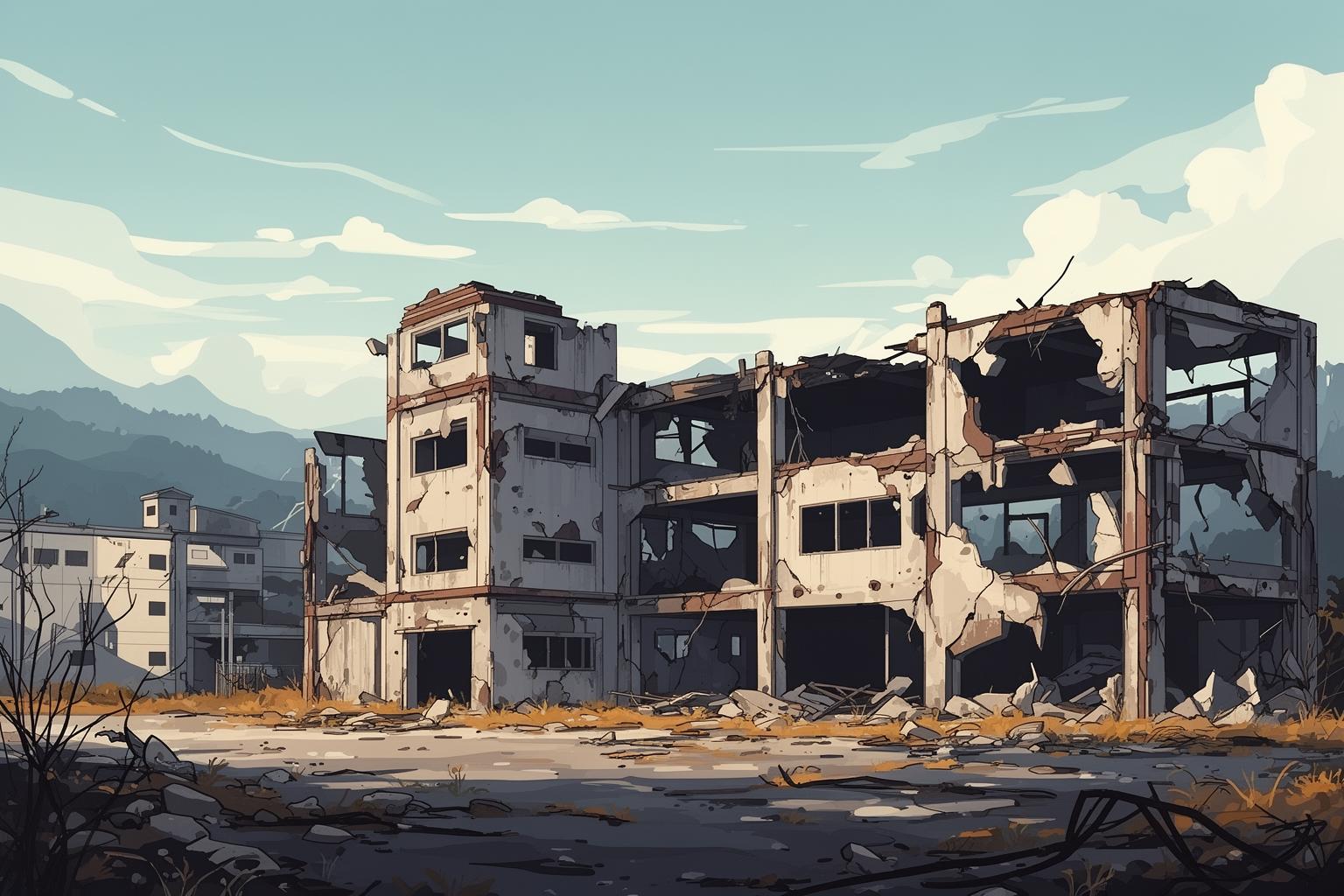
Stepping into an abandoned Bubble-era resort today feels like entering a time capsule. It’s a surreal experience—a quiet clash between faded glamour and slow, deliberate decay. Each ruin tells its own story, yet they all share a hauntingly familiar atmosphere. Let’s take a walk through a typical example—we’ll call it the “Château Royal Onsen Resort.”
The journey starts along an overgrown access road. A beautifully carved sign, now streaked with rust and mold, marks the entrance. The automatic glass doors at the front are either sealed shut with grime or left ajar, pried open by previous explorers. You step inside, and the first thing that strikes you is the silence. It’s heavy and dense, a sharp contrast to the vibrant energy the space once held. The air carries the scent of damp plaster, rotting carpet, and wet earth.
The Echoing Lobby
The grand atrium remains, though it’s only a faint echo of its former glory. Sunlight filters through dirty skylights, illuminating swirling dust particles in the air. At the center sits a grand piano, its wood warped and some keys missing, as if a ghost had tried to play one last, discordant melody. Plush velvet sofas lie beneath a fine layer of dust and debris fallen from the ceiling. At the marble-topped reception desk, guest registration books lie open, their pages swollen and browned by moisture. Often, the most poignant detail is a calendar frozen on a month in 1993 or 1994—capturing the exact moment time stopped.
The Ghosts in the Guest Rooms
Ascending to the guest floors is an unsettling experience. Long, dark hallways are lined with peeling wallpaper, curling from the walls like sunburnt skin. Inside the rooms, the scene often feels oddly intimate. Beds are sometimes still made, their sheets and blankets now harboring colonies of mold. A heavy tube television rests silently on a desk. In a closet, a forgotten yukata (cotton robe) might hang neatly. These personal spaces evoke the strongest sense of abandonment—you can almost sense the presence of the last guests, unaware they were the final ones.
The Drowned Amenities
The resort’s once-grand amenities now serve as the most dramatic stages for nature’s reclamation. The magnificent indoor swimming pool is the heart of the decay. Its water long vanished, replaced by a murky mixture of rainwater, fallen leaves, and debris. The bright blue tiles are cracked and overgrown with moss, while small trees sometimes take root in the deep end. The banquet hall, once a venue for lavish weddings and corporate events, is a vast, empty space. Tables may still be set with decaying tablecloths, awaiting guests who will never arrive. The bowling alley has become a museum of rust, with heavy balls resting in return racks and lanes warped and buckled by humidity. In the game arcade, the vibrant screens of Street Fighter II and Out Run remain permanently dark, their plastic shells thick with grime.
Everywhere you look, nature quietly undoes man’s handiwork. Ferns sprout through damp carpets. Vines creep through broken windows, spreading across the once-pristine interiors. It’s a slow, silent, and strangely beautiful process of erasure.
The Culture of Haikyo: The Allure of Modern Ruins
The presence of these decaying giants has sparked a fascinating subculture in Japan: haikyo exploration. Haikyo literally means “ruins,” but specifically refers to the exploration of modern, abandoned man-made structures. It is Japan’s version of urban exploration, or Urbex.
For haikyo enthusiasts, these resorts are highly prized locations. The attraction is multifaceted and extends well beyond mere trespassing or thrill-seeking. It involves a complex blend of historical curiosity, aesthetic appreciation, and a profound Japanese cultural concept.
Nostalgia and Mono no Aware
At its core, the charm of these places is connected to nostalgia for the Shōwa Era (1926-1989), especially its final, vibrant years. For many explorers, these ruins serve as a direct link to the Japan of their own youth or that of their parents. They represent a tangible piece of a past that feels both startlingly recent and impossibly distant. This evokes a central Japanese aesthetic sensibility known as mono no aware, which translates as “a gentle sadness for the transience of things.” It conveys a poignant awareness of impermanence. Encountering a grand ballroom, once alive with music and laughter, now silent and decaying, is a vivid expression of this idea. Its beauty lies precisely in its fading state.
The Uncanny Time Capsule
Unlike ancient castles or temples, these are modern ruins. The items left behind—telephones, televisions, magazines, beer bottles—are familiar. This generates a strong, uncanny sensation. It is not an abstract historical site; it is a scene from our own era, simply left to deteriorate. This “time capsule” effect is what makes exploring these resorts so captivating. You traverse a freeze-frame of the moment when a dream died. It feels personal and immediate in a way that older ruins do not.
The Aesthetics of Decay
There is also a deep visual appeal for photographers and artists. The way sunlight streams through a broken window to illuminate a dust-filled room, the textures of peeling paint and rusting metal, the vibrant green of moss creeping over a faded pink sofa—all compose a visual language of their own. It is a form of unintended wabi-sabi, the aesthetic of finding beauty in imperfection, impermanence, and incompletion. The forces of nature and time craft compositions no artist could deliberately create. Haikyo photography has become a popular genre, documenting these forgotten places and preserving their decaying beauty before they vanish entirely.
However, it is important to emphasize that this is a clandestine activity. These properties are private, and entering them constitutes trespassing. More significantly, they are often dangerously unstable. Floors might be rotten, ceilings on the brink of collapse, and unseen hazards abound. It is a pursuit suited for the experienced and cautious, not a tourist pastime.
More Than Just Rubble: The Legacy on the Landscape
Beyond the subculture of haikyo, these abandoned resorts hold a deeper significance in modern Japan. They are not merely architectural curiosities; they are tangible scars on the landscape, persistent and unavoidable reminders of a painful period in the nation’s recent history.
For the generations that experienced the Bubble and its collapse, these buildings embody a form of collective hubris. They represent a time when Japan briefly seemed to possess boundless potential, followed by a prolonged and challenging era of economic stagnation and uncertainty. They stand as monuments to overambition, serving as cautions against the risks of speculative excess.
The practical issue of what to do with them is enormous. Demolishing such vast structures, particularly in remote, mountainous regions, is prohibitively costly. The expenses of demolition and asbestos removal can reach into the millions of dollars, far exceeding the land’s value once cleared. Consequently, most are simply left to decay. Ownership is often a complex web of bankrupt companies and defunct lenders, making it nearly impossible to assign responsibility.
These buildings also reflect the broader difficulties facing rural Japan. They were frequently constructed with the hope of bringing jobs and economic renewal to aging, shrinking communities. When they failed, they not only fell short of that promise but also became physical eyesores, symbols of failed investments and burdens on the local environment. They serve as constant reminders of a boom that benefited urban areas but ultimately left the countryside with little more than well-designed ruins.
In the end, these neglected resorts are more than vacant structures. They are quiet stages of memory. They mark the final resting places of a particular, bold, and ultimately flawed vision of the future. As they stand silently against the mountains and sea, gradually yielding their grand ballrooms and fantasy suites to moss and wind, they tell a distinctly Japanese story of ambition, loss, and the slow, inevitable power of time to reclaim all things.