Yo, what’s the move? When you picture Japan, what hits the timeline of your mind? Is it the serene grace of a Kyoto temple, cherry blossoms popping off in a gentle flurry? Or maybe it’s the electric, neon-drenched chaos of Shibuya Crossing, a scene so vibrant it practically buzzes through your screen. Bet. Both are iconic, absolute must-sees. But there’s another layer to Japan’s visual identity, a whole other vibe that’s less about ancient tradition or hyper-modern gloss and more about… the future. A very specific, kinda gritty, totally epic vision of the future, dreamed up decades ago. I’m talking about megastructures. Towering giants of concrete and steel that look like they were ripped straight from the pages of a Katsuhiro Otomo manga or concept art for a cyberpunk anime. This is the world of Metabolism, Japan’s most radical and mind-bending architectural movement, and trust me, going on a pilgrimage to see these concrete beasts is a whole different kind of travel experience. It’s a journey into a future that never quite was, but whose ghost haunts the modern Japanese city in the most fascinating way. Forget what you think you know about architecture being boring. This is architectural storytelling at its peak, a saga of utopian dreams, spectacular ambition, and the beautiful, melancholic decay of a future past. It’s about a group of visionary architects who, in the ashes of World War II, looked at the roaring comeback of Japan’s cities and said, “We can do better. We can build cities that live, breathe, and grow like living organisms.” They envisioned a world of massive core structures with replaceable, plug-in cell units, allowing the city to evolve organically over time. It was a philosophy, a manifesto for a new way of living. And the structures they built? They’re absolute legends. So, buckle up. We’re about to dive deep into the concrete canyons and explore the soul of Japan’s most audacious architectural dream. This is your guide to the titans of Metabolism.
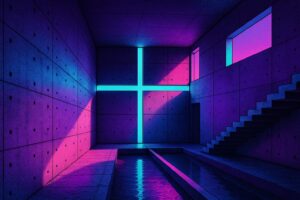
For a different perspective on how Japanese architects have masterfully shaped raw concrete into profound spaces, consider exploring the work of Tadao Ando.
The Ghost in the Machine: Nakagin Capsule Tower (A Loving Memory)
The Ultimate Vibe Check
Let’s begin with the icon that likely occupies your mind if you’ve ever searched for “weird Japanese buildings”: the Nakagin Capsule Tower. Real talk—it’s no longer standing. It was carefully dismantled in 2022, a heartbreaking loss for architecture enthusiasts everywhere. But you can’t discuss Metabolism without paying homage to the original champion of capsule living. Imagine this: two massive concrete towers, not so much soaring as they were fiercely thrust skyward. Attached to these central cores were 140 individual, prefabricated capsules, resembling a chaotic pile of washing machines, each marked by a single, perfectly circular window. It didn’t look constructed; it seemed to have grown or perhaps docked. Each capsule was a tiny, self-contained world, a 10-square-meter pod designed for the modern salaryman, the futuristic nomad. The vibe was pure, raw sci-fi. It was the gritty, lived-in future of Blade Runner, the practical, modular living of Ghost in the Shell. Standing in front of it, you didn’t feel like you were in Ginza, one of Tokyo’s most upscale districts—you felt transported to Neo-Tokyo, waiting for Kaneda’s bike to roar around the corner. The concrete bore the stains of decades of rain and urban grime, lending it a patina of beautiful decay. It was a failed utopia, which made it all the more fascinating. It wasn’t a shiny, idealized future; it was a future that had endured, a future with a story carved into its very walls.
The Lowdown: A Plug-In Dream
The genius behind this marvel was Kisho Kurokawa, one of the youngest and most flamboyant members of the original Metabolist group. He unveiled this landmark in 1972, making a bold statement. The core concept was that the individual capsules could be “unplugged” and replaced every 25 years. The central concrete cores served as the permanent infrastructure, like tree trunks, while the capsules were the leaves, designed to be updated as technology and needs evolved. This was Metabolism’s fundamental principle in its purest form: a building that wasn’t static but dynamic, a living part of the urban ecosystem. The capsules were manufactured off-site, transported by truck, and literally bolted onto the core shafts using just four high-tension bolts. The entire process was unbelievably fast, showcasing the post-war fixation on efficiency and prefabrication. Inside, they were feats of compact design, equipped with a bed, a tiny bathroom unit, a fold-out desk, and a built-in TV and radio straight out of 2001: A Space Odyssey. It represented a vision of flexible, nomadic living for the modern city dweller.
Reality Check: The Dream Fades
So, what went wrong? The 25-year capsule replacement plan never materialized—not once. The cost of manufacturing new capsules and the logistical nightmare of swapping them out while others were occupied proved insurmountable. The dream was captivating, but reality was complicated. Over time, the building fell into disrepair. Hot water was discontinued, leaks became frequent, and the once-pristine white pods grew stained and rusted. To some, it became a vertical slum; to others, a beloved icon. A prolonged and bitter battle erupted between the owners who sought to demolish it for its prime real estate and a devoted group of residents and fans—the Nakagin Capsule Tower Preservation and Restoration Project—who fought desperately to save it. They raised funds, hosted tours, and documented every inch of the structure, turning it into a global symbol of architectural preservation. Ultimately, demolition won, but the story didn’t end there. Preservationists managed to rescue and refurbish over 20 of the original capsules. These pods now live scattered across the world—some in museums, others serving as unique hotel rooms or installations. The spirit of Nakagin endures, a tribute to a future too daring to endure but too iconic to ever truly vanish.
The Concrete Tree of Life: Shizuoka Press and Broadcasting Center
The Vibe Check
Now, let’s shift focus from a ghostly relic to a living, breathing titan. Head over to Tokyo’s Ginza district, not far from where Nakagin once stood, and look up. There it is: the Shizuoka Press and Broadcasting Center. This colossal building is pure Metabolist poetry and stands as one of the best-preserved examples surviving today. Designed by the movement’s godfather, Kenzo Tange, and completed in 1967, this structure is like the architectural equivalent of a mighty oak tree. A massive cylindrical core—the trunk—reaches skyward. From this central pillar, a series of cantilevered glass-and-steel boxes burst out like branches. It’s an asymmetrical, dynamic composition that feels simultaneously strong and surprisingly light. It’s less a singular building and more a cluster of distinct modules clinging to a central spine. This is the megastructure concept in action. You can almost picture the building continuing to grow, with additional office pods being added over time, climbing ever higher into the sky. The vibe is less about dystopian decay and more about powerful, optimistic growth. It’s the kind of building you’d imagine housing a dominant corporation in a futuristic anime—a place of immense influence and technological prowess. Standing at its base, watching the Ginza traffic flow by, you sense the pure, unfiltered confidence of Japan’s economic miracle era captured in concrete and glass.
The Lowdown: Tange’s Urban Vision
Kenzo Tange was the master, the sensei guiding younger Metabolists like Kurokawa and Maki. His vision was broader, focusing on redesigning the entire city rather than just individual structures. The Shizuoka Press Center was a demonstration of his theories on a smaller scale. The central core isn’t merely decorative; it’s a vertical city in itself, housing elevators, stairwells, and all the building’s infrastructure—plumbing and electrical systems included. This frees the office pods, the “branches,” from internal columns, allowing for open, flexible workspaces. The concept was that these functional spaces could be adapted or even replaced over time as company needs evolved, all without disturbing the main structural core. While the pods have yet to be replaced, the principle remains powerful. The building was designed for change even if that change never fully came to pass. Tange wasn’t simply creating an office tower; he was proposing a new urban construction model, a way to bring order to the chaotic growth of modern Tokyo. It was a bold statement that architecture could actively shape society.
How to Vibe With It
This is an active office building, so you can’t just stroll inside to explore. But the best experience is from the outside anyway. It’s located in a highly accessible part of Ginza, close to major stations like Shimbashi and Ginza. The best way to appreciate it is to circle its base, observing how the building’s form shifts from different angles. It occupies a tight, triangular plot, and Tange’s ability to create such a dynamic shape in this constrained space is pure genius. Grab a coffee from a nearby convenience store, find a spot across the street, and simply watch. Notice how the light plays on the glass boxes and how it interacts with the surrounding skyscrapers. It’s a free architecture lesson and a fantastic photo opportunity. The neighborhood itself is a captivating mix of old and new Tokyo. One way leads to the high-end department stores of Ginza, the other to the gritty, salaryman-packed izakayas beneath the Shimbashi train tracks. The Shizuoka Press Center stands as a bridge between these two worlds—a concrete relic of a future that still feels strikingly present.
The Warlord’s Fortress: Yamanashi Press and Broadcasting Center
The Vibe Check
If the Shizuoka Press Center is a graceful, optimistic tree, then its counterpart in Kofu, the Yamanashi Press and Broadcasting Center, is its wild, untamed sibling. This building is, no exaggeration, one of the most intense architectural creations you will ever encounter. Also designed by Kenzo Tange and completed a year earlier in 1966, it pushes the core-and-module concept to the extreme. Rather than a single central core, it features sixteen massive concrete cylinders clustered together like the pillars of some ancient, cyclopean ruin. Slotted between and cantilevered off these formidable pillars are the office spaces, forming a jagged, complex, and astonishingly powerful shape. It doesn’t appear designed—it seems summoned. The vibe is overwhelming. It feels less like an office building and more like a futuristic fortress, a warlord’s command center from a post-apocalyptic saga. The raw, exposed concrete, or béton brut, lends it incredible texture as well as a sense of immense weight and permanence. You could easily picture giant mechs being serviced in its shadow or see it as humanity’s last stronghold in a devastated world. This is a building that doesn’t just occupy space; it dominates it with an almost intimidating presence. It’s Brutalism and Metabolism having a stunning, terrifying offspring.
The Lowdown: Communication Hub as Urban Gateway
Kofu, the capital of Yamanashi Prefecture, isn’t a sprawling metropolis like Tokyo. So why build such a monstrous structure here? Tange had a vision. He saw the building not just as a headquarters for a newspaper and TV station, but as an urban gateway. The massive cylindrical cores weren’t only structural; they were designed to house vertical transportation and services, similar to his Shizuoka project. But here, the spaces between the cores are equally crucial. They create openings and portals that establish visual and physical connections through the building at street level, linking different parts of the city. Tange was thinking on an urban planning scale. He also envisioned that as the company expanded, new functional blocks could be slotted into the empty spaces between the cylinders, enabling the building to grow and evolve over its lifetime. This is the Metabolist dream manifested on a grand scale. It was designed as an “incomplete” building, a framework meant for future growth. Although this expansion never took place, the potential remains evident in its form. You can see the vacant slots and sense the envisioned dynamism—a building forever awaiting its next phase of life.
A Pilgrim’s Destination
The journey from Tokyo to Kofu is an essential pilgrimage for any true Metabolist enthusiast. It’s a straightforward ride on the express train, taking you from Tokyo’s dense sprawl to a more mountainous landscape, with Mount Fuji often visible in the distance. The Yamanashi Press Center is just a short walk from Kofu Station. Like its Tokyo cousin, it’s a functioning building, but its exterior is the main attraction. Spend time walking around it. The way the building reveals its complexity as you move is extraordinary. Each angle offers a new composition, a fresh interplay of solid and void. It’s a photographer’s dream, especially on a day with dramatic clouds. After paying homage to Tange’s concrete beast, explore Kofu itself. Visit the Takeda Shrine, dedicated to the famed warlord Takeda Shingen, and you may notice parallels between the ancient castle ruins and the modern fortress of the Press Center. It’s a captivating contrast of old and new power structures, a recurring theme in Japan.
The Villain’s Lair: Kyoto International Conference Center
The Vibe Check
Let’s make our way to Kyoto—the city renowned for its countless temples, tranquil gardens, and geishas gliding through lantern-lit streets. It’s the last place you’d expect to spot a massive concrete megastructure that resembles a secret lair of a Bond villain. Yet, tucked into the green hills of northern Kyoto, stands the Kyoto International Conference Center (KICC). Designed by Sachio Otani and inaugurated in 1966, this building is a striking break from traditional Japanese design. It’s a masterpiece defined by dramatic angles and grand scale. Characterized by its enormous, slanting walls, it forms a series of gigantic inverted trapezoids. The lines are sharp, bold, and commanding. The expansive exposed concrete creates vast, sweeping surfaces that are both captivating and imposing. Climbing the grand staircase to the main entrance evokes the feeling of approaching a shadowy leader who is about to unveil a plan for world domination. Inside, the main hall is an immense space, featuring intricate concrete truss work overhead and a palpable sense of volume. Surrounding the complex is a beautiful Japanese garden and lake, and the contrast between this brutalist man-made structure and the soft natural landscape creates pure magic. It doesn’t attempt to blend in; instead, it stands out in proud, dramatic defiance—a temple dedicated to a different kind of belief: international diplomacy and human aspiration.
The Lowdown: A Stage for the World
Sachio Otani was a student of the legendary Kenzo Tange, and his mentor’s influence is evident in the KICC’s grand scale and daring concrete use. However, Otani’s vision is distinctly his own. The building’s distinctive shape was not solely for aesthetics. The angled walls and intricate internal structure reflect a Japanese architectural sensibility, reinterpreted into a modern, monumental form. The complex interior spaces, with their multiple levels and intersecting walkways, were designed to foster informal meetings and spontaneous interactions among conference participants—embodying a Metabolist concept of nurturing organic communication and connection. The KICC was Japan’s first national conference center, intended to elevate the country on the global stage—and it succeeded. Its most iconic moment came in 1997 when it hosted the conference that produced the Kyoto Protocol, the landmark international treaty addressing climate change. There’s something poetic about this futuristic, almost otherworldly structure being the birthplace of a global pact to save the planet. It’s a place where humanity’s future has been debated and shaped, fulfilling its role as a global platform.
How to Experience It
Unlike many buildings we’ve covered, the KICC is accessible to the public (though access to certain areas may be limited depending on current events). You can take the Karasuma subway line all the way to its northern terminus, Kokusaikaikan Station, right at the conference center. Visitors are welcome to explore the grand public lobbies and corridors, soaking up the atmosphere. The sheer scale of the interiors is something truly awe-inspiring and must be seen in person. But don’t miss the outdoors. The way the building is positioned within its landscape is a vital part of the design. Stroll through the adjoining garden and observe how the building’s sharp geometric forms mirror the calm surface of the lake. This creates a stunning visual conversation between structure and nature. Visiting the KICC is an essential Kyoto experience for anyone wishing to look beyond the temples and shrines and grasp the modern, ambitious side of Japan. It’s a powerful reminder that even in its most traditional city, Japan’s gaze has always been fixed firmly on the future.
The Evolving Organism: Hillside Terrace
The Vibe Check
Metabolism wasn’t solely focused on enormous, sci-fi megastructures. It also embraced a softer, more human-scale approach, and no better example exists than Hillside Terrace in Tokyo’s ultra-chic Daikanyama neighborhood. Designed by Fumihiko Maki, another key member of the Metabolist group, this is not just a single building but an expansive, mixed-use complex developed in phases over nearly 25 years, from 1969 to 1992. Walking through Hillside Terrace doesn’t feel like being in one spot; it feels like wandering through a small, self-contained village. It comprises low-rise buildings connected by winding pathways, hidden courtyards, and open plazas. The architecture is clean, modernist, and elegant—a refined combination of white walls, glass, and metal detailing. It’s a far cry from the raw concrete typical of Tange’s work. The atmosphere here is calm, sophisticated, and incredibly inviting. It’s the kind of place where you’d want to live, work, and spend time. This is Metabolism for adults. It’s not a bold proclamation; it’s a quiet, thoughtful conversation about how people can live harmoniously in a dense urban setting. It’s the utopian vision of Metabolism realized in a gentle, practical, and beautiful manner.
The Lowdown: Metabolism in Slow Motion
How is this Metabolism? It centers on the concept of growth over time. Maki referred to his method as “group form,” the idea that a cluster of buildings can create a richer, more dynamic urban experience than a single, monolithic structure. Hillside Terrace is the ultimate manifestation of this idea. By developing the project in multiple stages over several decades, Maki allowed the complex to evolve organically. He was able to respond to the shifting needs of both the neighborhood and tenants, adding new elements and refining his design as he progressed. This encapsulates the essence of Metabolism—architecture that isn’t fixed but constantly evolving. The complex is designed with the human experience at its core. The pathways are deliberately winding, meant to encourage strolling and exploration. Public spaces, such as the sunken plaza, invite people to linger. The buildings accommodate a mix of high-end boutiques, art galleries, cafes, offices, and residential apartments. This blend of uses creates a lively, 24/7 community. Hillside Terrace is a masterclass in urban design and a testament to the idea that modernist architecture can be warm, welcoming, and deeply integrated into its surroundings. It demonstrates that the grand ambitions of Metabolism can be scaled down to create something genuinely livable.
Your Daikanyama Day Out
Visiting Hillside Terrace is a true pleasure. Daikanyama is one of Tokyo’s coolest and most enjoyable neighborhoods, and the complex serves as its heart and soul. Reach it by taking the Tokyu Toyoko Line to Daikanyama Station; the complex is just a short walk away. Allow yourself plenty of time to get lost in its network of paths and spaces. Explore the unique shops, visit an exhibition at the art gallery, and be sure to stop for coffee or a meal at one of the stylish cafes. The famous Daikanyama T-Site, home to the incredible Tsutaya bookstore, is right next door and shares a similar design sensibility, making the entire area a paradise for lovers of good design. Experiencing Hillside Terrace isn’t about checking off a building from a list. It’s about immersing yourself in a part of the city crafted with great care and intelligence. It’s a peaceful, inspiring refuge from the chaos of central Tokyo and a perfect example of how architectural vision can create a truly wonderful place.
The Blueprint for the Future: Kiyonori Kikutake’s Sky House
The Vibe Check
Let’s get personal. We’ve explored public buildings and commercial complexes, but what happens when a Metabolist architect designs his own home? You get the Sky House, the personal residence of Kiyonori Kikutake, one of the intellectual pioneers and founding figures of the movement. Completed way back in 1958, before the Metabolist group was even officially formed, this house serves as the opening statement, the thesis for the entire philosophy. From the street, it appears as a simple concrete box hovering in the air. The entire living area is a single, large room, elevated on four massive concrete piers, or pilotis. The effect is striking—a home that seems detached from the ground, floating above the earth. The atmosphere conveys profound intellectual clarity and futuristic ambition. It’s not cozy in the conventional sense; it’s a living laboratory, a prototype for a new way of living. The walls of the main living space were originally almost entirely glass, creating a seamless connection with the sky and the surrounding city. It’s a space that feels open, free, and full of possibility. It is the architectural equivalent of a haiku: incredibly simple in form, yet infinitely profound in meaning.
The Lowdown: A Home That Changes
The Sky House perfectly embodies Metabolist principles. The main living space, supported by the four permanent piers, is what Kikutake called the “major structure.” The elements within and attached to this space—such as the kitchen, bathroom, and later, a child’s room—were considered “minor structures.” Kikutake referred to these modular units as “movenettes.” The core idea was that as the family’s needs evolved over time, these movenettes could be moved, modified, or replaced without changing the fundamental structure of the house. And this wasn’t just theoretical; he actually put it into practice. When his child was born, a children’s room module was literally suspended from the underside of the main floor. When the child grew up and moved out, the module was removed. This represents Metabolism in its most literal and personal form—a house that adapts and evolves alongside the lives of its inhabitants. The space beneath the house was initially an open pilotis area, a continuation of the city. Over time, this space was enclosed to create additional storage and workspace. The Sky House has remained in a constant state of change for over 60 years, serving as a living record of Kikutake’s revolutionary ideas.
A Glimpse of the Dream
The Sky House is a private residence, so you can’t simply knock on the door. It remains in the Kikutake family. However, you can view it from the street in the Otsuka neighborhood of Tokyo. It’s a pilgrimage site for serious architecture enthusiasts. Discovering it tucked away on a quiet residential street is part of the experience. To stand before it is to stand at the very origin of the Metabolist movement. You can witness the raw power of the initial concept—the separation of the permanent structure from changeable, lightweight elements. It’s a tangible piece of architectural history. Looking at this single house reveals the seeds of the Nakagin Capsule Tower, the city-scale plans of Tange, and all the other grand visions that followed. It stands as a quiet yet profoundly powerful monument to the belief that buildings should serve our lives, not the other way around.
Your Metabolist Pilgrimage Plan
How to Approach the Hunt
Alright, you’re excited and ready to witness these concrete giants in person. Let’s get strategic. The key thing to understand is that this isn’t your usual temple-hopping tour. Many of these buildings are active offices or private residences. The aim is exterior appreciation, what the Japanese call gaikan kenbutsu (外観見物), or sightseeing from the outside. You’re here to admire the form, scale, texture, and sheer boldness of the architecture from areas accessible to the public. Bring your best camera, but also be prepared to simply stand and observe. These buildings demand contemplation. Don’t just take a photo and move on; walk around them, view them from different perspectives, at various times of day. Notice how light and shadows interact with the concrete surfaces. Sense the energy of the neighborhoods they occupy. This is a journey of mindful observation.
A Tokyo-Kyoto Itinerary
Japan’s public transportation is legendary for good reason, making a multi-city architecture tour easy to manage. Here’s a suggested plan:
Day 1-2: Tokyo’s Core. Stay somewhere central like Shinjuku or Tokyo Station. Your first day could follow the Ginza/Shimbashi route. Begin at the site of the former Nakagin Capsule Tower. Though the building is gone, the space still holds a powerful presence. From there, it’s a short walk to Kenzo Tange’s Shizuoka Press and Broadcasting Center. Spend time appreciating its verticality. In the afternoon, head to Daikanyama. Lose yourself in the serene, human-scale Metabolism of Fumihiko Maki’s Hillside Terrace—a great spot to relax, shop, and dine. On your second Tokyo day, visit Kikutake’s Edo-Tokyo Museum (currently closed for long-term renovation, but its exterior remains impressive) in Ryogoku, and if you’re dedicated, make the trip to see the exterior of the Sky House.
Day 3: Kofu Day Trip. From Shinjuku Station, catch the JR Chuo Line Limited Express for a scenic 90-minute ride to Kofu. The highlight is Tange’s Yamanashi Press and Broadcasting Center, a short walk from the station. Spend an hour or two thoroughly exploring its exterior. Afterwards, visit Kofu’s other attractions like Maizuru Castle Park for panoramic views of the city and surrounding mountains.
Day 4-5: On to Kyoto. Take the Shinkansen (bullet train) from Tokyo to Kyoto—it’s an experience in itself. After settling in, dedicate half a day to the Kyoto International Conference Center. Take the subway to the line’s last stop and emerge into a world apart. Explore the building’s public spaces and its beautiful garden. Spend the rest of your time in Kyoto balancing this futuristic vision with the city’s ancient sites. Visit Kinkaku-ji (the Golden Pavilion) or Fushimi Inari Shrine, soaking in the remarkable temporal contrast unique to Japan.
The Final Word: Concrete Afterglow
Journeying to see Japan’s Metabolist architecture is more than just an architectural tour—it’s a kind of time travel. You’re stepping into a future imagined during a period of immense optimism, turmoil, and transformation in Japan. You’re witnessing the dreams of architects who believed they could solve modern urban issues through bold and innovative design. Some of these dreams, like Nakagin, have fallen into beautiful, melancholic ruins. Others, like Hillside Terrace, have matured into graceful, cherished elements of the urban fabric. And some, such as the KICC and the Tange towers, still stand as powerful, awe-inspiring monuments to a future that feels just beyond reach. These buildings are not merely concrete and steel. They are stories. They are manifestos. They are tangible evidence of a unique and potent moment in Japanese culture when anything seemed possible. To see them is to grasp a deeper layer of the Japanese psyche: the ongoing dialogue between tradition and innovation, acceptance of impermanence, and the relentless, audacious drive to envision what comes next. So go. Walk these concrete canyons. Feel the weight of these structures. And let their strange, beautiful, dystopian aura stay with you long after you’ve returned home.