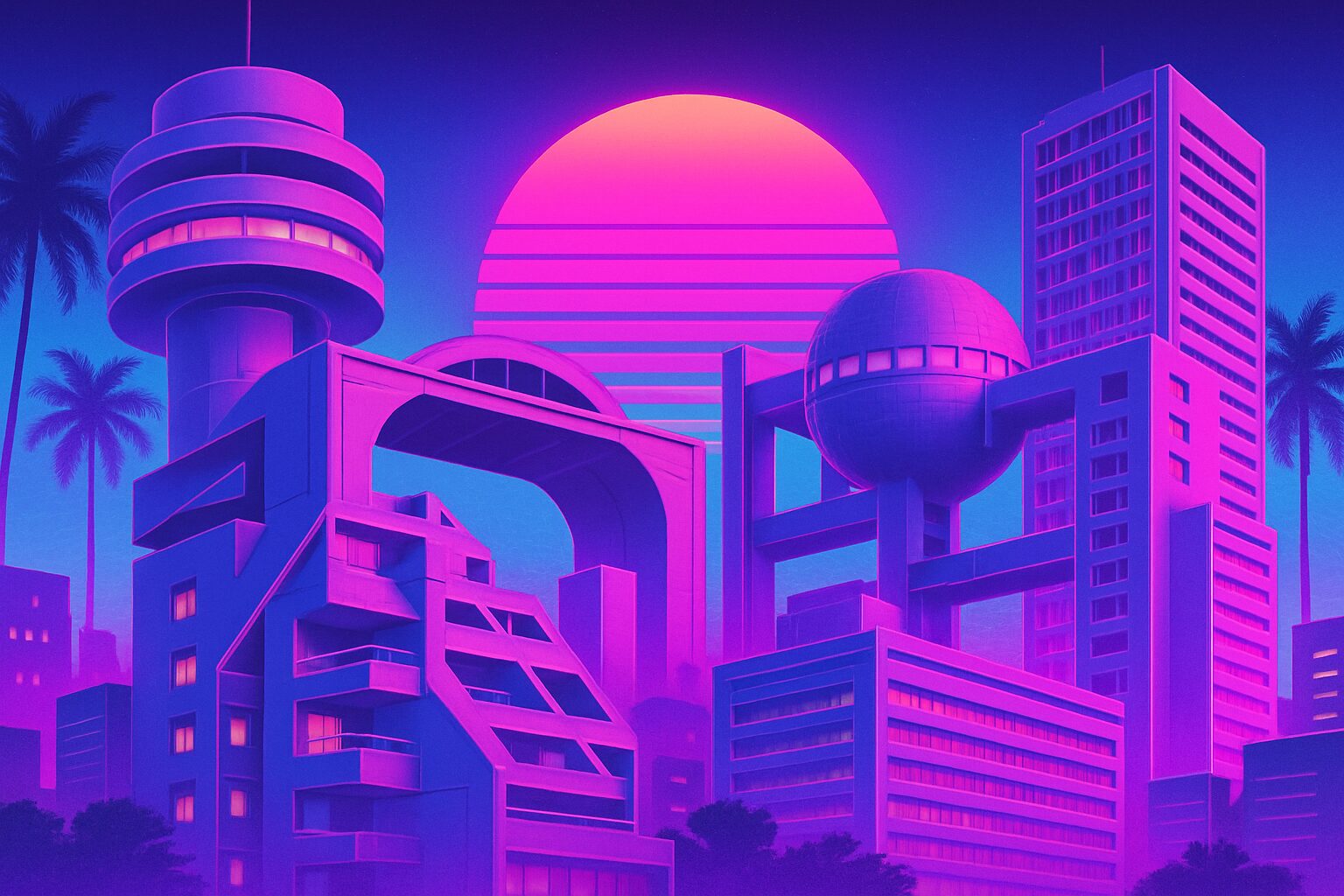
Yo, what’s the deal? It’s Shun Ogawa, and today we’re diving deep, not into some ancient temple, but into a vibe that’s way more recent and, honestly, way more wild. We’re about to time-travel back to Japan’s Bubble Era—that insane period in the late ’80s and early ’90s when the economy was on fire, cash was flowing like water, and the country was building its future, literally. The architecture from this era? It’s something else. It’s bold, it’s bizarre, and it’s dripping with an almost reckless optimism. These buildings weren’t just made to be functional; they were built to flex. They were monuments to a future that felt limitless, a concrete manifestation of Japan’s economic swagger. But the party didn’t last forever. The bubble burst, and many of these futuristic visions were left behind, becoming strange, beautiful relics of a bygone dream. They feel lost in time, echoes of an extravagant past standing silently in our modern world. Today, we’re going on a hunt for these concrete ghosts, to feel the vibes, understand the history, and see a side of Japan that’s totally off the beaten path but absolutely essential. It’s a journey into ambition, excess, and the beautiful melancholy of what gets left behind. Let’s get it.
To see how this audacious architectural spirit evolved from earlier radical movements, explore the fascinating world of Japanese Metabolism.
The Final Boss of Bubble Architecture: Tokyo Metropolitan Government Building
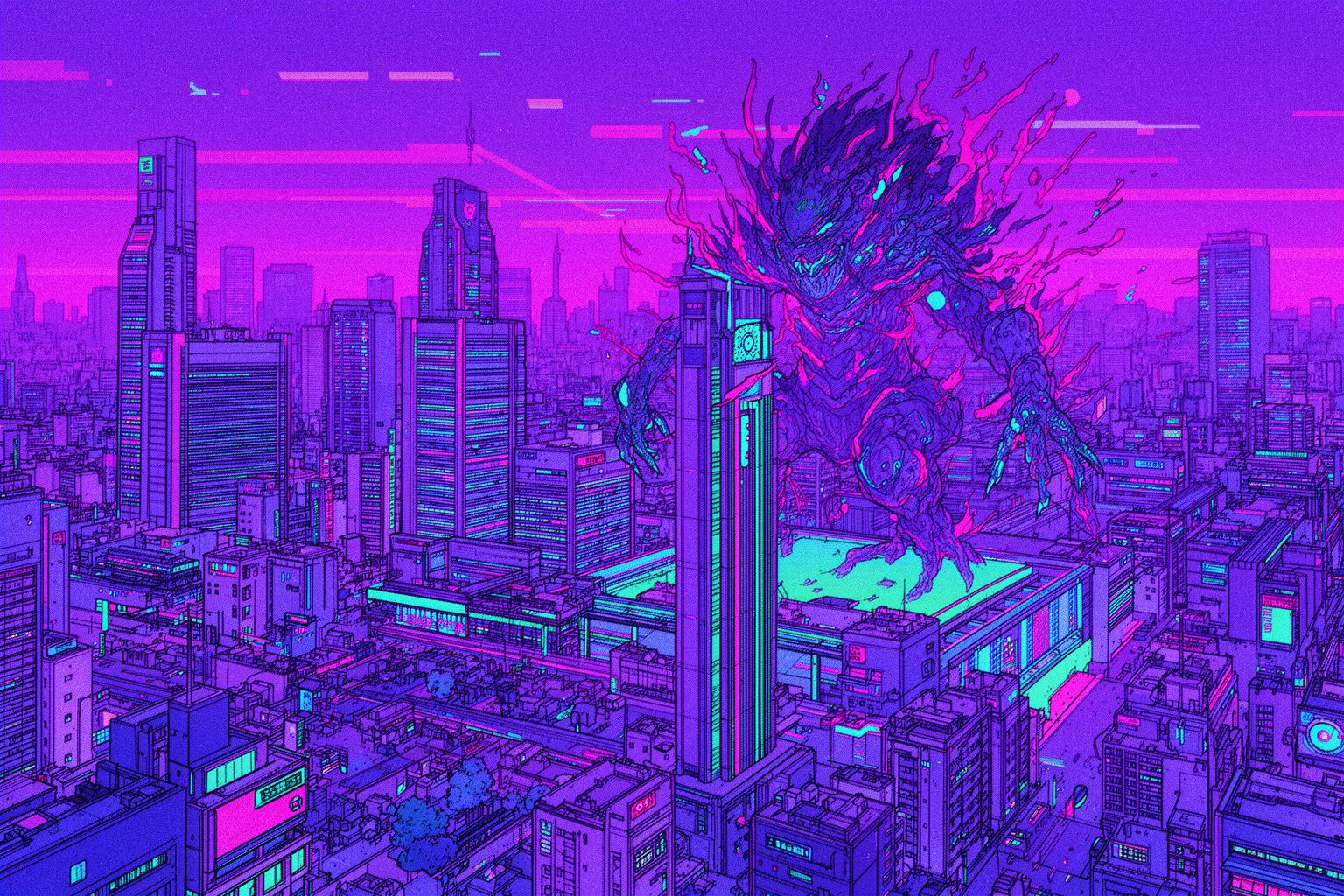
First stop: Shinjuku. You can’t miss it. Emerging from the concrete jungle of west Shinjuku’s skyscraper district stands the absolute giant, the undisputed icon of Bubble Era architecture: the Tokyo Metropolitan Government Building, or ‘Tocho’ as the locals call it. This structure isn’t just a building; it’s a bold statement. Completed in 1991, just as the bubble economy began to deflate, it was the ultimate power move—a ¥157 billion flex from Tokyo to the world. The mastermind behind this marvel was the legendary architect Kenzo Tange, a titan of Japanese modernism. With Tocho, Tange didn’t just design an office tower; he created a symbol.
A Postmodern Cathedral for the People
Standing at the foot of this colossal structure and looking up is truly an experience. The scale is immense. Two towers, soaring 243 meters high, joined by a central plaza. The design is famously intricate, with a facade resembling a microchip or some complex circuit board. Tange himself said he drew inspiration from the Gothic cathedrals of Europe, especially Notre Dame in Paris. You can definitely see it. The way the main tower splits into two near the top gives it that iconic cathedral silhouette. But instead of stone gargoyles and stained glass, you have grids of granite, steel, and reflective glass. It’s a cathedral not dedicated to a deity, but to the governance and economic power of Tokyo. It’s pure postmodern brilliance, melding historical influences with futuristic design. It feels like something straight out of Blade Runner or a high-budget mecha anime. The sheer audacity to build something this grand, this detailed, for a government office is peak Bubble Era ambition.
The View from the Top is Giving Main Character Energy
The best part about this architectural titan? It’s made for the people. Both the North and South towers feature free observation decks on the 45th floor. That’s right—free. In one of the world’s most expensive cities, you can take a dedicated elevator all the way to the top of this landmark and soak in a panoramic view that’s simply breathtaking. The entire city of Tokyo sprawls out beneath you—a seemingly endless sea of buildings, highways, and parks. On a clear day, you can spot the majestic outline of Mount Fuji to the west, and the Tokyo Skytree and Tokyo Tower to the east. It’s a prime photo opportunity. The atmosphere up there is surprisingly relaxed. Tourists and locals mingle, pointing out landmarks, while the city hums softly below. There are cafes and souvenir shops, but the main draw is pressing your face to the glass and trying to grasp the vastness of the metropolis.
How to Vibe with Tocho
Getting there is easy. It’s just a ten-minute walk from the west exit of Shinjuku Station, the busiest train station on earth. Simply follow the signs for the ‘Tokyo Metropolitan Government Building.’ It’s a functioning government building, so the vibe on the ground floor is a bit formal, but everyone is welcome. The elevators to the observation decks are clearly marked. A pro tip: visit about an hour before sunset. You’ll catch the city bathed in the warm glow of late afternoon, watch the sun dip below the horizon (maybe even behind Fuji-san if you’re lucky), and then see Tokyo transform into a dazzling sea of neon lights as night falls. It’s three shows in one (and it’s free—an unbeatable deal). Visiting Tocho isn’t just about seeing an impressive building; it’s about experiencing the ambition of the city itself. It’s a living monument—still active, still stunning, and still offering one of Tokyo’s best experiences.
Odaiba’s Sci-Fi Dream: The Fuji TV Headquarters
Next, we’re hopping on the Yurikamome line, an automated train that glides over the Rainbow Bridge, heading to the man-made island of Odaiba. This area is essentially a Bubble Era theme park. Conceived in the ’80s as a futuristic city of tomorrow, Odaiba is full of bold architectural experiments, wide-open spaces, and a distinct sci-fi atmosphere. At its center stands a building so wild and unconventional, it must be seen to be believed: the Fuji Television Headquarters.
A Spaceship Has Landed in Tokyo Bay
Designed by the legendary Kenzo Tange and completed in 1997 (technically post-Bubble, but conceived with full Bubble Era spirit), the Fuji TV building is a mind-blowing spectacle. It resembles a giant, futuristic erector set, a steel framework holding up a massive, 1,200-ton titanium sphere. This sphere, known as “Hachitama,” is suspended 123 meters in the air and looks like a spaceship docked to a space station. The design exudes confidence and creativity. The story goes that Tange aimed to create a building that was not just a static block but a dynamic structure—a “city within a city”—that felt open and connected to the sky and sea around it. He absolutely succeeded. The building doesn’t merely sit on the landscape; it dominates it. It’s playful, powerful, and utterly unforgettable. The entire structure is engineered to be earthquake-resistant, a technical achievement as impressive as its appearance.
Inside the Sphere and Beyond
That giant sphere isn’t just for show; you can actually go inside. The Hachitama serves as an observation deck, offering stunning views of Tokyo Bay, the Rainbow Bridge, and the Tokyo skyline. Being inside this enormous metal ball, suspended in the air, is surreal—it’s like standing on the bridge of a starship. Beyond the sphere, the building operates as a broadcast center, and there are public areas with exhibits about popular Fuji TV shows and characters. But the real magic of this place lies in experiencing it as part of the wider Odaiba landscape. This island is a Bubble Era fever dream brought to life. Nearby, you can visit the Decks Tokyo Beach and Aqua City Odaiba shopping malls, relax at Odaiba Seaside Park, and, of course, admire the life-sized Gundam statue standing guard. It’s a whole vibe, a day trip immersing you in Japan’s pop culture and futuristic fantasies.
Accessing the Future
The journey to the Fuji TV building is part of the experience. Riding the Yurikamome line from Shimbashi Station is a must. The driverless train offers incredible views from the front seat as it loops and soars over the Rainbow Bridge. Get off at Daiba Station, and the building is impossible to miss. A small fee is required to enter the Hachitama observatory, but it’s well worth it for the unique experience and the photo ops. First-time visitors should embrace Odaiba’s eccentricity fully. It’s a place that refuses to be dull, and the Fuji TV headquarters is its brilliantly bonkers heart.
The Gilded Ghost: Meguro Gajoen’s Opulent Overload
Let’s shift gears from futuristic sci-fi to something entirely different, yet equally soaked in the extravagance of the Bubble Era. We’re heading to Meguro to visit the “Palace of the Dragon God”—better known as Meguro Gajoen, now officially Hotel Gajoen Tokyo. This isn’t your typical minimalist Japanese style; it’s quite the opposite. It’s a sensory feast of gold, lacquer, intricate carvings, and priceless art so lavish it feels like a dream. Though its roots go back to the 1930s, the hotel underwent a grand, no-expenses-spared renovation during the Bubble Era, transforming it into the monument of opulence we see today.
Immersed in Extravagance
The moment you enter Meguro Gajoen, you know you’re somewhere extraordinary. The lobby alone is a spectacle, featuring a vast atrium, elaborate floral arrangements, and traditional artwork on every wall. The atmosphere feels different—heavier with the weight of all that artistry. The hotel is renowned for its almost obsessive dedication to traditional Japanese crafts. Think walls adorned with mother-of-pearl inlays, ceilings filled with exquisite paintings, and entire rooms that are essentially livable art pieces. This style, often called “Showa Kenran” or Showa Era splendor, was taken to the extreme thanks to Bubble Era funding. The result is a dizzying, almost overwhelming display of wealth and craftsmanship, complete with streams flowing through the interior and lacquered bridges crossing them. Even the bathrooms are famously luxurious, with stalls that double as works of art. This place is extravagance turned up to eleven, unapologetically so.
The Famous Hundred Steps Staircase
The highlight of Meguro Gajoen is the “Hyakudan Kaidan,” or Hundred Steps Staircase. This is the only remaining part of the original 1930s wooden building and is a designated Tangible Cultural Property of Tokyo. It’s more than just a staircase; it’s a gallery. The long, steep stairway connects seven rooms, each decorated by a different prominent artist of that era. Every room is a unique world of beauty, with themes ranging from peaceful nature scenes to dramatic historical events, all painted in stunning detail on the walls, ceilings, and fusuma (sliding doors). Walking up the stairs and glimpsing into each room feels like a sacred journey through Japanese art history. The staircase itself is crafted from dark, polished wood that creaks underfoot, adding to the historic and almost mystical ambiance. The Hyakudan Kaidan often hosts special exhibitions, so the room contents may vary, but the breathtaking framework remains constant. It’s a spectacular trip back in time, preserved within the larger, more contemporary hotel complex.
Experiencing the Palace
Meguro Gajoen is just a short walk from Meguro Station. While it operates as a luxury hotel, you don’t have to be a guest to enjoy its magnificence. The public areas are open for all to explore, and it’s worth wandering around just to take in the atmosphere. To visit the Hyakudan Kaidan, you’ll need to purchase a ticket, usually tied to the current exhibition, but it’s well worth it. If you want to indulge, have a coffee or meal at one of the hotel’s restaurants—a splurge that lets you soak in the one-of-a-kind, almost surreal setting. Visiting Meguro Gajoen is a vivid reminder that Bubble Era excess wasn’t only about futuristic skyscrapers; it was also about investing boundless resources into preserving and magnifying traditional Japanese beauty to an almost fantastical level.
Asakusa’s Golden Icon: The Asahi Super Dry Hall
Now for one of Tokyo’s most talked-about, photographed, and, let’s be honest, most perplexing architectural landmarks. Head over to Asakusa, the heart of old Tokyo with its renowned Senso-ji Temple. Just next to this bastion of tradition, across the Sumida River, stands a building that perfectly exemplifies a conversation starter: the Asahi Beer Hall, also known as the Super Dry Hall. And perched on its roof is… well, let’s get into that.
The Flame and the… Other Thing
Completed in 1989, this building was designed by the French avant-garde designer Philippe Starck. The structure itself is made of polished black granite, intended to resemble a giant beer mug topped with a frothy white head of foam. That’s impressive enough. But the real centerpiece is the massive, 360-ton golden sculpture on its roof: the “Flamme d’Or” (The Golden Flame). According to Asahi, this flame symbolizes the “burning heart of Asahi beer.” But according to almost every Tokyoite and tourist, it looks like a giant golden poo. There’s no denying it; the nickname “kin no unko” (the golden poo) caught on instantly and has since become a term of affection for this delightfully odd landmark. The boldness to place such an abstract, divisive sculpture in one of Tokyo’s most historic neighborhoods is Bubble Era bravado at its wildest and most brilliant. It was a statement that modern Japan could be playful, quirky, and irreverent, even amidst its most sacred traditions.
A View to Remember
Unfortunately, you can’t actually go inside the flame. The building contains a beer hall on the ground floor where you can, fittingly, enjoy a fresh pint of Asahi Super Dry. The best way to appreciate this architectural marvel is from a distance, where you can take in its full, eccentric context. The prime viewpoint is from the Azuma-bashi Bridge, the red bridge crossing the Sumida River right beside it. From here, you get the perfect shot: the Asahi Beer Hall topped with its golden flame, the adjacent golden Asahi Beer Tower (designed to look like a full beer glass), and the towering Tokyo Skytree in the background. It’s a visual mashup of old and new, serious and silly, that perfectly captures the chaotic spirit of modern Tokyo. It’s a must-have photo for anyone visiting the city. You can also enjoy a Sumida River cruise for a fantastic view from the water.
How to Appreciate the Golden Poo
Getting there is simple. It’s just a short walk from Asakusa Station on the Ginza and Asakusa subway lines. After exploring the wonders of Senso-ji Temple and Nakamise-dori street, head toward the river—you won’t miss it. Our advice? Don’t just snap a photo and move on. Stay a while. Grab a beer at the hall or relax in Sumida Park on the opposite riverbank and watch the boats drift by. The Asahi Beer Hall teaches us not to take things too seriously. It’s a building that makes you smile, puzzles you, and sparks conversation. In a world often filled with sterile corporate architecture, this golden curiosity is a breath of fresh, beer-scented air. It’s an icon because of its weirdness, not despite it.
The Bubble Goes West: Osaka’s Umeda Sky Building
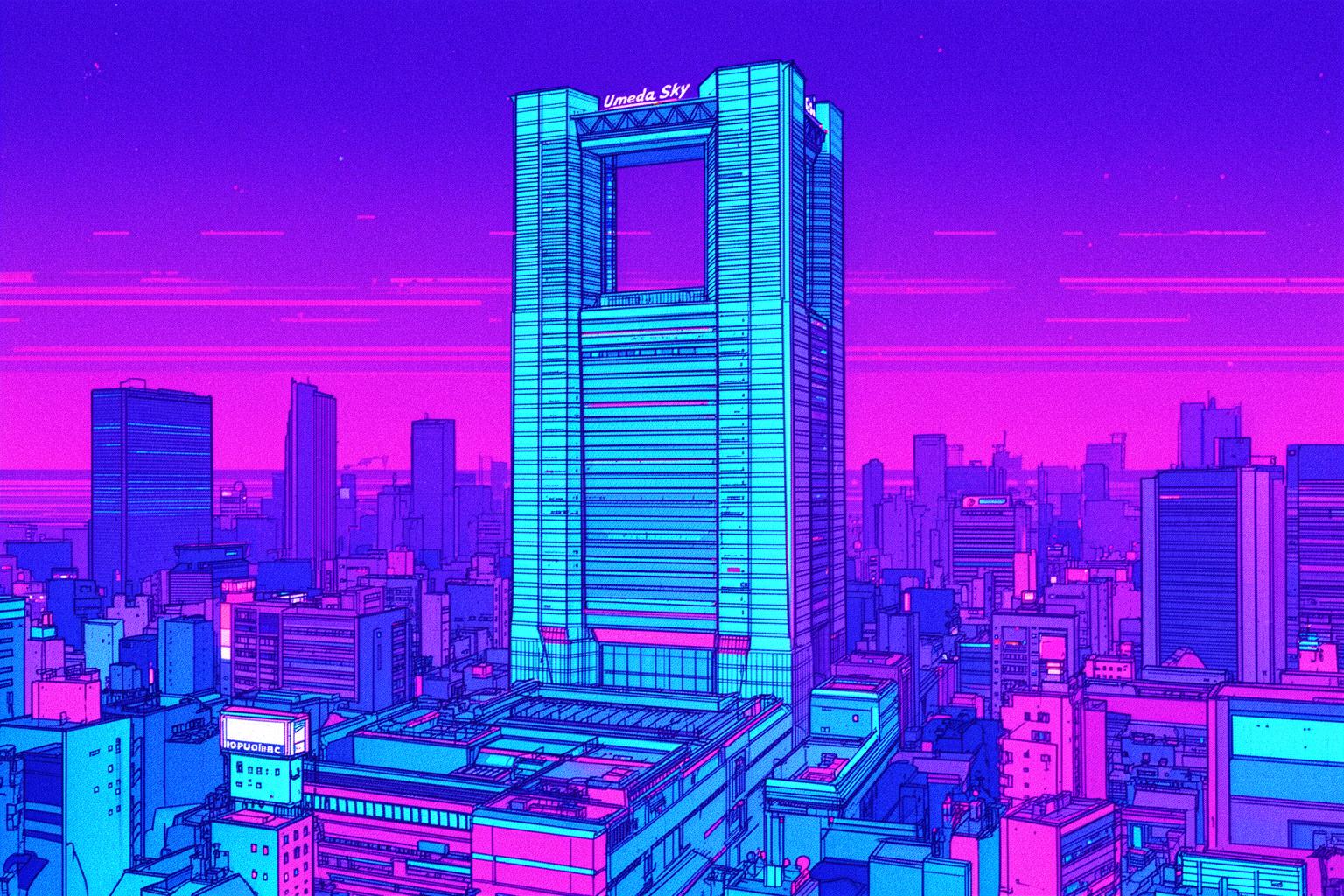
If you think all the architectural eccentricity is limited to Tokyo, let’s hop on the Shinkansen and head to Japan’s other megacity, Osaka. This city pulses with its own kind of energy—louder, bolder, and more in-your-face than Tokyo’s—and its iconic Bubble Era landmark perfectly captures that vibe. We’re talking about the Umeda Sky Building, an astonishing structure that seems like it was transported straight from the year 2049.
The Floating Garden in the Sky
Finished in 1993, this building is a stunning feat of engineering and creativity. Designed by Hiroshi Hara, the same architect behind Kyoto Station, it comprises two 40-story towers linked at the top by a huge, ring-shaped structure called the “Floating Garden Observatory.” This isn’t merely a bridge; it’s a complete glass-and-steel donut suspended 173 meters above the ground. The construction was remarkable: the observatory was built on the ground and then hoisted into place by cranes. The final result resembles a futuristic portal or a triumphant gateway to the sky. From afar, it commands a strong, almost robotic presence on the Osaka skyline. At night, it illuminates like a celestial beacon.
The Thrilling Ride Up
Visiting the Umeda Sky Building is an experience on its own. You take an elevator up to the 35th floor of one tower, then step onto a glass-enclosed escalator that crosses the vast open space between the two towers to reach the Floating Garden. This escalator ride is not for the faint-hearted. You’re suspended in midair, slowly ascending toward the massive ring, with the city sprawling below. It feels like boarding a UFO. Once you reach the observatory, you enjoy a 360-degree, open-air view of Osaka. Unlike many observatories that are fully enclosed, the Umeda Sky Building offers a rooftop deck where you can feel the breeze and truly connect with the skyline. The deck’s floor is sprinkled with fluorescent stones that glow in the dark, creating a magical, starry path as you walk around. It’s a perfect blend of romance and sci-fi. Naturally, the view is spectacular, showcasing Osaka’s dense urban landscape, its rivers, and the distant mountains.
Practicalities for a Sky-High Visit
The Umeda Sky Building is situated in Osaka’s Kita district, about a 10-15 minute walk from Osaka Station or Umeda Station. The walk includes an underground passageway, which can be a bit tricky to find but is well-marked. There is an admission fee for the Floating Garden Observatory, but it’s an essential Osaka experience. In the building’s basement is the Takimi Koji Gourmet Street, a replica of a Showa Era street filled with excellent restaurants, providing a fun, nostalgic contrast to the futuristic atmosphere upstairs. Visiting the Umeda Sky Building perfectly embodies the Bubble Era’s forward-looking optimism—a period when architects weren’t just building upward; they were inventing new ways to experience the city itself.
Faded Glory: The Lost Worlds of Resort Complexes
The architectural heritage of the Bubble Era extends beyond city centers. In fact, some of its most haunting and poignant relics are scattered throughout the Japanese countryside. During the boom years, developers invested enormous sums of money to build vast, luxurious resort complexes in remote mountain and coastal areas. Ski resorts, hot spring hotels, and European-style villages emerged, offering a lifestyle of leisure to the newly wealthy. The guiding principle was “bigger is better.” However, when the economy collapsed, many of these ambitious projects were abandoned to decay, becoming what are now referred to as haikyo—modern ruins.
Echoes in the Mountains
Consider sprawling ski resorts in Niigata or Nagano, featuring dozens of lifts, massive hotel towers, and even indoor water parks. A well-known example is Hoshino Resorts Tomamu in Hokkaido. Originally developed during the bubble years, its iconic twin towers, The Tower, rise prominently from the forest. It also boasts a vast indoor wave pool called Mina-Mina Beach, reflecting the era’s aim to master nature and offer entertainment regardless of the season. While Tomamu has been successfully revitalized, many other resorts were less fortunate. They now stand as silent monuments, their ski lifts rusting and hotel windows shattered. Exploring these sites (often legally questionable and physically hazardous, so this is more a conceptual reflection) evokes a tangible sense of faded glory—almost as if you can hear faint ’80s pop music and the laughter of skiers believing the party would never end.
The Melancholy Beauty of Mono no Aware
These neglected resorts may be the purest expression of the Bubble Era’s aftermath, evoking strong liminal space vibes. The aesthetic is a haunting blend of luxury and decay: peeling wallpaper in a once-grand ballroom, an empty swimming pool filled with rainwater and leaves, a futuristic monorail track leading nowhere. This brings to mind the classic Japanese concept of mono no aware, a gentle, melancholic awareness of the impermanence of all things. Witnessing these once-shining symbols of prosperity being slowly reclaimed by nature is a powerful, contemporary embodiment of this idea. These concrete skeletons are more than failures; they are time capsules telling a profound story of dreams, ambition, and the inevitable passage of time. They serve as a reminder that even the most solid and imposing structures are temporary. While we do not recommend venturing into hazardous ruins, acknowledging this side of the Bubble Era adds essential depth to the narrative. It wasn’t only about gleaming skyscrapers; it was also about grand, beautiful, and ultimately tragic failures.
The Ephemeral Nature of Concrete: Legacy and Loss
As we follow the trail left by these Bubble Era giants, we are faced with a difficult question: what does their future hold? While landmarks such as Tocho and the Umeda Sky Building remain celebrated icons, many other structures from this architectural period are under threat of demolition. They are often costly and challenging to maintain, and their flamboyant designs can fall out of favor. The most famous and heartbreaking example of this is the Nakagin Capsule Tower.
A Eulogy for a Fallen Icon
Designed by Kisho Kurokawa and completed in 1972, the Nakagin Capsule Tower predates the Bubble Era but served as the spiritual pioneer of its futuristic, experimental spirit. It was a masterpiece of the Metabolism movement, envisioning a flexible, adaptable city where individual living pods could be attached to a central core. For decades, it stood in Ginza as a cherished, albeit decaying, symbol of architectural idealism. Despite impassioned efforts to preserve and restore it, the tower was sadly demolished in 2022. Its loss left a significant void in Tokyo’s architectural landscape and acted as a stark reminder that even world-renowned buildings are not everlasting. The story of Nakagin underscores the ongoing conflict between development and preservation in Japan, compelling us to consider which parts of our recent history deserve saving.
Why These Buildings Still Slap
So, why should we care about these sometimes gaudy, often impractical buildings? Because they are genuine. They perfectly capture the spirit of their time—a period of boundless optimism, economic strength, and a hint of madness. They constitute an essential chapter in Japan’s story. Visiting them offers a drastically different perspective than the serene temples of Kyoto or the tranquil gardens of Kanazawa. This is the Japan that hustled, dreamed large, and wasn’t afraid to be a little eccentric. It’s the Japan that created the technology and pop culture that conquered the world. These buildings are the tangible expression of that energy.
As a traveler, seeking out Bubble Era architecture is like becoming an urban archaeologist. You learn to read the city in new ways, noticing layers of history not only in ancient wood but also in ’80s tilework, reflective glass, and bold cantilevers. It’s a way to connect with the modern soul of Japan. So next time you’re in Japan, look beyond the traditional. Seek out the strange angles, the oversized atriums, and the buildings that seem to belong to another era. You might just discover your new favorite place.
A Concrete Dream
Chasing the ghosts of the Bubble Era is an adventure, in every sense of the word. It’s a journey through a distinctive moment in history when Japan seemed unstoppable, building a future to match. From the cathedral-like Tocho to the quirky Golden Poo, these structures are more than just concrete and steel. They are stories, monuments to ambition, reflecting a time when no idea was too wild and no budget too large. They carry an energy— a blend of pride, nostalgia, and a touch of melancholy for a future that never quite unfolded as expected. Yet, they remain here, standing as defiant, often beautiful reminders of that electric dream. So, go out there. Find them. Stand beneath them and feel the echo of the past. It’s a side of Japan hiding in plain sight, waiting to share its utterly bonkers story. Peace out.