Yo, what’s up, world travelers and anime fans! Mia here, ready to spill the tea on a place that’s straight out of a historical epic. Forget the neon glow of Tokyo for a sec and let’s talk about a real-deal time capsule. We’re heading way up north to Akita Prefecture, to a town called Kakunodate. This isn’t just any old town; it’s nicknamed the “Little Kyoto of Michinoku” (Michinoku being the old name for the Tohoku region), and trust me, it lives up to the hype. Imagine a place where samurai literally used to walk, and their cribs are still standing, looking crisp and clean after 400 years. This is Kakunodate’s Samurai District, or Bukeyashiki, a spot so well-preserved it feels like you’ve walked onto the set of a Kurosawa film. It’s a place where history isn’t just in a book; it’s in the dark wood of the walls, the moss on the stone lanterns, and the whisper of the wind through ancient cherry trees. This town is a whole mood, a low-key flex on modern life, showing you how the elite warriors of Japan lived, plotted, and chilled. It’s where you go to get that main character energy, walking the same paths as legendary figures, feeling the weight and the elegance of a bygone era. We’re talking about a journey back in time, and you’re the protagonist. So, get ready to dive deep into the world of samurai architecture, feudal politics, and jaw-dropping seasonal beauty. This is your ultimate guide to Kakunodate, the town that time decided to bless.
The Vibe Check: What is Kakunodate Even?

So, imagine this: You step off the Shinkansen, the bullet train that just sped you through miles of Japanese countryside, and suddenly, the atmosphere changes. The air feels different—quieter. You wander a few blocks, and bam, you find yourself on a street that seems untouched by time. The roads are wide, the trees towering, and on either side stretch long, imposing black wooden walls, broken up by intricate gates. This is Bukeyashiki Street, the heart of the samurai district. The sensation is immediate and immersive. It’s a full sensory experience. You hear gravel crunching beneath your feet, the distant chime of a bell, the rustle of leaves from trees that have witnessed generations. You catch faint scents of wood, damp earth from the gardens, and perhaps a hint of miso from a nearby brewery. It’s no theme park; it’s a living, breathing neighborhood. Some of these historic homes are still inhabited. The place commands respect—a quiet reverence. The scale of the properties, with their vast gardens hidden behind formidable walls, tells a tale of power, status, and a deep bond with nature. Unlike the cramped, narrow streets common in many old Japanese towns, Kakunodate feels spacious, almost grand. This was intentional, reflecting the samurai class’s stature. It’s a place that naturally slows you down. You can’t rush through it. You find yourself strolling at a slower pace, eyes drawn to details: the way light filters through maple leaves, the texture of a mud wall, the ornate lock on a wooden gate. It’s a complete aesthetic, a flawless blend of austere strength and natural beauty. It’s the kind of place you visit to clear your mind, to feel connected to something larger and older than yourself. The energy here is calm yet potent, like a resting warrior. It’s the ultimate chill spot for history lovers and anyone wanting to escape the rush of the 21st century.
History Level-Up: The Samurai Sauce Behind the Scenery
To truly appreciate Kakunodate, you need to know its origin story. This town didn’t just happen to look this cool by chance. It was all part of a strategic plan from 1620 during the Edo Period, a long time of relative peace under the Tokugawa shogunate. The Ashina clan initially designed the town, but the Satake clan, specifically the Satake North Family, were the key players who shaped Kakunodate as we know it today. After a major clan reshuffling, they were relocated here from another domain and became the new rulers of the area. They implemented the town’s distinctive layout, which is central to its historical charm. The town was divided into two distinct areas, separated by an earthen mound called the ‘Hiyoke,’ meaning ‘firebreak.’ This served not only as a fire safety measure but also as a clear social boundary. To the north was the Uchimachi, or Inner Town, the exclusive, high-status zone for samurai. Around eighty families lived here, their homes aligned along wide, grand streets. The size and location of each residence directly mirrored the occupant’s rank—it was the ultimate feudal suburb. To the south was the Tomachi, or Outer Town, where merchants, artisans, and commoners resided. This area was more compact, featuring narrower streets and buildings designed for commerce and everyday life. This clever urban planning explains why the samurai district has been preserved so impeccably. It was a self-contained world, separated from the busy merchant town. The samurai here served the Satake clan as administrators, guards, and retainers. Their lives were governed by a strict code, but their houses were sanctuaries—spaces for family, strategic meetings, and cultural arts such as tea ceremonies and poetry. This social structure stayed intact for centuries until the Meiji Restoration in 1868, which changed everything. The samurai class was abolished and the feudal system collapsed. Suddenly, these warriors had to find new roles. Many left, but a remarkable number of families in Kakunodate adapted, becoming landlords, politicians, and businessmen. Importantly, they preserved their ancestral homes. This, along with the town’s remote location in Akita, spared it from rapid industrialization and wartime destruction that devastated many other historic cities in Japan. The result is what you see today: one of the most complete and authentic samurai districts in the country, a living blueprint of feudal society.
The Main Quest: Exploring the Samurai Residences
Alright, it’s time to delve into the actual houses. This is the main event of your Kakunodate adventure. Several residences are open to visitors, each boasting its own distinct story and atmosphere. You could easily spend an entire day hopping between these remarkable properties. Pro tip: be sure to pick up a combination ticket at the start of your visit, which offers discounted access to multiple houses. Wear your most comfortable shoes, because we’re about to embark on some serious historical sightseeing.
Aoyagi Samurai Manor Museum (Aoyagi-ke): The G.O.A.T.
First on the list is the Aoyagi House; and honestly, this place isn’t just a house—it’s an entire compound. It stands as the ultimate samurai manor in Kakunodate, the final boss of the district. Calling it a ‘house’ really undersells it. The Aoyagi family ranked among the highest in the domain, and their estate reflects this prestige. It’s a vast, sprawling complex covering nearly 10,000 square meters. You enter through an impressive thatched-roof gate, which opens into a world of its own. It feels less like a single residence and more like a multi-building museum complex that offers a 360-degree glimpse into samurai life. The main building is breathtaking—a prime example of high-status samurai architecture with spacious tatami rooms, elegant sliding screens, and a viewing veranda overlooking a meticulously maintained garden. But that’s just the start. The Aoyagi-ke includes multiple armories housing an incredible collection of samurai armor, helmets, swords, and spears. You can get an up-close look at the intricate craftsmanship behind these weapons. It’s astonishing to think about the history these artifacts have witnessed. Then there’s the Akita Folk Museum, showcasing rural life and traditional crafts from the region. Another building is dedicated to ‘kura,’ traditional storehouses, where valuables were safely preserved. One of the highlights is the Haikara-kan, a Meiji-era museum displaying items from the late 19th and early 20th centuries, illustrating Japan’s rapid modernization. Here you’ll find old cameras, gramophones, and other Western-influenced artifacts, which feel like a fascinating epilogue to the samurai era. But wait, there’s more. The Aoyagi-ke is highly interactive. You can try on authentic (and very heavy) samurai helmets and armor for a photo that’s sure to wow your Instagram followers. You can even hold a genuine samurai sword (under supervision, of course). There’s also a restaurant serving local Akita cuisine, and a gift shop offering high-quality crafts. The gardens are exceptional, featuring ancient trees, moss-covered stones, and tranquil ponds. You could easily spend half a day exploring Aoyagi-ke without growing bored. It’s the most comprehensive and engaging of all the residences—a must-visit that sets the bar for the whole district.
Ishiguro Samurai House (Ishiguro-ke): The OG Vibe
If the Aoyagi-ke is the blockbuster museum, the Ishiguro House is the indie arthouse film—pure, authentic, and deeply atmospheric. This is the real deal. The Ishiguro family was another high-ranking samurai household, serving as the clan’s treasurers. Their residence is considered one of the best-preserved and architecturally significant houses in Kakunodate. Here’s the coolest part: direct descendants of the original Ishiguro family still live in part of the house. This isn’t a static museum; it’s a living piece of history. When you visit, you’re essentially being welcomed into their ancestral home. The main section is open to the public, and often a family member or knowledgeable guide is there to share insights on the history and architecture. This personal touch makes the experience especially meaningful. The first thing you’ll notice is the striking simplicity and elegance of the design. The house features a magnificent thatched roof and classic black ‘kuro-bei’ walls. Inside, the layout is a masterclass in samurai-era practicality and aesthetic. You’ll see the formal ‘genkan’ entrance, guest reception rooms with beautiful alcoves (‘tokonoma’), and private living quarters. The woodwork is stunning, with dark, polished pillars and beams that have endured for centuries. The guide will highlight fascinating details, like the ‘kugikakushi’—ornamental nail covers often shaped like flowers or animals—and intricate ‘ranma’ carvings above sliding doors, which allow airflow while adding artistic flair. A standout feature of the Ishiguro-ke is its ‘kura,’ the family storehouse. This thick-walled, fireproof building is open to visitors and houses a fascinating collection of heirlooms, including anatomical drawings from the Dutch reflecting the family’s interest in Western medicine, historical documents, and samurai armor. The garden is another masterpiece—a classic Japanese strolling garden with a peaceful pond, ancient trees, and thoughtfully placed stones. It’s designed to be viewed from the house, creating a perfect harmony between indoor and outdoor spaces. The Ishiguro House provides a quieter, more contemplative experience than Aoyagi-ke. It’s the place to immerse yourself in the authentic atmosphere of a samurai home and appreciate the subtle beauty of its design. It’s truly a gem.
Iwahashi, Odano, and Other Residences
Besides these two headliners, several smaller samurai houses are also worth your time. The Iwahashi House was another high-ranking samurai residence. Though somewhat smaller, it exudes a charming rustic appeal. Film fans will appreciate that it was used as a location in the acclaimed 2002 movie The Twilight Samurai (Tasogare Seibei), adding a cool layer of pop culture significance to its historical value. The Odano House is also intriguing. The Odano family was unique, not only as samurai but also as scholars and artists. Odano Naotake, a notable family member, was a pioneer of the ‘Akita Ranga’ painting style, blending Japanese techniques with Western-style realism. The house reflects this artistic and intellectual heritage, often showcasing exhibits related to their contributions to art and science. Then there are residences like the Matsumoto House, which belonged to a lower-ranking samurai family. Visiting here offers a fascinating contrast, illustrating how life and architecture varied by social status. The property is smaller and the design more modest, rounding out your understanding of the samurai social hierarchy. Each of these houses adds another layer to the story of Kakunodate, each with its own unique flavor and narrative. Exploring them is like uncovering different chapters of the town’s epic tale.
Architecture 101: Decoding the Samurai Cribs
Strolling through Kakunodate feels like attending a masterclass in traditional Japanese architecture. The style seen throughout is known as ‘Bukeyashiki-zukuri,’ which translates to ‘samurai residence style.’ This distinctive architectural form was designed to convey power, ensure security, and maintain harmony with nature. Let’s explore the key features so you can fully appreciate the brilliance behind the design.
Bukeyashiki-Zukuri Style: A Display of Prestige
The first striking feature is the walls. Those long, black-painted wooden plank walls, often capped with tiles, are called ‘kuro-bei.’ The black paint was more than just decorative; it was a symbol of status. Because the paint was costly and acted as a preservative, these walls subtly flaunted the family’s wealth and importance. Next is the gate, or ‘mon.’ The gate was highly significant. Its size, style, and complexity were strictly regulated by the samurai’s rank. Prominent families like the Aoyagi or Ishiguro had large, ornate gates with smaller doors for daily use, whereas lower-ranking samurai had simpler entrances. As the first thing visitors encountered, the gate immediately conveyed the family’s social standing. Inside, the house’s layout is carefully planned, distinctly separating public and private areas. The ‘genkan’ served as the formal entrance hall for guests, who were then guided to the ‘zashiki,’ or main reception rooms. These elegant rooms featured tatami flooring, beautifully painted sliding doors (‘fusuma’), and a decorative alcove (‘tokonoma’) displaying hanging scrolls and flower arrangements to impress visitors. The family’s private quarters were tucked away at the back, hidden from view. This spatial separation was essential for security and upheld the formal etiquette that governed samurai society.
The Subtle Symbolism of Gardens
The gardens complement the residences and hold equal importance. They were more than mere decoration; they embodied the samurai’s philosophy. Unlike flashy, colorful gardens seen elsewhere, samurai gardens tended toward austerity and symbolism, designed to inspire contemplation and reflect the owner’s inner self. Many feature Zen Buddhist elements, with carefully positioned rocks symbolizing mountains or islands, and raked gravel representing the sea. Water often played a symbolic rather than literal role. These gardens were crafted as a series of perfect compositions, meant to be admired from the veranda or particular rooms—like living paintings that changed with the seasons. Plant choices were meaningful: pine trees symbolized longevity and strength, while maple trees represented life’s fleeting beauty—a concept deeply rooted in the samurai mindset, which embraced the ever-present possibility of death. Walking through these gardens, one senses the peace and order they were intended to evoke, serving as a private sanctuary and mental retreat from the rigid demands of samurai life.
Mastery in the Details
Inside, pay attention to the small details that showcase the era’s extraordinary craftsmanship. Notice the transoms above the sliding doors known as ‘ranma,’ often intricately carved with designs of birds, flowers, or geometric patterns. These weren’t purely decorative; they allowed air and light to circulate between rooms even when the doors were closed. Another detail is the ‘kugikakushi,’ or nail-hiding ornaments. Traditional Japanese carpentry aimed to conceal nails and joints wherever possible, and when nail heads were visible, they were covered with decorative metal or wooden pieces—often shaped like cranes, cherry blossoms, or family crests. The roofs are also prominent features. Many main houses boast thick thatched roofs that provide excellent insulation, keeping interiors cool in summer and warm in winter. Preserving these roofs is a highly specialized and vanishing craft, making their survival in Kakunodate all the more impressive. Together, these details form a rich, unified architectural language of wood, paper, and stone, telling a story of power, artistry, and deep reverence for nature.
Seasonal Glow-Up: When to Slide Through Kakunodate
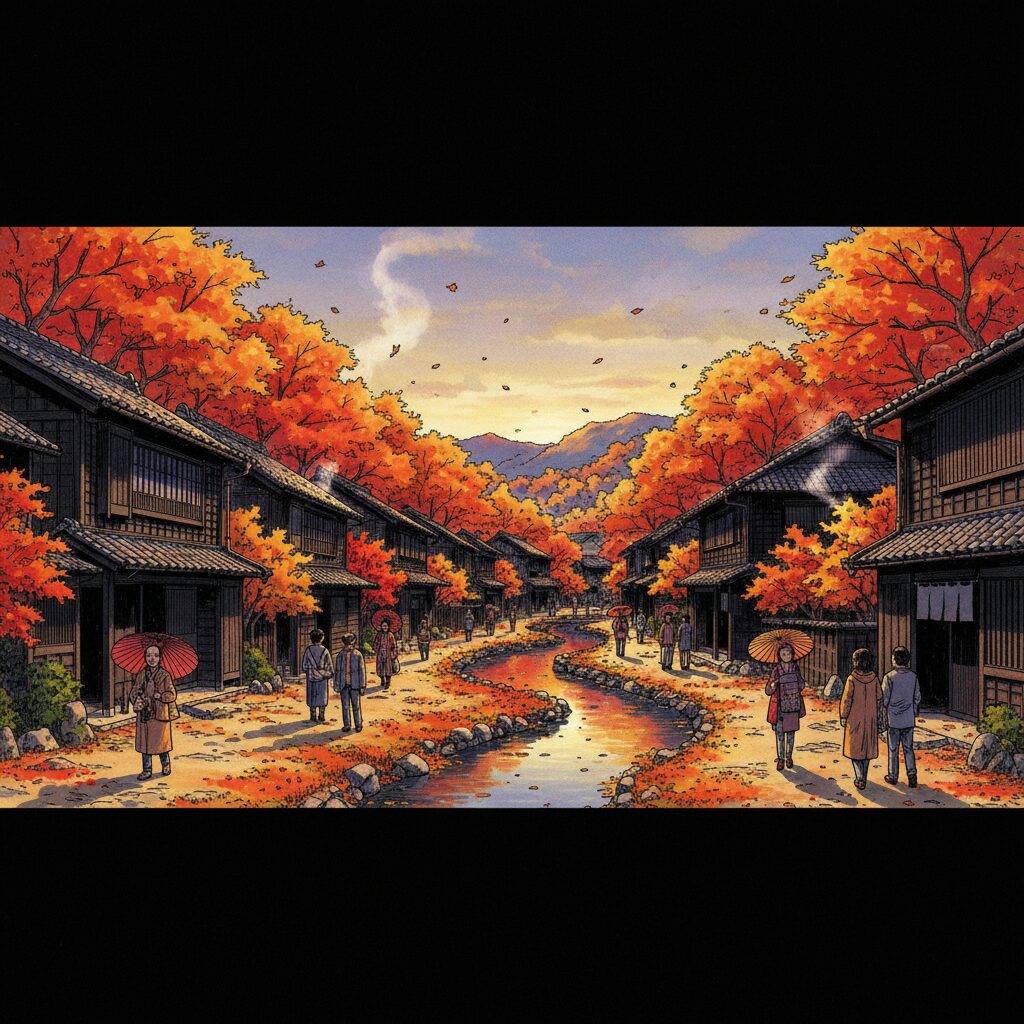
Kakunodate is stunning throughout the year, but its appearance changes dramatically with each season. Every season offers a unique atmosphere, so the best time to visit depends on the aesthetic you’re seeking. In fact, visiting four times could provide four entirely different experiences.
Spring: Sakura Season at Its Peak Main Character Energy
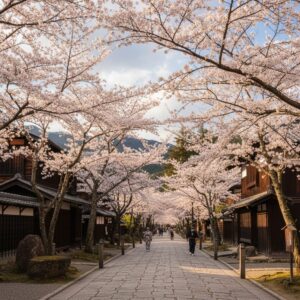
If Kakunodate has a signature season, it’s spring. Known for its cherry blossoms, the town features a special type of sakura in the samurai district—the ‘shidare-zakura,’ or weeping cherry trees. According to legend, these trees were brought from Kyoto as part of a bride’s dowry centuries ago. Today, they are recognized as a Natural Monument of Japan. From late April to early May, these ancient trees burst into a cascade of delicate pink blossoms. The contrast between the soft pink flowers and the stark black samurai walls is breathtaking. It’s one of the most iconic and beautiful sights in Japan. During this period, the entire town embraces a festive atmosphere. Streets fill with visitors, food stalls appear, and the trees are lit up at night, creating a magical and dreamlike setting. Another popular sakura spot is the nearby Hinokinai Riverbank, where a two-kilometer tunnel of ‘Somei Yoshino’ cherry trees forms a stunning canopy. Walking beneath these white and pink blossoms is unforgettable. Spring in Kakunodate is pure romance and beauty—busy, certainly, but the spectacle makes it well worth it. It’s the ultimate ‘main character in an anime’ moment.
Summer: Vibrant Greens and Firefly Nights
When the sakura season ends, summer arrives, turning Kakunodate into a lush sea of green. The weeping cherry trees fill out with leaves, creating a shady canopy over the samurai district. Gardens reach their peak verdancy with deep green moss and thriving foliage. The soundscape shifts to the loud, rhythmic hum of cicadas—the quintessential Japanese summer soundtrack. Fewer crowds mean you can explore the residences and streets more leisurely. It’s a time of profound tranquility. The air is warm and humid, and the town feels alive and breathing. In the evenings, if you’re lucky, you might catch fireflies lighting up the riverbanks, adding a touch of natural magic to the historic ambiance. Summer is also festival season, with events like the Sasara-mai dance—a traditional performance featuring lion-like costumes rooted in summer customs—held in September. Summer in Kakunodate is perfect for those wanting to embrace the town’s peaceful, natural beauty and experience its quiet, reflective side.
Autumn: Koyo Views at Their Finest
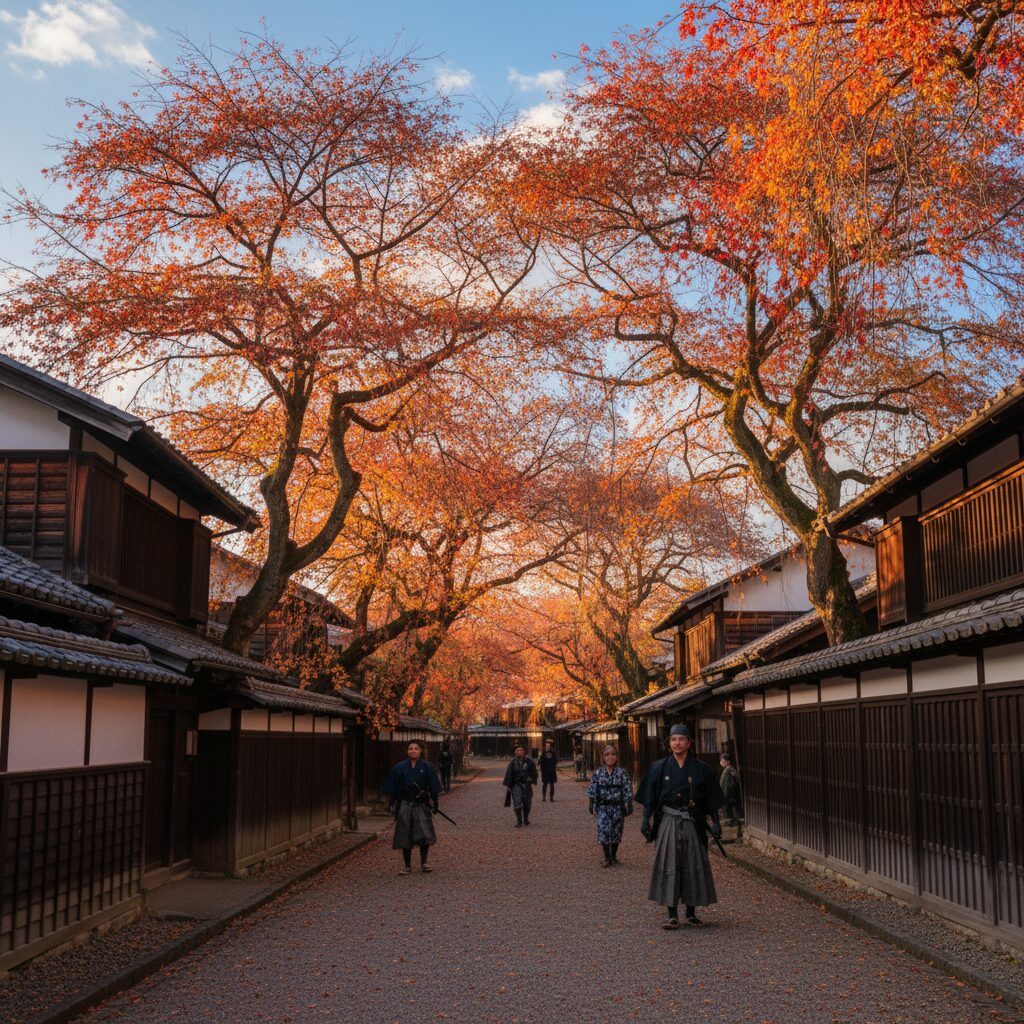
If spring is dominated by pink, autumn bursts forth with fiery reds, oranges, and golds. From late October to mid-November, maple and ginkgo trees in the samurai gardens and throughout the town showcase a spectacular fall colors display known as ‘koyo.’ The sight of historic samurai residences framed by blazing red maple leaves is unforgettable. The crisp autumn air invites leisurely strolls, while the colors create a warm, nostalgic atmosphere. The contrast between dark wooden walls and vibrant foliage is as striking and beautiful as the cherry blossoms in spring. This season is a photographer’s dream, with every turn offering a perfectly framed scene. Generally clear and comfortable weather makes it ideal for exploring the town and the nearby Akita countryside, also renowned for its autumn splendor. It’s a sophisticated and stunningly beautiful time to visit, with a calmer vibe than spring but no less breathtaking.
Winter: A Monochrome Masterpiece
Winter in Kakunodate is not for the faint-hearted, but braving the cold grants a truly magical experience. This region receives heavy snowfall, often blanketing the town in a thick, pure white layer. The samurai district becomes a monochrome wonderland, with black walls and gates sharply contrasting against pristine snow, and cherry tree branches delicately frost-kissed. The town is incredibly quiet and peaceful, with a solemn beauty that feels almost otherworldly. Snow muffles sound, creating a serene, introspective atmosphere. The winter highlight is the Hiburi Kamakura festival on February 14th—a fiery and ancient purification ritual where locals swing flaming straw bales around their bodies to banish evil spirits and pray for health and a good harvest. This dramatic spectacle lights up the cold winter night, showcasing community and tradition amidst the stark, snowy setting. Visiting Kakunodate in winter is a bold adventure and an opportunity to see the town in its most raw and striking form.
Beyond the Bukeyashiki: What Else is Good?
Although the samurai district is the main attraction, there’s much more to Kakunodate worth discovering. To get the complete experience, you need to explore the other side of town—the merchant district.
The Merchant District Vibe
Cross the old ‘Hiyoke’ firebreak, and you’ll enter Tomachi, the historic merchant quarter. The atmosphere here feels quite different. The streets are narrower, and the architecture shifts. Instead of grand samurai residences, you’ll see traditional ‘machiya’ townhouses and impressive ‘kura,’ or storehouses. These storehouses, with thick plaster walls and sturdy doors, served as safes during the Edo period, protecting valuable goods like rice, sake, and textiles from fire. Many of these buildings have been beautifully preserved and now host shops, cafes, and museums. A great spot to experience this is the Ando Jozo Miso & Soy Sauce Brewery. Established in 1853, it operates in a striking Meiji-era brick ‘kura.’ You can tour inside, sample their products, and witness traditional brewing methods. The scent of fermenting soybeans is truly remarkable. The merchant district feels busier and more commercial, yet it is equally historic and captivating as the samurai quarter. It completes Kakunodate’s story by revealing the other side of its feudal society.
Local Crafts and Eats
Kakunodate is also renowned for traditional crafts, especially ‘kabazaiku,’ or cherry bark woodwork. This intricate craft, passed down for over 200 years, uses the bark of wild cherry trees to create beautiful, functional items like tea caddies, boxes, and trays. The deep, rich color and smooth texture of the cherry bark are uniquely striking. At the Kakunodate Denshokan (Kakunodate Traditional Crafts Center), you can watch master artisans at work and admire an impressive collection of kabazaiku pieces. It’s an ideal place to find a truly unique, high-quality souvenir. And naturally, you can’t leave Akita without sampling the local cuisine. The region is famous for its rice, so dishes featuring it never disappoint. Try ‘kiritanpo,’ pounded rice cakes toasted on a skewer, often served in a hot pot with chicken and vegetables—perfect comfort food in colder months. Another specialty is Inaniwa udon, a thin, smooth noodle more delicate than standard udon, delicious served hot or cold. Exploring the local food scene is an essential part of the Kakunodate experience.
The Logistics Lowdown: How to Get There & Get Around
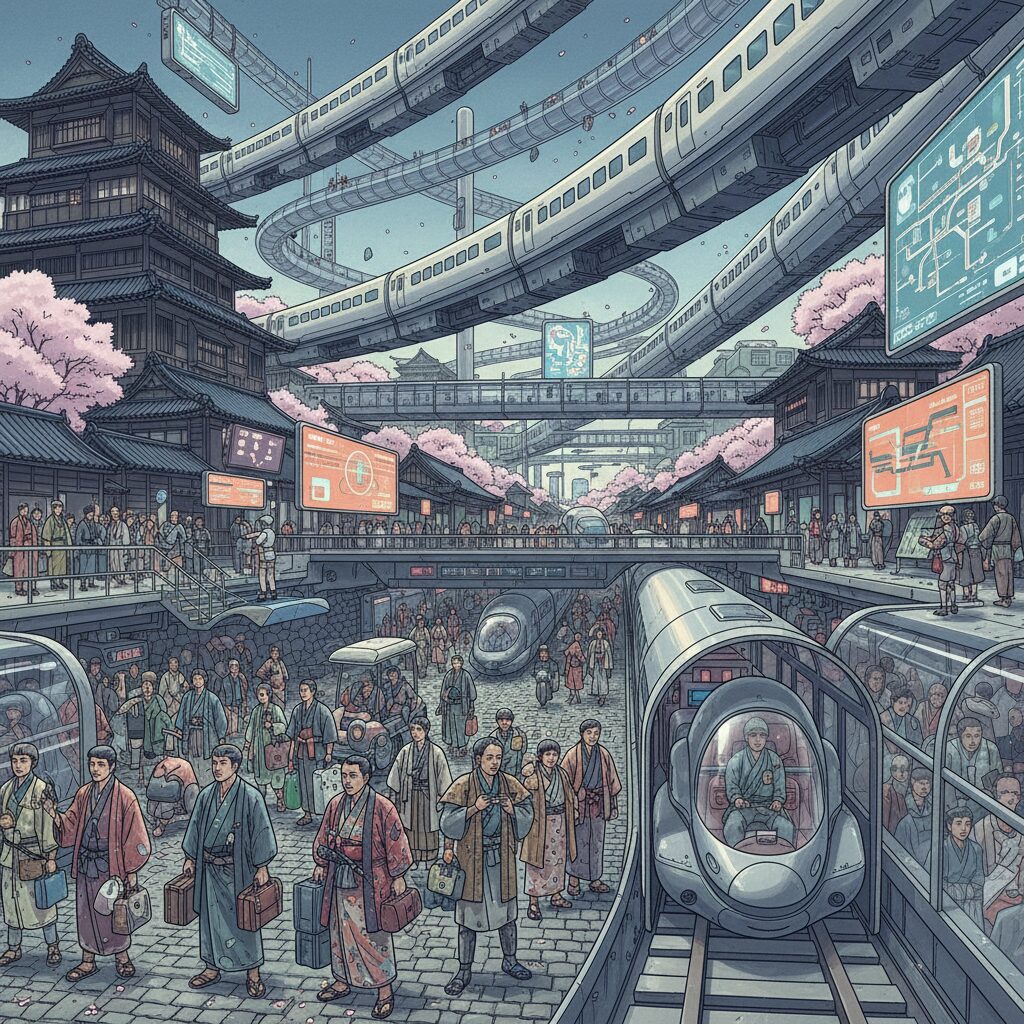
Reaching Kakunodate is surprisingly straightforward, thanks to Japan’s incredibly efficient train system. It’s a stop on the Akita Shinkansen line, which runs directly from Tokyo. The trip takes about three hours and offers a scenic view of the Japanese countryside. Upon arriving at Kakunodate Station, the samurai district is roughly a 15-20 minute walk away. The town is compact and easy to explore on foot, which is the best way to soak in its atmosphere. For a truly traditional experience, you can hire a rickshaw. The drivers are highly knowledgeable guides who will escort you to all the key sites while sharing stories and historical insights. It’s a fun and relaxing way to see the town, especially if you’re short on time or your feet need a break. Another excellent option, particularly during warmer months, is to rent a bicycle. This lets you cover more ground and quickly zip between the samurai district, the merchant district, and the Hinokinai Riverbank.
Pro Tips for Your Visit
To get the most out of your visit, here are a few insider tips. First, wear comfortable shoes. You’ll be walking a lot, and since you’ll also need to remove your shoes to enter the samurai residences, slip-ons are a smart choice. Second, check the opening and closing hours of the houses, as they vary by season—many close around 4:30 or 5:00 PM. Third, while you can see the highlights on a day trip, consider staying overnight. Kakunodate is enchanting in the early morning and late evening when day-trippers have left. The streets become quiet, the light is beautiful, and you can truly feel the town’s history. Waking up in a local ryokan and taking an early morning stroll through the empty samurai district is an unforgettable experience. Lastly, don’t hesitate to explore beyond the main street. Smaller lanes and hidden corners are just as charming and atmospheric. Let your curiosity lead you; you never know what treasures you might find.
Final Thoughts: The Kakunodate Afterglow
Leaving Kakunodate feels like emerging from a vivid dream. As your train departs, you’ll find yourself replaying the moments in your mind: the gentle sway of the weeping cherry trees, the quiet dignity of the samurai manors, the fiery glow of the autumn maples. This town offers more than history; it allows you to experience it. It’s a place that connects you to the past in a deeply personal and profound way. You leave with a greater appreciation for the elegance, discipline, and artistry of the samurai era. It serves as a reminder that even in a rapidly changing world, some places hold onto their stories, preserving them for us to discover. Kakunodate is not just a destination; it’s an experience, a journey into the heart of warrior Japan. It’s a place that stays with you, a quiet yet powerful memory that will call you back long after you’ve left. So, if you’re seeking a trip that’s more than mere sightseeing, one that truly transports you, put Kakunodate at the top of your list. The samurai await.