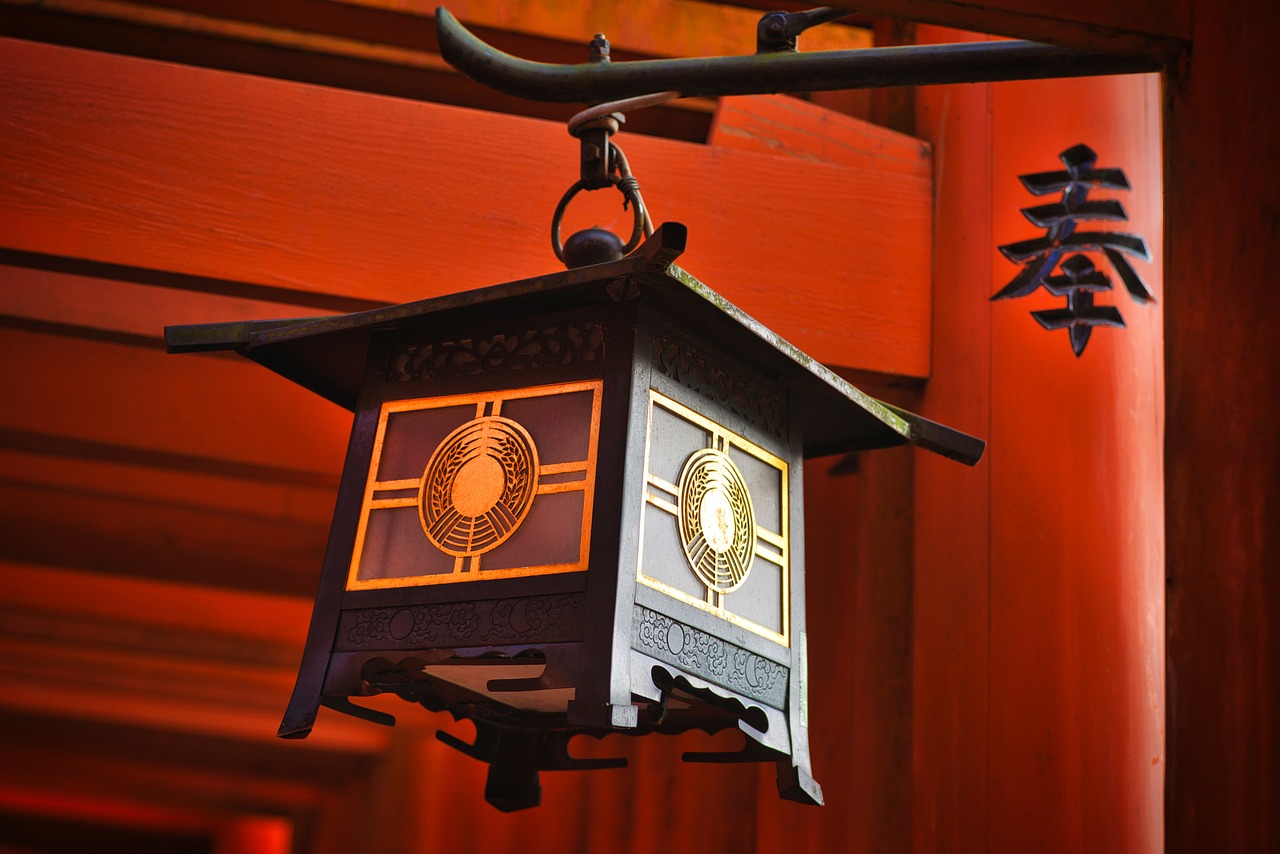
Yo, let’s spill the tea on a real one from Japan’s epic history. We’re talking about a story so wild it sounds like it’s straight out of a blockbuster anime – a tale of genius, political backstabbing, righteous fury from beyond the grave, and ultimate redemption. This ain’t just some dusty old legend; it’s the living, breathing origin story of Japan’s Tenmangu Shrines, sacred spots dedicated to the OG god of academics, Sugawara no Michizane, aka Tenjin. If you’ve ever stressed over an exam, lit a candle for good grades, or just vibed with the idea of a wronged scholar becoming a literal thunder god to get his revenge before chilling out as a patron saint of knowledge, then buckle up. Tenmangu shrines are more than just pretty architecture and plum blossoms. They are power spots, buzzing with the hopes and anxieties of millions of students every year. They’re a testament to one of the most dramatic character arcs in Japanese history, where a man’s powerful spirit reshaped the spiritual landscape of a nation. This is where history, belief, and the pressure of finals week collide in the most spectacular way. Get ready to dive deep into the world of Tenjin-sama.
If you’re captivated by Japan’s deep cultural narratives, you might also enjoy exploring its vibrant vintage shopping scene.
Who Was Sugawara no Michizane? The Man, The Myth, The Legend
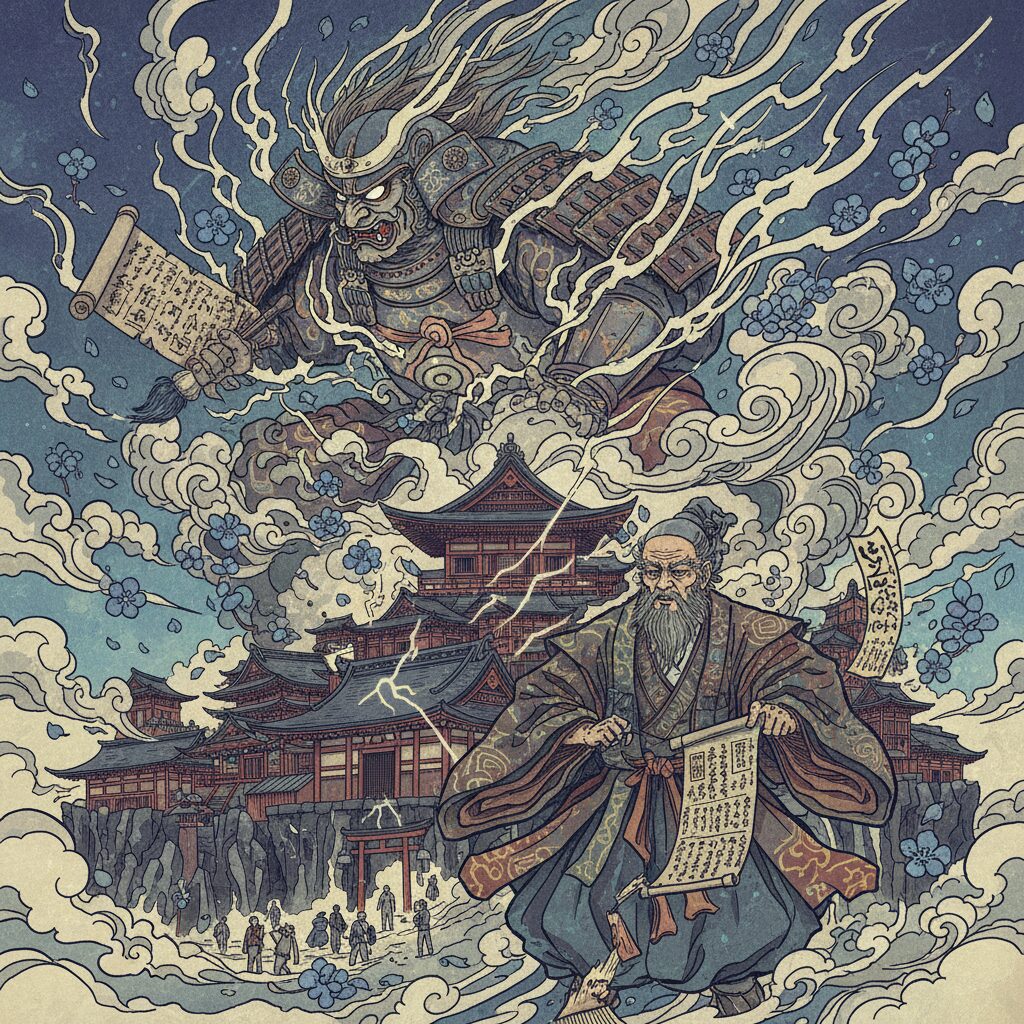
Before becoming Tenjin, the sky deity, he was Sugawara no Michizane, a genuine prodigy thriving during the Heian period (794-1185). This era epitomized courtly life in Kyoto—imagine peak aesthetics with intricate poetry, fragrant robes, and political intrigue hotter than wasabi. Right in the thick of it was Michizane, the ultimate intellect. He wasn’t just a kid good at schoolwork; he was a next-level genius. Legend has it he was composing poetry in Chinese—the prestigious language of scholars—by age five. By eleven, his poems were so impressive they caught the emperor’s attention. He was more than book-smart; a master calligrapher, gifted poet, and astute political thinker. He essentially aced life, rapidly ascending the imperial court ranks, leaving his peers in awe.
Born into a scholarly family, Michizane had knowledge in his blood. But his success wasn’t merely inherited; it was hard-earned. He passed the highest civil service exams with distinction, earning the reputation as the most brilliant mind of his era. Loyal and skilled, he served Emperor Uda and eventually rose to one of the top government posts, Minister of the Right. This was a huge rise, especially for someone outside the powerful Fujiwara clan—a family that had dominated court politics for centuries. Michizane was the merit-based outsider, a superstar threatening the status quo. And as you might expect, shining too brightly breeds hostility.
His main adversary was Fujiwara no Tokihira, who viewed Michizane’s close imperial ties as a threat to his family’s influence. The Fujiwaras played the long game, using strategic marriages and political tactics to effectively control the country from behind the scenes. Michizane, with his pure talent and imperial favor, was a glitch in their system. So Tokihira and his allies hatched a plot. They spread rumors, poisoning Emperor Daigo’s mind, accusing Michizane of treason—claiming he aimed to overthrow Daigo and install the emperor’s younger brother instead. The charges were baseless, a classic political setup, but effective. The court, fueled by jealousy and fear, turned on its brightest star. In 901, Sugawara no Michizane was stripped of his titles, honor, and home, exiled to the distant outpost of Dazaifu in Kyushu, far from the glittering capital he had served so well. His family scattered, his career ruined. The fall was as quick as it was harsh. He arrived in Dazaifu a broken man, living in poverty, his heart heavy with sorrow that colored his final poems. Two years later, in 903, he died in exile, proclaiming his innocence to the last. But, as you might guess, the story was far from over. Death was only the start of his legendary comeback.
From Vengeful Ghost to Patron Saint: The Birth of Tenjin
After Michizane died, Kyoto collectively breathed a sigh of relief. The problem was resolved, the rival neutralized—or so they believed. What the court, dressed in their silken robes, failed to understand was that they hadn’t simply exiled a man; they had created an onryō—a vengeful spirit, fueled by the profound injustice of his fate. Michizane’s spirit was not about to fade quietly into the night. It was time for revenge. The years following his death were, to say the least, a nightmare for the capital. It began with plagues and droughts ravaging the city, but that was only the opening act. Then came the lightning—unusual, targeted storms that seemed to carry a personal grudge against the imperial palace.
The climax came in 930. A massive black cloud appeared over the Seiryōden, the emperor’s residence, during a high-level meeting on the ongoing drought. A fierce lightning strike hit the hall, instantly killing several high-ranking officials responsible for Michizane’s exile. Fujiwara no Tokihira, the chief conspirator, had died years earlier from a mysterious illness, but his successors were now being struck down one by one from above. The court was terrified. Kyoto’s citizens believed this was no coincidence; this was the wrath of Michizane’s ghost, now revered as Tenjin—the Sky Deity or Thunder God. The message was unmistakable: you crossed the wrong scholar.
Panic barely describes it. The imperial court scrambled to contain the damage. They realized they had to appease this formidable spirit. Posthumously, they burned Michizane’s official exile notice, restored all his titles, and even promoted him to the highest court rank. But it wasn’t enough. Disaster continued. The emperor himself fell ill, fearing that Michizane’s ghost might come for him next. Eventually, the court concluded the only solution was deification. They needed to build a shrine—a permanent sanctuary where his spirit could be honored, worshipped, and most importantly, pacified. In 947, the first such shrine, Kitano Tenmangu, was established in northwest Kyoto. The court formally declared him a god, a protector of the state. It was the ultimate gesture of apology. Over the centuries, as memories of terror waned, Tenjin’s image transformed remarkably. People came to remember not just his fury, but his exceptional intellect, loyalty, and beautiful poetry. The fearsome god of lightning gradually evolved into a benevolent patron of scholarship, literature, and calligraphy. The virtues that marked his life became his divine domain. He went from being the spirit you prayed wouldn’t strike to the god you prayed to for success in your exams. It is one of history’s greatest rebrands and remains the foundation of every Tenmangu shrine you visit today.
A Pilgrim’s Guide to Tenmangu Vibes: What to See and Do
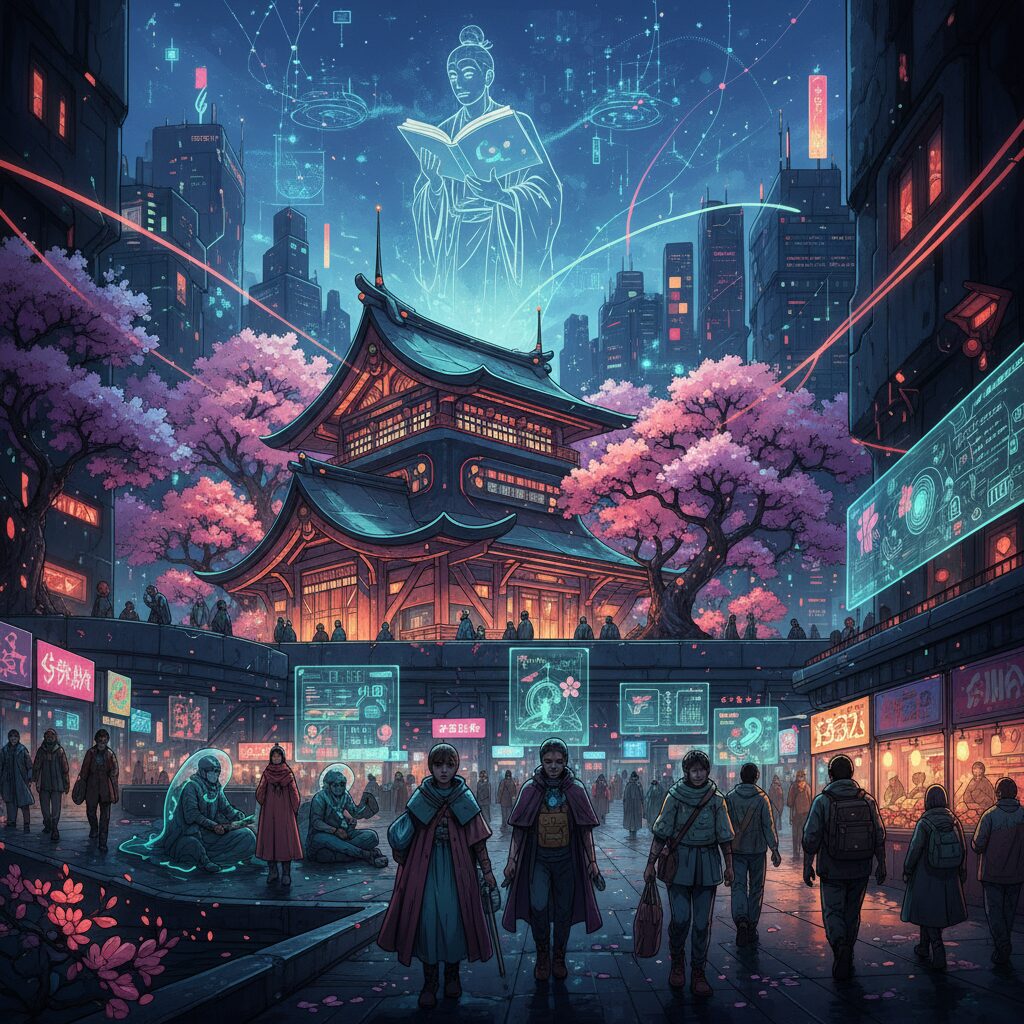
So, you want to connect with the god of wisdom? You got it. There are literally thousands of Tenmangu shrines scattered across Japan, but two stand out as absolute must-sees: Kitano Tenmangu in Kyoto and Dazaifu Tenmangu in Fukuoka. These are the grand matriarchs of the Tenjin cult, each with its own distinctive charm and story.
The Original: Kitano Tenmangu, Kyoto
Kitano Tenmangu is where the legend of appeasement first began. Situated in northwest Kyoto, this shrine has a vibe that’s both regal and approachable. Its main buildings showcase stunning shrine architecture, with detailed woodwork and dramatic roofs, designated as National Treasures. Yet, the true magic of Kitano Tenmangu lies in its living traditions. The best time to visit is on the 25th of any month, a date significant because Michizane was born and died on the 25th. On this day, the shrine grounds transform into the huge Tenjin-san flea market. It’s a treasure hunt full of antique ceramics, vintage kimonos, quirky bric-a-brac, and tasty street food. The energy is electric. The shrine’s most famous feature, however, is its plum grove. Michizane adored plum blossoms, and Kitano Tenmangu is home to about 1,500 plum trees of 50 different varieties. In late February and early March, the grove opens to the public, bursting into a sea of white and pink blossoms, their sweet fragrance filling the air. It’s a sight your Instagram feed will thank you for. Don’t miss the many statues of oxen, or ushi. Rubbing the head of one of these divine messengers is believed to grant wisdom. You’ll often see students lining up to give the statues a good rub before their big exams.
The Final Resting Place: Dazaifu Tenmangu, Fukuoka
Travel south to Fukuoka on the island of Kyushu, and you’ll find Dazaifu Tenmangu, built on the site of Michizane’s grave. This shrine is grand, expansive, and deeply moving. It represents the final chapter of his mortal story and serves as the headquarters for over 12,000 Tenmangu shrines nationwide. The approach to the shrine is an experience all on its own. You’ll cross three segments of a beautiful arched bridge, the Taiko-bashi, spanning a heart-shaped pond. These three parts symbolize the past, present, and future. Crossing it is said to cleanse your soul before encountering the deity. The main hall (honden) is magnificent, showcasing vibrant Momoyama-period style architecture rebuilt in 1591. The atmosphere here is deeply spiritual, making it a major pilgrimage site attracting millions annually. The shrine’s most legendary resident is the Tobiume, or “flying plum tree.” The tale goes that when Michizane was exiled, his beloved plum tree in Kyoto was so heartbroken that it uprooted and flew overnight to be with him in Dazaifu. This very tree, the first to blossom each year, stands proudly to the right of the main hall. While visiting, you must try the local specialty, Umegae Mochi—grilled rice cakes stamped with a plum blossom crest and filled with sweet red bean paste, sold fresh and hot from the stalls lining the path. They’re delicious, comforting, and the perfect snack to fuel your spiritual journey.
Shared Symbols: The Tenmangu Checklist
Wherever you visit, you’ll notice familiar symbols central to the Tenjin experience.
- Ume (Plum Blossoms): Tenjin’s signature flower. Unlike the brief cherry blossoms, plum blossoms are hardy and bloom in the cold of late winter. They symbolize perseverance, resilience, and hope amid adversity—a fitting metaphor for Michizane’s life. Nearly every Tenmangu shrine has some plum trees, and their crest is always a stylized plum blossom.
- Ushi (Cows/Oxen): Cows serve as Tenjin’s divine messengers. Stories vary: some say Michizane was born in the year of the ox, others that an ox pulled his funeral cart and refused to move beyond the spot where Dazaifu Tenmangu now stands. Whichever the reason, statues of resting oxen are found all over shrine grounds. Find one, rub its head for a wisdom boost, or rub the part of its body linked to an ailment you wish to heal. This ritual is a must.
- Ema (Votive Plaques): Prepare to witness an intense display of academic ambition. The ema racks at any major Tenmangu shrine, especially during exam season, overflow with thousands of small wooden plaques. Students write prayers for success on entrance exams—from high school to university to professional certifications—along with their names and intended schools. It’s a powerful visual of the nation’s collective hopes, a sea of wishes fluttering in the breeze.
Exam Season Madness: The Tenjin Cult in Modern Japan
To truly grasp the cultural importance of Tenmangu shrines, you need to see them during juken shiken, the notorious exam season that typically spans from January to March. In Japan, entrance exams are serious business; they can literally shape a young person’s entire future career path. The pressure is overwhelming, a time known as “examination hell.” In this intense period, Tenjin-sama serves as the ultimate supporter. During these months, shrines such as Dazaifu and Kitano Tenmangu turn into pilgrimage sites for a unique group of devotees: anxious students and their even more anxious parents. The atmosphere shifts from a peaceful spiritual center to a bustling, focused hub brimming with hope and desperation. You’ll find teenagers in school uniforms, their faces marked by determination, performing prayer rituals with an earnestness that’s tangible. They clap their hands, bow their heads, and send silent, fervent prayers to the god of learning.
The commercial aspect of the shrine also kicks into high gear, and it’s genuinely fascinating. Stalls selling omamori (good luck charms) thrive. You can purchase charms specifically for “passing exams” (gokaku kigan), “academic success” (gakugyō jōju), and even ones to help choose the right path. Priest-blessed pencils, guaranteed not to roll off the desk during an exam, are available as well. There are hachimaki headbands emblazoned with slogans like “Certain Victory.” It’s an entire industry built on hope and the desire for a touch of divine intervention. This isn’t merely superstition; it’s a deeply rooted cultural ritual. Visiting the shrine, buying charms, and writing ema all form part of a process that offers psychological comfort and a sense of control during an overwhelmingly stressful time. It’s also a family event, with parents and grandparents often making the pilgrimage for their children, purchasing charms and praying just as earnestly. It’s a beautiful, slightly intense display of how ancient beliefs provide solace and strength amid modern pressures.
Beyond the Books: Tenmangu Shrines as Cultural Hubs
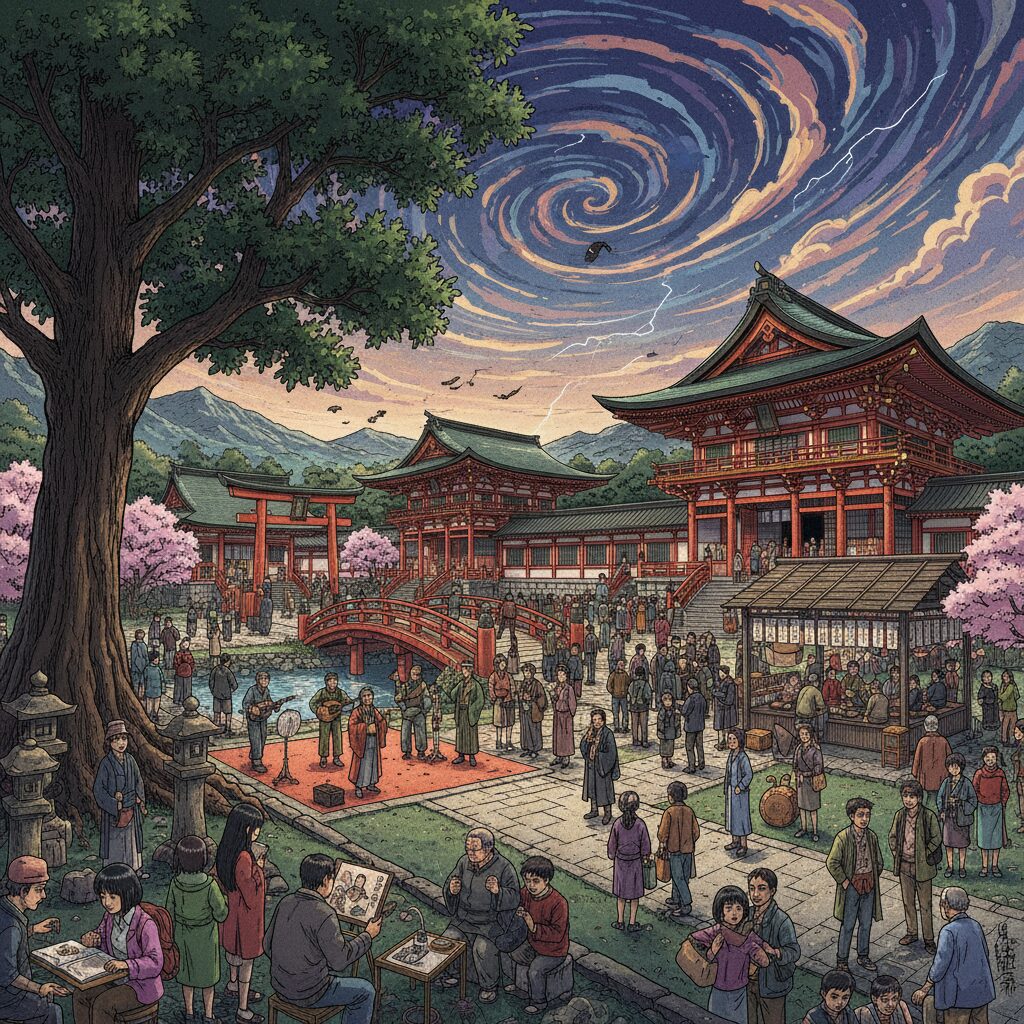
Although Tenmangu shrines are renowned as the epicenter for academic prayers, their significance within the community extends far beyond this role. They serve as lively cultural hubs, hosting some of Japan’s most magnificent festivals and providing tranquil beauty across the seasons. These shrines are places for celebration, community bonding, and the appreciation of art and nature.
A particularly stunning example is the Tenjin Matsuri held at Osaka Tenmangu Shrine. Taking place annually on July 24th and 25th, it is considered one of Japan’s top three festivals, alongside Kyoto’s Gion Matsuri and Tokyo’s Kanda Matsuri. This festival is a vibrant sensory extravaganza, a large-scale city-wide event honoring Sugawara no Michizane. The highlight features a grand procession of more than 3,000 participants dressed in elaborate Heian-period attire, carrying portable shrines, or mikoshi, through the streets. However, the ultimate spectacle is the river procession, where the divine spirit is transferred to a special mikoshi and transported on a fleet of over 100 intricately decorated boats cruising along the Okawa River. As twilight descends, the boats glow with lanterns, bonfires blaze on the riverbanks, and a dazzling fireworks display lights up the night sky. The atmosphere is electrifying—a joyous, magnificent tribute to Osaka’s patron deity of learning.
Even on non-festival days, Tenmangu shrines attract visitors seeking to enjoy seasonal beauty. The legendary plum blossoms of early spring offer a more subtle and, some argue, more refined elegance than the vibrant cherry blossoms. Many shrines are also well-known for their autumn foliage. For example, Kitano Tenmangu boasts a special momiji-en (maple tree garden) featuring around 350 trees lining a river. During the height of autumn, usually in late November, the garden opens to the public, with the trees transforming into a canopy of fiery reds, oranges, and golds. This view is often illuminated at night, creating a breathtaking and almost surreal atmosphere. These seasonal events serve as a reminder that these shrines are not only historical landmarks but are also deeply intertwined with Japan’s natural rhythms, providing places for quiet reflection and aesthetic pleasure throughout the year.
Practical Slay: Your Tenmangu Trip Planner
Ready to gain that divine wisdom? Planning a visit to a Tenmangu shrine is pretty simple, but a few tips can help you get the most out of your trip. Here’s the rundown.
Getting There
- Kitano Tenmangu (Kyoto): Kyoto’s public transportation is reliable. The easiest way to reach the shrine is by bus. From Kyoto Station, take city bus #50 or #101. From other parts of the city, like the Gion area, there are also direct bus routes. Since it’s a bit far from the main subway lines, the bus is your best option.
- Dazaifu Tenmangu (Fukuoka): Dazaifu makes a very easy day trip from Fukuoka City. From Nishitetsu Fukuoka (Tenjin) Station, board the Nishitetsu Tenjin Omuta Line to Nishitetsu Futsukaichi Station, then transfer to the short Dazaifu Line. The shrine is just a five-minute walk from Dazaifu Station, down a lively street lined with shops and snack stalls.
- Other Shrines: For places like Yushima Tenjin in Tokyo or Osaka Tenmangu, they’re generally well-connected by local subway and train networks. A quick search on Google Maps will guide you.
Best Times to Visit
- For the Flowers: Late February to mid-March is peak season for plum blossoms (ume). This is when the shrines are at their most scenic and fragrant.
- For the Crowds (and Culture): January through March is exam season, so it will be crowded with students and their families, but it provides a fascinating glimpse into modern Japanese culture.
- For the Markets: If you’re visiting Kitano Tenmangu, try to go on the 25th of the month to experience the large Tenjin-san market. Arrive early for the best bargains.
- For the Foliage: Mid-to-late November offers beautiful autumn leaves (momiji), especially at shrines with dedicated maple gardens.
First-Timer Tips
- Shrine Etiquette 101: Keep to the basics. Bow once as you pass through the torii gate at the entrance. Before praying, purify your hands and mouth at the chozuya water pavilion. At the main hall, the typical prayer ritual is: bow twice, clap your hands twice, quietly say your prayer, then bow once more.
- Get Involved: Don’t just observe! Purchase an ema plaque, write your own wish (it doesn’t have to be academic!), and hang it up. Or grab an omamori charm as a souvenir that brings a bit of good luck home with you.
- Try the Local Flavor: In Dazaifu, sampling Umegae Mochi is a must. It’s part of the pilgrimage experience. Follow the longest lines—that’s where the freshest ones are sold.
- Be Respectful: These shrines are active places of worship. Be considerate of those praying. Keep your voice down near the main halls, and avoid taking intrusive photos of worshippers.
A Gentle Closing That Leaves Readers Inspired
The story of Sugawara no Michizane is a powerful reminder that history isn’t static. It’s a living force, a narrative shaped by belief, fear, and love. His journey—from a brilliant courtier to a feared ghost, and finally to a beloved god—speaks to the enduring strength of a great story. Today, his spirit no longer haunts the capital with storms; instead, it imbues Tenmangu shrines with a quiet, scholarly aura. These are places where the hectic pace of modern life meets the deep traditions of the past. Whether you’re preparing for an exam, have a passion for poetry and plum blossoms, or are simply traveling in search of a deeper connection to Japan’s soul, visiting a Tenmangu shrine is a journey into the heart of the nation’s spiritual and cultural identity. It’s a place to wish for success, admire beauty, and feel the presence of a spirit whose intellect and passion transcended even death.