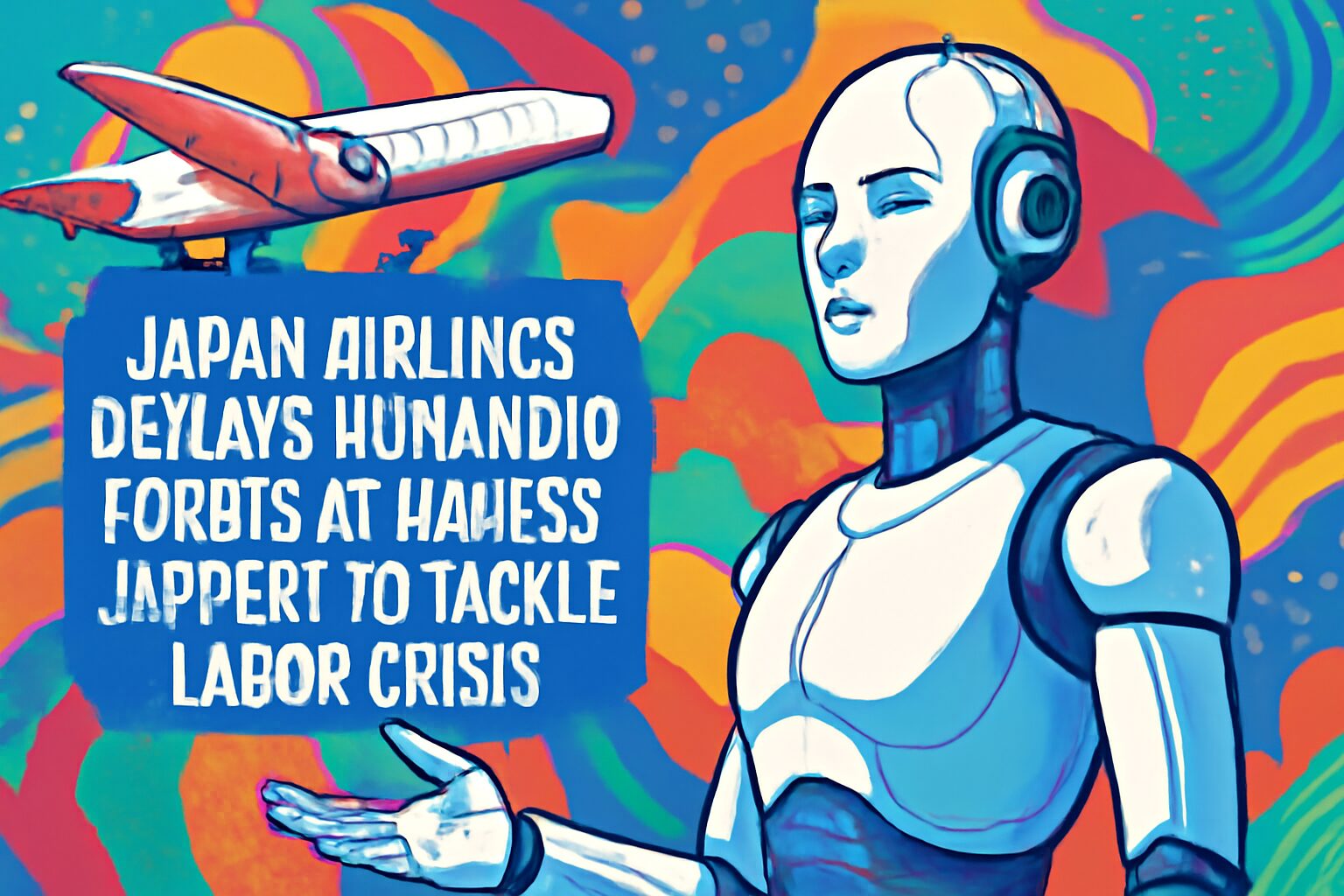
In a move that signals a significant shift in the aviation industry, Japan Airlines (JAL) has announced the launch of a two-year trial of humanoid robots at Tokyo’s Haneda Airport (HND). Set to begin in May, this initiative aims to combat severe labor shortages and manage the unprecedented surge in international tourism by automating physically demanding ground operations.
The Driving Forces: A Perfect Storm of Labor Shortages and a Tourism Boom
Japan is currently grappling with two major challenges that directly impact its travel infrastructure. The first is a deepening labor crisis, driven by an aging population and a shrinking workforce. The transportation and logistics sectors are among the hardest hit. According to a recent survey by research firm Teikoku Databank, over 70% of companies in Japan’s transportation and warehousing industry are experiencing a shortage of full-time employees as of early 2024. This makes it increasingly difficult to fill essential roles, including those in airport ground services.
Simultaneously, Japan is experiencing a record-breaking influx of tourists. Following the full reopening of its borders, the country has seen a dramatic recovery in visitor numbers. The Japan National Tourism Organization (JNTO) reported that in March 2024, Japan welcomed over 3.08 million international visitors—the first time the country has ever surpassed the 3 million mark in a single month. This tourism boom, while a boon for the economy, places immense strain on airport resources, from baggage handling to aircraft turnaround times.
What the Robots Will Do: Automating the Tarmac
To address these pressures, JAL’s trial will focus on automating some of the most labor-intensive tasks on the tarmac. The humanoid robots will be tasked with:
- Baggage Handling: Lifting and sorting heavy suitcases and loading them into airline-specific containers.
- Cargo Loading: Assisting with the loading and unloading of bulk cargo onto aircraft.
These operations are physically demanding and have traditionally relied entirely on human labor. By deploying robots, JAL aims not only to fill the labor gap but also to improve operational efficiency and create a safer working environment for its human staff. The two-year duration of the trial will allow the airline to collect extensive data on the robots’ performance, durability, and ability to operate in the complex and dynamic airport environment.
A Glimpse into the Future of Air Travel and Its Implications
While passengers may not see these robots directly, the impact of this initiative could be far-reaching.
Enhanced Efficiency and Reliability
Successful automation of ground handling could lead to faster and more predictable aircraft turnaround times. This, in turn, could contribute to improving JAL’s already world-class on-time performance, ensuring a smoother travel experience for passengers. By reducing reliance on a shrinking pool of human workers, the system becomes more resilient to labor fluctuations.
Redefining Human Roles
The introduction of robots is not about replacing human workers, but rather about augmenting their capabilities. This initiative will allow ground staff to shift their focus from strenuous manual labor to more complex, supervisory, and skilled roles, such as operating and maintaining the robotic systems or handling irregular operations that require human judgment.
A Blueprint for the Industry
If JAL’s trial at Haneda proves successful, it could serve as a blueprint for other airlines and airports across Japan and globally. Major hubs like Narita (NRT) and Kansai (KIX) face similar challenges and will be watching this experiment closely. It represents a critical step in realizing Japan’s “Society 5.0” vision, which seeks to solve social challenges through the integration of cyberspace and physical space technologies like robotics and AI.
For travelers, this behind-the-scenes innovation is a promising development. As Japan continues to grow as a top global destination, leveraging technology to maintain and enhance the quality of its infrastructure will be key to ensuring that the journey is as seamless and enjoyable as the destination itself.