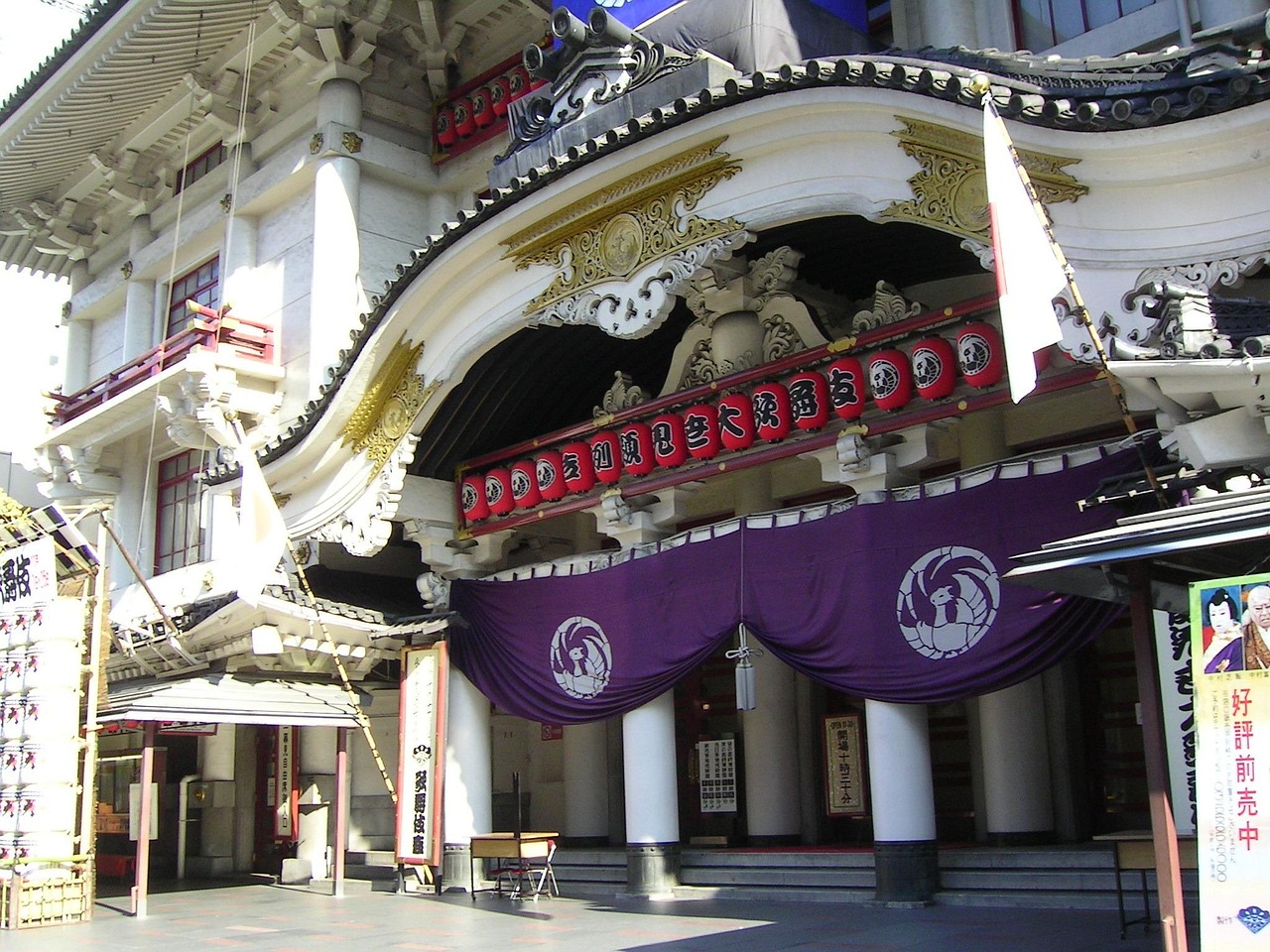
Yo, let’s talk real for a sec. You’ve probably seen the pics—the intense faces with the wild red and black lines, the massive, gorgeous kimonos, the dramatic poses that could break the internet. That’s Kabuki, Japan’s 400-year-old flex of a theatre art. It’s loud, it’s extra, and it’s an entire universe of its own. But watching it from a velvet seat in the audience? That’s just the trailer. The real movie, the director’s cut with all the secret scenes, is backstage. And getting a behind-the-scenes Kabuki theater tour is like finding a golden ticket to a world that’s been hiding in plain sight. This isn’t just about seeing where the actors get ready. Nah, this is a full-on vibe check of an ancient art form that’s still slaying. It’s a trip back in time, a masterclass in craftsmanship, and low-key one of the most spiritual experiences you can have in the middle of a bustling city like Tokyo or Kyoto. You get to walk the same halls as legends, breathe in air thick with the scent of cypress wood and history, and see the raw, human-powered machinery that makes impossible magic happen on stage every single night. It’s the ultimate cheat code to understanding not just Kabuki, but a core piece of Japan’s creative soul. It’s where the meticulously crafted illusion is built, piece by painstaking piece. No cap, this is the real story.
To further explore Japan’s rich cultural tapestry beyond the stage, consider experiencing a serene Kawakudari canal boat ride.
Stepping into the Hanamichi: The Vibe of Backstage Kabuki
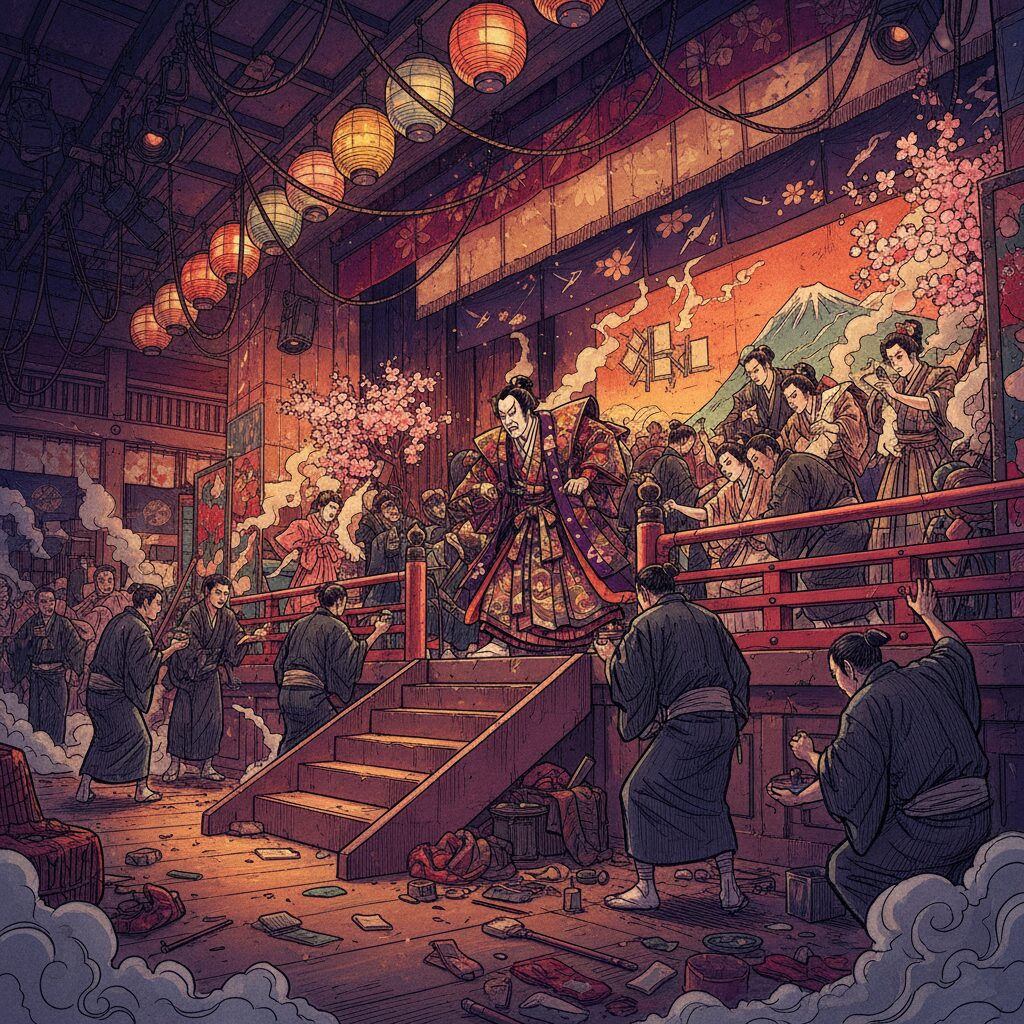
The moment you step through the unmarked door separating the plush, public lobby from the backstage realm, everything changes. The atmosphere shifts instantly from opulent spectacle to sacred workshop. The air itself feels altered—cooler, denser, and infused with a scent unlike any other place on earth. It’s a complex mixture: the sharp, clean aroma of hinoki cypress wood, the earthy fragrance of tatami mats, the sweet, waxy smell of the special pomade, bintsuke-abura, used for styling the magnificent wigs, and the faint, powdery trace of oshiroi, the iconic white face paint. It’s the scent of tradition, dedication, and centuries of performances absorbed into the very walls. The sounds transform as well. The grand music and booming voices from the stage fade into a muffled pulse, a distant heartbeat. Instead, you hear the soft scuffing of tabi socks on wooden floors, the quiet, respectful whispers of the stagehands, the creak of ancient machinery, and if you’re fortunate, the faint, solitary plucking of a shamisen being tuned in some hidden corner. It’s a soundscape of intense, focused calm before the storm.
Your guide will likely begin by taking you to the hanamichi, or “flower path,” the long ramp that stretches from the stage through the audience and stands as one of Kabuki’s signature features. From your seat, it presents a dramatic runway for grand entrances and exits. But standing on it from the actor’s viewpoint, gazing out at the sea of empty seats, offers a whole different experience. You sense the energy of the space flowing toward you. You can almost hear the ghosts of the kakegoe shouts—traditional calls from the audience praising the actors. This narrow path serves as a bridge between the gods on stage and the mortals in the audience, and standing there, you feel as if you’re straddling two worlds. The backstage area, or naraku (literally meaning “hell” or “abyss,” a nod to its location beneath the stage), is a labyrinth of raw, unvarnished wood, steep staircases, and organized chaos. The contrast is striking and beautiful. Up front, it’s all gold leaf, silk lanterns, and perfectly painted scenery. Back here, it’s practical, industrial, and genuine. You see the unpainted backside of a castle wall, the intricate network of ropes and pulleys, and handwritten notes and cues taped to posts. This is the engine room of the dream factory, and the energy is tangible. It’s not the frantic chaos of a Western theatre’s backstage; instead, it’s a quiet, almost reverent hum of professionals who are masters of their art, each moving with a purpose passed down through generations.
The Main Stage’s Secret Weapons: Unpacking the Tech
Forget CGI and digital projections; Kabuki technology has amazed audiences for centuries through pure analog brilliance. Seeing this machinery up close is one of the greatest highlights of any behind-the-scenes tour. This isn’t merely stagecraft; it’s mechanical poetry, entirely powered by human effort.
The Mawari-butai: A Revolution in Motion
Long before Broadway featured huge revolving stages for shows like Hamilton or Les Mis, Kabuki was already turning entire worlds. The mawari-butai, or revolving stage, was invented in 18th-century Japan. It’s a large circular platform embedded in the main stage that enables seamless, cinematic scene changes. One moment you’re in a snowy forest, and as the stage slowly and silently rotates, a grand palace interior emerges. It’s pure magic. But the tour reveals the secret: it’s not magic, it’s muscle. The guide leads you beneath the stage into the naraku, a dim, cavernous space reminiscent of an old ship’s hull. There you’ll see it—the underside of the giant circular platform resting on wheels running along a track. For centuries, a team of stagehands pushed it by running in unison in the darkness below. They were the human engine, their coordinated effort creating the flawless illusion above. Standing there, you can sense the immense physical power and precision required. It’s humbling. You’re not just witnessing equipment; you’re witnessing a testament to human ingenuity and teamwork that predates the industrial revolution.
Seri: The Art of the Dramatic Reveal
Ever seen a ninja or ghost suddenly appear in an anime? Kabuki perfected that effect centuries ago with the seri, or stage lifts. These are trapdoors and elevator platforms built into the stage and the hanamichi that can raise (seri-age) or lower (seri-sage) actors and even large set pieces. A powerful samurai can rise from below, striking a dramatic pose, or a vengeful spirit can sink back into the underworld. These create some of the most startling and memorable moments in the plays. Backstage, you get to see how the effect is achieved. You’ll see the platforms, massive counterweights, intricate rope systems, and the crew operating them with split-second timing. It’s a high-stakes ballet of mechanics and performance. The guide might explain how an actor must perfectly position themselves on a small platform in the cramped darkness beneath the stage, hold a powerful pose, and place full trust in the crew to raise them into the spotlight at the precise musical cue. It’s a fusion of art and engineering demanding absolute faith and precision from everyone involved.
Chūnori: Taking Flight
One of the most astonishing spectacles in Kabuki is chūnori, or flying. An actor portraying a fox spirit, mythical hero, or sorcerer is hoisted into the air and “flies” over the stage and sometimes even out over the audience sitting on the second or third floors. It’s a breathtaking moment of pure fantasy. The behind-the-scenes tour unveils this incredible illusion. You’ll see the harnesses, which are surprisingly complex and integrated into the elaborate costumes. You’ll observe the ceiling tracks and thick wires, and learn about the team of handlers who manually pull the ropes to control the actor’s speed and trajectory. It requires immense physical strength from the actor—especially in their core and back—to maintain a graceful, dramatic posture while suspended mid-air, all while wearing a heavy costume and wig. Seeing how it all works doesn’t diminish the magic; it heightens your respect for the athleticism and artistry needed to make a human fly.
Geza: The Live Soundtrack of a World
To the right of the stage (from the audience’s viewpoint) is a small room with a bamboo-slatted screen called the geza. This is the command center for all the live sound in the play—with no recordings involved. Inside this cramped space, musicians and sound effect artists work in perfect synchrony with the onstage action. A behind-the-scenes tour may offer a glimpse into this sacred booth. You’ll see a wild array of traditional instruments: massive ō-daiko drums to mimic thunder or battle roars, smaller drums to evoke raindrops or snowfall, flutes producing eerie, ghostly melodies, and gongs signaling dramatic moments. They use wooden blocks clapped together to imitate the footsteps of running characters and a special wind machine—a rotating fabric-covered barrel—to create storm sounds. It’s a live foley studio, and the artists inside are masters of their craft, watching actors through the slats and delivering a real-time, emotional soundscape. The focus and unspoken communication between the geza and the stage is a performance in its own right.
The Gakuya Glow-Up: Where Characters Are Born
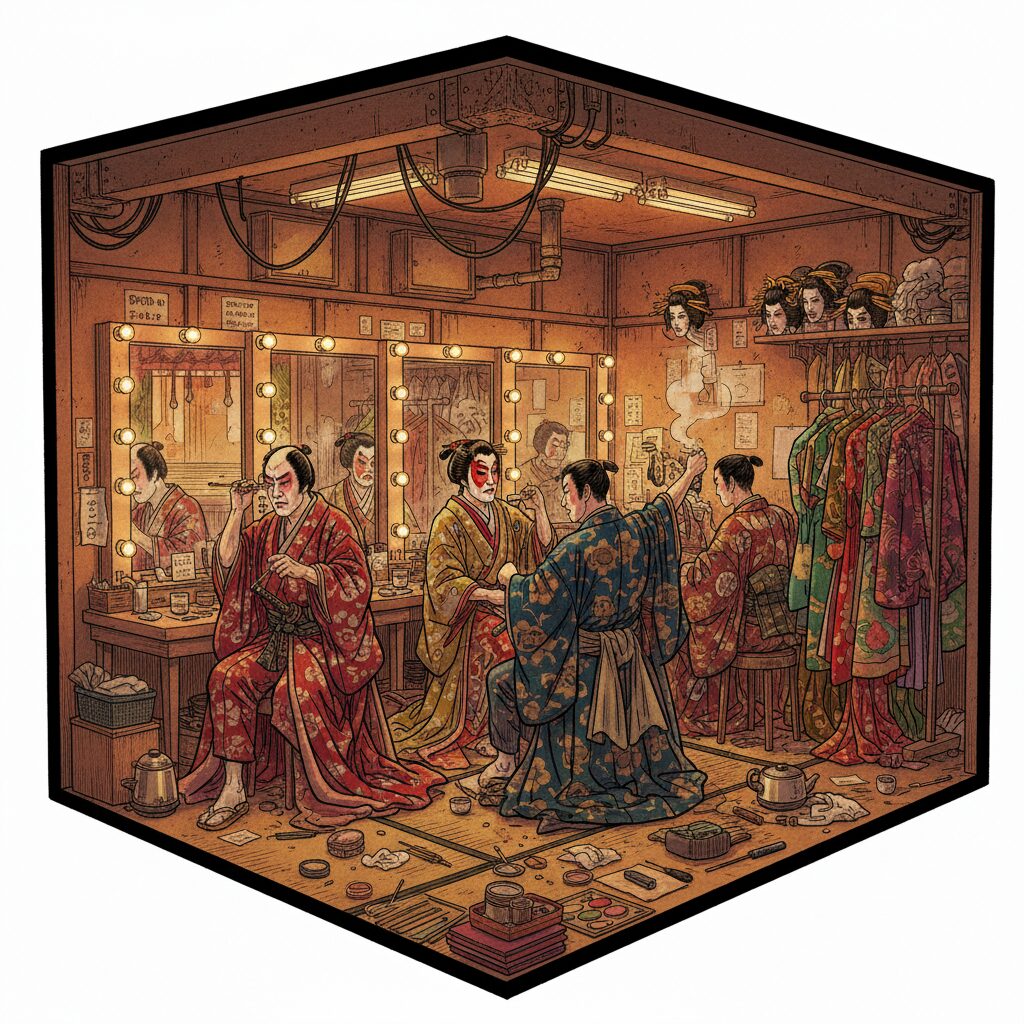
If the stage is the heart of the theater, the gakuya, or dressing room area, serves as its soul. This is where the transformation from person to performer unfolds, a process steeped in ritual and strict hierarchy. Gaining access to the gakuya during a tour is a rare privilege, offering a glimpse into the most private realm of the Kabuki world.
A World of Hierarchy and Ritual
The very layout of the gakuya tells its own story. It is far from a democratic space. The zagashira, the head of the acting troupe and star of the show, occupies the largest and most luxurious dressing room, often on the ground floor for easy stage access. This room is known as the “hyōbanki-mae,” or “in front of the review board,” a name that recalls when critics literally ranked actors. It serves as a sanctuary, often housing a small Shinto altar (kamidana) where the actor prays before each performance. Moving to higher floors, the rooms become smaller and more crowded, shared by supporting actors and apprentices. This physical arrangement embodies the strict, family-like hierarchy governing the Kabuki world, where seniority and lineage are paramount. The atmosphere in the gakuya is thick with concentration, a place of deep focus where actors mentally and physically prepare to embody characters from history and legend.
The Art of Kumadori: Painting a Soul
Perhaps the most captivating aspect of the gakuya experience is witnessing the transformation through makeup. The iconic Kabuki appearance begins with a thick white base of rice powder called oshiroi. This is more than mere foundation; it symbolizes erasing the actor’s identity to create a blank canvas for the character. The guide explains how the oshiroi’s consistency is carefully mixed with water and painstakingly applied to the face, neck, and hands.
Next comes the kumadori, the bold, expressive colored lines that serve as Kabuki’s visual signature. This part of the tour is particularly striking. These patterns are not random designs but a complex code conveying everything the audience needs to know about a character’s personality and status. The colors carry deep symbolism:
- Red (Suji-guma): Signifies power, virtue, passion, and righteousness. This is used for heroic samurai and warrior characters. Bold red lines trace the muscles and veins of the face to amplify the actor’s expressions of strength and anger.
- Blue (Aizome): Represents evil, jealousy, and the supernatural. Ghosts, demons, and chief villains bear blue kumadori, giving them a cold, sinister, and otherworldly look.
- Brown (Kagekiyo-guma): Reserved for non-human spirits, monsters, or demons, symbolizing the grotesque and supernatural.
The application of kumadori is a ritual performed by the actor himself. It’s a meditative procedure, a way to embody the character fully. Using fingers and fine brushes, the actor paints the lines that will define his performance. After the show, some actors press silk or paper against their face to create a reverse print of their kumadori. This imprint, called an oshiguma, is a treasured, unique piece of art—an actual impression of a fleeting performance.
The Weight of History: Costumes and Wigs
Seeing Kabuki costumes (ishō) up close is an experience unlike any other. These garments are far more than clothing; they are magnificent wearable sculptures. During the tour, you may visit the costume department, filled with brilliant colors and textures. The kimonos are crafted from heavy silk brocade, often richly embroidered with gold and silver thread. They are stunningly beautiful but also incredibly heavy. A single costume with all its layers can weigh over 20 kilograms (45 pounds). The guide might allow you to handle a sleeve, leaving you surprised by its weight. You’ll quickly realize that wearing one is an athletic feat. Actors cannot dress in them unaided; they rely on a team of specialist dressers, the ishōkata, who expertly tie the complex knots of the obi sashes and arrange the layers perfectly. This process is a frantic yet precise choreography carried out backstage during quick changes.
The same level of craftsmanship extends to the wigs, or katsura. In the tokoyama, or wig workshop, rows of mannequin heads display elaborate hairstyles that signify a character’s social status, age, and personality. Each wig is a masterpiece, hand-tied from human hair onto a custom-fitted copper base. The tokoyama-shi, the wig master, is among the most respected artisans in the theater, responsible for creating, styling, and maintaining these intricate pieces. Up close, you can appreciate the meticulous details—individual hairs perfectly set, ornate hairpins and decorations. This is another essential layer of artistry, invisible to the audience but crucial to crafting believable characters.
A Legacy in Every Prop: The Kodōgu and Ōdōgu
Every single object you see on a Kabuki stage, from an enormous temple gate to a tiny teacup, is the result of generations of craftsmanship. The tour often includes a visit to the prop departments, where you can examine these items up close and admire the incredible level of detail.
Ōdōgu: Building Worlds
Ōdōgu refers to the large-scale scenery and set pieces: houses, castle walls, bridges, and giant trees. What’s remarkable about these pieces is that they are not simply disposable sets made for one run. They are handcrafted works of art, created by skilled carpenters and painters, maintained and reused for decades, sometimes even centuries. The tour offers a glimpse behind the scenes of the scenery. A beautifully painted cherry blossom tree may be revealed as a masterpiece of joinery and painted canvas on the front, but raw, unpainted wood with structural bracing on the back. You might notice faded notes and instructions from stagehands of a bygone era scrawled on the frames. There’s a deep sense of history here. Kabuki also makes heavy use of symbolism. The guide will explain how a single branch with a few silk blossoms can symbolize an entire orchard in full bloom, or how a simple blue cloth stretched across the stage can transform into a raging river. The scenery doesn’t strive for hyper-realism; rather, it is designed to ignite the audience’s imagination.
Kodōgu: The Power of the Small
Kodōgu are the handheld props—the swords, fans, pipes, lanterns, scrolls, and everything else an actor interacts with. These are curated and cared for by the kodōgu-kata, the prop master, who acts like a museum curator for the performance. Every item carries a history. A sword that looks razor-sharp and deadly is actually made of lightweight bamboo, allowing actors to perform dynamic fight scenes safely. A letter that a character reads on stage is written in beautiful, period-appropriate calligraphy, even though no one in the audience can read it. This dedication to detail lies at the heart of Kabuki. The fan is a universe of props in itself. On the tour, you might see the extensive collection of fans. An actor can use a fan to represent nearly anything: a sword, a wine bottle, a writing brush, the rising sun, or falling rain. The way an actor opens, closes, and handles their fan is a language, and learning to recognize these subtle cues is part of the enjoyment of watching a play. Seeing the vast volume and variety of props stored backstage—rows upon rows of meticulously organized items—gives you a sense of the extensive repertoire of plays and the living library of objects required to bring them to life.
How to Score this Golden Ticket: Booking & Etiquette
Alright, real talk: securing a spot on one of these behind-the-scenes tours isn’t always straightforward. They’re not usually something you can simply book online like a regular ticket. These tours are rare, exclusive experiences, often reserved for theater patrons, student groups, or arranged through specialized high-end tour operators. That said, it’s not impossible to get in, and the pursuit itself adds to the thrill.
Your best approach is to begin by checking the official websites of major theaters, such as Kabuki-za in Tokyo, Minami-za in Kyoto, or Shochiku-za in Osaka. Monitor their announcements closely for any special events or limited-time tours, particularly during anniversaries or off-seasons. Another excellent strategy is to explore luxury travel agencies or cultural experience providers in Japan. Those who specialize in in-depth cultural tours often have the connections to arrange private backstage experiences. It may cost more, but it’s a reliable way to gain access.
Once you secure a spot, remember you are a guest in a functioning, revered space. The rules exist for good reason. Photography is almost always prohibited. Protecting the privacy of the actors and maintaining the integrity of the backstage area are top priorities. Follow your guide’s instructions closely, stay with the group, and never touch anything unless explicitly permitted. Dressing smart casual is wise; it shows respect for the venue. Be ready for the language barrier as most tours are conducted in Japanese. If you’re not fluent, hiring an interpreter is definitely advised—they’ll translate the guide’s detailed explanations and help you make the most of the experience.
If a full backstage tour remains out of reach, don’t lose hope! There are fantastic alternatives. For instance, the Kabuki-za Theatre in Ginza houses the Kabuki-za Gallery on the 5th floor. It’s open without a performance ticket and presents an excellent glimpse into the world of Kabuki, featuring costumes, props, and miniature stage models. A perfect ‘Plan B.’ Another insider tip is to buy makumi, or single-act tickets. Since many Kabuki plays run four hours or longer, the theater sells a limited number of inexpensive, standing-room-only tickets for just one act. It’s a great way to experience Kabuki without committing to the full performance marathon. The makumi ticket booth is usually separate and located at the side of the theater, requiring a queue, but it’s a memorable experience for both tourists and locals alike.
Post-Tour Playbook: Leveling Up Your Kabuki Game
Taking a behind-the-scenes tour will completely transform how you experience a Kabuki performance. It’s as if you’ve been handed a pair of X-ray glasses. The most important thing to do after your tour is to watch a show. When you witness a seamless scene change, you’ll imagine the crew pushing the mawari-butai from underneath. When a ghost emerges from the floor, you’ll gain a new appreciation for the precision of the seri operators. When you hear the sound of rain, you’ll picture the musician in the geza creating the effect on a special drum. You’re no longer just a passive spectator; you’re in on the secret, which makes the magic all the more impressive.
Be sure to rent the English audio guide. After the tour, the guide’s explanations of the plot, the characters’ motivations, and the symbolism behind the costumes and makeup will come together for you. You’ll connect what you saw backstage with the live performance on stage. You’ll also start noticing small details, like how an actor uses their fan or the subtle changes in music that signal a shift in mood. And listen for the kakegoe! These are perfectly timed shouts from audience members (often part of organized fan clubs) who call out the actor’s stage name at the height of a pose or speech. Once you understand the play’s structure, you’ll anticipate these moments, and hearing a roar of “Nakamura-ya!” or “Naritaya!” at the exact right time is an electrifying part of the live experience.
Finally, be sure to explore the neighborhood around the theater. The Kabuki-za stands in the heart of Ginza, Tokyo’s most glamorous shopping district. The contrast between the 400-year-old traditions inside the theater and the ultra-modern luxury of department stores and designer boutiques outside is an experience in itself. In Kyoto, the Minami-za theatre sits on the edge of the historic Gion district. After a matinee, you can stroll along the same cobblestone streets that geishas have walked for centuries. Connecting the world of the play to the world beyond the theater walls is the final step in making your Kabuki experience truly unforgettable.
A behind-the-scenes Kabuki tour is much more than a simple walkthrough of a building. It’s an initiation. It’s a deep, meaningful connection to an art form that represents centuries of passion, innovation, and unwavering dedication to craft. You step out of the quiet, fragrant darkness of backstage and back into the neon-lit hustle of modern Japan, but you’re changed. You carry with you the weight and beauty of that hidden world. You understand that beneath the city’s surface lie stories and traditions still alive, still powerful, and still creating magic every single day. Seeing how the illusion is made doesn’t break the spell; it makes it a thousand times stronger. It’s an energy that stays with you, no cap. So if you ever get the chance, peek behind the curtain. The real show awaits.