Yo, what’s good, world-traveler fam? Hiroshi Tanaka here, coming at you straight from the heart of Japan. Forget the neon-drenched hustle of Tokyo for a hot second. Forget the bullet trains and the scramble crossings. I wanna talk about a different kind of flow, a different kind of speed. I’m talking about ‘Kawakudari’ – the traditional art of gliding down rivers and canals in a long, wooden boat, powered by nothing but a single bamboo pole and a whole lot of skill. This ain’t your average tourist boat tour with a monotone recording. No cap, this is a main character experience. It’s a time machine, a vibe, and a straight-up beautiful way to connect with the soul of this country. You’re literally floating through history, seeing landscapes that have inspired poets and artists for centuries. It’s a low-key epic adventure that’s high-key unforgettable. We’re about to dive deep into these waterways, exploring the most iconic spots, uncovering the culture, and getting you prepped for a journey that’s pure poetry in motion. So, kick back, relax, and let’s catch this current. We’ll start our journey in the legendary city of canals, Yanagawa.
Before you embark on your journey, consider using a convenient nationwide luggage delivery service to travel light and fully immerse yourself in the experience.
Yanagawa: The GOAT of Canal Cruising
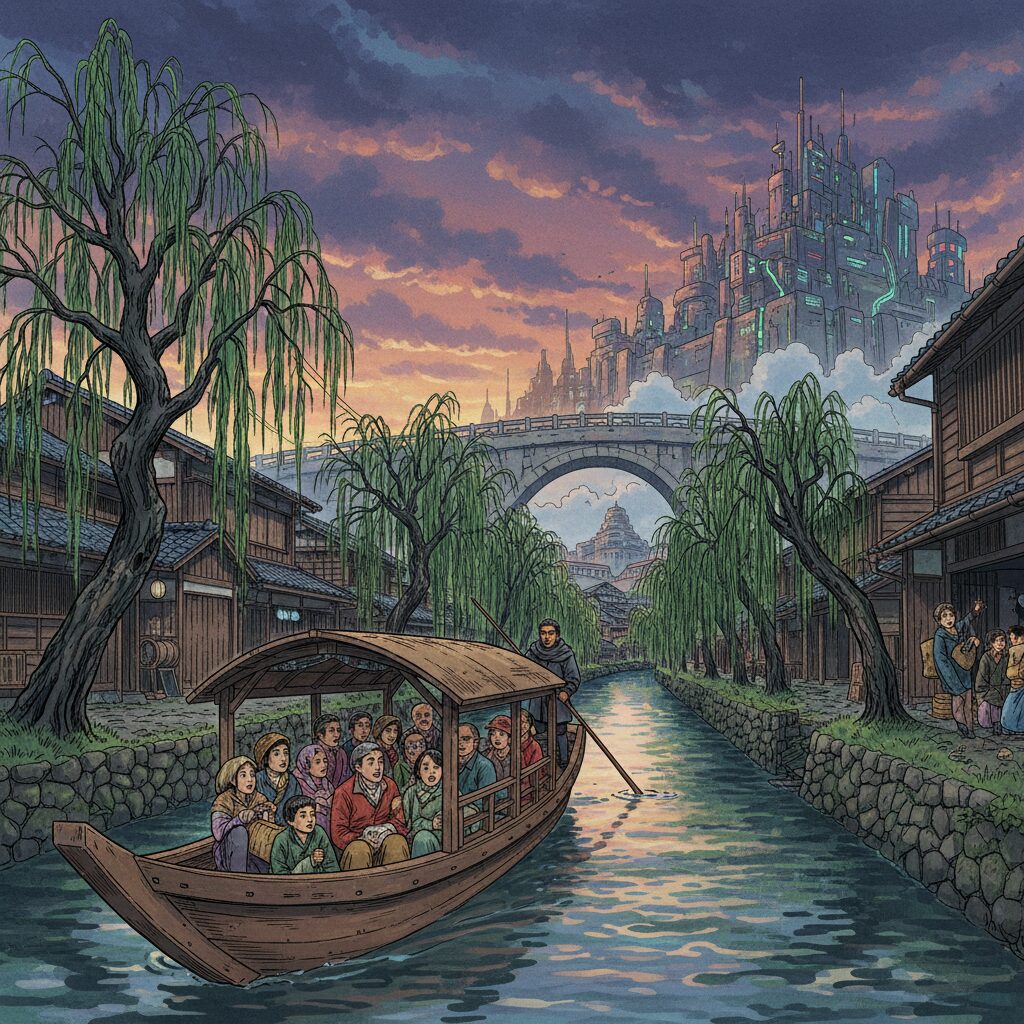
Alright, let’s clear one thing up. People love calling Yanagawa in Fukuoka Prefecture the “Venice of Japan.” And while I understand the comparison—water, boats, beauty—honestly, Yanagawa is a legend all on its own. It doesn’t need any validation. This place has a distinct mood, rich in samurai history and brimming with atmosphere. The city is literally a maze of canals, or ‘horiwari’ as they’re known, stretching an astonishing 470 kilometers. These weren’t designed for social media; they originally served as defensive moats for Yanagawa Castle during the feudal era. Today, they set the scene for one of the most peaceful experiences you can find in Japan.
The Donkobune Experience
The boat itself is called a ‘donkobune.’ It’s a long, narrow, flat-bottomed craft, and you’ll be sitting on tatami-style cushions, close to the water’s surface. This low vantage point is everything—it completely immerses you. As you push off from the dock, the world seems to quiet down. The only sounds are the gentle splash of water against the hull and the rhythmic ‘plunk… scrape’ of the boatman’s bamboo pole striking the canal floor. These boatmen, the ‘sendo,’ are the heart and soul of the journey. Wearing traditional happi coats and conical straw hats, they steer these boats with a grace that’s truly mesmerizing. Using a single long bamboo pole, they push, pull, and guide the boat through impossibly narrow waterways, ducking under centuries-old stone bridges with mere centimeters to spare. It’s a skill handed down through generations, and watching them work is understated performance art.
The ride itself is a sensory delight. You glide past ancient stone walls from the old castle grounds, moss-covered and whispering stories of a bygone era. Weeping willows—the iconic trees of Yanagawa—let their green fronds trail into the water, forming shimmering curtains you pass right through. You’ll glimpse into the backyards of traditional Japanese homes, offering an intimate, almost secret peek into local life. Small Shinto shrines appear along the banks, and clusters of irises and hydrangeas burst with color when in season. The pace is purposely slow, encouraging you to notice the little things: a koi darting under the boat, the reflection of a red bridge rippling on the water, the mix of blooming flowers’ fragrance with the earthy smell of the canal. The sendo often points out landmarks, shares local legends, or, if the mood strikes, breaks into traditional folk songs. Their voice, raw and heartfelt, echoing softly across the water, is a moment you won’t forget. It’s pure, unfiltered Japan.
A Taste of Yanagawa: Unagi Seiro-Mushi
More than an hour on the water will definitely work up an appetite, and Yanagawa has the perfect answer: unagi, or freshwater eel. But not just any unagi. The specialty here is ‘unagi seiro-mushi,’ a dish worth traveling for. After your boat ride, you’ll find dozens of unagi restaurants, many with histories spanning over a century. The eel is grilled in a sweet and savory soy-based sauce, placed over rice seasoned with that same sauce, and then steamed together in a bamboo steamer box. The result? The eel is incredibly tender, the rice infused with a smoky, sweet flavor, and the whole dish is served piping hot and fragrant. It’s the perfect soulful meal to cap off a soulful journey on the water. It’s not just food; it’s the taste of the town’s history and pride.
Winter’s Special Feature: The Kotatsu Boat
Just when you think Yanagawa can’t get any cooler, winter arrives—and that’s when it really shines. From December to February, the regular donkobune are replaced with ‘kotatsu boats.’ For those unfamiliar, a kotatsu is a low Japanese table with a heater underneath and a heavy blanket draped over it to trap the warmth. Now, imagine that setup on a boat. You and your fellow passengers sit with your legs tucked under a cozy, heated blanket, a charcoal brazier providing warmth, while gliding through the crisp winter air. You might even sip warm sake. It’s the coziest, most ingenious way to beat the cold. Cruising through the quiet, stark winter landscape while snug and warm is a vibe unlike any other. It transforms a season many travelers avoid into something truly magical.
Hozugawa Kudari: Kyoto’s Wild Ride
If Yanagawa offers a gentle, poetic ballad, then Kyoto’s Hozugawa Kudari is a full-blown rock anthem. Craving to swap that tranquil vibe for an authentic thrill? You’ve found your spot. Forget calm canals; this is a 16-kilometer, two-hour ride down the Hozugawa River, battling rapids and cutting through a dramatic, forest-covered gorge from Kameoka all the way to the iconic Arashiyama. This isn’t a city loop; it’s a one-way passage through the wild core of Kyoto’s mountains.
From Lumber Route to Adventure
The history here runs deep. For four centuries, this river served as a critical industrial route. Long before trains and trucks, it was the artery that transported lumber and goods from the Tamba region to construct Kyoto’s legendary temples, shrines, and palaces. The river was literally reshaped by human hands—rocks were blasted by a 17th-century merchant named Suminokura Ryoi to make the waterway navigable for cargo rafts. So when you’re on that boat, you’re tracing the path carved by generations of raftsmen, a route forged by grit and survival. Today, that rugged history has morphed into one of Japan’s most thrilling adventures.
The boats resemble those in Yanagawa—long, flat-bottomed, and traditional—but the crew operates differently. Here, three sendo work together: one at the front wields a long bamboo pole to fend off rocks, another at the rear steers with a rudder, and the third rows during calmer stretches. And they truly earn their keep. The journey begins tranquil, drifting past Kameoka’s green hills, but soon the valley tightens, cliffs rise sharply, and the river speeds up.
Navigating the Gorge
This is where the adrenaline surges. You’ll face white-water sections where the sendo must coordinate flawlessly, shouting commands and using remarkable strength and skill to pilot through boulder-strewn rapids. The boat bucks and sways, and you’ll be splashed with crisp river water. It’s thrilling without being genuinely intimidating—a perfect balance. But it’s not just about the rapids. Between the intense moments lie stretches of breathtaking beauty. The water gleams emerald green, and towering gorge walls flank both sides. You’re enveloped in nature’s embrace, surrounded by maple, cherry, and pine trees clinging to the slopes. If you’re lucky, you might glimpse herons, kingfishers, or even deer along the riverbanks. The air is pure, and the vast landscape humbles you in the best way.
Seasonal shifts here are extraordinary. Spring brings wild cherry blossoms that cloak the mountainsides in soft pinks and whites. Summer bursts with deep, lush greens, offering a true retreat from the city heat. Autumn steals the show, setting the gorge ablaze with fiery reds, vivid oranges, and bright yellows. Drifting through this kaleidoscope of colors is so stunning it feels almost unreal. It’s easily one of the premier autumn foliage spots in the entire Kansai region. In winter, a light snow dusting transforms the gorge into a silent, monochrome ink painting, creating a mood that’s equally breathtaking but entirely different.
As your two-hour trip draws to a close, the iconic Togetsukyo Bridge in Arashiyama appears ahead. You’ve arrived. Stepping off the boat into one of Kyoto’s most famous districts after journeying through such untamed nature delivers a surreal, unforgettable shift. You didn’t just take a bus to Arashiyama; you made an entrance.
Nagatoro River Boating: The Kanto Classic
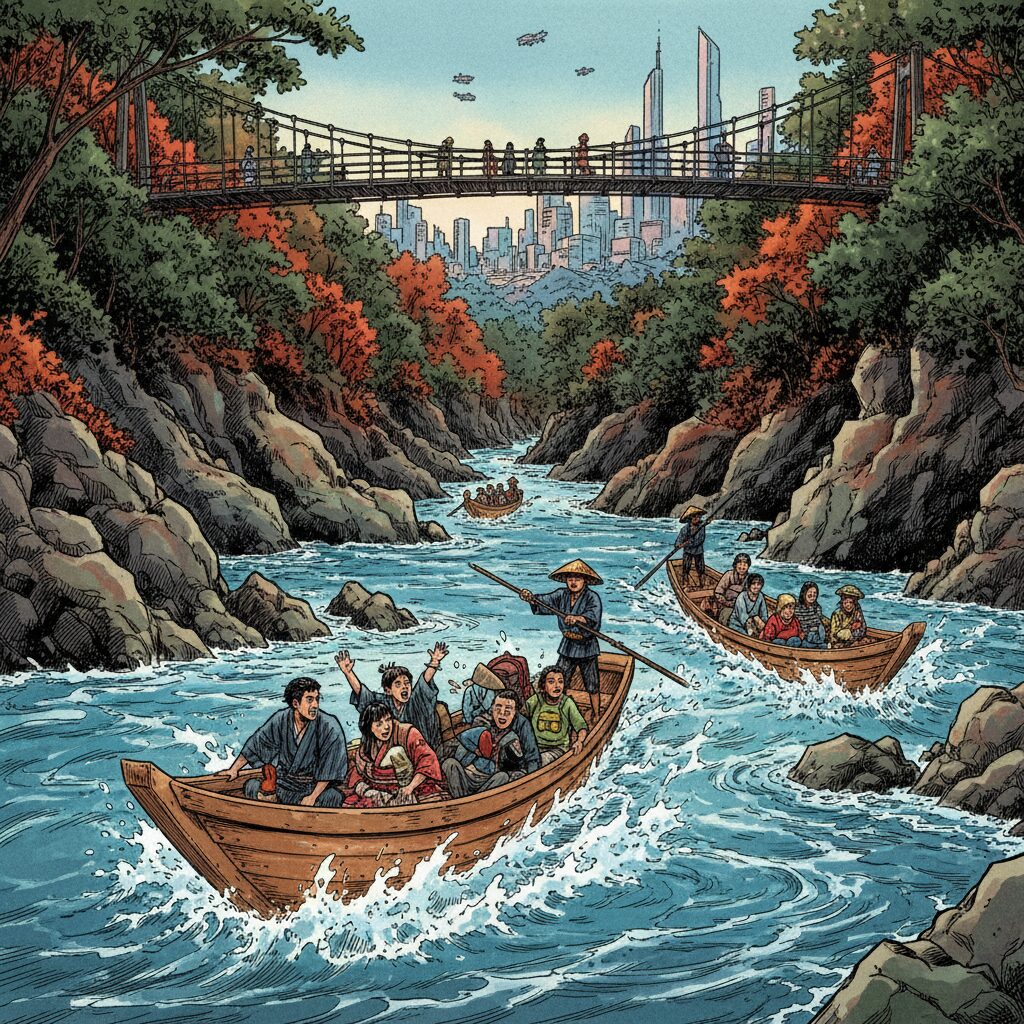
For those of you based in or visiting Tokyo, here’s a tip. If you’re yearning for a taste of the Kawakudari lifestyle but can’t spare several days, Nagatoro in Saitama Prefecture is the ideal destination. It’s an easy day trip from the city and offers stunning scenery along with classic river boating vibes. Nagatoro provides a perfect sample of the Kawakudari experience—a mix of tranquility, excitement, and remarkable natural beauty.
Cruising Past the Iwadatami
The standout feature of the Nagatoro experience is undoubtedly the geology. The Arakawa River winds through a valley renowned for its spectacular rock formations. The most famous of these is the ‘Iwadatami’, meaning ‘rock tatami mats’. This is a vast, broad ledge of crystalline schist rock naturally eroded and smoothed over millions of years, creating a surface resembling a giant tiled tatami mat plaza along the riverbank. It’s designated as a Natural Monument of Japan and truly an awe-inspiring sight.
Your boat ride takes you right alongside, and sometimes over, parts of these formations. Skilled boatmen expertly navigate the wooden boats using iconic long bamboo poles through the turquoise waters of the Arakawa. The journey is divided into a couple of courses, both providing a great variety of experiences. There are stretches where the river is wide and peaceful, allowing you to relax and take in views of the surrounding mountains. Then come sections with gentle yet thrilling rapids that add a bit of adrenaline. It’s the perfect introduction for those who might be hesitant about the more intense rapids in places like Hozugawa. Family-friendly fun that still feels authentically adventurous.
The Scenery and the Sendo
Nagatoro’s scenery is quintessential Japanese countryside charm. The hills are densely forested, and the seasonal colors are spectacular. Cherry blossoms in spring and vibrant autumn leaves mark peak visiting times. The Arakawa River’s water is remarkably clear, providing a striking contrast between the blue-green water and the stark grey of the Iwadatami rocks—highly photogenic. You’ll also pass the Nagatoro Red Wall, a steep cliff with a reddish tint from its iron content, another geological highlight in the area. The sendo here are just as skilled and engaging as anywhere else, offering running commentary (usually in Japanese, but their gestures and enthusiasm transcend language) and pointing out rocks that resemble various animals or figures. Their deep connection to the river is evident, and their pride in the local natural wonders is contagious.
After the roughly 20-30 minute boat ride, depending on the course, you can walk on the Iwadatami rocks to get an up-close look at this geological marvel. The riverside area is a charming tourist spot with shops selling local treats like miso-glazed potatoes and shaved ice made with natural spring water. It’s a complete, well-rounded day trip that perfectly captures the essence of a quick getaway from city life.
Geibikei Gorge: Iwate’s Hauntingly Beautiful Deep Cut
Now, for those looking to venture off the beaten path, for the true explorers, let’s talk about a hidden gem. This is the IYKYK spot. Geibikei Gorge in Iwate Prefecture, high up in the Tohoku region, offers a unique type of Kawakudari. It’s not about rapids or historic cityscapes. This is about pure, unfiltered, dramatic natural beauty and an almost spiritual atmosphere. It’s a bit of a trek to get here, but the reward is well worth it.
A Journey into Stillness
Geibikei, meaning ‘Lion’s Nose Gorge’, was sculpted by the Satetsu River through towering limestone cliffs that rise up to 100 meters. Unlike other river descents, the boat ride here is a round trip. The boat doesn’t drift with the current but is propelled solely by the boatman’s pole, creating an incredibly peaceful and silent journey up the gorge. The water is so calm and clear that it perfectly reflects the massive cliffs and sky above, crafting a breathtaking illusion of floating in midair. The silence is deep, interrupted only by the pole dipping into the water and the calls of birds echoing off the cliffs. It’s a meditative experience, a deliberate slowdown that feels like a reset for the soul.
As you glide further into the gorge, the enormity of the cliffs is truly awe-inspiring. They are covered in ferns and trees clinging to every crevice, with small waterfalls cascading down after rain. The upstream trip takes about 45 minutes, ending with a short walk. You follow a path to the gorge’s hallmark: a rock formation on the opposite cliff that looks like a lion’s nose, which gives the gorge its name. Here, a unique tradition awaits. You can buy small clay balls called ‘undama’ (luck stones), each inscribed with characters representing luck, love, or fortune. The challenge is to toss the undama into a small hole in the cliff face across the river. Legend says if you succeed, your wish will come true. It’s a charming ritual that adds to the place’s mystique.
The Echoing Song of the ‘Geibi Oiwake’
The real magic happens on the return trip downstream. As the boatman guides the vessel back, they perform the ‘Geibi Oiwake’, a local folk song. This is truly a moment. The gorge’s natural acoustics are incredible. The boatman’s voice, rich with melancholy and tradition, doesn’t just carry—it fills the entire space. It bounces off the stone walls, creating a rich, haunting echo that surrounds you completely. It feels ancient, powerful, and deeply moving, even if you don’t understand the lyrics. It’s a sound that seems to arise from the river itself. This performance, in this special, almost sacred place, transforms the Geibikei experience from a stunning boat ride into a deeply profound cultural moment. It’s the kind of memory that gives you goosebumps and stays with you for years. It’s the ultimate reward for making the journey to this hidden treasure.
The Art of the Sendo: Guardians of the Waterways
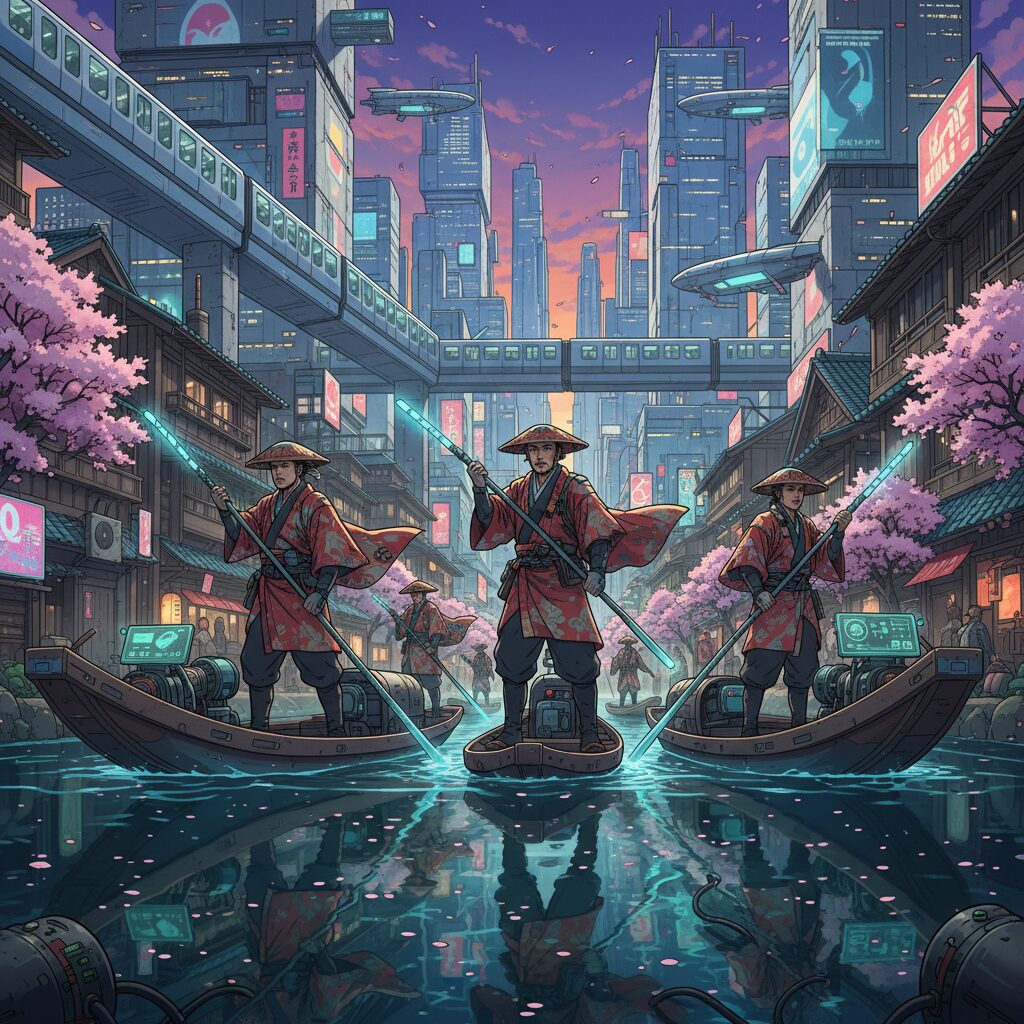
We’ve discussed these incredible places, but we must give special recognition to the people who make it all possible: the sendo, the traditional boatmen. Honestly, these individuals are the heart, soul, and strength behind the entire Kawakudari experience. It’s more than just a job; for many, it’s a legacy. This craft is a physically demanding and highly skilled profession often handed down through generations. They aren’t simply tour guides; they are living keepers of local history, folklore, and song.
Their main tool, the sao (bamboo pole), feels like an extension of their own body. Watching a skilled sendo use it is like watching a dance. They know every rock, every eddy, every subtle current shift in their home river or canal. They read the water almost instinctively. With a precise push here and a gentle pull there, they steer a multi-ton wooden boat full of passengers through narrow spaces and swirling water with seemingly effortless grace. But don’t be mistaken—this requires immense strength, balance, and endurance.
Their talent extends beyond the physical. They are storytellers who bring the landscape to life by pointing out historical sites, explaining the local ecology, and sharing entertaining anecdotes. And then there’s the music. The boatman’s song is an essential part of journeys in places like Yanagawa and Geibikei. These are not just random melodies; they are ‘funauta’ (boat songs), regional folk tunes sung on these waters for centuries. The lyrics tell of love, seasonal beauty, life’s hardships, or local legends. Hearing these songs, sung with a voice carrying the weight of tradition, connects you to the place on a much deeper, more emotional level. The sendo serves as a bridge between you, the visitor, and the spirit of the river. So when you’re on that boat, take a moment to appreciate the incredible artistry of the person guiding you—they are the reason this tradition continues to thrive.
Japan’s Seasons Don’t Play: Timing Your Ride
One of the most remarkable aspects of Japan is how dramatically the seasons change the landscape, and this is vividly evident during a Kawakudari ride. Choosing a season isn’t about right or wrong; it’s about selecting the vibe you prefer, as each one provides a distinctly different but equally incredible experience.
- Spring (March-May): Of course, this is sakura season—a major event. Gliding beneath canopies of blooming cherry blossoms, with petals gently drifting onto the water around you, is the height of aesthetic beauty. It’s like floating through a living painting. Locations like Yanagawa and the rivers around Tokyo look absolutely stunning. The weather is typically mild and pleasant, making it an ideal time for a leisurely cruise. It’s a popular season, so expect crowds and try to book ahead.
- Summer (June-August): Summer is characterized by lush, vibrant life. The landscape bursts with an intense, almost electric green. The trees are full, the foliage dense, and the cool mist from the river on a hot, humid day is a welcome relief. In some rural areas, you might even catch an evening cruise to see fireflies, which is truly magical. Summer is full of energy, and the rivers come alive.
- Autumn (October-November): For many, this is the ultimate season. The ‘koyo’ or autumn leaves are breathtaking. The gorges of Hozugawa and Geibikei become canvases of fiery reds, deep oranges, and golden yellows. The crisp, cool air combined with the stunning colors reflecting on the water creates an almost overwhelming scene of beauty. It’s a photographer’s dream and a nature lover’s paradise—undoubtedly one of the best times to experience the raw beauty of Japan’s mountain rivers.
- Winter (December-February): Don’t overlook winter. It offers a completely different, more reflective experience. The crowds disappear, and a quiet stillness envelops the landscape. A light dusting of snow can transform a familiar scene into a stark, beautiful monochrome world. And of course, there’s the ultimate winter indulgence: the kotatsu boats in Yanagawa. Being warm and cozy while drifting through a silent, wintry world feels both luxurious and uniquely Japanese.
Your Practical Slay Guide
Alright, you’re excited and ready to go. Let’s get you set up with the essentials so you can glide in smoothly and have the best experience possible.
- Booking Your Spot: This depends on the location. For highly popular places like the Hozugawa Kudari during the busy autumn season, booking online or through a travel agent ahead of time is wise. For others, like Nagatoro or Yanagawa on a typical weekday, you can often just show up and buy a ticket at the boarding area. My suggestion? If you’re aiming for a specific date and time, especially in spring or autumn, secure your spot early. Otherwise, a bit of spontaneity is perfectly fine.
- The Fit Check (What to Wear): Layers are essential. The weather on the water can differ from the town and can change unexpectedly. A light jacket is always recommended, even in summer. Sun protection is a must—bring a hat, sunglasses, and sunscreen since you’ll be exposed throughout the ride. In winter, dress warmly, unless you’re on a kotatsu boat—in which case, you’re in luck. Wear comfortable shoes that are easy to slip on and off, as you may need to remove them on some boats.
- What to Pack: Travel light. Your phone or camera is key for capturing the scenery. Carrying a bottle of water is smart, especially in summer. Some longer rides may allow snacks, but check ahead. It’s good to have some cash on hand, as smaller vendors or ticket counters in rural areas might not accept cards.
- On-Boat Etiquette: It’s straightforward. Just enjoy yourself, but be respectful. The top rule is to follow the sendo’s instructions—they are the experts, and their guidelines ensure your safety. Stay seated during the ride unless told otherwise. Don’t stand up or lean too far over the side, as this can tip the boat. Basically, don’t be that person. Just sit back, relax, and let the pros handle everything.
Beyond the Boat: Keep the Adventure Going
The boat ride may be the main attraction, but it’s rarely the only activity available. These destinations often boast plenty of other fascinating spots to explore, so plan to spend the whole day there!
- In Yanagawa: After enjoying your fill of unagi, wander through the town’s historic streets. Visit ‘Ohana,’ the grand villa once owned by the feudal Tachibana clan, featuring a beautiful Japanese garden that perfectly complements the canal cruise. You can also explore old samurai houses and browse local shops offering unique Yanagawa crafts and sake.
- In Arashiyama (after Hozugawa): You arrive in one of Kyoto’s most iconic areas. The world-renowned Arashiyama Bamboo Grove is right nearby. Visit Tenryu-ji Temple, a UNESCO World Heritage site with a stunning garden. Cross Togetsukyo Bridge for breathtaking views, or hike up to Iwatayama Monkey Park to meet the resident macaques.
- In Nagatoro: After finishing your river trip, climb or take the ropeway up Mount Hodo for panoramic views of the region. Hodosan Shrine at the mountain’s base is also worth a visit. If you’re there in late spring, don’t miss the nearby Hitsujiyama Park in Chichibu, famous for its vast fields of ‘shibazakura’ (pink moss phlox), an absolutely spectacular sight.
- Near Geibikei: Geibikei is close to Hiraizumi, a town home to several temples that together form a UNESCO World Heritage site. The most renowned is Chuson-ji, featuring the incredible Konjikido, or ‘Golden Hall,’ a small structure entirely covered in gold leaf. It’s a must-see and offers a striking historical contrast to the natural beauty of the gorge.
So, that’s the scoop on Kawakudari. It’s much more than just a boat ride. It’s an opportunity to slow down, breathe deeply, and experience Japan from a fresh perspective. It connects you to nature, history, and a living tradition of craftsmanship. It’s about finding the water’s rhythm and letting it carry you. Whether you’re after serene beauty, a touch of adventure, or an immersive cultural experience, there’s a river waiting for you. Trust me, it’s a journey you’ll never forget. See you on the water!