What’s up, fellow adventurers? Taro here. Let’s talk about stepping into another world. Not like, a VR world, but a real-deal, ancient, moss-covered planet that just happens to exist on a tiny island south of mainland Japan. I’m talking about Yakushima, a place so mythical, so intensely green, it feels like the Earth’s memory is physically rooted in its soil. This isn’t just a hike; it’s a full-on time-traveling experience. Imagine walking among giant cedar trees, some of which were saplings when the Pyramids were being built. It’s a vibe that recalibrates your soul, no cap. This island is a UNESCO World Heritage site for a reason, a living, breathing testament to nature’s sheer, stubborn power. It’s where water and stone and wood have been locked in a dramatic dance for millennia, and you get a front-row seat. We’re about to dive deep into the heart of these primeval forests, exploring trails that feel like they were pulled straight out of a Studio Ghibli masterpiece. This is for the hikers, the dreamers, the ones who crave that feeling of being infinitesimally small in the face of something immeasurably grand. So, lace up your boots, because we’re about to get lost in the magic of Yakusugi, the ancient cedars of Yakushima. Bet.
If you’re captivated by the idea of wandering through a landscape that feels like it was pulled straight from a Studio Ghibli film, you should definitely explore the magical Ghibli forest of Yakushima.
Yakushima: Why This Island is Straight-Up Legendary
First, let’s cover the basics. Yakushima is an island that essentially features a massive granite mountain rising out of the ocean. This distinctive geology creates a wide variety of climates. Along the coast, you find subtropical vibes with hibiscus flowers and banyan trees; as you climb higher, you enter a temperate, misty realm of ancient forests, and if you ascend further, it turns into a subalpine zone where everything is blanketed in snow during winter. This dramatic vertical climate shift is what makes the island a biodiversity hotspot. Locals often say it rains “35 days a month” here, and they’re not exaggerating. The abundant rainfall is the island’s lifeblood, nurturing its famous, moss-covered landscapes and enabling its most notable inhabitants, the Yakusugi, to flourish.
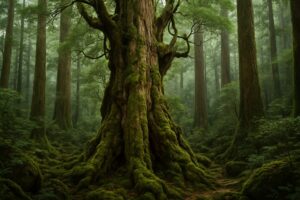
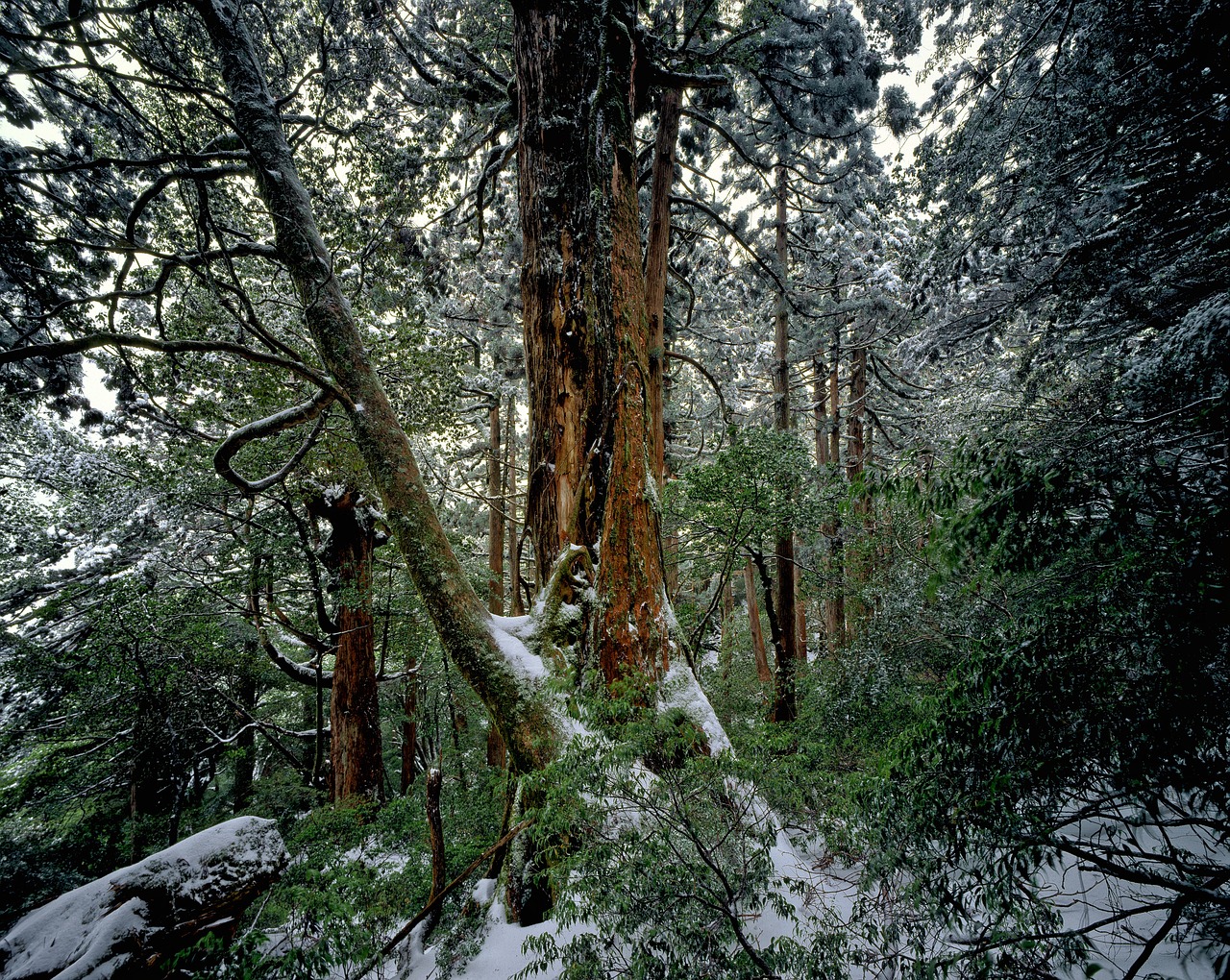
So, what exactly is a Yakusugi? The term specifically refers to cedar trees on the island that are over 1,000 years old. Those younger are called ‘kosugi’ (small cedars). These ancient giants are the true rulers of the forest. They are twisted, weathered, and remarkably resilient, having withstood typhoons, logging, and the passage of centuries. Their wood is highly resinous, making it resistant to rot and allowing them to live for millennia. The most famous among them, the GOAT, is Jomon Sugi, believed to be between 2,000 and an astonishing 7,200 years old. Being near these trees is a humbling experience—they’re not just wood and leaves, but living monuments. The atmosphere around them feels different—denser, purer, charged with history. For many Japanese and increasingly for travelers worldwide, visiting these trees is a spiritual pilgrimage. This is not just a nature walk; it’s an encounter with eternity.
The Vibe of the Forest: It’s More Than Just Trees
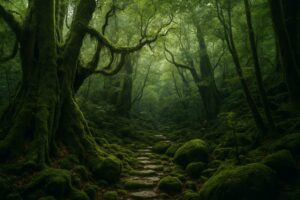
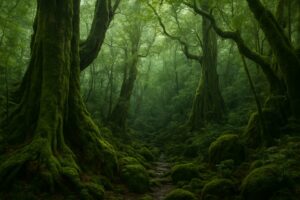
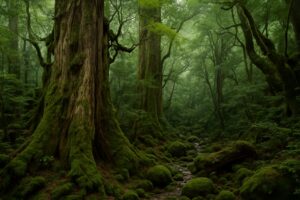
Before we even discuss specific trails, we need to address the atmosphere. The ambiance in Yakushima’s forests feels otherworldly. It’s an overwhelming sensory experience in the best way imaginable. The predominant color is an almost unimaginable range of green. Moss, thick and soft like a velvet carpet, blankets everything—rocks, tree trunks, fallen logs, and the ground itself. There are hundreds of varieties of moss here, each with its own unique texture and shade of green. The air is heavy with moisture, cool and crisp, carrying the aroma of damp earth, decaying leaves, and the subtle, spicy scent of cedar. The soundscape is equally rich. Silence is rare. You’ll hear the constant drip of water from leaves, the babbling of pristine streams weaving through the forest floor, the chatter of Yakuzaru monkeys in the canopy, and the rustle of a Yakushika deer stepping lightly through the undergrowth. When the mist rolls in, as it frequently does, the forest transforms entirely. The giant trees become ghostly silhouettes, and the world shrinks to just you and the few feet of trail ahead. It’s eerie and magical simultaneously. This is where the concept of ‘shinrin-yoku’, or forest bathing, originated. You don’t rush through these woods. You let them seep into you. You breathe deeply, touch the moss, listen to the water. It’s a meditative experience that truly grounds you. The stress of modern life seems to dissolve, replaced by a deep sense of peace and connection. The incredible age of the trees puts everything into perspective. Your deadlines, worries, and anxieties—all feel fleeting when you stand beside a living being that has occupied the same spot for three thousand years. It’s a powerful, elemental sensation that lingers long after you leave the island.
Choosing Your Adventure: The Holy Trinity of Yakushima Hikes
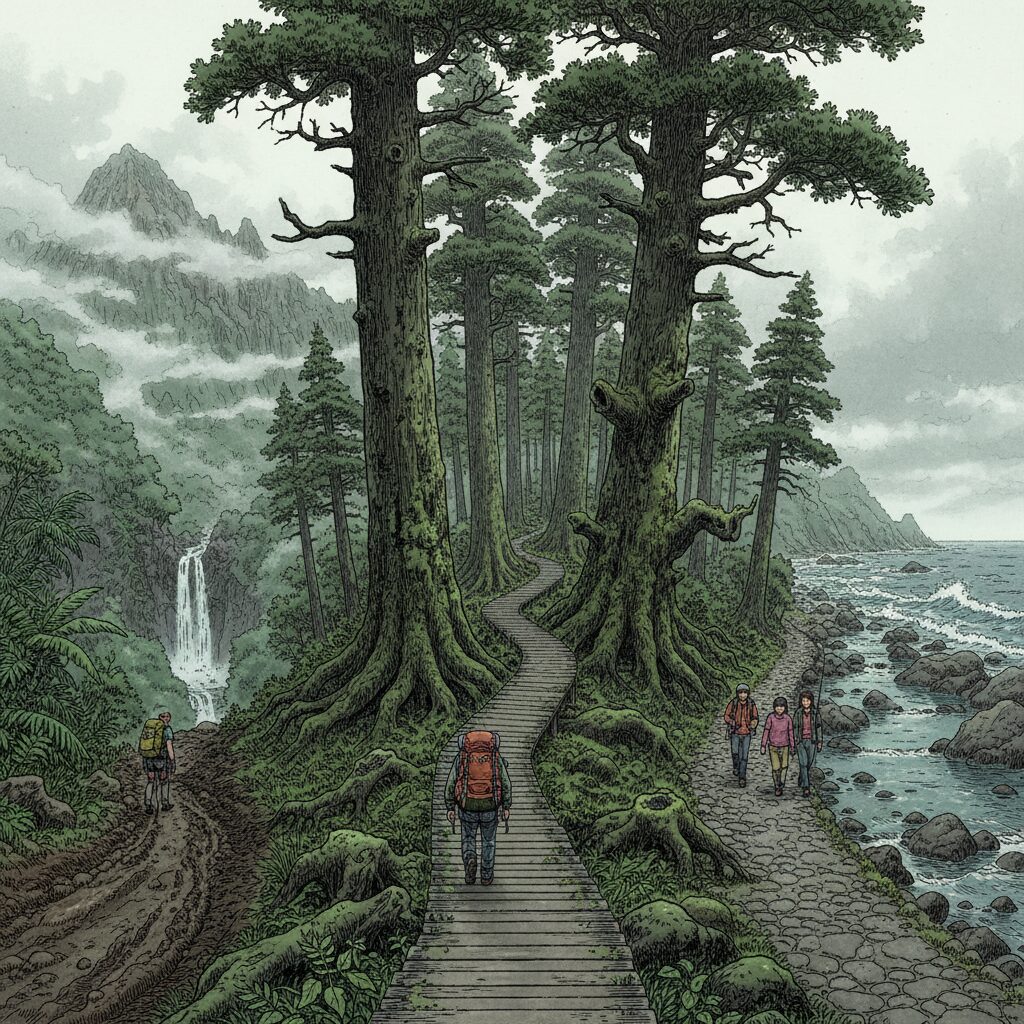
Alright, let’s dive into the details. Yakushima has trails for everyone, from easy strolls to tough, all-day hikes. However, there are three main spots you absolutely can’t miss. Think of them as the island’s greatest hits, each offering a distinct Yakushima experience, varying challenges, and unique rewards. Whether you have just an afternoon or are ready for a serious trek, one of these will suit you perfectly. Choosing the right one is crucial for an unforgettable adventure, so let’s break them down.
Yakusugi Land: The Easy Introduction
Don’t be fooled by the somewhat theme-park-like name. Yakusugi Land is a genuine, beautiful forest park that provides the most accessible glimpse into the ancient cedar world. It’s ideal if you’re short on time, hiking with family, or not up for a strenuous, multi-hour trek. The park features a series of well-maintained paths, including paved trails and wooden boardwalks, making navigation a breeze. You can pick from several courses, from a quick 30-minute loop to a more extensive 150-minute route. Even on the shortest path, you’ll instantly be immersed in Yakushima’s charm. You’ll encounter several impressive Yakusugi like Buddha Sugi and Sennen Sugi right alongside the trail. The forest is dense, the river running through it crystal clear, and moss is everywhere. It’s a fantastic primer for the island’s ecosystem. Because it’s so accessible, it can get more crowded than other locations, but it remains utterly stunning. Think of it as a preview for the main event—it delivers all the epic scenery and ambiance without requiring a big commitment. If you’re testing the waters or want a guaranteed gorgeous walk without extreme effort, Yakusugi Land is your spot. A total win.
Shiratani Unsuikyo Ravine: The Ghibli Wonderland
Now we’re stepping it up. If you’ve seen Hayao Miyazaki’s Princess Mononoke, you’ve already glimpsed the spirit of Shiratani Unsuikyo. This ravine famously inspired the film’s enchanted forests, and it’s easy to see why. The moment you start the trail, you enter another world. The forest floor is a wonderfully chaotic tangle of moss-covered granite boulders, some as large as cars. Gnarled roots, looking like ancient serpents, twist over and around them. Crystal-clear waters flow everywhere, forming small waterfalls and tranquil pools. The light here is magical, streaming down through the dense canopy in ethereal beams, illuminating the mist and making the moss glow with an inner light. The main route, the Taikoiwa Rock return course, takes about four hours and is a journey through constantly shifting scenery. You’ll cross charming wooden bridges, duck beneath giant fallen logs, and navigate trails that are more roots and rocks than dirt. The highlight for many is the ‘Moss Forest’ (Kokemusu-no-mori), a dense, vibrant section that feels like the essence of the ravine. It’s a place to pause, be silent, and take in the overwhelming greenery. The ultimate reward, though, is Taikoiwa Rock. After a final steep climb, you emerge onto a massive granite boulder with a breathtaking panoramic view of the island’s mountainous core. On clear days, you can spot the highest peaks, including Miyanoura-dake. It’s a view that makes every bit of effort worth it. Shiratani Unsuikyo is a moderately challenging hike with some steep sections, but it’s absolutely essential. It’s the poetic, mystical side of Yakushima that will genuinely take your breath away. A memory waiting to happen.
The Jomon Sugi Expedition: The Ultimate Journey
This is the big one—the main event. Hiking to Jomon Sugi isn’t just a walk; it’s a pilgrimage. It’s a tough, 10-to-12-hour, 22-kilometer round trip that will push your physical and mental limits. But the reward is meeting one of the planet’s oldest living beings. Let’s be honest: this hike is no joke. It’s not for the faint-hearted or unprepared. But if you’re ready, it’s a truly life-changing experience.
The day begins early, often before 4 AM, to catch a bus to the Arakawa Trail Entrance. The first part, a solid two to three hours, is deceptively easy, following the Anbo Forest Railway tracks—a narrow-gauge line once used for logging but now a flat, straightforward path deep into the mountains. Walking along these tracks through tunnels and over high trestle bridges as the forest wakes up is surreal. This section is beautiful, but just the warm-up.
After about 8 kilometers, the tracks end, and the real challenge begins. The trail turns into a steep, demanding climb through ancient forest. This is where you’ll see some of the hike’s famous landmarks. You’ll pass Wilson’s Stump (Wilson-kabu), the giant hollow remains of a cedar logged centuries ago. From inside, looking up at the opening forms a perfect heart shape against the sky—a truly iconic shot. As you ascend, the trees grow older and more massive. You’ll come across Daio Sugi (Great King Cedar) and Meoto Sugi (the Married Cedars, two trees fused together). The terrain gets tougher, with steep wooden stairs and spots where you must use your hands to climb over roots and rocks. Your legs will burn, your lungs will ache, and you’ll question why you took on this challenge.
Then, eventually, you arrive. Jomon Sugi doesn’t just appear all at once. You climb the final stairs to a specially built viewing deck (designed to protect the tree’s delicate roots), and there it is. It’s impossible to describe the feeling of finally seeing it. The tree is enormous, gnarled, and cloaked in moss and ferns. It’s less a tree and more a sculpture shaped by time. Its presence is overwhelming, radiating immense age and resilience. You can’t get close enough to touch it, but you don’t need to. You just stand in awe, sharing a moment with a being that has silently witnessed millennia of history. After soaking it in, you must turn back and face the entire 11 kilometers again. The return journey is long and tiring, but the incredible experience you’ve just had carries you through. This hike is a true epic, in every sense of the word.
Practical Slay: How to Nail Your Yakushima Trip
An epic trip to Yakushima demands careful planning. You can’t just show up and wing it, especially if you’re taking on the major hikes. Here’s the essential info on the logistics you need to ensure your adventure runs smoothly.
Getting There and Getting Around
Your trip begins in Kagoshima, the southernmost major city on Japan’s Kyushu island. From there, you have two main ways to reach Yakushima: by plane or ferry. Multiple daily flights from Kagoshima Airport offer the fastest, though most expensive, option. On a clear day, the aerial views are incredible. More commonly, travelers take the sea route. You can choose the high-speed jetfoil, which takes about two to three hours, or the slower car ferry, a four-hour journey that’s much cheaper and the only choice if you’re bringing a vehicle.
Once on the island, renting a car is nearly essential. Public transport is limited to a bus that circles the island, but the schedule is infrequent and doesn’t always stop conveniently near trailheads. Having a car lets you explore at your own pace, pause at viewpoints, and arrive early for hikes. Be cautious on the roads—they’re narrow, winding, and frequently shared with roaming deer and monkeys. Drive carefully!
Best Time to Visit
Yakushima is a destination for all seasons, each bringing a distinct atmosphere. Spring (March-May) is wonderful, with cooler temperatures and mountain rhododendrons blooming in pinks and whites. Summer (June-August) is peak season, hot, humid, and rainy (especially during the June-July rainy period), but the forests are at their most lush. Autumn (September-November) is arguably the best hiking season, offering mild temperatures, less rain, and fewer visitors. Winter (December-February) is the quietest time. While the coast remains mild, the high mountains get heavy snowfall, making hikes like Jomon Sugi impossible without advanced alpine gear and a guide. The bottom line: expect rain whenever you visit. It’s not just possible—it’s inevitable.
Packing the Right Gear is Crucial
This can’t be overstated. Your gear can make or break your Yakushima hiking experience. Don’t get this wrong.
First and foremost: everything waterproof. A high-quality waterproof, breathable jacket and pants are essential, along with a waterproof cover for your backpack to keep your gear dry.
Footwear is key: sturdy, waterproof hiking boots with good grip and ankle support are a must. Don’t even think about tackling Jomon Sugi in sneakers—you’ll regret it. Trails are rocky, root-filled, and often slippery.
Other essentials include a headlamp for early starts, plenty of water (mountain streams provide some of the purest water you’ll find), high-energy snacks, and a portable toilet kit. Facilities on the trails are very limited, and hikers are expected to pack out all waste, including human, to protect the fragile ecosystem. These kits are widely available on the island. It may feel odd initially, but responsible hiking here depends on it. If you prefer not to carry all your gear from home, many rental shops in Miyanoura and Anbo offer complete equipment packages at reasonable rates.
Beyond the Cedars: Other Dope Stuff to Do
While the ancient forests are the main attraction, Yakushima offers more than just hiking. On your rest days, or if you want to experience a different side of the island, there’s plenty to discover.
The waterfalls here are truly spectacular. Senpiro-no-taki and Toroki-no-taki are two of the most impressive, cascading down massive granite cliffs. Toroki is unique because it’s one of the rare waterfalls in Japan that flows directly into the ocean. The island is also surrounded by beautiful beaches. Nagata Inakahama is a breathtaking stretch of golden sand and serves as the most important nesting site for loggerhead sea turtles in the North Pacific. From May to July, you can join guided night tours to watch the turtles come ashore to lay their eggs. It’s an incredible experience.
And after all that hiking, what could be better than a soak in a natural hot spring, or onsen? Yakushima boasts some unique ones. Hirauchi Kaichu Onsen is a series of natural pools on the rocky seashore that are only accessible for a few hours each day at low tide. Bathing in the hot water while ocean waves crash just feet away is an unforgettable experience.
Lastly, don’t forget the food. Yakushima offers some delicious local specialties. Flying fish (tobiuo) is a highlight; it’s served either as sashimi or deep-fried whole, fins and all, which looks wild but tastes fantastic. The island is also famous for its tankan and ponkan citrus fruits, known for their sweetness and juiciness. For a local drink, try some of the island’s shochu, especially Mitake, a sweet potato-based spirit beloved by locals.
A Final Word from the Forest
A trip to Yakushima is more than just a vacation—it’s an immersion. It serves as a powerful reminder of nature’s vastness, beauty, and resilience. Walking through those ancient forests, inhaling the clean, moist air, and standing before a tree that has thrived for thousands of years transforms you. It’s a humbling and profoundly moving experience that cuts through the noise of the modern world and connects you to something primal and deep. It’s undoubtedly a challenge. The weather is unpredictable, the hikes are strenuous, but the reward is immeasurable. You’ll leave the island with sore muscles, a camera full of vividly green photos, and a renewed sense of awe. It’s a place that touches your soul and lingers there. So if you ever have the chance, go. Go and walk among the giants. You won’t regret it.