When one summons an image of Japan, the mind readily conjures a vibrant tapestry of ancient temples nestled in serene bamboo groves, the electric hum of neon-drenched cityscapes in Tokyo, and the sublime, snow-capped silhouette of Mount Fuji. It’s a nation defined by a delicate balance of meticulous tradition and relentless modernity. But what if I told you that nestled along its western coast, facing the often tempestuous Sea of Japan, lies a vast, shifting landscape of golden sand that seems lifted from the pages of ‘One Thousand and One Nights’? This is no illusion. This is the Tottori Sand Dunes, or Tottori Sakyu, Japan’s largest and most magnificent coastal dune system. It’s a place that fundamentally challenges your perceptions of the country, a geological marvel that serves as a sprawling adventure playground. Here, the salty spray of the ocean meets the dry whisper of the desert, creating a vibe that is utterly unique and, frankly, unforgettable. Forget what you think you know about Japan; we’re about to dive into a world of sandboarding down colossal slopes, trekking via camelback against a dramatic seaside backdrop, and witnessing sunsets so profound they feel like a spiritual awakening. This isn’t just a tourist spot; it’s a geographic anomaly, a testament to the raw, untamed power of nature that has been sculpting this coastline for a hundred millennia. It’s a core memory waiting to happen, a place where the scale of the landscape makes you feel both infinitesimally small and infinitely alive. Before we trek further into this sandy wonderland, let’s pinpoint our location on the map.
To further explore the stunning coastal landscapes of this region, consider sea kayaking through the San’in Kaigan Geopark.
The Vibe: A Desert Dropped on the Coastline

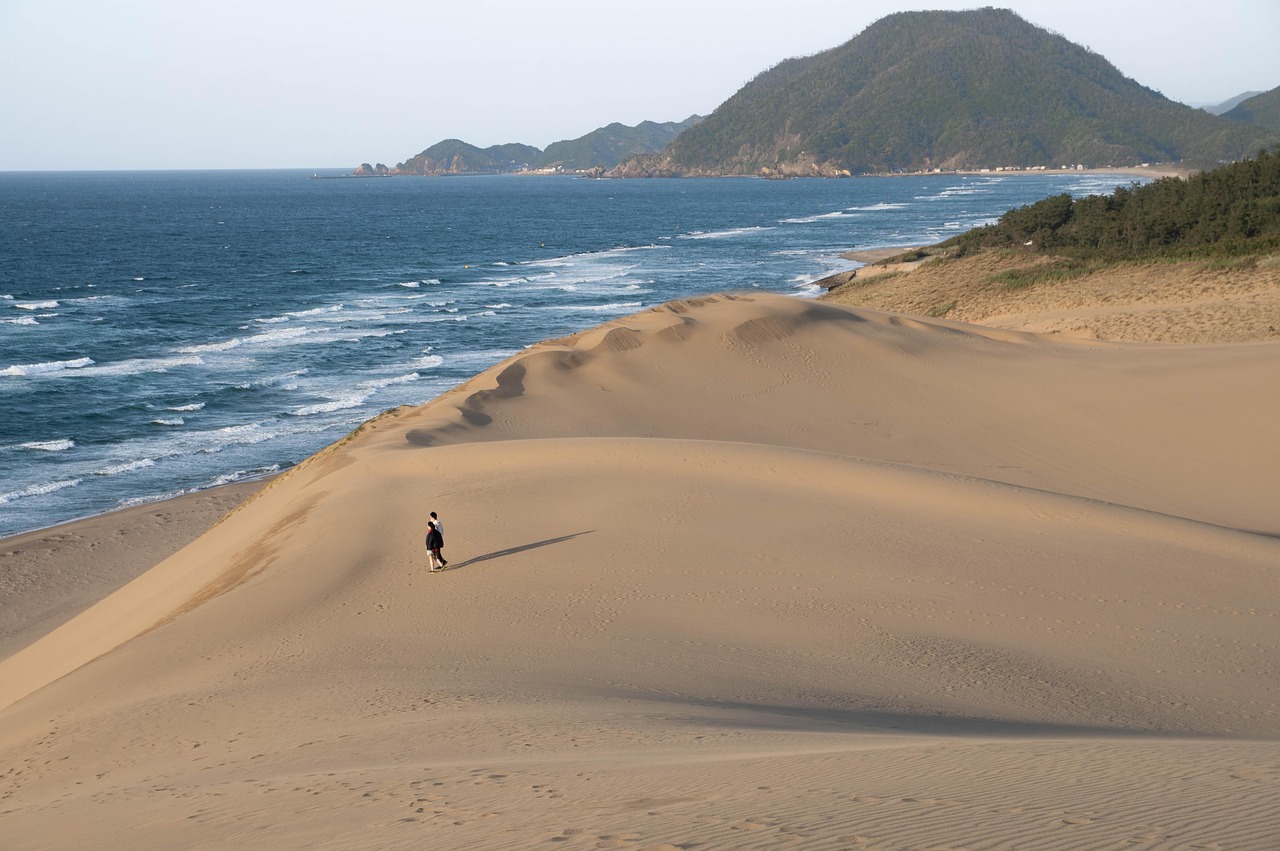
Stepping onto the Tottori Sand Dunes for the first time is both profoundly disorienting and exhilarating. The immediate feeling is one of vastness. The main expanse stretches about 16 kilometres along the coast and reaches up to 2.4 kilometres inland, a scale difficult to grasp from photographs. Your senses are instantly awakened. The wind, ever-present here, carries the faint, salty scent of the Sea of Japan, reminding you that you’re not in a landlocked desert but at the edge of an island nation. It hums and whistles as it shapes the sand into intricate, ever-shifting ripples called fūmon (wind ripples). The sand itself plays a role in this scene. It’s remarkably fine, a soft, pale golden powder that feels cool and pliant beneath your feet—a sharp contrast to the often humid Japanese air. On a scorching summer day, the surface can become blisteringly hot, demanding respect and proper footwear. Yet, the true magic, the authentic ‘vibe’ of the place, lies in its sheer improbability. To your left, the deep blue sea crashes upon the shore; to your right, undulating dunes rise and fall like a sleeping giant, crafting a horizon that feels more Sahara than San’in, Japan’s ‘shadowy northern side.’
This landscape is neither accidental nor man-made; it is the masterpiece of a 100,000-year geological collaboration. As a historian, I find this story utterly fascinating. It begins deep within the Chūgoku Mountains that form the region’s backbone. Over millennia, weathering caused granite rock to break down, its particles washing into the Sendaigawa River. This river, a vital artery, acted as a conveyor belt, carrying sediment—future sand—onward to the sea. Upon reaching the coast, lighter silt was carried further offshore by ocean currents, but heavier sand particles settled near the river’s mouth. The twist comes from the powerful currents of the Sea of Japan and relentless seasonal winds. Together, they churned the sand and pushed it back onto the shore, where the wind then lifted the grains and piled them higher and higher, dune after dune, across countless generations. What lies before you today is the awe-inspiring result: a dynamic, living landscape, always changing, shaped by the elemental forces that crafted it. It stands as a powerful lesson in deep time, a reminder of nature’s patient, persistent artistry. It’s quietly mind-blowing to stand on a dune and realize you’re standing on a mountain that has been ground down, washed out to sea, and blown back onto land across an unimaginable timescale.
Level Up Your Adventure: Sandboarding the Sakyu
Simply wandering the dunes is an experience in itself, but for adrenaline seekers, the Tottori Sakyu offers a unique thrill: sandboarding. This is your chance to literally surf the earth, and it’s much more accessible than you might imagine. No prior snowboarding or surfing experience is needed; all you really need is a sense of adventure and a willingness to get a little sandy. Don’t worry if you’re a complete beginner—the instructors are excellent, and the soft sand makes for a very forgiving landing.
The main stage for this activity is the massive dune known as Umanose, or the ‘Horse’s Back’. This enormous ridge of sand rises sharply to about 47 meters, with a steep 32-degree face. Climbing to the top is a workout—each step sinks into the soft sand, making the ascent quite challenging. But the payoff is huge. From Umanose’s summit, the view is breathtaking. You see the entire dune system stretched out below, with the sharp, rolling ridges casting a pattern of shadows and light, and beyond it all, the vast, uninterrupted horizon of the Sea of Japan. It’s a moment to pause, catch your breath, and take in the sheer beauty and scale around you.
Then it’s time to fly. After a quick but thorough lesson from a local guide—covering how to position your body, control the board, and most importantly, how to stop—you strap your feet onto the board (or choose a sled-like setup if you prefer sitting). The initial push-off feels like a leap of faith. The board hesitates for a split second before the sand gives way and gravity takes over. The acceleration is fast and smooth, a silent rush as you glide down the dune’s sandy face. The wind whistles past your ears, and the world blurs into gold and blue. Although the ride lasts only 20 to 30 seconds, the sense of freedom and exhilaration is immense. It’s pure, unfiltered fun. Several rental shops are located near the dunes’ main entrance, offering packages that usually include a board, boots, and a helmet, along with a two-hour lesson and session. Booking ahead is strongly advised, especially on weekends or holidays. As for what to wear, opt for comfortable, athletic clothing. Long sleeves and trousers help prevent minor scrapes in case you fall, and sunglasses are essential to protect your eyes from the bright sun and blowing sand. And sunscreen? Apply it generously—the sun reflecting off the sand can be intense, even on cloudy days.
A Taste of the Silk Road: Camel Riding in Tottori

If hurtling down a sandy cliff isn’t quite your pace, the dunes offer a more peaceful, almost meditative way to appreciate their majesty: riding on the back of a camel. Yes, you read that correctly—camels. Though not native to Japan, these gentle giants have become an iconic and cherished feature of the Tottori Sakyu, lending an exotic, Silk Road-esque ambiance to the landscape. Watching their slow, deliberate silhouettes as they trek across golden ridges against the backdrop of the blue sea is a surreal and wonderfully photogenic sight. It’s a scene that feels entirely out of place in Japan, which is exactly what makes it so special.
The experience itself is less of a long trek and more of a gentle, scenic stroll. The main attraction is a short, guided walk along a designated path near the base of the main dunes. It’s an opportunity to sit high atop the “ship of the desert” and view the scenery from a completely fresh perspective. The rhythmic, swaying motion of the camel is surprisingly soothing, allowing you to fully take in the sights and sounds around you. The guides, dressed in vaguely Middle Eastern-inspired attire, enhance the theatrical quality of the experience and excel at finding the perfect angle for your memorable photo. For those pressed for time or reluctant to ride, you can simply have your picture taken with the camels as they rest between trips. These animals are the undeniable stars of the dunes, and their calm, dignified presence adds an irresistible layer of charm.
The camel rides are run by a local company conveniently located near the main entrance. Usually, booking far in advance isn’t necessary; you can simply line up. The rides are relatively short, lasting about 15 minutes, making it easy to fit into your visit. It’s important to remember that this is a purely tourist attraction, established decades ago to enhance the desert-like feel of the dunes. The camels are well cared for, experienced with both the attention and the climate. Taking part in this activity means engaging with a piece of Tottori’s modern tourism history—a playful and imaginative addition that has shaped the dunes’ identity for generations of visitors, both domestic and international. It’s about capturing that perfect, unbelievable photo that will have your friends asking, “Wait, that’s in Japan?” The atmosphere is quietly majestic, and for a few minutes, you can imagine yourself as a traveler on an ancient trade route, even with the Sea of Japan shimmering just a few hundred meters away.
Beyond the Dunes: Exploring the Neighborhood
While the sand dunes are undoubtedly the main attraction, the surrounding area offers treasures well worth exploring that add considerable depth to any visit. Chief among these, and just a short walk from the dunes themselves, is The Sand Museum. This is far from a mere dusty collection of geological specimens; it stands as one of the most astonishing and unique art museums in the world. The museum commissions sand sculptors—true masters of their craft—from around the globe to create monumental, exquisitely detailed sculptures entirely from sand and water. No adhesives or secret ingredients are used—just compaction and moisture. The scale of these works is immense, with some towering several meters high, depicting intricate scenes with a level of detail that seems impossible for such a fleeting medium. The exhibition’s theme changes annually, with past themes including ‘Germany,’ ‘South America,’ and ‘Ancient Egypt.’ This constant renewal ensures that every visit offers an entirely new experience. The temporary nature of the art is part of its profound appeal; knowing that these incredible masterpieces will eventually return to dust lends them a poignant and powerful resonance. It is truly a must-see.
For a different view of the dunes, visit the Sakyu Center. Situated on a bluff overlooking the landscape, it provides a stunning panoramic viewpoint. A chairlift runs between the center and the edge of the dunes, offering a leisurely and scenic way to ascend or descend, saving your energy for exploring the sand itself. The view from the chairlift as you float over the road and approach the golden expanse is spectacular. The center is also a convenient hub, featuring a large restaurant serving local Tottori specialties, an extensive souvenir shop where you can find everything from sand-themed trinkets to local crafts and food, and clean restroom facilities. It’s the perfect spot to enjoy lunch or ice cream while taking in the magnificent scenery.
To fully appreciate the region’s natural beauty, venture a little further east along the coast to the Uradome Coast. This section of coastline is designated a UNESCO Global Geopark due to its stunning and dramatic geological formations. Here, years of erosion by the rough waves of the Sea of Japan have sculpted the shoreline into a series of charming small islands, sea caves, tunnels, and dramatic cliffs. You can explore the area via walking trails that trace the cliffs or, for a more immersive experience, take a sightseeing cruise weaving between the islands, offering spectacular close-up views. The crystal-clear, emerald-green water contrasts beautifully with the golden sands of the dunes, highlighting the incredible diversity of Tottori’s natural landscapes. Lastly, no trip to the prefecture would be complete without enjoying its culinary delights. Tottori is famous throughout Japan for its ‘Nijisseiki’ or 20th Century Pears (nashi), known for their crispness and juiciness. In autumn, you can even go pear-picking in local orchards. Thanks to its location on the Sea of Japan, the prefecture also boasts exceptional seafood, with the Matsuba snow crab being a highly prized delicacy available in winter. For a humble yet equally delicious meal, try Tottori’s unique gyukotsu ramen, which features a rich, savory broth made from beef bones instead of the more common pork broth—a true local specialty.
The Deets: Planning Your Tottori Trip
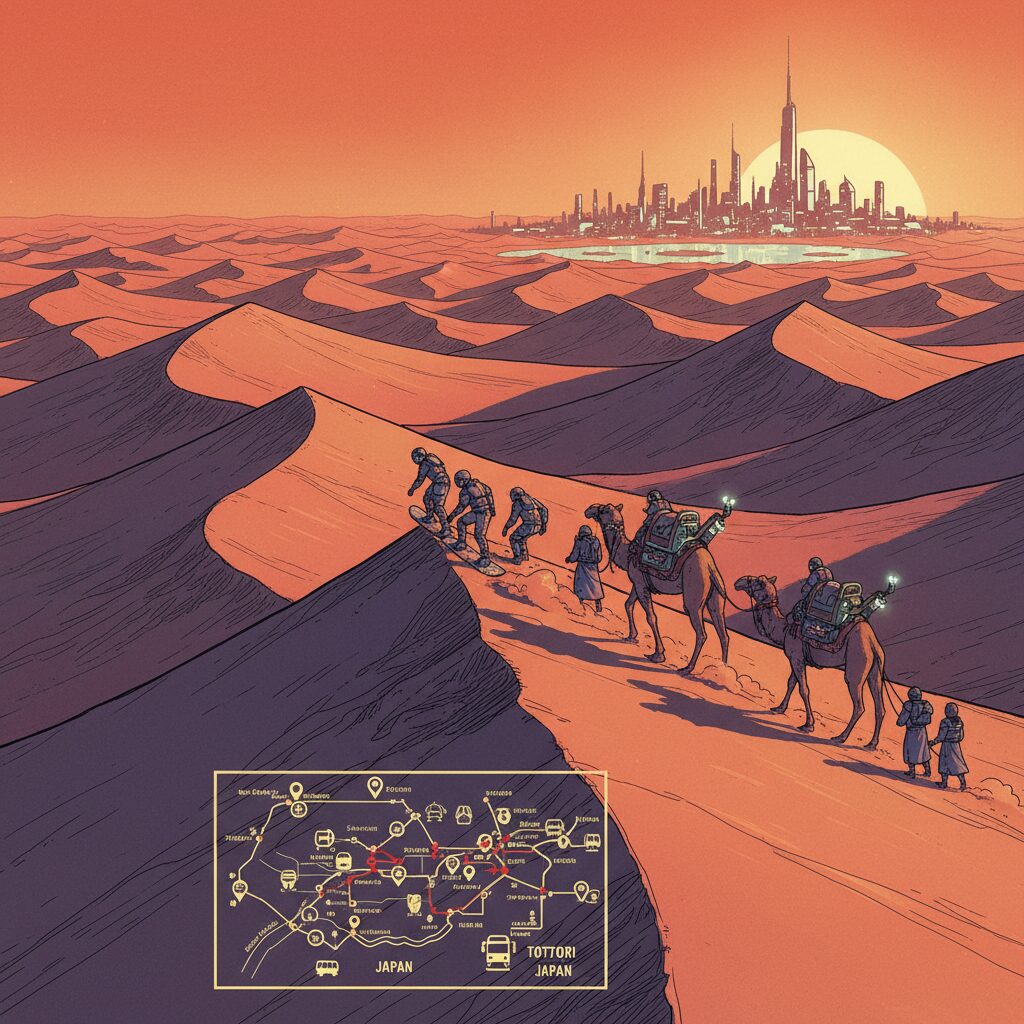
Reaching this remote-feeling corner of Japan is easier than you might think, although it does involve a bit of travel, which adds to the adventure. Tottori City serves as the main access point. If you’re traveling from major cities like Tokyo, Kyoto, or Osaka, the Japan Rail Pass is highly recommended. The quickest way is usually to take a Shinkansen (bullet train) to Himeji or Okayama, then transfer to the Limited Express Super Hakuto or Super Inaba train, which goes directly to Tottori Station. The entire trip from Osaka, for example, takes about 2.5 to 3 hours. Once you arrive at Tottori Station, the dunes are a 20-minute bus ride further. The local bus system is very reliable; the bus stop is right outside the station, with regular departures for Tottori Sakyu (鳥取砂丘). For added convenience, especially if you plan to visit attractions like the Sand Museum or the port, consider the Kirin Jishi Loop Bus. This tourist-friendly bus operates on weekends, holidays, and during summer vacation, covering all major sights in one loop for a flat day-pass price.
When you choose to visit can greatly influence your experience. Spring (March to May) and Autumn (September to November) are typically the best seasons. The weather is mild and comfortable, ideal for walking on the sand and exploring outdoors without the harsh heat of summer or the biting cold of winter. The autumn foliage in the nearby mountains also creates a stunning contrast with the dunes. Summer (June to August) can be extremely hot and humid. The sand heats up, feeling like a frying pan, and the sun can be intense. If you visit in summer, try to go very early in the morning or late in the afternoon to avoid the peak heat. Winter (December to February) presents a rare and magical scene. Occasionally, the dunes get covered with pristine snow, creating an unforgettable image of a snowy ‘desert’ meeting the dark, turbulent sea. However, be prepared for freezing temperatures and strong, chilly winds.
Here are some pro tips for your first visit. First, timing is crucial. To avoid crowds and heat and to capture the best light for photos, arrive early in the morning. At this time, the sand is still untouched, adorned with delicate wind ripples that disappear as the day progresses. Alternatively, stay until sunset. The setting sun colors the dunes and sea with stunning shades of orange, pink, and purple—truly a photographer’s dream. Second, choose your footwear wisely. Rubber boots are available for rent near the entrance, which is a good option if you want to avoid getting sand everywhere. Many visitors prefer going barefoot to fully connect with the landscape. If you do, be mindful of the sand temperature on hot days and keep shoes handy to slip back on. Lastly, come prepared. The dunes are a harsh, exposed environment, so bring plenty of water, especially in warmer months, along with a hat, sunglasses, and high-SPF sunscreen. Check the weather forecast beforehand, paying close attention to wind speed, as strong winds can cause mini sandstorms that may be unpleasant. With a little preparation, your desert adventure will be both comfortable and memorable.
A Historian’s Final Take
In a country abundant with carefully curated gardens, ancient shrines, and meticulously preserved castles, the Tottori Sand Dunes stand out as a testament to the untamable. They serve as a powerful and humbling reminder that long before any temple was built or city planned, the elemental forces of wind, water, and time were engaged in their own grand architectural design. From a historical standpoint, the dunes are more than just a geographical curiosity; they are a tangible chronicle of this region’s ancient past, a 100,000-year-old narrative written in grains of granite. They embody a different kind of Japanese heritage—not crafted by human hands, but bestowed by the planet itself. This landscape has long inspired the artistic imagination, prompting poets and artists to reflect on themes of permanence, impermanence, and humanity’s place within the vastness of nature. Standing atop the Umanose, gazing at the endless sea, one feels a profound connection to the generations who have stood in this very spot, humbled by the same breathtaking view.
What makes a visit to the Tottori Sakyu so deeply rewarding is this very sense of contrast. It is the thrill of sandboarding followed by the quiet reflection of a sunset. It is the strange yet charming sight of a camel train moving where a coastline should be. It is the experience of a desert and an ocean sharing the same breathtaking frame. This is Japan at its most unexpected, a place that defies categorization and broadens one’s understanding of what this incredible country can offer. It stands as a testament to the fact that even in a nation celebrated for its order and precision, there remain places of wild, chaotic beauty. So, when you plan your journey to Japan, by all means, immerse yourself in the vibrant energy of its cities and the serene grace of its cultural heartlands. But I urge you also to set aside time to venture to this sandy shore. Come and walk where mountains meet the sea in the most unusual ways. Come and experience the wind, the sand, and the sky. It’s a journey to the edge of the familiar, a place that will not only fill your camera with stunning photos but will also leave an unforgettable mark on your soul. It truly feels different, and it is a chapter of the Japan story you absolutely don’t want to miss.