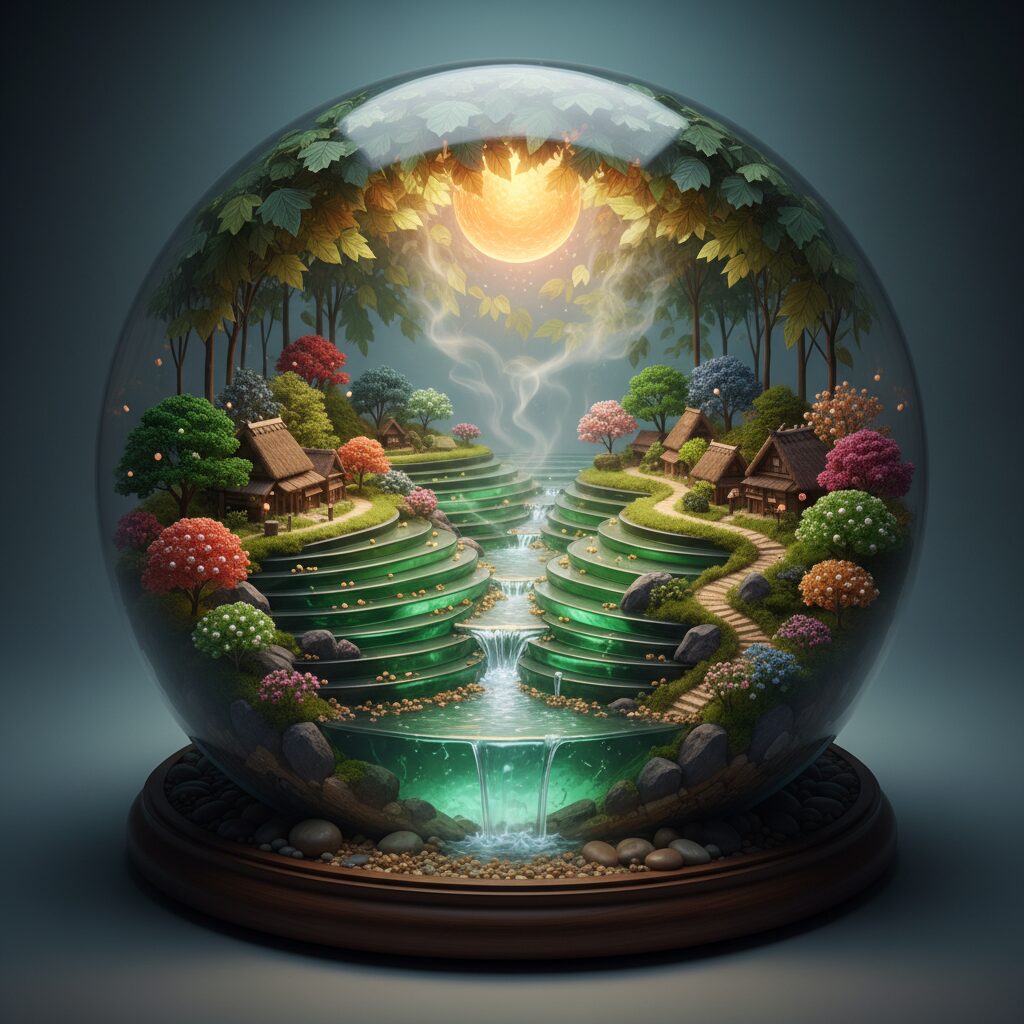
You’ve seen it, even if you don’t know its name. It’s the backdrop to countless classic films and the entire world of Studio Ghibli’s My Neighbor Totoro. It’s a gentle, rolling landscape of terraced rice paddies climbing a hillside, a dark band of forest crowning the ridge, and a cluster of farmhouses with smoked-tile roofs nestled in between. It looks like nature, but a softer, more inviting version than the jagged, imposing wilderness of a national park. This is satoyama (里山), and it’s one of the most important concepts for understanding Japan’s deep, complicated, and often contradictory relationship with the natural world.
The word itself is deceptively simple: sato (里) means a village or place where people live, and yama (山) means mountain. Satoyama is the in-between space, the borderland ecosystem where human civilization and the wild gently overlap, usually encompassing the area from the foothills to the lower mountain slopes. But it’s so much more than a geographical term. It’s a working ecosystem, a cultural ideal, and a powerful symbol of a Japan that is rapidly disappearing, yet yearned for more than ever. It challenges the Western notion of a strict divide between untouched, pristine wilderness and the human-dominated world. Satoyama suggests a third way: a landscape not conquered by humans, but shaped and sustained by them in a delicate partnership that lasted for centuries. To explore satoyama is to explore the heart of rural Japan and the soul of its relationship with the land.
Their delicate balance between human touch and nature mirrors the care seen in Japanese car craftsmanship that, like satoyama, celebrates a timeless dialogue between tradition and innovation.
What Exactly Is a Satoyama Landscape?
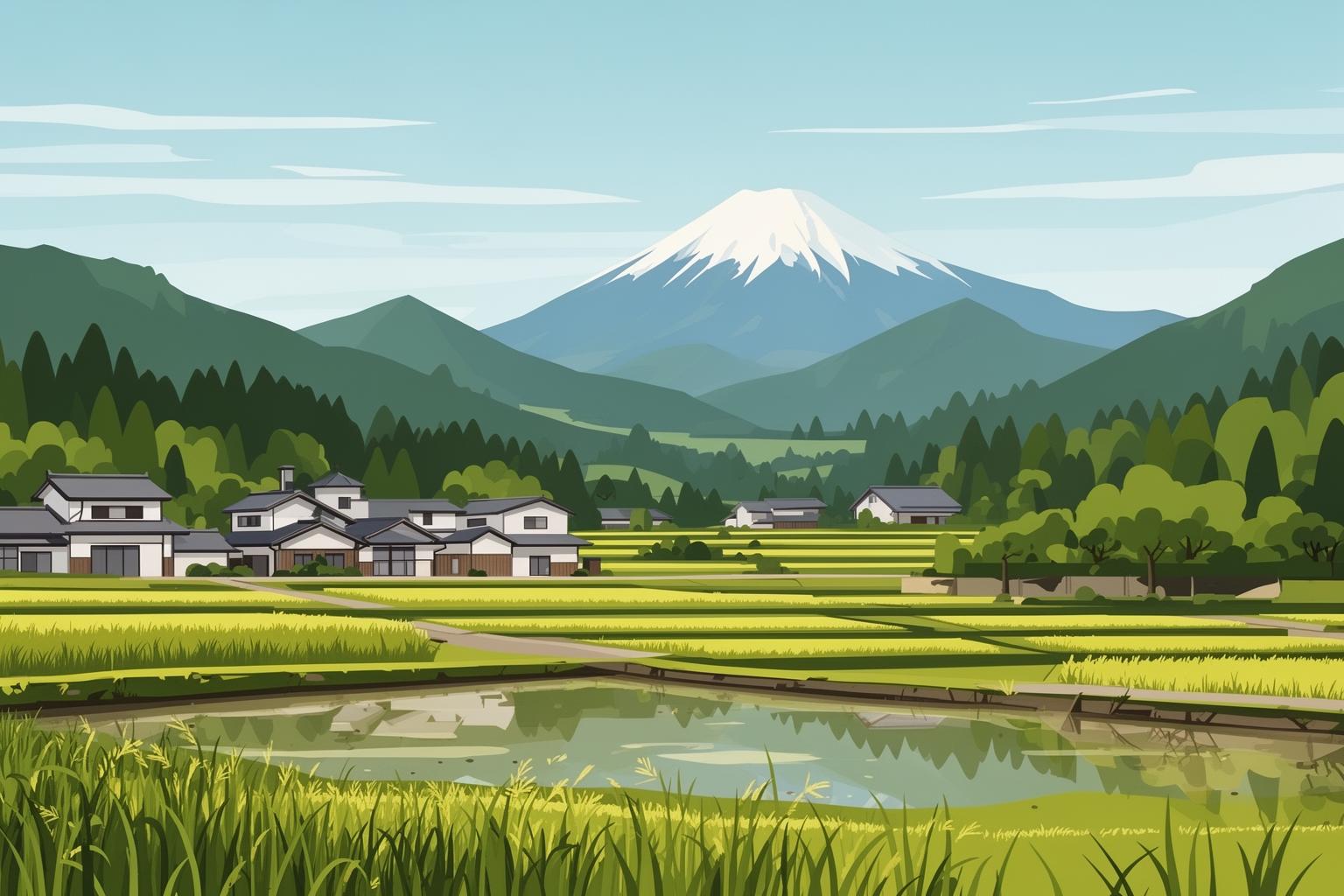
At first glance, a satoyama may appear to be a simple, pastoral scene. However, it is actually a highly intricate, integrated system where every element serves a purpose and is interconnected with the others. It is less a single location and more a mosaic of diverse environments, all managed by human hands to sustainably meet a community’s needs.
The Mosaic of Managed Nature
The quintessential satoyama landscape resembles a patchwork quilt of various land uses. The most iconic features are the terraced rice paddies, or tanada (棚田). These terraces are not only picturesque but also engineering marvels, cascading down hillsides to maximize arable land and regulate water flow. The water itself is a vital part, diverted from mountain streams through a network of canals and irrigation ponds (tameike), which also serve as habitats for fish, frogs, and dragonflies.
Above the paddies lie the coppiced woodlands, which are not untouched old-growth forests. For centuries, villagers regularly cut trees like sawtooth oak and chestnut down to the stump. This practice, known as coppicing, stimulates the trees to produce multiple new shoots, ready to be harvested every fifteen to twenty years for firewood and charcoal—the primary fuel sources in rural Japan until the mid-20th century. This cyclical cutting fosters a distinct forest structure with a bright, open floor, supporting a diverse range of wildflowers and insects that would not thrive in a dense, shadowy forest.
Beyond the woodlands, one might find managed bamboo groves, or chikurin (竹林), which provide materials for construction and crafts, along with edible bamboo shoots in spring. There were also grasslands, or kayaba (茅場), regularly harvested for roof thatch used in traditional farmhouses. Every part of the landscape was utilized; nothing was wasted, and everything was sustained through a steady, low-impact cycle of human activity.
A Human-Centered Ecosystem
It is essential to recognize that the rich biodiversity of the satoyama is not a coincidence of nature but a direct result of human involvement. Western environmental ideals often emphasize removing human influence to allow “pure” nature to prevail. Satoyama follows the opposite approach. It is a landscape where biodiversity is enhanced through human activity. The sunny openings in the coppiced woods provide ideal habitats for certain butterflies. The irrigation ponds create wetlands that support rare amphibians. The diverse mosaic of forest, field, and water offers habitats for numerous species within a relatively small area.
This landscape was the backbone of rural life. It was more than just a place to live; it served as the community’s grocery store, hardware store, and power plant combined. People foraged for edible wild plants (sansai) such as fiddlehead ferns and bamboo shoots in spring, hunted mushrooms in autumn, and collected fallen leaves from the forest floor to use as fertilizer for their fields. This relationship was one of stewardship rather than mere extraction. The health of the forest was directly tied to the health of the rice paddies, which in turn was linked to the village’s well-being. It was a closed-loop system, driven by human labor and deep, place-based knowledge passed down through generations.
The Satoyama in the Japanese Mind
Though satoyama is a physical place, its significance in modern Japan has become equally tied to its role as a cultural and emotional symbol. For millions living in hyper-modern cities, satoyama embodies a powerful, nostalgic ideal of a simpler, more genuine way of life.
Nostalgia for a Lost Ideal
The concept is closely linked with furusato (故郷). While furusato translates as “hometown,” its meaning is much deeper, conveying a profound sense of nostalgia for one’s origins, a spiritual home. For generations raised during the post-war economic boom who moved to cities, the satoyama landscape is the ultimate furusato. It is the imagined setting of their parents’ or grandparents’ lives—a place of community, connection to nature, and meaningful labor. It symbolizes a Japan lost in the haste to modernize.
This imagery permeates popular culture. Hayao Miyazaki’s film My Neighbor Totoro stands as perhaps the most iconic tribute to satoyama. Its setting—with rice fields, forested hills, and a deep reverence for nature’s spirits—offers a perfect, idealized portrayal of this landscape. The film resonated with a collective longing within Japanese society, becoming a cultural phenomenon by visually and emotionally expressing the sense of a lost paradise. The story is not set in a wild, untamed forest but in a world where children, farmers, and forest spirits live together in gentle harmony. This captures the very essence of the satoyama ideal.
Beyond Scenery: The Philosophy of Coexistence
The satoyama landscape also embodies a profound philosophical and spiritual worldview. Unlike the Abrahamic notion of humans having “dominion” over nature, traditional Japanese beliefs, especially Shinto, regard humanity as one part of a larger natural world inhabited by countless gods or spirits, kami (神). These kami can dwell in anything—from ancient trees to striking waterfalls or uniquely shaped rocks. Nature is not a resource to be conquered but a living entity deserving respect and coexistence.
Satoyama is where this philosophy was enacted. It illustrates a model of kyōsei (共生), or coexistence. Humans modified their environment, yes, but did so in ways that mirrored natural cycles and sustained the overall health of the system they depended upon. They took from the mountain but also nurtured it. This required deep knowledge of the local environment and the belief that human well-being was inseparable from nature’s vitality. The small shrines often found at the edge of a satoyama forest are not mere decorations; they mark this respect, positioned at the boundary between the human village and the mountain’s spirit world.
The Decline and Cautious Rebirth of Satoyama
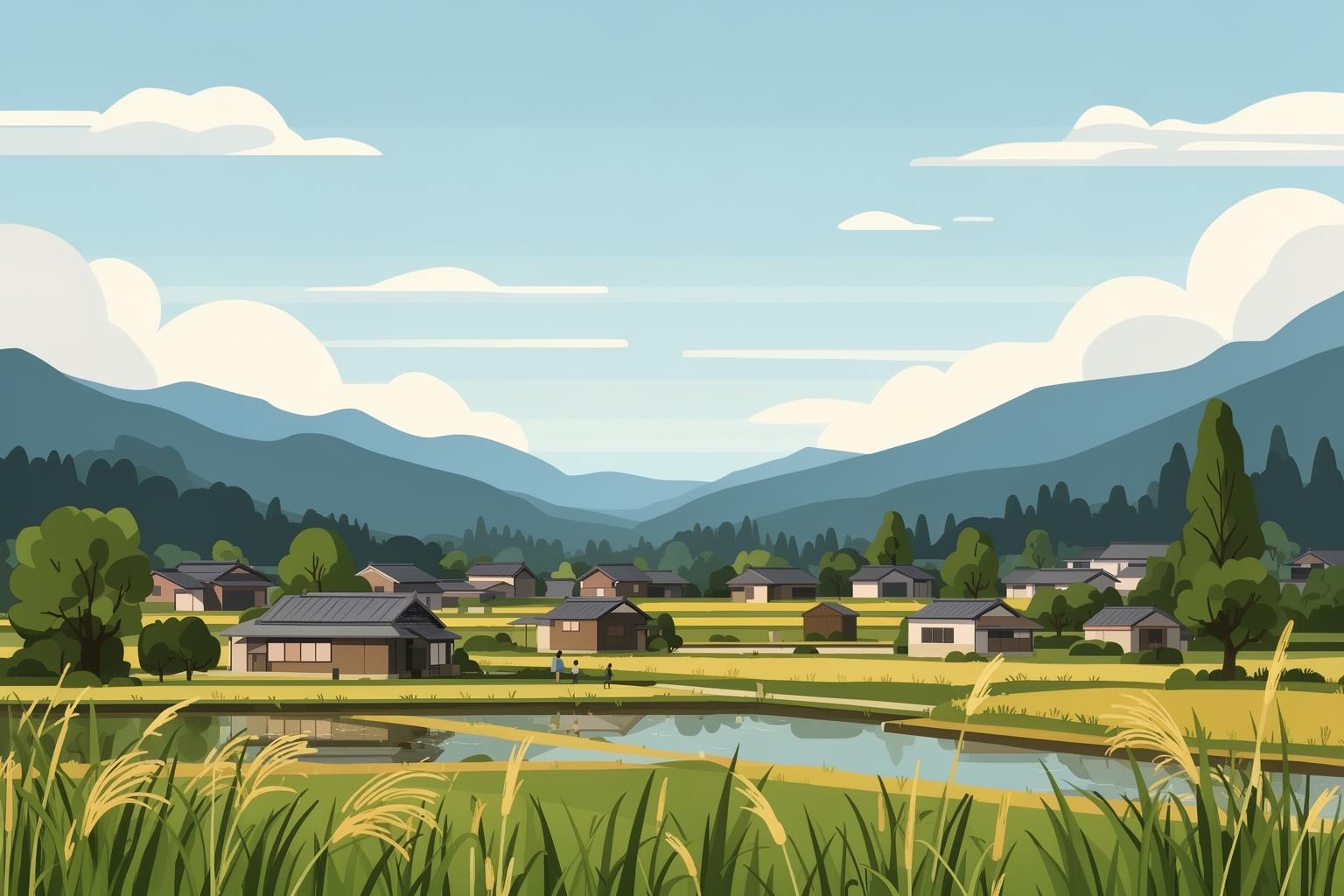
Despite its significant cultural influence, the traditional satoyama landscape is critically endangered. The very forces that propelled Japan into a modern economic powerhouse have systematically dismantled the lifestyle that created and sustained it for centuries.
The Pressures of Modernity
The primary cause of satoyama’s decline was the energy revolution of the 1950s and 60s. When Japan transitioned from charcoal and firewood to oil, gas, and electricity, the economic motivation to manage coppiced woodlands disappeared almost overnight. The forests ceased to be a vital resource and were simply left untended. Without regular cutting, they grew dense and overgrown, losing the unique biodiversity that thrived on the sunny forest floor.
At the same time, agricultural practices shifted. Chemical fertilizers replaced the need for compost from the forest floor. Large-scale machinery was introduced, effective on flat plains but poorly suited to the small, terraced paddies of the satoyama. Most importantly, millions of young people migrated from rural areas to jobs in booming cities, leaving villages with aging populations (kōreika) and severe labor shortages. There was simply no one left to perform the meticulous work of maintaining forests, canals, and fields. An unmanaged satoyama quickly deteriorates—terraces collapse, irrigation channels clog, and invasive species like bamboo spread rapidly, overtaking entire hillsides.
The Rise of the Satoyama Revival
Just when it seemed the satoyama would fade into history, a renewed appreciation for its value began to surface in the late 20th century. Scientists and conservationists recognized these managed landscapes as vital hotspots of biodiversity. Acknowledging the ecological and cultural crisis, the Japanese government designated satoyama as a key focus for conservation efforts. The term was even adopted internationally by the United Nations as part of a global initiative to promote sustainable, human-influenced natural environments.
This sparked a variety of revival projects nationwide. NPOs and volunteer groups formed to restore abandoned woodlands and rice paddies. Many volunteers are city residents who spend weekends in the countryside, seeking a direct connection to nature and relief from urban life. For them, it is a way to reclaim a part of their cultural heritage.
A new economic model, sometimes called “Satoyama Capitalism,” is emerging. This approach focuses on building sustainable businesses based on the landscape’s unique resources. It includes promoting eco-tourism, producing high-quality organic rice and vegetables labeled with their satoyama origin, crafting artisanal products from local wood and bamboo, and harvesting natural ingredients for cosmetics and cuisine. The goal is to establish a modern economic cycle that provides local communities with a continuing incentive to care for the land.
Experiencing Satoyama Today
For visitors to Japan, exploring a satoyama landscape offers a glimpse into a side of the country far removed from the neon intensity of its cities. It provides an opportunity to witness the living history that has shaped the nation’s culture and aesthetics. However, it requires a different mindset than visiting a temple or a museum.
It’s Not a Tourist Park
The key thing to remember is that satoyama is not a designated park with an entrance fee and clearly defined boundaries. Mostly, it is a working landscape composed of private and community-managed land. These are people’s homes, fields, and livelihoods. Respect is essential. This means staying on public roads and paths, avoiding wandering into rice paddies or private woodlands, and being mindful that you are a guest in a living community. The charm of satoyama lies in its authenticity, and preserving that requires approaching it with sensitivity and quiet observation.
Where to Find It and What to Look For
Satoyama landscapes exist throughout Japan, though some regions are especially well known for them. The Noto Peninsula, despite the recent devastating earthquake, remains a classic example. Rural areas near Kyoto, such as Ohara and Miyama, showcase stunning scenes of traditional farmhouses set against forested hills. The foothills of the Japan Alps in Nagano and Gifu prefectures are also rich in these landscapes. Yet, you don’t always have to travel far; even the outskirts of major cities like Tokyo and Osaka have remnant satoyama areas preserved by local groups.
While there, observe the signs of human interaction with nature. Notice the uniform thickness of trees in a coppiced wood. Appreciate the intricate engineering of waterways feeding the rice terraces. See the small vegetable gardens beside each house, and racks for drying persimmons or daikon radish in the autumn. Look for boundary markers—perhaps a small shrine or a stone Jizo statue—that mark the transition from village to mountain. It is in these details that the story of the landscape is told.
A Taste of the Landscape
Perhaps the most immediate way to connect with the spirit of satoyama is through its food. Rural Japanese cuisine is hyperlocal by necessity and tradition. Staying in a minshuku (a family-run guesthouse) or dining at a small restaurant in a satoyama region offers an unforgettable experience. The rice served was likely grown just steps away. The meal will often feature sansai in spring—a delicate, slightly bitter taste of the mountains. You might enjoy grilled river fish, simmered dishes with local shiitake mushrooms, or pickles made from vegetables grown in a family garden. This is not elaborate kaiseki cuisine; it is honest, seasonal, and deeply connected to the place. It embodies the flavor of the landscape itself—a taste of the partnership between people and nature that has nourished Japan for centuries.
Satoyama is more than just beautiful countryside. It is a living lesson in sustainability, a nostalgic vision of a simpler past, and perhaps a blueprint for a more balanced future. It reflects a fundamental Japanese truth: that humans are not separate from nature but thrive when they act as its respectful and diligent partners. In a world searching for a sustainable path forward, this ancient landscape of managed nature may hold more wisdom than we realize.