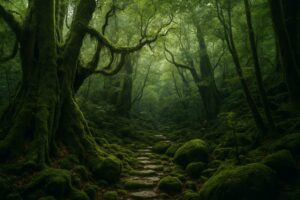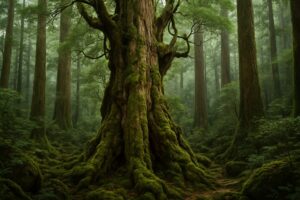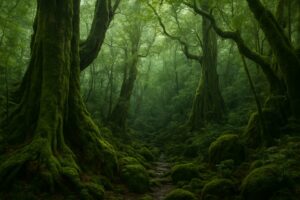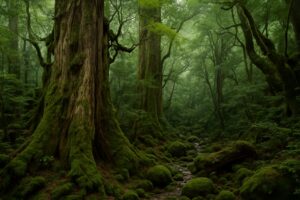
Yo, let’s talk about places that just hit different. I mean, truly, fundamentally different. We’re not talking about a cool city or a pretty beach. We’re talking about stepping into another dimension, a prehistoric world where the air itself feels ancient and alive. That place? It’s Yakushima Island. Tucked away south of Japan’s main islands, this spot isn’t just a travel destination; it’s a full-on vibe shift. It’s a UNESCO World Heritage site, but honestly, that label feels too clinical for what it is. This is the island that literally inspired the mythical forests in Studio Ghibli’s Princess Mononoke. No cap, you can walk through the exact scenes that sparked Hayao Miyazaki’s imagination. It’s a place where thousand-year-old cedar trees, called Yakusugi, stand like silent gods, draped in a thick, electric-green carpet of moss. The rain here isn’t just weather; it’s the island’s lifeblood, falling so often they joke it rains “35 days a month.” But that constant moisture is what makes the whole island glow with an otherworldly light. This isn’t your typical Japan trip of temples and neon-lit cities. This is a deep dive into the raw, untamed soul of nature. It’s for the adventurers, the dreamers, the ones looking to disconnect from the grid and reconnect with something primal and seriously epic. So, if you’re ready for a quest that will challenge your body and blow your mind, Yakushima is calling. Bet.
To truly immerse yourself in this magical environment, you should learn more about exploring Yakushima’s ancient Ghibli-inspired forests.
The Vibe Check: What Yakushima Actually Feels Like
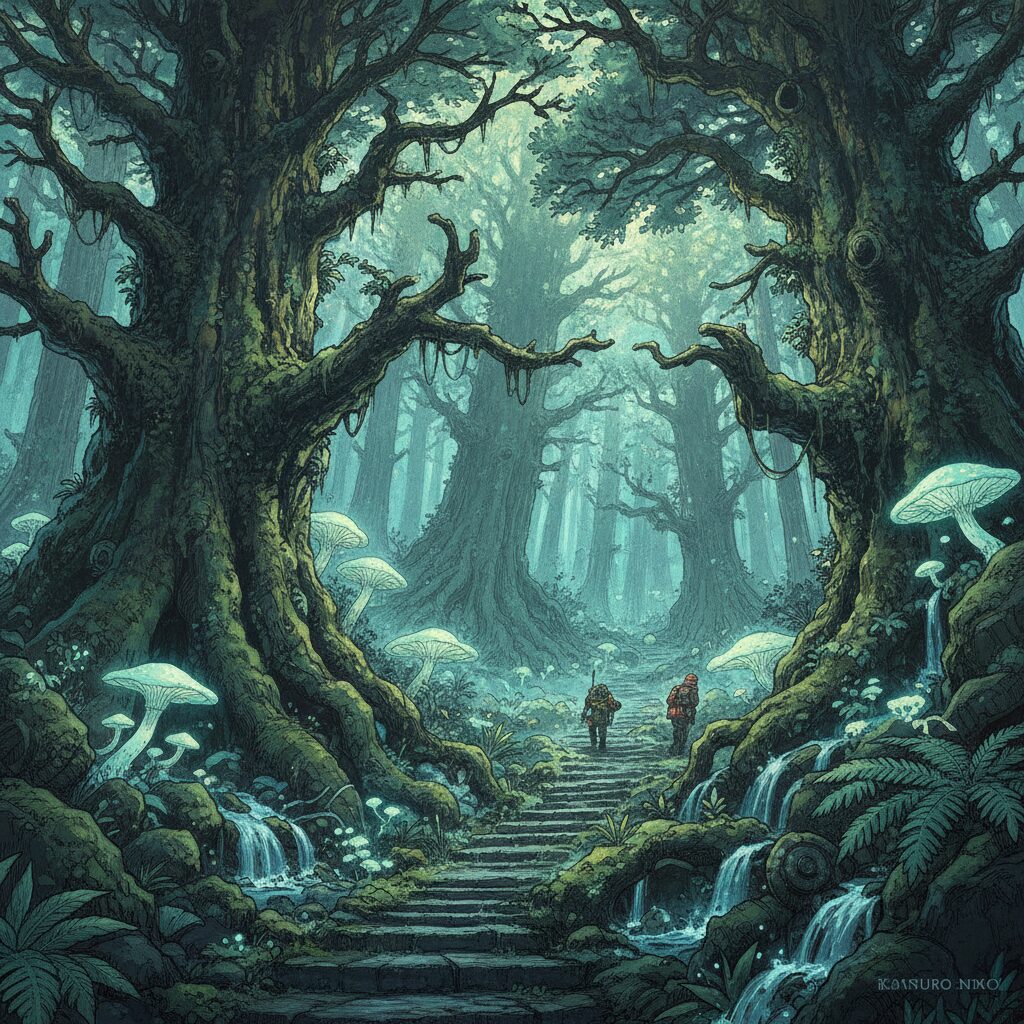
Before we even dive into the trails and must-see spots, we have to talk about the atmosphere. The vibe of Yakushima is the true protagonist of the entire experience. The moment you step off the ferry or plane, you sense it. The air is thick, humid, and scented with damp earth, decaying leaves, and fresh, sharp pine. It’s the cleanest, most natural fragrance you can imagine. It’s a sensory overload in the most wonderful way. There’s a profound quietness here. In the forests, the only sounds are water dripping from moss-covered branches, the rustling of a Yakushika deer in the underbrush, or the chatter of Yakuzaru monkeys high up in the canopy. The silence isn’t empty; it’s full, ancient, and powerful. It makes you want to whisper—not because you must, but because it simply feels right. You’re a guest in a massive, living cathedral, with the towering Yakusugi trees serving as its pillars.
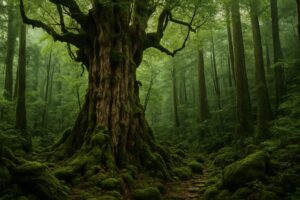
The scale of everything is awe-inspiring. You might be walking along a path and suddenly encounter a tree so wide it feels like a building. Its bark is gnarled and twisted, telling a story that began centuries, or even millennia, before your time. You feel incredibly small, but in a comforting, grounding way. It helps put your own life and worries into perspective. And the moss… oh, the moss. It’s not just a patch of green fuzz on a rock; it’s an entire universe. Hundreds of varieties cover everything—tree trunks, fallen logs, stones, and the ground itself—in a plush, velvety, impossibly vibrant carpet. When sunlight filters through the dense canopy and illuminates the moss, the entire forest floor seems to glow. It’s utterly magical. This constant cycle of life, decay, and rebirth is the heartbeat of the island. It’s a rhythm you can see and feel, making Yakushima more than just a hike; it’s a spiritual experience.
The Mononoke Forest Quest: Shiratani Unsuikyo Gorge
Alright, if you’re visiting Yakushima, the ‘Princess Mononoke Forest’ is likely high on your itinerary. This is it. Shiratani Unsuikyo Gorge is the real-life inspiration behind the film, and the moment you step inside, you’ll see why. It’s an accessible yet incredibly enchanting network of trails that offers the full, concentrated Yakushima experience. This isn’t a grueling, ten-hour trek (though you could make it one if you like). Instead, it’s a place where you can choose your own pace, from a leisurely one-hour stroll to a more demanding six-hour hike, with breathtaking views at every step.
The forest floor is a beautifully chaotic tangle of twisting roots, moss-covered boulders as large as cars, and crystal-clear streams winding through the landscape. The air is cool and misty, and the light is always soft and diffused, struggling to penetrate the thick canopy high above. It feels as if the outside world vanishes completely. You’re fully immersed. The deeper you go, the more ancient the trees become, their gigantic forms crafting a scene more reminiscent of a fantasy painting than reality. You’ll cross charming wooden bridges over rushing water and squeeze through tunnels made from enormous roots. Every turn reveals a new composition of green, brown, and grey so perfect you’ll find yourself stopping just to stare.
Choosing Your Adventure: The Trail Options
Shiratani Unsuikyo offers several main routes based on your energy and available time. There’s a short loop near the entrance showcasing stunning scenery—ideal if you’re short on time or just want a quick dose of magic. But honestly, you’ll want to venture deeper. The main trail leads to the Kokemusu-no-mori, or ‘Moss-Covered Forest’. This is the core inspiration behind Mononoke. The moss here is incredibly dense, hanging from branches like green beards and carpeting every surface in a thick, spongy layer. It’s quiet, hauntingly beautiful, and utterly transportive. It’s the kind of place where you half-expect a Kodama, a tree spirit, to peek from behind a log.
For those seeking more of a challenge, you can continue beyond the Moss-Covered Forest to climb up to Taiko-iwa Rock. This section gets steeper and more strenuous, but the reward is one of the most iconic views on the entire island. You leave the enclosed forest behind and ascend above the canopy—a complete shift in perspective—and the vista is well worth the effort.
That Taiko-iwa Rock Moment
Let’s talk about Taiko-iwa. After a final, heart-pounding scramble over roots and rocks, you break through the treeline onto a massive, exposed granite boulder. And then, it hits you. The entire interior of Yakushima stretches out below—a limitless sea of green mountains, including the island’s tallest peak, Miyanoura-dake, extending toward the horizon. On a clear day, the view is so expansive and overwhelming it can be deeply moving. You feel like you’re standing on top of the world—or at least it certainly seems that way. It’s the perfect climax to the Shiratani Unsuikyo hike. You’ve journeyed through the dark, mystical heart of the forest, and now you witness its grand, majestic scale from above. It’s a moment of pure awe. One tip: try to arrive before the crowds. An early start often means having the rock—and that view—almost all to yourself. It’s a memory you won’t forget.
The Ultimate Pilgrimage: Trekking to Jomon Sugi
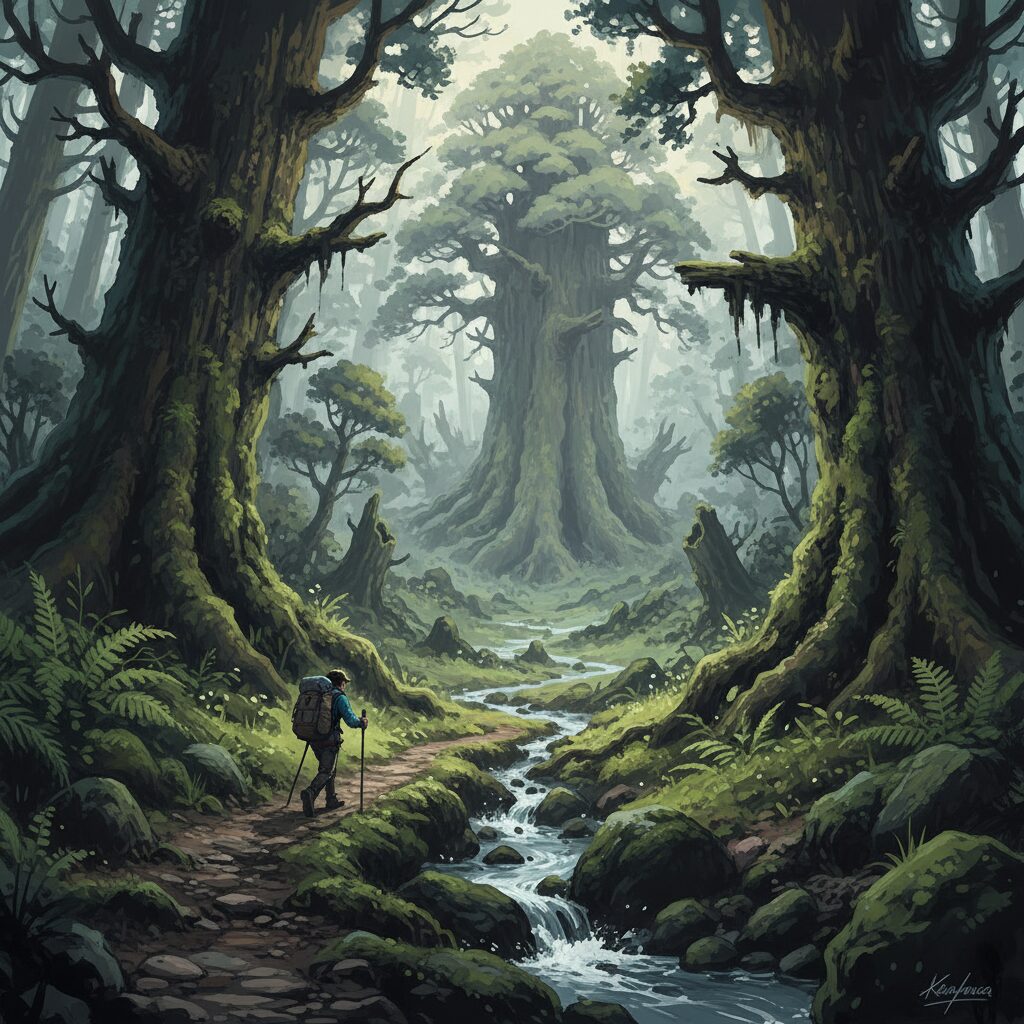
If Shiratani Unsuikyo serves as the enchanting prelude, then the trek to Jomon Sugi is the grand main event. This is the pinnacle. The GOAT. Jomon Sugi is the oldest and largest of the Yakusugi cedars—a true giant of the natural world. Its age is estimated to range anywhere from 2,000 to over 7,200 years old. Just let that sink in. This tree was a sapling while the pyramids of Giza were being constructed. It has silently witnessed the entire span of recorded human history. Hiking to see it is less a tourist activity and more a pilgrimage. It’s a grueling ten to twelve-hour round trip that will test your physical and mental limits, but the reward is a profound connection to deep, ancient time.
This is no casual walk. You need to come prepared. It’s a full-day commitment, starting before dawn. Most hikers are on the trail by 5 or 6 AM, using headlamps to navigate the first hour in darkness. The journey is long but incredibly diverse and captivating. The story unfolds with every step, guiding you through different epochs of the forest’s natural and human history.
The Grind is Real: What the Hike Requires
Let’s be honest about the Jomon Sugi hike. It’s a 22-kilometer (about 13.7 miles) round trip. The first and last couple of hours follow an old logging railway line called the Anbo Forest Railway. While mostly flat, walking on wooden railway sleepers for such a distance can be surprisingly tough on your ankles and feet. It might feel a bit monotonous, but it’s a meditative start and finish to the day, plunging you deep into the mountains alongside sheer cliffs and towering trestle bridges. After this railway section, the real climb begins. It’s a steep, relentless ascent up wooden staircases and winding, root-entangled paths. This is where your fitness really gets tested. The climb is challenging, especially in the rain, which is nearly guaranteed on Yakushima. Proper gear is essential—serious waterproofs, sturdy hiking boots, and trekking poles if you use them. Also, bring enough food and water for the entire day, as nothing is available to buy once you’re on the trail.
But the physical challenge is an integral part of the experience. It strips away the trivial distractions of daily life. Out there, it’s just you, your breath, the burn in your legs, and the forest. The sense of achievement when you finally arrive is heightened by the effort it took to get there. You’ve truly earned it.
More Than Just a Tree: The Journey’s Highlights
The trek to Jomon Sugi is dotted with incredible sights that help the long hours pass swiftly. Along the way, you’ll encounter several other named Yakusugi, each with its own unique character and story, like Meoto Sugi (Husband and Wife Cedars), which are fused together, and the massive Daio Sugi (Great King Cedar). One of the most famous stops is Wilson’s Stump (Wilson Kabu), the enormous, hollowed-out stump of a cedar felled several hundred years ago. You can actually step inside it. From a particular vantage point within the stump’s heart, the opening above forms a perfect heart shape. It’s a hugely popular photo spot but also a genuinely cool and surreal experience to stand inside a tree that was a giant long before modern Japan existed.
And then, finally, you arrive. Jomon Sugi doesn’t reveal itself all at once. You climb a final set of stairs and there it stands on a ridge, protected by a viewing platform designed to prevent damage to its delicate root system. It’s impossible to describe the feeling of seeing it for the first time. It is圧倒的, attoteki—overwhelming. It’s not just its immense size but its presence. Its gnarled, weathered bark resembles the skin of some ancient creature. Its branches reach out like twisted arms. It radiates an aura of immense age and resilience. You can’t get right up to it, but you don’t need to. You feel its power from the platform. Standing there in silence, sharing a moment with a living being that has existed for millennia, is humbling, awe-inspiring, and deeply moving. It makes every single step of the arduous journey utterly worth it—no question.
Island Life Beyond the Ancient Trees
Look, the forests are definitely the main attraction. But Yakushima has so much more to offer. The island forms a circle of dramatic mountains that drop straight into the sea, creating a stunning coastline with its own unique adventures. Spending a day or two driving around the island’s circumference is a must. The atmosphere shifts from mystical, enclosed forests to a bright, breezy, subtropical island vibe. Along the way, you’ll pass through tiny, charming villages, tea fields, and tankan orange groves, with the sparkling blue ocean almost always in sight.
Chasing Waterfalls and Ocean Breezes
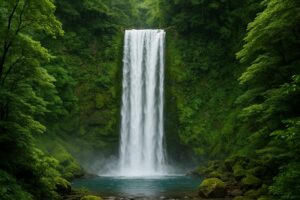
Yakushima is an island of water, which means waterfalls—lots of them, and they are spectacular. On the south side, you’ll find Oko-no-taki, one of Japan’s top 100 waterfalls. It’s a massive, powerful cascade that you can approach closely, feeling the spray on your face—an incredible display of raw natural force. Nearby is Senpiro-no-taki, a waterfall that crashes down a huge granite rock face into a beautiful gorge. You view it from afar, emphasizing its immense scale. These aren’t just pretty streams; they are dramatic, roaring spectacles.
The coast itself is a playground. Nagata Inakahama Beach is a beautiful, golden sandy stretch and an essential nesting site for loggerhead sea turtles. If you visit between May and August, you might join a guided nighttime tour to witness the magic of female turtles laying eggs. It’s a strictly regulated and respectful experience that’s truly unforgettable. For those eager to get on the water, sea kayaking offers an amazing way to explore the coastline, paddling over clear waters and discovering hidden coves. And no conversation about the Yakushima coast is complete without mentioning the onsen. Hirauchi Kaichu Onsen is a set of natural hot spring pools nestled in the shoreline rocks. The catch? They’re only accessible for a few hours at low tide. Soaking in a natural hot tub with the Pacific waves crashing just feet away offers a wild, uniquely Japanese experience.
Local Flavors and Island Culture
After all that hiking, you’ll be hungry. Yakushima’s cuisine focuses on fresh, local ingredients. The island is famed for its flying fish (tobiuo), which you’ll find served in every form imaginable, from sashimi to deep-fried—delicious. You should also try dishes made with local venison (shika) and mackerel (saba). For a sweet treat, look for desserts featuring the local tankan orange, a super sweet and juicy citrus fruit. The island also produces its own shochu, a distilled spirit. The most well-known brand is Mitake, smooth and easy to drink, making it the perfect post-hike reward. Towns like the main ports of Miyanoura and Anbo are small and laid-back. Don’t expect a bustling nightlife. Instead, you’ll find cozy izakayas and restaurants run by friendly locals serving incredible food. It’s the perfect way to relax, refuel, and soak in the quiet, welcoming culture of the island.
The Logistics Drop: How to Actually Do Yakushima
Alright, feeling pumped? Let’s dive into the details. Planning a trip to a remote island like Yakushima requires some effort, but it’s definitely doable. Here’s the essential info on how to make it happen.
Getting There: Flights, Hydrofoils, and Ferries
Yakushima is an island, so your travel options are either by air or sea, typically via the nearest major city, Kagoshima, located on the Kyushu mainland. The quickest way is by plane. There are several daily flights from Kagoshima to the small Yakushima Airport, and the flight takes about 40 minutes. Occasionally, you can find direct flights from larger hubs like Fukuoka or Osaka, which is incredibly convenient. Flying is fast but also the priciest option.
A more common and scenic choice is the sea route from Kagoshima Port. You have two main options. The high-speed hydrofoil, nicknamed the ‘Toppy’ or ‘Rocket,’ is the faster option, taking around two to three hours. The ride is smooth, but the boat is enclosed with no outdoor decks. The other choice is the slower, much cheaper car ferry called the Yakushima 2. It’s a four-hour trip on a large, stable ship where you can stroll on the outer decks, enjoy ocean views, and really soak in the voyage atmosphere. If you’re not in a hurry and want to save some cash, the ferry offers a great vibe. Whichever option you pick, be sure to book tickets early, especially during busy times like Golden Week or summer holidays, as they tend to sell out.
Getting Around the Island: Renting a Car is Essential
I can’t stress this enough: renting a car is a must. This is by far the most important logistics tip. Yakushima is much larger than it appears, and the main spots—trailheads, waterfalls, beaches—are scattered across the island. While there is a local bus system, it’s infrequent and doesn’t cover all the places you’ll want to visit. Depending on it will be limiting and frustrating. Having a car lets you explore freely, stop at random viewpoints, and reach trailheads early for those crucial pre-dawn starts. Several rental agencies operate near Miyanoura Port and the airport—again, book in advance because rental cars are limited! Driving is on the left, and the roads are narrow and twisty, particularly the Seibu Rindo forest road on the island’s western side, where you’ll see plenty of monkeys and deer. Take it slow and enjoy the stunning scenery.
When to Visit: The Four Seasons of Rain
When is the best time to visit Yakushima? It’s a tough call, since every season has its own appeal. Spring (March to May) is lovely, with blooming mountain rhododendrons and comfortable temperatures, but it’s also popular and can get crowded. Summer (June to August) brings heat, high humidity, and typhoon season. The upside? It’s prime sea turtle nesting time and the forests are lush and vibrant. Just be ready for possible typhoon-related disruptions. Autumn (September to November) is arguably the best hiking season, with cooler temperatures, lower humidity, and generally more stable weather. Winter (December to February) is the quietest period. The lowlands remain mild, but mountain peaks get snow-covered, which might close higher trails. Serious mountaineers with snow gear will find it beautiful, but it’s not ideal for most hikers. One thing is constant: rain. You will experience rain no matter when you visit. Don’t fight it—embrace it. The rain is what defines the island. Just pack with it in mind.
Your Yakushima Packing Essentials
Speaking of packing, what you bring can make or break your trip. This isn’t about fashion; it’s all about function. Your top priority is high-quality rain gear from head to toe. A waterproof, breathable jacket (think Gore-Tex) and waterproof pants are absolutely essential. Your hiking boots should be waterproof, sturdy, and well broken-in—don’t even think about hiking Jomon Sugi in sneakers. Layers of synthetic or merino wool clothing that wick moisture are best; avoid cotton since it stays wet and chills you. A headlamp is critical for early starts. A portable phone charger can be a lifesaver. And here’s a crucial item: a portable toilet kit. Toilets along the long trails are scarce, and you are expected to pack out all your waste to protect the fragile ecosystem. These kits can be purchased on the island. Finally, bring plenty of high-energy snacks and a reusable water bottle. Being well-equipped will keep you comfortable and safe, allowing you to fully absorb the island’s incredible magic.
A Final Word from the Forest
Leaving Yakushima feels like awakening from a vivid dream. Returning to the concrete and noise of the city can be startling after being enveloped in such a powerful, ancient world. Yet, the island’s presence lingers. It lives on in the memory of the fresh, earthy scent of the air, the sight of the glowing green moss, and the profound silence beneath the canopy of thousand-year-old trees. It’s a place that resets your perspective. It reminds you of a timescale far grander than our own and the quiet, enduring strength of nature. A trip to Yakushima is more than just a vacation; it’s an investment in your soul. It offers a chance to walk through a dream, to test yourself physically, and to gain a deeper appreciation for the wild, beautiful world we inhabit. So if you ever have the opportunity, go. Hike the trails, feel the rain on your skin, and stand among the ancient cedars. It will, without question, change you. And that’s a promise.