Yo, let’s get real for a sec. You think you know noodles? You’ve had your ramen, your soba, maybe even some instant cup stuff that got you through college. That’s cool, that’s all good. But you haven’t truly lived a noodle life until you’ve been to Kagawa Prefecture. Down here on the island of Shikoku, we’re not just making food. We’re living it. Kagawa is straight up known as the Udon Prefecture, and that’s not some cutesy nickname. It’s a fact. Udon is the heartbeat of this place. It’s breakfast, lunch, and sometimes an afternoon snack. And the capital, Takamatsu, is the grand central station for your ultimate noodle pilgrimage. We’re talking about a place with more udon shops than convenience stores, a place where locals can tell the subtle differences between shops just by the chew of the noodle. This isn’t just about grabbing a bite; it’s a full-blown cultural deep-dive into a bowl of Sanuki Udon, the undisputed king of Japanese noodles. Forget everything you thought you knew. We’re about to drop you into a world of bouncy, chewy, slurp-able perfection that’ll change your noodle game forever. This is your all-access pass to Takamatsu’s udon scene, from the legendary spots to the local secrets. Get ready to eat. A lot.
After you’ve had your fill of udon, consider exploring Takamatsu’s famous Ritsurin Garden for a perfect cultural balance.
The Heartbeat of Kagawa: What Makes Sanuki Udon Legit?
So why the fuss? Why do people literally fly across the country, even across the globe, just for a bowl of noodles from this particular corner of Japan? It comes down to a few essential factors that make Sanuki Udon truly unique. It’s not merely flour and water; it’s an art, a science, and a slice of local spirit all combined. The level of dedication here is extraordinary, and you can taste that commitment in every single strand. Once you experience it, you understand—and you’ll spend the rest of your life chasing that perfect chew.
The Secret’s in the ‘Koshi’
If there’s one word you need to know, it’s koshi. There’s no direct English equivalent. ‘Chewy’ comes close, but it doesn’t capture it fully. ‘Al dente’ is near, but still not quite right. Koshi describes a particular kind of resilience—a firm, lively springiness that pushes back when you bite into it. This texture is simultaneously strong and tender. It’s the signature characteristic of authentic Sanuki Udon. The pursuit of perfect koshi motivates every udon craftsman in Kagawa. The ingredients are deceptively simple: wheat flour, salt, and water. That’s all. Yet, the magic lies in the precise balance, technique, and generations of wisdom passed down. Traditionally, this involved kneading the dough with your feet in a method called fumikomi to develop gluten just right. Although many places now use machines, they replicate this traditional technique to preserve the noodle’s soul. The distinctive climate of the Seto Inland Sea region, along with the high-quality local salt and water, all contribute to creating this exceptional texture. It’s a noodle that feels alive in your mouth, delivering a substantial, satisfying bite that makes other noodles seem, well, a bit limp by comparison.
A Symphony of Broths and Toppings
While the noodle is the star, the supporting cast is equally important. The broth, or dashi, in Sanuki is legendary. It’s usually lighter in color than what you’d find in Tokyo, yet it packs incredible flavor. Its key ingredient is iriko, dried baby sardines from the abundant Seto Inland Sea. This imparts a deep, savory, subtly sweet complexity that’s utterly addictive. Often, it’s balanced with kombu (kelp) and katsuobushi (bonito flakes) to produce a perfectly rounded umami bomb that complements the noodles without overwhelming them. When you visit a shop, you’ll typically find several core styles on the menu.
Kake Udon: The Classic
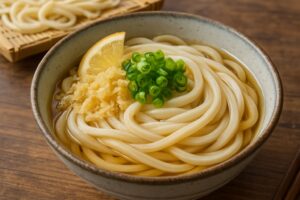
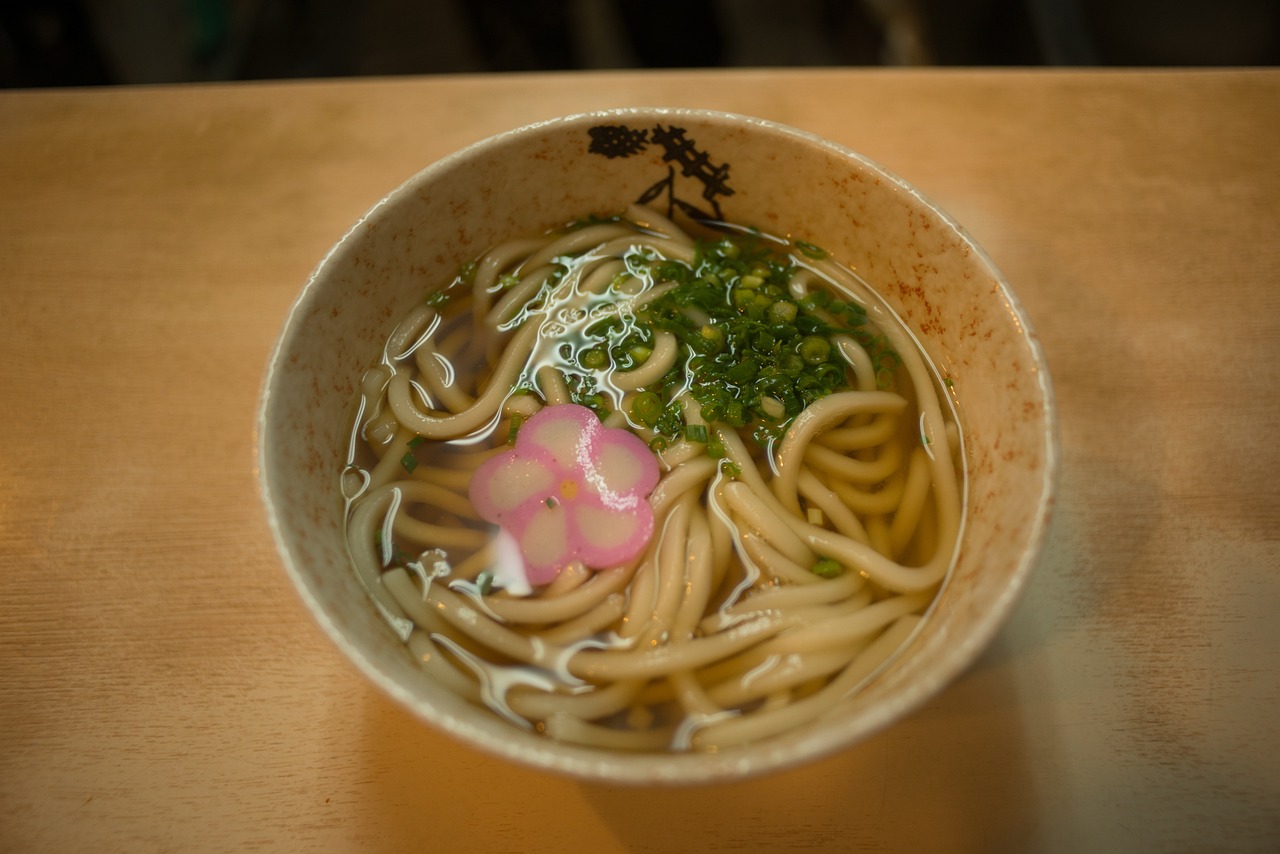
This is the purest form. Freshly boiled noodles swimming in a hot, fragrant dashi broth, usually garnished simply with chopped green onions. It’s clean, simple, and the ultimate way to appreciate the quality of both noodles and broth. When a shop can perfect Kake Udon, you know they’re the real deal. It’s the comforting staple of Kagawa, the bowl locals enjoy daily.
Bukkake Udon: The Flavor Punch
Don’t be misled by the name; bukkake simply means to splash or pour over. This style features noodles—served hot or cold—with a smaller amount of a more concentrated, intense dashi. It’s thicker, saltier, and sweeter than kake broth. The goal is for the broth to coat the noodles rather than submerge them. It’s often topped with grated daikon radish, a squeeze of sudachi citrus, ginger, and a raw quail egg. The cold version, hiya-bukkake, is incredibly refreshing on a hot day and one of the best ways to experience that distinctive koshi.
Kamatama Udon: The Creamy Delight
This is a game-changer. Kamatama is short for kama-age tamago, meaning noodles straight from the pot with egg. The noodles aren’t rinsed in cold water after boiling; they’re scooped directly from the hot water into your bowl, still starchy and steaming. A raw egg is then cracked on top, and you’re given a bottle of dashi-shoyu (soy sauce infused with dashi). Pour the soy sauce in and mix vigorously. The residual heat gently cooks the egg, creating a rich, creamy, carbonara-like sauce that clings to every strand. It’s a revelation.
Shoyu Udon: The Minimalist’s Pick
For purists, this typically means cold, rinsed noodles served with just a splash of dashi-shoyu. That’s it. Maybe some grated daikon or green onions if you’re feeling fancy. This style is the ultimate test for noodles. There’s no hot broth or heavy toppings to mask anything. You get the pure, unadulterated flavor and texture of the wheat. It’s simple, profound, and a true connoisseur’s choice.
Don’t Overlook the Tempura
Stepping into a self-service udon shop in Takamatsu is like entering a golden-brown wonderland. Before you reach the condiment station, you must navigate the tempura line—and trust me, you want to. It’s an essential part of the experience. You grab a tray and slide it along a counter loaded with every kind of freshly fried delight imaginable. The classics are all there: massive kakiage (a glorious fritter of mixed veggies and sometimes shrimp), prawn tempura, sweet potato, eggplant, and pumpkin. Keep an eye out for local favorites, too. Chikuwa-ten, a tube of fried fish cake, is a must-try. Even better is the legendary hanjuku-tamago-ten, a soft-boiled egg that’s been deep-fried. When you crack it open over your udon, the jammy, molten yolk oozes out and mixes with the broth. It’s pure, unadulterated magic. You just pick what you want, place it on your plate, and pay afterwards. It’s cheap, quick, and instantly transforms a simple bowl of noodles into a full-fledged feast.
Mastering the Udon Shop Vibe: A First-Timer’s Playbook
Alright, you’re excited and ready to go. But stepping into a lively, local udon spot for the first time can feel a bit overwhelming. The pace is quick, everyone seems to know their routine, and there’s a system in place. Don’t worry though—once you figure it out, you’ll be ordering like a local in no time. The trick is understanding the different types of shops and how each operates.
Cracking the Code: Full-Service vs. Self-Service
Udon shops in Kagawa usually fall into two categories. Full-service establishments work like typical restaurants: you sit down, a server takes your order from a menu, and they bring the food to your table. These are perfect if you want a more leisurely meal or if you’re feeling a bit unsure. But the genuine, authentic, heart-and-soul-of-Kagawa experience comes from the self-service or serufu shops. This is where things get interesting. It’s a fast, efficient, and hands-on system that adds to the fun. It may seem hectic at first, but it follows a clear and sensible flow.
The ‘Serufu’ Udon Challenge: Step-by-Step Instructions
Embrace the bustle. Here’s how to navigate a self-service udon spot like an expert. Just follow these steps, and you’ll do great.
Step 1: Pick up a tray. As soon as you enter, find a stack of trays and grab one. This will hold everything you order. No tray, no moving forward.
Step 2: Order your noodles. Join the line moving toward the noodle counter, where the main action happens. The staff behind the counter will be working quickly. Simply tell them two things: the type of udon and the size you want. For example, “Kake, sho” (small kake udon) or “Kamatama, dai” (large kamatama). They’ll nod, prepare your noodles right there, and place the bowl on your tray.
Step 3: The ‘Te-bo’ step. At some very traditional or DIY-style shops, they’ll hand you a bowl of cold, pre-cooked noodles instead. You then take these noodles to a vat of boiling water, place them in a wire basket called a te-bo, and dip them in to heat up yourself. It’s a fun, interactive part of the process—just watch and follow the person ahead of you.
Step 4: Tempura and other sides. With your noodle bowl on your tray, move along the counter where you can pick tempura, onigiri (rice balls), or inari-zushi (sweet tofu pouches stuffed with rice). Use the provided tongs and fill your plate generously—now’s not the time to hold back.
Step 5: Pay up. At the end of the counter, you’ll find the cashier. They’ll glance at your tray, quickly total up the cost, and tell you the price. It will probably be surprisingly affordable. Pay, and you’re almost done.
Step 6: Customize at the condiment and broth station. This is where you make your bowl your own. Find the condiments area, which will have large dispensers of hot and cold dashi broth. If you ordered kake udon, fill your bowl with broth here. Then add free toppings like heaps of chopped green onions, grated ginger, and a bowl of tenkasu (crispy tempura bits). Add as much as you want—this is your creation.
Step 7: Find a seat and enjoy. Carry your tray to an open seat—it could be at a table, a counter, or a shared community table. Now, the most important part: eat, and don’t forget to slurp. Slurping isn’t rude; it shows you’re enjoying your meal and helps cool the noodles.
Step 8: Return your tray. When you’re finished, don’t just leave your tray on the table. You’re expected to clear your own dishes. Look for a return window or shelf, stack your bowls and plates neatly on your tray, and return them. Congratulations, you’ve officially mastered the serufu udon experience.
Udon Vocabulary 101
Knowing a few key phrases will help you feel like a seasoned local. Udon temperature matters here—it’s not just hot or cold.
- Atsu-atsu: Hot noodles in hot broth. The classic, comforting option.
- Hiya-atsu: Cold, rinsed noodles in hot broth. This offers a wonderful texture contrast—the noodles stay firm with great koshi while you still enjoy warm broth.
- Hiya-hiya: Cold noodles in cold broth. The ultimate test of noodle quality, delivering maximum koshi. Perfectly refreshing in the summer.
For sizes, listen for:
- Sho (小), Chu (中), Dai (大): Small, Medium, Large. Be warned: Kagawa portions are generous. A sho is often as big as a regular bowl elsewhere. Sizes are measured in tama, or balls of dough. A sho usually means 1 tama, chu is 2, and dai can be 3 or more. If you plan to try multiple shops, start with a sho.
The Ultimate Takamatsu Udon Crawl: Shops You Can’t Miss
Alright, theory time is done. Now it’s time to dive into the good stuff. Takamatsu is bursting with legendary udon shops, each boasting its own distinct character and specialty. You could spend weeks here and still not try them all, but there are some must-visit spots that no udon pilgrim should miss. Get ready to feast.
Udon Baka Ichidai (うどんバカ一代): The Creamy Kamatama Champion
Let’s begin with a superstar. Udon Baka Ichidai, roughly meaning ‘The Udon Idiot Generation,’ is a true icon in Takamatsu. You’ll recognize it by the line — there’s always a line. It snakes around the building, rain or shine, from early morning onward. But don’t be discouraged. That line is proof of what awaits inside, and it moves impressively fast and smoothly. The atmosphere is electric — bustling, steamy, filled with the joyful sounds of slurping. Locals on lunch breaks, families, and eager tourists all flow through together. The highlight, and the dish that made this place famous, is the Kama-butter-udon. Yes, butter. It’s their signature take on the classic kamatama. You receive a bowl of piping hot noodles fresh from the pot, topped with a raw egg, a pat of butter, and a generous sprinkle of black pepper. Mix it all together, and you get an incredible Japanese-style carbonara like no other. The butter and egg yolk meld into a rich, creamy sauce that clings perfectly to the chewy noodles. The sharp black pepper cuts through the richness, creating an exquisitely balanced bowl of pure comfort. It sounds unusual, looks amazing, and tastes heavenly. This is a must-try, bucket-list udon experience.
Chikusei (竹清): Tempura Paradise
If tempura is your obsession, Chikusei is your destination. This simple, old-school shop is a local legend, cherished for its udon but revered for its tempura. The specialty here is frying much of the tempura to order, especially their famous chikuwa-ten and hanjuku-tamago-ten. The process is unique. You go through the line and order your udon first — a simple kake or zaru bowl is the perfect foundation. Once you have your noodles, you reach the tempura station. You tell the staff your choice, and they pluck the freshly fried pieces from the hot oil, glossy and sizzling, then add them to your plate. The soft-boiled egg tempura is a masterpiece. Crispy on the outside, but when you break into it, the yolk inside is soft and molten. It seeps into your broth, adding another layer of richness. The chikuwa fish cake tempura is equally stunning — light, savory, and a far cry from pre-made varieties. The vibe at Chikusei is pure, unpretentious local charm. It’s not fancy, but it’s genuine. Eating a freshly fried tempura piece straight from the oil alongside a perfectly crafted bowl of udon is one of life’s simple, profound joys.
Waraya (わら家): Tradition in a Thatched-Roof Farmhouse
For a totally different atmosphere, head to the base of Yashima, a scenic lava plateau just outside the city, where you’ll find Waraya. This isn’t your fast-paced udon joint; it’s an experience. Housed in a beautifully preserved traditional farmhouse — a kominka with a massive thatched roof — and surrounded by a lovely Japanese garden, it feels like stepping back into the Edo period. The specialty here is kazoku udon, or ‘family udon,’ made for sharing. A large, steaming wooden tub filled with kama-age udon is brought to your table, accompanied by individual bowls and a warm, savory dipping sauce loaded with ginger, sesame seeds, and green onions. Everyone dines by pulling noodles from the communal tub, making it a fun and traditional experience. The noodles here are softer than at other shops, ideal for dipping and soaking up the delicious sauce. Waraya is a full-service restaurant, making it a perfect place to unwind and soak in the historic ambiance. It’s an ideal stop after exploring the temples and viewpoints of Yashima mountain — udon served with a side of culture and history.
More Essential Udon Stops
If you have the time and appetite, the udon trail around Takamatsu is never-ending. Here are a few more standout spots worth the pilgrimage:
- Gamo Udon (がもううどん): A legendary spot located amidst rice paddies in a nearby town, Gamo is the quintessential countryside udon shack. It’s little more than a small building with outdoor seating. The lines can be long, with udon lovers traveling from all over Japan. Their noodles are famously soft and tender at first bite, but reveal a deep, satisfying koshi as you chew. The broth is delicate and refined. Eating a 150-yen bowl here, surrounded by nature, feels like discovering a delicious secret — even though it’s one of the prefecture’s most famous shops.
- Udon Honjin Yamadaya (うどん本陣 山田家): At the other end of the spectrum is Yamadaya, a palatial restaurant set in a designated tangible cultural property — a magnificent former sake brewery with sprawling, impeccably manicured gardens. This full-service, upscale udon experience offers beautiful presentation and superb quality. Their Zaru Bukkake, cold noodles served on a bamboo mat with a rich bukkake sauce, is a masterpiece of textures and flavors. It’s perfect for special occasions or for anyone wanting to savor udon craftsmanship in a breathtaking setting.
- Matsushita Seimenjo (松下製麺所): For a raw, authentic DIY experience, visit a seimenjo, or noodle factory, with Matsushita among the most famous. These places primarily produce noodles wholesale but have a small area for on-site dining. The process is as straightforward as it gets. You buy a ball of freshly made noodles at a low price, then cook it yourself by dunking it in a te-bo. After draining, you place it in a bowl, add broth from a tap, and sprinkle on toppings. You’re literally eating inside the factory. It’s unglamorous but as fresh and authentic as possible — a truly unique Kagawa experience.
Beyond the Bowl: Udon Taxis and Other Kagawa Quirks
The passion for udon in Kagawa extends far beyond just the restaurants; it is deeply embedded in both tourism and everyday life. The locals have devised some truly unique ways to share their love for noodles with the world.
Hail an Udon Taxi
Yes, you read that correctly. In Kagawa, you can hire an Udon Taxi. These aren’t ordinary cabs. The drivers must pass a challenging exam covering udon history, noodle-making techniques, and detailed knowledge of local shops. They are certified udon experts. You can hire one for a few hours, and they will serve as your personal udon guide, creating a tailor-made tour based on your preferences. Want to try the best kamatama? They know just where to go. Interested in visiting a remote countryside shop known only to locals? They’ll get you there. They can assist with ordering, explain each shop’s nuances, and share stories you won’t hear anywhere else. It’s a fun, quirky, and highly efficient way to embark on a serious udon crawl, especially for reaching distant shops without a rental car.
When to Go and How to Get Around
Takamatsu is easily reached via its own airport (TAK), the JR Seto-Ohashi train line connecting to Honshu, or by several ferries. Once in the city, the central shops are quite walkable. Renting a bicycle is also a fantastic way to explore. The local Kotoden train line is useful for getting around as well. However, to reach the renowned rural shops, renting a car is by far the best option, giving you the freedom to explore at your own pace. The key thing to remember about udon-hopping is timing. In Kagawa, udon is primarily a breakfast and lunch dish. Many famous shops open early in the morning and close by mid-afternoon or as soon as they run out of noodles for the day. Don’t expect a late udon dinner at a top spot — you’ll likely be disappointed. Always check shop hours and closing days, as many take an occasional day off during the week. The golden rule is to start your udon crawl early.
A Final Slurp: The Soul of Sanuki
After spending a few days in Takamatsu, you begin to understand something important. Sanuki udon is more than just a regional specialty; it is the very heart of the community. It’s the affordable, filling breakfast that construction workers rely on, the quick midday meal for office employees, and the weekend indulgence for families. It represents immense local pride—a craft refined over centuries, nourished by the unique gifts of the land and sea in this special corner of Japan. There is a genuine simplicity to it: no fancy gimmicks, no elaborate plating. Just a humble bowl of noodles, prepared with great care and served with sincerity. The joy of an udon crawl in Takamatsu goes beyond checking off famous shops. It’s about diving deep into the culture—experiencing the lightning-fast efficiency of a self-service line, the fun of dunking your own noodles, the shared happiness of slurping alongside strangers at communal tables, and that perfect moment when you take the first bite and feel the springy, ideal koshi. So come to Kagawa. Come hungry and open-minded. Immerse yourself fully in this wonderfully passionate world. Find your favorite shop, discover your preferred style, and craft your own perfect bowl. Your noodle experience will never be the same.