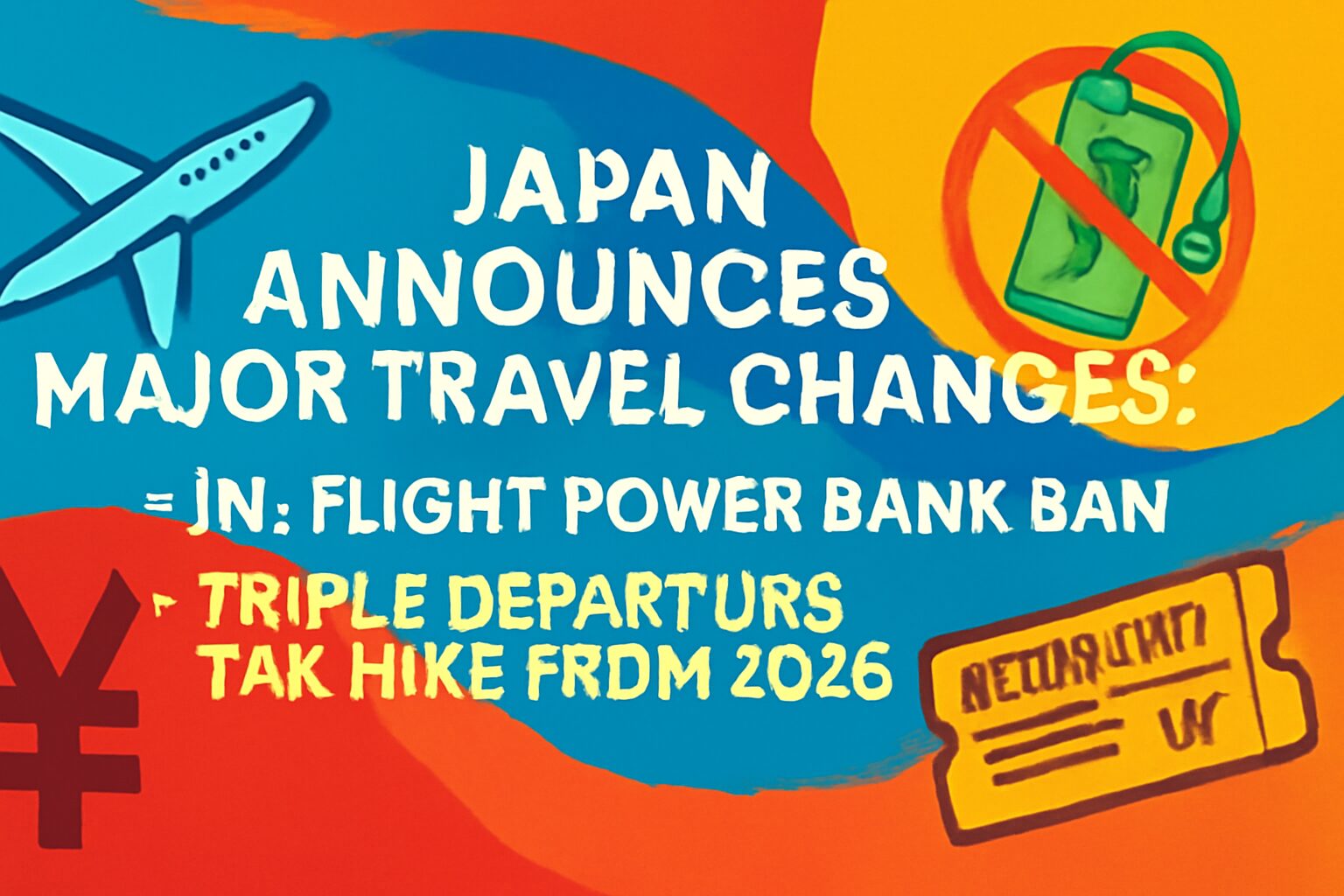
Travelers planning a trip to Japan in 2026 and beyond should take note of two significant new regulations that will impact both their in-flight experience and their budget. The Japanese government has announced a ban on the in-flight use of portable power banks and a substantial increase in its international departure tax, signaling a shift in safety protocols and tourism funding strategy.
In-Flight Power Bank Use to be Prohibited
What’s Changing?
Effective from mid-April 2026, Japan’s Ministry of Land, Infrastructure, Transport and Tourism will implement a complete ban on the use of portable power banks during flight. This rule will apply to all domestic and international flights operating to, from, and within Japan.
While passengers will still be permitted to carry power banks in their carry-on luggage, as per existing international aviation guidelines, plugging in and charging devices like smartphones, tablets, or laptops mid-flight will be forbidden.
The Rationale: Prioritizing Air Safety
The primary driver for this new regulation is safety. Lithium-ion batteries, which are standard in most portable power banks, pose a potential fire risk if they are damaged or short-circuit. While incidents are rare, they can be catastrophic in a pressurized aircraft cabin. By prohibiting their use, authorities aim to minimize the risk of thermal runaway events—a chain reaction that can lead to fire or explosion—occurring during flight. This proactive measure aligns with a growing global focus on mitigating risks associated with personal electronic devices on aircraft.
Impact on Travelers
For passengers, especially those on long-haul flights to Japan, this change will require a shift in habits. The convenience of on-demand charging will be gone. Travelers will need to ensure their devices are fully charged before boarding and conserve battery life throughout their journey. This could be particularly challenging for business travelers reliant on their devices or families using tablets to entertain children.
“Sayonara Tax” to Triple in Price
A Hefty Price Increase for Departure
In another major development, Japan’s International Tourist Tax, commonly known as the “sayonara tax,” is set to triple. From July 1, 2026, the tax levied on all international travelers departing from Japan by air or sea will increase from the current ¥1,000 to ¥3,000.
This tax, first introduced in January 2019, is automatically included in the price of airfare. A ¥2,000 increase is significant, representing approximately $13 USD at current exchange rates.
Background: Funding Japan’s Tourism Future
The Japanese government has stated that the increased revenue will be reinvested directly into the nation’s tourism sector. The initial ¥1,000 tax has already funded projects such as installing multilingual support systems at airports and tourist sites, and improving Wi-Fi access.
With post-pandemic tourism numbers soaring—Japan welcomed over 3 million visitors in a single month for the first time in March 2024—the government aims to use the additional funds to tackle new challenges and further enhance the visitor experience. Key areas for investment will likely include:
- Developing infrastructure: Upgrading regional airports, transportation networks, and tourist attractions to better handle the influx of visitors.
- Promoting sustainable tourism: Addressing issues of over-tourism in popular destinations like Kyoto and Mount Fuji by encouraging travel to lesser-known regions.
- Enhancing digital services: Creating more seamless travel experiences through improved digital guides, booking systems, and contactless payment options.
Based on pre-pandemic visitor numbers from 2019, where over 50 million travelers (both Japanese nationals and foreign visitors) departed the country, this tax hike could generate an additional ¥100 billion (approximately $640 million USD) annually for these initiatives.
What This Means for Your Future Japan Trip
While the increased tax will add to the overall cost of a trip, the long-term goal is to create a more comfortable, accessible, and enjoyable travel environment for everyone. However, for budget-conscious travelers and families, this increase will need to be factored into their travel planning.
As Japan continues to position itself as a top global destination, these 2026 changes reflect a dual focus: ensuring the highest standards of safety in the skies while building a robust and sustainable tourism infrastructure on the ground for the years to come. Travelers should stay informed and prepare accordingly for these new regulations.