Yo, what’s the deal? Ryo Kimura here, ready to drop you right into the heart of Fukuoka’s electric nightlife. Forget the quiet temples and serene gardens for a minute. When the sun dips below the horizon in this city, a whole different kind of magic comes alive. We’re talking about yatai, the legendary open-air food stalls that are, no cap, the beating heart and soul of Fukuoka. This isn’t just about grabbing a quick bite; it’s a full-on cultural immersion. Imagine rows of rustic, wooden carts, glowing with the warm light of paper lanterns, steam billowing into the cool night air, carrying the irresistible scent of grilled meats and savory broth. This is where the city comes to connect, to unwind, and to feast. It’s a tradition that has weathered the decades, a pop-up community that materializes every single evening. For real, visiting the yatai isn’t just a recommendation; it’s a rite of passage for anyone wanting to understand what makes Fukuoka tick. It’s the ultimate local experience, a vibrant, chaotic, and utterly delicious scene that you just can’t find anywhere else in Japan on this scale. It’s raw, it’s real, and it’s waiting for you. Get ready to dive deep into the world of Fukuoka’s yatai, where every stall tells a story and every meal is a memory in the making. Let’s get it.
If you’re looking for another incredible Fukuoka food adventure, you absolutely must check out our guide to Yanagawa’s famous grilled eel.
The Vibe: What’s it Really Like to Hit Up Fukuoka’s Yatai?
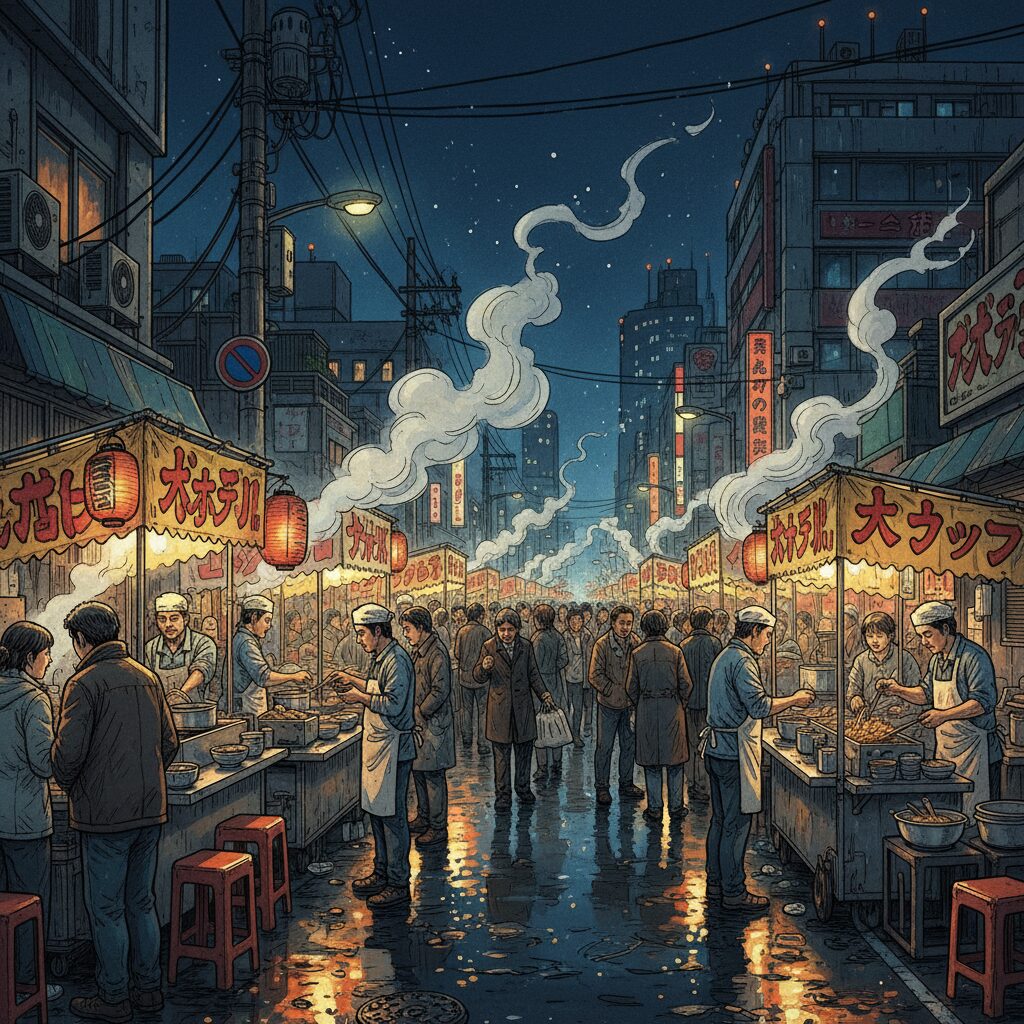
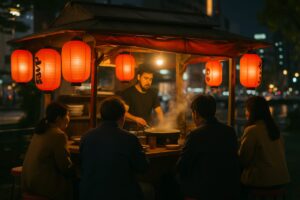
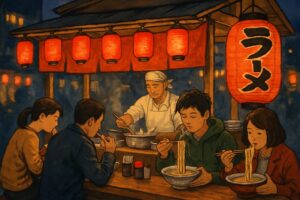
So, imagine this: you’re strolling down the street as dusk begins to fall. Office buildings are emptying, the city’s daytime rush is fading away, but a new energy starts to rise from the pavement. You turn a corner, and bam—it hits you. The glow. A row of lanterns casts a soft, warm light, highlighting about a dozen small wooden stalls lined up, each one a self-contained world of culinary delights. The atmosphere is electric yet deeply intimate. It’s a sensory overload in the best sense. You hear the sizzle of gyoza on a hot griddle, the steady chop of a knife, the cheerful clinking of glasses, and a steady, joyful hum of conversation. The air is rich with incredible aromas: smoky yakitori, hearty, porky tonkotsu ramen broth, and the savory, slightly sweet scent of dashi bubbling in a pot of oden. It’s truly intoxicating.
What really defines the scene, though, is the closeness of everyone. A typical yatai seats only about eight to ten people, packed on small stools around a central counter. You’re literally shoulder-to-shoulder with strangers—salarymen loosening their ties after a long day, young couples on dates, groups of friends catching up, and curious travelers like yourself. This isn’t a private dining experience. It’s communal, vibrant, and shatters all the usual barriers. Within minutes, you might be sharing a laugh with the person next to you over a dropped skewer or getting a recommendation from the stall master, called the taisho, who runs the show from behind the counter. The vibe shifts with the seasons, too. On warm summer nights, the stall flaps are rolled up, letting the breeze in as people sip ice-cold beer. In the chill of winter, vinyl flaps are pulled down, creating a cozy, steamy cocoon that feels like the warmest, most inviting place on earth. It’s a laid-back, unpretentious world focused on good food, good drinks, and good company. It’s a space to be present, to engage, and to experience the genuine warmth of Fukuoka‘s legendary hospitality.
Yatai Zones: Where to Find the Action
Fukuoka’s yatai aren’t randomly scattered; instead, they cluster in a few key areas, each with its own unique character and flavor. Knowing where to go is crucial to crafting your ideal yatai crawl. You could spend an entire week exploring and still not visit every stall, but the main action is concentrated around three epicenters. Think of them as different levels of the same amazing video game, each presenting its own challenge and reward.
Nakasu Area: The Iconic Riverfront Scene
This is the big one—the spot you’ve likely seen on postcards and travel blogs. The Nakasu yatai line the Naka River on Nakasu Island, Fukuoka’s entertainment district, in a striking display. The backdrop is stunning: city skyline lights shimmering on the water, neon signs of the Canal City shopping complex lighting up the sky. It’s undoubtedly the most scenic and tourist-friendly yatai zone. Strolling along the riverbank, you’ll be spoiled for choice with some 20 stalls vying for your attention. The atmosphere here is lively and international. You’ll hear various languages, and many stall owners are accustomed to foreign visitors, with some even offering English menus.
Nakasu’s food is more diverse, catering to a wider range of tastes. You’ll find all the classics alongside stalls specializing in tempura, French-inspired dishes like escargots, or inventive fusion creations. Due to its popularity, Nakasu can get quite crowded, especially weekends, so expect to wait for a spot at the busier stalls. The smart move is to arrive early, around 6:30 PM when they begin setting up, to secure a prime seat. Though it may feel the most touristy, don’t let that deter you—the quality remains top-notch, and dining on superb street food with that million-dollar view is an unforgettable experience.
Tenjin Area: The Local’s Hangout
If Nakasu is the flashy main event, Tenjin is the cool, underground afterparty. Situated in the heart of Fukuoka’s bustling commercial and shopping district, spread around main streets and tucked near the Bank of Japan, Tenjin’s yatai have a very different vibe. This is where locals gather. After department stores close, office workers, shoppers, and residents flock here for an authentic, no-frills yatai experience. The focus is less on scenic views and more on the city’s raw, urban energy.
The stalls here tend to be more old-school and traditional. The taisho might be a gruff but friendly veteran who has run the same stall for decades. Menus are usually straightforward, concentrating on a few items done exceptionally well—think outstanding yakitori, hearty oden, and soul-warming ramen. It may feel a bit intimidating for first-timers, as English menus are scarce and the pace is set by regular customers. But don’t hesitate: a simple smile and pointing at what you want goes a long way. Here, you might share a bottle of sake with locals and get the genuine inside scoop on Fukuoka. For a thoroughly authentic experience, Tenjin is the place to be.
Nagahama Area: The Ramen OG Spot
For serious foodies, especially ramen enthusiasts, a pilgrimage to Nagahama is essential. Located near the city’s large wholesale fish market, this neighborhood is the spiritual home of Nagahama-style ramen, a famous variation of Hakata ramen. Historically, this area was filled with yatai serving fish market workers who needed quick, affordable, and tasty meals at unusual hours. Though the number of stalls has declined over time, the legacy endures. The atmosphere here is distinct—more spread out, less polished, with a gritty, working-class port-town feel.
This isn’t a spot for a romantic date; it’s all about one thing: an incredibly good bowl of ramen. Nagahama style is known for its super-thin, firm noodles (barikata is the usual order) and a lighter, yet richly flavored, tonkotsu broth. The focus is squarely on the food. Some stalls have served the same recipe for generations, true masters of their craft. Though it’s a bit of a trek from downtown, for those wanting a taste of Fukuoka’s culinary heritage at its source, Nagahama is absolutely a must-visit. It’s the IYKYK destination for genuine ramen lovers.
The Grub: What’s on the Menu?
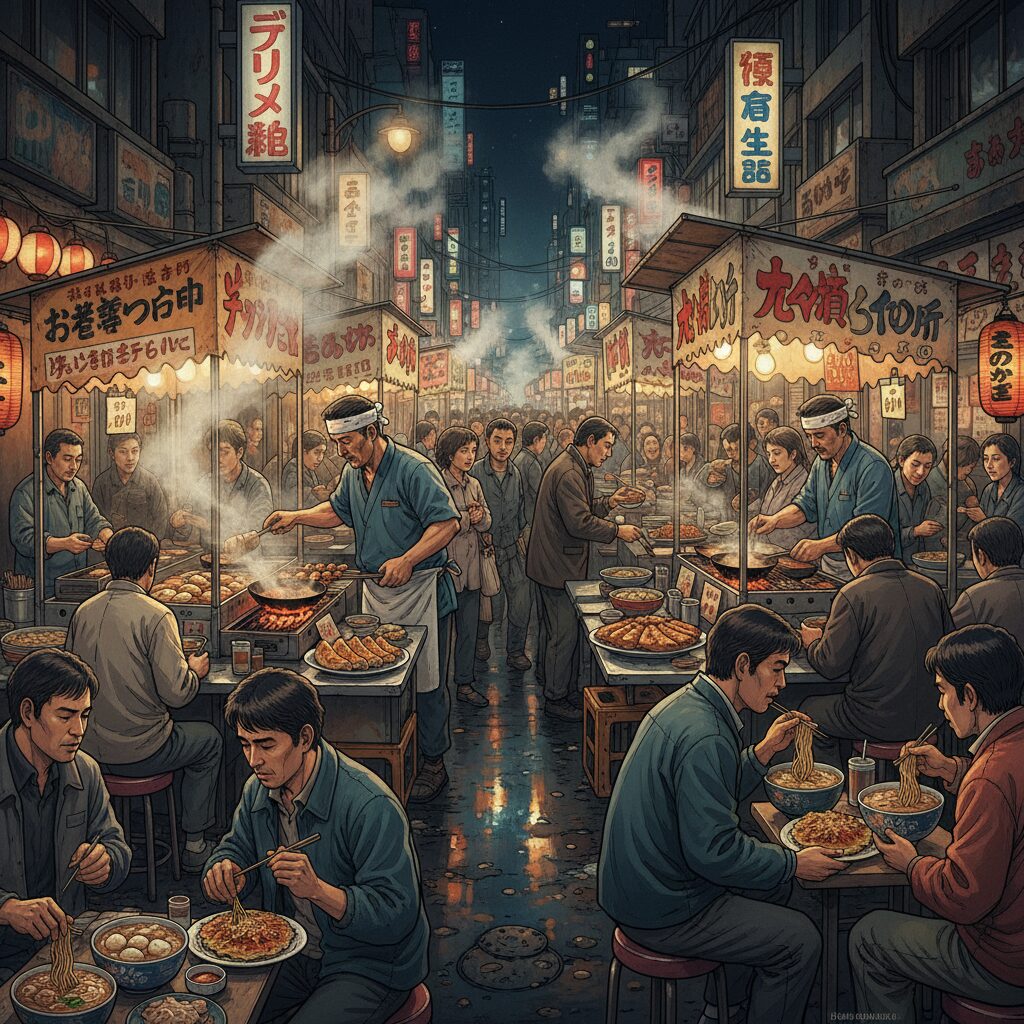
Alright, let’s dive into the most important topic: the food. Exploring a yatai menu can be an adventure in itself. Most stalls specialize in a specific type of cuisine, so part of the fun is hopping between them to sample a variety of dishes. Although there are countless options, a few must-try dishes truly define the Fukuoka yatai experience—these are the GOATs of Fukuoka street food.
Hakata Ramen: The Unrivaled King
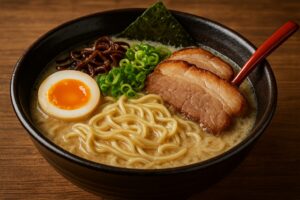
You simply cannot visit Fukuoka without tasting yatai ramen. It’s the city’s most famous culinary export, and enjoying it at a yatai is the ultimate experience. We’re talking about Hakata-style tonkotsu ramen. The magic lies in the broth, a creamy, opaque soup made by simmering pork bones for hours until it turns rich, complex, and bursting with umami. It’s served with ultra-thin, straight noodles cooked to your preferred firmness—from yawa (soft) to kona-otoshi (nearly raw). Toppings are simple but perfect: slices of tender chashu pork, chopped green onions, and perhaps some pickled ginger or sesame seeds. The best part? The kaedama system, where you can order an extra helping of noodles to add to your leftover broth. Slurping a steaming bowl of ramen on a stool in the cool night air becomes a cherished memory. It’s pure comfort, pure flavor, pure Fukuoka.
Yakitori: Skewers of Pure Delight
Yakitori, or grilled skewers, are the perfect pairing for a cold beer or sake and a staple at yatai. The sight and aroma of various meats and vegetables expertly grilled over fiery charcoal will make anyone’s mouth water. Although ‘yakitori’ technically means grilled chicken, the term covers all kinds of skewers. A must-try in Fukuoka is butabara, grilled pork belly. It’s a local obsession for good reason—the crispy, fatty, and juicy pork is simply divine. Classics like momo (chicken thigh), tsukune (chicken meatballs), and vegetable options like shiitake mushrooms and green peppers are also common. You usually order by skewer and pick your seasoning: shio (salt) for a clean, simple taste, or tare (a sweet and savory soy-based glaze). Watching the taisho skillfully fan the flames and turn the skewers is part of the delicious spectacle.
Motsunabe: The Heartwarming Hot Pot
If you visit during cooler months or feel adventurous, you must try Motsunabe. This is Fukuoka’s soul-food hot pot—a bubbling cauldron of deliciousness. The star ingredient is motsu, beef or pork offal (usually intestines). Before you get squeamish, hear me out: when cooked properly, it’s incredibly tender and flavorful, absorbing all the richness of the broth. The broth itself is typically soy sauce or miso-based, loaded with garlic, chili, and heaps of cabbage and chives that cook down into a sweet, savory stew. It’s a rich, hearty, deeply satisfying dish meant to be shared. Gathering around a steaming pot of Motsunabe at a yatai on a cold night defines coziness. It’s a true taste of local Hakata flavor.
Oden & Other Classics
Beyond these main dishes, there’s a whole world of yatai delights to discover. Watch for stalls with a large, steaming, sectioned pot at the front—that’s oden. A classic Japanese winter comfort food, it features ingredients like daikon radish, boiled eggs, fish cakes, and tofu simmered for hours in a light, savory dashi broth. You simply point out what you want, and the taisho will fish it out for you, often serving it with a touch of sharp karashi mustard on the side. It’s simple, warming, and delicious. Many yatai also serve crispy gyoza (pan-fried dumplings), tempura made from fresh seasonal ingredients, and various itamemono (stir-fried dishes). Some owners are even getting creative, crafting unique dishes that blend Japanese flavors with international influences. The key is to keep your eyes peeled and your appetite ready.
Yatai Etiquette 101: How to Yatai Like a Pro
Diving into the close-knit world of yatai can seem a bit intimidating at first, but it becomes really relaxed once you understand the unspoken rules. Following a few simple etiquette tips will not only make your visit smoother but also earn you genuine respect from both the locals and the taisho. Consider this your guide to yatai-ing like a pro.
First and foremost, don’t overstay your welcome. Yatai are small, and seats are highly sought after. The culture revolves around a quick, satisfying stop. The unwritten rule is to order, eat, drink, and then politely leave to make space for the next group of hungry customers. Lingering for hours over a single beverage is a big no-no. Think of it as a tasty pit stop, not your final destination. Aim to spend about an hour max at any stall, especially if there’s a queue behind you. This idea ties into the Japanese concept of omoiyari, or consideration for others. Everyone wants a turn to enjoy the atmosphere, so keep things flowing.
When you sit down, it’s customary to order at least one drink per person alongside your food. Yatai depend on a steady turnover of both food and drink sales. Even if you’re not keen on alcohol, ordering a soft drink like oolong tea or cola is a polite gesture. When it comes to food, don’t order everything at once. Begin with a drink and a couple of small dishes. Take your time, savor the ambiance, and then maybe order more. This keeps the experience relaxed and helps you gauge your hunger better.
Cash remains king in the yatai scene. While payment methods everywhere are becoming digital, these small, independent vendors largely rely on cash. Don’t expect credit card machines to be available. Bring enough cash, including smaller bills and coins, to cover your bill—it just makes things smoother for everyone. Also, keep in mind that yatai are essentially mobile kitchens with no restroom facilities. Plan to use public restrooms nearby before or after your visit.
Lastly, the most important rule is to be open and friendly. The real charm of the yatai lies in the human connection. Don’t hesitate to try and communicate. A simple “Sumimasen!” (Excuse me!) will catch the taisho’s attention, and a genuine “Oishii!” (Delicious!) is sure to earn a smile. Ask for recommendations (“Osusume wa nan desu ka?”). Compliment the food. If your neighbor starts a conversation, go with it. This is your chance to step outside the tourist bubble and share an authentic moment with the people who make Fukuoka special. Embrace the lively atmosphere, be respectful, and you’re guaranteed to have an unforgettable experience.
The Bigger Picture: Why Yatai Culture is So Dope

To truly appreciate the yatai, you need to understand that they are much more than just places to eat. They represent a living, breathing piece of Fukuoka’s history and embody its resilient, community-focused spirit. The yatai culture really flourished in the post-World War II era. During a time of scarcity and rebuilding, these mobile food stalls offered affordable, hearty meals for workers and became essential social hubs where people gathered, shared stories, and restored a sense of community. For decades, they existed as an unregulated, freewheeling element of urban life throughout Japan.
However, as Japan modernized, concerns over sanitation and traffic congestion caused many cities to crack down on street vendors. Although yatai culture disappeared from most parts of Japan, Fukuoka famously resisted. The people of Fukuoka cherished their yatai too much to let them vanish. They fought to preserve them, recognizing yatai as a vital part of their city’s identity. This led to a distinctive regulatory system where existing yatai licenses could be passed down within families, but no new licenses were issued. For a long time, this resulted in a gradual decline in the number of yatai as owners retired without successors.
Realizing this beloved tradition was at risk, the Fukuoka city government took a groundbreaking step. They established a new public recruitment system for yatai operators, opening the door for a new generation of passionate chefs and entrepreneurs to join the scene. This has brought fresh energy and creativity to the yatai culture. Today, you’ll find traditional stalls run by third-generation owners alongside innovative yatai operated by young chefs experimenting with new ideas, all while maintaining strict hygiene and operational standards. This careful balance between preserving a treasured tradition and encouraging evolution is what makes Fukuoka’s yatai scene so lively and unique. When you dine at a yatai, you’re not just eating; you’re participating in a cultural legacy and supporting a community of small business owners who carry the soul of the city.
Planning Your Yatai Adventure
Ready to dive in? Bet. A bit of planning will help you get the most out of your yatai night. First, timing is key. Most yatai begin their meticulous setup in the late afternoon and officially open around 6:00 PM to 6:30 PM. They typically stay open late, often until 1:00 AM or beyond, depending on the day and how busy they are. Peak hours usually run from 8:00 PM to 11:00 PM, when the stalls are buzzing with activity. To avoid the largest crowds, consider visiting on a weekday or arriving a little earlier.
Getting to the main yatai areas is easy, thanks to Fukuoka’s excellent public transportation system. The city is served by a convenient subway network. For the Tenjin area, get off at Tenjin Station. For Nakasu, Nakasu-Kawabata Station is your stop, just a short walk from the riverfront. The city is very walkable, so walking between Tenjin and Nakasu is completely doable and a great way to explore the city at night.
One of the best ways to experience the full range of yatai offerings is to do a hashigo, essentially a yatai crawl or bar hop. Instead of staying at one spot all night, plan to visit two or three different stalls. This lets you try a wider variety of food and atmospheres. A classic route might be starting in Nakasu for the iconic views and a plate of tempura, then strolling over to Tenjin for authentic butabara yakitori at a local favorite, and finishing with a soul-warming bowl of ramen at a legendary spot. This turns your dinner into a lively urban adventure. Don’t hesitate to wander and trust your senses—if a stall looks lively and smells amazing, it’s likely a winner.
Fukuoka’s Yatai: More Than Just a Meal
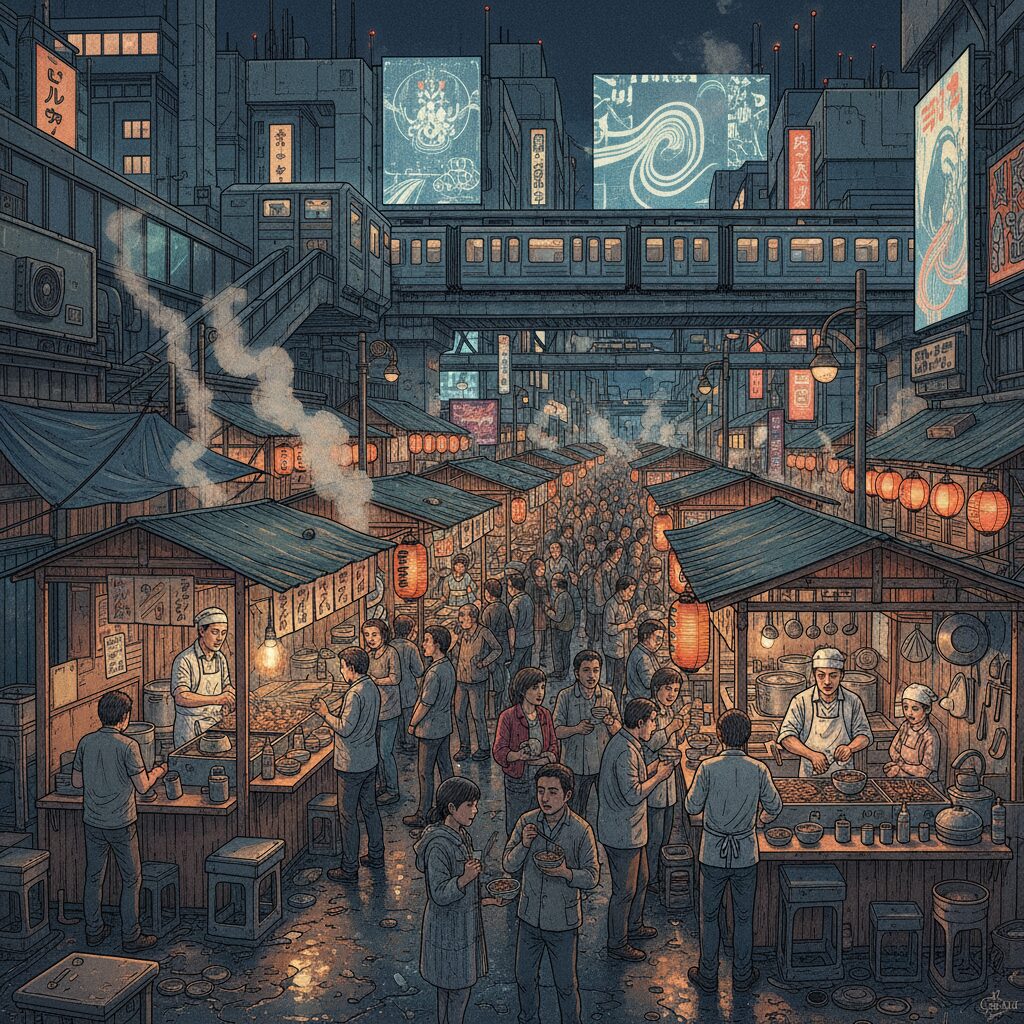
As the night winds down and the taisho begins to pack up their wooden cart, you’ll leave with more than just a full stomach. You’ll carry the warmth of the lanterns, the taste of the rich broth, and the sound of shared laughter with you. A night at Fukuoka’s yatai offers a deep dive into the city’s character. It’s an experience that’s messy, a bit chaotic, and deeply human. Within these cramped, convivial spaces, the true spirit of Fukuoka—warm, unpretentious, and fiercely proud of its culinary heritage—shines brightest. It serves as a reminder that sometimes the most memorable travel moments aren’t found in grand monuments or pristine museums, but on a simple wooden stool, sharing a skewer and a story with a stranger. So when you visit Fukuoka, don’t just see the sights. Pull back the flap of a yatai, grab a seat, and take a bite of the city’s living, breathing soul. It’s an experience that is, without a doubt, absolute fire.