Yo, let’s talk about a place that’s a total game-changer. Forget what you think you know about Japan for a sec—the neon-drenched streets of Tokyo, the serene temples of Kyoto. We’re going off-grid, to a small island floating in the tranquil Seto Inland Sea that went from a sleepy fishing community to a global hotspot for contemporary art. We’re talking about Naoshima. This isn’t just an island with a few museums slapped on it; this place is a living, breathing canvas. It’s a pilgrimage destination where architecture nerds, art stans, and anyone craving a serious dose of inspiration come to get their minds blown. Naoshima is where nature, art, and community collide in the most epic way possible. It’s a place that redefines what a museum can be, blurring the lines between the gallery and the world outside until the entire island feels like one massive, immersive installation. This is the ultimate art adventure, a full-on sensory deep dive that’ll stick with you long after you’ve hopped on the ferry back to the mainland. Prepare to have your perspective shifted, because Naoshima isn’t just a place you see; it’s a place you feel. It’s a vibe, a mood, an entire universe crafted by visionaries who believed art could literally change the landscape. And trust me, they weren’t wrong. Get ready to explore a world where every corner holds a new discovery, every building tells a story, and the journey itself is a masterpiece.
To fully immerse yourself in this unique landscape, consider exploring Naoshima’s art sites by E-Bike for an epic quest across the island.
The Benesse House Area: Where Art Meets Nature
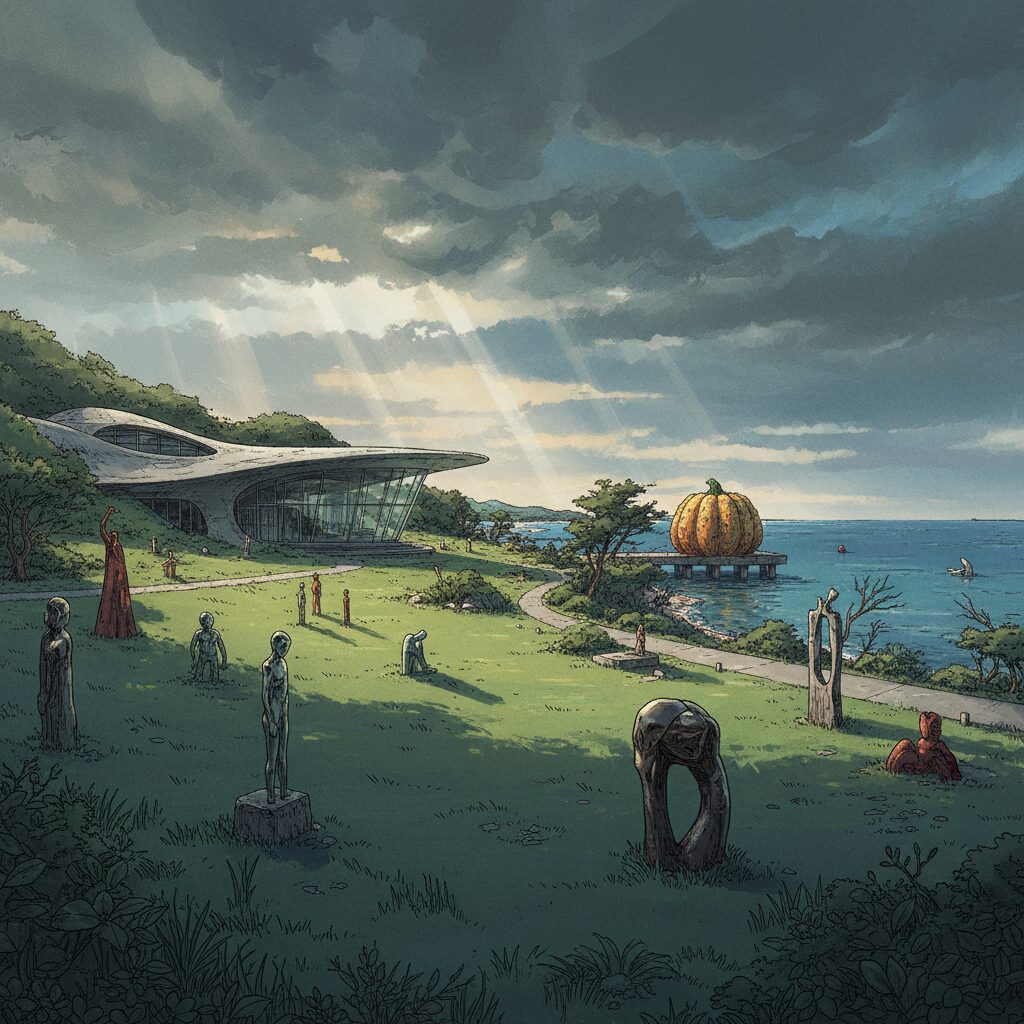
Alright, let’s begin in the southern part of the island, the area that essentially kicked off everything: the Benesse House Area. This spot is the core of Naoshima’s transformation, a vast landscape where the boundaries between museum, hotel, and nature completely blur. It’s the visionary project of Benesse Holdings and the renowned architect Tadao Ando, whose concept was truly groundbreaking. Their goal wasn’t merely to build galleries; they wanted to craft a space where art becomes part of daily life, where creativity frames every moment. Nestled on a hill overlooking the shimmering Seto Inland Sea, Ando’s signature style—smooth exposed concrete, dramatic natural light, and a profound respect for the environment—is evident everywhere. You feel it instantly upon arrival. The air feels different here—salty, peaceful, charged with creative energy. It’s less a tourist attraction and more a sanctuary. You stroll along lush paths, and suddenly encounter world-class sculptures set against blue waters and green hills. It’s a continuous discovery, a reminder that art isn’t meant to be confined to sterile white walls. This is where art lives and breathes.
Benesse House Museum: The Original Masterpiece
At the heart of it all is the foundational piece of the Naoshima project. Opened in 1992, Benesse House Museum represents a total leap forward. It’s a museum combined with a hotel—or a hotel with a museum inside—either way, the distinction barely matters. The concept is brilliant: you can stay overnight and enjoy 24/7 access to parts of the collection. Imagine waking up, stepping out of your room, and immediately facing remarkable works by artists like Yves Klein, Richard Long, or David Hockney. It’s the ultimate experience for any art enthusiast. The building itself reflects classic Tadao Ando design. Massive concrete walls curve along the coastline, forming a structure that feels monumental yet perfectly harmonious with the landscape. Large openings and skylights fill the interiors with natural light, which shifts throughout the day, constantly altering your perception of the art. The collection is exceptional, featuring works specifically commissioned for the space. These pieces weren’t just acquired; they were created in response to the architecture and natural surroundings of Naoshima. This interplay between art, architecture, and nature makes the experience deeply moving. You’re not passively observing art—you’re immersed in a deliberately crafted environment designed to provoke thought and feeling. Even if you’re not staying at the hotel, a visit to the museum is essential. The flow of the space, the spiraling ramp through the galleries, terraces offering breathtaking sea views—it’s as much an architectural pilgrimage as it is an art one. It’s quiet, reflective, and effortlessly elegant. It’s the kind of place that invites you to whisper, not out of obligation, but because the space commands such reverence.
The Iconic Outdoor Sculptures
Outside the museum, the entire Benesse House park is an expansive open-air gallery. This is where the thrill of exploration truly unfolds. You can rent an electric bike or simply wander on foot, with every path leading to a new artistic surprise. The sculptures are thoughtfully placed to engage with the natural surroundings—the coastline, forest, and sky. It’s an art treasure hunt with a series of unforgettable rewards.
The Reigning Queen: Yayoi Kusama’s Pumpkins
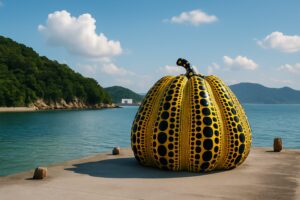
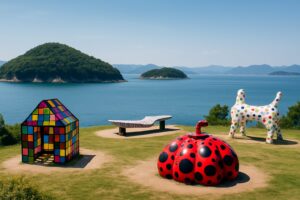
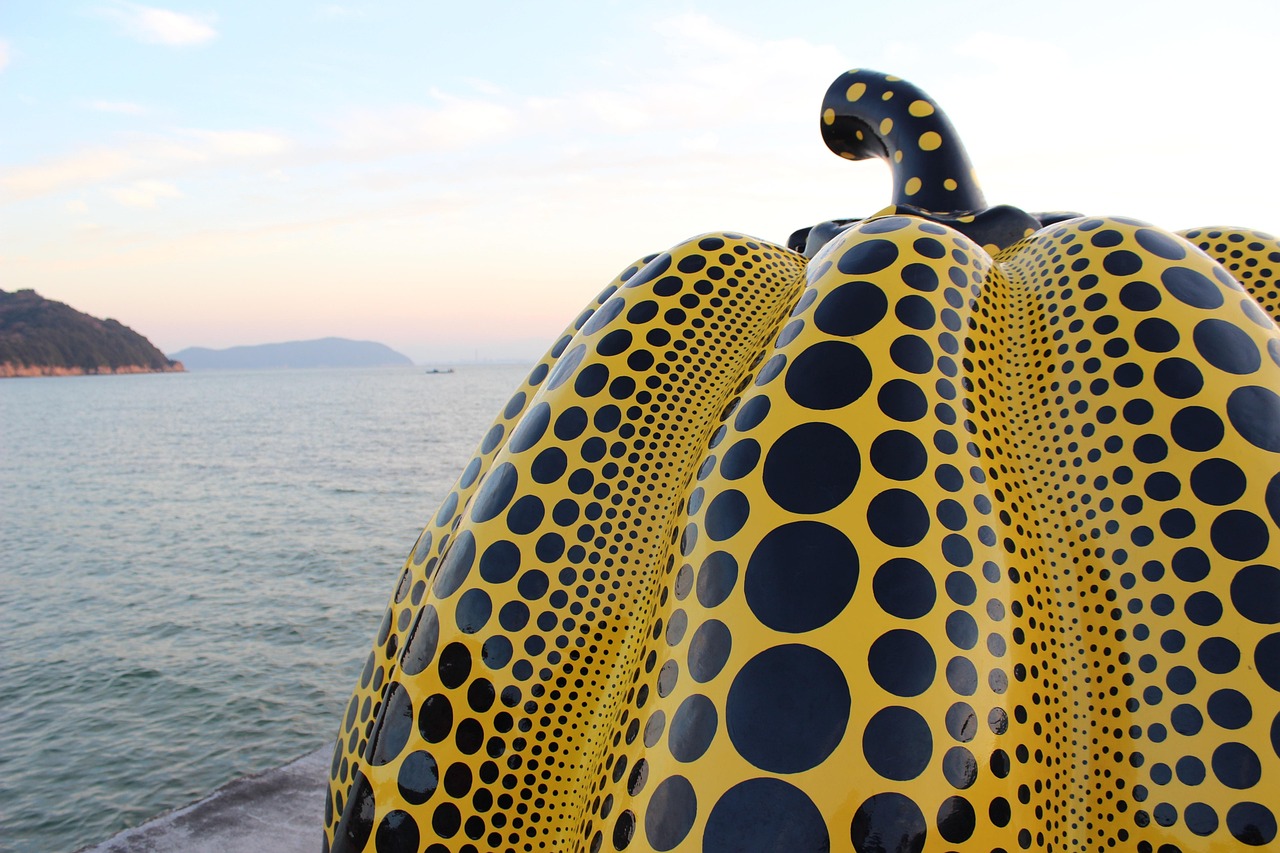
Let’s be honest, you’ve seen them on Instagram. Yayoi Kusama’s pumpkins are the undeniable icons of Naoshima, symbols that have come to define the whole island. But experiencing them in person is a completely different sensation. First, right as you step off the ferry at Miyanoura Port, you’re welcomed by the “Red Pumpkin” (Akakabocha). It’s enormous, hollow, and covered with Kusama’s trademark black polka dots. You can even go inside, where light streaming through the dot-shaped holes creates a mesmerizing, immersive experience. It’s playful and inviting—the perfect introduction to the island’s art-filled world. Yet the true star, the one featured on countless magazine covers, is the “Yellow Pumpkin.” Situated at the end of a small pier, against the endless backdrop of sea and sky, this sculpture feels magical. Smaller and more isolated, it seems like a solitary guardian of the island. The vibrant yellow and black contrast starkly with the natural blues and greens, creating a visually stunning effect. The piece changes with the weather and time of day—glowing under the afternoon sun, silhouetted against fiery sunsets, or stoic beneath cloudy skies. It was famously washed away by a typhoon in 2021, and its loss was deeply felt. Its restoration was a major celebration, a testament to how much this single piece of art means to the island and its visitors. Seeing it there, resilient and radiant, is genuinely moving. It’s far more than a photo opportunity—it’s a moment of connection with one of the most influential artists of our time, set in a perfect environment.
Art Along the Shoreline
Beyond the pumpkins, the coastline is scattered with other remarkable works. Niki de Saint Phalle’s colorful and whimsical sculptures burst with joyful energy. Her large, vibrant animals and figures stand proudly on the beach, inviting close inspection. Their raw, playful vibrancy offers a beautiful contrast to Ando’s minimalist concrete. Nearby, Karel Appel’s “Frog and Cat” is a quirky bronze sculpture that looks like it’s engaged in conversation by the sea. Meanwhile, George Rickey’s kinetic sculptures feature polished metal blades that move and shimmer in the wind, reflecting the sky and performing a mesmerizing dance. The beauty of the outdoor collection lies in its freedom. There are no set routes or viewing hours. You can sit on the beach to contemplate a piece for an hour or catch a fleeting glimpse while cycling past. It’s about crafting your own personal journey with the art, letting curiosity lead the way. The entire area invites you to slow down, look closer, and savor those beautiful, unexpected moments where human creativity and natural beauty merge into one.
Chichu Art Museum: A Subterranean Sanctuary
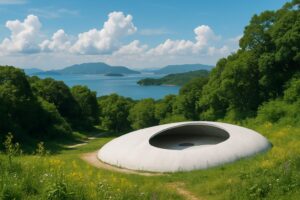
If Benesse House is the heart of Naoshima, then the Chichu Art Museum is its soul. Without exaggeration, this place offers one of the most extraordinary museum experiences on the planet. The name “Chichu” (地中) literally means “in the earth,” which perfectly encapsulates its concept. To protect the breathtaking natural scenery of the Seto Inland Sea, Tadao Ando designed much of the museum to be built underground. From outside, it’s barely visible—only a few geometric concrete openings punctuate a green hill. This is an act of radical architectural humility, a building that places the landscape above all else. Visiting Chichu is a ritual. You must first book your ticket online well in advance for a specific time slot. This is not a place you just drop into; it’s a pilgrimage. From the ticket center, you walk along a winding path through the Chichu Garden, a beautiful oasis filled with flowers and ponds inspired by Claude Monet’s gardens at Giverny. It’s a deliberate transition, designed to cleanse your palate and prepare you for the artistic journey ahead. Once inside, you enter Ando’s world: a maze of cool, silent concrete corridors, sharp angles, and open courtyards framing the sky. The genius lies in how natural light is manipulated. Despite being underground, the spaces glow softly with ethereal light that changes throughout the day, making the building feel alive. The museum is devoted to just three artists—Claude Monet, Walter De Maria, and James Turrell—and its architecture was specifically crafted to house their works, creating a perfect fusion of art and space.
The Hallowed Halls of Art
The experience of moving through Chichu is meticulously choreographed. You’re guided from one breathtaking installation to the next, each housed within a custom-built chamber that amplifies its impact. The silence, scale, and sheer beauty of the place overwhelm in the best possible way. It’s a space that demands your full attention.
Claude Monet’s Water Lilies: A Dream in Natural Light
You might believe you know Monet’s “Water Lilies,” but never like this. Ando designed a stunningly pure, white-walled room to display five of Monet’s late masterpieces. The most remarkable aspect? The room is lit solely by natural, diffused light streaming from a skylight above. No artificial lighting is used. This means the paintings appear different depending on the time of day and weather—soft and gentle on a cloudy morning, brilliant and vibrant in the afternoon sun. To enter, you remove your shoes and slip on soft slippers. The floor, made of 200,000 tiny marble cubes, creates a soft, textured surface underfoot. The whole experience is incredibly serene and reverent. You’re not simply viewing paintings; you’re stepping into Monet’s world. The scale of the works, the quality of light, and the room’s silence create an almost spiritual encounter with Impressionism. Ando crafted the perfect environment to appreciate the subtle genius of Monet’s brushwork and his revolutionary portrayal of light and water. It is an unforgettable moment of pure artistic bliss.
Walter De Maria’s Cosmic Chamber
Prepare for a dramatic shift in scale and tone. You ascend a grand staircase into a vast, temple-like hall containing Walter De Maria’s installation “Time/Timeless/No Time.” The room’s immense scale is breathtaking. At its center sits a colossal, 2.2-meter polished granite sphere, so flawlessly smooth it reflects the entire space like a distorted mirror. Twenty-seven gilded wooden sculptures flank the sphere, arranged along the walls and staircase. The room is a cathedral of light and space, flooded by natural light from a long skylight running the length of the ceiling. As the sun moves, light and shadows shift dramatically, activating the installation. At certain moments, a beam of sunlight strikes the golden sculptures, causing them to blaze with an almost sacred light. The piece explores concepts of time, space, and eternity. The sphere feels ancient and cosmic, a perfect form that seems to absorb and reflect the universe around it. It is a powerful, minimalist statement that feels both timeless and futuristic. You could spend hours simply watching the light change, feeling the immense energy of the space. It’s an awe-inspiring work that connects you to something vast and elemental.
James Turrell’s Perception Games
James Turrell is an artist who doesn’t use paint or clay; his medium is light itself. Chichu offers the ideal setting for his mind-bending work. The museum showcases three of his installations, each designed to challenge and play with your perception of light and space. In “Afrum, Pale Blue,” you enter what appears to be a normal room, only to find a glowing blue square projected onto a corner. As you approach, you realize it’s not a projection, but a precisely shaped opening filled with colored light, creating a three-dimensional object made of pure luminescence. It’s a simple illusion that completely scrambles your brain. But the masterpiece is “Open Sky.” You enter a square room with slanted walls leading your eyes to a large rectangular opening in the ceiling, framing the sky above. You sit on a bench lining the walls and simply watch. The sky becomes a living painting, a collaboration between James Turrell and nature. On a clear day, the blue is so intense and flat it appears like a solid painted surface. When clouds drift by, it becomes a stunning, unexpected event. The true magic happens during a special night program (booked separately and absolutely worth it). As twilight falls, hidden LED lights inside the room gradually change color, dramatically altering your perception of the sky’s hue. The sky can shift from blue to deep violet, vibrant magenta, or eerie green, all due to Turrell’s manipulation of surrounding light. It’s a mesmerizing, meditative experience that reveals how our perception constructs what we see. It’s a must-do and a memory in the making.
The Art House Project: Art Woven into the Community
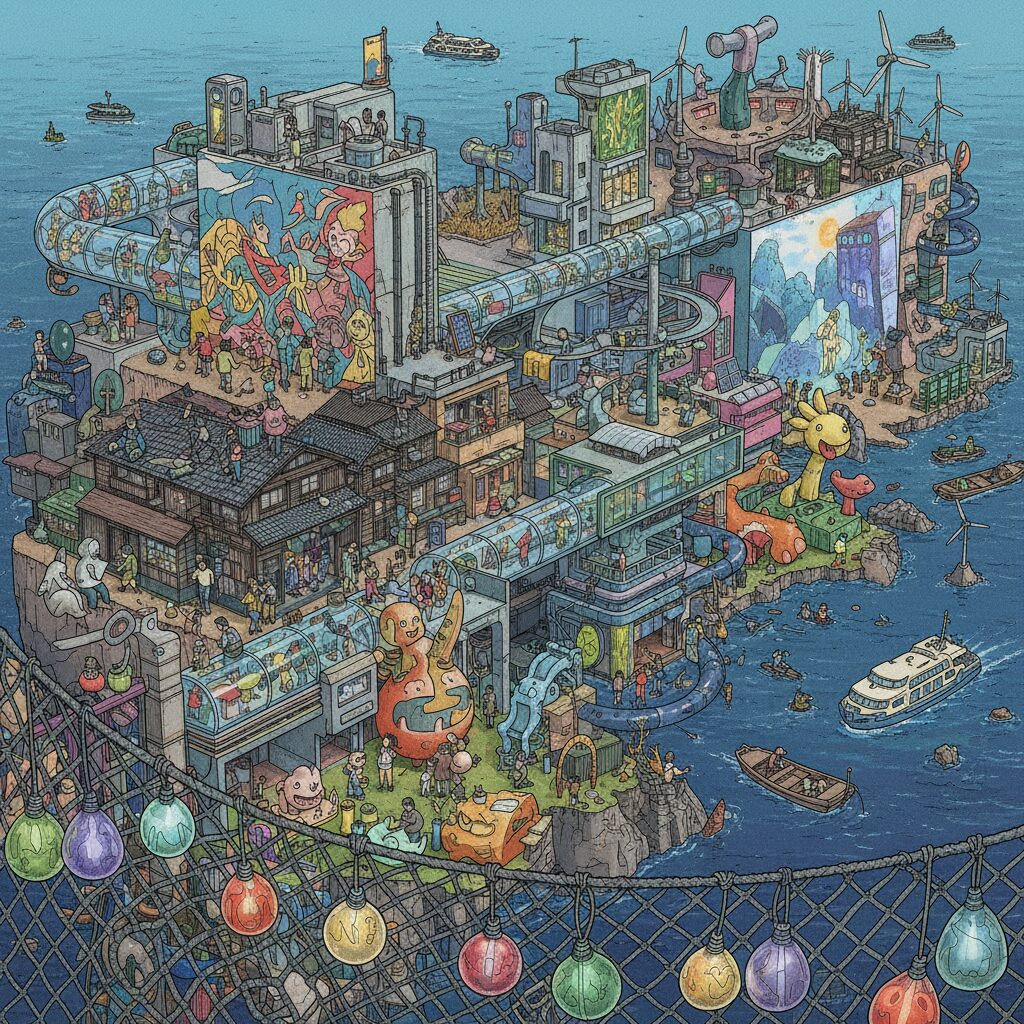
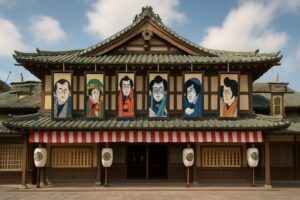
If the south side of Naoshima is known for its monumental museums, the eastern side, in the port town of Honmura, presents something entirely different yet equally profound. Here, you’ll discover the Art House Project, one of the island’s most unique and captivating art initiatives. The idea is elegantly simple: take empty or abandoned traditional Japanese houses (akiya) scattered throughout this quiet, inhabited village and invite artists to transform them into permanent art installations. It’s not about constructing new galleries; it’s about breathing new life into old spaces, integrating contemporary art directly into the community’s daily life and history. To experience it, you purchase a multi-site ticket and wander through the narrow, winding streets of Honmura, following a map to find the seven different art houses. The journey between the houses is part of the experience. You’ll pass local residents’ homes, see gardens, and hear the sounds of village life. It’s a beautiful, intimate way to explore both art and a genuine Japanese neighborhood. Each house is a self-contained universe, a collaboration between an artist, the building’s history, and your own presence.
Exploring the Houses of Honmura
Each of the seven houses offers a distinctly different sensory experience. You might step from a sunlit village street into total darkness or encounter a Shinto shrine reimagined with a futuristic twist. The journey is full of surprises.
Minamidera: The Void of Light
This is the standout of the Art House Project, and for good reason. Minamidera isn’t an old house; it’s a new structure built on the former site of a temple, designed by—you guessed it—Tadao Ando. Inside is a light installation by James Turrell called “Backside of the Moon.” The experience is a masterclass in sensory manipulation. You and a small group are led by a guide into a building and down a hallway enveloped in complete, absolute pitch-black darkness. You can’t see your hand in front of your face. You shuffle forward, one hand on the wall, until you’re guided to sit on a bench. Then you wait. For several minutes, you sit in the oppressive darkness, your eyes struggling to find any point of focus. It can be disorienting, even slightly frightening. But then, slowly and almost imperceptibly, a faint, ethereal rectangle of deep blue light begins to emerge at the far end of the room. It’s been there all along, but your eyes need time to adjust to the extreme lack of light. As you continue gazing, the shape sharpens, appearing to float in the void. You’re invited to walk toward it, and as you draw nearer, you realize the light has substance and depth. It’s a powerful, meditative experience that challenges the limits of perception. It teaches patience, trust in your senses, and finding beauty in darkness. It’s pure genius and an experience you won’t forget.
Kadoya: A Sea of Time
Kadoya was the first Art House, restored from a 200-year-old building. Inside, artist Tatsuo Miyajima has created a hauntingly beautiful piece titled “Sea of Time ’98.” You step into a darkroom where the old wooden floor has been replaced with a shallow pool of water. Submerged within are 125 digital LED counters, flashing numbers from 1 to 9 at varying speeds, each chosen and set by a Naoshima resident. The room is filled with the faint, rhythmic blinking of red and green lights, their reflections shimmering on the water’s surface and the dark ceiling above. Each light symbolizes a life, a rhythm, a passage of time. The counters never reach zero; they cycle continuously, representing the continuity of life, death, and rebirth. It’s a deeply moving, contemplative work—a community collaboration that transforms personal rhythms into a luminous, collective poem. It’s a quiet masterpiece that speaks volumes about time and humanity.
Go’o Shrine: Stairway to Heaven
This one is truly mind-bending. Artist Hiroshi Sugimoto undertook the restoration of a dilapidated Edo-period Shinto shrine, creating a work that bridges the earthly and the sublime. The main shrine building has been carefully restored, but the highlight lies beneath. An optical-glass staircase descends from the main hall into an underground chamber, passing through the earth and seemingly connecting the living world with the one below. You can walk through a narrow tunnel into this subterranean space and look up at the glass stairs, which glow with an otherworldly light as they capture and refract sunlight. It’s a stunning, conceptually brilliant piece, merging ancient Shinto beliefs about purity and nature with a sleek, modern aesthetic. It feels both sacred and futuristic. Go’o Shrine perfectly exemplifies how the Art House Project honors history while expanding the definition of art.
More Art Vibes: Ando Museum and Beyond
Beyond the well-known venues, Naoshima is brimming with other artistic experiences that enrich and enliven your visit. These places are equally important for fully appreciating the island’s creative spirit. They demonstrate how art has permeated every facet of life here, from architecture to public bathing.
Ando Museum: A Dialogue in Concrete and Wood
Also situated in the Honmura district, the Ando Museum is a small yet powerful homage to the man who shaped much of Naoshima’s aesthetic. But this is no dull architectural archive. The museum is housed within a 100-year-old traditional wooden home. Ando took this classic structure and, with precise skill, inserted a new world of exposed concrete inside its historic frame. The contrast is stunning. You move through the warm, dark wood of the original house and suddenly step into a stark, minimalist concrete cube, lit by a sliver of light from a skylight above. The museum displays drawings, models, and photographs of Ando’s work on Naoshima and beyond, offering a deeper insight into his philosophy and process. Yet the building itself is the main exhibit. It is a physical conversation between past and present, tradition and modernity, light and shadow. It perfectly captures the spirit of Naoshima—a place that respects its history while boldly embracing the future. It’s a must-see for any architecture enthusiast and a serene, reflective space for everyone else.
The Naoshima Bath “I♥湯”: Bathe in Art
Looking for the island’s most unique art experience? Return to Miyanoura Port and spot the wildly eclectic, fantastical building that houses the Naoshima Bath, also called “I♥湯” (a pun on “I Love Yu,” as “yu” means hot water in Japanese). This is a real, working public bathhouse (sento) designed by artist Shinro Ohtake. Forget minimalist calm; this place is a chaotic, exuberant explosion of color and texture. Ohtake has crafted a masterful collage using found objects, tiles, neon signs, and pop-culture imagery from across Japan. The exterior is a riot of mismatched styles, featuring everything from a giant scrap-metal elephant on the roof to a vintage pin-up girl sign. The interior is just as wild, with vibrant tile mosaics in the bathing areas and a distinct vibe that is both nostalgic and surreal. The best part? You can actually go in, pay the admission, and take a bath. It’s an incredible chance to engage with the art and experience a classic piece of Japanese culture at the same time. Soaking in the hot water while surrounded by Ohtake’s wild, beautiful world is a truly unforgettable Naoshima moment. It’s fun, unpretentious, and a perfect reminder that art doesn’t always have to be serious.
Practical Deets & Pro Tips for Your Art Pilgrimage
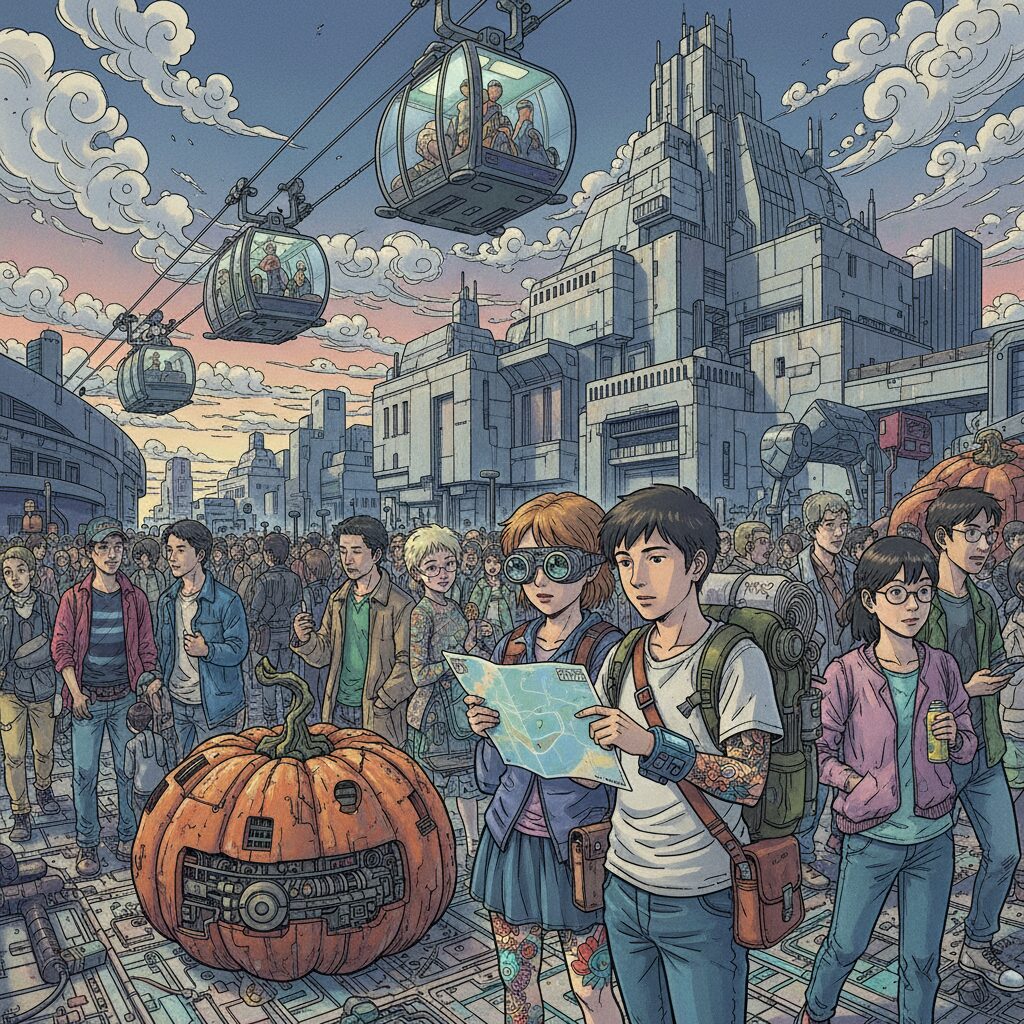
Alright, you’re excited and ready to go. However, a trip to Naoshima requires some planning to ensure it runs smoothly and stress-free. This isn’t a place you can just improvise, especially during peak season. Here’s the essential guide on how to do it right.
Getting There
The most common way is to take the Shinkansen (bullet train) to Okayama Station. From there, catch a local JR train to Uno Station, which takes about an hour. Uno Port is just a short walk from the station, and that’s where you’ll board the ferry to Naoshima. Ferries run frequently and take roughly 20 minutes to arrive at Miyanoura Port, the island’s main hub. You can also take ferries to Honmura Port, which is closer to the Art House Project, but these are less frequent. The ferry ride itself is part of the charm, offering stunning views of the Seto Inland Sea and its many islands. Grab a spot on deck and enjoy the scenery.
Getting Around the Island
Naoshima is hilly and more spread out than you might expect, so planning your transportation is important. You have several good options:
- Electric Bicycles: By far the best way to explore the island. It gives you the freedom to go at your own pace, stop for photos, and uncover hidden spots. The hills are challenging, so renting an electric-assist bike (e-bike) is highly recommended. Multiple rental shops near Miyanoura Port offer e-bikes—try to book in advance, especially on busy days.
- Town Bus: The local bus is a dependable and budget-friendly choice. It runs between key areas—Miyanoura Port, Honmura, and the Tsutsuji-so bus stop near the museum district. A free shuttle bus also connects the Benesse Art Site museums. The main drawback is being bound to the schedule, and buses can get crowded, especially around midday.
- Walking: Walking is practical around certain spots like Honmura village or from Tsutsuji-so along the coast to Benesse House Museum. However, trekking across the entire island isn’t feasible unless you’re an avid hiker with a full day to spare.
Booking & Planning
This step is crucial. Don’t overlook it!
- Museum Tickets: Chichu Art Museum requires advance online reservations for specific dates and time slots. Tickets become available on the 10th of each month for the following month and sell out quickly, particularly on weekends and holidays. Book as soon as they’re released. The Kinza Art House also needs a separate, advance reservation. For other attractions like Benesse House and the Art House Project, tickets can typically be purchased on the day.
- Accommodation: Naoshima is small with limited lodging options. Book well in advance, especially if you want to stay at the iconic Benesse House Hotel, which features four separate areas: Museum, Oval, Park, and Beach. There are also charming traditional inns (minshuku) and guesthouses in Miyanoura and Honmura for a more local, budget-friendly experience.
- Check for Closures: This is a common rookie mistake. Most museums and art sites on Naoshima are closed on Mondays. If Monday falls on a national holiday, they generally open that day but close the next Tuesday instead. Always check the official Benesse Art Site Naoshima calendar online before finalizing your plans.
What to Pack & Wear
Comfort is key on Naoshima. You’ll be walking and/or cycling a lot. Comfortable walking shoes are essential. Dress in layers, as island weather can change quickly. Don’t forget sunscreen, a hat, and sunglasses, since you’ll spend plenty of time in the sun. Also, bring cash—while major sites accept credit cards, many smaller cafes, rental shops, and local eateries only take cash.
The Vibe of Naoshima: Beyond the Art
Beyond the world-class museums and iconic sculptures, what truly defines Naoshima is its distinctive atmosphere. It’s a place full of striking contrasts. Monumental contemporary art and architecture stand against the serene backdrop of a slow, quiet rural island life. You might cycle from a multi-million dollar James Turrell installation to a tranquil fishing village where an elderly woman tends her garden. This fusion of global influence and local intimacy is what gives Naoshima its soul. Life here moves at a gentler pace. The air is fresh, carrying the scents of salt and pine. The sounds are the gentle lapping of waves, the hum of the ferry, and the summer song of cicadas. It’s a place that urges you to disconnect from the hectic city energy and reconnect with something more essential. It’s a richly sensory experience—the sea breeze as you coast downhill on your bike, the coolness of the concrete walls inside the Chichu Art Museum, the flavor of a simple meal made from fresh, local ingredients. Naoshima stimulates your mind and soothes your spirit. It offers space to think, wander, embrace silence, and simply be present. This intangible essence—the pervasive sense of peace and inspiration—is what visitors carry home with them. Naoshima proves that art is not merely an object to behold, but a force that can shape environments, build communities, and transform your worldview.
Naoshima is not just a list of sights to check off. It’s a holistic journey, an immersion into a world where every detail is carefully crafted. The island has invested its future in the power of creativity, and the result is nothing less than miraculous. From the moment you glimpse the Red Pumpkin at the port to your final contemplative view from the Chichu terrace, you’ll find yourself on a new wavelength. It’s a place that lingers in memory—etched in light, concrete, and the endless blue of the Seto Inland Sea. So, book your ticket, reserve your bike, and prepare for an adventure that will transform how you experience art. Naoshima is more than ready to welcome you. It’s a masterpiece waiting to be discovered.