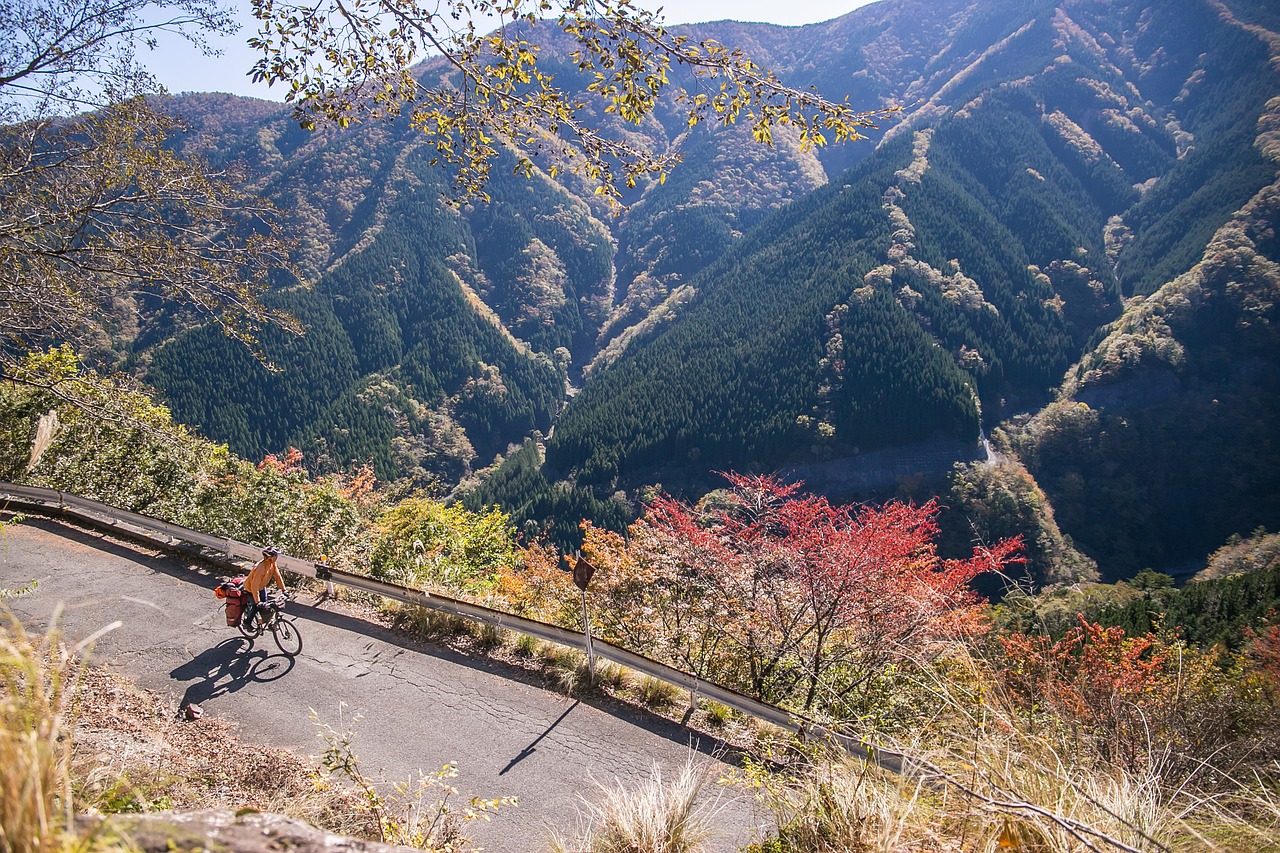
What’s up, fellow adventurers? Let’s talk about an experience that’s so uniquely Japan, it feels like it was cooked up in a dream. Picture this: you’ve spent the day absolutely sending it down epic mountain trails, your bike covered in hero dirt, your legs screaming with that good kind of burn. The air is crisp, filled with the scent of pine and damp earth. Now, instead of heading back to a generic hotel, you roll into a timeless village, a place where steam billows from wooden bathhouses and the sound of geta clogs echoes on stone-paved streets. You trade your riding gear not for street clothes, but for a yukata, and your final destination for the day is a soul-soothing, mineral-rich hot spring, or as we call it, an onsen. This isn’t just a fantasy; it’s the ultimate Japan adventure combo—mountain biking and onsen hopping through secluded villages. It’s a full-on sensory reset, a perfect mashup of high-octane thrills and ancient traditions of relaxation. This is about discovering a side of Japan that’s raw, real, and waiting just beyond the city lights, a place where every grueling climb is rewarded with the most sublime soak you can imagine. Forget just seeing Japan; this is about feeling it, from the handlebars to the hot springs. Let’s drop in.
After a day of epic riding, getting to these secluded hot spring villages is easier than ever with the new Shinkansen luggage service that’s revolutionizing travel across Japan.
The Ultimate Vibe Check: Why MTB and Onsen is a Match Made in Heaven
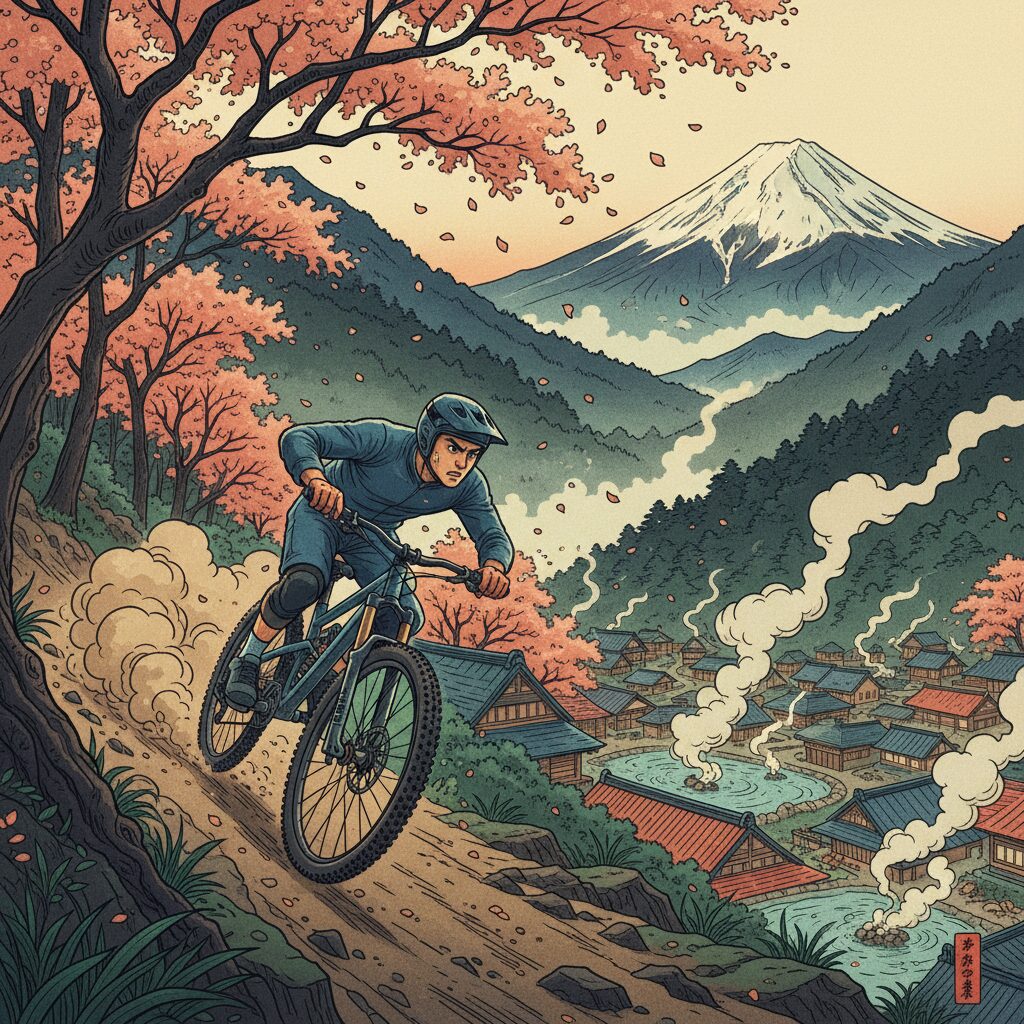
Let’s be real for a moment. The link between shredding trails and soaking in a natural hot spring isn’t just convenient; it’s a deeply spiritual experience. This idea of “earning your soak” takes the whole experience to another level. When your muscles ache after a day of technical descents and quad-burning climbs, slipping into geothermally heated water isn’t merely relaxing—it’s rejuvenating. The minerals in the water, which differ by region, are renowned for their healing qualities, soothing muscle soreness and dissolving fatigue. It’s nature’s ultimate recovery session. The contrast is what makes it so powerful. You shift from the intense focus of navigating a rocky singletrack, the wind rushing past your ears, the world a blur of green and brown, to absolute stillness. You’re immersed in warm, silent water, surrounded by only the rustling of bamboo or the sight of stars emerging in a clear mountain sky above. The sensory shift from adrenaline to calm is utterly addictive. It’s a full-body, full-mind reset unlike anything else.
The atmosphere of these secluded onsen villages, called hittou (secret hot springs), is a unique experience. These aren’t resort towns as you’d find in the West. They’re living pieces of history. You’ll wander narrow lanes lined with centuries-old ryokan (traditional inns), their wooden facades worn by time and volcanic steam. The air itself feels different here, often carrying the faint sulfuric scent of the springs—a smell that becomes synonymous with relaxation. You’ll see locals and visitors alike strolling in yukata and geta, moving from one public bathhouse to another. It’s a slow-paced world that encourages you to unplug, breathe deeply, and simply be present. The feeling is less like visiting a tourist spot and more like stepping into a temporary home—a community centered around life-giving water bubbling up from deep within the earth. This genuine, low-key vibe is the ideal antidote to the high-energy demands of the trail.
Dropping In: Japan’s Premier Trail and Onsen Zones
So, where can you find this magical combination? Japan is over 70% mountainous, giving you plenty of options, but a few regions are truly legendary for this specific kind of adventure. The undisputed champion is Nagano Prefecture, the heart of the Japan Alps. This area is a mecca for mountain sports. Places like Hakuba Valley, renowned for its epic winter snow, transform into a green-season paradise with world-class downhill and cross-country MTB parks integrated right into the ski resorts. After a day of lift-accessed gravity riding, you can visit a dozen different onsen, ranging from luxurious hotel baths to rustic hidden gems tucked away in the forest. Then there’s Nozawa Onsen, a village that arguably represents the pinnacle of this experience. It boasts a dedicated MTB park on the mountain and over a dozen free, public bathhouses scattered throughout its charming, historic streets. Here, biking and bathing are woven into the fabric of daily life.
But the appeal doesn’t stop in Nagano. Head over to Gunma Prefecture, to places like Minakami. It’s a hotspot for all kinds of outdoor activities, including some seriously challenging backcountry trails. The onsen here, such as the famous Takaragawa Onsen, are often located right beside pristine rivers, offering some of the most breathtaking rotenburo (outdoor bath) views imaginable. Further north, the island of Hokkaido presents a different kind of adventure. In summer, Niseko’s legendary powder fields transform into a network of flowing MTB trails through silver birch forests. The onsen here feel wild and remote, perfectly complementing the untamed landscape of Japan’s northern frontier. The trails across Japan range from perfectly groomed, machine-built flow trails in bike parks to raw, technical, hand-cut singletrack that locals have used for generations. There are also countless kilometers of gravel roads and forest paths, or rindo, connecting remote villages and offering incredible scenic rides without extreme technical challenges. This diversity means that whether you’re a seasoned downhill pro or a casual cross-country rider, there is a trail—and an onsen—waiting for you.
When it comes to your ride, you have options. Major hubs like Hakuba and Niseko feature top-tier bike rental shops with the latest full-suspension models from major international brands. You can literally show up with just your riding gear and be fully equipped. However, if you’re exploring smaller, more remote villages, rental options might be limited or unavailable. Planning ahead is crucial. If you’re serious about your setup, bringing your own bike is a smart choice. Japan’s efficient baggage delivery services (takkyubin) can ship your bike box from the airport straight to your first ryokan, simplifying logistics. Just remember to be courteous on the trails. Many are multi-use and shared with hikers. A friendly “Konnichiwa!” goes a long way, and always yield the right of way. The golden rule is to leave these beautiful places better than you found them—pack out everything you pack in.
Onsen Etiquette 101: Soaking Without the Stress
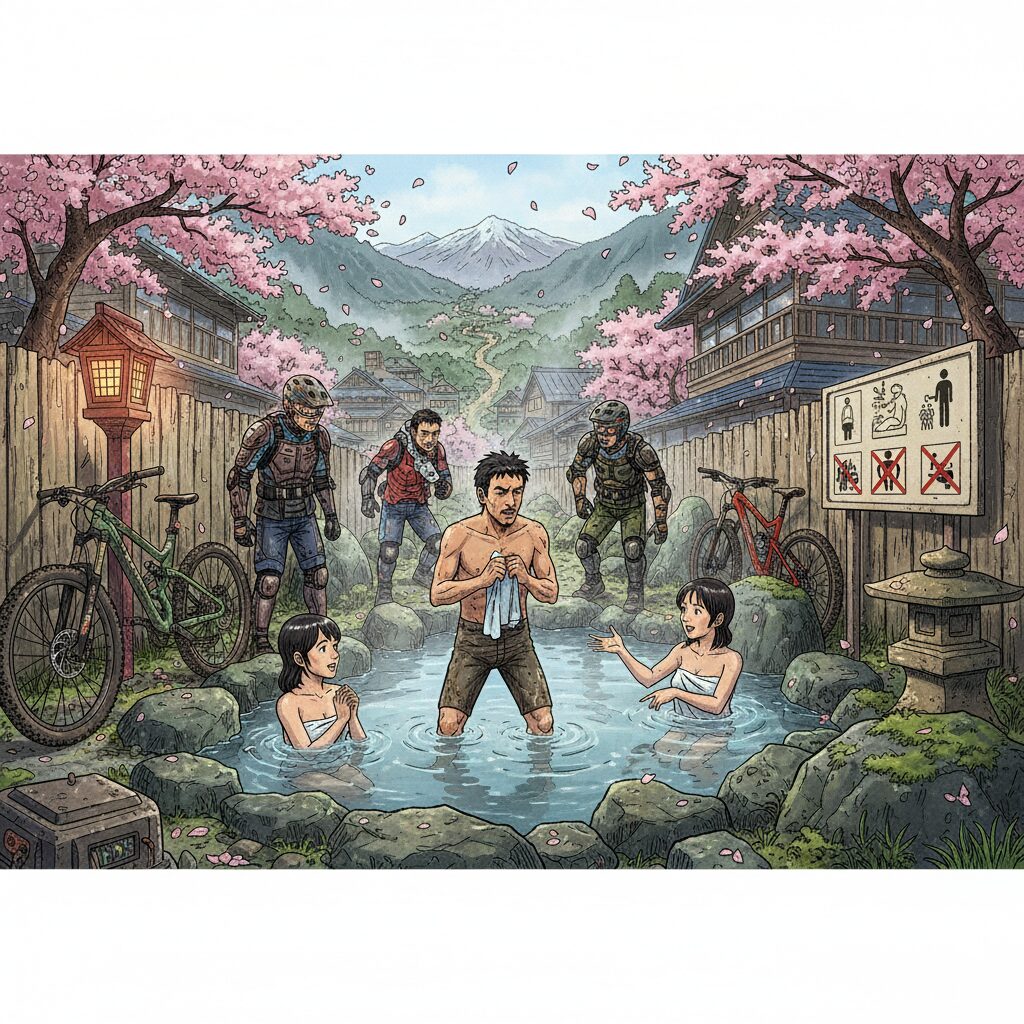
Alright, let’s dive into onsen culture, because stepping into a Japanese bathhouse for the first time can feel a bit intimidating. But it’s really simple once you understand the process. First, nearly all onsen are divided by gender, indicated by curtains (noren) with the characters for man (男) and woman (女). Once you’re in the changing room, the rule is straightforward: get naked. It might seem strange at first, but it’s completely normal, and no one is watching you. You’ll receive two towels: a large one for drying off after your bath, which stays in the changing room, and a small one you can bring with you into the bathing area.
Here’s the most important rule: you must wash your body thoroughly before entering the onsen bath. There will be a washing area equipped with small stools, faucets, and showers. Sit down, lather up, and rinse off completely. This is to keep the communal bathwater clean. Once you’re fully clean, you can finally enter the onsen. Ease in slowly, as the water can be very hot. The small towel’s main purpose is modesty while you move between the washing area and the bath. Once in the water, don’t let the towel touch the water. Most people either rest it on their head, a classic style, or leave it on the rocks beside the bath. Now, just relax. No swimming or splashing—just quiet soaking. It’s a meditative experience.
Now for the big question: tattoos. Historically, tattoos in Japan were linked to the yakuza, or organized crime, so many onsen enforced a strict “no tattoos” policy. Times are changing, but the rule still applies in some places, especially older, more traditional establishments. However, the situation is improving. In tourist-friendly areas, many onsen have eased their rules. Some may ask you to cover small tattoos with a waterproof patch. The best option, and a genuinely luxurious experience, is to book a ryokan that offers a kashikiri-buro (a private, reservable onsen) or a room with its own private rotenburo. This guarantees a hassle-free soak and an indulgent experience. My advice is to always check the onsen’s or ryokan’s website beforehand or have your hotel concierge call and inquire. A bit of planning prevents awkward moments and ensures your post-ride relaxation is completely stress-free.
A Perfect Day: The Nozawa Onsen Experience
To give you an authentic sense of what this life entails, let’s take a stroll through a perfect day in Nozawa Onsen, the village that arguably excels the most. You wake up on a soft futon in your room at a family-run minshuku. The shoji paper screens gently diffuse the morning light. Downstairs, a traditional Japanese breakfast awaits you: grilled fish, tamagoyaki (rolled omelet), miso soup, rice, and assorted pickles. It’s the ideal fuel for a day on the mountain. After gearing up, you cycle a short distance to the Nagasaka Gondola, which swiftly carries you and your bike thousands of feet up Mount Kenashi. From the summit, the views of the surrounding Shin-etsu mountains are absolutely breathtaking.
The Nozawa Onsen Ski Resort’s bike park offers something for everyone. You can begin with a warm-up lap on the main downhill course, a long, flowing track with large berms, rollers, and small jumps that winds its way down the entire mountain. The dirt is grippy, the forest a vibrant green, and the ride pure joy. As you gain confidence, you can explore some of the more technical singletrack trails branching off the main route, featuring steeper gradients, rooty sections, and natural obstacles that will challenge even the most skilled riders. You spend the morning doing lap after lap, the gondola making it easy to maximize your downhill time. The thrill of carving a perfect turn with the Japan Alps as your backdrop is unforgettable.
By mid-afternoon, your legs start to feel the effort. You take one last epic ride all the way back into the village. You drop off your bike at the minshuku, grab your small onsen towel, and the second part of your adventure begins: the soto-yu meguri, or public bath tour. Nozawa Onsen has thirteen free public onsen, each maintained by the villagers themselves. Each bathhouse possesses its own unique character, housed in beautiful, traditional wooden buildings that look as though they’ve come straight from a Studio Ghibli film. You start at the iconic O-yu, the largest and most architecturally stunning bathhouse, situated right in the heart of the village. The water here is milky with sulfur and piping hot. Immersing yourself after a hard ride is pure, unadulterated bliss. Your muscles begin to relax instantly.
After your first soak, you wander through the village streets in your yukata. You might stop at the Ogama, the village’s communal open-air kitchen where the hot spring water is so hot it’s used to cook vegetables and onsen tamago (soft-boiled eggs). You grab a few eggs, which have a unique, subtly savory flavor from the mineral-rich water, making them a perfect post-ride, pre-dinner snack. You continue your onsen tour, perhaps visiting a smaller, quieter bath like Juodo-no-yu. The atmosphere is relaxed, local, and genuinely authentic. As evening falls, you return to your minshuku for a multi-course kaiseki dinner. Dish after dish of exquisitely prepared local and seasonal ingredients is served in your room. Think fresh sashimi, mountain vegetable tempura, Shinshu beef hot pot, and locally foraged wild mushrooms. It’s a culinary masterpiece. You eat until you’re full, your body completely relaxed from riding and soaking. You fall asleep on your futon feeling more content and physically satisfied than you have in years. This is the rhythm of life in an onsen village, and it’s absolutely perfect.
Beyond the Bike and Bath: Soaking Up Village Life
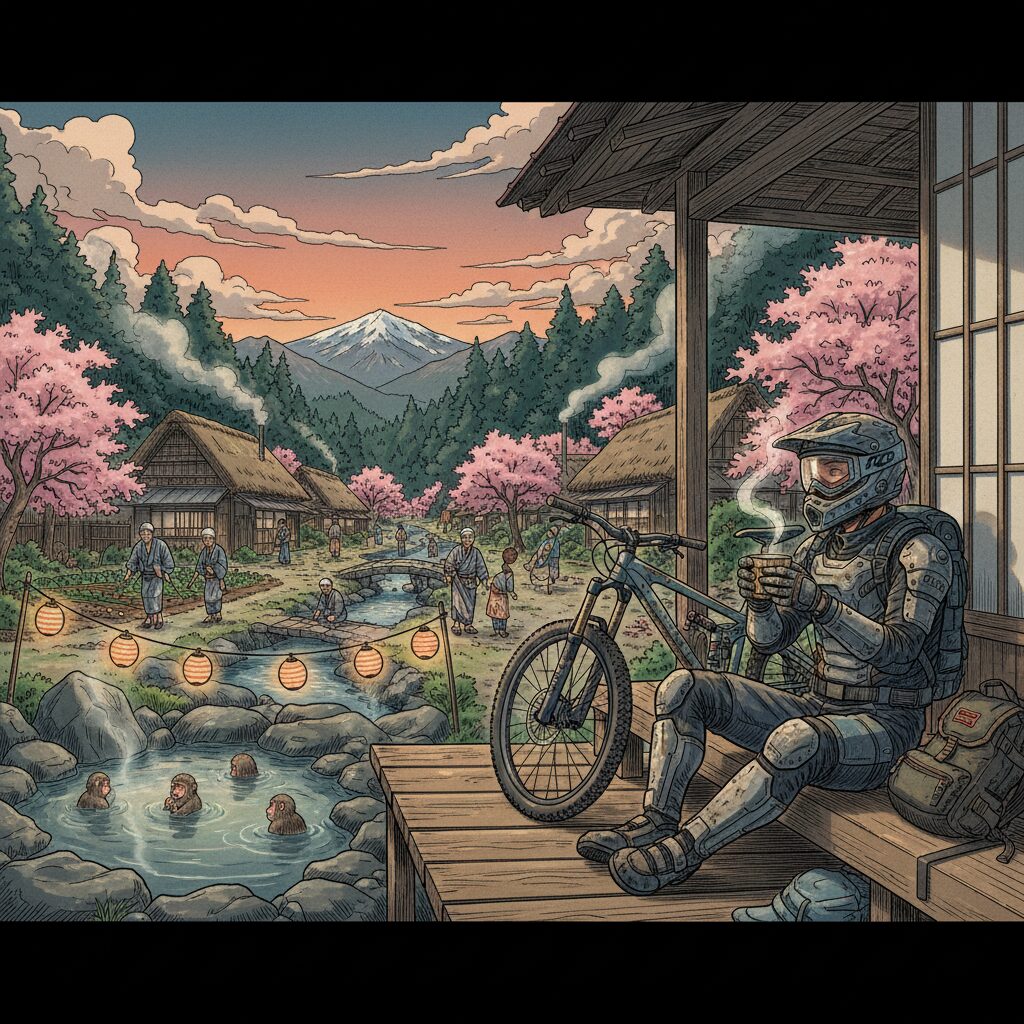
While the ride-and-soak combo is the main attraction, much of the magic of these trips lies in immersing yourself in the life of these small mountain communities. These villages are more than just backdrops for your adventure; they are destinations in their own right. Take some time to wander aimlessly. Explore the narrow alleyways that wind between ancient buildings. You’ll uncover tiny shops that have been run by the same family for generations, selling local crafts, sake, and regional delicacies. In Nozawa Onsen, you’ll find shops offering Nozawana-zuke, the village’s famous pickled mustard greens, a staple at nearly every meal. In other areas, you might discover incredible handmade soba noodles or artisanal miso paste.
Food plays a huge role in the experience. Seek out small, local eateries—a tiny soba shop run by an elderly couple, an izakaya (Japanese pub) bustling with locals, or a stand selling freshly made oyaki, delicious steamed or grilled dumplings filled with sweet red bean paste, pumpkin, or savory vegetables. Sampling these local specialties is a direct way to connect with the culture and the land. Many of these villages also feature small but beautiful temples or shrines. Visiting the local shrine offers a moment of tranquility and a chance to appreciate the spiritual side of Japanese rural life. These are often quiet, peaceful spots surrounded by ancient cedar trees, providing another form of serene escape.
Don’t forget to notice the seasons. While summer is peak season for mountain biking, late spring brings lush, vibrant greenery and fewer crowds. But the true spectacle is autumn, from late September to early November. The mountainsides burst into a riot of fiery reds, electric oranges, and brilliant yellows. This season, known as koyo, is truly breathtaking. Riding through forests of golden larch trees or soaking in a rotenburo overlooking a valley painted in autumn colors creates unforgettable memories. The air is crisp and cool, ideal for both riding and soaking. Each season offers a distinct aesthetic and a unique experience, giving you a reason to return again and again.
The Practical Playbook: Your Trip Logistics
Reaching these mountain retreats is part of the adventure. Typically, the journey begins with taking the world-famous Shinkansen (bullet train) from a major city like Tokyo to the closest main station, such as Nagano or Jomo-Kogen. From there, you’ll usually switch to a local train line or regional bus that climbs up into the mountains. Japan’s public transport system is incredibly efficient and punctual, making navigation surprisingly straightforward. For greater flexibility, especially if you want to explore multiple areas or reach more remote trailheads, renting a car is an excellent choice. Driving in rural Japan is enjoyable; the roads are well-kept, and traffic is light. Just make sure to obtain an International Driving Permit before leaving your home country.
Timing is crucial. The main mountain biking season generally runs from May through October. June can be a bit unpredictable due to the rainy season (tsuyu), though it doesn’t rain every day. July and August are hot and humid in the lowlands but typically pleasant in the mountains, offering a great escape from city heat. September and October are prime months, bringing cooler weather, less rain, and stunning autumn foliage. When packing, think layers, as mountain weather can change rapidly. Bring your usual riding gear, along with a lightweight waterproof jacket, even if the forecast looks clear. Off the bike, comfortable clothes for exploring the village are essential. A quick-dry pack towel is a smart choice for onsen hopping. While Japan is increasingly modern, in these small rural towns “cash is king.” Many small inns, shops, and restaurants might not accept credit cards, so always carry a reasonable amount of yen.
Finally, a little knowledge of the language goes a long way. You don’t need fluency, but learning a few basic phrases will smooth your interactions and show respect for local culture. Simple words like “Konnichiwa” (Hello), “Arigato gozaimasu” (Thank you very much), and “Sumimasen” (Excuse me) are greatly appreciated. Don’t hesitate to use translation apps on your phone; people are generally patient and willing to help. Embrace the small challenge of navigating a different culture—it’s all part of the experience and what makes traveling here so rewarding.
This is more than just a mountain bike trip. It’s an immersion into a deeper, quieter, and more traditional side of Japan. It’s a journey that challenges your body on the trails and soothes your soul in the water. It’s about the excitement of discovery—whether that’s finding a hidden trail, a perfect onsen, or the best bowl of noodles you’ve ever tasted. So, if you’re seeking an adventure that’s more than just adrenaline, one that offers a genuine connection to place and culture, start planning now. The trails are waiting, and the onsen are steaming. It’s time to earn your soak.