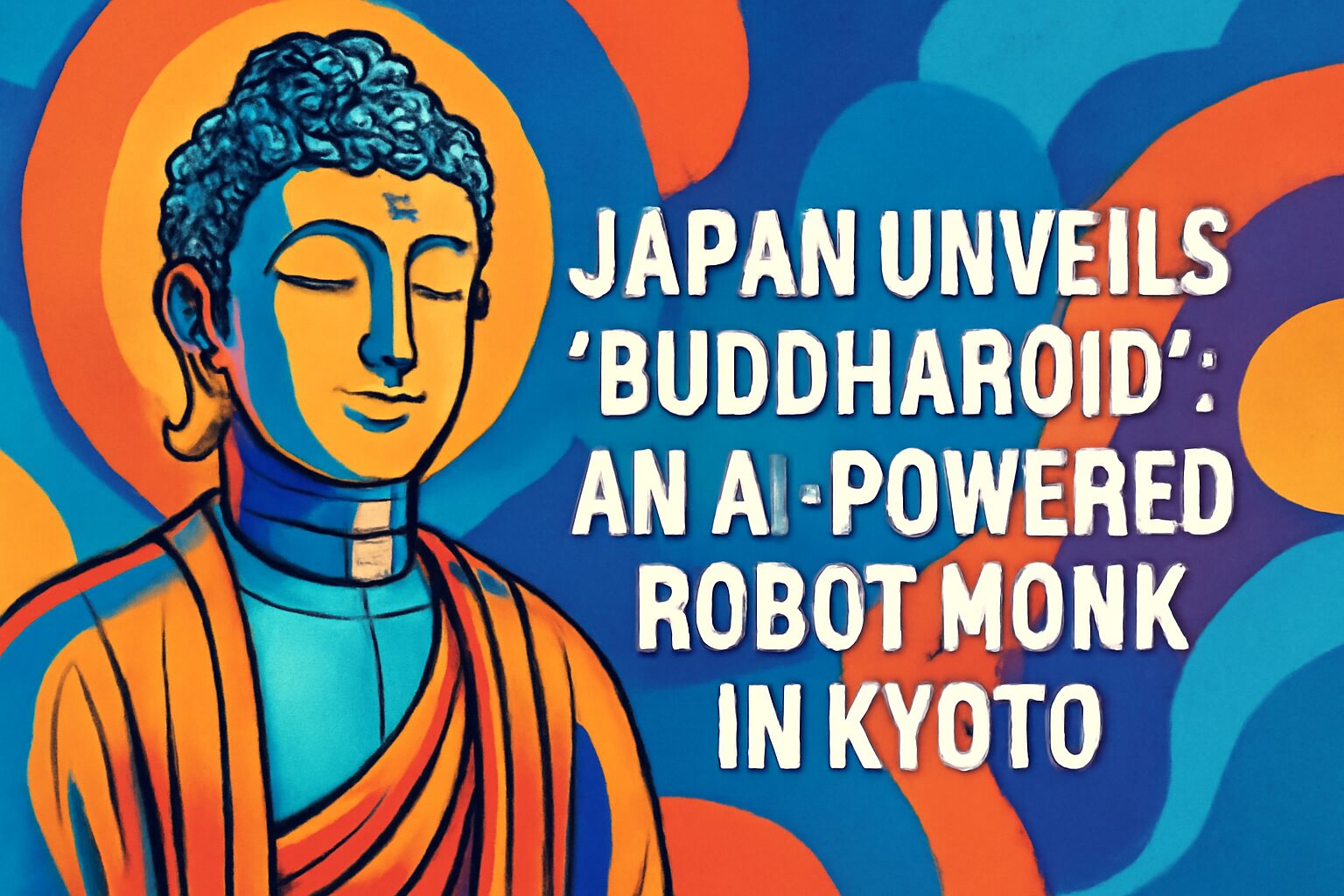
In the ancient city of Kyoto, a place renowned for its serene temples and timeless traditions, a groundbreaking innovation is capturing global attention. A local temple, in a bold fusion of spirituality and technology, has introduced ‘Buddharoid’, an AI-powered robot monk designed to share the wisdom of Buddhist philosophy with a new generation.
The Intersection of Ancient Faith and Modern Crisis
This development is not merely a technological curiosity; it is a direct response to some of Japan’s most pressing societal challenges. Japan is one of the world’s most rapidly aging nations, with nearly 30% of its population aged 65 or over. This demographic shift has profound consequences, particularly in rural areas where many temples are located.
It is estimated that up to 40% of Japan’s temples could face closure in the coming decades due to a lack of succeeding monks. Younger generations are often moving to cities for work, and the demanding lifestyle of a monk holds less appeal. This has created a spiritual vacuum in many communities, leaving temples without a guide and locals without a spiritual focal point. In this context, technology is being explored not as a replacement for human connection, but as a potential bridge to preserve and transmit ancient knowledge.
Meet Buddharoid: The Monk of the Future
Developed in collaboration with researchers from the prestigious Kyoto University, Buddharoid is more than just a machine. Its AI has been trained on an extensive library of Buddhist scriptures, including the Heart Sutra and other key texts. This allows it to engage in sophisticated spiritual conversations, answering questions from visitors about the nature of existence, suffering, and the path to enlightenment.
Beyond conversation, Buddharoid can perform traditional rituals, chant sutras, and offer blessings. Its purpose is twofold: to assist with the duties in understaffed temples and to make the profound, often complex, teachings of Buddhism more accessible and engaging for visitors, especially young people and international tourists who may not be familiar with the faith.
Future Projections and Global Impact
The introduction of Buddharoid is poised to create ripples far beyond the temple gates.
A New Landmark for Tech-Savvy Travelers
For international visitors, Buddharoid offers a uniquely Japanese experience—the seamless blend of deep-rooted tradition and cutting-edge robotics. Kyoto may soon find itself with a new must-see attraction, drawing tourists who are curious to witness this AI monk in person. It represents a living example of how Japan is navigating its future while honoring its past, making it a powerful symbol for the “Japaan” travel experience.
A Catalyst for Debate and Adaptation
Naturally, the concept of a robot monk sparks debate. Traditionalists may question whether a machine, devoid of human consciousness and life experience, can truly convey spiritual depth. Can an algorithm offer genuine compassion? These questions are now being actively discussed within Japan’s religious communities.
However, proponents argue that the core purpose is to disseminate the teachings. If an AI can deliver the Buddha’s words accurately and tirelessly to a wider audience, it serves a valuable purpose. This could inspire other religious traditions around the world facing similar succession issues to explore technological solutions.
Buddharoid is more than a novelty. It is a bold experiment at the crossroads of faith, demographics, and technology. It stands as a testament to Japan’s innovative spirit and offers a glimpse into a future where the lines between the sacred and the synthetic may begin to blur. For any traveler to Kyoto, a visit to see Buddharoid is not just a photo opportunity, but a chance to witness the future of tradition unfold.