You’ve seen the videos. The TikToks of someone silently grilling a perfect slice of A5 wagyu on a personal grill. The vlogs of a solo traveler exploring Kyoto’s serene temples, completely absorbed in the moment. The endless shots of people lining up, party of one, at a legendary ramen joint. And if you’ve been to Japan, you’ve felt it on the ground. People are everywhere, yet so many of them are completely, comfortably, and unapologetically alone. From a Western perspective, this can be a real head-scratcher. Our cultures often frame dining alone as a bit sad, a sign that you couldn’t find a friend. Traveling solo is an adventure, sure, but for many, it’s a second choice to a trip with a partner or crew. In many places, being alone in public is seen as a problem to be solved. But in Japan, it’s not just normal; it’s a fully-fledged, thriving culture with its own name: Ohitorisama. So what’s the deal? Is Japan a nation of loners, grappling with a quiet crisis of connection? Or have they unlocked a new level of personal freedom that the rest of us are still sleeping on? The answer is way more complex and fascinating than a simple yes or no. It’s a story about demographics, work culture, urban design, and a massive generational shift in what it means to be happy. This isn’t about loneliness. This is about liberation. Let’s spill the tea on the world of Ohitorisama.
This culture of solo enjoyment is part of a broader shift in Japanese social life, which can also be seen in the quiet evolution of its traditional public bathhouses, or sentō.
Decoding Ohitorisama: It’s Not “Loner,” It’s “Pro Solo Player”
First, let’s clarify the vocabulary, because words are important, especially in a high-context culture like Japan. The term “Ohitorisama” is a vibe check in itself. It’s made up of three parts. “O” is an honorific prefix, the same one used in words like o-cha (tea) or o-kane (money). It instantly elevates the word, adding a layer of politeness and respect. “Hitori” is the simple part, meaning “one person.” Lastly, “sama” is a highly respectful suffix, a step above the usual “-san.” You use “sama” for customers, deities, and royalty. So, Ohitorisama doesn’t just mean “one person.” It more accurately translates to something like “honorable solo individual” or “esteemed party of one.” When a waiter uses this term, they’re not pitying you; they’re formally recognizing you as a valued customer who is dining alone.
This is vastly different from the slang term botchi, meaning “loner.” Botchi carries a negative, somewhat pitiable connotation. It suggests isolation, exclusion, and a lack of social connection that isn’t by choice. A student eating lunch alone in a bathroom stall because they have no friends is botchi. An adult confidently entering a high-end sushi restaurant, sitting at the counter, and ordering the omakase for one is Ohitorisama. The key difference is agency. Ohitorisama culture is about the conscious, deliberate decision to spend time alone. It’s not a social failure; it’s a successful act of self-care. It’s about being the main character in your own life and choosing that for this meal, this movie, or this trip, the only company you need is yourself. This mindset marks a radical shift from group-oriented thinking and represents a quiet yet powerful revolution in Japanese society. It’s a statement that your own company is not only sufficient but can be a source of deep pleasure and peace.
The Origin Story: How Japan Became the Land of the Solo Stan
This cultural phenomenon didn’t emerge overnight. The rise of Ohitorisama is the result of a perfect storm of social, economic, and demographic shifts that have been developing for decades. It’s a deeply pragmatic response to the realities of modern Japanese life. To truly understand it, you need to examine the statistics, the soul-crushing work culture, the design of its cities, and a significant philosophical shift among younger generations.
The Demographic Data Dump
You can’t grasp modern Japan without looking at the numbers, and the numbers shout “solo.” For decades, Japan’s population has been aging and shrinking, while traditional family structures have undergone rapid change. The most crucial statistic driving the Ohitorisama trend is the surge in single-person households. According to national surveys, these now account for nearly 40% of all households nationwide, with an even higher percentage in megacities like Tokyo. This doesn’t just include twenty-somethings living alone before marriage—this group also encompasses career-driven professionals in their 30s and 40s who have postponed or chosen not to marry, divorcees, and a large and growing elderly population, especially women who have outlived their partners. When tens of millions are living, eating, and making purchasing decisions alone, the market must respond. Businesses across all sectors realized that catering to solo consumers was not a niche market but the main one. This created a powerful feedback loop: the societal reality of living alone pushed businesses to develop products and services for solo individuals, which in turn made solo living easier, more convenient, and more attractive, further normalizing and encouraging it.
The Corporate Grind vs. Personal Peace
Another major factor is Japan’s notorious work culture. While changes are slowly occurring, the stereotype of the overworked salaryman persists for good reason. Long hours, intense pressure, and a strict corporate hierarchy remain realities for many. A key aspect of this culture has been mandatory after-work socializing, especially the nomikai, or drinking parties. These are not just casual hangouts; they’re often seen as extensions of the workday, venues for team bonding and reinforcing hierarchical relationships. The pressure to attend, drink, and perform certain social roles can be utterly draining.
Ohitorisama culture serves as a direct and powerful rebellion against this enforced socializing. After spending ten or twelve hours in a highly structured, group-focused environment, the last thing many want is more obligatory small talk. The desire to clock out and retreat into a personal bubble is overwhelming. Solo activities become a sanctuary. Eating dinner alone lets you enjoy exactly what you want, when you want, at your own pace, without pouring drinks for your boss or enduring office gossip. Visiting a solo karaoke booth provides a way to release the day’s stress without judgment. In this context, choosing solitude isn’t antisocial; it’s an essential act of mental and emotional self-care. It’s about reclaiming your time and energy, drawing a firm boundary between professional duties and personal life. It’s about recharging your social battery to face another day in the corporate machine.
Big City Energy: The Tokyo Effect
Japan’s urban environment is a huge enabler of the Ohitorisama lifestyle. Living in a sprawling, hyper-dense city like Tokyo or Osaka is a unique experience. You are surrounded by millions, yet can feel completely anonymous. This paradox of density is liberating. No one watches or judges you because everyone is absorbed in their own lives. This anonymity creates ideal conditions for solo endeavors.
Moreover, the infrastructure is a solo traveler’s dream. The public transportation system is incredibly efficient and punctual. You can go anywhere, anytime, alone and without hassle. This convenience makes solo adventures easy. Compared to car-dependent suburbs, where solo outings require significant effort, cities favor individual mobility by default. Scheduling is another challenge—coordinating with friends spread across Tokyo with demanding, varied schedules is often a logistical headache. The easiest option is frequently to just go alone. Want to catch a new art exhibit? Visit it on your lunch break. Craving a specific ramen? Hop on a train and be there in twenty minutes. It’s pure pragmatism. The city’s design supports individual action, making solo choices not only feasible but often the most efficient and enjoyable.
The Generational Mood Shift
The final ingredient is a profound change in values, especially among younger Japanese. The postwar generations operated with a collectivist mindset. The group—whether company or family—came first. Individual desires were often sacrificed for group harmony, or wa. Lifetime employment with a single company was ideal, and loyalty was exchanged for stability and belonging. But the economic crash of the 1990s and the ensuing “Lost Decades” shattered this social contract. The promise of lifelong security vanished. Younger generations witnessed their parents’ sacrifices for companies that could no longer guarantee their futures.
This economic disillusionment prompted a major shift in priorities. If the company wouldn’t care for you, you had to care for yourself. Pursuing individual happiness, self-fulfillment, and personal experiences became paramount. The focus shifted from “we” to “me.” This new mindset aligns perfectly with Ohitorisama culture. Spending time and money on oneself is reframed not as selfish, but as a necessary investment in well-being. Combined with the influence of social media, this acts as a cultural catalyst. Instagram, TikTok, and YouTube abound with visually appealing solo journeys, beautifully plated meals for one, and serene solo camping trips. This not only normalizes solo activities but makes them aspirational. It’s a status symbol. It signifies independence, self-sufficiency, and a rich inner life. You’re not alone because you have to be; you’re alone because you choose to be—and you’re having a fantastic time doing it.
The Ohitorisama Playbook: A Field Guide to Japan’s Solo Scene
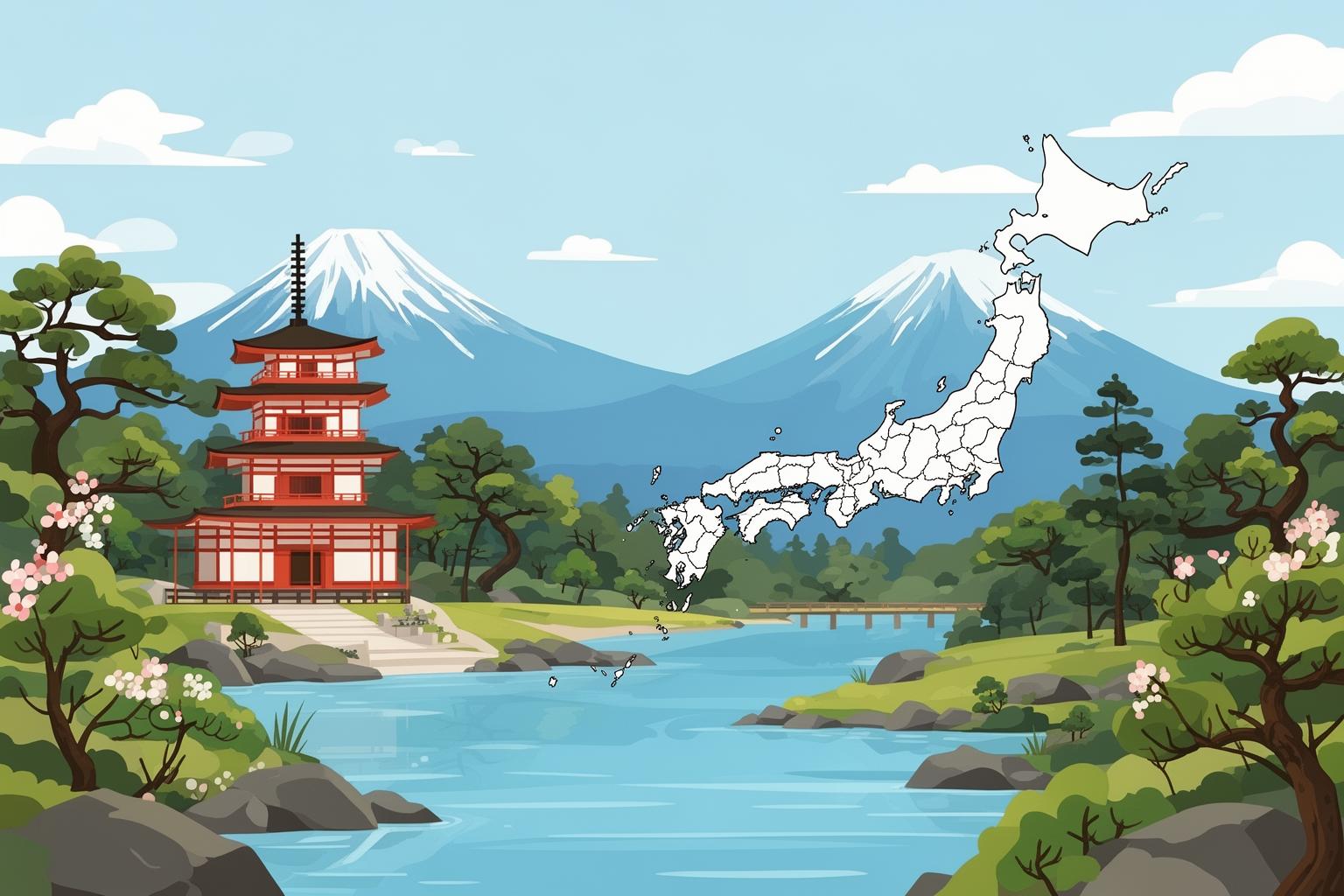
So, what does this solo culture look like in reality? It’s more than just an idea; it’s woven into the everyday fabric of life. A whole ecosystem of businesses has emerged to serve the “party of one,” making solo experiences not only feasible but often more comfortable and enjoyable than group activities. This includes a range of experiences, from quick solo lunches to extended solo vacations.
Solo Dining: A Culinary Journey for One
Food is arguably at the core of Ohitorisama culture, and Japan’s solo dining scene is unmatched. It’s much more than grabbing a lonely bite; it’s a universe of specialized restaurants perfected for eating alone, where the spotlight is entirely on the food and the individual’s experience.
The Ramen Realm: The Original Solo Sanctuary
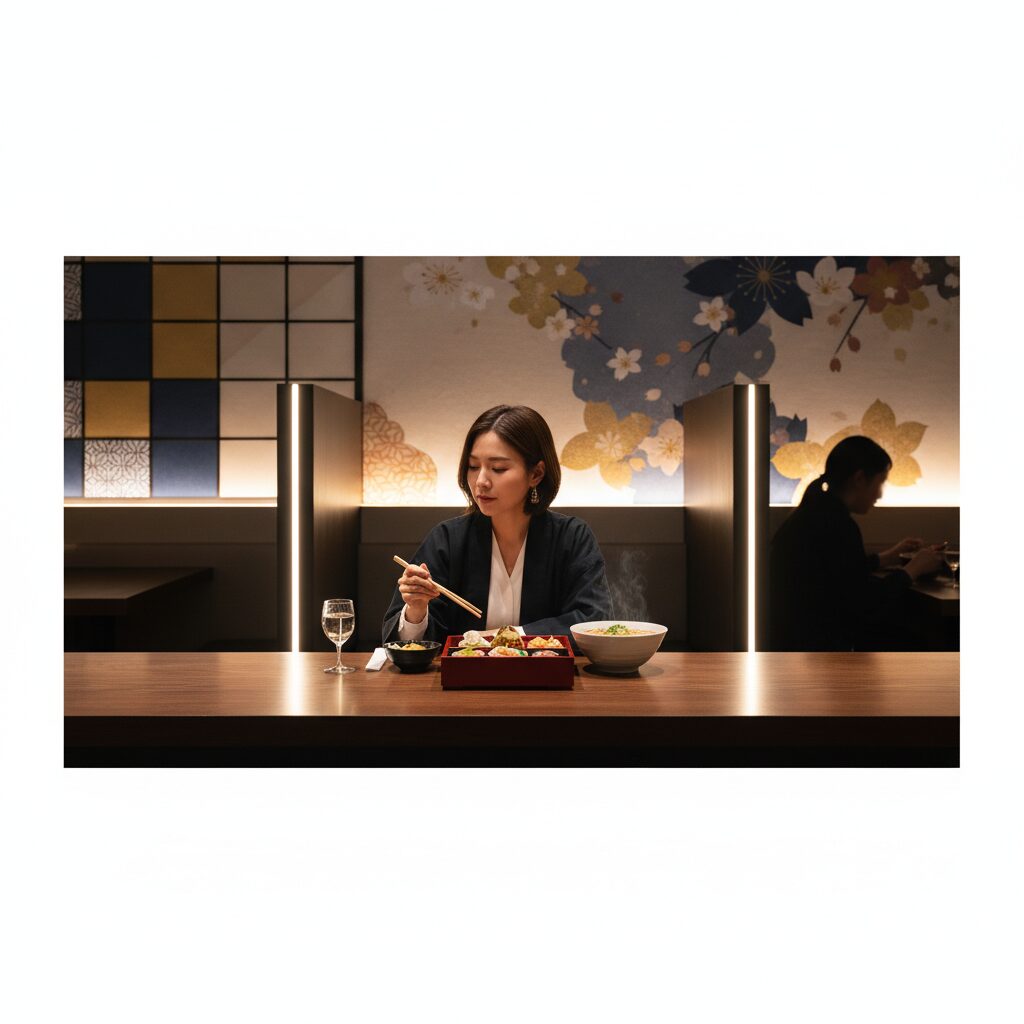
The quintessential solo dining experience is the ramen shop. Famous chains like Ichiran Ramen have refined this into an art form. You begin by buying a ticket from a vending machine (kenbaiki) at the entrance, choosing your ramen, noodle firmness, and toppings in advance. This process removes the need for long conversations with staff. Inside, you’re not seated at communal tables but instead placed at a narrow counter, often partitioned from neighbors. It’s like having a private study carrel for food, a “flavor concentration booth.” A small window in front opens, invisible hands collect your order ticket, and a few minutes later, a steaming bowl is served before the bamboo screen is lowered again. This intimate, focused, almost monastic setup is designed for maximum efficiency and minimal social interaction. You’re not there to socialize; you’re there to have a deep, personal connection with your noodles. No one finds this odd; in fact, being loud and chatty would be out of place.
Beyond the Bowl: The Evolution of Solo Feasting
The solo ramen counter concept has now expanded to nearly every type of Japanese cuisine, even those traditionally enjoyed in groups. The rise of hitori-yakiniku (solo grilled meat) perfectly illustrates this. Places like Yakiniku Like are built around the solo diner, offering personal smokeless grills embedded in the counter, tablets for ordering individual cuts of premium meat, and personal sets of sauces. You grill your meat just how you like, at your own pace, with no need to negotiate what to order or who cooks what. It’s pure meat-grilling freedom. This trend has extended to shabu-shabu (hot pot), where individual induction burners and pots are available. Even conveyor belt sushi (kaiten-zushi), a pioneer in solo dining, has been optimized, with many chains offering direct-to-seat tablet ordering and express delivery lanes bringing plates right to you. Together, these innovations declare: being alone is not an afterthought but the centerpiece. They create a comfortable, judgment-free space focused entirely on savoring the dining experience.
Solo Travel: Your Solo Adventure
Japan stands out as perhaps the best country for solo travel—an essential part of the Ohitorisama movement. This is not only about foreign tourists; domestic solo travel is a huge market. Several factors make Japan the ultimate destination for the individual traveler.
The Safety Advantage
The key enabler is Japan’s renowned safety. With exceptionally low crime rates, the country offers a level of freedom unimaginable in many other places. Solo female travelers, especially, often cite safety as their top reason for traveling alone in Japan. You can walk through major cities late at night without fear, leave your phone unattended in a cafe and likely find it untouched when you return, and generally explore worry-free. This security provides a vital stress relief that allows solo travelers to fully embrace every moment of discovery.
Solo-Friendly Accommodations
The hospitality sector is finely tuned to solo travelers. The backbone is the business hotel chain. APA Hotel, Toyoko Inn, and Dormy Inn are found in every city, typically near train stations, offering countless compact, spotless, efficient, and affordable single rooms. These are tailored for individual travelers, whether for business or leisure. Capsule hotels have also undergone a transformation; once seen as basic crash pads for inebriated salarymen, many are now stylish, modern, even luxurious micro-accommodations appealing to all kinds of travelers. They combine privacy, comfort, and excellent amenities at low prices. Significantly, even traditional ryokan inns, historically aimed at families and groups and often reluctant to accept singles, have adapted. More ryokan now offer special solo traveler plans, catering to those seeking peaceful, personal retreats to enjoy hot springs (onsen), exquisite multi-course kaiseki dinners, and the serene beauty of traditional surroundings, all alone.
Solo Entertainment: No Compromises on Fun
Ohitorisama freedom extends deeply into leisure and entertainment. It’s about indulging your passions without needing to compromise or coordinate with others’ preferences or schedules.
Hito-Kara: The Solo Karaoke Superstar
Karaoke is a beloved national pastime in Japan, traditionally shared with friends or colleagues. Yet, hito-kara (solo karaoke) has surged in popularity. Chains like 1Kara specifically cater to solo singers, with small, soundproof booths outfitted with high-quality microphones, headphones, and recording gear. The appeal is diverse: some use it to practice singing privately, others see it as great stress relief—a place to belt out songs without an audience. Many simply enjoy the pure fun, singing the same anime theme song repeatedly, tackling challenging ballads too embarrassing to sing publicly, or just relaxing with music. There’s no judgment; it’s your own private concert, and you’re the star.
The Solo Camping Renaissance
A newer but rapidly growing trend is solo camping, or solo-campu. Popularized by anime and manga like “Yuru Camp” (Laid-Back Camp), it celebrates connecting with nature on your own terms. It’s not about extreme survivalism but finding a quiet spot, pitching a cozy tent, cooking a simple meal over a fire, and enjoying peaceful outdoor solitude. It satisfies a deep craving for self-reliance and tranquility, offering an escape from digital noise and urban chaos. The market has responded with a vast selection of lightweight, compact, high-quality gear designed especially for solo campers, making this lifestyle more accessible than ever before.
Cashing In on the Solo Vibe: The Ohitorisama Marketplace
The normalization of Ohitorisama culture has generated a vast and highly lucrative market. Businesses that recognize and cater to solo consumers are flourishing. This goes beyond simply offering a service; it involves crafting an entire economic ecosystem centered on the individual.
Honey, I Shrunk the Groceries
Step into any Japanese supermarket or konbini (convenience store), and you’ll witness the Ohitorisama economy in full swing. The product packaging clearly reflects this trend. Contrary to the bulk-buying habits common in countries like the United States, Japanese grocery stores excel at providing single servings. You can purchase a single banana, a two-pack of eggs, a small salmon fillet perfectly sized for one, or a tiny block of curry roux meant for an individual meal. Vegetables are frequently sold in small, pre-chopped portions, and bread comes in half-loaves. This approach prioritizes convenience and waste reduction for the millions living alone. The ready-made meal aisle is a world of its own, offering a remarkable variety of premium bento boxes, onigiri rice balls, and other dishes that deliver a quick, tasty, and balanced meal for one.
Marketing the “Me-Time” Dream
The language used in marketing these products and experiences is highly revealing. Companies don’t present solo consumption as a consolation; rather, they frame it as an act of indulgent self-care. A popular and compelling marketing phrase is jibun e no gohoubi (自分へのご褒美), meaning “a reward for myself.” That small, pricey piece of cake isn’t just a lonely dessert; it’s a gohoubi for enduring a challenging week at work. That solo trip to a hot spring isn’t a sign of having no travel companion; it’s a gohoubi to refresh one’s mind and body. This branding strategy is brilliant. It turns activities that could be stigmatized into aspirational lifestyle choices, giving people permission to treat themselves and redefines solo time not as loneliness but as an abundance of self-respect. This positive messaging has been key in making Ohitorisama not only socially acceptable but also culturally trendy.
The Final Take: Loneliness or Next-Level Freedom?
Returning to the original question: Is the rise of Ohitorisama a sign of a lonely, disconnected society? To be clear and honest, Japan does indeed face serious challenges related to social isolation. The phenomenon of hikikomori (prolonged social withdrawal) is well-documented, and the tragic reality of elderly people dying alone (kodokushi) exists. These complex issues stem from economic difficulties, mental health struggles, and the weakening of traditional family support systems.
However, it is a fundamental error to confuse these societal problems with the conscious, deliberate, and empowering choice represented by Ohitorisama. They are entirely different. Ohitorisama is not forced isolation; it is chosen solitude. It is not about a lack of ability to connect with others; it is about the capacity to connect deeply with oneself. This culture emerges from a unique combination of factors: a dense urban environment, demanding work life, a safe society, and a demographic trend toward individualism. It symbolizes the development of an essential life skill: the art of enjoying one’s own company.
In many Western cultures, there is an implicit pressure to be constantly social, and public solitude is often met with suspicion or pity. What Japan’s Ohitorisama culture offers is an alternative perspective. It affirms that being alone is a valid, respectable, and even desirable state of being. The society has built both social and commercial infrastructures to support this, creating an environment where individuals can move fluidly between communal and solitary spaces without friction or judgment. It is a quiet, pragmatic revolution of one, reflecting a culture that has found a way to make room for the individual amid the crowd. It is not about rejecting others, but about fully embracing the most important person in your life: yourself.