Yo, what’s the vibe? Keiko here, coming at you straight from the concrete jungle of Tokyo. So, let’s spill the tea on something you’ve probably seen on your feed: the Japanese vending machine. It’s iconic, right? A glowing beacon of convenience on literally every street corner, slinging everything from hot coffee to cold green tea. It’s part of the wallpaper of Japan, a symbol of our 24/7, hyper-efficient culture. But that’s the basic tourist-level take. We gotta go deeper. I’m not talking about the shiny, branded machines you see outside Shibuya station. I’m talking about the weird ones. The slightly sus, low-key beat-up machines tucked away in a quiet residential alley in Setagaya or under some random train tracks out in Chiba. The ones filled with drinks you’ve never heard of, with faded labels and maybe even a hand-drawn sign taped to the front screaming “ALL 100 YEN!” You stare at it, confused. Is this a glitch in the matrix? Are these drinks even safe? Why does this one look like… fermented pear and basil soda? And that’s the question, right? You’re wondering, “Why is Japan like this?” Is this just random chaos, or is there a system behind the madness? Here’s the alpha: it’s not a bug, it’s a feature. Think of it less like a convenience store and more like a gacha game. Each 100-yen coin is your pull, and you’re hunting for a legendary Pokémon. That bizarre, unknown can of juice isn’t a mistake—it’s a rare spawn. It’s a whole underground culture of low-stakes gambling and urban treasure hunting, and it tells you more about modern Japan than any shiny tourist brochure ever could. This isn’t just about grabbing a drink. It’s about the thrill of the hunt, the story behind the can, and why our society gets a kick out of turning the most mundane daily act into a game of chance. This is the real Japan, the one that lives in the weird, wonderful, and sometimes questionable spaces between the hyper-curated perfection. It’s a vibe, and if you know, you know. Let’s get into it.
This thrill of the hunt mirrors the unspoken teamwork found in Japan’s silent Pokémon GO raids, where community forms without a word.
The Vending Machine Ecosystem: It’s a Whole Mood
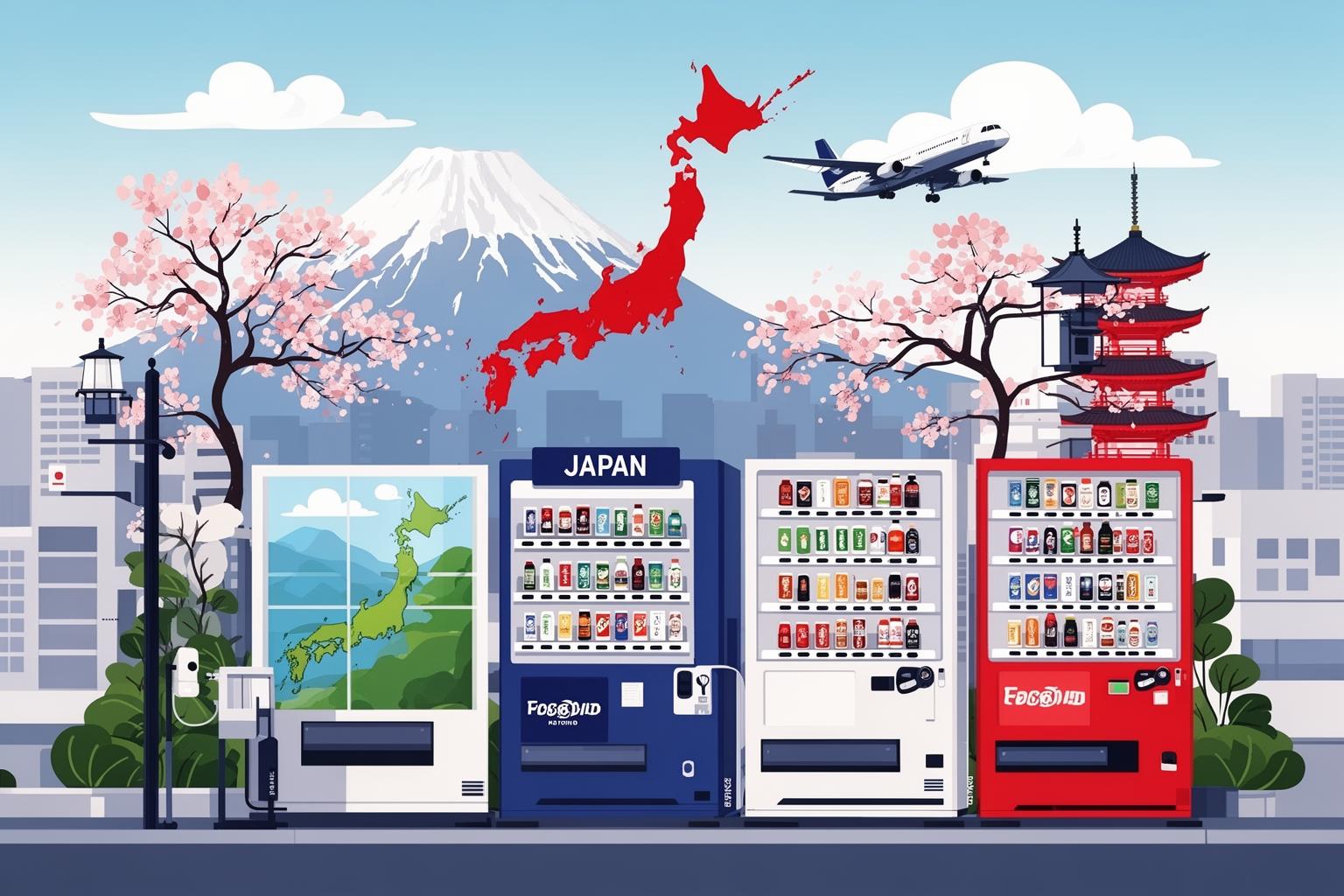
Before we even start discussing the hunt for rare finds, you need to understand the world these machines inhabit. It’s a whole ecosystem, a complex network of corporations, small-time hustlers, and logistical ingenuity that keeps everything running. It’s not just a box dispensing drinks; it’s a tiny, automated storefront with its own economy, rules, and culture. Once you grasp that, the existence of a mysterious melon cream soda begins to make much more sense. This context is the foundation for the entire gacha game. Without this system, you’d simply have rows of the same old boring coke and water. The chaos emerges from the order.
A Quick History Recap: From Functional to Funky
Japanese vending machines didn’t start out cool. Their origin is quite practical. In post-war Japan’s high-growth era, a time of rapid economic rebuilding and urbanization, cities were booming, and everyone was working hard. There was huge demand for labor-saving, automated solutions across the board. Japan’s reputation as a very safe country with low crime meant you could leave a box full of cash and goods on a dark street corner and expect it to remain untouched by morning. This combination of dense population, demand for convenience, and high societal trust created the perfect environment for vending machines to skyrocket in popularity. Initially, they offered basics like cigarettes and tickets. Then beverage giants like Coca-Cola, Suntory, and Kirin entered the scene, taking things to the next level. They perfected technology that could serve both hot and cold drinks from the same machine. This was revolutionary. Suddenly, you could grab a hot can of coffee on a freezing winter morning or an ice-cold tea during humid summer days, any time, day or night. This cemented the vending machine as essential infrastructure, not just a novelty. But as the market became saturated, competition pushed companies to get creative. That’s when vending machines started to get funky. They introduced corn potage soup, sweet red bean soup (oshiruko), and even hot dashi broth in cans. They pushed the boundaries of what vending machines could offer, laying the groundwork for the legendary Pokémon drinks we seek today. The lesson was clear: people will buy weird stuff from a machine if it’s convenient enough.
The Unseen Hand: Who Actually Stocks These Machines?
Here’s the real scoop. You might assume a machine branded with a big Suntory logo is owned, operated, and stocked by Suntory itself. That makes sense, but it’s not the whole story. While big beverage corporations operate many machines, a large portion of the market is managed by a network of independent operators—often small local companies or even sole proprietors who own or lease the machines under contract to stock them. Think of them like franchisees with far more freedom. This vast, decentralized network of people drives around in small trucks restocking machines. These route sales drivers are the secret heroes—or villains, depending on what you get—behind the story. They decide on a day-to-day basis which products fill those empty slots. Drivers for major brands follow strict stocking rules. Yet independent operators enjoy much more flexibility. Their main goal is maximizing profit for each machine on each street. While they might be required to carry certain core items, many slots are discretionary, allowing them to choose what to stock. This is where the magic happens. Perhaps they receive a call from a distributor with a pallet of discontinued Fanta at a steep discount, or a new small beverage company offers some cases of their latest energy drink for free to boost exposure. The driver thinks, “If I buy this for 20 yen a can and sell it for 100, that profit margin beats standard Coke.” So, it goes in. These drivers are the curators of chaos, their economic incentives fueling the surprising variety and randomness we see. They play a constant game of supply and demand, risk and reward, right there on the street. That unusual drink isn’t there because a corporate marketing team planned it. It’s there because a guy named Tanaka-san, with a truck and a route in West Tokyo, scored a great deal last Tuesday. That unseen hand—the human element in this automated world—makes the whole treasure hunt possible.
The “Legendary Pokémon” Phenomenon: Decoding the Rare Drinks
Now that you understand the backstage logistics, let’s move on to the main attraction: the drinks themselves. What are these enigmatic cans and bottles? Where do they originate? They aren’t just random mixtures. Each category of rare drink has its own background story and reason for existing. Knowing these categories is like having a Pokédex for the vending machine universe. It helps you recognize what you’ve discovered and appreciate the unique tale behind its presence in this random metal box before you. It turns the experience from simply “ooh, strange drink” to “aha, this must be a regional exclusive from Hokkaido that somehow landed here!” It’s about connoisseurship and understanding the game you’re playing.
The Test Market in a Can: Corporate Field Research
This is one of the most fascinating and high-concept sources of rare drinks. Major beverage companies are always developing new products, and some of them are… quite out there. We’re talking truly experimental flavors. Before committing to a full-scale, nationwide launch — with all the marketing and production expenses involved — they need to test the market. Where do they do this? You guessed it. They produce a very small batch of a new item—like a “Sparkling Soy Sauce & Yuzu” soda—and distribute it to a handful of vending machines within a very specific, limited area. It might be just in office buildings around Shinjuku or only in residential neighborhoods of Kichijoji. There’s no large ad campaign, no announcement. They simply release it into the wild and monitor sales data. How quickly does it sell? Is it more popular in the morning or evening? Does it sell better next to a classic tea or a sweet juice? It’s the most direct and cost-effective market research imaginable. If the drink flops, they pull it, and it vanishes forever, having existed only in a few dozen machines for a few weeks. But if you were one of the lucky few to find and try it, you effectively caught a Mewtwo. You experienced a product that 99.9% of the country will never even know existed. These are the true legendaries — the ones that become myths whispered on Japanese social media. Finding one is a peak IYKYK moment.
Regional Exclusives: The Geographic Shinies
Japan has a deep obsession with regionality. Every prefecture, city, and even small town has a famous local product or specialty known as ‘meibutsu.’ This plays a big role in our gift-giving and travel culture called ‘omiyage.’ You don’t just visit Hokkaido; you visit Hokkaido and bring back Shiroi Koibito cookies and Yubari Melon-flavored treats for your friends and colleagues. This obsession naturally extends to drinks. Numerous beverages are produced and sold exclusively within certain regions. Aomori boasts countless apple-based sodas and ciders. Shizuoka, the heart of green tea country, offers special high-grade bottled green teas you can’t find elsewhere. Setouchi features a range of drinks made with local citrus fruits. These are like region-locked Pokémon. Normally, you’d have to travel there to find them. But thanks to quirks in the Japanese distribution system, they sometimes escape into the wild. A Tokyo distributor might buy a surplus pallet of Shikoku-exclusive mikan orange juice. Or a vending machine operator originally from Hiroshima might order a case of cider from his hometown to sell in his Tokyo machines just for fun. When you come across one of these, it’s like spotting a Tauros outside North America. It’s a geographic anomaly—a small taste of a distant region that somehow made its way to your corner street. It’s a reminder of the incredible diversity of products across this country, most of which remain completely under the mainstream radar.
The Ghosts of Seasons Past: Discontinued Drinks and Overstock
This is perhaps the largest source of strange vending machine finds. Japanese marketing revolves heavily around seasonality and limited-time offers. It’s a relentless cycle. Spring arrives, and BAM, everything is sakura or strawberry flavored. Summer offers mint, watermelon, and salty litchi. Autumn showcases chestnut, sweet potato, and pear. Winter brings rich chocolate, ginger, and yuzu. Companies launch these special seasonal editions with great fanfare, produce massive batches, and sell them for about two to three months. But what happens when the season ends and a warehouse still holds “Winter Wonder Snow Mint Milk Tea”? It can’t be sold in major supermarkets anymore; they’ve already moved on to promoting the new spring flavors. That’s where the secondary market steps in. This leftover stock—perfectly good but no longer viable in the primary market—is sold at deep discounts to clearance wholesalers and, you guessed it, independent vending machine operators. So when you find a can with a Christmas-themed design in the middle of May, it’s not a time-traveling drink. It’s a ghost. It’s a remnant of a past marketing campaign, a product living on borrowed time. These are the Fossil Pokémon of the beverage world. They echo a bygone season, offering a taste of a moment long passed. It’s a form of delicious archaeology, and it’s the most common kind of treasure you’ll uncover in those 100-yen machines.
The 100-Yen Machine: The Ultimate Safari Zone
A special mention goes to the 100-yen machine. Not all vending machines embrace the gacha game, but the 100-yen ones are high-stakes, high-reward arenas. These machines fully commit to the treasure-hunting business model. Their whole appeal is variety and value. They are almost always operated by independent vendors who have mastered the art of sourcing inexpensive drinks. They are the ultimate destination for all the categories just discussed: failed test market products, out-of-region exclusives, and the ghosts of seasons past. Their inventory is a rapidly changing kaleidoscope of oddities. One day you might find obscure energy drinks and vegetable juices; a week later, those will be gone, replaced by a strange assortment of Korean sodas and canned coffees from brands you’ve never seen before. These machines are the Safari Zone. You know you’ll find something unusual; you just don’t know what. They are a deliberate curation of the uncurated—a celebration of the cast-offs and B-sides of the Japanese beverage industry. They thrive on the customer’s adventurous spirit. People don’t visit a 100-yen machine for their familiar, reliable favorites. They go for the thrill of the unknown. It’s a destination and represents the gacha mentality in its purest, most distilled form.
The Cultural Vibe: Why We’re Here For the Vending Machine Gacha
So, we’ve covered the logistics and the drink categories. But the final—and perhaps most important—question remains: why do we care? Why does this whole phenomenon resonate so profoundly with people here? It’s not merely about scoring a cheap drink. There’s a deeper cultural psychology at work. This vending machine hunting craze taps into essential elements of modern Japanese culture, from our love of games to our philosophical appreciation for fleeting moments. It’s a small-scale expression of broader national vibes. Grasping this is crucial to understanding why something so simple can blossom into such a cherished subculture.
It’s All About the ‘Gacha’ Mentality
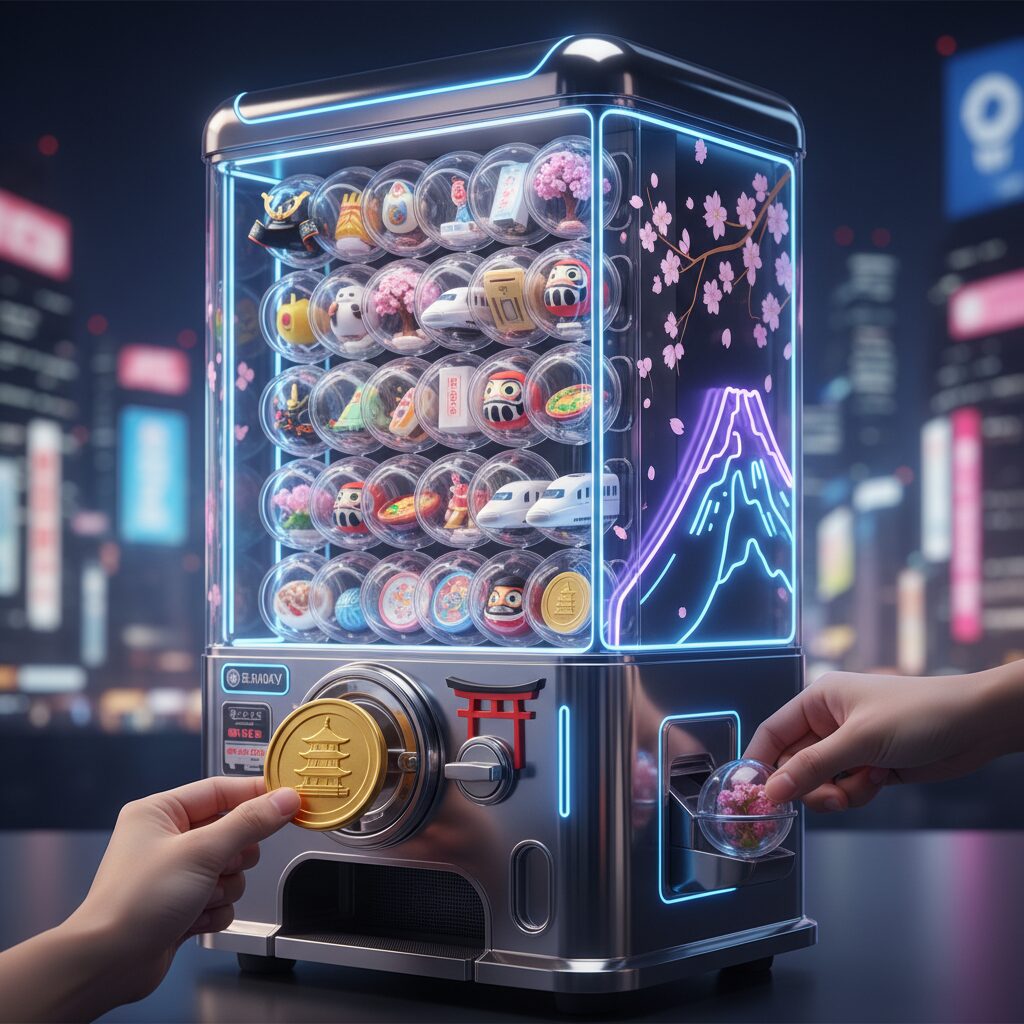
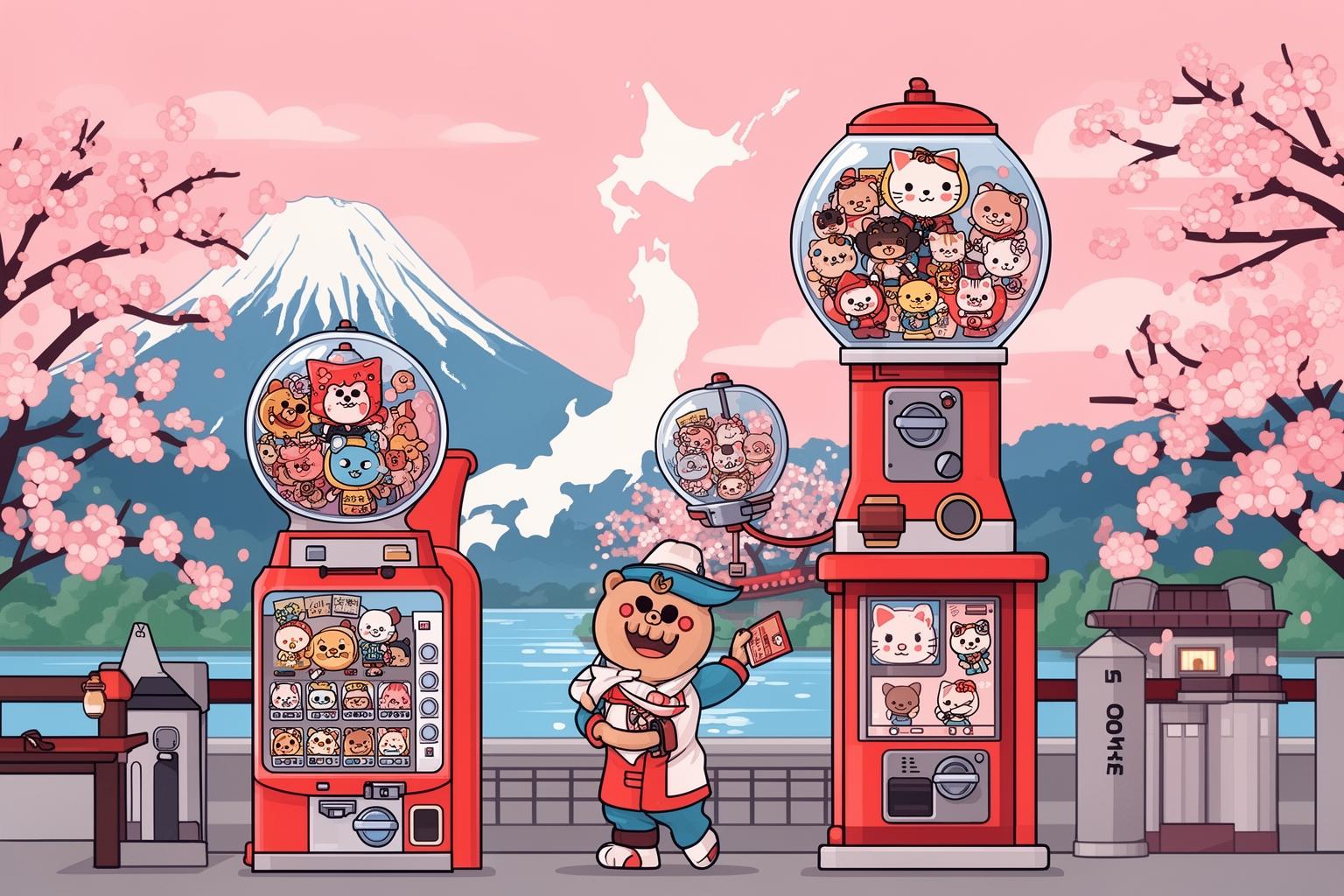
The most direct analogy—and the one that inspired its name—is the ‘gacha’ mechanic. Gacha, named after the sound of a toy capsule machine turning (‘gacha-pon’), is a foundation of Japanese play culture. You pay a small, fixed price for a random chance at an item, some common and others extremely rare. Originating with capsule toys, it has now dominated mobile gaming, where players spend money hoping to pull rare characters or items. This mechanic is ingrained in the psyche of anyone raised here. We know the thrill of the random reward. The vending machine gacha applies the exact same principle to real life. Your 100 yen is the credit; the button press is the ‘pull’; the clunk of the can dropping is the reveal. The dopamine rush when you discover it’s not just a common oolong tea but a rare ‘Hokkaido-only Corn & Butter Soda’ mirrors the joy of landing an SSR character in your favorite game. It’s a low-stakes gamble. The worst case? A drink you don’t love, for just 100 yen (under a dollar). The best? Finding a new favorite, a legendary gem, plus a great story to share. People literally go ‘hunting’ for these drinks, sharing their discoveries on Instagram and Twitter with hashtags—creating a real-life, nationwide collecting game.
Embracing the Ephemeral: The ‘Ichi-go Ichi-e’ of Beverages
On a deeper level, this entire experience connects to a distinctly Japanese concept: ‘ichi-go ichi-e.’ It roughly translates to ‘one time, one meeting’ or ‘for this time only.’ Originating from tea ceremony traditions, it emphasizes treasuring the unrepeatable nature of each moment. Every gathering, every encounter, is a unique event that will never happen again in exactly the same way. The rare vending machine drink perfectly embodies this idea. That limited-edition, seasonally discontinued, regionally exclusive pear soda you found? It’s a true ‘ichi-go ichi-e’ moment. You will almost certainly never come across that exact drink in that exact machine again. The complex blend of logistical and economic factors that led it to you is so random and chaotic, it feels like a miracle. This elevates the purchase beyond a mere transaction. It becomes a singular, fleeting experience. You’re savoring a moment that can’t be replicated. This stands in stark contrast to much of Western consumer culture, which often emphasizes consistency, reliability, and the ability to obtain the exact same product anywhere, anytime. We have that too, of course. But alongside it is a profound cultural appreciation for the temporary, the seasonal—the beauty of things that exist precisely because they don’t last. The vending machine gacha is a modern, pop-culture expression of this much older aesthetic and philosophical sensibility.
The Low-Stakes Adventure in a Concrete Jungle
Let’s be honest: modern urban life, especially in a city like Tokyo, can feel highly structured, scheduled, and predictable. You take the same train to work, eat lunch at the same convenience store, walk the same route home. It’s efficient, but it can also feel a bit soul-crushing. There’s little room for spontaneity or discovery. That’s where the vending machine hunt breathes a little spark back into life. It’s a perfect micro-adventure. It’s a socially acceptable excuse to explore a back alley you’ve never been down or to take a new route home from the station. It injects playfulness and exploration into the mundane rhythm of daily routine. It gives you a quest. The city becomes your RPG map, with these quirky vending machines acting as treasure chests. The adventure is accessible to absolutely everyone, completely safe, and costs almost nothing to join. For a generation raised with digital worlds and game narratives, this offers a way to bring that mindset into the physical world. It’s a means of re-enchanting everyday life. And the best part is the social currency it generates. You don’t just drink the weird soda. You snap a photo. You post it online. You tell your friends. The real treasure isn’t just the drink itself; it’s the story, the thrill of the hunt, and the little moment of surprise that breaks up the monotony of your day.
So, Is It Worth the Hunt? The Reality Check
We’ve built up the romance and excitement of the chase, but let’s get real. You’re standing in front of one of these machines, with a 100-yen coin in hand. Should you actually press the button? Is the reality as thrilling as the hype? Like any good game, there are highs and lows. It’s not all about legendary finds. Sometimes, you simply get a common item. So, it’s important to go in with the right expectations and a bit of strategy to boost your fun while reducing the chances of ending up with something truly unpleasant.
The Thrill vs. The Taste: Managing Your Expectations
Let’s be honest for a moment. There’s usually a good reason why a drink has been discontinued or is found only in a 100-yen machine. No joke, many of them are just… not great. That experimental ‘carbonated fish broth’ soda failed for a reason. That seasonal ‘pumpkin spice curry latte’ was perhaps a bit too bold. Part of the game is accepting that you will come across some duds. That’s the risk you take for the possibility of finding a gem. The taste is secondary to the excitement of discovery. If you expect every rare find to be the most delicious thing you’ve ever tasted, you’ll be let down. The real energy in this experience comes from the gamble itself. Sometimes you win and find a new all-time favorite drink you’ll spend ages trying to find again. Other times, you lose and end up with a can tasting like sweet, carbonated grass, but you gain a hilarious story to share. It’s a win-win if you have the right mindset. You must embrace the possibility of failure as part of the fun. The true prize is the experience, not necessarily what’s inside the can.
How to Spot a “Legendary” Machine
If you’re ready to start your own quest, you need to know how to find the ideal hunting grounds. Your average, clean, brightly-lit Coca-Cola or Asahi machine on a busy street isn’t where the good stuff awaits. That’s just the starting zone with all the low-level Pidgeys. You need to find the hidden dungeons. So, what do you look for? First, machines with mixed branding or no major brands at all. If a machine carries drinks from Suntory, Kirin, DyDo, and several other brands you’ve never heard of all together, that’s a great sign. It usually means an independent operator runs it and has freedom in sourcing. Second, look for signs of chaos. Handwritten paper signs taped to the glass showing prices or quirky jokes are a big green flag. Mismatched or faded display cans also suggest the lineup isn’t carefully curated by corporate. Third, price is a key clue. Any machine with many drinks priced at 100 yen or less (80, 70, or the holy grail 50 yen machines) is a guaranteed treasure trove of oddities. Lastly, location matters. Explore less glamorous spots: quiet residential alleys, industrial zones near factories, under rusty train overpasses, or dusty corners of old shotengai shopping arcades. These are the independent machines’ domains, far from prime real estate controlled by big corporations.
The Real Treasure Was the Story All Along
At its core, the Japanese vending machine gacha is about much more than just a drink. It’s a way to connect with the country and its culture on another level. It perfectly illustrates how systems and culture intertwine. The hyper-efficient beverage logistics, paired with a cultural love for novelty, seasonality, and chance, create this beautiful, chaotic, and uniquely vibrant subculture. Participating in it means seeing a side of Japan that’s usually hidden. It reveals that behind the surface of order and conformity, there are weird, wonderful, and unpredictable little systems in action. Chasing these legendary drink Pokémon turns a simple city walk into an adventure of exploration and discovery. The can you end up with is just a souvenir from that micro-adventure. The true prize is the hunt itself—the thrill as you drop your coin, the suspense before the can falls, and the story you take away. It reminds us that even in the most automated and mundane parts of life, there’s room for mystery, surprise, and a little magic. And that, no doubt, is a whole vibe.