Yo, what’s up. It’s Ryo. So you’ve probably seen it, right? Scrolling through your feed, you see these epic shots of Japan – serene temples, massive red torii gates, and people in slick outfits or traditional kimono, tossing coins into a giant wooden box, clapping their hands twice, and bowing. It gives off this majorly spiritual vibe. The immediate thought is, “Wow, are Japanese people super religious?” It’s a fair question. From the outside, it looks like a country deep in devotion. But if you ask most of my friends if they’re “religious,” they’d probably just laugh and say, “Nah, not really.” So what’s the deal? Is it all just for the aesthetic? Is it a performance?
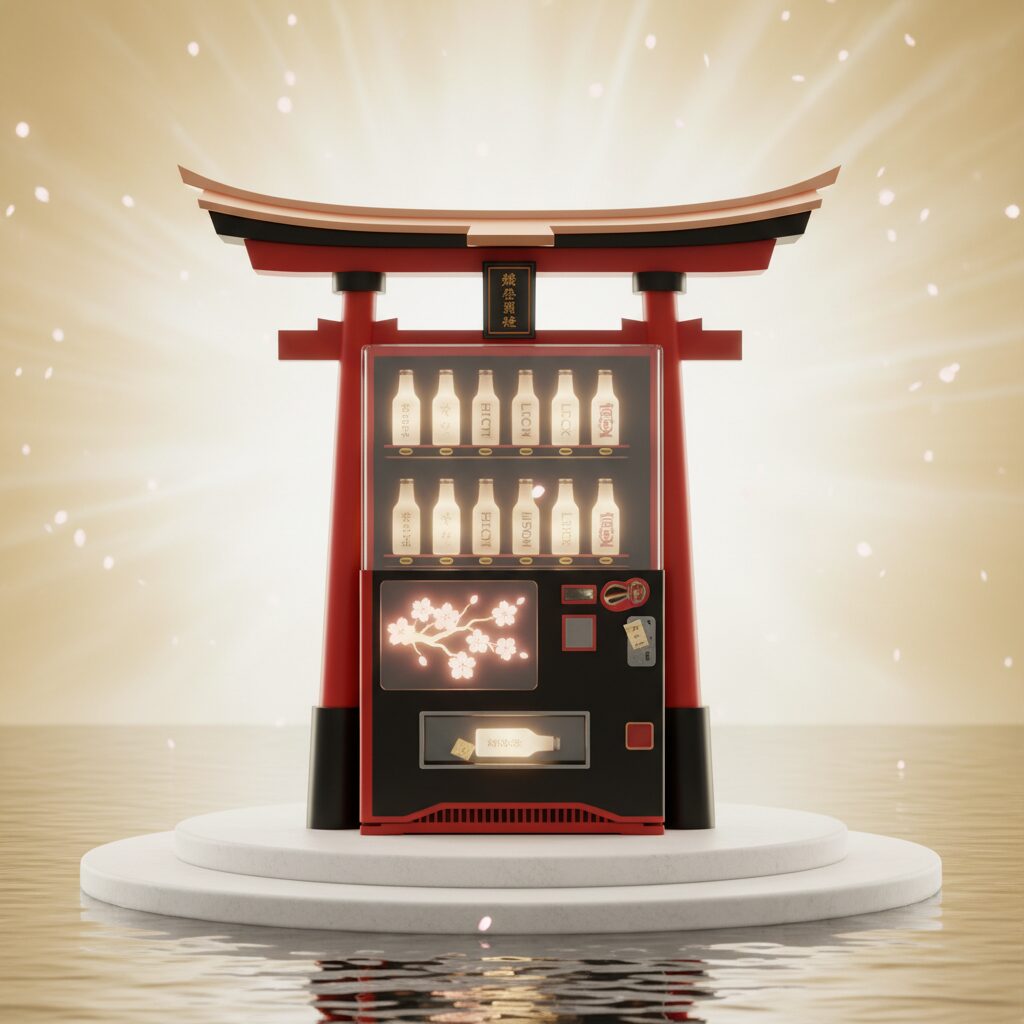
Here’s the tea: what you’re seeing isn’t really about “faith” in the way you might understand it. It’s less about unwavering belief in a single, all-powerful deity and more about something way more pragmatic, goal-oriented, and, honestly, kinda transactional. It’s a system called Goriyaku Meguri – literally, a “tour for blessings.” Think of it less like a church service and more like a cosmic vending machine or a spiritual life-hack. You go to a specific spot, follow the steps, make a specific request for a specific outcome – like acing an exam, landing a new gig, or finding a partner – and hope the local deity, or kami, hooks you up. It’s a deeply ingrained part of our culture that’s equal parts tradition, superstition, psychological comfort, and a fire tourist attraction. It’s this wild mix of the sacred and the everyday that makes Japan so, well, Japan. We’re not praying for salvation; we’re trying to get a little divine boost for the daily grind. Before we dive deep into this cultural rabbit hole, get your bearings. Here’s a map centered on one of Tokyo’s most iconic spiritual hubs, Meiji Jingu. It’s a prime example of a place that’s both a serene escape and a major hub for people seeking some A-tier goriyaku.
This pragmatic, goal-oriented approach to spirituality shares a cultural DNA with the Japanese concept of enduring hardship, where perseverance itself is seen as a form of strength.
Unpacking the Vibe: What Even is “Goriyaku”?
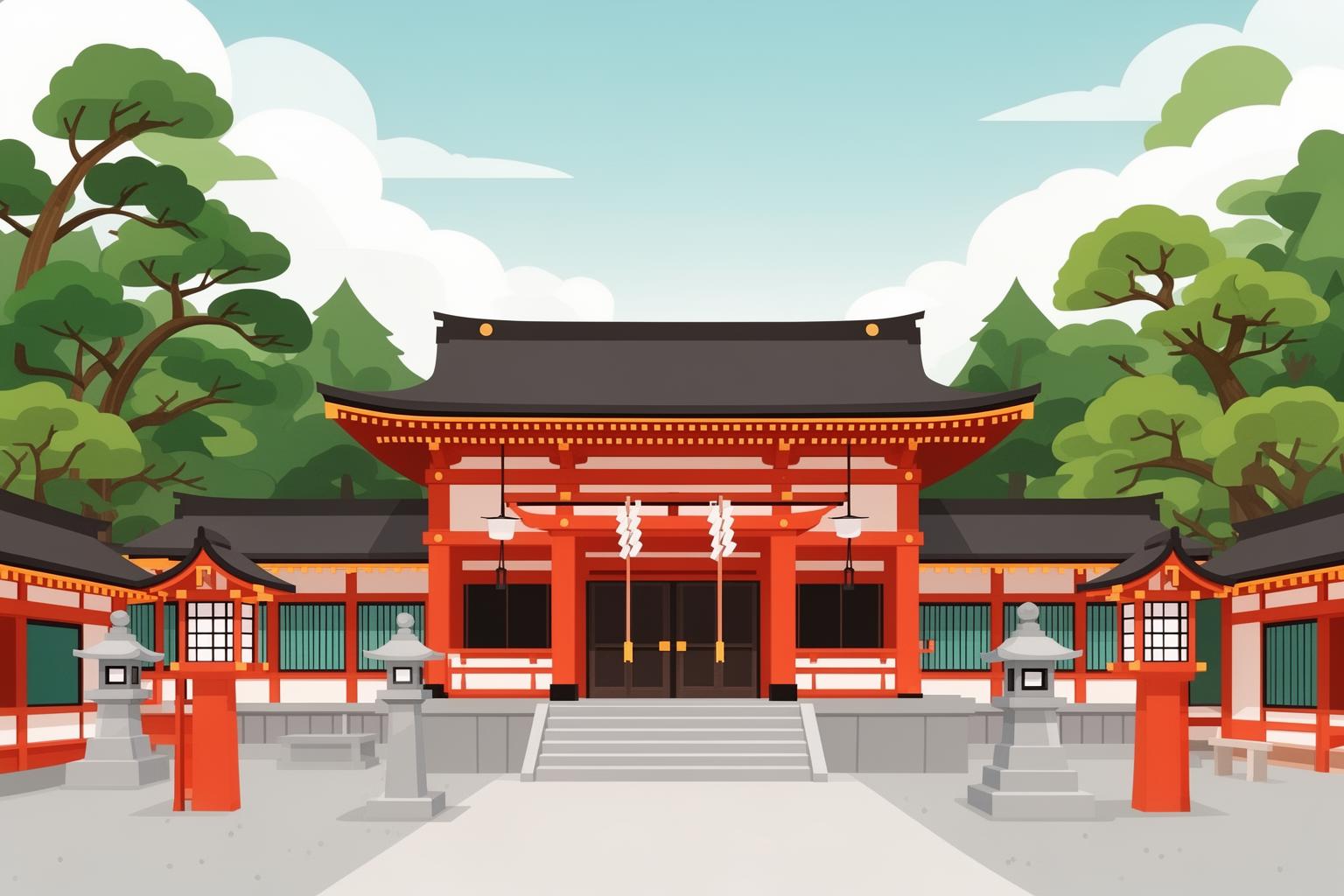
Let’s dive into the details. The term Goriyaku (御利益) is crucial for understanding this entire concept. The kanji roughly translates to “honorable benefit” or “divine profit.” Right from the name, it’s not about abstract spiritual enlightenment but about a tangible return on your investment of time and respect. This clearly distinguishes it from faith or worship as understood in many other cultures. It operates on an entirely different system.
It’s Not What You Think: Faith vs. Function
First, you need to set aside the Western idea of religion to truly grasp this. In many cultures, religion is defined by monotheism, exclusive devotion to one God, sacred texts with strict doctrines, and a clear division between believers and non-believers. In Japan, spirituality is more fluid and laid-back. The two main traditions are Shinto, Japan’s native belief system, and Buddhism, which was introduced from mainland Asia centuries ago. Historically, these two weren’t rivals but blended through shinbutsu-shugo, the syncretism of kami and buddhas. This produced a culture where a Buddhist temple might have a Shinto torii gate, and people freely visit both without any conflict.
Consequently, most Japanese people don’t label themselves exclusively as “Shinto” or “Buddhist.” Instead, they participate in both according to practical needs. It’s common wisdom: you’re born Shinto (with a shrine visit for the birth), get married in a Shinto ceremony (or a Christian-style chapel for its aesthetic, which is another topic), and have a Buddhist funeral. It’s a pick-and-choose approach depending on the life stage. The core isn’t a soul-bound commitment to a single deity, but maintaining a respectful connection with the broad spiritual ecosystem around you. You don’t have to doctrinally “believe” in the mountain kami, merely respect it enough not to anger it. This practical mindset creates the ideal environment for goriyaku. It’s not about devotion to God but about asking the deity of safe childbirth for a smooth delivery. The relationship is pragmatic and results-oriented.
The Spiritual Supermarket: A God for Every Need
Once you understand it’s about function, the system looks like a massive, highly specialized store of divine favors. You wouldn’t buy fish at a bakery, right? Similarly, in Japan, you don’t visit just any shrine to request anything. You go to the expert. Each major shrine and many temples are renowned for particular goriyaku, their unique specialty. This specialization is remarkable and covers almost every human concern or aspiration you can imagine.
Let’s start with the top priority for students: Gakugyo Joju (学業成就), academic achievement. The patron is Sugawara no Michizane, a Heian-period scholar and politician who was exiled due to court intrigue. After his death, disasters struck the capital, blamed on his angry spirit. To calm him, he was deified as Tenjin, the kami of scholarship. Shrines dedicated to him—like Dazaifu Tenmangu in Fukuoka and Yushima Tenjin in Tokyo—are pilgrimage sites for students. During exam season, these shrines flood with hopeful students and anxious parents buying wooden plaques called ema, inscribed with wishes such as, “Please help me pass the Waseda entrance exam!” Hundreds are hung, forming walls of collective hope and tension. Students also purchase special omamori amulets for academic success, carrying them throughout exam periods. It’s a full-fledged industry around the pressure to succeed academically.
Then there’s the universal desire for love, represented by En-musubi (縁結び). This concerns not only romantic relationships but also friendships and business connections. Still, most visitors seek romance. Shrines like Tokyo Daijingu, one of Tokyo’s “big five” shrines, are famed matchmaking hotspots. It was the first shrine to conduct Shinto wedding ceremonies, linking it closely to marriage. Another famous place is Jishu Shrine at Kyoto’s Kiyomizu-dera Temple, which features two “love stones” set apart. Legend says that if you can walk between them with your eyes closed, you’ll find true love. Groups of teens and young adults frequently attempt this ritual, their friends cheering them on. It’s both a deeply personal prayer and a lively social event.
For businesspeople and entrepreneurs, there’s Shobai Hanjo (商売繁盛), or prosperity in commerce. This is where goriyaku culture meets modern capitalism. The most iconic example is Fushimi Inari Taisha in Kyoto, famous for its thousands of red torii gates. Each gate is donated by individuals or companies as thanks for blessings received or as prayers for success. These gates cost from several thousand to over ten thousand dollars. They serve as public displays of success and spiritual investment. In Tokyo, Kanda Myojin is a major business blessing site, especially for the tech industry. Located near Akihabara, the “electric town,” it has become a protector of IT workers. Visitors can buy omamori shaped like computer chips said to protect devices from viruses and crashes. Companies from startups to giants send employees or executives there at the start of each year for blessings. It’s a well-established business custom.
The list goes on. There’s Anzan (安産) for safe childbirth, with Suitengu Shrine in Tokyo a popular destination for expectant mothers. Kotsu Anzen (交通安全) denotes traffic safety. It’s common to drive a new car to a shrine for purification, where a priest waves a wand over the vehicle’s hood and tires. Drivers then buy special omamori to hang from their rearview mirrors. There are even highly specialized goriyaku: shrines dedicated to health for specific body parts like eyes or lower back, places to help stop smoking or drinking, and even Kyoto’s Mikami Shrine, known as a patron of beautiful hair. If you have a concern, chances are there’s a kami and a shrine for it.
The Menu of Miracles: How You Request Your Blessing
Once you’ve picked your spiritual expert, what’s next? You can’t just walk in and start demanding blessings. There’s a standardized ritual—the “user interface” for communicating with the kami—followed at shrines big or small. Mastering this shows respect and that you understand the customs.
First, you pass through the torii gate, marking the boundary between the ordinary world and the sacred realm. It’s customary to bow once before entering. The path to the main hall is called the sando; don’t walk in the center, which is reserved for the kami. Walk along the sides.
Next is purification at the temizuya, a pavilion with a water basin used for chozu cleansing. This ritual isn’t just washing hands but symbolically cleansing body and spirit before meeting the deity. You take a ladle (hishaku) in your right hand, fill it with water, and pour some over your left hand. Then switch hands and clean your right. Return the ladle to your right hand, pour water into your cupped left hand to rinse your mouth (never drink directly from the ladle or spit into the basin—spit discreetly beside the drain). Finally, tilt the ladle so water runs down the handle and return it. Though it sounds complex, it becomes a smooth, mindful routine once you practice.
At the altar, you’ll see a large offering box called the saisen-bako. Toss in your monetary offering, or saisen—often a 5-yen coin because it’s go-en, a pun on good fortune or connection (御縁). Then, if there’s a bell (suzu) with a rope, ring it a couple of times to attract the kami’s attention.
The prayer sequence follows: “two bows, two claps, one bow” (nirei-nihakushu-ichirei). You bow deeply twice, place your hands together at your chest, slide your right hand down slightly, clap twice, then slide it back up. The claps express joy and respect. With hands still together, silently say your specific prayer—“Please help me pass the math test,” not just a vague blessing. Finish with one more deep bow.
But the process isn’t complete until you obtain your spiritual souvenirs. This is a major part of the goriyaku experience. Visit the shrine office (shamusho) to purchase items like omamori, small brocade amulets containing prayers or sacred inscriptions, each targeted toward a specific goal like traffic safety, academic success, or love. Keep it with you but never open it, as that would release the blessing. There are also ema, wooden plaques where you write your wish and hang it at the shrine—like sending the gods a postcard. Another popular item is the omikuji, paper fortunes you receive after paying a small fee (about 100 yen). You shake a box of sticks until one drops out, then take the matching paper with your fortune, ranging from Great Blessing (dai-kichi) to Great Curse (dai-kyō), complete with predictions for health, relationships, and work. Good fortunes are kept, while bad ones are folded and tied to designated spots on shrine grounds, leaving bad luck behind for the kami to manage.
The Historical Hustle: Where Did This System Come From?
This complex system of goal-oriented worship didn’t emerge suddenly; it is the result of centuries of cultural and social development. To truly understand why Japan is this way, you need to rewind history and see how this practical approach to the divine was embedded in the culture from the very start.
Before “Religion,” There Was Nature and Respect
The roots of this practice trace back to ancient Shinto, which was not a formal religion with scriptures and doctrines but rather an animistic belief system. The central concept was that divine spirits, or kami, inhabited everything: mountains, rivers, ancient trees, uniquely shaped rocks, even the wind and rain. The world was alive with these powerful, invisible forces. They were neither inherently good nor evil in a human moral sense; they were simply powerful and unpredictable. Mount Fuji was a kami. A thousand-year-old cedar tree was a kami. A waterfall was a kami.
The relationship between humans and kami was fundamentally transactional and centered on survival. People respected the mountain’s kami, made offerings, and performed rituals to appease it, hoping it wouldn’t erupt and destroy their village. They prayed to the river’s kami to prevent flooding their rice paddies. They prayed for a good harvest and protection from illness. This wasn’t about abstract salvation; it was about managing the very real and immediate dangers posed by nature. This laid the groundwork for the principle of goriyaku: showing respect to a particular power in hopes of receiving a specific, tangible benefit. It was a cosmic negotiation for a safer, better life.
Buddhism Rolls In: A New Set of Skills
Then, in the 6th century, a significant new influence arrived: Buddhism. Brought from Korea and China, it introduced a complex cosmology, elaborate art, and a new pantheon of divine beings. Rather than one religion trying to eradicate the other, Japan did what it does best: absorbed, adapted, and integrated. This gave rise to shinbutsu-shugo, the fusion of Shinto and Buddhism, which shaped Japan’s spiritual landscape for over a thousand years.
The Japanese didn’t perceive conflict; they saw an expansion. The kami of Shinto were powerful but often localized. The Buddhas and Bodhisattvas of Buddhism were viewed as benevolent, potent beings with distinct abilities. Kannon, the Bodhisattva of mercy, offered compassion and relief from suffering. Yakushi Nyorai, the Medicine Buddha, healed illness. Jizo, with his gentle smile, protected children and travelers. These Buddhist figures were seamlessly woven into the existing framework of goriyaku, simply adding new spiritual services. People might visit a Shinto shrine to pray for a good harvest, then go to a Buddhist temple to seek healing from Yakushi for a sick relative. It was all part of the same toolkit for coping with life’s challenges. This blending reinforced the idea of seeking the right deity for the right purpose, regardless of religious origin.
The Edo Boom: Turning Pilgrimage into a Party
The concept of goriyaku became widely popular and a major cultural phenomenon during the Edo period (1603-1868). After years of civil war, Japan was unified under the Tokugawa shogunate, ushering in over two centuries of peace. Although travel was restricted, one of the few permitted reasons for long-distance travel was religious pilgrimage—and people seized the opportunity eagerly.
Pilgrimages became immensely popular. The Okage Mairi to Ise Grand Shrine, the most sacred Shinto site, attracted millions at its height—an impressive portion of the population. But here’s the twist: for many, the pilgrimage was as much about tourism and enjoyment as it was about religious devotion. It was a once-in-a-lifetime adventure. These journeys were carefully planned, with people saving for years and entire villages pooling resources to send a delegate. Along the routes, a thriving tourism industry emerged: inns, restaurants, souvenir shops. Guidebooks, akin to the Edo-era Lonely Planet, listed famous sights, local specialties, and importantly, the specific goriyaku associated with temples and shrines en route.
This commercialization and popularization embedded the concept of goriyaku meguri—touring for blessings—deeply in the national consciousness. Worship became a goal-driven leisure activity. You didn’t just visit Ise; you stopped at various temples for health, prosperity, or other benefits along the way. The journey itself became a chance to collect blessings, explore the country, and enjoy yourself. This mix of devotion and amusement is the direct forerunner of modern Japanese spiritual tourism. The notion that visiting sacred sites should bring tangible benefits while being enjoyable became a cultural norm.
Meiji’s Big Breakup and the Modern Reboot
This long-standing fusion of Shinto and Buddhism was abruptly disrupted in the late 19th century during the Meiji Restoration. The new government aimed to modernize Japan and centralize authority around the Emperor. To do so, they promoted a revised Shinto—State Shinto—that positioned the Emperor as a living deity. To elevate Shinto, they had to separate it from Buddhism. The government issued the Shinbutsu Bunri decree, forcibly dividing the two. Buddhist elements were removed from shrines, and some temples were destroyed. This political move sought to create a “pure” national ideology.
Yet, a government order couldn’t erase a millennium of cultural habits. Although institutions were separated, the syncretic mindset of the people persisted. They continued visiting both shrines and temples, choosing based on tradition and expected benefits. After World War II, when State Shinto was dismantled and religious freedom established, this pragmatic approach revived with vigor. However, the prayers had evolved. In rapidly industrializing and modern Japan, people no longer prayed for rice harvests; their prayers focused on passing university exams, securing jobs at major companies, succeeding in business, or staying safe on the highways. The goals changed for the 20th and 21st centuries, but the underlying system of seeking specific goriyaku from specialized deities remained perfectly intact. It’s the same software running on new hardware.
So, Is It Just Superstition? A Modern Take
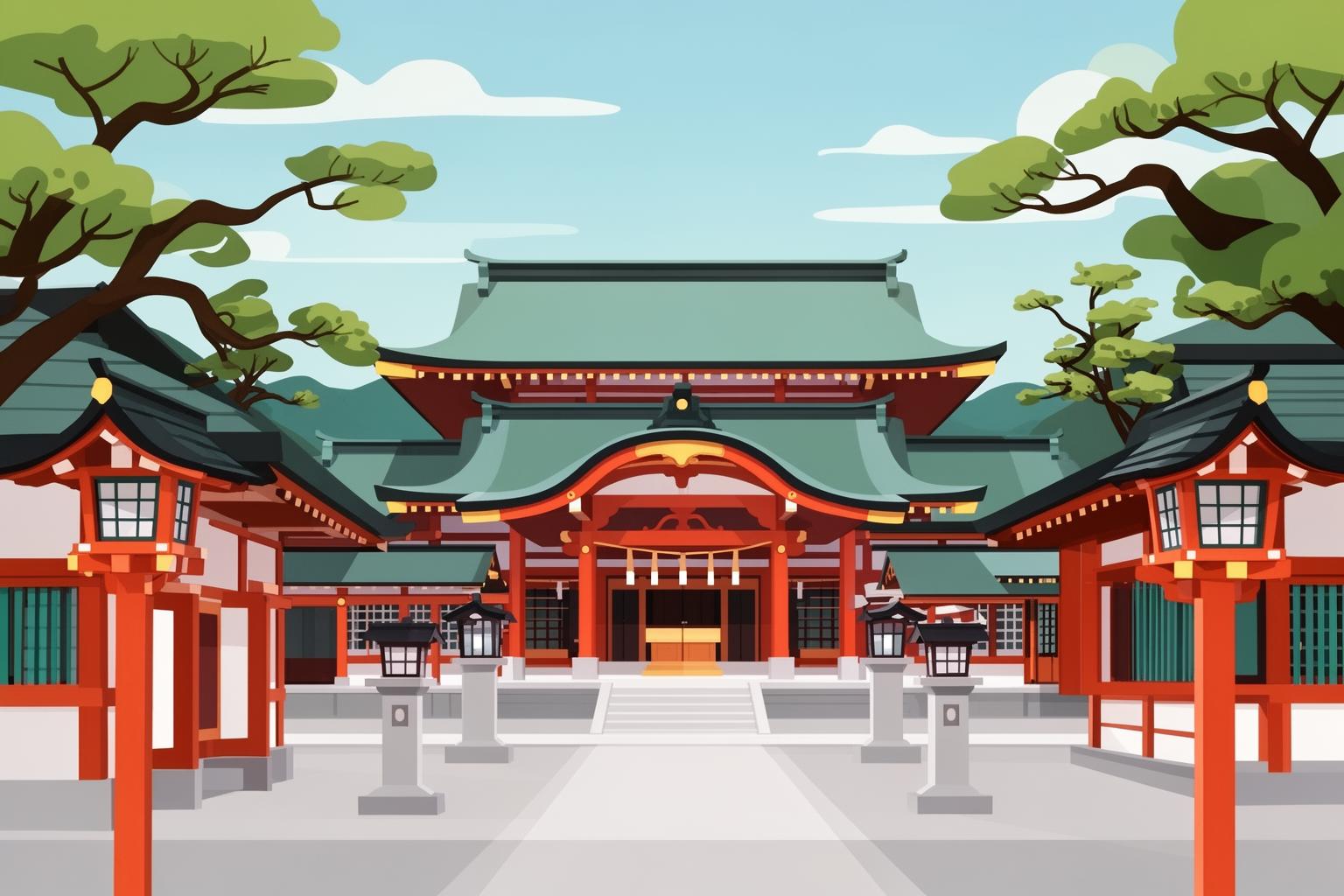
A skeptical person might view all this—the lucky coins, chip-shaped amulets, and prayers for traffic safety—and simply dismiss it as superstition. And, on some level, they wouldn’t be entirely wrong. However, to write it off as mere superstition overlooks the deeper psychological and social roles that goriyaku culture plays in contemporary Japan. It acts as a complex coping mechanism, less about literal belief in magic and more about managing the anxieties of modern life.
The Psychological Payoff: Beyond Magic
Do people sincerely believe that a small cloth bag, the omamori, will magically shield them from a car accident? For most, the answer is probably a tentative “maybe,” but that’s not really the point. The strength of the goriyaku system lies in its psychological value. It provides a means to externalize anxiety and create a sense of agency amid powerlessness. Life is stressful and uncertain—no matter how hard you study for an exam, failure remains a possibility. No matter how cautiously you drive, you can’t control others on the road. Here is where goriyaku comes in, offering rituals that make you feel as though you’ve done absolutely everything possible to secure a positive outcome.
Purchasing an omamori before an important test transforms vague anxiety into a concrete action—you have actively addressed your fear. The amulet becomes a constant physical symbol of your aim and effort, a focal point for hope. Similarly, writing your deepest wish on an ema and hanging it at a shrine acts as a form of catharsis, like writing in a diary and sending it out into the universe. You articulate your goal, set an intention, and, to some extent, release the stress by entrusting it to a higher power. These rituals don’t replace practical effort—you still have to study—but they complement it by providing mental and emotional support, enabling you to perform your best. It’s a structured way to manage hope, a ritualized form of positive thinking—an original life hack for peace of mind.
The Community Vibe: United in the Experience
Another significant but often overlooked function of goriyaku culture is its social dimension. These rituals are rarely carried out in total solitude; they tend to be communal events that reinforce social bonds. Take Hatsumode, the first shrine or temple visit of the New Year, one of Japan’s largest cultural events. Millions flock to places like Meiji Jingu in Tokyo or Fushimi Inari in Kyoto, going with family, partners, or friends. They wait in long lines together, pray for a good year together, buy and compare fortunes together. It’s a massive shared cultural experience, connecting you to your family, community, and preceding generations. This participation strengthens social ties through a shared, ritualized expression of hope for the future.
This communal aspect is also deeply meaningful in times of personal hardship. During exam season, a student visiting a shrine and seeing thousands of ema hanging there visually experiences they are not alone in their anxiety. Thousands share the same struggle, creating a sense of solidarity—a temporary community of hopefuls united by a common goal. Even in the corporate world, when a team visits a shrine to pray for business success, the act doubles as team-building. It aligns everyone around a shared purpose with a spiritual overlay, a way of saying, “We’re all in this together; let’s hope for the best.”
The Gamification of Good Fortune
In recent years, this whole system has embraced a modern twist that appeals especially to younger, more secular people: gamification. Shrines and temples have, consciously or not, adopted elements reminiscent of real-life video games. This makes participation fun, engaging, and highly shareable, apart from any deep spiritual faith.
The prime example is the goshuin craze. A goshuin is a special seal or stamp obtainable at most shrines and temples. Visitors purchase an accordion-fold book called a goshuincho and bring it to each sacred site’s office, where a priest or calligrapher stamps it with the vermilion seal and inscribes the shrine’s name, date, and sometimes a short prayer in elegant calligraphy. Each one is a unique piece of art, turning temple and shrine visits into a collectible quest. People travel nationwide to fill their books, treating it like a spiritual passport or a real-life achievement hunt—marking progress rather than just visiting.
Shrines and temples have fully embraced this trend, offering limited-edition goshuin for special holidays, seasonal events, and anniversaries. The designs have become more elaborate, featuring colorful stamps and intricate artwork. They also produce uniquely styled omamori—beyond the standard bags, you can find charms shaped like strawberries at a shrine for relationships or anchors for maritime safety. Some shrines collaborate with popular anime series, creating merchandise that attracts a new audience. This savvy marketing keeps these ancient institutions relevant and financially sustainable. The gamified layer lets people engage on their own terms: maybe not for deep spiritual meaning, but to collect a cool stamp, buy a cute charm, and snap a great Instagram photo—and that’s a perfectly valid way to participate.
A Skeptic’s Guide to Playing Along
So, you’re in Japan, standing in front of a shrine, feeling a bit awkward. You’re not a believer, but you want to experience the culture. What do you do? The best thing about the goriyaku system is how welcoming it is. It’s a culture of participation, not conversion. You don’t have to believe in anything to take part respectfully.
You Don’t Have to Believe to Participate
Honestly, no one will stop you to ask if you truly believe in the kami Amaterasu. The focus in Shinto and Japanese Buddhism is almost always on performing the right actions and showing proper respect, not on your internal beliefs. The rituals are meant for everyone. Think of it as cultural immersion or even a mindfulness practice. The chozu purification ritual—the cool water, the specific movements—can be calming and centering, a quiet moment amid a busy day of sightseeing. Bowing at the altar is not necessarily worship but a gesture of respect for the history, culture, and those who revere the space. When you make a prayer, you don’t have to ask for divine intervention; it can be simply a moment to focus on your hopes and intentions. It’s an opportunity to connect with a different way of being, and there’s value in that regardless of your personal beliefs.
How to Pick Your “Goriyaku” Adventure
Rather than just wandering into the closest shrine, make your visit more meaningful by choosing one whose “brand” resonates with you. This transforms it from a generic tourist stop into a personal quest.
For the Hustle Culture Crowd: Entrepreneurs, coders, and career-focused individuals should visit Kanda Myojin in Tokyo. It’s the spiritual home of Akihabara’s tech scene, with a vibe centered on modern success. Grab a computer chip omamori to bless your laptop and pray for your startup’s next funding round. It offers a fascinating glimpse of ancient traditions adapting to the digital age.
For the Romantics (or the Desperate): If you’re seeking love or just a romantic atmosphere, visit Tokyo Daijingu. The air there is thick with hope—you’ll see people earnestly writing relationship wishes on ema and buying heart-shaped charms. Or in Kyoto, try the love stone challenge at Jishu Shrine—a fun, slightly whimsical ritual and a classic Japanese experience.
For Art & History Enthusiasts: If aesthetics and stories are your interest, choose a shrine with strong historical significance and striking visuals. Fushimi Inari in Kyoto is a must-see—the thousands of torii gates create an unforgettable experience, telling a powerful story about the link between commerce and spirituality in Japan. Meiji Jingu in Tokyo is another excellent choice—a vast, peaceful forest in the heart of a bustling city, dedicated to the emperor who modernized Japan. The goriyaku here is more general—prayers for national peace and prosperity—but the serene atmosphere and grand scale are the main attractions.
For the Niche Collector: If you prefer to stray off the beaten path, research and find a small, local shrine with a very specific goriyaku. It’s a great way to see a different side of Japan. Whether it’s a shrine for good hair, for artists seeking inspiration, or for brewers hoping for a good batch of sake, these quirky spots often offer the most unique charms and stories.
Reading the Room: Shrine & Temple Etiquette, Low-Key Edition
Lastly, here are a few simple rules so you don’t come across as a clueless tourist. It’s all about being respectful and mindful.
Stick to the sides of the main path (sando). The center is reserved for the gods. It’s a small gesture but shows you’re aware.
Keep your voice down. Shrines and temples are places of peace and reflection, even when busy. Save loud conversations for after you leave.
Be careful with photos. Generally, pictures of the grounds are fine, but photographing the main altar inside prayer halls is usually considered disrespectful. Signs (sometimes in English) often indicate where photography is prohibited. Also, avoid close-up shots of people praying or priests performing rituals.
Know how to handle your omikuji fortune. If you receive good luck (anything from Great Blessing to a simple Blessing), fold it and carry it in your wallet to keep the luck with you. If you get bad luck (a Curse), don’t worry. The tradition is to leave the bad luck behind by folding the paper and tying it to designated strings or tree branches at the shrine—letting the kami take care of it for you.
So, is Japan a deeply religious country? The answer is both yes and no. It depends on how you define “religious.” If you mean a country of people with strong doctrinal faith, then no, not really. But if you mean a country where spiritual rituals, traditions, and a practical relationship with the divine are woven into everyday life, then absolutely. Goriyaku Meguri perfectly captures this paradox. It’s a system that is both ancient and modern, sacred and commercial, deeply personal and highly social. It’s a way for people to find comfort, focus their intentions, and feel some control in a chaotic world. From the outside, it might seem like a vending machine for miracles, but once you understand the cultural framework it’s built on, you see it’s a sophisticated method for connecting with history, community, and your own deepest hopes. It’s a whole vibe. And once you get it, everything makes a weird, wonderful kind of sense.