Yo, what’s the deal? Hiroshi here. So you’ve seen it, right? The endless scroll on your feed, bursting with images from Harajuku’s Takeshita Street. It’s a full-on sensory assault. Rainbow cheese hotdogs that stretch for days, cotton candy bigger than your head, and fashion that looks like it crash-landed from another planet. It’s been branded as the pulsating heart of Japan’s youth culture, a non-stop parade of pure, uncut kawaii. For decades, this narrow, chaotic street was the absolute ground zero for anyone who wanted to know what was next in music, style, and vibes. It was the stage, the runway, and the sanctuary all rolled into one. The legend, especially the one forged in the fiery crucible of 90s J-pop, is epic. But let’s get real. You’re planning a trip, or maybe you’ve already walked that packed pavement, and a question is bubbling up: Is this it? Is this legendary street still the bleeding edge of Japanese cool, or has it morphed into a caricature of itself, a perfectly packaged, Instagram-ready theme park for tourists? It’s a legit question. You see the photos, you hear the hype, but then you get there and it feels… different. Polished. Almost too perfect. It leaves you wondering if you missed the party. Did the soul of Takeshita Street peace out, leaving behind a ghost that just knows how to pose for the camera? We’re gonna dive deep, pull back the curtain, and unpack the whole wild story. We’ll rewind to the golden era of the 90s, when teen pop queens ruled and style was a declaration of war against boredom. We’ll figure out why this tiny street became such a cultural behemoth, and then we’ll fast-forward to today to see what’s left of that legacy. Is it a time capsule, a tourist trap, or something way more complicated? Let’s get into it. It’s time to decode the truth behind the rainbow-colored smoke and mirrors of Takeshita Street.
To truly understand how this aesthetic became a global force, it’s worth exploring the history of Japan’s ‘kawaii’ culture.
The Genesis of a Vibe: How a Random Backstreet Became a Legend
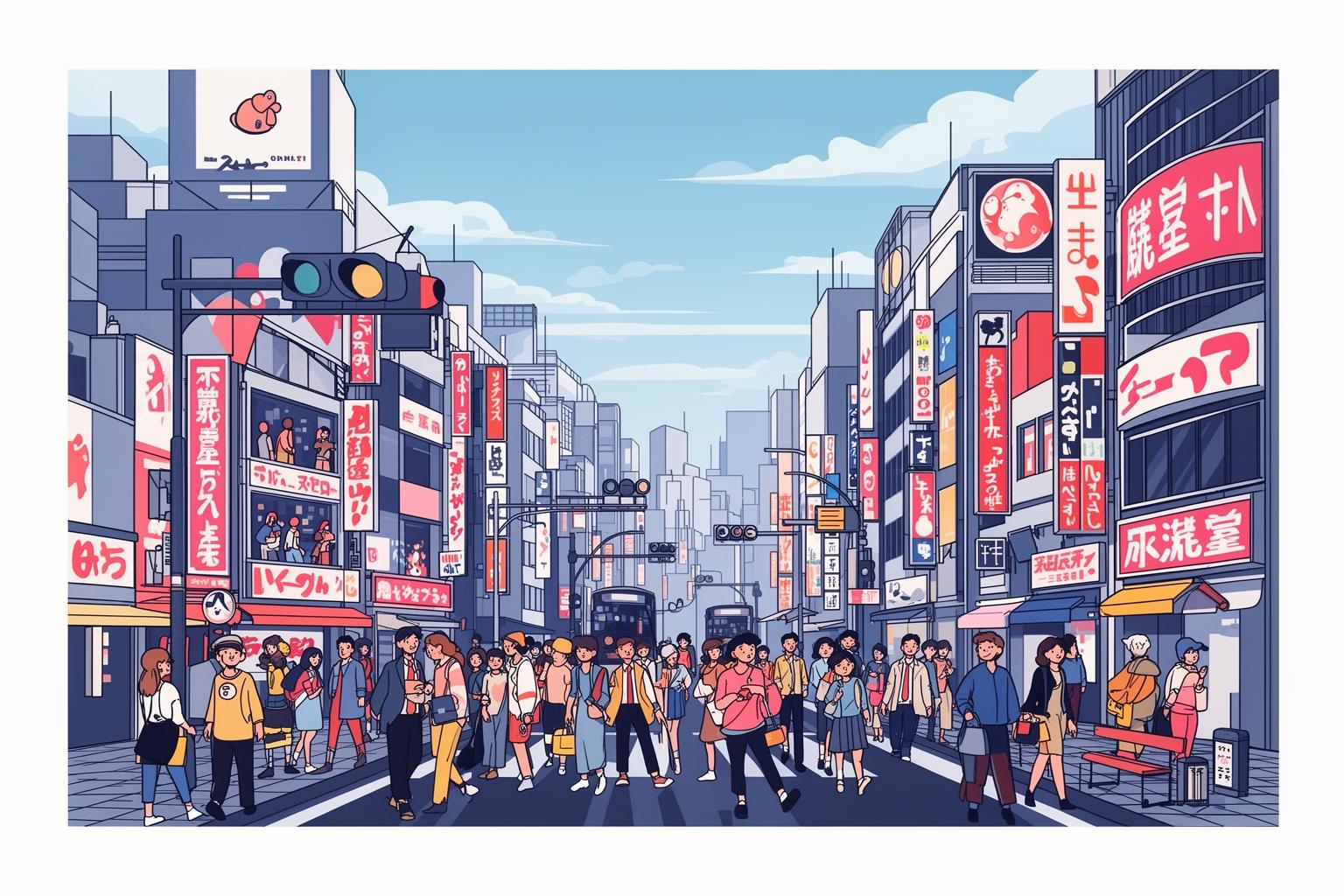
So, how does a narrow little alleyway become a global icon? Takeshita Street wasn’t cool from the start. It had to earn that status, and its origin story is a blend of post-war history, urban planning, and a deep-rooted teenage desire for freedom. To understand it, you have to go back quite a bit. After World War II, this part of Tokyo had a very different vibe. Just beside Harajuku was Washington Heights, a large housing complex for American military personnel during the occupation. This closeness meant Western culture—its music, fashion, and snacks—began to permeate the local scene. Japanese youth were getting their first glimpse of a world beyond their own, and it was captivating. Shops started appearing to serve this new, curious crowd, creating a distinctive international-local mix unlike anywhere else in Tokyo.
Then came the 1964 Tokyo Olympics, which really put Harajuku in the spotlight. The city was cleaned up, new buildings were constructed, and the entire area got a significant makeover. Harajuku’s main avenue, Omotesando, was designed to be Tokyo’s answer to the Champs-Élysées—wide, tree-lined, and increasingly upscale. But the real turning point arrived in the 1970s with hokoten, or “pedestrian paradise.” On Sundays, major roads like the one near Yoyogi Park were closed to vehicles, transforming them into vast open-air plazas. This was revolutionary. For the first time, young people had large, free public spaces where they could simply be. And they didn’t just exist; they blossomed. This gave rise to groups like the Takenoko-zoku (the “Bamboo Shoot Tribe”), who appeared with boomboxes, dressed in wild, brightly colored, often handmade outfits, dancing for hours. It was pure, raw self-expression. They weren’t pros; they were just kids wanting to be noticed, to belong, and to break free from the strict conformity of school and home.
This hokoten culture became a magnet. Harajuku turned into the place to see and be seen. It was like a live fashion magazine unfolding in real time. But as Omotesando grew more expensive with luxury designer stores, the youthful, creative energy needed a new hub. It found one just a few steps away, in the cramped, somewhat chaotic back alley known as Takeshita Street. It was cheaper, grittier, and far more accessible. Small, independent shops could afford rent there. They began selling clothing, accessories, and snacks aimed directly at the teenagers now flooding the area on weekends. Takeshita Street wasn’t a planned commercial zone; it developed naturally. It became the unofficial clubhouse for every kid who felt a little different—a place to experiment with identity, away from adult judgment. The street’s very narrowness, which now makes it difficult to navigate, was its greatest advantage. It forced people close together, creating a dense, high-energy environment where trends ignited and spread rapidly. It was the perfect breeding ground for the cultural explosion that followed.
Hitting a High Note: The 90s J-Pop Takeover and Takeshita’s Golden Era
The 90s were the decade when everything shifted into overdrive. Japan was still grappling with the economic fallout from the “Lost Decade” following the 80s bubble burst, yet culturally, it exploded like a supernova. At the heart of this explosion was J-pop. This was not just music; it was a full-blown cultural phenomenon, with Takeshita Street serving as its tangible hub. The connection between the music charts and the street fashion was inseparable. They were one and the same. The undisputed queen of this era was Namie Amuro. She was more than a singer; she was a style icon. When she introduced her signature look—the tanned skin, ultra-thin eyebrows, long dyed hair, miniskirts, and towering platform boots—it wasn’t merely a fashion choice. It was a cultural reboot. A whole generation of high school girls, known as Amuraa, began to faithfully imitate her style. And where did they shop for their outfits? Takeshita Street.
The stores along the street became the arsenal for this style revolution. Strolling down that 400-meter stretch, you could find everything needed to complete the Amuraa look. This was far from simple copying—adopting the Amuraa style was a way for these girls to channel Namie’s confident, independent spirit. In a society still bound by strict expectations for women, her image was empowering. It allowed them to feel strong, cool, and in control. The music itself, often produced by the legendary Tetsuya Komuro, was the perfect soundtrack. His high-BPM, synth-heavy dance tracks radiated pure optimism. Songs by artists like Namie Amuro, TRF, globe, and the girl group SPEED were not mere background noise; they were anthems for a generation. These tracks blasted from every store on Takeshita, creating a unified, pulsating soundtrack that energized the entire scene.
This symbiotic relationship between music and fashion was most apparent in the types of stores that characterized 90s Takeshita. The most iconic were the tarento shoppu—talent shops. These were far from typical merchandise stores; they were shrines to J-pop idols. Walls were covered with photos, not official glossy portraits but candid, often unofficial snapshots known as buroomaido. For just a few hundred yen, fans could own a piece of their favorite idol’s world. You could buy pictures of them on set, leaving a TV studio, or just hanging out. This created an intimate feeling, as if you really knew the person behind the celebrity image. These shops also sold keychains, stationery, and various trinkets emblazoned with idol faces. Owning this merchandise was a badge of honor—a way to publicly declare your loyalty. It was social currency you could trade and discuss with friends. This was fandom made tangible in a pre-digital era. You couldn’t just follow idols on Instagram; you had to visit Takeshita Street and buy a photo to prove your devotion. This made the street an essential pilgrimage site for any J-pop fan in Japan.
Alongside the talent shops were countless small, independent fashion boutiques. This was before the rise of global fast-fashion giants. Each boutique had its own niche and a carefully curated take on current trends. Some specialized in perfect platform boots, others focused on the kogyaru look, and still others began exploring the more avant-garde streetwear emerging in the backstreets, which would later be known as Ura-Harajuku. The vibe on the street was electric. Takeshita wasn’t just a shopping destination—it was a social arena. You went there to see what everyone else was wearing and to showcase your own carefully crafted outfit. It was like a real-life social media feed, where your outfit was your post and the street was the platform. You could easily spend an entire day there, absorbing the energy and knowing you were at the epicenter of the universe. It was more than a street; it was a community, a stage, and a symbol of youthful rebellion, all wrapped into one chaotic, vibrant, and unforgettable place.
Deconstructing the Look: The Anatomy of 90s Harajuku Style
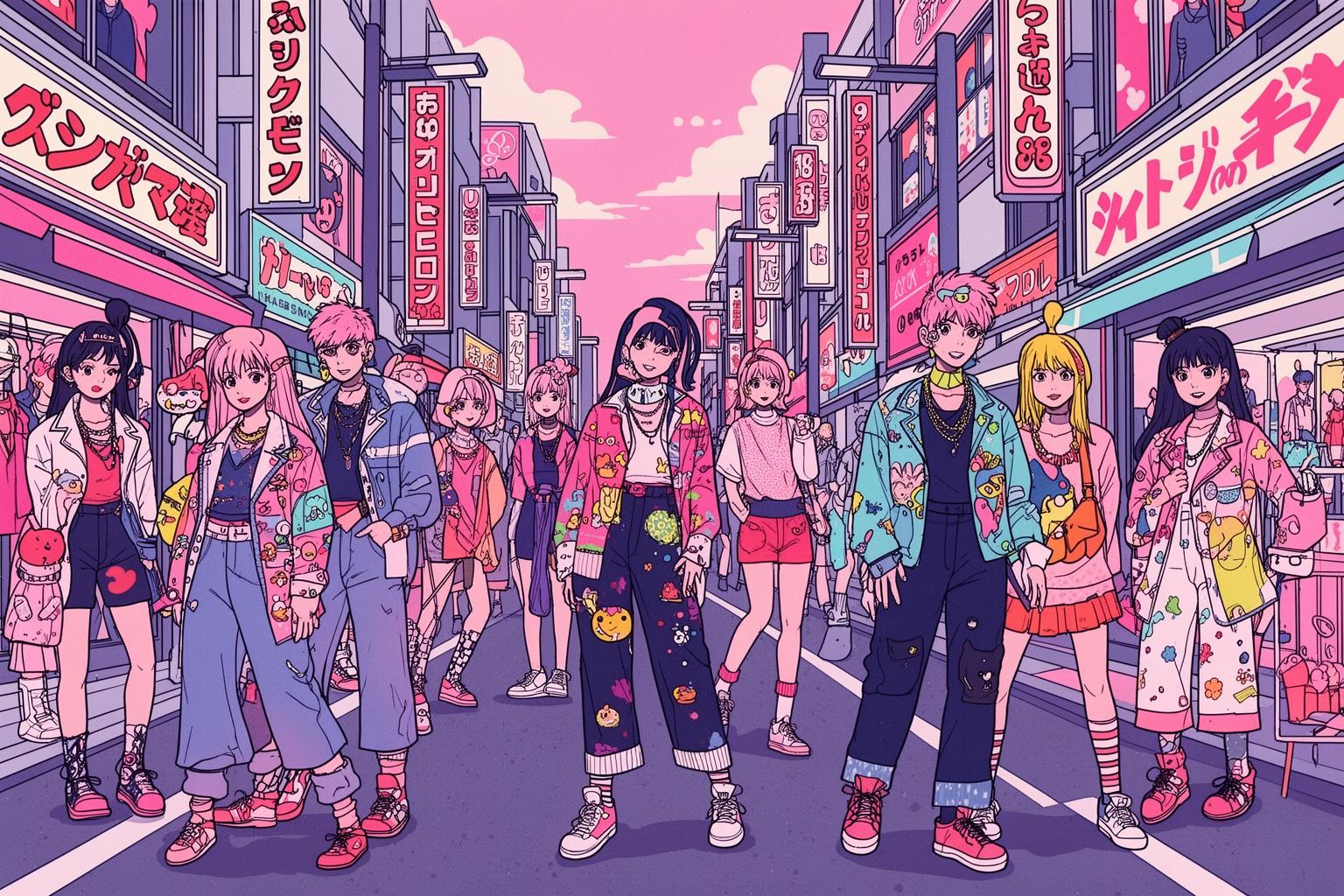
To truly understand the vibe of 90s Takeshita Street, you need to analyze the uniforms. These were more than just clothing; they represented intricate systems of meaning, rebellion, and belonging. Every item was a deliberately selected symbol, a piece of a broader puzzle that, when put together, conveyed a very specific message about your identity and the group you belonged to. This was fashion as a language, and the Harajuku kids spoke it fluently. It served as a powerful counter-narrative to the strict conformity imposed by the Japanese school system and the corporate world of their parents. Let’s explore the key elements of this iconic era.
H3: The Kogyaru Uniform: Rebellion in Miniature
The kogyaru (a blend of kōkōsei, meaning high school student, and the English word “gal”) look was arguably the most dominant and influential style of the time. Originating from the standard Japanese school uniform, it was twisted, subverted, and remixed into a clear statement of defiance. It involved taking the symbol of conformity—the uniform—and making it uniquely your own.
At the core of the look were the loose socks. These were no ordinary socks: massive, ribbed, white tubes that ranged anywhere from two to six feet long, bunched up around the ankles to create a voluminous, sagging effect. The bigger, the better. This was a direct challenge to strict school dress codes that required navy or black knee-highs. To prevent them from slipping down completely, girls used a special adhesive known as “sock glue” or “sock touch.” The ritual of applying the glue and perfecting the bunching became an essential part of their morning routine. Loose socks were a visual middle finger to authority, a subtle but potent way to assert ownership over their bodies and style within an otherwise rigid system.
Next, the skirt. School regulations demanded modest skirts that covered the knees. The kogyaru response was simple and clever: by rolling the waistband of their pleated skirts multiple times, they raised the hemline to daring heights. The shorter the skirt, the stronger the rebellious statement. Paired with the voluminous loose socks, this created a distinctive and instantly recognizable silhouette. It was a constant game of cat and mouse with teachers, who sought to enforce the rules, only for the girls to roll their skirts back up the moment they were out of sight.
To complete the uniform, certain branded items became essential status symbols. The most iconic was the Burberry-style scarf. The classic beige, black, and red check pattern became ubiquitous. Owning an authentic Burberry scarf was the ultimate status symbol, but high-quality replicas from Takeshita Street were more common. This accessory was aspirational, a nod to a luxury world a million miles away from the classroom. This might be accompanied by a specific brand of school-style leather loafers and a designated school bag, often customized with keychains and stickers. The entire look was a masterclass in subversion, transforming the mundane into something extraordinary.
H4: Beyond the Uniform: Hair, Makeup, and Maximalism
Rebellion extended beyond clothing to hair and makeup, which were vital arenas for self-expression. Japanese schools famously enforced natural black hair. The most immediate and widespread act of defiance was chapatsu, dyeing hair various shades of brown or blonde. This was a significant statement, viewed by many adults as a mark of delinquency and rejection of Japanese identity. Getting caught with dyed hair could mean being sent home or suspended. Yet, this style became the norm among self-respecting gals.
Makeup was equally distinctive. The 90s global trend of thin, highly arched eyebrows was eagerly embraced. Some, however, pushed it far beyond this. This is where the ganguro and yamanba styles emerged. Ganguro—meaning “black face”—involved a deep, dark artificial tan using tanning salons and dark foundation. This was a stark rejection of the traditional Japanese beauty ideal of bihaku, or “beautifully white” skin, valued for centuries. It was a bold, provocative statement. Over this dark tan, girls applied bright white concealer around the eyes and lips, creating a striking, raccoon-like contrast. Pastel eyeshadow, false eyelashes, and small decorative face stickers completed the look.
Yamanba represented an even more extreme evolution of ganguro. Named after a mountain witch from Japanese folklore, this style featured the darkest possible tans framed by long, wild, often bleached blonde or brightly colored hair. The white makeup was more pronounced than ever. This look was deliberately shocking, designed to be as far removed from conservative Japanese femininity as possible. It was not about conventional beauty but about visibility—being loud, creating an identity entirely their own. It served as armor, deterring unwanted attention from men and fostering a strong in-group identity among girls.
H4: The Culture of Accessories: Totems of a Generation
No 90s Harajuku look was complete without a thoughtfully curated collection of accessories. These weren’t mere extras; they were vital tools of social life. The most important was the Purikura. These photo booths offered far more than standard strips of photos. Friends would cram inside, take pictures against digital backdrops, then spend about ten minutes at a digital editing station outside, adding text, stamps, sparkles, and cute decorations. They could even adjust features, making eyes bigger or skin smoother—a precursor to today’s filters. The machine printed a sheet of tiny glossy stickers, which were cut up and traded among friends, then pasted into dedicated purikura albums. These albums were treasured keepsakes, visual diaries of friendships and youth. Purikura was the original physical form of the selfie, but its focus was communal, not individual: a documentation of your tribe.
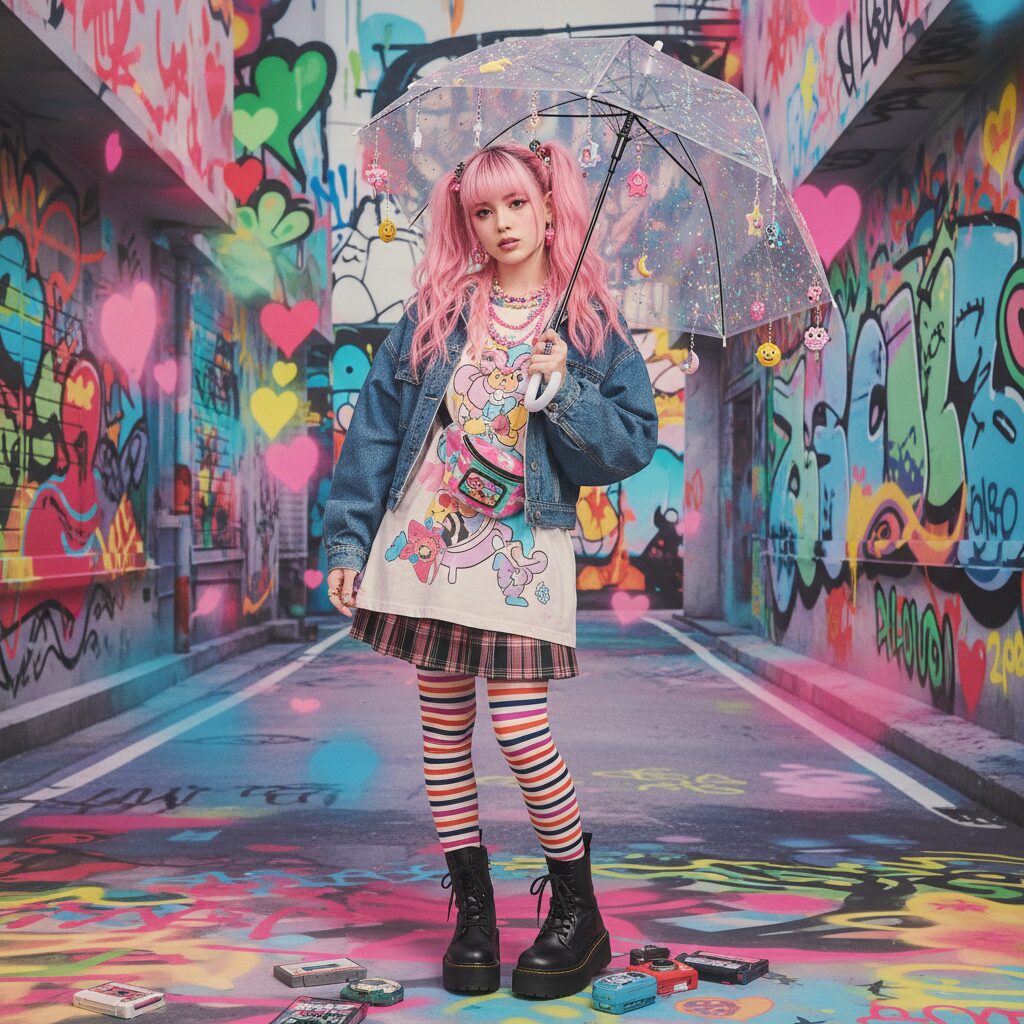
Another key accessory was the keitai, the early flip mobile phone. In the 90s, these became common among teenagers and were treated as extensions of personality. Phones were often covered with stickers and rhinestones. The centerpiece was the phone strap—dozens of tiny charms dangling from a loop on the phone, ranging from favorite Sanrio characters to purikura photos encased in plastic. The more straps you had, the more popular and connected you appeared. The phone was not just a communication device but a personal totem, a noisy charm bracelet broadcasting your identity.
Lastly, the culture of kawaii, or cuteness, permeated everything. Characters like Hello Kitty, My Melody, and Keroppi weren’t just for children. High school girls proudly carried Sanrio stationery, purses, and accessories. This embrace of cuteness expressed a softer, playful side, balancing the tougher, rebellious aspects of the kogyaru style. It was a uniquely Japanese fusion—the ability to be both fierce and cute simultaneously, with no contradiction. Together, the modified uniform, radical makeup, and social accessories created a rich, complex visual language that made 90s Takeshita Street one of the most exciting places on earth.
The Great Shift: What Happened to the 90s Vibe?
If the 90s were such a legendary, chaotic, and genuine explosion of style, why does Takeshita Street feel so different now? Walking down it today, the raw, grassroots energy seems like a faint echo. The scene didn’t simply fade away; it was radically transformed by powerful forces that rewired youth culture not only in Japan but around the world. The gritty, experimental lab of the 90s has been replaced by something more polished, commercial, and self-aware. Understanding this shift is essential to decoding the Takeshita Street of today.
H3: The Digital Tsunami: Internet, Social Media, and Fast Fashion
The single greatest disruptor was undoubtedly the rise of the internet. In the 90s, Takeshita Street was the original source code. To discover what was cool, you had to be there in person. Trends were chronicled in cult fashion magazines like FRUiTS, whose photographers roamed the streets capturing the most innovative youth. These magazines became style bibles, spreading the Harajuku gospel across Japan and eventually worldwide. The street itself was the hub—the central node in youth culture’s network. Information radiated outward from this physical space.
The internet completely overturned that model. Suddenly, you no longer needed to visit Harajuku to catch the latest styles. You could see them on blogs, then social media platforms like Mixi, and eventually Instagram, Twitter, and TikTok. Trends could emerge from Osaka, Fukuoka, or even outside Japan, spreading virally within hours. The street lost its control over information. Youth culture became decentralized and dematerialized. The new “street” became the hashtag; the new “magazine,” the influencer’s feed. The need to gather at a single physical spot to exchange style information disappeared. The spotlight moved from the pavement to the palm of your hand.
Simultaneously, the retail landscape experienced a seismic shift with the arrival of global fast fashion giants. In the 90s, Takeshita was filled with small, independent boutiques fostering incredible diversity. Each shop had its own unique viewpoint, catering to hyper-specific subcultures. The rise of brands like Uniqlo, H&M, and Forever 21 changed everything. These companies could produce trendy clothing faster and cheaper than any small boutique. Their massive stores, often located nearby in prime areas, drew away customers. The small, quirky shops—the lifeblood of Takeshita’s creativity—struggled to compete. Many closed, while survivors had to adapt to a new reality. Fashion on the street began to homogenize, reflecting global trends more than local subcultures. The unique ecosystem that encouraged radical experimentation was paved over by the efficiency of mass-market retail.
H3: The Tourist Gold Rush: From Local Hub to Global Hotspot
The second major force was the surge in inbound tourism to Japan. As Japanese pop culture—anime, manga, and the “Cool Japan” brand—gained global popularity, Harajuku became a must-see destination for international travelers. The government actively promoted tourism, sending visitor numbers soaring. Takeshita Street, known as the epicenter of the weird and wonderful, became ground zero for this influx.
This dramatically shifted the street’s target audience. For decades, shops on Takeshita spoke directly to Japanese teenagers, understanding the nuances of subcultures, inside jokes, and subtle fashion signals. Now, they had to cater to a worldwide audience seeking a very specific, easily digestible “Harajuku experience.” The products changed to meet this new demand. Small, niche boutiques and idol shops were replaced by businesses with broader appeal and, importantly, more photogenic qualities.
That’s why Takeshita Street today is dominated by Instagram-driven food stalls. Rainbow cheese hotdogs, giant cotton candy, and animal-shaped ice cream aren’t just snacks—they’re props designed to be photographed and shared on social media. They are the perfect tourist commodity: visually striking, easy to understand, and a tangible proof of “I was here.” Similarly, character cafes, owl cafes, and sprawling souvenir shops like the multi-story Daiso have proliferated. These businesses thrive but cater to a transient international crowd rather than a committed local youth scene. The street has optimized itself for the tourist gaze.
This has resulted in what some call the “performance” of Harajuku. The wild, boundary-pushing styles that once expressed authentic local subcultures are now often costumes. You may spot people in extravagant outfits, but many are influencers creating content or tourists who paid for a “Harajuku makeover.” The line between genuine self-expression and performance for an audience has become blurred. Subcultures haven’t disappeared entirely, but they are more elusive—moved to less visible spots, gone underground, or migrated online. Today’s Takeshita Street is, in many ways, a living museum or theme park devoted to its past glory. It’s brilliant, fun, and successful, but the raw, unpredictable energy of the 90s has been carefully curated, packaged, and put on display for sale.
So, Is Takeshita Street Worth It Today? A Real Talk
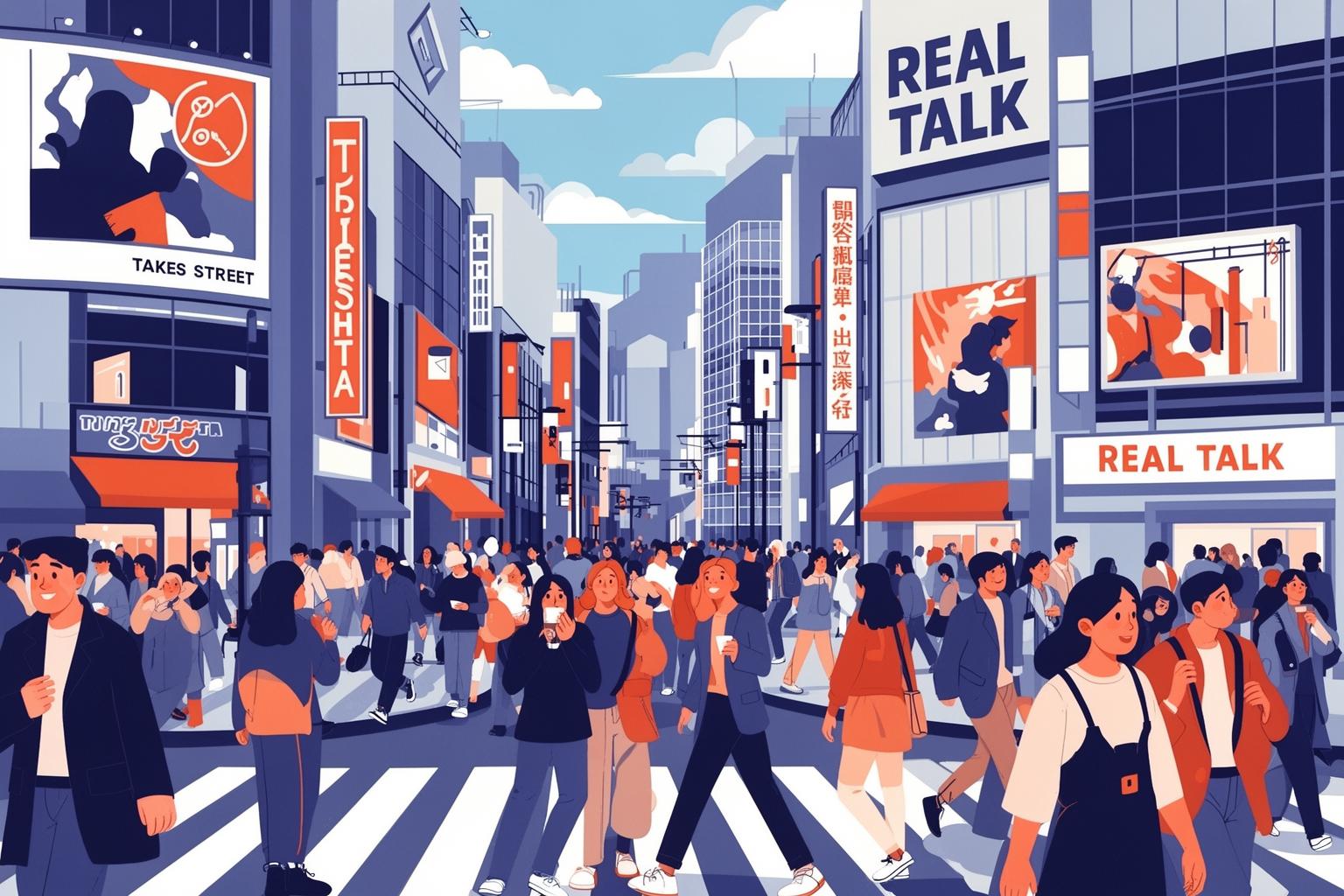
Alright, so after all that—the history, the glory days, the big transformation—we return to the original question. You’re in Tokyo, pressed for time, standing at the Harajuku station exit. Do you plunge into the frenzy of Takeshita Street? Is it really worth your time? The honest answer is: it entirely depends on what you’re after. The key is to manage your expectations and recognize what the street represents in 2024, not what it was back in 1998. Let’s break it down, no sugarcoating.
What Takeshita Street IS Now
First and foremost, Takeshita Street is an unmatched sensory spectacle. It’s a full-body dive into the most concentrated, high-energy version of commercialized kawaii culture anywhere in the world. The dense crowds, the clash of J-pop tunes blasting from every shop, the visual overload of neon lights, colorful treats, and cute mascots—it’s overwhelming. For many, that’s the appeal. It’s vibrant, dynamic, and unapologetically commercial. It’s an excellent spot for people-watching. On a Sunday afternoon, the street becomes a torrent of people—a wild mix of Japanese teens, families, and tourists from all over. You’ll spot some genuinely interesting street styles here, even if they’re not the cutting-edge subcultural fashions of the past.
Without a doubt, it’s also the undisputed king of photogenic snacks. If your aim is to boost your social media feed, Takeshita Street is a treasure trove. The gigantic rainbow cotton candy from Totti Candy Factory, the extra-long fried potato sticks from Long! Longer!! Longest!!!, the charming animal-themed ice creams from Eiswelt Gelato, and the legendary Harajuku crepes piled high with whipped cream and fruit—they’re all made for the camera, and they deliver. It’s playful, indulgent, and makes for a memorable experience. The street is basically a theme park of cuteness, and if you’re willing to embrace the silliness and the crowds, it can be an absolute blast. Think of it as the Disney World of Japanese street culture—less a reflection of daily life, more a spectacular show.
What Takeshita Street ISN’T Anymore
Here’s the reality check. Takeshita Street is no longer the hotspot for cutting-edge youth fashion that it used to be. The chances of witnessing the birth of Japan’s next major subculture here are slim. The styles are often rehashes of old trends or influenced by global online aesthetics. The raw, authentic, slightly dangerous energy of the 90s has vanished. That rough edge has been smoothed over and replaced with a safer, more commercially appealing polish. The rebellious spirit has been largely commodified. You’re purchasing an image of Harajuku cool rather than actively shaping it.
It is also no longer a sanctuary for unique, independent boutiques. While a handful of old-school and punk shops remain, most of the retail space now belongs to big chains, character goods stores, cosmetics outlets, and souvenir stalls. The thrill of discovering a tiny, one-of-a-kind shop run by an impassioned designer is harder to come by on the main street. The shopping experience is more predictable and designed for a broad audience. If you’re a serious fashion enthusiast hunting for the next big thing from Tokyo’s underground, you’ll likely be disappointed. You’re not getting a backstage pass to the real scene; you’re buying a souvenir in the gift shop.
How to Approach It for the Best Experience
So, how do you make the most of it? First, choose the right time to visit. For the full chaotic, overwhelming vibe, go on a weekend afternoon. If you dislike crowds and prefer more space, opt for a weekday morning. Second, treat it as a starting point, not your main destination. Use Takeshita Street as your loud, crazy introduction to Harajuku. Walk its length, grab a crepe, snap some silly photos, and soak in the energy. Then, escape. The true magic of modern Harajuku lies in the side streets.
Venture into the labyrinth of back alleys that form Ura-Harajuku (literally “back Harajuku”). Here you’ll find cool independent boutiques, vintage shops, high-end streetwear labels, and art galleries. The vibe is more relaxed and fashion-focused. This is where the 90s spirit—the emphasis on individuality and unique style—still thrives. Also explore the streets linking Harajuku to Shibuya, known as Cat Street. It offers a more mature, curated take on Harajuku’s fashion scene. By using Takeshita as your base, you can explore the richer, more nuanced environment surrounding it.
Ultimately, see Takeshita Street for what it is: a living monument. It pays tribute to its glorious past, performed daily for a new audience. It’s not the authentic, gritty scene of the 90s, and that’s perfectly fine. It’s evolved. It’s loud, commercial, a bit absurd, but undeniably fun. Approach it with an open mind, a sense of humor, and a fully charged phone, and you’ll understand why, even in its current state, it remains a vital piece of Tokyo’s puzzle.
The Echoes of the 90s: Where the Spirit of Harajuku Lives Now
If you came to Tokyo searching for the raw, creative spirit that defined 90s Takeshita Street, don’t be discouraged when the modern version feels more like a theme park than a subcultural incubator. The soul of Harajuku hasn’t vanished; it has simply moved elsewhere. That rebellious, innovative energy remains a core element of Tokyo’s youth culture, but like any living entity, it has migrated to new spaces where it can thrive more freely, away from the mainstream spotlight and the overwhelming crush of mass tourism. If you know where to look, you’ll find the echoes and evolutions of that 90s vibe scattered throughout the city and beyond.
Ura-Harajuku: The Cooler Older Sibling
The quickest way to escape the sensory overload of Takeshita is to explore the maze-like backstreets known as Ura-Harajuku. Located between Takeshita Street and Omotesando, this area has long been the gathering place for serious fashion enthusiasts. In the 90s, it was the birthplace of Japanese streetwear, home to iconic brands like A Bathing Ape and Undercover. Though it’s now more established and less “underground,” it still offers a markedly different energy from Takeshita.
Here, shops are smaller, more curated, and cater to a discerning clientele. You’ll encounter high-end Japanese and international streetwear brands, niche sneaker stores, and an impressive array of vintage shops. The pace is slower, crowds are thinner, and the focus is on the clothing itself rather than spectacle. Walking through Ura-Harajuku feels like engaging in a conversation about style, whereas Takeshita Street feels like a loud proclamation. This is where fashion innovation pulses strongly, where style is treated as a craft, not merely a costume. It stands as the direct heir to the 90s creative explosion—just more mature and confident.
Shimokitazawa & Koenji: The Vintage Paradises
If your idea of Harajuku style leans more towards creative self-expression through second-hand clothing, then catch a train west to Shimokitazawa and Koenji. These neighborhoods are Tokyo’s undisputed vintage and used clothing capitals, embodying the DIY, individualistic spirit central to 90s Harajuku. Their streets are dotted with hundreds of vintage shops, from tiny, carefully curated boutiques specializing in 70s rock memorabilia to vast warehouses where you can sift through piles of clothes for hidden treasures.
What’s especially intriguing is how the 90s styles born in Harajuku are now prized as premium vintage here. Platform boots, plaid skirts, and iconic streetwear from that era are being rediscovered and reinterpreted by a new generation. These neighborhoods are more than just shopping destinations; they are style ecosystems. Residents and visitors deeply appreciate personal style that resists fast fashion’s dictates. The atmosphere is relaxed, artistic, and fiercely independent. Here, you’ll see genuinely surprising and unique looks—a philosophical continuation of old Harajuku, where fashion is a form of personal storytelling rather than trend-chasing.
The Digital Realm: The New Frontier
Perhaps the most profound change is that the idea of a single, physical “scene” is becoming outdated. The most vibrant and innovative subcultures in Japan today are born and nurtured online. Social media platforms like TikTok, Instagram, and Twitter have become the new Harajuku. A teenager in a rural town can develop a new aesthetic in their bedroom, share it with a hashtag, and spark a global trend without ever visiting Tokyo. Online communities gather around highly specific niches—a particular video game, style of illustration, or music sub-genre. These digital tribes are where identities form and new styles emerge.
This doesn’t mean physical spaces are irrelevant, but their role has shifted. They now serve as venues for these online communities to meet in real life—at pop-up events, fan conventions, or casual meetups. However, the community itself lives primarily on the server. The spirit of the Takenoko-zoku dancing in Yoyogi Park or kogyaru flaunting loose socks on Takeshita Street remains vibrant; it just manifests in TikTok dance challenges or Discord chats. The basic human need for belonging and self-expression remains unchanged; only the platform has evolved. Recognizing this is key to understanding Japanese youth culture today. Don’t just watch the streets—watch the screens. That’s where the 90s echoes resonate loudest, shaping the future of style in real time.