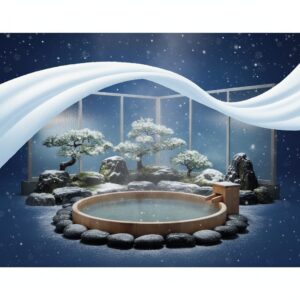
Alright, let’s spill the tea. You’ve seen the videos. The ones with pro snowboarders floating through chest-deep powder in Hokkaido, screaming into their GoPros. You’ve heard the term ‘Japow’—a sacred word whispered in ski lodges from Chamonix to Vail. Japan, the winter wonderland. The land of endless, weightless, champagne powder. And look, that’s not fake news. The snow is legit legendary. Niseko, Hakuba, all the big names—they deliver the goods. It’s a bucket-list trip for anyone who worships at the altar of fresh tracks. But here’s the thing, and you gotta lean in for this one: focusing only on the ‘Japow’ is like going to a Radiohead concert and only listening for ‘Creep’. You’re getting the hit single, but you’re missing the entire, soul-crushing, beautiful, complicated album. The real story of Japan’s winter isn’t just about epic shredding. It’s about the ‘Yukiguni’—the Snow Country. And that, my friend, is a whole different vibe. It’s quieter, deeper, and way more intense. It’s a mood, a psychological state, a cultural bedrock forged by centuries of being buried alive in white. It’s the story of what happens when the party’s over, the lifts are closed, and you’re left with nothing but the crushing silence of a world under a blanket of snow three meters deep. Before we dive into this heavy, monochrome world, let’s get our bearings. The heart of the classic ‘Snow Country’ isn’t the international resort hub of Niseko. It’s the region along the Sea of Japan, particularly places like Niigata Prefecture, the setting for the Nobel Prize-winning novel that gave this place its name. This is ground zero for the vibe we’re about to unpack.
To truly understand how this modern ‘Japow’ phenomenon contrasts with the deep cultural roots of the Snow Country, it’s worth exploring the history of Japan’s 80s ski boom.
The ‘Yukiguni’ You Don’t See on IG
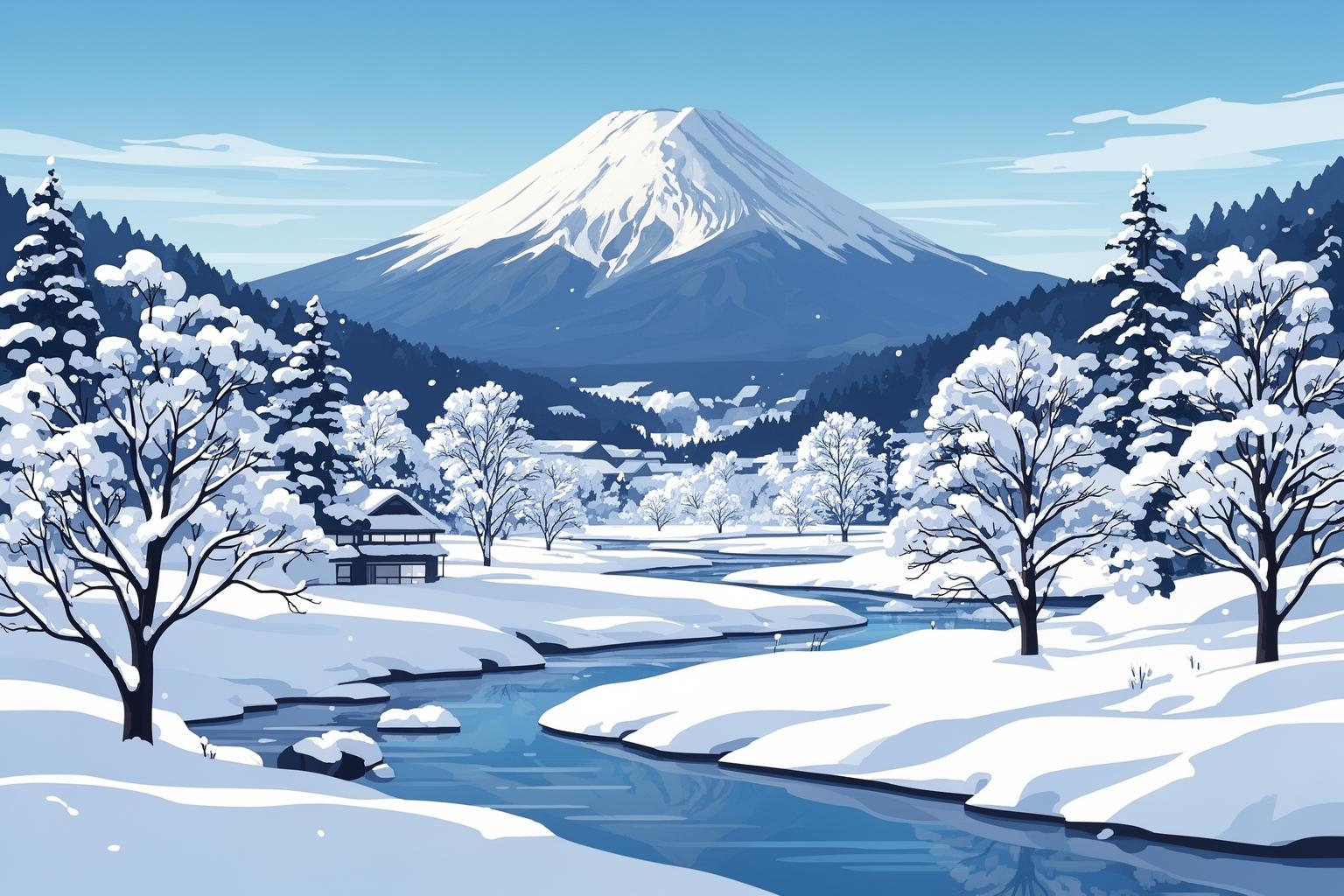
So, what exactly is ‘Yukiguni’? First of all, it’s a literal place—the western coast of Japan’s main island, Honshu. Think Niigata, Akita, Yamagata, Aomori—the prefectures relentlessly battered by winter. This isn’t a mild, picturesque snowfall; it’s a harsh, months-long onslaught. Siberian winds roar across the Sea of Japan, gathering massive moisture, then collide with the Japanese Alps. The result is the heaviest snowfall of any populated region on Earth. Not just a few feet—snow that buries houses up to their second stories, turns roads into deep icy canyons, and reshapes the landscape for five to six months a year. While people on Japan’s Pacific side, in Tokyo or Osaka, enjoy sunny, crisp winter days, those in Yukiguni are busy digging tunnels out of their homes. This geographic divide is significant. It created two entirely different Japans on one small island. The sunny, connected Pacific coast became the center of power, commerce, and culture—the ‘omote Nihon’ or ‘front Japan’. Meanwhile, the snowy, isolated Sea of Japan coast became the ‘ura Nihon’—‘back Japan’. That term isn’t merely geographical; it carries cultural weight. For centuries, ‘ura Nihon’ was viewed as remote, backward, poor, and melancholy—a place of exile, hardship, and stoic farmers rather than samurai lords and fashionable merchants. Though today it’s linked by bullet trains and highways, that entrenched identity of being the “other Japan” still lingers. But Yukiguni is more than just a location; it’s a concept, a potent archetype in the Japanese imagination. It embodies a world of profound beauty and suffocating isolation, delicate art and harsh survival. It’s the backdrop for countless poems, paintings, and stories, the most famous being Yasunari Kawabata’s 1948 novel, Snow Country. Kawabata didn’t merely set a story in the snow—he captured the very soul of the place: its fleeting, doomed beauty, deep sadness, and the strange, cold passion that thrives there. When Japanese people hear ‘Yukiguni’, they aren’t thinking of ski resorts; they recall Kawabata’s opening line: “The train came out of the long tunnel into the snow country.” This iconic sentence marks a passage from the ordinary world into a realm that is sealed off, ethereal, and emotionally charged. This is the Yukiguni we must understand—a psycho-geographical space where the sheer weight of snow presses down not only on rooftops but on the human spirit itself.
The Weight of White: Decoding the Melancholy
To truly capture the Yukiguni vibe, you need to understand that snow isn’t merely a weather condition—it’s the protagonist of the story. It’s an active force that sets the rhythm of life, carrying a fundamentally deep, pervasive melancholy. This isn’t the dramatic, performative sadness often seen online; rather, it’s a quiet, introspective, and almost beautiful sorrow the Japanese describe as monoganashisa. It’s the awareness of the fragility and fleeting nature of things, with snow in Yukiguni serving as the ultimate teacher of this lesson. Snow arrives and wipes the world clean, burying the vibrant autumn hues beneath a stark, monochrome blanket. It silences everything, creating a stillness so profound it feels almost loud. Life retreats indoors, and the world shrinks to the scale of your home and village. For months, the horizon vanishes. The sheer physical weight of the snow is tremendous—it breaks branches, collapses roofs, and turns every outdoor trip into a strenuous task. Yet, its psychological burden is even more daunting. The endless white, somber gray skies, and brief daylight hours contribute to a kind of sensory deprivation. This environment breeds a personality turned inward. The snow can’t be fought or conquered; it can only be endured. This enforced passivity leads to resignation and deep contemplation. It is within this heavy silence that the Yukiguni melancholy flourishes.
The Sound of Silence, Literally
One of the first things you notice when stepping off the train into true deep snow country is the sound—or rather, the absence of it. Fresh, deep snow is among nature’s most effective sound absorbers, literally swallowing sound waves. The distant rumble of trucks, voices chatting on the street, the usual background hum of modern life—all vanish. The only sounds left are the soft crunch of your footsteps and the whisper of the wind. This isn’t the serene quiet of a library but an elemental silence that shifts your perception of the world. It compels you to listen to your own breathing, the steady beat of your heart, and the thoughts swirling inside your head. In a culture that often values unspoken communication and inner reflection, this setting acts as a vast amplifier for the inner world. Unlike bustling Japanese cities where noise constantly distracts, here there is no escape from yourself. This quiet is central to the Yukiguni aesthetic. It’s why visiting can feel either a spiritual experience or a descent into madness, depending on one’s mindset. You find yourself alone with your thoughts in a padded white room the size of a mountain range. It is in this silence that the characters in Kawabata’s novel engage in their intense, unspoken emotional struggles. The hushed landscape becomes a canvas upon which they project loneliness, longing, and despair.
A World Painted in Ink Wash
Yukiguni’s visual landscape is as striking as its soundscape. It’s a world drained of color, reduced to endless shades of white, gray, and the deep black of bare branches and traditional wooden houses. It resembles a living sumi-e (ink wash) painting. This is not the vivid, polychromatic Japan of anime, cherry blossoms, and neon-lit city streets—it is its opposite. The aesthetic here is one of subtraction, a minimalism imposed by nature. This is where the key Japanese aesthetic of wabi-sabi becomes relevant. Commonly translated as finding beauty in imperfection and impermanence, wabi-sabi extends beyond admiring a cracked teacup. It is a worldview that discovers profound beauty in the stark, the weathered, and the simple. Yukiguni embodies wabi-sabi on a landscape scale. You learn to appreciate the subtle gradient of a snow-covered mountain beneath a gray sky, the delicate frost filigree on a windowpane, the stark calligraphy of a bare branch. There is a quiet, powerful beauty in this monochrome world, but it demands patience and stillness to truly perceive. This aesthetic of subtraction and subtlety has profoundly influenced Japanese art and design, from Zen gardens to contemporary architecture. It favors evocation over explicitness, empty space over crowded detail—a preference born in places like Yukiguni, where nature itself teaches that the strongest statements are often the quietest.
The Flip Side: The Culture of ‘Gaman’ and Getting Through It
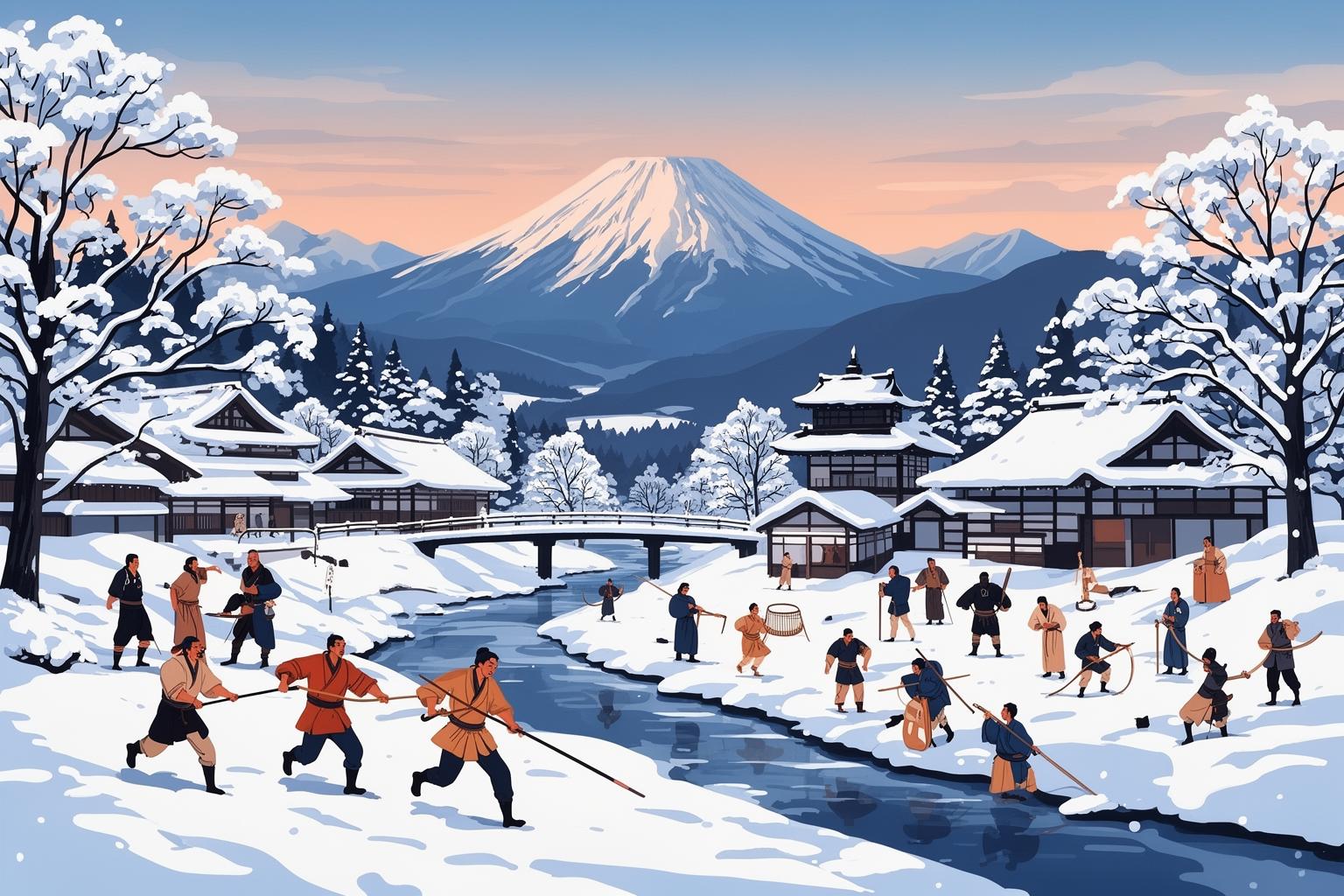
If the story ended with everyone being beautifully sad all winter, no one would live in Yukiguni. Yet people do, and they have for centuries. This serves as a crucial and powerful counterpoint to the melancholy: an extraordinary, deeply ingrained resilience. While the weight of the snow fosters a quiet, introspective spirit, it also forges an iron will. The Japanese have a word for this: gaman (我慢). Often translated as ‘endurance’ or ‘patience,’ these translations don’t fully capture its essence. Gaman is the act of enduring the seemingly unbearable with patience and dignity. It is a virtue, symbolizing maturity and strength. A related concept is nintai (忍耐), meaning perseverance or fortitude. Yukiguni essentially serves as a six-month-long national training ground for gaman and nintai. Complaining about the snow is not an option. Nor is raging against it. Instead, people quietly, methodically, and collectively manage it: shoveling roofs, helping elderly neighbors, clearing paths to the street—they simply get through it. Together. This spirit of stoic endurance is one of the most remarked-upon traits of Japanese culture, especially evident during natural disasters like earthquakes and tsunamis. The orderliness, the absence of looting, the calm resolve to rebuild—that is the spirit of gaman. Its roots run deep in the snows of Yukiguni, where for generations survival depended not on individual heroism, but on collective, uncomplaining effort. The resilience of the snow country is not merely passive endurance; it is an active, ingenious, and communal struggle for life and light during the darkest months.
Community as the Ultimate Winter Gear
In a place where a single snowstorm can isolate you entirely, you learn quickly that rugged individualism is a death sentence. The true strength in Yukiguni lies in community. Survival is a team effort. This fundamental truth has shaped the social fabric of these regions for centuries. Neighbors are not just those living next door—they are your lifeline. Helping one another clear snow, known as yukikaki, is not only a chore but a vital communal ritual. Everyone is responsible for maintaining paths in their area to ensure life goes on. This deep interdependence fosters exceptionally strong community bonds and explains the power of group harmony in Japanese society. The saying goes, “The nail that sticks up gets hammered down.” In Western contexts, this is sometimes viewed negatively—as suppression of individuality. Yet, in Yukiguni, it originated as a survival strategy: conforming to the group, doing one’s part, and avoiding trouble were essential for the village to endure winter. This collective need for joy and release also gives rise to spectacular winter festivals—more than mere celebrations, these are acts of spiritual defiance against darkness and cold. Consider the Yokote Kamakura Festival in Akita, where people build hundreds of beautiful igloo-like snow huts, light candles inside, and offer sweet rice cakes to visitors—creating warmth and light in a frozen world. Or the Tokamachi Snow Festival in Niigata, a massive event showcasing giant, elaborate snow sculptures demanding immense collective effort. These festivals powerfully remind us that even in the depths of winter, community can create beauty, warmth, and reasons to celebrate life.
Ingenuity Born from a World of White
Enduring the snow is not just about attitude; it requires the right technology and knowledge passed down through generations. The architecture of Yukiguni exemplifies climate-specific design. The most famous example is the gassho-zukuri farmhouses of Shirakawa-go and Gokayama, featuring massive, steeply pitched thatched roofs to shed heavy, wet snow and provide spacious attics for sericulture (raising silkworms), a key winter industry. These houses stand as brilliant examples of folk engineering. In many snow country towns, you’ll find gangi-zukuri (雁木造), covered walkways extending from the fronts of homes and shops, creating continuous snow-free corridors for pedestrians. This simple yet highly effective solution keeps commerce and daily life moving even when streets are buried. Food culture in this region also reflects remarkable ingenuity. With no fresh vegetables for months, preservation became vital. This area is the heartland of Japan’s fermentation and pickling traditions. Vegetables are transformed into a vast array of tsukemono (pickles), while miso and soy sauce production flourish. Fish is salted and dried. This process isn’t merely about making food last; it’s about crafting complex, umami-rich flavors from simple ingredients. Additionally, the culture of nabe (hot pot) is central—on cold nights, nothing brings a family together like sharing a bubbling pot of broth, vegetables, and meat. It’s a communal, warming, and deeply comforting ritual that embodies the culinary soul of Japanese winter. This ingenuity reveals that the people of Yukiguni are not passive victims of their environment; they are active, intelligent agents who have adapted, innovated, and created a rich, sustainable way of life in one of the world’s harshest climates.
So, Why Does Yukiguni Matter?
Alright, so it’s a challenging place rich with history. But why should you, a contemporary traveler or an inquisitive observer of Japan, care about this seemingly distant and somber world? Because understanding Yukiguni is essential to understanding Japan as a whole. The values and behaviors shaped in the snow country are not limited to those regions—they are embedded in the national cultural DNA. The stoic ideal of gaman is taught to every Japanese person, regardless of whether they have experienced a two-meter snowbank. It’s the spirit that drives a Tokyo office worker to quietly endure a 14-hour day without complaint. It forms the basis of the careful preparation and calm execution seen in everything from the tea ceremony to a factory assembly line. The emphasis on the group over the individual, a concept that may perplex Westerners, becomes clear when you recognize it as a winter survival strategy. Moreover, the Japanese sensitivity to the changing seasons—a defining cultural trait—is heightened to an almost intense degree in the snow country. In a place where spring is not a gentle shift but a dramatic, life-changing burst of green following months of white, you come to deeply appreciate the fleeting beauty of each season. This notion of mono no aware, the awareness of the impermanence of things and the bittersweet pathos it brings, is felt most strongly here. Cherry blossoms are cherished across Japan precisely because their beauty is so brief, a lesson the snow country relearns every year when the short, glorious summer is inevitably swallowed again by winter.
The Echo in Modern Japan
The spirit of Yukiguni can be sensed even amid the hyper-modern chaos of Shibuya Crossing. It’s apparent in the quiet patience of those waiting for the light to change. It’s evident in the meticulous care given to a perfectly arranged bento box. It’s found in the profound cultural appreciation for the first snowfall in Tokyo, even if it’s only a light dusting. Resilience, quiet endurance, an appreciation for subtle beauty, and a deep-seated understanding that hardship is part of life to be endured—not resisted—are all whispers of the snow country. This doesn’t mean every Japanese person is stoic; far from it. But the cultural default setting is one of perseverance and collective responsibility. Understanding its origins in the harsh, beautiful, and demanding world of Yukiguni helps to clarify much that can seem confusing or contradictory about modern Japan. It offers a crucial piece of the puzzle, a glimpse into the “why” behind the “what.” It’s the quiet, monochrome backdrop that gives the vibrant colors of modern Japan their depth and meaning. It’s the silent, heavy winter that makes spring’s explosion of joy so much more profound.
Beyond the Powder: How to Actually Experience Yukiguni
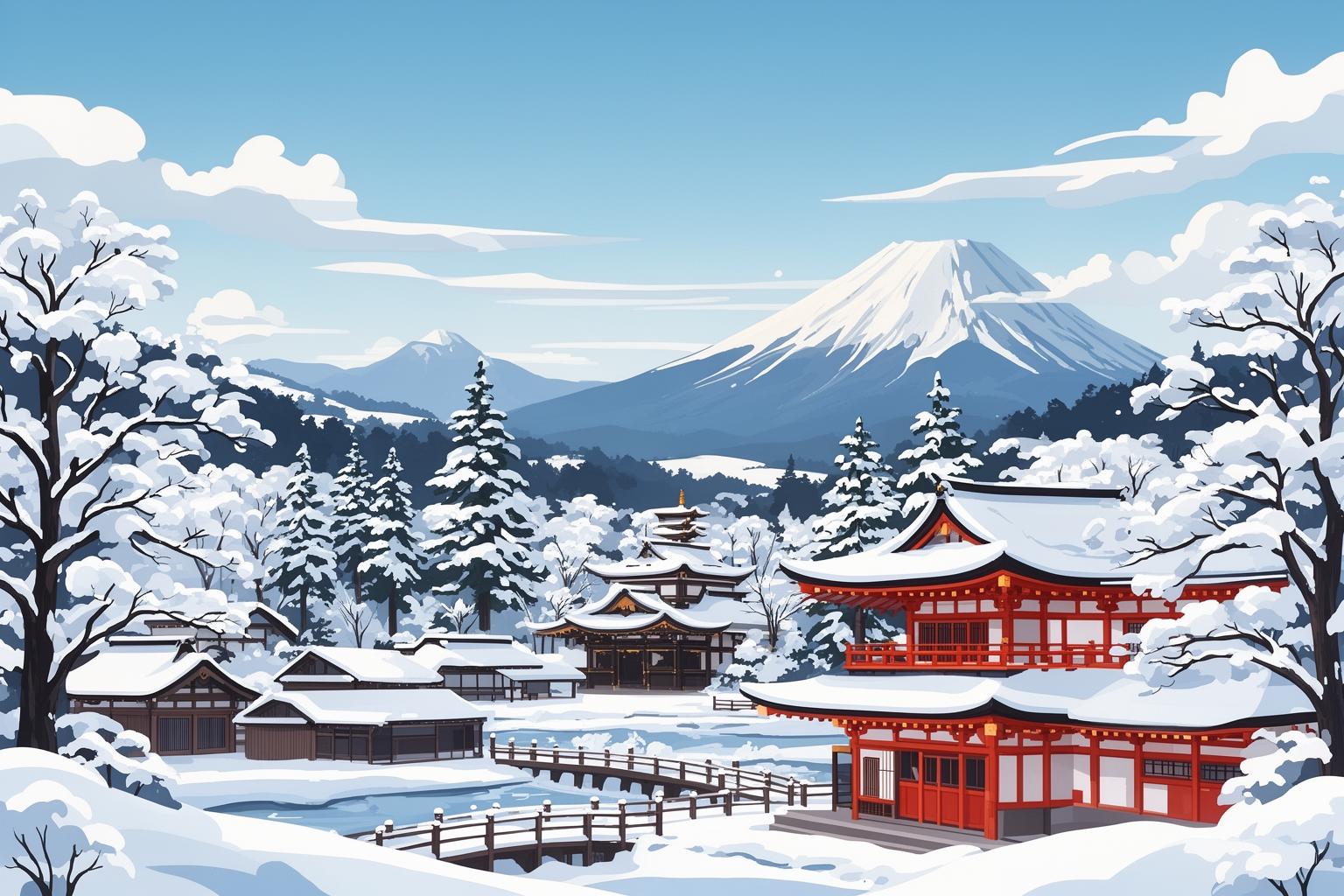
If you’re curious about this quieter side of Japan, how do you truly experience it? First, you need to adjust your intentions. The goal isn’t to conquer the mountain or chase the deepest powder. It’s to soak in the atmosphere. That means steering clear of the large, international ski resorts designed to mimic Aspen or Whistler. Instead, venture to the smaller, older, and more tranquil corners of the snow country. Visit an old onsen (hot spring) town in Tohoku, such as Ginzan Onsen in Yamagata, where gaslights flicker over snow-dusted wooden inns and the only sounds are the flowing river and the soft shuffle of people in yukata. Stay in a family-run ryokan (traditional inn) in Niigata. Savor the local cuisine. Spend an afternoon in a small-town café simply watching the snow drift outside. The aim is to slow down to winter’s pace. The true experience of Yukiguni isn’t about adrenaline; it’s about a long, slow immersion. Take a local train winding through the mountains. Sit in an outdoor onsen while snowflakes melt on your head, the contrast between hot water and cold air a startling, life-affirming sensation. Walk through a silent cedar forest, its branches heavy with snow. Just be. Listen to the silence. Observe the endless shades of gray in the sky. Feel the weight of the world and the quiet strength needed to bear it. This journey isn’t for your highlight reel—it’s for your soul. It’s about realizing that the real power of a Japanese winter lies not in exhilarating descents but in its profound, sometimes challenging stillness.
So yes, the ‘Japow’ is real. It’s incredible. Go enjoy it. But remember, it’s only the shimmering surface of a far deeper, darker, and more beautiful ocean. The true soul of Japanese winter is found in the quiet towns and silent mountains of the Yukiguni. It’s a place that teaches the beauty of melancholy, the strength of resilience, and the warmth of human connection amidst the coldest places. It’s not about epic highs, but the deep, resonant quiet that follows. It’s a vibe check from mother nature herself—and if you’re brave enough to embrace it, it’s one you’ll never forget. This is the side of Japan that doesn’t shout but whispers—and you must be very, very still to hear it.