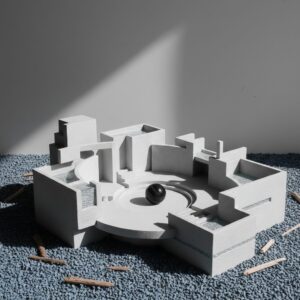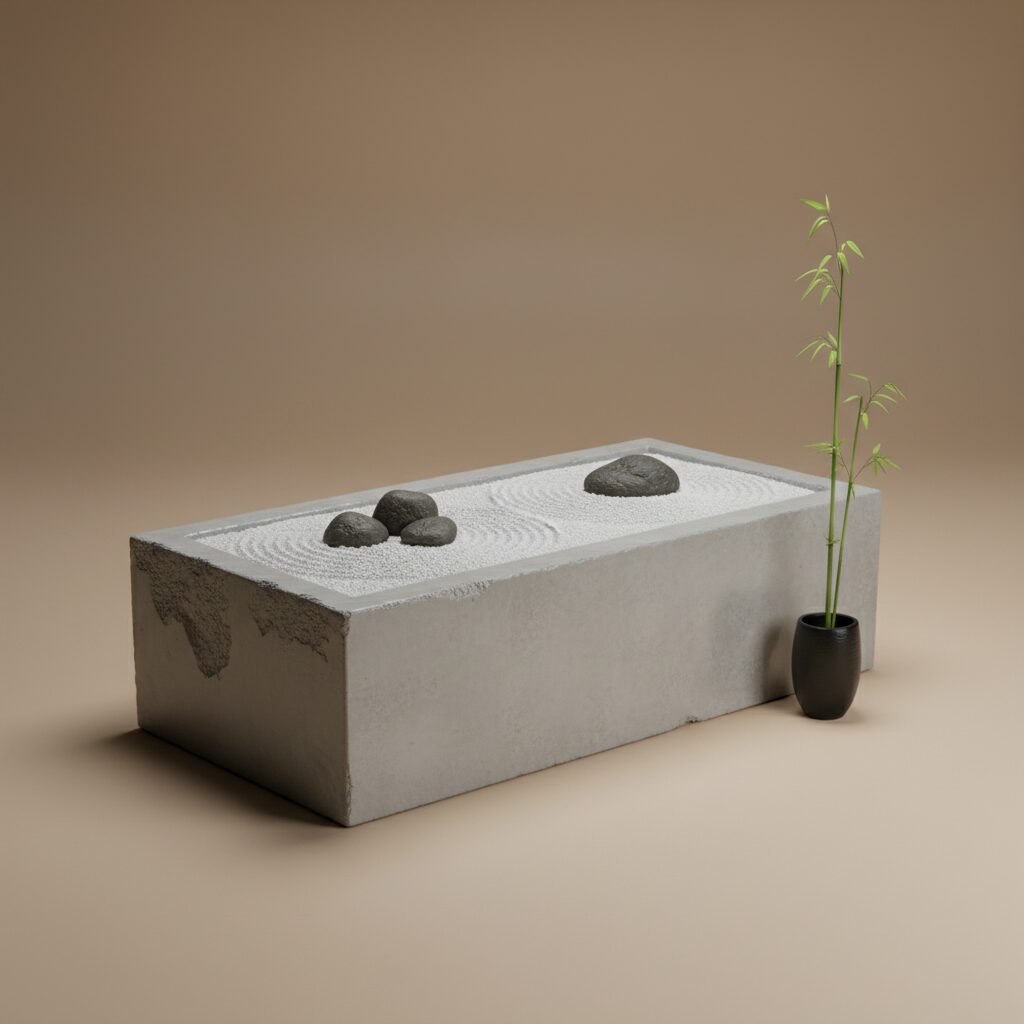
Yo, what’s up. It’s Yuki. Let’s get real for a sec. You’re scrolling through your feed, planning that dream trip to Japan, and you keep seeing these pics. Massive, super-smooth grey walls. Geometric shapes. Stark, empty rooms with just a single slit of light cutting through the darkness. The captions are always throwing around words like ‘Zen,’ ‘minimalist,’ ‘spiritual.’ And you’re probably thinking, ‘Hold up. Spiritual? It looks like a high-fashion parking garage. Or a villain’s lair from a sci-fi movie.’ It’s all concrete. It looks cold, hard, maybe even a little… intimidating? Is this just another one of those aesthetic trends that looks sick on camera but feels totally different, maybe even a bit underwhelming, IRL? It’s a legit question. Why are people flocking to these concrete structures and calling them soulful sanctuaries? Is it all just hype for the ‘gram, or is there a legit, deep reason why the architecture of this one guy, Tadao Ando, hits so different?
Here’s the lowdown: It’s not about the concrete. Not really. For Ando, a totally self-taught legend who started as a boxer, that raw, unadorned concrete—a style called uchi-panashi—is the ultimate neutral canvas. It’s a quiet stage. The real stars of the show are way more epic: pure light, the wildness of nature, and the inner workings of your own mind. His buildings are less like structures to be looked at and more like experiences to be felt. They’re designed to shut out the chaotic noise of the modern world and force you into a conversation with yourself. It’s a total vibe shift. You don’t just visit an Ando building; you participate in it. It’s a masterclass in Japanese philosophy, molded into physical form. So, let’s ditch the surface-level aesthetics and do a deep dive into the why. Why does this bare, seemingly brutal material have the power to create some of the most profound and spiritual spaces in the world? Let’s unpack the genius, the philosophy, and the pure, unadulterated feeling of Ando’s concrete world.
To see how this raw material shapes everyday life, explore the unique atmosphere of Japan’s Danchi estates.
Deconstructing the Concrete Vibe: It’s Not What You Think
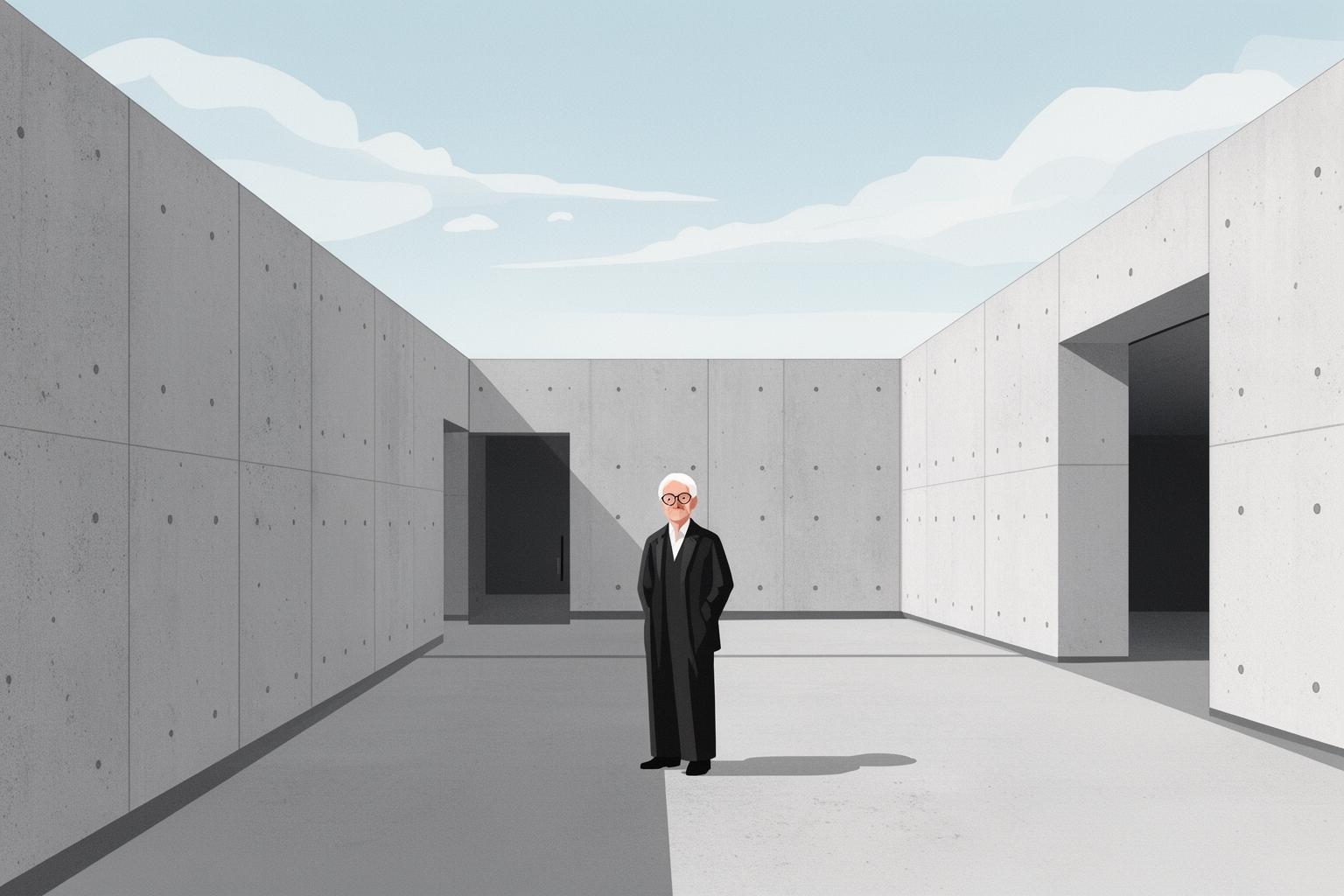
First and foremost, we need to clear up a common misconception. When people view Ando’s work, especially through a Western lens, the word ‘Brutalism’ often springs to mind first. On the surface, this makes sense—both prominently feature raw concrete. However, this comparison fundamentally misunderstands the intention and emotional resonance. It’s like equating a heavy metal guitar riff with a silent monk’s chant simply because both produce sound. Their underlying philosophies are worlds apart, and grasping this difference is essential to fully appreciating Ando’s work.
The Misconception: Brutalism vs. Japanese Minimalism
Western Brutalism, which gained prominence in the mid-20th century, often evokes a heavy, monumental, and sometimes intimidating presence. Picture massive government offices or sprawling social housing. The term derives from the French béton brut, meaning ‘raw concrete.’ This style aimed to highlight the material’s raw power and honesty, creating unapologetically massive, fortress-like structures. There’s a certain heaviness and a top-down assertion of dominance characteristic of Brutalism. While it can be awe-inspiring, words like ‘serene’ or ‘spiritual’ rarely come to mind. It’s architecture that conveys strength and solidity through unyielding form.
Now, consider Ando. Yes, he uses raw concrete, but his approach is pure Japanese minimalism, refined through an exceptionally meticulous craft. His signature uchi-panashi concrete is on a caliber of its own. It’s neither rough nor gritty—famous for its smoothness, almost like silk to the touch. Achieving this finish is an extraordinary process. The wooden formwork used for the concrete is crafted with the precision of traditional Japanese carpentry. The placement of tie-rod holes—those iconic small circles visible on his walls—is carefully calculated to establish a perfect, rhythmic pattern. Not a single flaw, crack, or bubble is allowed. This perfectionism is deeply rooted in the Japanese concept of monozukuri—the spirit of craftsmanship and relentless pursuit of excellence. This concrete does not celebrate brute strength; it highlights its potential for flawless, serene beauty. It doesn’t feel heavy but is meant to seem light, to dissolve into planes of pure surface and shadow. The aim isn’t to dominate but to create a tranquil, perfect emptiness.
The Philosophy of Nothingness: Zen and the Void (Ma)
This preoccupation with ’emptiness’ is at the heart of Japanese aesthetics and, by extension, Ando’s entire philosophy. In the West, empty space is often regarded as something to be filled. An empty room needs furniture; a blank page needs words. But in Japan, especially within Zen philosophy, emptiness (mu) isn’t absence. It’s a space of pure potential, freedom, and infinite possibility. It’s the silence that gives music meaning, the unpainted segment of a scroll that enhances the painted portion.
This concept manifests in the architectural and aesthetic principle of ma (間). Ma is the negative space, the interval, the gap between elements. It’s not merely empty space but a deliberate, meaningful component of the overall composition. Think of a traditional Japanese room with minimal furnishings. The empty space is crucial, enabling energy to flow and the mind to find calm. Ando is a master of ma. His buildings abound with it. Those long, unadorned concrete corridors? That’s ma. The expansive, bare walls? That’s ma. The spaces that seem functionally purposeless? That’s ma.
These spaces are crafted to make you conscious of yourself within them. Walking down a long, silent hallway where your footsteps echo against concrete forces you into the present moment. Your mind ceases to race. You’re not distracted by clutter or decoration—only space, light, and your own thoughts remain. This is architecture’s equivalent of meditation. The ‘nothingness’ of the concrete walls fosters a mental ‘nothingness’ that encourages introspection and a deeper connection to your environment. The building doesn’t dictate what you should think or feel; it provides a pristine setting for personal discovery. It’s a radical notion—that the most powerful aspect of a building might be what’s consciously left out.
The Holy Trinity: Concrete, Light, and Nature
To truly grasp what Ando is doing, you must understand that concrete is never isolated. It always belongs to a sacred trinity: the solid, unchanging concrete; the fleeting, ever-shifting light; and the living, breathing essence of nature. These three elements engage in a continuous, dynamic conversation in his work. The concrete sets the stage—a quiet, minimalist backdrop—while light and nature enact a dramatic, never-ending performance upon its surfaces. This interaction elevates the architecture from a mere structure to a living, spiritual experience.
The Drama of Light: A Slit as a Statement
This is most famously exemplified in his masterpiece, the Church of the Light in Ibaraki, Osaka. Renowned worldwide for good reason, the chapel is a simple concrete box, where the wall behind the altar is cut by two slender slits—one vertical, one horizontal—that form a cross. But here’s the astonishing part: there is no physical cross. The cross isn’t an object made of wood or metal; it is a void in the solid wall, filled entirely with pure, unfiltered light. It stands as one of the most powerful architectural statements ever conceived.
Ando’s genius lies here. He doesn’t just admit light into a building; he sculpts it. He treats light as a tangible, equally essential material alongside concrete. Through sharp, precise openings—slits, skylights, carefully positioned windows—he captures, directs, and intensifies light. Light is more than illumination; it is a storyteller. As the sun traverses the sky, the cross of light inside the church shifts in intensity and angle. Light beams that sweep across the walls of his museums and homes move throughout the day, marking time’s passage. This connects the building’s occupants to the cosmic rhythms of the universe, a fundamental principle in Zen philosophy. You become keenly aware of the time, the season, the weather. The building is never static; it is a living sundial.
The deep, dark gray of the concrete plays a vital role. It’s a play on contrasts, what Japanese aesthetics term in’yō (the Japanese version of yin and yang). The profound darkness of the material causes the captured light to appear infinitely brighter, more sacred, more divine. Painting the walls white would not evoke the same emotional response. The velvet darkness of the concrete absorbs excess light, allowing the focused beams to have maximum dramatic impact. This tension between the heavy, permanent concrete and the ethereal, fleeting light creates a space that feels both grounded and transcendent simultaneously.
Bringing the Outside In: Nature as a Partner
Equally important is nature. For Ando, a building should not overwhelm its landscape; it should engage in a respectful dialogue with it. He often uses concrete walls not to exclude nature, but to frame it, curating your experience. It’s as if the building becomes a viewfinder, compelling you to see the sky, a lone tree, or the water’s surface with fresh intensity and appreciation.
The ultimate example is the Chichu Art Museum on Naoshima, the art island. “Chichu” literally means “in the earth.” To protect the island’s breathtaking coastline, Ando opted to bury most of the museum underground. An underground museum might suggest darkness and claustrophobia, but here, the opposite is true. The entire design revolves around geometric courtyards open to the sky. As you move through the subterranean galleries, you’re constantly returned to these open-air spaces where you can feel the wind, watch the clouds drift, and sometimes even catch the rain. You are literally inside the earth while maintaining contact with the heavens. It’s a profound experience that connects you viscerally to the planet.
In the room housing Claude Monet’s ‘Water Lilies’ series, the only light is natural, filtered from the sky above. The light varies with the time of day and weather, meaning you will never see the paintings exactly the same way twice. The art becomes a living entity, responding to the natural world outside. This reflects a core Shinto belief deeply embedded in Japanese culture—the idea that nature is divine and that we are part of it, not separate from it. Ando’s architecture fosters this sense of unity.
Another striking example is Awaji Yumebutai, a vast complex built on an island scarred by quarrying and devastated by the Great Hanshin Earthquake of 1995. Rather than erecting a mere monument, Ando undertook a monumental act of healing the land itself. He designed the Hyakudanen, or ‘100-stepped gardens,’ a sprawling hillside arrangement of 100 small, square flowerbeds cascading down the slope. It is a co-creation with nature, where the rigid geometry of the concrete planters provides a framework for the wild, organic beauty of the flowers. This memorial is not about death and destruction, but about life, regeneration, and nature’s enduring power to reclaim and heal. His architecture does not simply occupy the land; it merges with, respects, and sometimes even helps restore it.
The Human Experience: It’s All About How You Feel
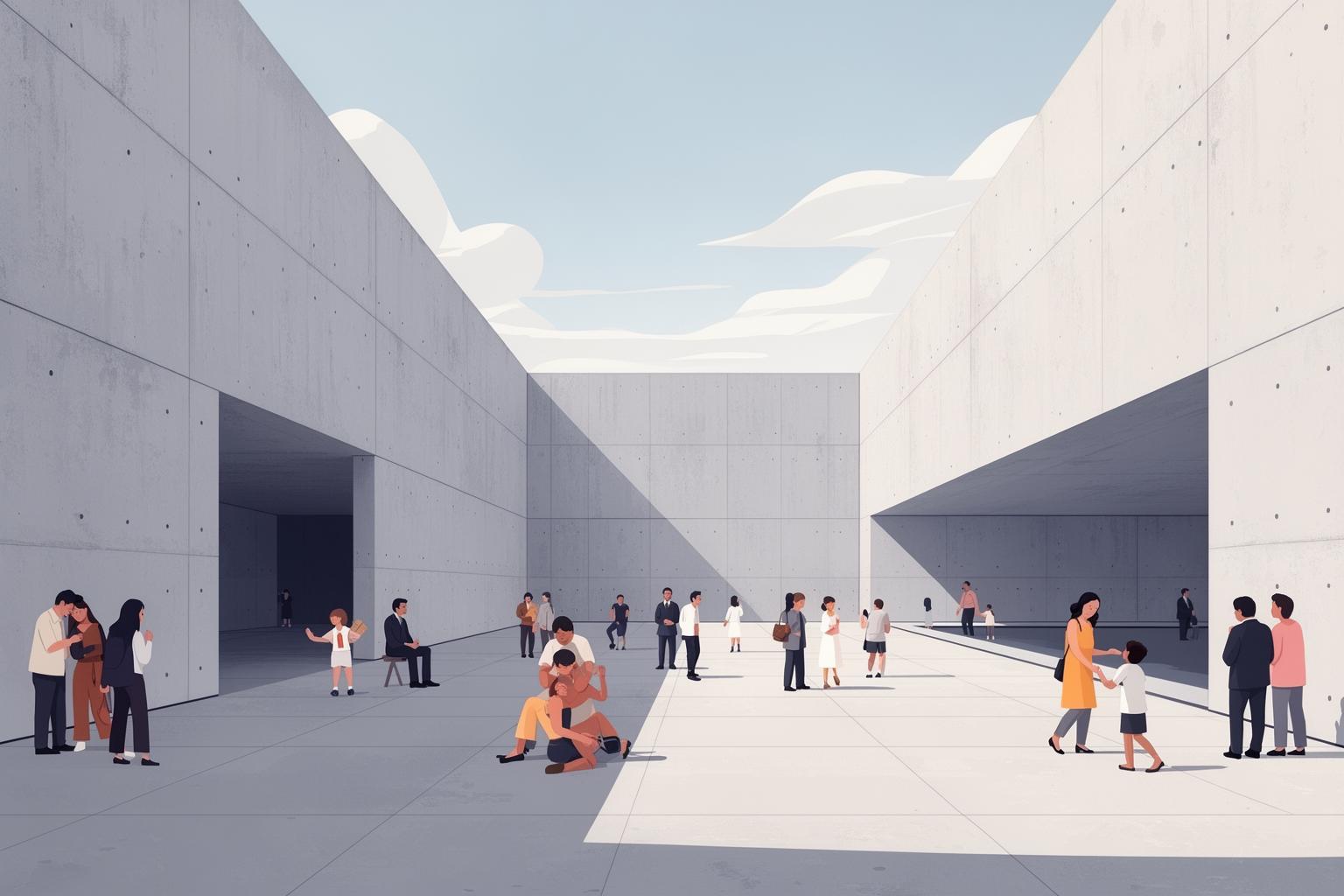
Ultimately, the brilliance of an Ando building lies not only in its ingenious use of materials or its philosophical foundations but in how it makes you, the person moving through it, feel. His architecture is profoundly experiential, crafted to choreograph your movements, engage your senses, and transform your state of mind. It’s not a passive encounter; it demands your full attention and, in return, offers an opportunity for genuine introspection. It is architecture as a spiritual practice.
The Journey, Not the Destination: The Power of the Path
One of the first things you realize in an Ando building is that you rarely proceed in a straight line to your destination. The circulation paths tend to be long, winding, and indirect. He encourages you to take the scenic route. You might ascend a flight of stairs, walk along an outdoor corridor exposed to the elements, descend another set of stairs, and curve around a corner before finally arriving. This can feel confusing or inefficient if you are accustomed to Western designs that prioritize moving from point A to point B as quickly as possible.
However, this is entirely deliberate. The approach is deeply inspired by the layout of traditional Japanese temples and tea gardens. The winding path (roji) leading to a tea house, for instance, is more than just a walkway—it’s a ritualistic journey meant to help you shed worldly concerns, cleanse your mind, and prepare for the ceremony ahead. Ando’s concrete corridors serve a similar purpose. The passage through the building functions as a form of purification, a forced meditation. The long, silent walks, the play of light and shadow, unexpected glimpses of nature—all work to slow you down and heighten your presence and mindfulness. By the time you reach the main gallery, chapel, or stunning viewpoint, your mind has shifted. No longer a hurried visitor, you become a calm observer, ready to fully experience the space. The path itself becomes as significant as the destination.
Wabi-Sabi in Concrete Form? Yeah, Kinda.
At first, this might seem contradictory. Ando’s concrete is so perfect, pristine, and geometrically precise. How could it possibly connect with the Japanese aesthetic of wabi-sabi, which celebrates beauty in imperfection, impermanence, and a humble, rustic nature? It appears to be the exact opposite.
Yet, a closer look reveals the link. At its heart, wabi-sabi is about valuing the authentic, unvarnished essence of materials and accepting the natural cycle of life and decay. Ando’s concrete is fundamentally honest. It is what it is—free of paint, tiles, or cladding that might conceal its true nature. It is raw and exposed—a form of humility and truthfulness that resonates with wabi-sabi ideals.
More importantly, Ando’s concrete is intended to age. It isn’t meant to remain in a state of flawless perfection indefinitely. Over time, exposed to the elements, the silky-smooth surfaces will inevitably stain from rain. Moss may begin growing in crevices. The color will gently shift and weather over decades. Ando embraces this. He recognizes his buildings as living entities that record the passage of time on their surfaces. This acceptance of impermanence—of the beauty that arises through aging and weathering—is pure wabi-sabi. The building’s soul emerges not just through its initial perfection but in how it gracefully evolves and matures, becoming ever more integrated with its natural environment. Its ultimate beauty lies not in resisting change but in surrendering to it.
So, Is It Worth the Hype? The Real Talk
We’ve explored the philosophy, materials, and techniques in depth. Yet, the key question remains: When you actually visit one of these sites, does it live up to the hype? Is it really worth making a pilgrimage to a remote island just to see a concrete building? The answer is… it depends entirely on you.
Why It Resonates Differently with Different People
Let’s be frank: Ando’s architecture is not for everyone. If you seek warmth, comfort, vibrant colors, or decorative details, you will likely be disappointed. His spaces can feel stark, severe, and to some, deeply empty and cold. I’ve seen visitors enter one of his museums, look around for a few minutes, and leave confused and underwhelmed. They expected a spectacular visual display but instead found quiet emptiness. They anticipated the architecture to entertain them, but in reality, it awaited their participation: to be still and listen.
The experience within an Ando building directly reflects the mindset you bring to it. If you rush through, phone in hand, trying to capture the perfect angular shadow for social media, you will miss the essence. You’ll get the photo, but not the feeling. These spaces counterbalance the fast-paced, information-overloaded world we inhabit. They are meant to be slow. They require patience. You must be willing to sit on a concrete bench and observe how the light shifts across the floor for ten minutes. You need to stand in an open courtyard and simply feel the breeze. This architecture rewards stillness and reflection. It’s less about visual spectacle and more about presence.
The Verdict: A Contemporary Pilgrimage
So, is it worth it? Absolutely. But you must understand what you’re committing to. Visiting an iconic Ando site like the Chichu Art Museum or the Church of the Light is not just tourism. It’s a modern pilgrimage. An active, participatory experience. The massive concrete walls shield you from outside noise and distractions. They create a sanctuary, a sacred space where only the fundamental elements matter: stone, light, water, air, and the space within your own mind.
Why is this bare concrete so spiritual? Because the concrete itself is not the spiritual focus. The concrete is a vessel. It forms a pure, silent, and powerful stage for a profoundly personal, inward journey. It removes all non-essential distractions, leaving you with heightened awareness of your own presence in space and time. It functions like a traditional Zen temple—not by imitation, but by achieving the same purpose: to still the restless mind.
In our chaotic, constantly connected lives, the chance to disconnect, to be in a space of profound silence and simplicity, is perhaps the most radical and essential luxury. That’s the true gift of Tadao Ando’s architecture. It’s not merely an impressive aesthetic. It’s a tool for discovering the quiet center within yourself. And that is undeniably a journey worth making.