What’s up, fellow culture explorer? Hiroshi here. Ever been to Japan and just felt… a vibe? It’s hard to put your finger on it. You see it in the way a ramen chef meticulously cleans his tools after closing, the way old ladies tenderly wrap produce at the market, or even how a discarded bicycle seems to be placed respectfully by the trash, not just thrown. It feels like people here have a different relationship with their stuff. It’s not just ownership; it’s something deeper, a quiet conversation between person and object. You might have chalked it up to Japan being “polite” or “clean,” but that’s just scratching the surface. The real tea is way wilder, and it goes back centuries.
What if I told you that in the Japanese imagination, that old, forgotten umbrella you left on the train could, after a hundred years, spring a single leg, grow a giant eye, and hop around looking for you? Or that a worn-out pair of sandals could sprout arms and legs and run around the house at night, chanting and causing a ruckus? Sounds like a fever dream, right? But this is the world of the Tsukumogami (付喪神) – the yokai, or supernatural beings, born from everyday items that have reached a ripe old age. And trust me, this isn’t just some quirky folklore for anime plots. It’s a key that unlocks a fundamental part of the Japanese psyche. It’s the OG explanation for that intense respect for inanimate objects, the almost spiritual hatred of wastefulness known as mottainai, and why everything here, from a teacup to a temple, feels like it has a soul. So, if you’ve ever wondered why Japan is the way it is—this fascinating, confusing, and deeply soulful place—let’s dive into the story of the yokai that live in our junk drawers. It’s the ultimate lesson that here, nothing is ever truly inanimate.
This deep-seated animism, where even a coffee shop can feel alive, is further explored in our look at Japan’s haunted kissaten.
What Exactly is a Tsukumogami? The 100-Year Glitch
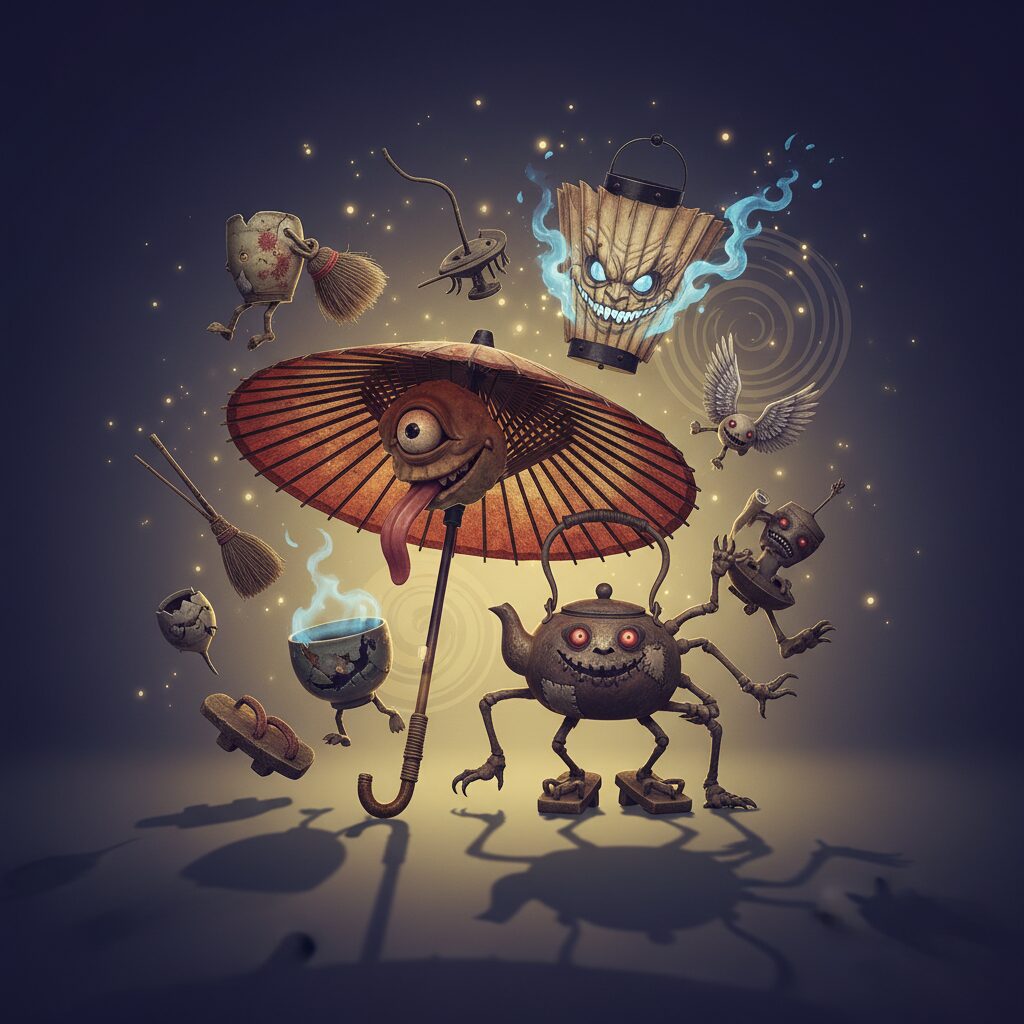
Alright, let’s clarify the lore. The concept of Tsukumogami is elegantly simple yet profoundly rich. At its heart, when a tool or household item—something you handle daily and rely on—reaches its 100th birthday, it transforms. This isn’t a curse, nor exactly a blessing, but more like a spiritual coming-of-age. The object awakens, gains a soul or spirit (kami or yore), and becomes a yokai. The name itself offers a clue: Tsukumo (九十九) can mean ‘ninety-nine,’ symbolizing the eve of the hundredth year, and gami (神) means god or spirit. So, it’s the ‘ninety-nine spirit,’ poised on the brink of becoming something greater. It’s like an upgrade for your old belongings, but instead of fixes and patches, it gains sentience, personality, and often, a grudge against its former owner. It’s the ultimate transformation from forgotten object to a supernatural entity with will.
The Origin Story: More Than a Ghost, an Evolution
This idea springs from a mix of Shinto animism—the belief that gods and spirits dwell in all things—and a touch of Buddhist influence. Its most famous portrayal appears in Muromachi period (1336-1573) scrolls known as the Tsukumogami Emaki. The tale tells of a thorough house cleaning where many old, discarded tools were thrown away. Feeling deeply disrespected after faithful service, they banded together and decided, ‘No, we won’t disappear like this.’ They spontaneously morphed into yokai, held a grand rebel parade, and plotted revenge against the humans who had abandoned them. This parade became known as the Hyakki Yagyō or ‘Night Parade of One Hundred Demons,’ an iconic scene in Japanese folklore. It’s a wild, vivid, and slightly frightening march of animated objects, a visual warning of what happens when you fail to value your belongings.
Here are some classic members of this supernatural troupe:
The Original Tsukumogami
Kasa-obake (傘おばけ): The quintessential Tsukumogami. This paper umbrella typically features a single large eye, a long tongue sticking out, and hops around on one leg (formerly the handle). Its character leans less toward a fearsome monster and more toward a mischievous trickster. It represents a simple, useful item left behind in a storm or forgotten in a corner, now alive to startle unwary people. It’s not truly harmful; it just wants attention.
Bakezōri (化け草履): Picture a pair of traditional straw sandals (zōri). Now picture one with little arms and legs, darting through your home at night, kicking up dust and chanting nonsense. That’s a Bakezōri. It arises from worn-out sandals carelessly discarded. Its main role is to create noise and minor chaos around the house—a pointed jab at the owner who didn’t properly honor it.
Chōchin-obake (提灯おばけ): This one’s a paper lantern that, upon turning 100, splits open along a wooden rib to reveal a gaping mouth, with a single eye emerging from the paper. It floats about, attempting to frighten people with its eerie visage. Like Kasa-obake, it’s more about shock than harm—a ghostly remnant of light and festivity now haunting the darkness it once brightened.
Biwa-bokuboku (琵琶牧々): This yokai is a bit more refined—a biwa, a traditional Japanese lute, which grows a human-like face and body as a Tsukumogami. Often depicted as a blind priest, it laments its neglect. This spirit embodies sorrow. An instrument once meant to create beauty, now left to gather dust. Its haunting presence reminds us of wasted potential and forgotten artistry.
Good, Bad, or Just Annoying? The Tsukumogami Nature
So what about their personalities? Are they malevolent? Usually not. A Tsukumogami’s emotional nature reflects its past life. If an object was treasured, carefully used, and respectfully retired, it might become a kind, protective spirit. It could even turn into a marebito, a sacred guest spirit bringing good luck. These are the Tsukumogami with good vibes, sticking around to watch over the household that valued them.
But honestly, the more intriguing ones are the bitter spirits. Those broken, tossed aside thoughtlessly, replaced by shinier models. These Tsukumogami are fueled by feelings of betrayal and abandonment. Their goal isn’t usually to kill but to seek payback and make themselves known. They trip you, hide your keys, make eerie noises in the attic—it’s the ultimate reminder to treat your belongings with respect. They symbolize being taken for granted. Their mischief is a form of protest, a supernatural call for recognition. They are ghosts born from our neglect, haunting us with inconvenient, irritating, and sometimes truly unsettling pranks. It’s less like The Exorcist and more like a poltergeist with a grudge from being left out in the rain one too many times.
Beyond Folklore: How Tsukumogami Explains Modern Japan
Old ghost stories are fascinating, but how does a one-legged umbrella yokai help explain why the cashier at 7-Eleven carefully wraps your single onigiri as if it’s a Fabergé egg? This is where Tsukumogami moves beyond folklore to become a lens through which we can view an entire culture. These stories are more than just tales; they form the narrative foundation for deeply embedded social behaviors and philosophies still highly relevant today.
The “Mottainai” Mindset: The Ultimate Philosophy Against Waste
If there’s one word that perfectly encapsulates the spirit of Tsukumogami in contemporary life, it’s mottainai (勿体無い). This term is notoriously difficult to translate literally. It’s not merely ‘wasteful.’ Rather, it conveys a profound, almost Buddhist sense of regret over failing to use something’s full potential. It’s the feeling you get when you throw away food that could have been eaten or discard something that could have been repaired. It’s a feeling of disrespecting the very essence—the ‘body’ and ‘spirit’—of an object.
This is Tsukumogami philosophy in practice. You don’t just discard things because it makes financial sense; you avoid it because it’s disrespectful to the object itself. You are rejecting the labor invested in creating it, the natural resources that shaped it, and its history of service. The fear isn’t merely that a yokai might haunt your house; it’s about a moral and spiritual failure. You failed to recognize the value, the ‘life,’ in what you owned. This mindset pervades many aspects of Japanese life:
Kintsugi (金継ぎ): The art of repairing broken pottery by mending fractures with lacquer dusted or mixed with powdered gold, silver, or platinum. Rather than concealing the cracks, kintsugi highlights them. The philosophy is that the object’s history of damage and repair adds to its beauty, making it more valuable, not less. It contrasts sharply with disposable culture. It transforms a ‘broken’ object into something whole and even more beautiful through care and respect. It’s as if the bowl itself is told, ‘Your scars make you unique,’ embodying Tsukumogami thinking.
Gift Wrapping (Tsutsumi): The meticulous attention to Japanese gift wrapping goes beyond aesthetics. It honors the object inside and the act of giving. The wrapping acts as a temporary home for the gift, a protective layer that reflects respect.
Finishing Your Plate: From an early age, children are taught to eat every single grain of rice. This isn’t just about avoiding fussiness; it honors the farmer who grew the rice, the cook who prepared it, and the life of the rice itself. Wasting food exemplifies mottainai at its peak.
Animism in Everyday Life: Discovering Kami Everywhere
The idea that a teapot might have a soul doesn’t arise out of nowhere. It’s rooted in Shinto, Japan’s indigenous religion, which is fundamentally animistic. Shinto teaches that kami—gods, spirits, or divine essences—reside in everything. They inhabit majestic waterfalls, ancient trees, intriguingly shaped rocks, the wind, and even the human-made objects we live with. This worldview blurs the boundary between the sacred and the ordinary. Your kitchen knife, sewing needle, and car all have the potential to house spirits.
This is why you can find rituals and shrines dedicated to even the most mundane items. These ceremonies acknowledge the service of objects and offer them a respectful end-of-life farewell. It’s essentially a funeral for your belongings.
Hari-kuyō (針供養): A memorial for broken needles and pins. Once a year, usually in February, seamstresses and kimono makers visit shrines or temples to stick their old, bent, and broken needles into soft blocks of tofu or konjac jelly. This practice thanks the needles for their service and provides them a gentle resting place. It beautifully expresses the Tsukumogami mindset: even a small, sharp piece of metal deserves gratitude and a peaceful retirement.
Ningyō-kuyō (人形供養): A memorial for dolls, which are believed to have a particularly strong potential to house spirits because they resemble humans and evoke intense affection. You cannot simply throw a doll away; that’s considered profoundly disrespectful and invites hauntings. Instead, people bring dolls to temples where priests perform rituals to pacify their spirits before ritual burning.
Cleanliness as Respect for an Object’s Soul
Have you ever noticed how clean everything is in Japan? This isn’t just a stereotype. From spotless subway floors to meticulously maintained homes, cleanliness is a national obsession. Much of this stems from the same animistic respect. A clean space is a respected space. The act of cleaning, o-soji, is almost ritualistic. It purifies the space and shows reverence for the environment and the objects within it. Allowing things to gather dust, break, or become neglected disrespects their spirit and creates an environment conducive to resentful Tsukumogami manifestations.
Consider Marie Kondo, the modern guru of tidying. Her KonMari method embodies pure Tsukumogami philosophy for a global audience. What is its most famous—and perhaps most unusual—aspect? You must hold each item and ask if it ‘sparks joy.’ If not, you thank the item for its service before discarding it. This is a contemporary ritual that prevents your old T-shirts from turning into vengeful yokai. It acknowledges their contribution to your life and grants them a peaceful farewell. While it may seem quirky to outsiders, for someone raised in an animistic culture, it makes perfect, intuitive sense. You are not only tidying your space but also clearing your spiritual conscience.
Spotting Tsukumogami Culture in the Wild
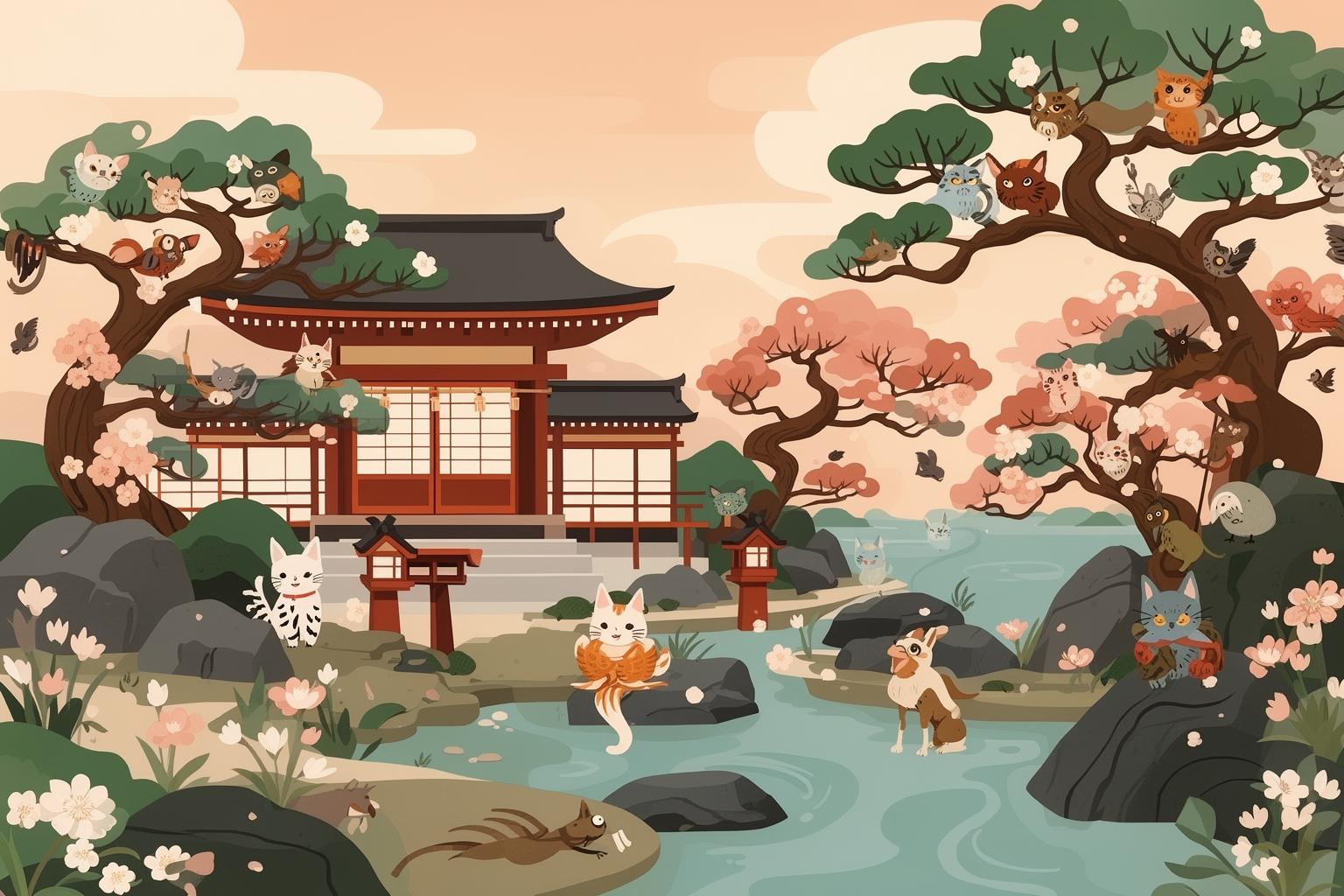
Once you know what to look for, you’ll start noticing the echoes of the Tsukumogami legend all over Japan. It’s not limited to temples or museums; it’s woven into everyday life, often hiding in plain sight. Here are some places where you can experience that feeling firsthand.
Antique Markets: Where Old Souls Find New Life
There’s no better place to sense the presence of potential Tsukumogami than at a Japanese antique market, or kottō-ichi. Markets like the Oedo Antique Market in Tokyo or the Kobo-san market at To-ji Temple in Kyoto are vast, enchanting gatherings. You’ll encounter rows of vintage tools, ceramics, kimonos, scrolls, furniture—all items steeped in history. Each one has been held, used, and lived with. As you stroll past the stalls, you’re doing more than just shopping; you’re exploring a library of lives. The sellers treat their wares with a reverence you rarely find in department stores. They can share the story behind a lacquer box or a set of carpentry tools. Buying here feels less like a simple purchase and more like an adoption. You’re choosing to become the next keeper of an object’s story, offering it a second life filled with respect and purpose. In essence, you’re rescuing it from the loneliness and neglect that might give rise to a vengeful yokai. This is less ‘thrifting’ and more like an adoption center for future spirits.
Kintsugi Workshops: Honoring the Scars
As mentioned earlier, kintsugi embodies the spirit of Tsukumogami reverence. While finished works can be admired in galleries, participating in a workshop transforms the experience. The process is slow and meditative. You carefully piece together broken fragments, fill the cracks with lacquer, and gently apply gold powder. Through this, you’re compelled to focus wholly on the object in your hands. You come to appreciate its shape, material, and history—including its ‘trauma.’ This philosophy reverses the Western idea of perfection. Here, a broken object isn’t ruined; it’s given a chance to become something even more meaningful. It’s a tangible expression of honoring an object’s journey. It teaches a powerful lesson about finding beauty in flaws and breathing new life into what might otherwise be discarded. You’re literally healing the object’s wounds and, in doing so, respecting its spirit.
From Temples to Your Airbnb: Notice the Little Things
You don’t have to attend a special event to witness this culture—just open your eyes. Notice how construction workers carefully stack their tools and cover them with a tarp at day’s end instead of just leaving them lying around. It’s a mark of respect for the tools of their trade. Look for small household Shinto altars, kamidana, tucked in corners of shops, restaurants, and homes, where offerings are made to local and household deities. Observe designated spots at shrines and temples for returning old luck charms (omamori) and talismans, which are ritually burned in a ceremony called otakiage. People don’t simply discard these sacred objects; they return them to the divine realm with gratitude. Even in your Airbnb, you might notice how remote controls are carefully placed or how slippers are neatly lined up at the entrance. These aren’t random acts of tidiness; they express a worldview in which every object has its place and deserves a fundamental level of respect.
So, Are the Japanese Scared of Their Toasters?
Alright, let’s ground this conversation for a moment. After all the talk about soulful sandals and vengeful lanterns, you might be wondering if the average person in Tokyo really worries about their ten-year-old microwave staging a revolt. And honestly… probably not, lol. It’s important not to romanticize this too much. The literal belief in Tsukumogami is not as widespread as it might have been centuries ago. However, the cultural essence remains.
The Modern Reality: A Blend of Tradition and Consumerism
Here’s the paradox: Japan is simultaneously one of the world’s most hyper-consumerist societies. It’s a place filled with convenience stores stocked with endless plastic-wrapped snacks, fast fashion giants like Uniqlo, gachapon machines dispensing countless plastic trinkets, and a relentless flow of new and improved electronics. The pressure to own the latest model of everything is intense. Items are made to be replaced, not repaired. This throwaway culture seems to stand in stark contrast to the entire mottainai and Tsukumogami philosophy.
So, how do these two worlds coexist? It’s like running two different operating systems on the same computer. One is the ancient, background OS of Shinto-Buddhist animism that murmurs messages of respect, longevity, and soulful connection to objects. The other is the flashy, modern app of global capitalism, shouting for novelty, convenience, and disposability. The average Japanese person grapples with this tension daily. They might carefully maintain an expensive chef’s knife while simultaneously buying a new plastic umbrella every time it rains because it only costs a few hundred yen. This contradiction defines modern Japanese life. The reverence for objects hasn’t vanished, but it now exists uneasily alongside a culture of mass consumption.
The Enduring Legacy: Why It Still Matters
Despite this paradox, the spirit of Tsukumogami is far from extinct. It has simply evolved. It may no longer appear as a literal fear of yokai, but it endures as a fundamental aesthetic and ethical sensibility. It lives on in Japan’s internationally acclaimed craftsmanship, or monozukuri. The dedication to perfecting a craft—whether making swords, pottery, or anime—stems from deep respect for the materials and tools used. A true master engages in a dialogue with their tools, rather than simply commanding them.
It persists in the design philosophy that values simplicity, durability, and functionality—the belief that a well-made object should serve you for a long time. And it is found in the small, everyday acts of care that many foreigners find so striking.
So, the next time you’re in Japan and see a shop owner carefully wiping down their storefront at the end of the day, or receive a purchase wrapped with astonishing precision, you’ll understand. You’ll glimpse the faint shadows of the Bakezōri, the Chōchin-obake, and other forgotten folklore objects. You’ll realize you’re witnessing the ghost of an idea: that everything has a spirit, that care is a form of prayer, and that respect is the currency of the universe. They’re not just maintaining tidiness. They’re part of a long, quiet, unbroken tradition of honoring the souls of things. And that, quietly, is one of the most powerful and unique aspects of this culture. It’s a place where, if it lives long enough, even a humble paper lantern gets its moment in the spotlight.