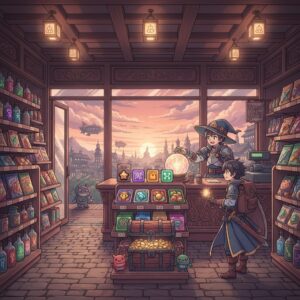
Step off a gleaming, silent-as-a-whisper train in Tokyo. You emerge from the station’s cool, controlled air, walk for maybe three minutes past pristine convenience stores and minimalist apartment buildings, and then… you see it. An archway, often slightly faded, announces the entrance to a long, covered street. Inside, a cacophony of sights, sounds, and smells hits you. The sizzle of frying croquettes, the bright colours of a greengrocer’s stall, the tinny sound of dated pop music piped through overhead speakers, the chatter of elderly ladies laughing over pickled radishes. This is a shōtengai, a traditional Japanese shopping arcade. And if you’ve ever poured hours into a classic Japanese Role-Playing Game, the feeling is uncanny. It feels, for all the world, like you’ve just walked into the starting village. It’s pixelated charm made real. But this raises a serious question that cuts to the heart of understanding modern Japan. In a country lauded for its futuristic vision, its robotics, and its relentless pursuit of efficiency, why do these decidedly low-fi, human-scale, sometimes chaotic shopping streets not only survive but, in many cases, thrive? This isn’t just about retro aesthetics or a clinging to nostalgia. The shōtengai is a living, breathing blueprint of Japanese society. It’s the community’s living room, its open-air kitchen, and its unofficial social safety net, all crammed under one long roof. To understand the shōtengai is to understand the unspoken social contract that holds much of Japan together, a world away from the neon glow of Shibuya Crossing. It’s where the grand narrative of Japan’s economic miracle meets the tiny, everyday reality of buying tofu for dinner. It’s a system built on relationships, not transactions, and it’s one of the most revealing cultural classrooms you’ll ever step into.
This living, breathing blueprint of society offers a stark contrast to the isolated reality explored in our article on Japan’s hikikomori phenomenon.
The Shōtengai as the Social ‘Hub World’
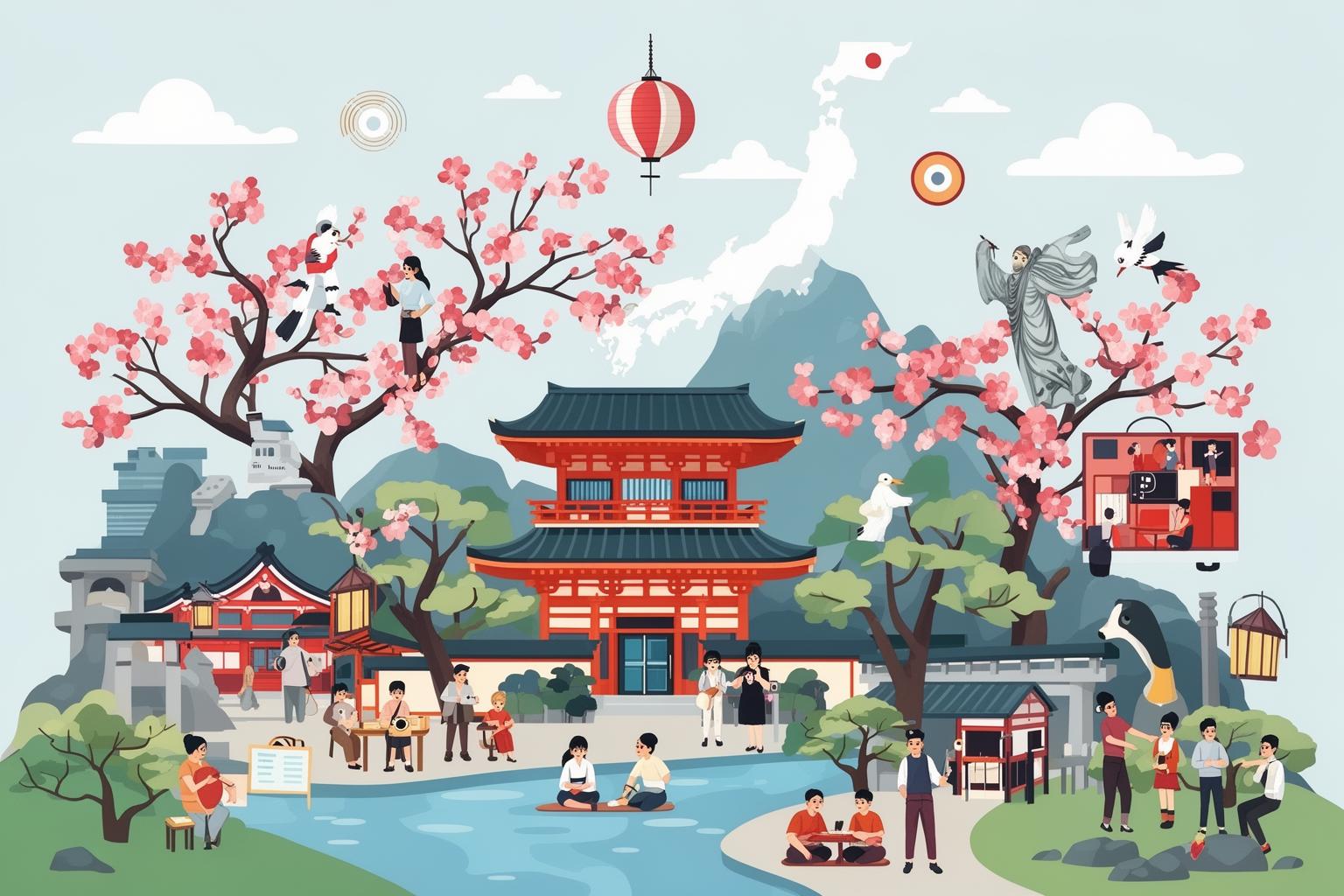
The term ‘hub world’ in gaming describes a central, safe space where players can rest, resupply, and engage with non-player characters (NPCs) before venturing into more hazardous areas. This exactly mirrors the role a shōtengai serves in its local neighborhood, both functionally and emotionally. It acts as a safe zone and a community anchor within the sprawling urban landscapes of Japanese cities. While the home is private and the workplace is formal, the shōtengai serves as the ‘third space’ where informal yet essential community interactions take place. It’s designed for lingering, spontaneous meetings, and low-stakes social exchanges that form the foundation of a stable society. Instead of rushing through, you meander through a shōtengai. Experiencing the act of walking its length and soaking in the atmosphere is as meaningful as reaching a destination or making a purchase. This approach contrasts fundamentally with the design philosophy of modern supermarkets or shopping malls, which prioritize efficiency by guiding shoppers along predetermined paths to spend money quickly. With its cluttered storefronts, random benches, and absence of a unified brand identity, the shōtengai rebels against this ethos. It embodies organised chaos—not corporate, but social.
The ‘NPCs’ You Encounter Daily
What truly brings these real-world hub worlds to life are the shopkeepers. They are the fixed points in the community, the enduring personalities who give the place its character. Picture a typical JRPG town: the gruff yet kind-hearted blacksmith, the chatty item shop owner, the wise old woman selling potions. These figures are always present, offering advice, essential items, or local lore. The shopkeepers of a shōtengai are the real-world counterparts. They are not anonymous employees rotating shifts; they are owners. For example, the tofu maker who has likely risen at 4 AM for decades to prepare fresh tofu, knows which customers prefer firm or silken varieties, and recalls their children’s names. The butcher’s window displays not only meat but also golden-fried menchi-katsu (minced meat cutlets) and korokke (croquettes) that locals buy for easy dinners. He’ll casually ask about your day while wrapping your purchase. The elderly woman managing the tsukemono (pickles) shop oversees barrels of vibrant, pungent vegetables and insists you sample her latest batch. These ongoing daily interactions serve as social currency. In Japanese, this is connected to the concept of kao-tsunagi, meaning ‘connecting faces’—the practice of maintaining relationships through regular face-to-face contact. By shopping at the shōtengai, residents do more than just buy groceries; they actively nurture their community’s social fabric. This contrasts sharply with the silent self-checkout experience of a modern supermarket. Here, your identity as a community member is reaffirmed with every small purchase and brief exchange. Although conversations might revolve around unseasonal rain rather than dragons terrorizing kingdoms, the function is the same: to ground you, remind you of your collective identity, and strengthen a sense of place and belonging.
The ‘Side Quests’ of Everyday Life
If shopkeepers are the NPCs, then the errands carried out in the shōtengai represent the ‘side quests’ of Japanese daily life. These small, repetitive tasks add texture and meaning to the ordinary, even if they seem mundane. While a ‘main quest’ might be one’s career or family life, side quests make the world feel vibrant. Visiting the shōtengai never centers on a single goal; it is a series of minor missions. You might begin at the yaoya (greengrocer) to pick up daikon and green onions for tonight’s soup. Then, you head to the fishmonger to check the freshest catch and ask for grilling tips on the mackerel. Next, you stop by the dry goods store for rice, and on your way back, the enticing aroma from the yakitori stall prompts you to grab a few skewers as a snack. Each interaction is a micro-event, a checkpoint in the daily routine. The ‘reward’ isn’t a magical sword or treasure but social cohesion—the friendly nod from a regular, an omake (a little extra) the shopkeeper slips into your bag because you’re a familiar face, or simply the satisfaction of preparing fresh, quality ingredients for your family meal. The entire atmosphere supports these rituals: the covered arcade shields you from sun and rain, making shopping pleasant year-round; the street’s narrowness slows the pace and encourages interaction; and the overlapping sounds—the butcher’s cleaver, the shopkeeper’s call of ‘Irasshaimase!’ (Welcome!), children’s laughter—compose a rich, immersive soundscape. This multi-sensory environment transforms shopping from a chore into a form of gentle community participation.
A Blueprint from the Past: Why Shōtengai Even Exist
To truly understand why the shōtengai feels so fundamentally different from a modern shopping centre, you need to explore its origin story. These places were not created by a developer’s focus group or an urban planner’s grand design. Instead, they grew organically and often chaotically out of the needs of the people. Their essence lies in resilience, community, and grassroots organisation, a legacy that remains evident when you walk through one today. They stand as a physical timeline of Japan’s post-war journey—from scarcity to prosperity, and now to a thoughtful reconsideration of what ‘quality of life’ truly means.
From Post-War Black Markets to Community Anchors
The direct predecessors of most shōtengai are the yamiichi, or black markets, that emerged amid the bombed-out ruins of Japanese cities after World War II. In a time of severe scarcity and official rationing, these chaotic, desperate, yet absolutely vital hubs allowed people to find food, clothing, and other essentials. They were born purely out of survival instinct. Merchants and hawkers set up stalls near major train stations, creating spontaneous commercial centres that became the lifeblood of their communities. This origin is key. The shōtengai was not imposed from above; it grew from the ground up. As Japan began rebuilding in the 1950s and entered its era of miraculous economic growth, these informal markets started to take shape more formally. Shopkeepers formed local business associations, which evolved into powerful community organisations. They pooled resources to pave streets, install lighting, and most notably, construct the iconic arched roofs that characterize the modern shōtengai arcade. This roof, the ākēdo, was an ingenious, practical innovation. It sheltered shoppers from Japan’s hot, rainy summers and cold winters, effectively creating an all-weather community space. This simple architectural feature transformed a loose cluster of shops into a cohesive, defined place. It created a semi-indoor environment that encouraged lingering and fostered the social atmosphere which remains their greatest strength today. The legacy of the yamiichi lives on in the fiercely local nature of the shōtengai, run by and for the people of the immediate neighbourhood.
The Bubble and the Bust: The Fight Against the Supermarket Invasion
The shōtengai’s golden age arguably came during the 1960s and 70s. As prosperity rose, they became the undisputed centres of daily life. However, the 1980s introduced a formidable new challenge: large-scale supermarkets and gleaming department stores. These retail giants, often backed by massive corporations, could offer a wider range of products, lower prices, and the convenience of one-stop shopping. This was the commercial equivalent of a giant, menacing boss battle for the small, independent shops of the shōtengai. For a period, the Japanese government sided with the smaller players. The Large-Scale Retail Store Law, passed in 1974, imposed significant restrictions on the opening of big supermarkets and department stores, requiring a lengthy approval process that gave local merchants a voice. This law clearly showed the government’s commitment to preserving the social role of the shōtengai and protecting it from pure market forces. However, under international pressure, the law was considerably relaxed in the 1990s and eventually abolished. The floodgates opened. Huge Aeon malls and Daiei supermarkets appeared in the suburbs, accessible by car, sparking a brutal war of attrition. Many shōtengai struggled to survive, entering a slow, painful decline—a story repeated nationwide. Yet the ones that endured did so by doubling down on what made them special. Unable to compete on price or convenience, they focused on quality, specialisation, and, above all, community connection. They embraced their identity as social hubs, hosting local festivals (matsuri), stamp rallies, and other events to attract visitors. They became custodians of a distinct local culture that impersonal corporations could never replicate. This struggle shaped the character of the modern shōtengai; they are survivors, defined by a profound understanding of their unique value in a world dominated by big-box retailers.
Decoding the Shōtengai ‘Game Mechanics’
Like any well-crafted game, the shōtengai runs on a set of rules and systems. Some are clearly stated, but many remain unspoken—a kind of social grammar guiding how interactions unfold. For a newcomer, this can be the most perplexing aspect. It’s easy to feel like you’re missing something, as if there’s an unseen cultural script you haven’t been handed. Why does the shopkeeper ask where I’m from? Why did the woman at the vegetable stall give my child a free candy? Grasping these ‘game mechanics’ is essential to unlocking a richer and more fulfilling experience. It involves shifting your perspective from that of a consumer to that of a community participant, even if you’re just passing through for an afternoon.
The Unspoken Rules of Social Interaction
Shopping in a shōtengai isn’t simply a transactional event; it’s a relational one. The first rule is to acknowledge the humanity of the person behind the counter. You don’t just quietly grab an item and head to the checkout. The exchange begins with a greeting. Offering a simple ‘Konnichiwa’ (Hello) upon entering the shop is the norm. While you browse, the owner might leave you be, or they might strike up a conversation—perhaps commenting on the weather or asking about the item you’re interested in. When it’s time to buy, the interaction becomes even more important. In Osaka, the merchant’s greeting, ‘Maido!’ (Thanks for your continued patronage!), sets a warm, familiar tone. This is where the concept of the jōren, or regular customer, comes into play. Becoming a jōren is like leveling up your reputation with a faction in a video game. You earn this status through repeated visits and friendly exchanges. Once acknowledged as a jōren, the dynamic changes. The butcher might reserve a particularly fine cut of meat for you. The greengrocer could share tips on a new recipe. The senbei (rice cracker) seller may slip an extra cracker into your bag—the prized omake. This small, free gift isn’t just a marketing tactic; it’s a tangible token of the relationship formed. It’s the shopkeeper’s way of saying, “I see you. I appreciate your loyalty.” To a Westerner used to the speed and anonymity of barcode scanners and tap-to-pay systems, this can feel slow and unnecessarily elaborate. But that’s because the goal isn’t mere efficiency. The ‘inefficiency’—the small talk, the pleasantries, the personal recognition—is the core purpose. It’s a system designed to build social capital, not just generate financial profit.
The ‘Inventory’ System: Specialized and Curated
The shōtengai stands in direct contrast to the all-in-one hypermarket. Its ‘inventory’ is spread across many small, highly specialized shops. This retail model predates the modern era and profoundly shapes the customer experience. You don’t go to a single store; you visit a series of masters. The tofu shop sells tofu—and nothing else. Yet, they offer a dozen varieties—silken, firm, grilled (yaki-dofu), fried pouches (aburaage)—all freshly made that morning. The owner is a tofu expert and can advise you on which type suits which dish best. The same applies to the fishmonger (sakana-ya), the tea merchant (ocha-ya), the seaweed specialist (nori-ya), and the rice cracker artisan (senbei-ya). Each shop offers a deep, focused expertise in one category. As a shopper, you’re not just buying a product; you’re acquiring the owner’s accumulated knowledge, taste, and thoughtful curation. They’ve selected the finest items and can explain why they stand out. This is, once again, closely akin to the structure of a JRPG village. You don’t visit the blacksmith for health potions, nor the alchemist to sharpen your sword. Instead, you seek out the specialist who has dedicated their life to their craft. This system nurtures a culture of quality and expertise. It promotes a more mindful approach to shopping, encouraging you to consider each meal component and its origin. It’s a slower, more intentional process, but the reward is a connection to your food and its providers that you simply can’t find in the huge, impersonal aisles of a supermarket.
The Modern Shōtengai: Evolve or Fade Away?
Despite their nostalgic charm and social significance, it would be misleading to present the shōtengai as universally successful. The reality is complex and often bittersweet. For every lively, bustling arcade, there is another in regional Japan slowly fading away. The same demographic shifts and economic centralization affecting small towns worldwide are severely impacting the shōtengai. However, this is not a straightforward tale of decline. It is a narrative of struggle, adaptation, and, in some cases, impressive reinvention. The shōtengai stands at a crossroads, and its future will reflect much about Japan’s own trajectory.
The ‘Shutter Shōtengai’ Phenomenon
Travel by car or local train through regional Japan, and you will inevitably come across a shattā-dōri, or ‘shutter street’. This melancholic term describes a shōtengai where most storefront metal shutters remain permanently closed. These ghost streets are the ruined towns of reality. Their decline stems from a perfect storm of modern Japanese social issues. The most critical factor is the aging population. Many shopkeepers are in their seventies or eighties, and their children have often relocated to major cities for university and corporate careers, with no intention of inheriting the family fish shop or futon store. When the owner retires or passes away, there is no successor, and another shutter closes for good. This is exacerbated by rural and regional depopulation, as young people move to Tokyo, Osaka, and Nagoya seeking better opportunities. Fewer residents mean fewer customers, creating a vicious cycle of decline. Moreover, competition from massive suburban shopping malls and the convenience of online retailers like Amazon and Rakuten persists. These shutter shōtengai are a poignant sight, a tangible symbol of a disappearing lifestyle and community loss. They represent a failure to adapt—a place where the old business model could no longer withstand the pressures of the modern economy.
The ‘Re-Leveled’ Shōtengai: New Game+
Yet, this is not the entire picture. Many shōtengai have resisted becoming relics. They have adapted, reinvented themselves, and found renewed purpose. They’ve entered ‘New Game+’ mode, carrying forward past experiences but adopting new strategies. Several successful archetypes have emerged. First is the Tourist-Focused Model. Yanaka Ginza in Tokyo exemplifies this, capitalizing on its Showa-era (1926–1989) retro charm, which strongly appeals to foreign tourists and young Japanese seeking an ‘authentic’ experience. The street overflows with vendors selling affordable and delicious street food (tabe-aruki), from fried meat cutlets to sweet potato treats. It has evolved from a purely local shopping street into a major tourist attraction, offering an experience as much as goods. Second is the Subculture Specialist Model. Nakano Broadway stands out here; while its ground floor resembles a typical shōtengai, its upper floors have transformed into a globally renowned hub for otaku (geek) culture. Packed with tiny shops selling rare manga, anime cells, vintage toys, and idol merchandise, it survived by shifting away from a general shopping center towards serving a passionate, global niche community. It found a new clan to serve. Third is the Youth and Counter-Culture Model, best exemplified by the shōtengai in Tokyo’s Kōenji neighborhood. Kōenji is known for its vibrant alternative scene, and its arcades reflect this with vintage clothing stores, independent record shops, quirky cafes, and small live music venues. They attract a young, creative clientele explicitly seeking an alternative to mainstream consumer culture. These examples demonstrate that the shōtengai is not a static entity. Its future depends on its ability to adapt, understand the needs of a new generation, and offer something that large corporations cannot: a unique, curated, and deeply human experience.
So, Is It Just Nostalgia? What the Shōtengai Really Tells Us About Japan
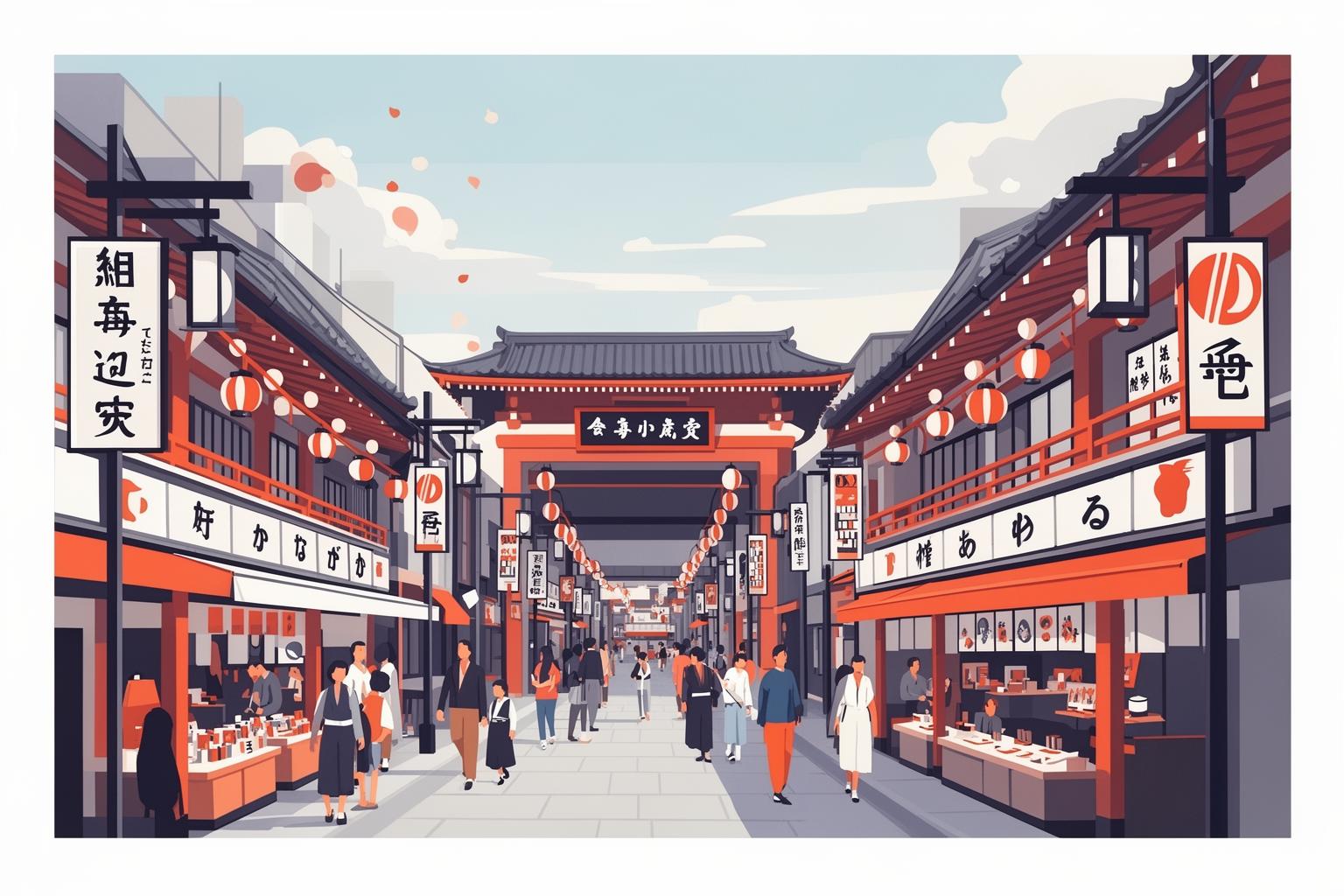
It’s easy to write off the charm of the shōtengai as mere nostalgia, a longing for a simpler time. While nostalgia certainly plays a role, it doesn’t capture the full picture. The ongoing presence and significance of the shōtengai highlight deeper, fundamental values within Japanese society that endure despite hyper-modernity. They serve as a living counterpoint to the perception of Japan as a land of cold efficiency. They demonstrate a profound respect for community, for the tangible, and for human-scale living. Far from being just a relic, they represent an active choice.
The Visible Safety Net
One of the most vital, yet often overlooked, roles of a thriving shōtengai is that of an informal social safety net. In a society that can feel anonymous and isolating—especially in large cities—the shōtengai offers a network of casual surveillance, in the most positive sense. Shopkeepers act as the eyes and ears of the street. They recognize the neighborhood children who walk home from school and will notice if one appears upset. They know the elderly residents who live alone and shop daily. If Mrs. Suzuki, who buys a block of tofu and some spinach every day like clockwork, doesn’t show up for two days, someone will notice. The tofu vendor might mention it to the fishmonger, who could then ask another neighbor to check on her. This informal system of mutual care is an incredibly powerful tool for community welfare, especially in a country with one of the world’s fastest-aging populations. It is a low-tech, high-touch social network that offers security and a sense of being looked after. It embodies the Japanese ideal of the collective, where community responsibility is an unspoken but shared understanding. This is a role no online marketplace or automated supermarket can ever replicate.
A Preference for the Tangible in a Digital World
Japan is a country of striking contradictions. It is a global leader in robotics and technology, yet remains a society where cash is still widely used and the fax machine has only recently started to disappear. The shōtengai exemplifies this duality. The people who shop there are making a conscious decision. They own smartphones and can order anything online for delivery within hours. They can drive to enormous, climate-controlled malls. Yet they choose instead to stroll down their local shōtengai, chat with the butcher, and pick up fresh vegetables for dinner. This choice speaks volumes—it reflects a deep cultural appreciation for the tangible, the analog, and the human. It prioritizes freshness over convenience, relationship over anonymity, and quality over quantity. In a world that is constantly speeding up, the shōtengai offers a deliberate way to slow down. It encourages a slower, more mindful pace of life. It’s like choosing to play life in “story mode,” focusing on the characters and setting, rather than trying to “speedrun” the objectives as fast as possible. The shōtengai persists because it provides an alternative—and for many, a more fulfilling—definition of value.
Your Shōtengai Adventure: A Practical Guide for the Skeptic
So, you’re persuaded to venture beyond the major tourist spots and explore one of these arcades. How should you approach it? It can feel a little daunting, especially in a more local shōtengai where you might be the only foreigner. The key is to change your mindset. You’re not just a customer; you are a guest in a community’s shared space. A bit of cultural awareness and a willingness to participate, even in a small way, will turn your experience from passive observation into active involvement.
Don’t Just Observe, Engage
The biggest mistake you can make in a shōtengai is treating it like a museum. Don’t just stroll through snapping photos. The whole place is designed for interaction. The best way to break the ice is to buy something, even if it’s small. That stall selling a curious variety of deep-fried items? Approach, point to the most interesting one (it’s probably a korokke), and buy a single piece. It will cost about a dollar. That barrel of colorful, mysterious pickles? Ask for a small sample. This simple act of commerce shifts the dynamic. You become a participant, not just a spectator. Many tourist-friendly shōtengai actively promote tabe-aruki, the practice of eating while walking. This is your permission to snack your way down the street. A few practical tips: carry some cash. Many small, family-run shops don’t accept credit cards. Don’t hesitate to point if you don’t know the name of what you want. A smile and a gesture go a long way. And be mindful of your surroundings. Remember that for every tourist, there are ten locals just trying to do their daily shopping. Don’t block narrow walkways, and respect their routine.
Finding Your ‘Starting Village’
Not all shōtengai are the same. They exist on a spectrum, from polished tourist destinations to gritty, truly local hubs. Picking the right one for your comfort level can make all the difference. Think of it as choosing your difficulty setting. The ‘Easy Mode’ shōtengai are well-known among tourists, like Nakamise-dori leading to Senso-ji Temple in Asakusa, or Kyoto’s Nishiki Market. They are bright, clean, and used to foreigners. Shopkeepers might speak some English, and products are often aimed at souvenir hunters and photogenic snacks. These are a fantastic, low-stress introduction. The ‘Normal Mode’ shōtengai are located near residential train stations, a bit outside the city center. Great examples include Togoshi Ginza or Sunamachi Ginza in Tokyo. These are the real deal. Made primarily for local residents, the mix of shops is practical, and the atmosphere feels authentic. You’ll see fewer tourists and more mothers with kids and elderly shoppers. This is where you’ll find the best hidden gems and get a true slice of everyday life. The ‘Hard Mode’ or ‘Specialist’ shōtengai cater to those with a specific passion. If you’re deeply into cooking, Tokyo’s Kappabashi Dogugai (Kitchen Town) is your paradise. If you’re an anime and manga fan, Nakano Broadway is a must-visit pilgrimage. These spots can be overwhelming and chaotic, but for those with the right interest, they are the ultimate ‘themed dungeons’ filled with rare treasures. No matter which you choose, the objective is the same: to witness the intricate, human-powered machinery operating just beneath the surface of modern Japan.