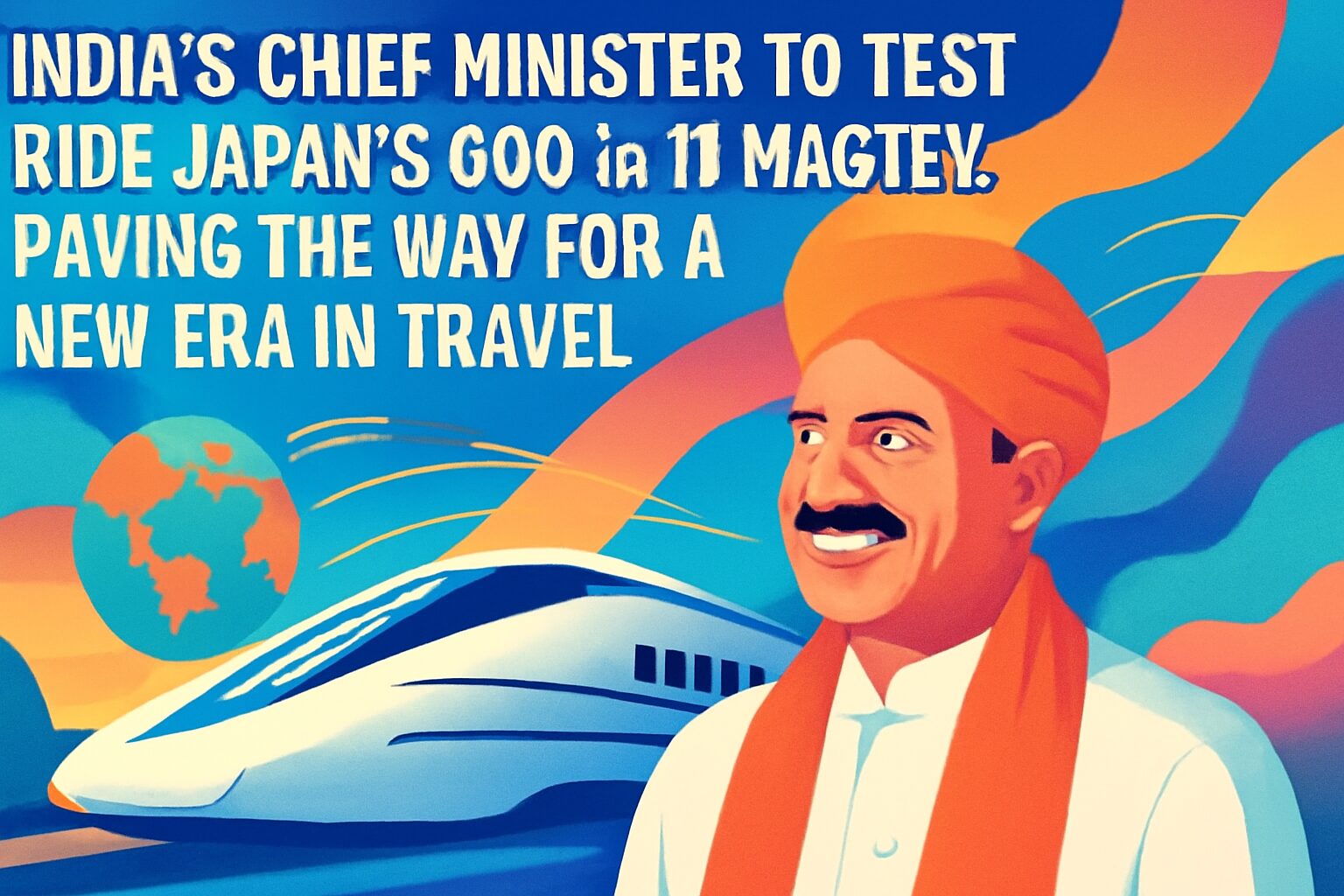
In a landmark event for international transport collaboration, Indian Chief Minister Yogi Adityanath is scheduled to experience Japan’s revolutionary SCMaglev (Superconducting Magnetic Levitation) train next week. This test ride is more than just a demonstration; it represents a significant step towards a potential partnership that could redefine high-speed travel in India and signals a deepening of technological ties between the two nations.
The Future is Fast: Japan’s Maglev Technology
The train at the center of this visit is no ordinary high-speed rail. Japan’s SCMaglev is the fastest train in the world, holding the Guinness World Record for a staggering speed of 603 km/h (approximately 375 mph), achieved during a test run in 2015. Unlike conventional trains, including Japan’s famous Shinkansen (bullet train) which operates at speeds around 320 km/h, the Maglev levitates above its guideway using powerful superconducting magnets. This elimination of friction allows it to achieve incredible speeds with remarkable stability and quietness.
Japan is currently constructing the Chuo Shinkansen, its first long-distance commercial Maglev line. The initial phase aims to connect Tokyo and Nagoya, a distance of about 286 km, in a mere 40 minutes—less than half the time it takes on the current fastest Shinkansen. The ultimate vision is to extend the line to Osaka, cutting the Tokyo-Osaka journey to just 67 minutes. This technology showcases Japan’s ambition to continuously push the boundaries of public transportation.
A Deepening Partnership in Infrastructure
This high-profile visit builds upon a solid foundation of India-Japan cooperation in the rail sector. The two countries are already collaborating on India’s first high-speed rail project, the Mumbai-Ahmedabad High-Speed Rail Corridor. This 508 km line utilizes Japan’s proven Shinkansen technology and is heavily financed through a soft loan from the Japan International Cooperation Agency (JICA).
Chief Minister Adityanath’s interest in the even more advanced Maglev technology suggests India is looking beyond its current projects and envisioning a next-generation transportation network. For a vast country like India, the ability to connect major economic hubs like Delhi, Mumbai, and Bengaluru in a fraction of the current travel time could be transformative for its economy, society, and tourism.
Potential Impacts and a Glimpse into the Future
The implications of a potential India-Japan Maglev collaboration are immense.
For India and its Travelers
The introduction of Maglev technology could revolutionize domestic travel in India. Journeys that currently take an entire day or an overnight trip by train could be completed in just a few hours. This would not only boost business and commerce but also make tourism across India’s diverse regions more accessible than ever before. It would represent a quantum leap in the country’s infrastructure, potentially reducing road and air traffic congestion and its associated carbon footprint.
For Japan’s Global Ambitions
For Japan, successfully exporting its crown jewel of railway technology to a massive market like India would be a major economic and diplomatic victory. It would solidify Japan’s position as a global leader in cutting-edge infrastructure and strengthen its strategic partnership with India in the Indo-Pacific region.
This test ride is a powerful symbol of what the future of travel could hold. While commercial Maglev lines in India are still a distant prospect, this visit marks the official start of a conversation that could one day lead to passengers gliding across the Indian subcontinent at speeds once thought to be the stuff of science fiction.