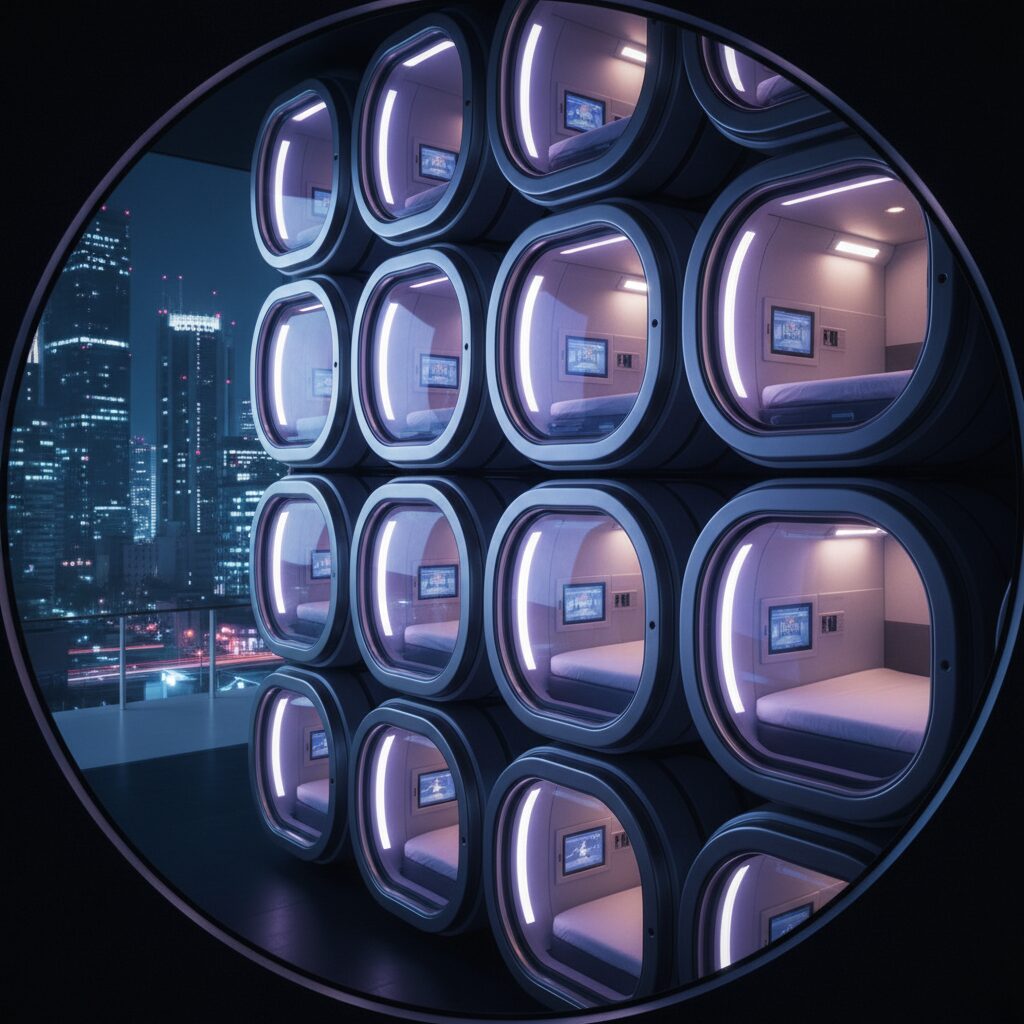
You’ve seen them. For sure. Scrolling through your feed, a sudden flash of neon and fiberglass—a wall of glowing rectangles stacked like a sci-fi beehive. Someone’s story, captioned “Living in 2049,” shows a disembodied hand giving a peace sign from inside a human-sized drawer. Welcome to the Japanese capsule hotel. It’s an image that’s become shorthand for “Japan is the future,” a low-key flex on the rest of the world’s boring, boxy hotel rooms. But here’s the thing: that image, that aesthetic, is only about 10% of the story. It’s the glossy cover of a deep, complex, and sometimes straight-up weird cultural manuscript. You see the pics and think, “Cool, I guess?” but the real question bubbling under the surface is “Why?” Why sleep in a pod? Is it a gimmick? A budget-traveler’s last resort? Or is it something more? Bet. It’s way more. This isn’t just about finding a cheap bed for the night. It’s about willingly plugging yourself into a uniquely Japanese system—a cultural OS built on radical efficiency, unspoken social contracts, and a deep-seated love for niche escapism. We’re about to go beyond the “Top 5 Coolest Capsule Hotels” listicles and decode the cultural software that runs these places. It’s a journey into a world where the futuristic sheen often masks an analog, deeply human, and sometimes challenging reality. This is your guide to not just surviving a night in a pod, but actually understanding it. Because when you slide that curtain closed, you’re not just shutting out the world; you’re logging into a microcosm of Japan itself. Let’s get it.
To truly understand this niche escapism, you might also be interested in exploring the phenomenon of Heisei-era ‘Deco-den’.
The Blueprint: Why Pods Even Exist
Before we even get to discussing the wild, themed capsules—the ones resembling manga libraries or samurai hideouts—we need to take a step back. The origin story of the capsule hotel has nothing to do with tourism, aesthetics, or Instagram. No joke. Its roots lie deep in the soil of Japan’s post-war economic boom, an era marked by relentless work and urban migration. It’s a story centered around a very specific figure: the Japanese salaryman.
The Salaryman’s Last Resort
Imagine Tokyo in the late 1970s and 80s. The city is booming, a relentless engine of industry. Men from sprawling suburbs commute for hours daily to corporate jobs in the city center. The work culture is harsh, with overtime not just common but expected. After a long office day, the night isn’t finished. There’s the nomikai—the obligatory after-work drinking session with colleagues and bosses. This is where deals are informally struck, bonds formed, and hierarchies temporarily blurred by alcohol. It’s a crucial part of the job.
The problem? These nomikai often run very late. So late that our protagonist, the salaryman, stumbles out of the izakaya only to discover the last train to his suburban home left an hour ago. What options does he have? A taxi ride to the suburbs would be exorbitantly expensive, maybe costing a significant portion of a day’s pay. A regular hotel is an unnecessary luxury for just a few hours of sleep. A love hotel? Not exactly the right atmosphere for a solo business warrior. This is precisely the problem the capsule hotel was designed to solve. The world’s first capsule hotel, created by the visionary Kisho Kurokawa, opened in Osaka in 1979. It was a masterpiece of utilitarian design, offering a clean, safe, and most importantly, affordable place for a man to crash for a few hours, shower, change, and be ready for another 9 AM meeting. It wasn’t about comfort or luxury; it was a practical, no-frills solution to a uniquely modern, urban Japanese problem. The design itself—the stacked pods and shared facilities—responded directly to the need to accommodate many people in a tiny urban footprint, cheaply and efficiently. It was a sleeping machine, built for the exhausted soldiers of Japan’s economic army.
Space is the Ultimate Luxury
To truly understand why the capsule hotel makes sense in Japan, you have to grasp the concept of space. In the West, luxury is often associated with expansiveness—a big house, a large car, a sprawling hotel suite. In Japan, especially in its mega-cities, that notion is completely reversed. Land is the most precious commodity, and space is the ultimate luxury. The country is mountainous, and the flat, habitable plains are densely packed with people. This scarcity has given rise to a culture of ingenious spatial efficiency. It’s a design philosophy born of sheer necessity, evident everywhere.
Consider the tiny yet highly functional kitchens in Tokyo apartments, the compact brilliance of a bento box that holds a full, balanced meal in a small container, or the kei cars, miniature vehicles that receive tax breaks for their size. This isn’t about poverty; it’s about mastering minimalism. It’s about discovering elegance and function in constraint. The capsule hotel is the architectural embodiment of this philosophy. It distills the hotel room’s single purpose—a place to sleep—and removes everything else. Why waste space on a desk you won’t use, a closet for clothes you don’t have, or empty floor room? Instead, it stacks the primary function—the bed—vertically. It’s a brilliant, almost brutalist, solution to the challenge of urban density. So when you see a wall of pods, don’t perceive it as a stack of coffins. See it as a highly efficient residential algorithm, a new kind of luxury where clever design, not sheer size, is the ultimate statement.
Logging In: The Unspoken Rules of the Hive
Checking into a capsule hotel feels less like a typical hotel check-in and more like being inducted into a social system. You’re entering a shared environment, a hive, governed by strict, often unspoken protocols. These aren’t just hotel rules; they reflect a broader Japanese social contract. If you don’t grasp this, you’ll become the star of a very awkward story. But if you do, you’ll find a peculiar and rewarding sense of collective harmony.
The Ritual of the Shoes
Your initiation begins as soon as you step inside. Before reaching the front desk, you’ll encounter a rack or wall of small lockers known as the genkan, the traditional Japanese entryway, where the first and non-negotiable rule is: shoes off. This isn’t a casual request. In Western cultures, shoe removal is usually for comfort or cleanliness, but in Japan, it’s a deeply symbolic act. The outside ground is considered impure, separate from the inner, private space. Removing your shoes signifies purification and marks a physical and mental transition from the public world to a private one. You literally leave the street’s dirt behind. You place your shoes in a locker, take the key (often attached to a wristband that serves as your ID inside), and slip into the provided slippers. This simple action immediately shifts your mindset. You stop being an individual walking around your own space; you become part of a clean, quiet, shared environment. It’s the first step in blending your individuality into the collective, setting the tone for what follows.
The Art of Invisibility
Inside, the most striking feature isn’t the pods themselves but the silence. This is not empty or hollow; it is dense, deliberate quiet. It’s the golden rule and prime directive of capsule living: do not make noise. This derives from the Japanese cultural concept of wa (和), meaning harmony or social cohesion. The aim is to preserve a peaceful atmosphere by minimizing your impact on others. Being considerate is not merely polite; it’s a core social obligation.
This means no phone calls in the sleeping areas—not even whispered ones. Use the designated lounge for calls. Phones must be on silent, not vibrate. The buzz of a phone against a fiberglass pod can sound like a jackhammer in the middle of the night. Even the noise from your belongings is scrutinized. The crinkle of a plastic convenience store bag is a sonic offense. Seasoned capsule guests learn to pack and unpack with ninja-like stealth. Zippers cause anxiety; they’re pulled slowly and carefully. Loud, ripping zips earn disapproving stares. This isn’t about arbitrary restrictions; it’s an unspoken collective agreement. Everyone sacrifices personal space for affordability and convenience, and to keep order, everyone must sacrifice their right to make noise. You strive to become invisible—a ghost in the system. Your presence should be barely noticeable. It’s the ultimate form of consideration in a densely populated space.
Your Pod, Your Castle (Though It’s Made of Fiberglass)
Finally, you reach your designated pod—your personal space for the night, your tiny kingdom. Sliding in for the first time is a unique experience. The pod is surprisingly comfortable, ergonomically designed to maximize the small space. You’re in more than just a bed; you’re inside a self-contained unit. Often, a control panel is built into the wall, showcasing Japanese efficiency. From here, you can control lighting (often with a dimmer), ventilation, and sometimes a small silent fan. USB ports and power outlets allow device charging. A small shelf may hold your glasses or phone. Many pods have a small TV at the foot, but headphones are essential, reinforcing the silence rule. Alarms are thoughtfully designed—often using gradual light rather than a harsh beep—to wake you without disturbing neighbors. It feels futuristic and clever.
But then reality sets in. The pods are typically made of thin plastic or fiberglass, offering zero soundproofing. Nothing but a pull-down shutter or curtain separates you from the hallway. This ensures visual privacy but little auditory privacy. This is the central trade-off of capsule living. You hear everything: the neighbor coughing, shifting, snoring; the faint beep of a forgotten phone alarm; the late arrival fumbling with their locker key. Your pod is your castle, but its walls are paper-thin. Earplugs and an eye mask shift from travel luxuries to essential survival gear. You must accept that you are sleeping alone, yet together.
The Themed Escapism: From Cyberpunk to Samurai
Alright, we’ve established that the original capsule hotel was a simple, utilitarian space born out of economic necessity. It was practical, but let’s be honest, it was also quite bland—rows of beige or grey pods designed for function rather than enjoyment. So how did we transition from that to the vibrant, Instagram-worthy themed hotels we see today? The evolution reflects Japan’s shifting economy, the surge in tourism, and the influential cultural presence of the otaku.
Why the Theme? The Otaku Influence
The transformation began as the 1980s bubble economy faded into more frugal times. While the core demographic of salarymen remained, hotels needed to differentiate themselves. They started by improving amenities—adding saunas, premium toiletries, complimentary ramen. However, the real turning point was the recognition that the capsule format could serve as a creative canvas. With the boom in inbound tourism and changes in domestic youth culture, a new market emerged: travelers seeking an experience, not just a place to sleep. This is where otaku culture played a key role. Although otaku is often translated as “geek” or “nerd,” those terms don’t fully capture its significance. It refers to someone with a passionate, almost obsessive interest in a specific niche—whether it’s anime, manga, video games, trains, or military history. For an otaku, their hobby isn’t simply an activity; it’s a fundamental part of their identity.
Suddenly, the capsule hotel became more than just an affordable sleeping spot. It transformed into a temporary, immersive fantasy. Why stay in a dull pod when you could sleep in a spaceship cockpit? Or a ninja’s secret chamber? Or be surrounded by thousands of manga? Themed hotels are a form of commercialized escapism, allowing guests to physically enter the world of their passion. It’s fandom taken to its logical conclusion: sleeping inside what you love. For travelers, this offers a fun, quirky, and highly photogenic experience. For the domestic market, it’s an affordable way to indulge in a fantasy weekend. This clever business model turns budget lodging into a destination in and of itself.
Case Study: The Bookworm’s Haven
Consider the renowned “Book and Bed” chain. The concept is simple yet brilliant: capsules integrated directly into enormous bookshelves, letting guests literally sleep surrounded by books. On the surface, it’s a hotel—but what they’re really selling is a vibe, an aesthetic, a dream. They sell the romantic idea of falling asleep while reading your favorite book in a cozy, dimly lit library. Their own slogan states, “The perfect setting for the finest moment of sleep is not a fluffy mattress… but when you are reading.” This explicitly prioritizes experience over the comfort of sleep. It’s lodging designed for the Instagram era, where the photo you take is as much part of the product as the bed itself. This highlights a key insight about themed hotels: the theme is the main attraction, with the bed as a side feature. It shifts the purpose of the stay from “rest” to “experience.”
Case Study: The Ninja Lair or Samurai Residence
Then there are historically themed hotels. You might find a capsule hotel styled like a feudal-era castle, with pods resembling a samurai’s quarters, complete with faux wood paneling and family crests. Or a ninja-themed hotel decorated with dark tones, hidden passageways, and shuriken patterns on the walls. To outsiders, this might seem kitschy, but it resonates deeply within Japanese cultural consciousness. Periods such as the Edo (samurai) and Sengoku (warring states) eras are endlessly romanticized in Japanese pop culture—via films, TV dramas, anime, and video games. These historical figures and aesthetics hold a place in Japanese hearts similar to that of superheroes or Arthurian legends in the West. Thus, a samurai-themed hotel isn’t a mere gimmick; it offers a playful, accessible way for people to physically connect with their history and national stories. It’s like a miniature, sleep-in theme park—a brief escape from the stress of modern life, spreadsheets, and train schedules into an idealized past, if only for one night.
The Shared Space Survival Guide: Bathing and Belongings
The aspect of the capsule hotel experience that often surprises Western visitors the most isn’t the sleeping pod itself—it’s everything else. It’s the logistics of managing your belongings and personal hygiene in a completely communal setting. This is where you’ll encounter the greatest challenges to your adaptability. If you handle it well, you’ll enjoy a serene, clean, minimalist bliss. If not, you’ll likely feel awkward and confused.
The Naked Truth: Navigating the Sento
Most capsule hotels, particularly traditional or upscale ones, don’t have private showers. Instead, they feature a large communal bathing area called a sento (public bath) or an onsen if it uses hot spring water. For many Westerners, the idea of bathing naked among strangers can be highly anxiety-inducing. However, in Japan, it’s a perfectly normal, non-sexual, and cherished cultural practice that has been part of everyday life for centuries. It’s about cleanliness and relaxation, not body image.
There is a strict, non-negotiable ritual to follow. First, you leave your clothes in a locker in the changing room, taking only a small towel with you into the bathing area. Before stepping into the large communal hot tubs, you must thoroughly wash your entire body. There will be rows of individual washing stations equipped with a low stool, faucet, handheld shower, and various soaps, shampoos, and conditioners. You sit on the stool and scrub yourself clean. Only after rinsing off all soap are you allowed to enter the main baths. The small towel is for scrubbing and modesty as you move around but must never be put into the bath water. You can place it on the edge of the tub or, as many Japanese men do, fold it neatly and balance it on your head. This routine isn’t just about hygiene; it’s an act of consideration—to keep the shared water pure for everyone. Embracing the sento experience is a significant step in understanding Japanese culture. It’s a moment of vulnerability and communal relaxation that can be deeply refreshing once you overcome the initial self-consciousness.
Locker Room Tetris
Here’s a practical reality: your large roller suitcase won’t be coming with you to the pod floor—there’s simply no space. When you check in, you’ll be assigned a locker. In older hotels, this might be a slender locker barely big enough for a briefcase and a change of clothes. In newer, more tourist-friendly places, there may be larger lockers or a separate, secure luggage storage room. Either way, you’ll need to master the art of Locker Room Tetris. This means you can’t live out of your suitcase. Instead, you must plan ahead and transfer only the absolute essentials for your stay into a smaller bag (sometimes provided by the hotel). This usually includes toiletries, a charging cable, a book, and perhaps a change of underwear. This enforced minimalism is again a feature of the system—it keeps sleeping corridors and communal areas clutter-free, standardizes the experience, and maintains order. The system is designed for collective efficiency, not for the convenience of someone with an oversized bag. Traveling light here isn’t just recommended; it’s essential.
The “Free” Stuff That Isn’t Really Free
One of the most delightful surprises for first-timers is the extensive range of amenities included in the price. It goes far beyond a tiny bar of soap. You’ll almost always be provided sleepwear, ranging from a simple yukata (light cotton robe) to a practical samue (two-piece pajama-like outfit). This is convenient because you don’t need to bring your own pajamas, but it also serves another purpose: creating a uniform that breaks down individuality and reinforces the communal atmosphere. Everyone is on equal footing. Then there are the toiletries: toothbrushes with single-use toothpaste, razors, hairbrushes, cotton swabs, and often a full skincare lineup including face wash, toner, and moisturizer. This reflects omotenashi, the legendary Japanese spirit of hospitality, but it is also highly practical. Recall the salaryman origin story—the system is designed so that anyone who unexpectedly needs to stay overnight has everything required to be fresh and presentable for work the next morning without going home. These amenities aren’t just extras; they are a fundamental part of the hotel’s purpose.
The Verdict: Is It For You or Just For the ‘Gram?
So, we’ve cracked the cultural code, navigated social customs, and even showered alongside strangers. The big question remains: should you actually stay in a capsule hotel? The answer is the classic “it depends.” The capsule hotel experience often lies somewhere between expectation and reality, and whether you enjoy it or not depends entirely on your personality, travel habits, and what you hope to gain from it. This isn’t a one-size-fits-all experience, and anyone claiming it’s a “must-do” for every visitor to Japan is selling you a fantasy.
The Matrix vs. Reality
The images online typically show a wide-angle view of a spotless, empty corridor filled with glowing pods. It looks sleek, futuristic, and cool—almost like an aesthetic. In reality, you’ll be sharing that hallway with dozens of other guests. The pods aren’t soundproof. The air can get stuffy. There will almost certainly be someone snoring loudly, and another rustling a plastic bag endlessly. The themed hotels may look stunning in carefully staged photos, but up close, the “samurai” accents might be plastic laminate, and the “library” could feature glued-on book spines. It’s crucial to go in with your eyes wide open. You’re paying for a unique experience and remarkable efficiency, but you’re sacrificing privacy, personal space, and often a truly restful night’s sleep. If you expect the serene, isolated sci-fi vibe portrayed in photos, you’re setting yourself up for disappointment. The truth is much more human, crowded, and noisy.
Know Your Player Type
So, who is the perfect guest for a capsule hotel? It’s definitely a vibe for some people.
- The Solo Traveler: Capsule hotels mainly cater to individuals. If you’re traveling alone and just need a safe, clean spot to crash, they’re unmatched in value.
- The Budget Backpacker: Usually cheaper than a hostel, capsules offer more perceived privacy (at least visually) and typically much better amenities and cleanliness.
- The Cultural Explorer: If you travel to understand a place rather than just visit it, spending a night in a capsule hotel is like a rapid ethnographic study—a crash course in Japanese social norms. IYKYK.
- The Minimalist: If you travel light and appreciate efficiency and smart design, a capsule hotel will feel like a perfectly crafted system you get to inhabit for a night.
And who should definitely skip it?
- Light Sleepers: If the tiniest noise wakes you, you’ll have a miserable night. Earplugs only go so far.
- Anyone with Claustrophobia: This one’s obvious—if small, enclosed spaces freak you out, don’t even consider it.
- Couples or Groups: Most capsule hotels are strictly gender-segregated, often on separate floors or buildings. Staying with your partner won’t be possible.
- The Privacy-Seeker: If you need a private space to relax, make a phone call, or just exist unobserved, this isn’t the place. Privacy is limited to a thin curtain on your pod.
- The Luggage-Heavy Traveler: On a long trip with multiple large bags? Storing and accessing your belongings will be a constant and major hassle.
Beyond the Pod: The Cultural Takeaway
Ultimately, spending a night in a capsule hotel is less about how well you sleep and more about the depth of insight you gain. It’s easy to write it off as a quirky Japanese novelty, a fun anecdote to share with friends back home. But if you pay close attention, it reveals so much more. It’s a living, breathing diorama of modern Japanese urban life.
It embodies the cultural values that drive this society: the relentless quest for efficiency, the profound respect for public order and harmony, the collective social responsibility enabling so many people to coexist peacefully in a confined space, and the simultaneous craving for niche, immersive escapism as a release from societal pressures. The capsule hotel is where the practical, weary salaryman’s need for a bed meets the devoted otaku’s passion for fantasy. It’s where ancient, ritualistic bathing customs intersect with futuristic, minimalist design. It’s a place of striking contradictions and impeccable logic. So when you finally find your pod, slide inside, and pull the shutter down, take a moment. Listen to the quiet hum of the ventilation, the distant, muffled cough of a fellow traveler, the rustle of a stranger turning in their sleep. You’re not just in a bed. You’re inside the system. You’ve connected to the Japanese mainframe. It might not be the most comfortable night’s sleep you ever have, but I promise it will be one of the most culturally enlightening experiences. And that, truly, is a journey worth taking.