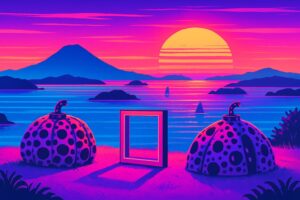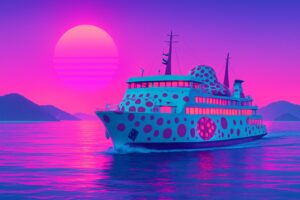
Yo, what’s up, fellow travelers! Sofia here, coming at you with a story that’s honestly so wild, it feels like a movie plot. So, picture this: you’re scrolling through the ‘gram, and you see these insane shots from Japan. A giant, polka-dotted yellow pumpkin sitting on a pier, staring out at a sparkling blue sea dotted with misty, green islands. You see minimalist concrete museums that look like they were built by futuristic aliens, and traditional wooden houses that have been turned into trippy art installations. The vibe? Serene, beautiful, and a little bit magical. This is the Seto Inland Sea, or Setouchi, a place that has blown up as a must-see destination for art lovers and anyone chasing that perfect, aesthetic travel shot. But here’s the tea, and you might want to sit down for this: for decades, this dreamy paradise was one of Japan’s most notorious industrial dumping grounds. Seriously. We’re talking toxic sludge, oil slicks, and ‘red tides’ that killed everything. The glow-up is real, but the story of how it happened is a rollercoaster. How does a place go from being an environmental cautionary tale to a global icon of regeneration? It’s a question that gets to the very heart of Japan’s weird and wonderful way of doing things—a mix of high-tech innovation, ancient philosophy, corporate power, and a whole lot of community spirit. It’s a story about facing your ugly past and literally turning trash into treasure, and understanding it is key to understanding modern Japan. So, buckle up, because we’re about to dive deep into the fascinating, confusing, and ultimately inspiring transformation of the Seto Inland Sea.
This incredible transformation is a perfect example of the unique art of island time that defines the region’s creative rebirth.
The Not-So-Pretty Past: What a “Miracle” Left Behind
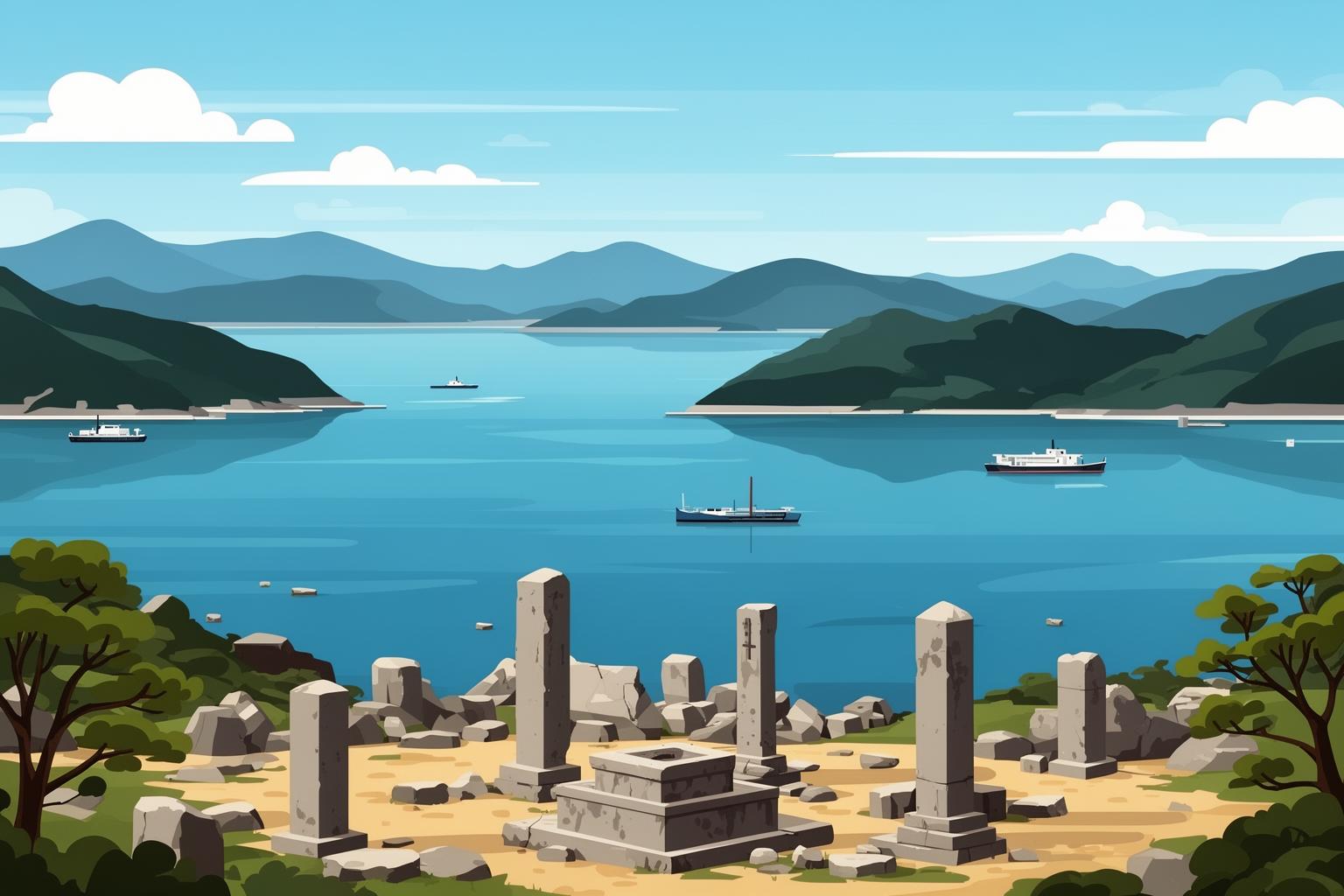
To understand why the Setouchi revival is such a significant event, you first need to grasp the extent of the disaster it emerged from. It wasn’t merely a minor pollution issue; it was a full-scale environmental crisis directly caused by Japan’s relentless pursuit of becoming an economic superpower. The very factors that propelled Japan to global dominance nearly destroyed one of its most stunning natural treasures.
The High-Speed Growth Era: Japan’s Industrial Powerhouse
Following World War II, Japan accelerated its development. The mission was clear: rebuild rapidly and grow quickly. This era, spanning the 1950s to the 1970s, is known as the Japanese Economic Miracle, and rightly so. The nation transformed itself into a manufacturing giant. The Seto Inland Sea served as the ideal hub for this transformation. Its calm, sheltered waters provided a perfect transportation route for shipping, while its extensive coastline offered abundant space for factories, refineries, and power plants. The whole region was rezoned for heavy and chemical industries. Imagine enormous steel mills producing metal for cars and skyscrapers, petrochemical plants creating plastics, and shipyards constructing vessels destined to export Japanese goods worldwide. For a generation that endured the destruction of war, smokestacks belching smoke symbolized not pollution, but progress, employment, and a prosperous future. The prevailing national mindset prioritized ‘keizai seichō’ (economic growth) above all else. The environment was considered a secondary issue. The sea was treated less as a treasured ecosystem and more as an endless dumping ground. Industrial wastewater, often insufficiently treated, was dumped directly into bays. Oil spills from tankers and coastal facilities were frequent. Air quality in cities like Mizushima degraded so severely that respiratory illnesses became widespread—similar to ‘Yokkaichi asthma’ in another industrial region—with a comparable crisis developing in Setouchi. The sea itself began to exhibit alarming signs. The most notorious was the ‘akashio,’ or red tide—an algal bloom caused by an overload of nutrients, mainly nitrogen and phosphorus, from industrial and agricultural runoff. These blooms depleted oxygen in the water, creating large dead zones. For fishing communities that had relied on the sea for centuries, this was catastrophic. Their catches shrank, and often the fish were contaminated. The once-vibrant sea, celebrated in Japanese poetry and art for its beauty, was turning into a murky, foul-smelling wasteland. This was the dark cost of the miracle—the price of progress paid by the people and the natural environment of the Seto Inland Sea.
The Teshima Incident: The Wake-Up Call That Shook Japan
Sometimes, a problem known to many requires a single shocking scandal to compel action. For the Seto Inland Sea, that scandal was the Teshima incident—a story of corporate greed, governmental neglect, and the remarkable determination of a small community refusing to give up. Teshima is a small, beautiful island inhabited by a few hundred people, mostly farmers and fishermen. It should have been a peaceful haven. But starting in the late 1970s, a dubious waste disposal company began illegally dumping huge quantities of industrial waste there. This was not household trash but shredded car parts, slag, sludge, and a toxic mix of heavy metals and chemicals. The company was supposed to process and recycle the waste, but instead, it was dumped into a massive, unlined pit on the island’s western side. Over more than a decade, trucks arrived daily, piling more than 900,000 tons of hazardous material. Islanders sensed something was wrong. The air smelled foul, the spring water turned strange colors and tasted metallic, and crops began failing. They protested and appealed to the local Kagawa prefectural government but were ignored for years. It turned out the authorities had issued the company’s license and were reluctant to admit their error or confront the politically connected operator. This reflects a classic and often frustrating facet of Japanese bureaucracy: the desire to avoid conflict, preserve face, and navigate complex jurisdictions can result in paralyzing inaction. Yet the people of Teshima, especially the fishermen seeing their livelihoods threatened, remained resolute. In 1990, they filed for arbitration with the prefectural government, sparking a prolonged legal and political struggle. Years of protests, scientific evidence of contamination, and national media coverage eventually compelled government intervention. In 2000, a landmark settlement was achieved. The government formally apologized to residents and committed to funding a massive cleanup operation—one of the largest and most costly in Japan’s history. The toxic waste is now being excavated, transported to a special facility on nearby Naoshima Island, detoxified at extremely high temperatures, and safely stored. This slow, expensive process will take decades to complete. The Teshima incident was a national disgrace, but also a crucial turning point, exposing the dark side of Japan’s industrial rise and proving that the old model of prioritizing economic growth at any cost was no longer acceptable. It empowered local communities nationwide and set a precedent: polluters and the governments that enabled them would be held accountable. The fight for Teshima’s future laid the groundwork for the region’s revival.
The Art Intervention: How a Yellow Pumpkin Changed Everything
The cleanup of Teshima and the gradual enforcement of environmental laws were crucial initial steps. However, while restoring the sea was one challenge, healing the region’s spirit was quite another. Many of the islands faced ‘kaso,’ or depopulation, as young people left for jobs in major cities, leaving behind aging populations and empty villages. The fishing and farming industries were in decline. Though the islands were beautiful, they felt hollow and marked by a sense of loss. Reviving them would require more than just cleaner water—it demanded a bold, visionary, almost unbelievable idea.
A Bold Vision: Benesse and the “Art Site” Concept
Enter Soichiro Fukutake, billionaire head of the Benesse Corporation, primarily known for its education and publishing ventures like Berlitz language schools. It was unexpected for such a company to enter the contemporary art world, let alone island revitalization. Yet Fukutake had a personal connection to the area and an ambitious vision. Rather than seeing the struggling islands as problems, he viewed them as a canvas for an extraordinary experiment. His plan was to use contemporary art and architecture to breathe new life into the region—creating a unique and compelling destination that would draw visitors, restore local pride, and open new opportunities for residents. He named this initiative ‘Benesse Art Site Naoshima.’ Starting with Naoshima, an island with a declining fishing industry and an industrial plant, it was an unlikely candidate for a global art destination. Fukutake’s first major step was to commission the renowned architect Tadao Ando to design a series of museums and hotels. Ando’s minimalist style, featuring smooth exposed concrete, creates spaces both monumental and intimately connected to nature. This choice sent a clear message: this project was not a generic tourist resort but a serious artistic and architectural destination. The first completed work was the Benesse House Museum, which opened in 1992—a striking building serving as both museum and luxury hotel, where guests could sleep surrounded by art from artists such as Andy Warhol and Jasper Johns. When announced, many in Japan were skeptical; an art museum on a remote island an hour by ferry from a major city seemed a foolhardy extravagance, doomed to fail. Yet this reflected a distinctive type of Japanese philanthropy and corporate vision—less focused on immediate returns and more invested in legacy, personal philosophy, and long-term impact. Fukutake was not merely building museums; he was crafting a new societal model where art, nature, and community coexist and enrich one another, committing hundreds of millions over decades to realize this vision.
Beyond Museum Walls: Art as Immersive Experience
What distinguishes Benesse Art Site from museums like the Louvre or the Met is that art is not confined to buildings—the entire island serves as the museum. This central concept makes the experience both magical and photogenic. The most iconic example is Yayoi Kusama’s ‘Yellow Pumpkin,’ a whimsical oversized sculpture placed at the end of a pier, exposed to sun, wind, and waves—a revolutionary act bringing art out of formal galleries and into the natural environment. It became a landmark, experienced as part of the landscape itself. This integration philosophy permeates the site. The Chichu Art Museum, another Tadao Ando masterpiece, is almost entirely underground to preserve the island’s natural skyline. Visitors walk through concrete corridors evoking ancient tombs before emerging into naturally lit chambers designed to house select artworks, including Monet’s stunning ‘Water Lilies.’ Here, architecture is art in itself. Arguably the most intimate project is the Art House Project in Honmura village. Benesse restored several ‘akiya’—empty, abandoned homes—and invited artists to transform them into permanent installations. Visitors wander narrow traditional streets guided by maps, discovering a digital waterfall in one house or a glass staircase seeming to float to the heavens in another. This art treasure hunt brilliantly brings art directly into the community: preserving old buildings, drawing visitors into the village heart, and giving residents reason to engage. Village elders often serve as caretakers for these houses, adding authenticity and warmth rather than a sterile corporate feel.
The Setouchi Triennale: A Festival Engaging Senses and Soul
Following Naoshima’s success, the vision broadened. Launched in 2010, the Setouchi Triennale is a large international art festival held every three years, extending the Naoshima concept to a dozen islands in the Inland Sea. This propelled the regeneration project into overdrive. The Triennale stands apart from typical art fairs—it’s an epic island-hopping journey. The travel itself is part of the experience, with days spent ferrying between islands, each offering unique character and artworks. One day visitors explore Teshima’s breathtaking Art Museum, a vast, water-drop-shaped structure where water seeps through the floor in a meditative display; another day they might visit Ogijima, a small hilly island dotted with art installations nestled in a labyrinthine village, or Shodoshima, known for olive groves and a massive bamboo sculpture. The art often deeply reflects its location, as artists spend time on-site, collaborate with locals, and create works inspired by each island’s history, culture, or challenges. For instance, an artwork might reference the island’s stone quarrying past or help revive a shuttered community center. This collaborative ethos makes the Triennale exceptional. The islanders, many elderly, are not passive observers but active participants. They volunteer as guides—the ‘Koebi-tai’ or ‘Little Shrimp Corps’—operate cafes and guesthouses from their homes, and share their stories with global visitors. For these aging communities, the festival brings not only financial support but renewed purpose and connection. It offers a powerful remedy to isolation and decline. The Setouchi Triennale became a global sensation, demonstrating that art can be a transformative force for social and economic renewal in rural, post-industrial regions.
The “Satoumi” Renaissance: Healing the Waters
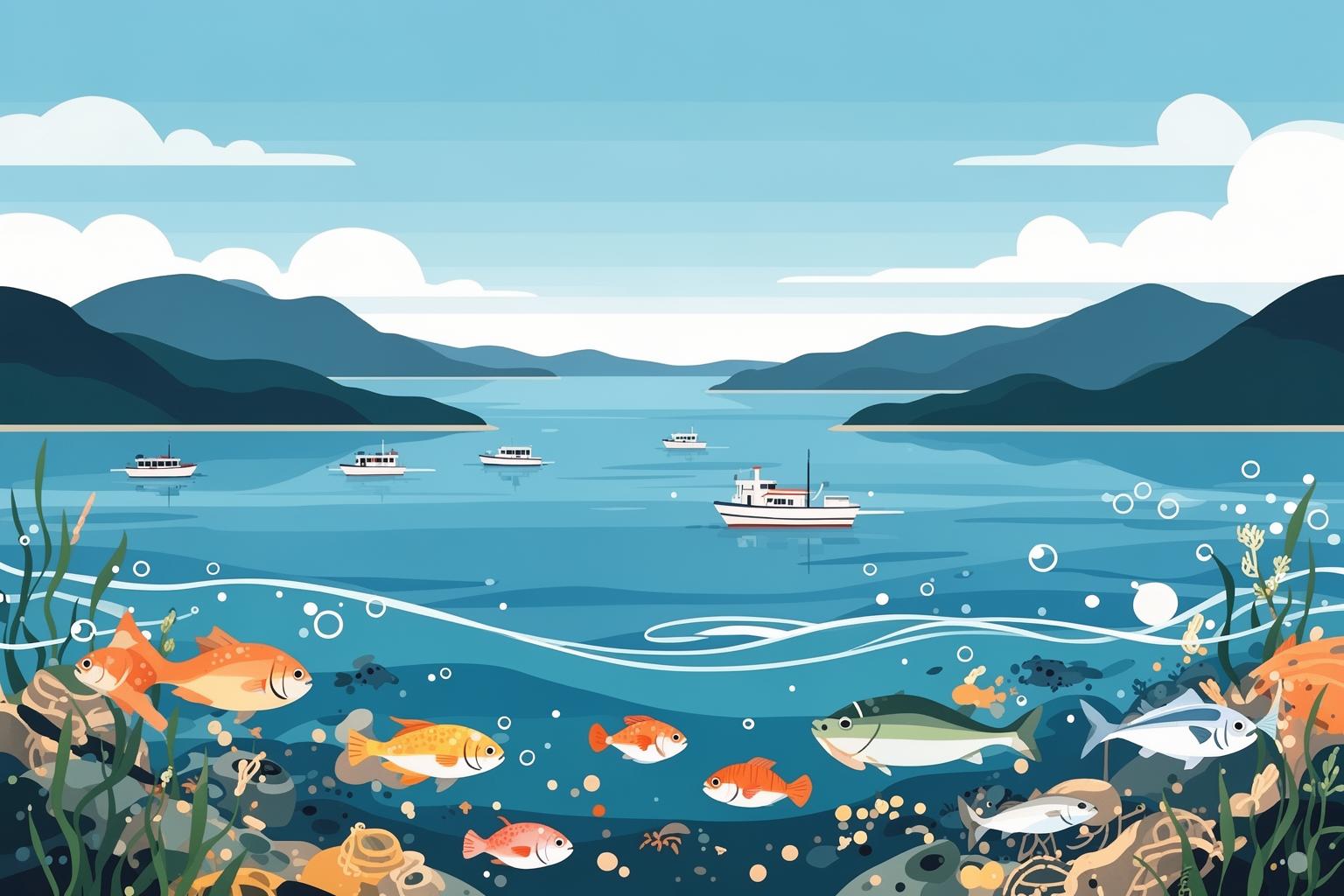
While the art islands were attracting international attention, a quieter revolution was unfolding in the water itself. Cleaning up industrial pollution was only part of the challenge. The greater task was to restore the sea’s health and revive the rich biodiversity it had lost. This effort was guided by a uniquely Japanese concept essential to understanding the environmental aspect of this story: ‘Satoumi.’
More Than Just “Ocean”: The Concept of Satoumi
In the West, there is often a strong environmental ideal of ‘wilderness’—the belief that nature is best when it remains pristine and untouched by humans. The Japanese concept of ‘Satoumi’ (里海) offers an alternative perspective. ‘Sato’ means village or homeland, and ‘umi’ means sea. Thus, ‘Satoumi’ literally translates to ‘village sea.’ It refers to coastal areas where human interaction over centuries has actually enhanced the biodiversity and productivity of the marine ecosystem. This is not about dominating nature, but about a symbiotic relationship. Think of traditional seaweed farming, which creates habitats for small fish; carefully managed tidal flats that serve as perfect nurseries for shellfish; or small-scale fishing practices that avoid depleting stocks. For hundreds of years, the Seto Inland Sea was a prime example of a flourishing Satoumi. The industrial revolution disrupted that balance. Consequently, the modern regeneration movement is not about returning the sea to a pristine, untouched wilderness, but about restoring that harmonious and productive relationship between people and the sea. It is a revival of Satoumi principles, updated with modern ecological science and a consciousness born from past mistakes. This philosophy is crucial, as it frames local fishing communities not as exploiters of the sea, but as its primary stewards. Their knowledge and involvement are considered essential to the sea’s recovery.
From Red Tides to Blue Seas: The Nitty-Gritty of Regeneration
Restoring a vast body of water like the Seto Inland Sea is an immensely complex task. It was not a single project, but thousands of efforts, large and small, driven by a blend of government regulation, scientific research, and community action. One of the initial and most significant steps was legal. In 1973, the Japanese government passed the ‘Law Concerning Special Measures for Conservation of the Environment of the Seto Inland Sea,’ which was later reinforced. This landmark legislation imposed strict limits on the amount of industrial and municipal wastewater discharged into the sea. It compelled companies to invest in improved treatment facilities and empowered authorities to enforce water quality standards. This top-down regulation was the tool that halted the worst pollution. However, the real progress occurred at the grassroots level. Scientists and local communities collaborated on restoration projects, with a major focus on rehabilitating the ‘amamo’ beds. ‘Amamo’ is a species of eelgrass growing on the shallow seabed. These underwater meadows play a vital role: stabilizing the seafloor, purifying water by absorbing excess nutrients, and providing essential nurseries and shelter for juvenile fish and other marine life. Vast stretches of these eelgrass beds had been destroyed by pollution and coastal development. In response, fishermen, local volunteers, and even schoolchildren began painstakingly replanting them, creating new habitats and jumpstarting the ecosystem’s recovery. Aquaculture was another area of emphasis. Historically, fish farming often involved overcrowding fish in cages and excessive feed use, which polluted nearby waters. Now, a strong push exists for more sustainable methods. For example, oyster farming, a major industry in places like Hiroshima, benefits the environment greatly. A single oyster can filter dozens of liters of water daily, removing algae and particulates. The oyster rafts scattered across the Seto Inland Sea’s bays serve as large, natural water purifiers. Fishermen’s cooperatives also play a vital role. They collaborate with marine biologists to manage fish stocks, imposing catch limits to allow populations to replenish. They monitor water quality, reporting pollution or early signs of red tides. They organize beach cleanups and lead public education programs. This is the Satoumi concept in action: those who depend on the sea for their livelihood are also its most devoted guardians. The results of these decades-long efforts are evident. The devastating red tides have become much rarer and less severe. The water is visibly cleaner. Fish and marine species once on the brink of disappearance are beginning to return. Though the journey is ongoing, the sea is healing.
The Vibe Today: What’s it Really Like to Visit?
With this epic backstory of pollution, protest, and artistic rebirth, what is the Setouchi region really like to visit today? It’s a place full of fascinating—and sometimes jarring—contradictions. It’s where your Instagram feed and the reality on the ground don’t always perfectly align, and honestly, that’s what makes it so captivating.
The Instagram vs. Reality Check
Let’s be honest: most visitors come to Setouchi drawn by the stunning images they’ve seen online—the yellow pumpkin, futuristic museums, and art installations in old houses. And yes, all that is here, and it truly is as amazing as it appears. Standing before a Monet at the Chichu Art Museum, lit only by natural light, is a genuinely spiritual moment. Capturing Kusama’s pumpkin framed by a perfect sunset becomes a cherished travel memory. The region fulfills its visual promise. However, it’s important to realize that Setouchi is not a flawlessly curated art theme park. It is a living, breathing, working region with a complicated past that remains visible. On ferry rides between art islands, you’ll pass the still-active industrial coastline of the mainland. Massive tankers share waterways with small passenger boats. Smokestacks from refineries loom behind peaceful fishing villages. On Naoshima, the southern half hosts the art sites, while the northern half is dominated by a large Mitsubishi materials processing plant. This contrast can initially be startling. You might think, “This disrupts the vibe.” Yet soon, you understand that this is the vibe. The tension between industrial and artistic, past and present, is the full story. The art wasn’t placed in pristine wilderness; it was deliberately situated here because of this history. It’s a statement about recovery and coexistence. Ignoring the industrial side misses the point entirely. The beauty here is not simply natural; it’s a hard-earned, complex beauty enriched by the scars it carries.
The Human Element: More Than Just Art and Oysters
Beyond art and industry, the most memorable aspect of a Setouchi visit is often its people. The regeneration project has injected new energy into the islands, though the demographic challenge of ‘kaso’ (depopulation) remains. On many smaller islands, most residents are over 65. Villages can feel quiet, sometimes eerily so. Abandoned houses and overgrown fields sit beside beautifully restored art houses. Yet the people who remain are the heart and soul of the place. They have lived through the transformation, recalling when the sea was polluted and now proudly caring for the art and renewed environment. Interactions here differ from those in big cities like Tokyo. Everything moves at a slower pace. Ferry schedules shape your day. Shops and cafés are often small, family-run, and may close early. You adjust to ‘shima jikan,’ or ‘island time.’ This enforced slowdown is part of the magic. It offers moments to speak with the woman running a tiny restaurant or an elderly volunteer stamping your art passport. They hold incredible stories. They are living history. These encounters add powerful human context to the art and scenery. You realize this grand project isn’t just about abstract ideas of regeneration; it’s about the real lives of island residents. The art forms a bridge between their world and the outside, creating a community both deeply local and surprisingly international.
The New Eco-Tourism Model: Is It Sustainable?
The Setouchi project’s success has been remarkable, yet it raises questions about sustainability. The very qualities that make the islands special—their quiet, remote, contemplative atmosphere—are threatened by growing popularity. Overtourism is a genuine concern. During the Triennale’s peak season, small ferries are packed and lines for key artworks can be long. The islands’ fragile infrastructure is stretched thin. How can they welcome visitors without destroying what drew them in? This challenge faces Benesse and local governments, who are actively managing visitor flow. Many major museums on Naoshima now require advance, timed-entry tickets to control crowds. They encourage visits in the off-season, when weather remains pleasant but islands are quieter. Promoting longer stays aims to reduce rushed day-trips and lower travel-related carbon footprints, while benefiting local guesthouses and restaurants economically. The Setouchi model is a large-scale, ongoing experiment in sustainable tourism—a delicate balance between economic revival, cultural preservation, and environmental stewardship. The story continues to evolve. Visiting today means participating in that experiment and embracing a more mindful, respectful way to travel.
So, Why Did It Happen Here? The Japan Factor
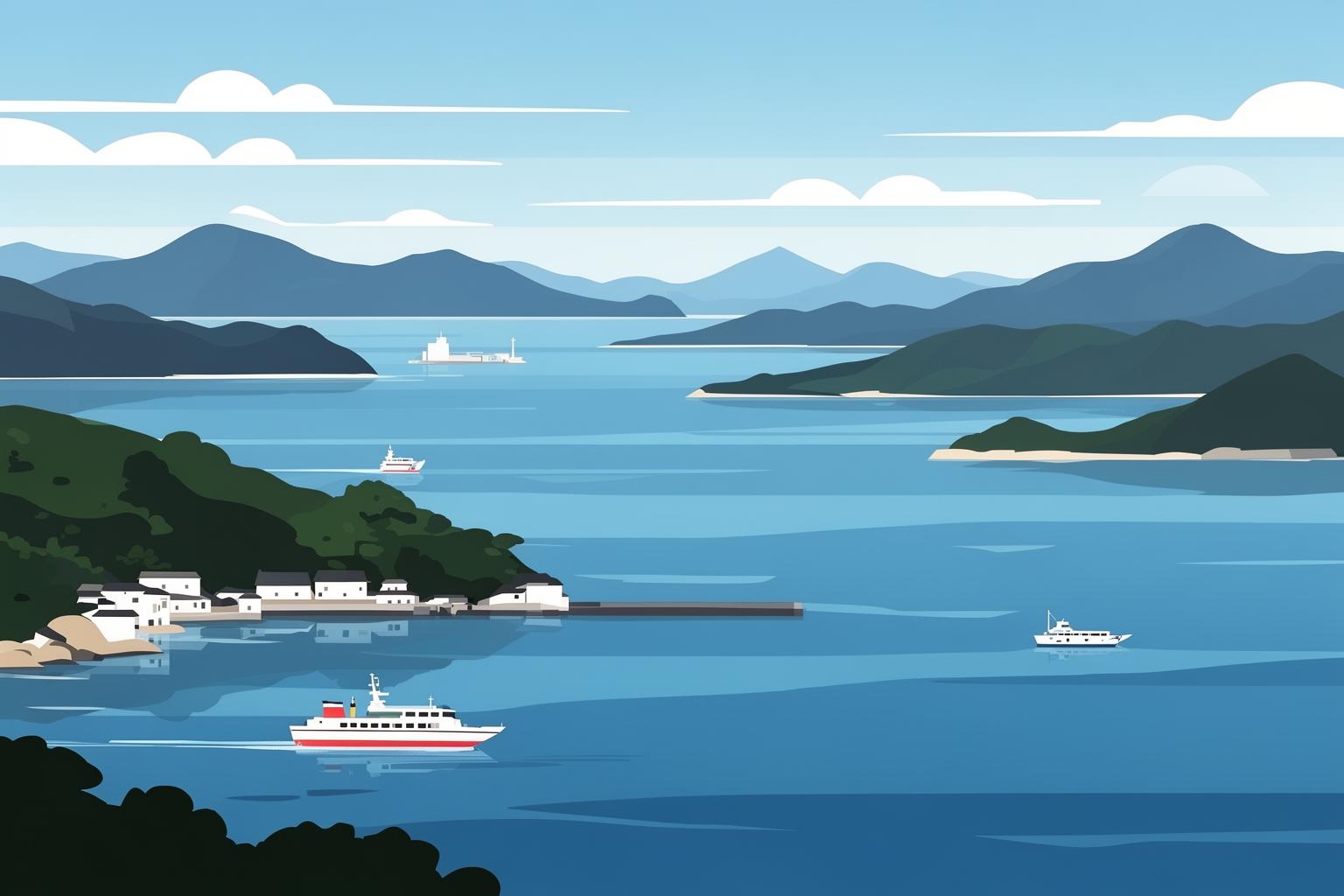
The transformation of the Seto Inland Sea is a remarkable story in itself, but the most intriguing question is, “Why Japan?” Could a project of this scale, vision, and timeline occur anywhere else? The answer is likely no. The success of Setouchi is deeply embedded in several fundamental aspects of Japanese culture and society.
The Power of a Long-Term Vision
Central to the art project is the steadfast, multi-decade dedication of one individual and his company. Soichiro Fukutake’s vision for Benesse Art Site was not a typical business plan; it was a philosophical pursuit. A Western corporation attempting a similar project would probably face intense pressure from shareholders to deliver profits within a few years. In contrast, the Setouchi project was a significant financial gamble that took decades to bear fruit, and financially speaking, it may never fully recover the initial investment. This capacity to invest “patient capital” in initiatives with cultural or social goals, rather than purely economic ones, is a distinctive trait found in certain segments of the Japanese corporate world. It’s about building a legacy, contributing to society, and having a vision that extends well beyond the next quarterly report. This long-range perspective, often grounded in a sense of responsibility toward the nation or a particular region, was the crucial factor that enabled the Setouchi dream to be realized.
Group Harmony and Bottom-Up Collaboration (Wa 和)
While Fukutake’s vision served as the spark, the project would have faltered without the collaboration of numerous other groups. The success of the Triennale, for instance, depends on a complex network of partnerships among Benesse corporation, prefectural and municipal governments, international artists, architects, and most importantly, the local island communities. In Japan, there is a strong cultural emphasis on ‘wa’ (和), which means harmony or social cohesion. This often entails a slow, deliberate process of consensus-building, where everyone’s viewpoints are considered and compromises reached before progressing. Although this process may seem frustratingly slow to outsiders, it ensures that once decisions are made, everyone is aligned and works together toward shared objectives. This dynamic is evident in how artists collaborated closely with villages, how fishermen’s cooperatives partnered with scientists to restore the sea, and conversely, in the Teshima story: when that harmony is disrupted by a single disruptive actor, the community’s response—while slow to mobilize—can be extraordinarily strong and persistent. The renewal was not imposed from the top down; it was a collective endeavor, demonstrating the power of ‘wa.’
The Aesthetic of Impermanence and Renewal (Wabi-Sabi 侘寂)
Lastly, the entire project resonates deeply with traditional Japanese aesthetics. The concept of ‘wabi-sabi’ celebrates the beauty found in imperfection, impermanence, and incompleteness. It’s the charm of an aged, weathered piece of wood or an irregular ceramic bowl. The Art House Project perfectly exemplifies this principle by transforming old, decaying, forgotten houses—objects society might deem worthless—into spaces of profound beauty and reflection without erasing their history. It embraces the value in imperfection. A related idea is ‘kintsugi,’ the art of repairing broken pottery with gold lacquer. The philosophy behind kintsugi is that an object becomes more beautiful because it has been broken; its cracks represent its history and should be honored, not concealed. Metaphorically, the Setouchi revitalization acts as cultural kintsugi. It took a region fractured by industrialization, pollution, and depopulation and didn’t attempt to hide the scars. Instead, it filled the cracks with art, community, and a renewed respect for nature. The visible relics of industry serve as golden lacquer—a reminder of the past that enriches the present beauty. The Seto Inland Sea’s transformation is more than just an inspiring travel story; it’s a profound lesson in how a society can face its past, accept its flaws, and through a distinctive mix of vision, cooperation, and cultural values, create something new, beautiful, and hopeful.