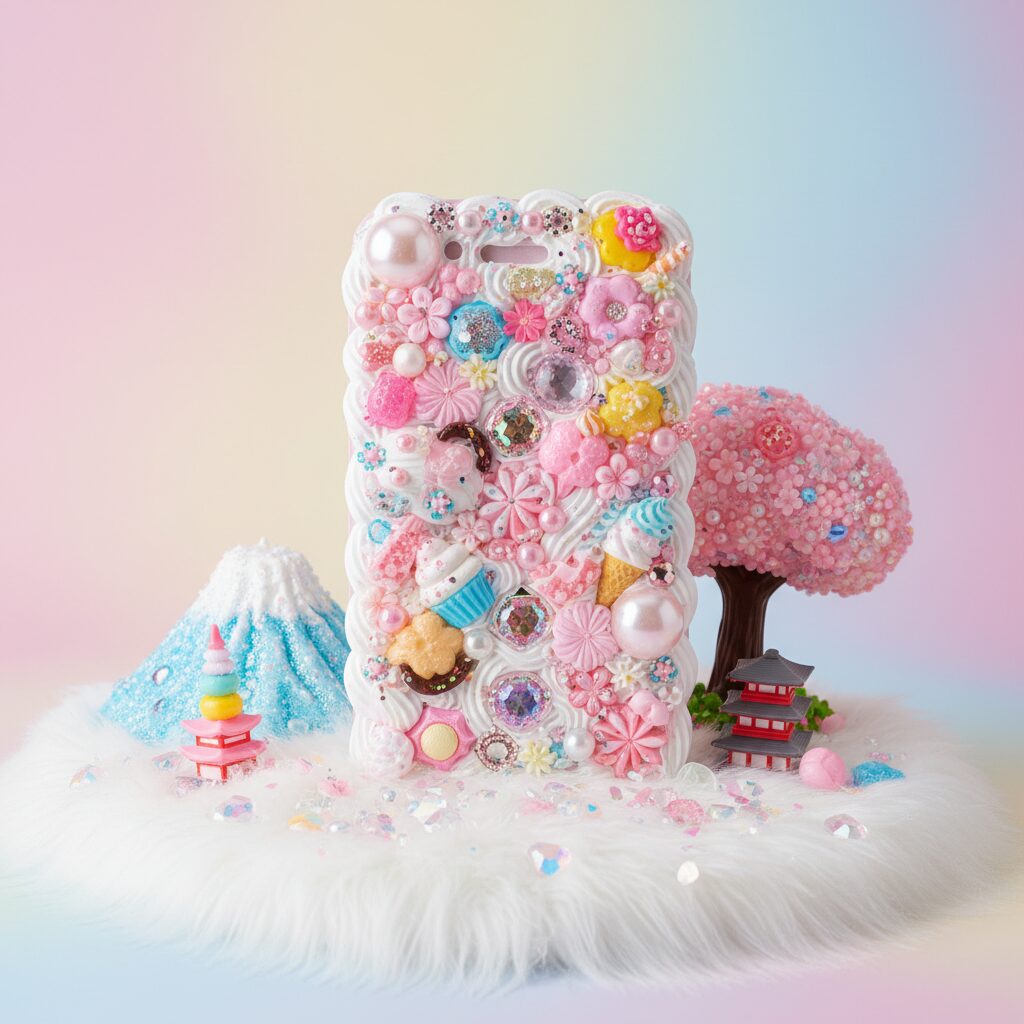
Yo, what’s the deal? Taro here. So you’ve done the temple run, you’ve slurped the ramen, maybe you’ve even seen the bowing deer in Nara. You’re on that next-level Japan trip, the one where you start asking the real questions. You scroll through old pics from the 2000s, see some wild fashion on the streets of Shibuya, and land on this one image that just breaks your brain: a flip phone so caked in rhinestones, fake sweets, and plastic pearls that you can barely tell it’s a phone. Your first thought is probably, “Why?” It looks impractical, kinda gaudy, and a total sensory overload. It’s the polar opposite of the clean, minimalist Muji-and-matcha aesthetic you’ve been sold. And that, right there, is the whole point. You’ve just stumbled upon the ghost of the Heisei era, a glitter-covered artifact known as ‘Deco-den’ (デコ電), or decorated phone. This isn’t just about sticking shiny things on a phone. Nah, this is a legit cultural deep-dive. It’s a whole vibe, a rebellion in your pocket, and honestly, one of the best ways to understand the chaotic, creative, and totally extra energy of Japan between the 90s and the late 2000s. Forget what you think you know. We’re about to get our hands sticky with silicone cream and cultural context to figure out why, for a hot minute, Japan decided that more was, like, way more. This is the real story, the one that doesn’t fit neatly into a travel brochure. It’s the answer to the question, “Is this what Japan is really like?” And the answer is a loud, glittery, unapologetic YES. It was, and its spirit is still kicking around if you know where to look. So let’s get into it, and craft our way to understanding a side of Japan that’s way more punk rock than it is peaceful rock garden.
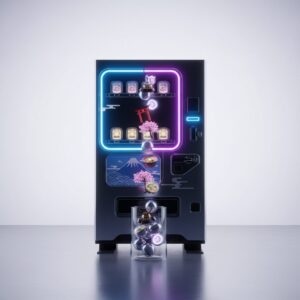
This chaotic, creative energy also fueled other uniquely Heisei-era phenomena, like the rise of Japan’s bizarrely specific vending machines.
What Even IS Deco-den? More Than Just Glue and Rhinestones
Alright, let’s start with the basics because when you gaze at a prime example of Deco-den, your eyes don’t know where to focus. It’s a visual extravaganza. You might spot a phone that looks like a miniature wedding cake has collapsed on it, or one completely covered in Swarovski crystals, or another showcasing a full 3D scene with Hello Kitty lounging on a plastic macaron. It’s not random. There’s a method to this madness—an entire aesthetic language that a generation of Japanese youth, especially young women, mastered. To truly understand it, you need to break it down into its core elements and, more importantly, grasp the philosophy behind it all. It represents a rejection of sleek, corporate-designed tech in favor of messy, glorious, personalized humanity. At its purest, it was a way to transform a mass-produced object into a unique treasure, a personal emblem you could carry everywhere.
A Visual Breakdown: The Anatomy of a Glitter Bomb
So, what exactly is on these creations? It’s an entire ecosystem of craft supplies, a symphony of plastic and sparkle. First, you have the foundation: rhinestones. We’re not talking about a few subtle gems; the goal is to cover every square millimeter of available surface—a technique called ‘paving.’ The aim is to make the phone shimmer and catch the light from every angle. Next are the ‘parts,’ or ‘cabochons’ as crafters call them. These are the 3D elements, tiny plastic charms that give the design its theme and personality. Think miniature donuts, teddy bears, alphabet blocks, bows, crowns, roses, and characters from Sanrio. The wilder, the better. Anything and everything could become a charm. But the real game-changer, the signature element of Deco-den, is the fake whipped cream. Usually made from silicone sealant—the kind used for bathrooms—piped from a pastry bag to resemble frosting, it creates a fluffy, 3D base to nestle all the heavy charms, making the phone look like a luscious dessert. This whole aesthetic is summed up by a key word from Japanese youth slang: ‘mori’ (盛り). ‘Mori’ means ‘to pile on’ or ‘to heap.’ It’s the direct opposite of minimalism. It’s about abundance, excess, and being unapologetically extravagant. When you ‘mori’ something, you’re not just decorating it; you’re amplifying it, making it bigger, louder, and more fabulous. This one word unlocks much of the essence of Heisei-era youth culture. Many expect Japan to be the land of wabi-sabi, finding beauty in simplicity and imperfection, and it is—but it’s also the land of ‘mori.’ It’s a culture of striking contrasts, and Deco-den is the ultimate proof: for every quiet Zen garden, there’s a loud, sparkling ‘mori-mori’ phone case demanding attention. The real Japan lives in the tension between these extremes.
The Canvas: Not a Smartphone, but a ‘Garakei’
Here’s an essential point to grasp the Deco-den phenomenon: the canvas wasn’t a smartphone. It couldn’t be. The sleek, black, all-screen slabs we carry today are terrible canvases—boring. The true golden age of Deco-den thrived on the ‘garakei’ (ガラケー). The term combines ‘Galapagos’ and ‘keitai’ (携帯, mobile phone). It refers to feature phones that evolved in isolation in Japan—much like the unique species of the Galapagos Islands—before the iPhone homogenized the market. These phones were industrial design marvels. There were flip phones (the classic ‘paka-paka’ or パカパカ, named after the sound they made opening and closing), slider phones, and twist-open models. They came in countless colors and featured physical keypads. This variety of forms was a decorating paradise. You had so many surfaces to embellish: front, back, inside around the screen, even individual keypad keys. The hinge of a flip phone became a new frontier for decoration—a 3D object with personality built-in. Deco-den just took that personality to the extreme. Often, Japan’s ‘Galapagos syndrome’ is seen negatively, as a symptom of an insular tech market, but here it was a creative blessing. It nurtured a unique and vibrant mobile culture the rest of the world never saw. The ‘garakei’ wasn’t merely a communication device; it was an accessory, a fashion statement, a diary, and a canvas, all rolled into one. Decorating it wasn’t just a cute hobby; it was integral to owning it. The phone itself was an expression of your identity—long before crafting a curated Instagram feed became a thing.
The Heisei Vibe Check: Why Did This Trend Go So Hard?
So we’ve defined what Deco-den is, but that doesn’t answer the ‘why.’ Why did millions of young people devote countless hours gluing tiny plastic pieces to their phones? To understand that, you need to take a step back and examine the cultural landscape of Japan during the Heisei era, especially in the 1990s and early 2000s. This wasn’t just a random crafting fad. It was a perfect storm of social rebellion, shifting aesthetics, and technological constraints. It was a direct response to the environment these kids inhabited—a society often rigid, demanding conformity, and, following the economic bubble burst in the early ’90s, somewhat gloomy. Deco-den was a burst of colorful, joyful, DIY energy in an increasingly drab world. It was a way for a generation to claim a small corner of the world as their own and make it shine.
The ‘Gyaru’ and ‘Kogal’ Revolution: Individuality as Rebellion
The tale of Deco-den is intertwined with the rise of the ‘gyaru’ (ギャル). Emerging in the ’90s, gyaru were young women who broke away from traditional Japanese beauty standards and social expectations. They sported tanned skin, bleached hair, dramatic makeup, and ultra-short skirts. Loud and confident, they developed their own slang and culture, centered in Tokyo’s Shibuya and Ikebukuro districts. The ‘kogal’—a blend of ‘koko-sei’ (high school student) and ‘gal’—were the high school equivalent, known for customizing their uniforms with loose socks and accessories. This whole subculture was a form of gentle rebellion. In a society that highly values conformity and group harmony—summed up by the saying, “the nail that sticks out gets hammered down”—the gyaru chose to be the most dazzling, glittering nail you’ve ever seen. Their entire existence was a declaration of individuality. And what’s the most personal, always-on-you item? Your phone. The Deco-den phone became a vital part of gyaru identity. A plain phone was dull and standard-issue. A decorated phone was a statement: “This is me. I’m not like everyone else. I’m creative, I’m fun, and I have my own style.” It was like carrying a piece of their decorated bedroom with them—a mobile symbol of their unique taste. In a world full of uniforms—be it school, work, or societal expectations—the phone was a small loophole where rules didn’t apply and creativity could run wild. It was a way of loudly proclaiming your identity without saying a word.
‘Kawaii’ Gets an Upgrade: From Cute to ‘Kote-Kote’
Everyone knows the word ‘kawaii’ (かわいい), meaning cute. But the Western interpretation is often limited, imagining only the soft, pastel, gentle side—like Hello Kitty in her simplest form. The Heisei era and the gyaru subculture amplified the concept of kawaii into something more intense. They created a new kind of cute that was loud, elaborate, and over-the-top. This is where the term ‘kote-kote’ (コテコテ) comes in. If regular kawaii is a simple vanilla soft-serve, kote-kote kawaii is a towering parfait with ten scoops of ice cream, whipped cream, sprinkles, chocolate sauce, a brownie, a slice of cheesecake, and a lit sparkler on top. It’s so rich and dense it can be almost overwhelming—that’s exactly the point. It’s a celebration of extravagance. Deco-den embodies kote-kote perfectly. It’s not just one cute charm; it’s a hundred charming trinkets competing for space, creating a texture and density that’s mesmerizing. It took the established idea of ‘cute’ and injected it with a punk, DIY spirit. Suddenly, Hello Kitty wasn’t just a simple character; she was a princess dripping in faux pearls and rhinestones, queen of her own glittery, chaotic kingdom. This evolution of kawaii is crucial for understanding modern Japan. The culture isn’t static but constantly remixed and reinvented by its youth. Deco-den reveals that ‘cute’ isn’t just a passive style; it can be bold, powerful, and deeply personal.
The Pre-Social Media Scarcity: Making Your Mark in the Real World
This piece of the puzzle is often overlooked in our hyper-connected era. Consider this: it was before smartphones, before Instagram, before TikTok. How did you express your personal brand? How did you curate your identity and broadcast it to the world? You had to do it physically. Your identity was defined by your fashion, makeup, hairstyle, and possessions. And the phone was central to that. It was the hub of your social life, used for texting (or ‘mailing,’ as it was called in Japan) and taking grainy photos. Showing off your customized Deco-den phone to friends was the 2005 equivalent of posting a viral Instagram story. It was a tangible, physical ‘post’ proving your creativity and commitment. This culture also intertwined deeply with ‘purikura’ (プリクラ), the iconic Japanese photo booths. You didn’t just take photos in purikura; you decorated them afterward on a screen—with stamps, text, glittery backgrounds, and doodles—then printed them as tiny stickers to cut up and trade with friends. You’d stick them on your phone, in your planner, everywhere. Deco-den is essentially 3D purikura. It captures the same urge—to transform a generic object into something uniquely yours through decoration—and applies it to a physical item. The Deco-den phone was a conversation starter, a status symbol, and a piece of portable art. It was a way to earn ‘likes’ in real life, through gasps and compliments. It stands as a testament to a time when social life was more tangible and self-expression required a hot glue gun, not just a filter.
The DIY Spirit: Why Not Just Buy a Case?
Alright, the aesthetic was a whole vibe. But it prompts a practical question: why go through all the effort to make it yourself? Even back then, decorated cases were available for purchase. But that wasn’t the point. The creative process mattered just as much as the finished product. The DIY spirit was central to the Deco-den trend, fueled by a unique blend of economic accessibility and a deep cultural appreciation for the one-of-a-kind. This wasn’t about ease; it was about passion. It involved investing your time and personality into an object until it became a part of you. This hands-on approach is what distinguishes true Deco-den from merely owning a glittery phone case. It was craftsmanship, skill, and a labor of love.
The ‘100-Yen Shop’ Empire and the Democratization of Crafting
You can’t discuss DIY culture in Japan without acknowledging the temple of affordable goods: the 100-yen shop. Stores like Daiso, Seria, and Can Do are institutions. During the Heisei era, they surged in popularity. For a teenager on a small allowance, these stores were a godsend. They offered abundant crafting supplies. You could buy bags full of rhinestones, cute charms, glitter, glue, and all the tools, each item just 100 yen (about a dollar). This was huge. It meant Deco-den wasn’t an exclusive hobby for wealthy kids. Anyone could participate. The 100-yen shop democratized creativity. It placed tools of self-expression directly into people’s hands. You could enter with 1000 yen (about ten bucks) and leave with enough materials to create a masterpiece. This accessibility fueled the Deco-den movement. It nurtured a culture of experimentation. If a project failed, no problem — the materials were inexpensive, and you could simply try again. It created a low-pressure environment where kids could learn new skills, develop their style, and become creators and designers, all from their bedroom floors.
‘Only One’: The Japanese Obsession with Uniqueness
Here’s another fascinating cultural paradox in Japan. On one side, there is intense social pressure to conform, to fit in, to be part of the group. Yet on the other, there is a deep, almost spiritual appreciation for things that are unique, special, and ‘sekai ni hitotsu dake’ (世界に一つだけ)—the only one in the world. People will queue for hours for limited-edition sneakers or region-exclusive KitKat flavors. The idea of owning something no one else has is incredibly compelling. Deco-den tapped directly into this desire. By making your own design, you were assured of having a phone literally unlike any other on Earth. It was the ultimate expression of ‘sekai ni hitotsu dake.’ While your school uniform matched hundreds of others, your phone was a bold statement of individuality. It was a safe and socially acceptable way to be the ‘nail that sticks out.’ You weren’t breaking official rules but bending unwritten social norms. This highlights why the DIY aspect was so vital. A store-bought case is mass-produced; even limited editions are shared by others. But a handmade Deco-den phone? That was your signature, proof that you weren’t a clone. This impulse appears in other Japanese youth culture areas, like students secretly customizing their uniform jacket linings or decorating school bags with so many keychains they become nearly unrecognizable. It’s about transforming uniform items into personal statements.
The Magazine as a Bible: Learning the Craft
So, where did everyone learn this? There were no YouTube tutorials back then. The answer was found in monthly magazines. Publications like ‘Popteen,’ ‘egg,’ and ‘Ranzuki’ were the bibles of gyaru culture. They covered more than fashion and makeup; they were packed with detailed, step-by-step DIY tutorials for everything, especially Deco-den. These magazines featured extensive reader-submitted photos showcasing incredible creations. They ran contests for the best-decorated phones. Famous gyaru models (‘charismatic gyaru’) shared their personal phones and explained their design choices. This was the original influencer culture. These magazines taught techniques: how to lay down a rhinestone base without gaps, how to pipe silicone to resemble perfect frosting, how to arrange charms for optimal balance (‘bara-maji’ or balance magic). They served as instruction manuals for the entire subculture, creating a shared language and skill set that united the community. Flipping through one of these old magazines today is like viewing a historical document—a perfect time capsule of a generation’s creativity, passion, and resourcefulness.
Crafting Your Own Heisei Time Capsule: A Modern Deco-den Experience
Alright, you’ve had the history lesson and grasped the cultural context. Now you’re probably wondering, “This actually sounds pretty cool. Should I try this myself?” Absolutely. While the ‘garakei’ may be gone, the spirit of Deco-den is very much alive. People have simply adapted the art form to modern technology. Creating your own deco piece isn’t just a fun souvenir; it’s an interactive cultural experience. It’s a way to tap into that rebellious, creative Heisei energy and craft something that’s entirely your own. It’s a statement against the dull, minimalist style of contemporary tech. So, let’s dive into how you can get hands-on and make your own slice of kote-kote magic.
So, You Wanna Get Your Sparkle On? Here’s the Lowdown.
First things first: you need supplies. And Japan remains the top spot to find them. Forget the tiny craft aisle at your local store; we’re talking entire buildings dedicated to crafting. Your first stop should be a large variety store like Tokyu Hands or Loft. They offer expansive crafting sections filled with quality glues, tools, and a thoughtfully selected range of deco ‘parts’. For a deeper dive, you’ll want to visit a specialized craft shop. Look out for places like Parts Club or Kiwa Seisakujo. These jewelry-making and craft supply stores are deco heaven, boasting walls of tiny drawers packed with every kind of rhinestone, pearl, and charm imaginable, sold individually or in small packets. Here’s where you’ll find the truly unique, premium pieces. And for bulk buys and that thrill of discovery, hit up the 100-yen shops. Visit a large Daiso in the city, and you’ll find everything you need to start on a budget. As for your base, the clear, hard plastic smartphone case is the go-to today. It offers the perfect blank canvas. But don’t stop there! People are decorating wireless earphone cases, portable battery packs, compact mirrors, laptops, and handheld gaming consoles. Anything with a surface is fair game. The medium may have evolved, but the message of bold personalization is unchanged.
The Mindset: Embracing Imperfection and ‘Mori’ Madness
Before you even pick up the glue, you need to be in the right mindset. This is key. First, let go of any notion of perfection. The charm of Deco-den lies in its handmade feel. It’s meant to look a bit chaotic, even messy. If a rhinestone is slightly askew or there’s a fingerprint in the silicone, that’s fine. That’s proof it was crafted by a person. It stands in contrast to sleek, factory-made products, and that’s its strength. Next, embrace the ‘mori’ philosophy: more is more. Your minimalist-conditioned brain might urge you to stop. Don’t listen. Keep going. Fill every gap. Add another charm, then one more. The goal is joyful abundance. It should feel plentiful and generous. When you think it’s done, it probably could use one more big bow right in the center. It’s a freeing exploration in maximalism. It’s about creating something that makes you smile because it’s gloriously over-the-top. There’s no right or wrong way—only your way. Your project should be a wild reflection of your personality.
A Step-by-Step Guide to Your First Deco Project
Let’s walk through the process not as rigid instructions but as a creative journey. Start with your blank canvas—the clear phone case. Clean it thoroughly. Now, consider your theme. You don’t have to stick to it rigidly, but it’s a helpful starting point. Are you leaning towards a ‘sweet lolita’ vibe? Gather parts that look like candy, cakes, and macarons in pastel hues. Or aiming for a ‘hime’ (princess) or ‘gorgeous’ look? Choose lots of pearls, large faceted jewels, crowns, and roses, likely in pink and gold or black and silver tones. Once you have your parts, do a dry run. Arrange them on the case without glue to get a sense of the layout. This is where you can play with that ‘bara-maji’ and find a balance that feels right. Now for the fun part. If you want the full ‘kote-kote’ experience, you’ll need a whipped cream base. You can buy special crafting cream in tubes with piping tips, or go old-school with a tube of white silicone sealant from a hardware store and put it in a pastry bag yourself. Pipe a generous, fluffy layer onto the case. While it’s still wet, start placing your large ‘parts’. Use tweezers for precision, gently pressing the big charms into the silicone cream. After the main pieces are set, fill the gaps. This is where you add rhinestones and smaller pearls, carefully placing each one. This is the most time-consuming but also quite meditative part. Finally, for extra sparkle, sprinkle fine glitter over everything. Now, the hardest part: waiting. Let it cure completely undisturbed for 24 to 48 hours. Once dry, you’ll have a solid, three-dimensional work of art. Snap it onto your phone. It’ll be bulky, heavy, gloriously impractical—and entirely yours.
The Legacy of the Glitter Phone: Is the Heisei Vibe Dead?
Deco-den was very much a product of its era—a time defined by flip phones, gyaru fashion, and social lives before Instagram. But does it still hold significance? Was it merely a short-lived, kitschy trend, or does it reveal something deeper about Japan that remains relevant today? The answer is a clear yes. While you’re less likely to spot wildly decorated phones on trains than you would have in 2007, the spirit of Deco-den has persisted, evolving into new expressions. Its legacy serves as a reminder that Japanese culture is far from monolithic, and that the drive for creative, personal, and sometimes outrageous self-expression is a powerful force that always finds a way to manifest.
From Deco-den to Depop: The Y2K Revival
If you’ve been following global fashion trends, you know that Y2K is making a major comeback. Low-rise jeans, vibrant accessories, and playful, layered looks are everywhere again. Much of this style draws directly from the Heisei-era street fashion seen in Harajuku and Shibuya. Young international Gen Z audiences scrolling through Pinterest and Depop are discovering and falling for gyaru and fruits magazine aesthetics—often without full awareness of their cultural background. They’re attracted to the same elements that made Deco-den so captivating: vivid colors, a DIY ethos, rejection of dull minimalism, and celebration of individuality. Deco-den stands as a key artifact of this period. Understanding its roots offers deeper insight into the Y2K revival. This resurgence isn’t just a random mix of trends; it stems from a distinct cultural moment in Japan when youth were breaking boundaries and crafting their own visual language. Now, that glittery, charm-laden style is being reimagined globally, proving the enduring appeal and power of that ‘kote-kote’ vibe.
The Smartphone’s Double-Edged Sword: Convenience vs. Character
There’s no doubt that the smartphone is a technological marvel, connecting us in ways unimaginable during the ‘garakei’ era. Yet, in gaining all that convenience and capability, we’ve arguably lost something—character. Today’s smartphones are sleek, beautiful, but ultimately impersonal black mirrors. Their design favors function over form, minimalism over personality. By contrast, ‘garakei’ phones, with their diverse shapes and colors, felt more like personal objects—a kind of companion. Deco-den celebrated that tangible sense of individuality. In a sense, the current surge in decorative phone cases is a direct response to the uniformity of modern smartphones. People want their sleek slabs of glass and metal to feel unique, to reclaim a sense of ownership and personality that once came naturally with ‘garakei.’ So, is it worth having a bulky, impractical phone case? Perhaps the real question is whether it’s worth carrying a device that feels entirely generic and stripped of your own spirit. Deco-den suggests that for many, it’s not. A little impracticality is a small price to pay for a great deal of joy and character.
Why Understanding Deco-den Helps You ‘Get’ Japan
And so, we come full circle back to that perplexing image of a phone swamped in glitter. By now, it should look a bit different—it’s no longer just a tacky object. It’s a symbol, a historical artifact, and an ideal case study for grasping the real, complex, and often contradictory nature of Japan. Understanding Deco-den reveals that Japan is not a singular entity. It isn’t just serene temples and minimalist design. It’s also the explosive creativity of youth subcultures. It embodies the tension between a deeply rooted desire for group harmony and a powerful, rebellious urge for individual expression. It illustrates how global trends are imported, transformed, and evolved into something uniquely Japanese. It demonstrates how constraints—whether social customs, school uniforms, or the physical form of a flip phone—can spark remarkable bursts of creativity. The next time you’re in Japan and encounter something strange, illogical, or wildly over-the-top, pause. Don’t simply dismiss it. Remember the story of Deco-den. Chances are, you’re not just witnessing a strange object or fleeting fad—you’re seeing the tip of a cultural iceberg. You’re looking at a narrative about identity, rebellion, and the universal human need to claim a small piece of the world and proclaim, “This part is me.”