Yo, what’s up. It’s Ryo. So, you’ve been scrolling through the endless feeds of Japan content. One minute, you see these hyper-organized, sparkling clean streets and people sorting their trash into a dozen different bins. The next, you see a single grape, a perfect, solitary grape, entombed in three layers of pristine plastic like it’s a crown jewel. You see vending machines on every corner selling everything from hot soup to tiny T-shirts, but then you hear about ancient traditions of repairing broken pottery with gold. It’s a whole mood, and honestly, it’s confusing. You’re probably thinking, “Make it make sense.” Why does a country that seems so mindful of waste also seem to be the world champion of single-use packaging? This isn’t just a simple contradiction; it’s a cultural paradox, a glitch in the matrix of modern Japan. And if you really want to get it, to understand the deep-level OS that this country runs on, you need to get familiar with one word: mottainai.
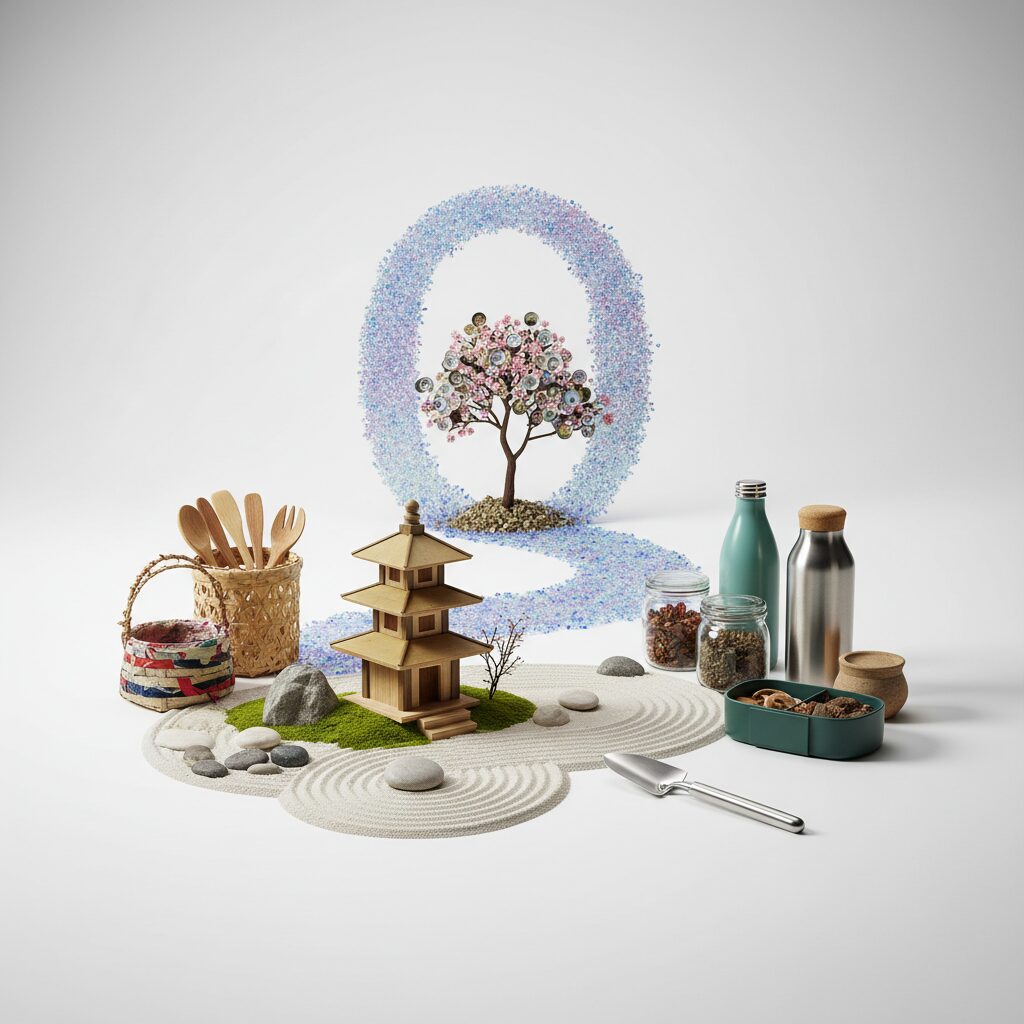
This isn’t just some new-age, tote-bag-and-metal-straw eco trend. Mottainai (もったいない) is the OG zero-waste philosophy. It’s an ancient, deeply ingrained vibe that predates any Western environmental movement by centuries. It’s not a rule written in a book; it’s a feeling, a gut punch of regret you get when you see something valuable being wasted. It’s your grandma’s spirit animal whispering in your ear when you think about throwing out that last bite of rice. This single concept is the key to unlocking so many of Japan’s most baffling behaviors, from its intricate art forms to its obsession with packaging. It’s the secret sauce, the cultural software that explains both the minimalist Zen temples and the maximalist plastic wrap. So, let’s get into it. We’re about to deep-dive into the mottainai mindset to decode why Japan is the way it is. It’s a trip, for real.
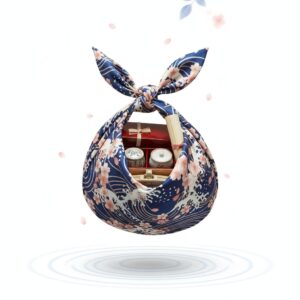
This philosophy is perfectly embodied in practices like using a traditional furoshiki cloth, a zero-waste alternative to modern bags and wraps.
What Even IS ‘Mottainai’? More Than Just ‘Wasteful’
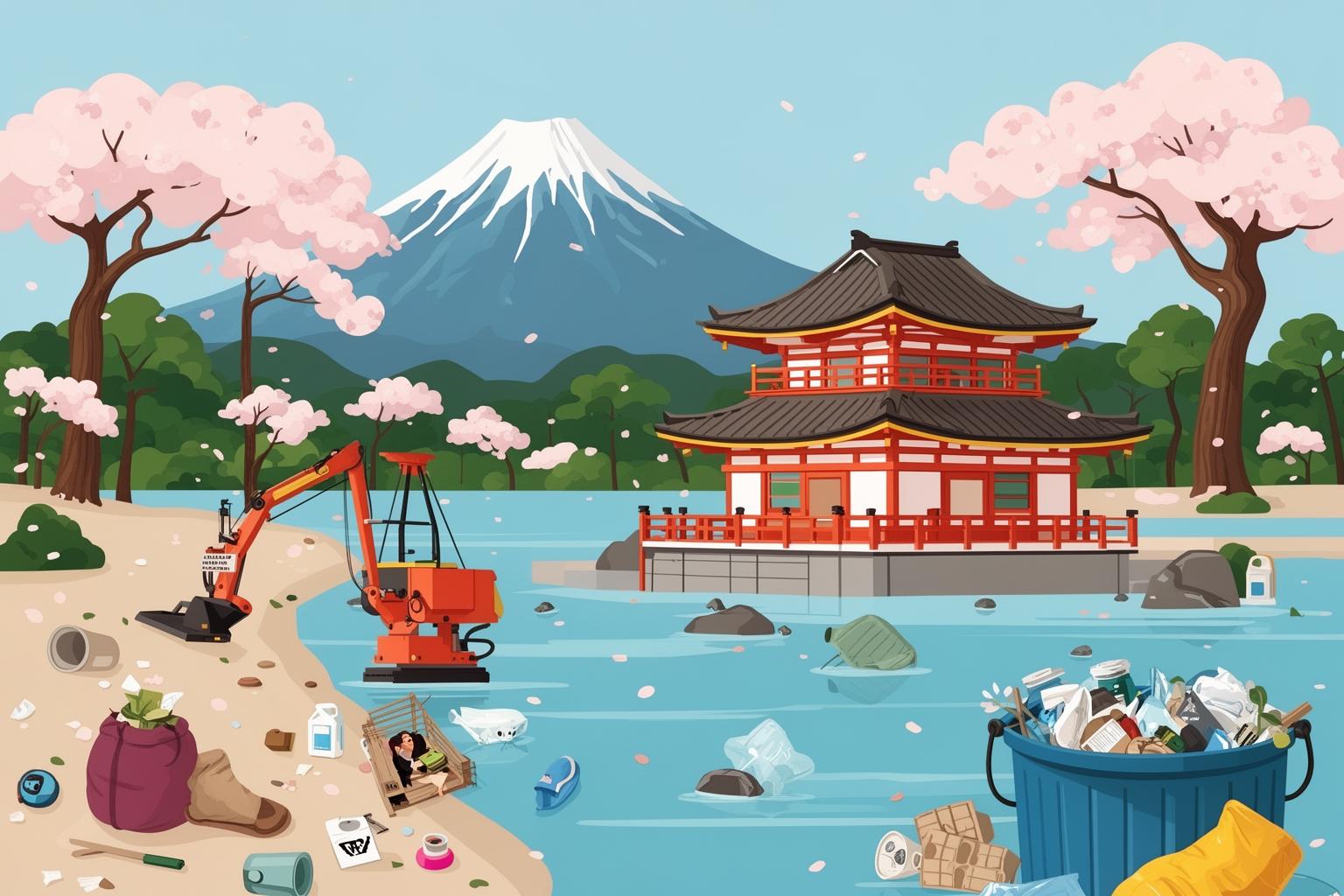
Alright, so you’ve heard the word, but what does it truly mean? Translating mottainai merely as “wasteful” is kind of a disservice. It’s like calling a full-course kaiseki meal just “food.” It completely misses the essence, the nuance, the whole atmosphere. The English word “wasteful” carries judgment—it implies inefficiency, economic foolishness. Mottainai is different. It’s an emotional expression, a lament. It conveys a genuine feeling of sadness and regret over the loss of something’s potential.
Deconstructing the Kanji
To fully grasp it, you need to look at the characters. Mottainai is written as 勿体無い. The first part, 勿体 (mottai), speaks to the intrinsic essence or dignity of a thing. It’s the “thing-ness” of the thing, its inherent value. The second part, 無い (nai), simply means “there is not” or “lacking.” So, combined, mottainai literally means something like “the essence is gone” or “its inherent dignity is missing.” When you throw away food, you’re not just wasting money; you’re disrespecting the very essence of that food—the life it contained, the sun and water that nurtured it, the farmer who grew it, the chef who prepared it. It’s a spiritual kind of regret. It hits differently, you know?
It’s a Feeling, Not a Rule
You won’t find a law that says, “You must not be mottainai.” It’s not about following strict rules. It’s a cultural instinct. It’s the pang of guilt when a perfectly good shirt gets a small stain and you consider discarding it. It’s the automatic impulse to save a small piece of wrapping paper because it’s “too nice to throw away.” It’s a collective, unspoken understanding that everything has value and that to squander that value is simply… wrong. It’s a feeling ingrained in the Japanese psyche over generations, a quiet but persistent voice guiding countless small, daily choices. This feeling is the invisible force behind why people take the time to meticulously repair a torn paper screen or why a chef will create a new dish just to use some vegetable scraps. It’s not about being cheap; it’s about being respectful.
The Four R’s Before They Were Cool
The modern environmental mantra of “Reduce, Reuse, Recycle” is essentially mottainai repackaged for a global audience. But Japan’s version has always been deeper. You could say it’s based on four principles: Reduce, Reuse, Recycle, and the most important one, Respect. The entire concept rests on respecting the full life cycle of an object. You respect the raw materials from the earth. You respect the labor and skill of the person who made it. You respect the object itself for fulfilling its purpose. And finally, you respect the process of its disposal, ensuring it can return to the cycle in some form. It’s a holistic worldview where humans aren’t just consumers but temporary custodians of the things around them. This explains why you might see a ceremony to “retire” old tools or sewing needles. It may seem elaborate, but it’s a physical expression of that respect. It’s about honoring the service the object has provided.
Example in Daily Life
The most iconic example, drilled into every Japanese child’s mind, is finishing every last grain of rice in your bowl. It’s called kome o nokosazu taberu (leaving no rice behind). To an outsider, it might simply seem like good manners or not wanting to waste money spent on food. But it’s much deeper. The saying goes that seven gods reside in every grain of rice (kome no tsubu ni wa shichinin no kamisama ga iru). Leaving rice behind isn’t just wasteful; it’s disrespectful to those gods, to the farmer, to nature itself. It’s a micro-ritual performed three times a day, consistently reinforcing the mottainai philosophy. It’s a small act that connects you to a massive, ancient cultural current. And once you grasp that, you start noticing this principle everywhere—from the way a bartender pours a drink down to the last drop to how shopkeepers carefully fold a used paper bag to pass on to the next customer.
The Roots of the Vibe: Where Did Mottainai Come From?
The whole mottainai concept didn’t just emerge suddenly. It isn’t a government campaign from the 1970s. Its origins are ancient, deeply embedded in Japanese culture, shaped by religion, geography, and historical necessity. To grasp why this outlook remains so influential today, you need to explore the forces that shaped it—a tale of island isolation, spiritual beliefs, and making the most of very little.
Shintoism and the Spirit in Everything
First, there’s Shintoism, Japan’s native religion. At its core, Shinto teaches that kami, or gods and spirits, reside in everything—not only in grand mountains and rivers but also in rocks, trees, and even man-made objects. This animistic worldview fosters profound respect for the material world. An old, well-used tool is more than metal and wood; it carries history, character, and perhaps even a spirit. This idea leads to tsukumogami—household items believed to gain a soul after 100 years of use. Imagine a paper lantern with an eye or sandals growing arms and legs. It sounds like something out of anime, because it’s a fundamental part of Japanese folklore. The message is clear: treat your belongings with care, as they’re more than lifeless things. Discarding them thoughtlessly is not just wasteful; it’s like evicting a long-term tenant. That’s why Japan holds ceremonies like Hari-kuyō, funerals for broken sewing needles to thank them for their service. This is the ultimate expression of mottainai—giving a respectful farewell to something as small and humble as a needle.
Buddhist Influence: The Finite Nature of Things
Buddhism arrived in Japan around the 6th century, blending with Shinto beliefs. It introduced a strong emphasis on mindfulness, gratitude, and the impermanence of all things. Since everything is temporary, you should appreciate what you have right now. This philosophy discourages greed and attachment to possessions, encouraging the use of only what is necessary. Buddhist teachings on interdependence—the idea that everything is connected—also play a major role. Waste isn’t an isolated issue; it causes ripple effects. Wasting food means the life of an animal or plant was taken in vain, along with the resources used to produce it. This cosmic interconnection frames waste not just as a personal fault but as a disruption of natural balance. The vegetarian cuisine of Buddhist monks, shōjin ryōri, exemplifies mottainai, using every part of vegetables—from leaves to roots to peel—to craft complex, delicious meals from what others might consider scraps.
The Edo Period Grind: Making Do With Less
While religion laid the philosophical foundation, it was the Edo period (1603-1868) that truly ingrained mottainai into Japan’s identity. During this era, Japan adopted national isolation (sakoku), cutting off almost all trade with the outside world. For over 250 years, the country had to rely nearly entirely on its own resources. These resources were limited and precious. You couldn’t simply import more. This was not a lifestyle choice but a survival necessity. Scarcity bred invention and became the mother of mottainai.
The Original Circular Economy
The Edo period was the ultimate example of a circular economy. Nothing—absolutely nothing—was wasted. Entire industries revolved around recycling and reuse. Specialists went door-to-door buying items you wouldn’t expect to be valuable. They purchased human waste (shimogoe) from city residents to sell as fertilizer to farmers. Ash from cooking fires was repurposed in everything from pottery glazes to fabric dyes. Old paper was collected, de-inked, and transformed back into new paper. Worn-out clothes were never discarded; they were patched, re-dyed, and handed down through generations. When too tattered for wearing, clothes were made into aprons or diapers. When reduced to rags, they became cleaning cloths (zōkin). And once they fell apart entirely, their fibers were woven into new paper. It was a closed-loop system of remarkable scale. This era gave birth to iconic mottainai art forms that are now celebrated. Boro textiles, for instance, are garments crafted by repeatedly patching scraps of indigo-dyed fabric, creating a beautiful, layered history of use. Sashiko is decorative stitching that reinforces these patches, transforming practical repairs into art. And kintsugi is the art of repairing broken pottery with lacquer mixed with powdered gold, silver, or platinum. The kintsugi philosophy embodies mottainai: it doesn’t conceal damage but rather highlights cracks as part of the object’s story, making it more beautiful and valuable than before. This was more than craftsmanship; it was a worldview forged by the absolute necessity of making things last.
Mottainai in Modern Japan: The Good, The Bad, and The Confusing
Fast forward to today: Japan is a hyper-modern, high-tech, consumer-driven society. So how does this ancient, scarcity-focused philosophy of mottainai fit into a world of convenience stores, fast fashion, and next-day delivery? The answer is… somewhat awkwardly. The mottainai spirit is definitely still present, but it’s competing with a whole new set of post-war values. This clash gives rise to the “Mottainai Paradox”—the perplexing contradictions visible throughout daily life here. It’s a blend of the positive, the negative, and the genuinely baffling.
The Good: Where the Spirit Endures
Even in the 21st century, the mottainai ethos remains central to many aspects of Japanese culture. You just need to know where to look.
Thrifting Culture (Furugi)
Forget fast fashion. In Tokyo, second-hand clothing, or furugi, is hugely popular. Neighborhoods like Shimokitazawa and Kōenji are famed for their labyrinth of thrift stores, offering everything from vintage American denim to avant-garde Japanese designer pieces from the 80s. For young people here, thrifting isn’t just about saving money—it’s a statement. It’s about sustainability, individuality, and finding unique pieces with a story. It’s the ultimate rejection of mass-produced fashion. Buying furugi is a contemporary expression of mottainai—giving old garments a new life and appreciating their history and craftsmanship rather than chasing the latest trend. The care that goes into curating these shops is remarkable; it’s far from a dusty, disorganized charity store.
Food Culture: Nose-to-Tail and Root-to-Stem
Japanese cuisine has long been deeply rooted in mottainai. The practice of using every part of an ingredient is fundamental. This isn’t a new trend; it’s simply how food has traditionally been prepared. Think of yakitori shops grilling every possible part of a chicken—from the heart (hatsu) to the cartilage (nankotsu). Or ramen shops simmering pork bones for days to extract every drop of flavor for their broth. This philosophy applies to vegetables too. Daikon radish peels, often discarded elsewhere, are stir-fried to make the classic side dish kinpira. The radish tops are used in soups and pickles. This isn’t about gourmet flair; it’s about respecting the ingredient and ensuring nothing goes to waste. It’s a delicious, deeply ingrained form of mottainai that you can taste on every street corner.
The Art of Repair
While kintsugi is the most famous example, the repair culture extends far beyond that. Japan remains one of the few places where you can find dedicated, highly skilled artisans who repair nearly anything—broken umbrellas, worn-out shoes, torn paper screens. Whereas much of the world has adopted a throwaway mentality, where buying new is cheaper than fixing old, the mottainai spirit keeps repair alive in Japan. There’s pride in maintaining possessions and extending their life. It’s a quiet resistance to planned obsolescence.
The Bad & The Confusing: The ‘Mottainai Paradox’
Now, here comes the part that puzzles many. If Japan values minimizing waste so much, what’s the deal with all the… well, waste? Especially plastic. This is where the traditional mottainai values collide head-on with modern Japanese priorities.
The Plastic Overload
This is the major issue. Individually wrapped bananas. Cookies each placed in small plastic trays, inside plastic bags, inside decorative boxes. Buy a single pen, and it’s put in a tiny plastic bag. It seems excessive. The explanation is a complex mix of cultural values. Hygiene and cleanliness are paramount—plastic wrapping signals purity, safety, and freshness. Another key factor is omotenashi, Japanese hospitality, which emphasizes presentation. A beautifully wrapped product isn’t just merchandise; it’s a gift, a symbol of respect toward the customer. Packaging is part of the experience, demonstrating care and meticulous attention to detail. During Japan’s post-war economic boom, convenience and modern aesthetics became strong status symbols. Plastic was viewed as modern, clean, and efficient. These newer values of convenience, presentation, and hygiene became so influential that they began to overshadow the older mottainai ideal. It’s a cultural traffic jam, with two opposing philosophies vying for the same space.
The Obsession with Freshness
Another perplexing issue is food waste on a commercial scale. Supermarkets discard perfectly edible food that’s just a day past its often very conservative “best before” date. Farmers might reject an entire crop of cucumbers because they aren’t perfectly straight. This seems completely at odds with mottainai. Yet again, it’s a paradox born from conflicting values. Food aesthetics are crucial in Japan. Offering customers a bruised apple or oddly shaped vegetable is seen as disrespectful, as if providing a subpar product. So, ironically, food is wasted to avoid the “mottainai” of harming reputation or offending customers. It’s a logic loop where social and aesthetic values take precedence over the intrinsic worth of the food itself, resulting in huge amounts of behind-the-scenes waste.
The Gift-Giving Gauntlet (Omiyage)
Gift-giving culture in Japan is immensely important, especially the tradition of buying omiyage (souvenirs) for friends, family, and colleagues when traveling. The emphasis often lies less on the gift itself and more on the elaborate, multi-layered packaging. You’ll find boxes of cookies where each one is individually wrapped, placed in plastic trays, sealed in beautifully printed boxes, and then placed into branded paper bags. The ritual of giving and receiving this artfully prepared object is key. The packaging, often immediately discarded, is part of demonstrating sincerity and thoughtfulness. It’s a modern ritual where presentation completely outweighs resource conservation, creating mountains of high-quality waste in the name of social grace. It’s a contradiction even many Japanese people are beginning to question.
Decoding the System: How Japan Tries to Systematize Mottainai
You have this profound cultural feeling of mottainai clashing with modern consumerism. The outcome can appear chaotic. But Japan’s response, in characteristically Japanese fashion, is to develop a system—an incredibly complex, detailed, and sometimes baffling one. The country seeks to manage the consequences of its consumer culture by institutionalizing the mottainai spirit, transforming a personal sentiment into a civic responsibility. This is where the infamous trash-sorting rules and the extensive second-hand economy come into play.
The Recycling Labyrinth
If you’ve ever lived in an apartment in Japan, you’ve encountered The Wall of Rules. The trash and recycling system is serious business. It’s not just paper, plastic, and glass. No, it’s a full logistical challenge. In my Tokyo ward, we must separate trash into categories like: Burnable (moeru gomi), Non-burnable (moenai gomi), Plastic containers and packaging (which must be washed first), PET bottles (with caps and labels removed and sorted separately), Glass bottles, Cans, Used paper, Cardboard, and Oversized garbage (sodai gomi), which needs special stickers and scheduled pickups. Each category has its own collection day, and if you get it wrong, your bag of shame stays behind with a sternly written notice.
Why So Complicated?
From an outsider’s perspective, it may seem like bureaucratic madness. But there is a method to it. This stringent system compels everyone to be acutely aware of what they consume and discard. The act of washing a plastic tray or peeling off a bottle label forces you to confront your waste in a direct, physical way. It becomes a ritual, a moment of mindfulness. You can’t just toss everything into one bin without thought. You must handle each item, consider its material, and sort it carefully. It is a state-mandated practice of mottainai, an attempt to transfer the meticulous, respectful attention of an Edo-period craftsman to the massive waste stream of a 21st-century megacity. While it doesn’t solve the issue of over-packaging, it seeks to manage the fallout with rigorous discipline.
Second-hand Shops on Steroids
Beyond individual recycling, Japan has built a vast, mainstream infrastructure for reuse. The second-hand market here operates on a completely different scale. It’s not just about vintage clothing or niche antiques. There are large, nationwide chains that buy and sell practically everything. The most well-known is the “Off” group: Book Off (books, manga, CDs, and games), Hard Off (electronics, computers, and musical instruments), Hobby Off (toys and collectibles), and Off House (furniture, home goods, and clothing). You can walk into one of these stores, sell an old PlayStation, a stack of manga, and a guitar amp, and leave with a used microwave and a designer handbag. These stores are tidy, well-organized, and ubiquitous. They have made buying and selling used goods easy and socially accepted. It’s not considered low-class; it’s simply smart. This system is a powerful, modern engine for mottainai, creating a seamless cycle where one person’s unwanted item becomes another’s treasure, keeping millions of products out of landfills.
The “Mottainai Grandma” Campaign
The strength of this idea has even gone global. The late Kenyan environmental activist and Nobel Peace Prize laureate Wangari Maathai was so inspired by the word mottainai when she visited Japan that she adopted it as a slogan for her environmental campaign. She viewed it as an ideal, concise summary of the “3Rs and Respect” philosophy. She became known as the “Mottainai Grandma,” spreading the Japanese concept worldwide as a tool for environmental awareness. This is a remarkable example of a deeply traditional, local Japanese value being re-exported as a solution to a global issue. It highlights just how powerful and universal the core idea truly is.
The Takeaway: How to Spot the Mottainai Vibe on Your Trip
Alright, so you’ve grasped the theory. You know the history, the contradictions, the systems. But how does this shift the way you perceive Japan when you’re actually here? Once you adopt the mottainai perspective, you begin to notice it everywhere. It’s in the small details, the subtle gestures, and even the arrangement of your dinner. It’s the hidden code that helps the confusing aspects of Japan finally make sense.
Examine Your Lunch Set (Teishoku)
Next time you order a teishoku, or set meal, take a moment to observe what’s on your tray. You’ll find your main dish, a bowl of rice, and miso soup. But you’ll also see several tiny side dishes known as kobachi. One might be pickled vegetables, another simmered seaweed, and another a small portion of seasoned tofu. It may look intricate, but it exemplifies pure mottainai ingenuity. These kobachi are the chef’s way of using every last bit of their ingredients. Vegetable trimmings from the day before become today’s pickles (tsukemono). A small leftover piece of fish is simmered in soy sauce to create another dish. Nothing is wasted. The entire meal showcases resourceful and respectful cooking.
The Small Hotel Amenities
When you check into your hotel room and spot those tiny, single-use bottles of shampoo and soap, you might initially think it’s just the hotel cutting costs. But if you view it through the mottainai lens, a large communal dispenser could reduce plastic waste, yet much of its content might be wasted by guests who check out early. These small bottles are designed to provide just enough product for a brief stay, minimizing waste of the contents. It’s a trade-off and another example of the mottainai paradox at work—producing packaging waste to prevent product waste.
The Unspoken Pressure to Clean Your Plate
Now you understand. When dining out with Japanese friends, leaving a small pile of rice in your bowl creates a slight tension. They’re not judging you for being picky. Instead, they feel a collective, cultural pang of mottainai. They see the spirits of the seven gods in those leftover grains. Finishing your food isn’t just courteous; it signals your awareness and respect for the value of what you’ve been given. Leaving food behind is like saying, “I don’t respect the farmer, the chef, or this meal!” in a culture that deeply values the opposite.
Beyond the Surface
Mottainai is more than just about food and garbage. It’s an aesthetic. It’s the philosophy behind the careful upkeep of ancient wooden temples, where centuries-old beams are lovingly preserved. It’s present in the design of a traditional Japanese room, where every item serves a purpose and clutter is avoided. It’s evident when a shopkeeper chooses to use a well-worn abacus rather than a calculator, not for speed but out of respect for the tool and tradition. Mottainai is the quiet, steady undercurrent beneath the loud, chaotic exterior of modern Japan. It’s a philosophy of gratitude, respect, and appreciation for the finite. It’s what gives Japan its bewildering contradictions, as well as its profound depth and mindfulness. And now, you get it. IYKYK.