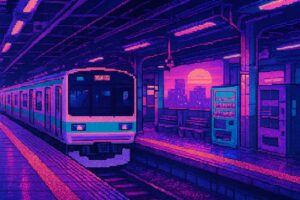
Yo, what’s the deal? Mia Kim here, and let’s get real for a sec. You’ve seen the videos. The TikToks of a million people flowing through ticket gates like a human river. The bewildering maps of Tokyo Station that look less like a building blueprint and more like the final dungeon schematic for a forgotten Square Enix game. You’ve probably heard the name “Shinjuku Station” spoken in the same hushed, terrified tones that anime characters use to describe a world-ending catastrophe. And you’re asking the realest question: Why? Why are Japanese train stations such sprawling, multi-level, labyrinthine beasts? Is it just bad design, or is there a method to this madness? The answer, fam, is that you’ve been looking at it all wrong. This isn’t just public transit. This is the game. You’ve just loaded into the world map, and the station itself is the first, and possibly greatest, challenge you’ll face. Forget tourist traps; navigating Shinjuku during rush hour is the real Japan experience. It’s a rite of passage, a skill to be leveled up, a boss battle against organized chaos. It’s not broken; it’s a feature. And once you understand the rules, once you see the station not as a building but as a perfectly designed JRPG dungeon, everything starts to click. This isn’t just about getting from Point A to Point B. It’s about understanding the entire operating system of modern Japan, a system built around these colossal, commercial, and cultural hubs. So grab your Suica card—that’s your MP potion—and let’s break down the strategy for clearing this S-Rank quest. First, let’s get a lay of the land. Peep the world map for the final boss dungeon, Shinjuku Station. Don’t get overwhelmed. We’re about to give you the cheat codes.
For a deeper dive into Japan’s retro gaming culture, check out our guide to Japan’s retro game arcades.
The World Map Unlocked: Why Your Station is the Entire Game
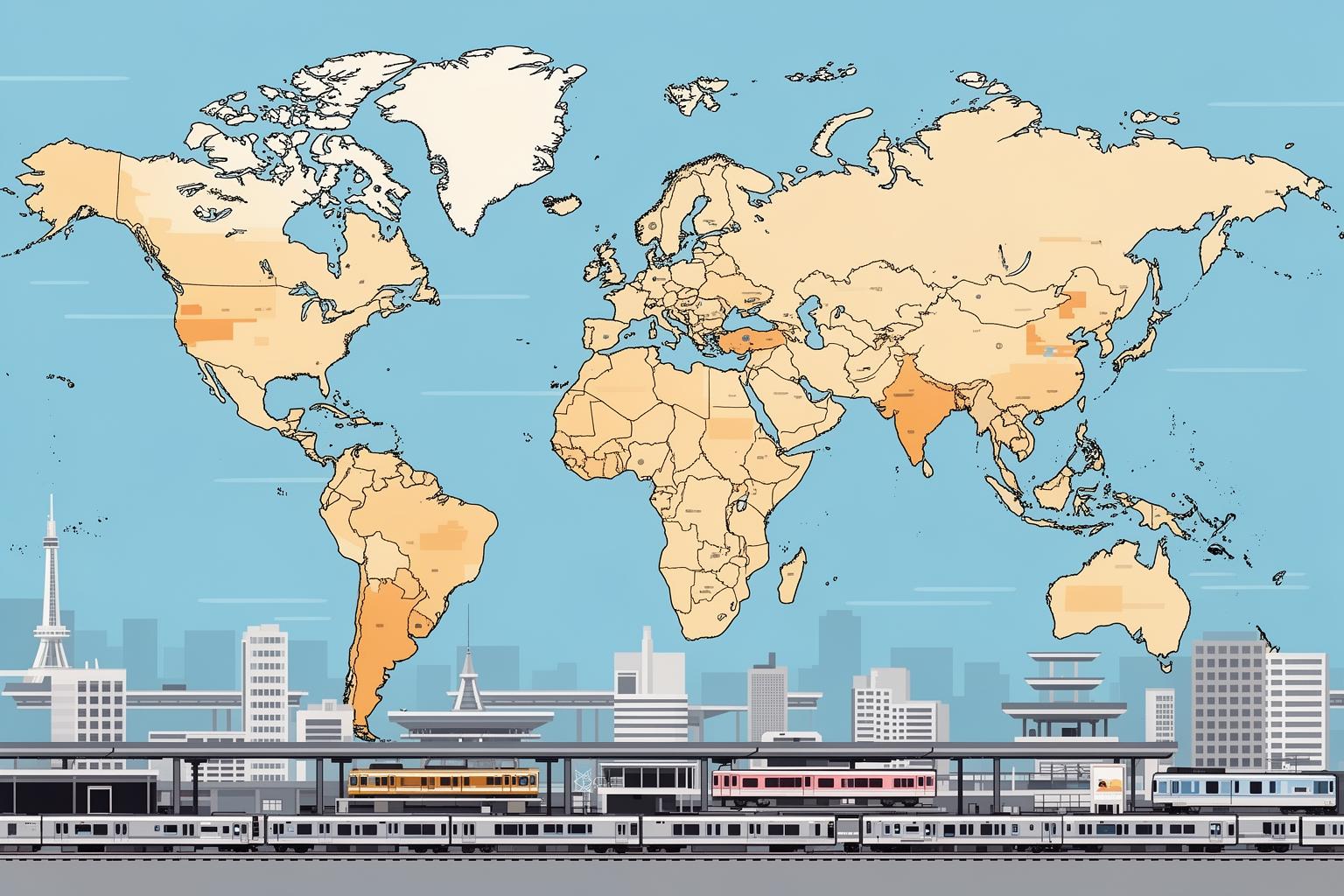
Your first error is treating places like Tokyo Station or Umeda Station in Osaka as merely train stations. That’s like calling the Citadel in Mass Effect “just a spaceport.” These locations are actually central hubs, capital cities, and nexus points around which the entire game world of modern Japan has been shaped. To understand why, you need to dive into the history—the lore. It’s not the result of grand, top-down urban planning by the government. Instead, it emerged from a century of intense competition between private railway companies, each a powerful guild building its own realm.
The Hub-and-Spoke Kingdom: The Story of Corporate Fiefdoms
In the late 19th and early 20th centuries, Japan massively upgraded its infrastructure. The government constructed core trunk lines, like the Yamanote Line, which acts as a ring road around Tokyo’s central area. Yet, the real growth stemmed from private companies. Visionaries—or ruthless RPG guild leaders, depending on your view—like Ichizo Kobayashi of the Hankyu Railway had a master plan. Don’t simply build a railway from the city center to empty countryside; that’s a low-reward quest. Instead, first buy cheap rural land, then extend the railway to it, and develop that land into appealing residential districts complete with schools, parks, and entertainment. You weren’t only selling train tickets; you were marketing an entire lifestyle—membership to your company’s world. The crowning achievement of this kingdom? A massive terminal station back in the city center, more than just a place to catch a train—it was the anchor. Kobayashi pioneered the addition of a huge, glamorous department store built right atop his Umeda terminal in Osaka. This was genius: commuters would disembark and immediately enter the store. The station became a commercial black hole, drawing in both money and people. Competitors like Tokyu, Seibu, Keio, and Tobu replicated this model in Tokyo. Each has its own railways, department stores, bus lines, and real estate domains. Shinjuku Station isn’t a single station; it’s a cramped neutral zone where rival corporate realms—JR East, Odakyu, Keio, and others—have their main bases side by side, all vying for your yen.
A History of Perpetual Beta Testing: The Organically Evolved Dungeon
The chaotic, confusing feel of these stations comes from the fact they were never designed all at once. Architecturally, they’re like a ship repaired and upgraded so many times that none of the original planks remain. Imagine a game that’s received continuous updates and expansions for 100 years without ever resetting the servers. The original Meiji-era station now lies buried deep in the foundation. New lines were added in the 1930s, with underground platforms excavated. The station was firebombed in World War II and rapidly rebuilt. In the 1960s, for the Olympics, a subway line was inserted on another level. During the economic bubble of the 1980s, a new wing housing a luxury mall was tacked on. In the 2000s, yet another subway line was added some twenty-five meters underground. Each addition made sense at the time, but the cumulative result is a sprawling, multi-layered maze of corridors and staircases leading nowhere, with floors labeled B1F, M2F, B3F. It’s a geological record of Japan’s economic history. No single dungeon master devised it all from the beginning. Rather, it grew organically—a concrete coral reef of commerce and transit, with each corporation adding wings without much regard for overall ease of use. This “perpetual beta” explains why you can encounter a sleek modern ticket gate from this decade right next to a grimy concrete corridor straight out of a 1970s sci-fi film. It’s all part of the same tangled, functional, maddeningly complex system.
Character Creation & Your First Quest: Spawning into the Dungeon
Alright, so you’ve just tapped your card and materialized inside. The first thing that strikes you isn’t a sight, but a sound—a constant, multi-layered symphony of announcements, jingles, rolling suitcases, and the footsteps of thousands of people. It’s sensory overload. This is your character creation screen, and the game asks you to choose your class: Confident Local, Frantic Salaryman, or Lost Tourist. Your first quest, if you choose to accept it, is simple: Find your exit. But in a Japanese station, nothing is ever that simple. This is the first, and most crucial, decision you will make.
Choosing Your Exit: The First Fork in the Road
In most games, you leave the starting area and enter the main world. In Japan, the station is the starting area, with dozens of exits. These aren’t just doors; they’re gateways to completely different worlds, distinct biomes populated by unique NPCs, aesthetics, and questlines. Picking the wrong one can mean spawning a 15-minute walk away from your actual destination, on the wrong side of a major highway, immersed in a completely different atmosphere. Shinjuku Station is the ultimate example. The West Exit deposits you into a stark, modernist canyon of skyscrapers, home to the Tokyo Metropolitan Government Building and corporate headquarters—a high-level business district filled with sharp angles and suited salarymen. The East Exit, on the other hand, thrusts you into a neon-lit cyberpunk dreamscape of shopping, restaurants, the notorious Kabukicho entertainment district, and a giant Godzilla head. It’s vibrant, chaotic, and loud. The South Exit leads to a modern, trendy area anchored by the massive Takashimaya department store and the Shinjuku Gyoen National Garden just a short walk away. Your game map changes completely depending on which door you choose. The station doesn’t live in a neighborhood; rather, it creates the neighborhoods around it. Your first skill to level up is learning the names of the exits: Central East Exit, New South Gate, West Exit. These are your quest markers. Before you even consider which train to board, your top priority is identifying the correct portal to emerge from. Check Google Maps before you start moving. Know your exit—it’s the single most valuable piece of starting gear you can have.
Deciphering the Ancient Runes: Signage as Your UI
The visual chaos of a Japanese station can be overwhelming. Signs hang from every conceivable surface, presenting a cascade of Kanji, Hiragana, Katakana, and English. But honestly, it’s not as random as it seems. There’s a user interface here—a HUD designed to guide hundreds of thousands of people every day. You just need to learn how to read it. This is your tutorial level. First, focus on colors. Each train line is color-coded, and these colors remain consistent throughout the entire city. The JR Yamanote Line is always a particular shade of light green. The JR Chuo Line is orange. The Tokyo Metro Marunouchi Line is red. When you’re trying to transfer, stop searching for English words. Your brain processes color far faster in a chaotic environment. Follow the green circles. Follow the orange squares. Second, understand the hierarchy of the signs. The massive overhead signs are your main quest markers, directing you toward major lines and exits. Smaller signs on walls or hanging lower serve as side quests—showing directions to specific department stores, restrooms, or coin lockers. Focus on the big signs first. Don’t get distracted by the noise. The system is designed to guide the herd. Your job is to identify your herd’s color and follow it without hesitation. The signs will often include a number indicating the distance to your platform. This is the game telling you the length of the fetch quest. Four hundred meters to the Keiyo Line? Okay, settle in—this is going to be a walk. It’s an incredibly dense but logical system. It’s overwhelming because it throws all the information at you at once, but if you concentrate on your specific quest—finding the light green Yamanote Line platform—you can filter out 90% of the noise. The UI is cluttered, but every bit of it is there.
Level Grinding: Mastering the Labyrinth
Alright, you’ve learned how to read the signs and know which exit to head for. You’ve completed the tutorial. Now it’s time to level up. Mastering these station dungeons isn’t about memorizing every corridor—it’s about grasping the systems, the unspoken rules, and the secret techniques that set pros apart from beginners. This is the grind, where deliberate, stressful effort transforms into pure muscle memory.
The Transfer Gauntlet: A Timed Mission Mini-Game
One of the most intense and high-stakes mini-games in the Japanese station JRPG is the transfer challenge. You have five minutes to get from your arriving Shinkansen on the JR tracks to a departing local train on the Keio private line, located three floors down on the opposite side of the station. The clock is ticking—this is a timed mission. Success means a smooth journey; failure means another 20-minute wait on a cold platform. This is where the dungeon design truly puts you to the test. Transfers are rarely straightforward. You often have to exit one company’s ticket gates and enter another’s. This requires passing through a set of gates, navigating a crowded concourse that doubles as a shopping mall, finding the right entrance for the next railway company, and tapping through their gates. It’s intentional—each company aims to keep you within its own ecosystem as long as possible. The walk from the JR lines to the Keiyo Line in Tokyo Station is legendary: a full ten-minute trek down a seemingly endless underground corridor with moving walkways. It’s so long that people joke you’re halfway to the next station by the time you reach the platform. To master the transfer gauntlet, you need to level up your “Situational Awareness” stat. You learn which train car to board to arrive right at the bottom of the main escalator. You learn to follow the crowd flow instead of fighting it. You discover that sometimes, the “shortcut” on the map is actually more crowded and slower than the main, longer route. A successful tight transfer feels like a flawless speedrun move: weaving through crowds, tapping your card without breaking stride, and sliding into the train car just as the departure jingle ends and the doors hiss shut. It’s an exhilarating rush—no cap.
The NPC Guides: Your Friendly Station Attendant
Even the most seasoned player gets lost sometimes. Station layouts shift due to construction, or you face a quest you’ve never encountered before. When you’re truly stuck, it’s time to talk to an NPC. Near the ticket gates in every station, you’ll find small glass booths staffed by station attendants. These are your friendly guides, the quest-givers, the info-dropping characters of this world—and they’re incredibly helpful. Don’t worry if you don’t speak Japanese; pointing to a name on your phone and looking puzzled is a universal language. They’ve seen it all. They’ll pull out maps, point you in the right direction with clear, efficient gestures, and sometimes even walk part of the way if traffic is slow. They are masters of this domain, knowing every secret passage, elevator, and shortcut. They represent the game’s help system in living form. Larger information desks staffed by multilingual attendants are often found in the main concourses, too. Using these resources isn’t admitting failure; it’s a smart strategy. These NPCs exist for a reason. Wandering in circles for twenty minutes because you were too proud to ask for help is a rookie mistake. Pros know when to consult the experts.
Unlocking Fast Travel: The Commuter’s Secret Paths
After grinding in the same station dungeon for months or years, a magical skill unlocks: Instinct. You no longer need signs—you navigate by feel, by muscle memory. This is the endgame content. You know that to get from Yamanote platform 5 to the Marunouchi subway, you don’t follow the main signs. Instead, you take the third escalator, cut through the Lumine department store’s basement floor (a public right-of-way, if you know, you know), and emerge right at the subway ticket gates, sidestepping the main crowd. This is the commuter’s fast travel. These secret paths abound—undocumented routes that shave minutes off your journey. Another pro skill is knowing which train car to board. Japanese platforms have markings showing where each car’s doors will stop. Veteran commuters know that if their exit is at the station’s north end, they board car number 2. When the train arrives, they’re positioned perfectly at the base of the stairs they need, while tourists and casual riders who boarded in the middle of the train are left a good 50 meters down the platform. This level of mastery feels like breaking the game’s physics. You’re no longer just playing—you are one with the system. It’s a beautiful, efficient, and slightly intimidating sight to behold.
Side Quests & Loot: The Station is More Than Just a Station
So you’ve mastered movement, effortlessly traveling from platform to exit in record time. But if that’s all you focus on, you’re only experiencing half the game. The station isn’t merely a dungeon to be crossed; it’s a treasure trove overflowing with loot, side quests, and hidden levels. The commercial and cultural sides of the station are just as vital as the transit itself. This is where world-building truly comes alive.
The Depachika Biome: A Food Lover’s Paradise Dungeon
Beneath nearly every major department store connected to a station lies a hidden realm: the depachika. This basement food hall is one of the most incredible, overwhelming, and mouthwatering places in Japan—a biome unto itself. The depachika is a high-end maze of food stalls, each more stunning than the last. You’ll discover flawless, gem-like cakes, outrageously priced single strawberries packaged like luxury watches, world-class bakeries, pickle sellers, tea merchants, and stalls offering every imaginable Japanese delicacy. The atmosphere buzzes with energy. Vendors call out greetings, offer free samples on toothpicks, and wrap your purchases with an almost ceremonial finesse. Just navigating the crowds and choosing what to buy for dinner feels like a side quest. This is where you gather high-tier consumable items. Picking up a medley of salads, freshly fried tonkatsu, and a fancy dessert from a depachika on your way home powers up your evening. It’s an essential part of daily life for millions, transforming the commute from a chore into a gourmet adventure. For tourists, it’s a mind-blowing spectacle; for locals, it’s simply their grocery run.
Omiyage and Ekiben: Collecting Your Legendary Items
Within the station concourses, entire sections are dedicated to two particular kinds of loot: omiyage and ekiben. Omiyage are souvenirs, but the tradition runs much deeper. These are gifts you’re socially expected to bring back to coworkers, family, and friends after traveling. Stations bustle with shops offering beautifully packaged boxes of cookies, cakes, and crackers—each representing a specific region. Tokyo Banana, Shiroi Koibito from Hokkaido—these iconic items are station staples. Stations serve as the perfect place to complete this crucial social side quest before heading home. Ekiben, or “station bento,” are another category of loot. Sold at stations for eating on long-distance trains like the Shinkansen, these lunch boxes are far from just simple pre-packaged sandwiches. They’re a major part of Japanese food culture. Every region—and often each station—boasts its own renowned ekiben featuring local specialties. You can get a bento packed with succulent crab from Hokkaido, grilled beef tongue from Sendai, or mackerel sushi from Toyama. Choosing your ekiben becomes an important ritual before the journey. It’s like preparing your provisions for an epic quest. The packaging often resembles art, and the food quality is remarkably high. An ekiben isn’t just lunch; it’s a taste of the region you’re departing from or heading to. It’s a collectible that enriches your travel experience.
The Hidden Villages of Character Street and Ramen Alley
Some stations are so vast they contain entire themed villages. Tokyo Station is the ultimate example. Buried deep within its underground maze is “Tokyo Character Street,” a corridor packed with stores dedicated to Japan’s most beloved pop culture franchises. There’s a Studio Ghibli shop, a Pokémon Center, a Hello Kitty store, and a Shonen Jump outlet. It’s a pilgrimage destination for anime and manga fans—a hidden village of otaku culture tucked beneath the platforms. Just a few corridors away is “Tokyo Ramen Street,” an alley featuring eight of the city’s best ramen shops all in one spot. People line up for an hour or more to savor a bowl before catching their train. These aren’t random eateries; they’re carefully curated destinations. They transform the station from just a transit point into a place of entertainment. You could easily spend an entire day exploring Tokyo Station’s non-transit zones, completing side quests, collecting loot, and never boarding a train. It’s a self-contained world—a commercial and cultural theme park with a train system attached.
The Final Boss: Shinjuku Station
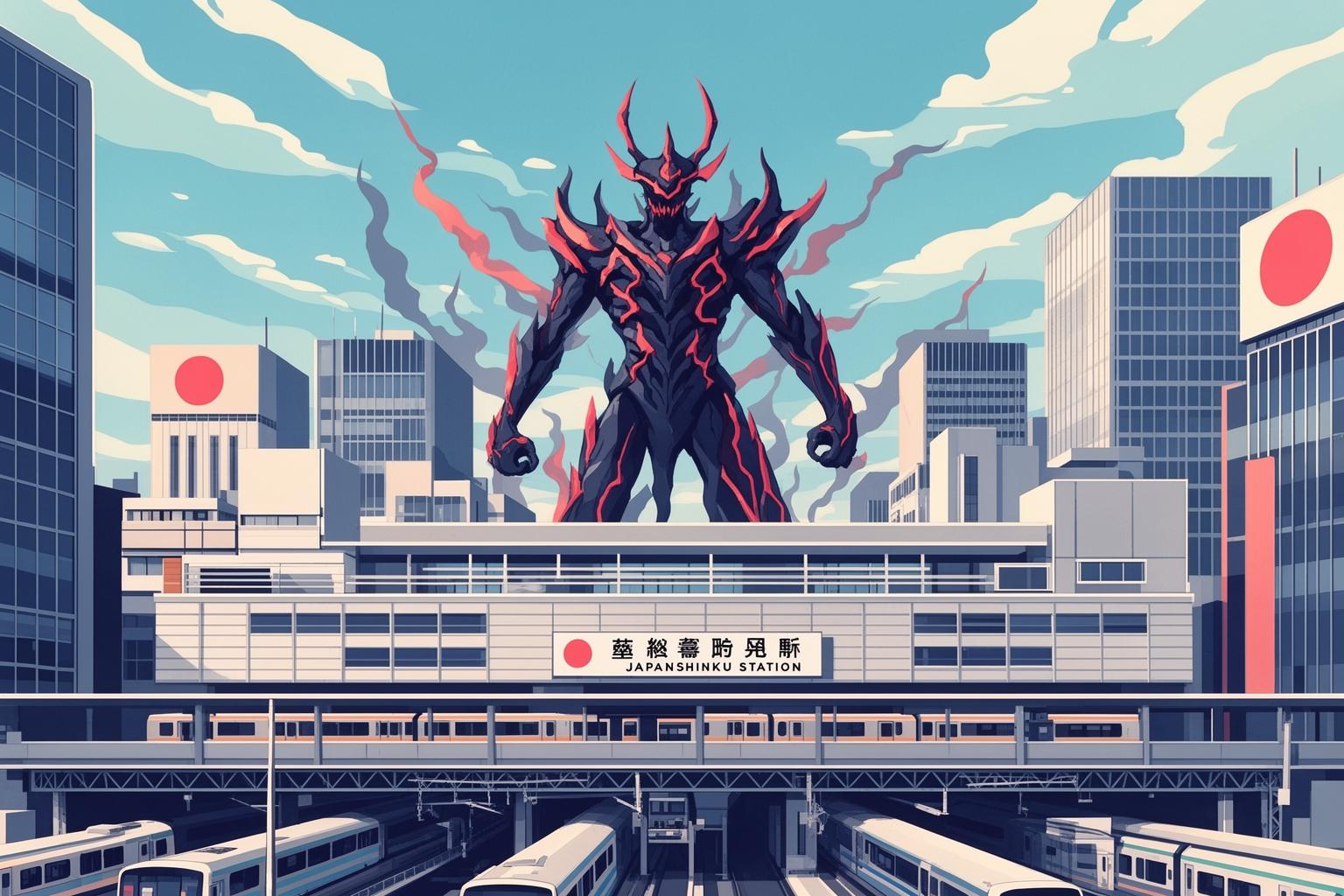
And then there is Shinjuku: the ultimate, legendary, world-ending boss battle of the Japanese station JRPG. Every skill you’ve acquired and strategy you’ve crafted will be challenged here. Shinjuku Station holds the title of the busiest transportation hub in the world, as verified by Guinness World Records. On an average weekday, over 3.5 million people pass through its gates—more than the entire population of many major cities. It is less a building and more like a subterranean mini-country, complete with its own complex geopolitics.
A Dungeon with Over 200 Exits
The scale is simply on another level. Forget a handful of exits; Shinjuku Station boasts over 200. It’s a sprawling, multi-level behemoth with dozens of platforms operated by five different railway companies (JR East, Odakyu, Keio, Tokyo Metro, and Toei Subway). These aren’t just different train lines—they represent distinct corporate territories within the same structure, each with its own ticket gates, concourses, and signage systems. The station is so vast and convoluted that even Tokyo natives get lost in it. There are well-known, almost mythical stories of people trying to meet a friend at the “South Exit” only to find themselves on a ten-minute phone call of pure confusion because they ended up at the “New South Exit,” a completely separate complex across a four-lane road. Navigating Shinjuku demands near zen-like focus. You must trust the signs, even when they seem to circle you back. You must believe that the orange path for the Chuo Line will, after many twists and turns, finally bring you to the orange platform. To wander aimlessly in Shinjuku means being lost for hours. It’s the ultimate test of your navigation skills.
The Rush Hour Horde: A Survival Challenge
If the station is the boss, then rush hour is its deadliest attack. Between 8 and 9 AM on a weekday, Shinjuku’s difficulty spikes to Nightmare level. The crowds are not merely crowds; they’re a physical force, a river of humanity with currents, eddies, and rapids of their own. There’s an unspoken, hive-mind choreography to it all. People flow in designated lanes, moving at a brisk, uniform pace. They don’t stop. They don’t check their phones. They ascend and descend stairs in perfect formation. To an outsider, it’s overwhelming—you feel as if you’ll be swept away and crushed. But if you watch closely, the system reveals itself. You see the order within the chaos. Surviving rush hour here is a true survival challenge. You must synchronize your movements with the crowd’s rhythm. You move with intention. You anticipate the flow. You become a drop of water in the river. It’s stressful, intense, and in a strange way, a beautiful showcase of collective social coordination on an extraordinary scale. To navigate Shinjuku Station at 8:30 AM and arrive at the correct platform on time means you’ve truly beaten the game. You’ve made it. You get Japan. You’ve passed the final trial and can now call yourself a master of the Japanese urban experience.