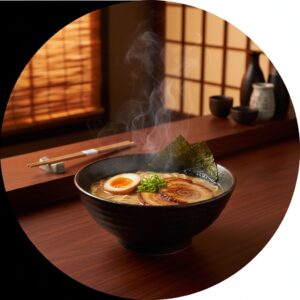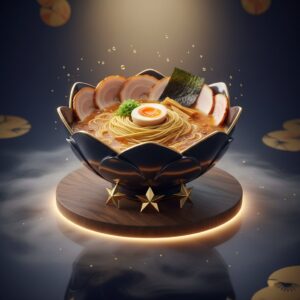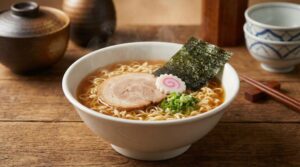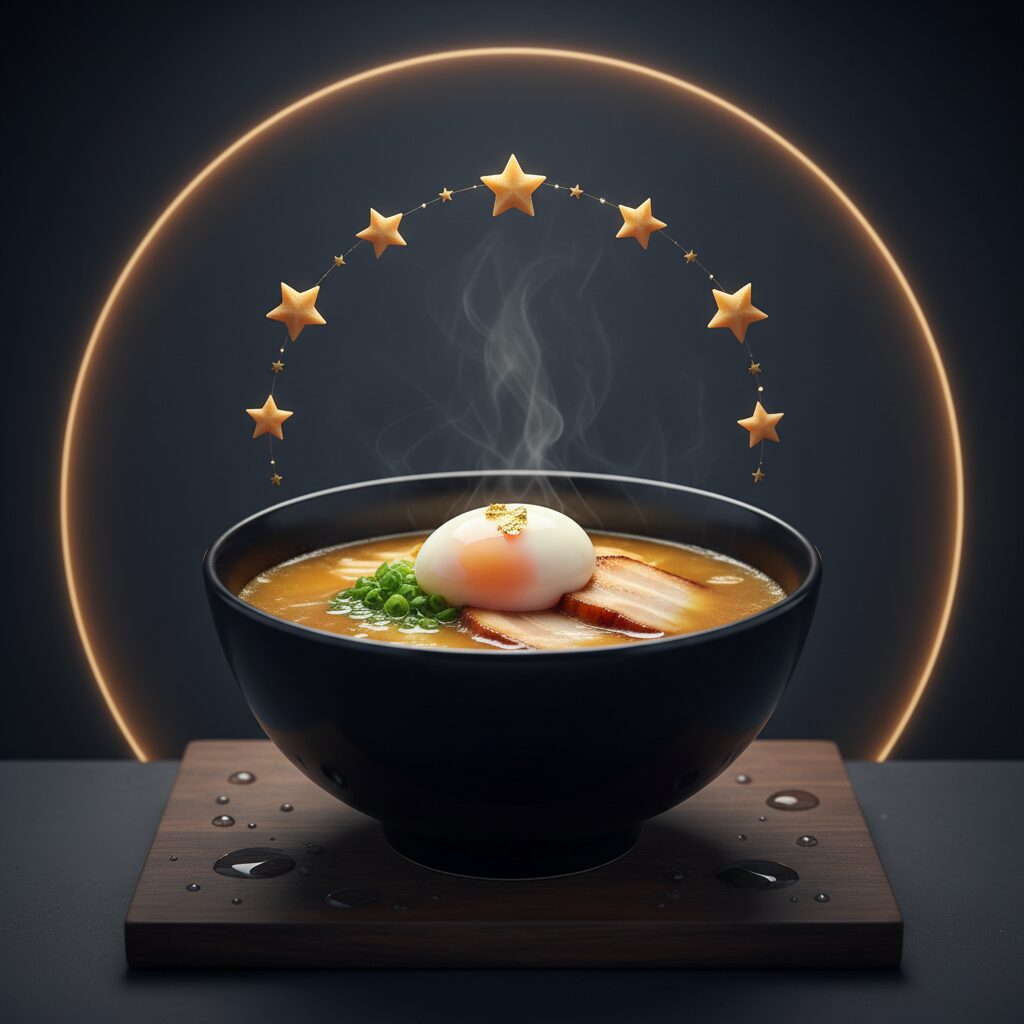
Alright, let’s set the scene. You’re in Tokyo, the city that basically invented the future. You’ve seen the pics, the reels, the million-and-one stories hyping up the food scene. And today, you’re going for the gold standard, the main event: Michelin-starred ramen. You’re picturing a cool, vibey noodle bar, maybe some low-fi beats, the happy chatter of people just living their best life over a killer bowl of soup. You’ve been queuing for an hour, a silent, orderly line that snakes around a non-descript building, which only amps up the hype. Finally, the door slides open. You step inside and… boom. Silence. Not just quiet. It’s a heavy, thick, almost sacred silence. The only sounds are the clink of a spoon, the soft murmur of the chef behind the counter, and a symphony of… slurping. Everyone is hunched over their bowls, heads down, in what looks like a state of deep, noodle-based meditation. There’s no chat, no phones out, no laughter. It feels less like a restaurant and more like a library, or maybe even a church. The cognitive dissonance is real. You’re holding a ticket for what is, essentially, noodle soup, but the atmosphere is giving final-round Wimbledon. The question hits you like a ton of bricks: Why is this so serious? Why the intense, zen-like focus for a dish that started as cheap street food? This, my friend, is your first lesson. In Japan, and especially here, you’re not just about to eat lunch. You’re about to have an experience, a performance, a full-on cultural deep dive served in a deceptively simple bowl. And understanding the silent slurp is the key to unlocking a huge piece of the puzzle that is modern Japan. It’s a whole vibe, and we’re about to break it down. Forget what you thought you knew about noodle bars; you’ve just stepped into a ramen dojo, a temple of broth, and the service is about to begin. This is where the simple act of eating transcends itself and becomes a lesson in focus, respect, and the Japanese obsession with perfection. You’re not just here for the ‘gram; you’re here to understand the why.
To fully appreciate this temple-like atmosphere, it’s essential to understand how modern craft ramen has evolved far beyond its humble origins.
The Vibe Check: Decoding the Silence

That pin-drop quiet you step into isn’t accidental, nor is it because everyone harbors secret grudges. It’s purposeful. It’s meticulously crafted. It’s the essential foundation of a premium ramen experience. For a first-time visitor, it might feel intimidating or even a bit cold. You may wonder if simply breathing too loudly has broken some hidden rule. But once you understand the reasoning behind it, the silence shifts from awkward to remarkable. It’s not about being antisocial; it’s about enhancing the experience. It’s a collective understanding to elevate the meal from mere sustenance to something far more meaningful. Think of it as the ultimate sign of respect—not only for your fellow diners but for the bowl of ramen itself and, most importantly, for the person who dedicated their life to perfecting it. This silence isn’t empty; it’s charged with anticipation and appreciation. It reflects a shared realization that what lies before you is so exceptional, it demands your full attention. In a world overwhelmed by noise and distraction, this enforced mindfulness is a true luxury and a fundamental part of what you’re paying for. It’s a space designed to block out the city’s chaos and focus your senses on one flawless creation.
More Than a Meal, It’s a Performance
Let’s be clear: you’re not simply inside a restaurant. You’re in a theatre, and the show is about to begin. The long wooden counter serves as the stage, the minimalist decor acts as the set, and the chef, the taisho, is the lead actor, director, and producer all at once. Every motion they make is precise, rehearsed, and steeped in years—sometimes decades—of practice. Watch them: the sharp, rhythmic flick of water off the freshly cooked noodles; the almost reverent ladling of shimmering broth into the pre-warmed bowl; the careful arrangement of each topping with chopsticks, like an artist adding the final strokes to a masterpiece. This is culinary ballet. It’s a live performance of expertly honed craft. And what do you do when watching such mastery? You remain silent. You observe. You let yourself be fully absorbed. The quiet in the room is the audience’s respect for the artist. Your conversations about last night’s events can wait. It would be like pulling out your phone and taking a call during a symphony solo—it breaks the collective experience. The entire space is designed to direct your focus toward the stage—the open kitchen—and ultimately, to the bowl placed before you. The chef’s concentration is complete, and the silence is diners’ way of mirroring that focus, forging a symbiotic bond between creator and consumer. You’re not just a customer; you’re a participant in a ritual.
The Unspoken Language of Wa (Harmony)
To truly grasp the silence, you need to understand one of Japan’s most fundamental cultural concepts: Wa (和). Often translated as ‘harmony,’ this term is somewhat simplistic. Wa embodies the cultural emphasis on maintaining smooth, peaceful, and cooperative group dynamics. It’s the invisible lubricant that allows a densely populated society to function without friction. It represents an unspoken social contract prioritizing the collective good over individual desires. Wa explains why people form orderly lines, why trains remain quiet, and why car horns are seldom heard in Tokyo. It’s a constant, low-level awareness of how your actions affect those around you. In the ramen shop context, loud talking, overstaying your welcome, or generally being disruptive is seen as imposing personal needs on a shared space, thus disturbing the Wa. This silence isn’t a strict rule imposed by a grumpy chef; it’s a voluntary, collective act of consideration. Everyone in that room has silently agreed to maintain a calm atmosphere so each person can have the best experience. By staying quiet, you’re not merely polite; you’re fulfilling your part of the social contract. You’re contributing to the space’s harmony, ensuring your enjoyment doesn’t diminish someone else’s. It’s a deeply communal act, even if experienced individually. The shared silence connects everyone more profoundly than loud chatter ever could. It’s a mutual understanding that everyone is united by one sacred goal: to truly honor an exceptional bowl of ramen.
Your Personal Ramen Bubble
Paradoxically, this intense group harmony creates the ideal setting for a deeply personal, nearly solitary experience. The entire arrangement—the counter seating facing the chef, the minimalist design, the silence—crafts a personal bubble around you and your bowl. It eliminates distractions. No pressure to engage in small talk. No need to entertain dining companions. No intrusive music or nearby conversations. It’s just you, your senses, and the universe of flavor and texture the chef has painstakingly crafted. This is induced mindfulness. Your attention turns inward: to the steam rising from the bowl, the complex aroma of the broth, the texture of the noodles, the richness of the egg. Here, ramen becomes more than food; it’s a meditative object. The famous chain Ichiran takes this idea to the extreme with ‘flavor concentration booths,’ individual cubicles isolating you from even seeing your neighbors. While Michelin-starred establishments rarely push this far, the guiding principle remains: they provide a pristine sensory environment for a pure, undistracted communion with your food. It’s a rare opportunity in our hyper-connected world to focus on one thing alone. It’s a zen-like state, achieved through the deliberate removal of everything unrelated to the ramen. So when you sit there in the silence, you’re not being ignored; you’re receiving a gift—the gift of focused attention.
The Great Slurp Debate: Why It’s Not Rude, It’s Required
The room is utterly silent, except for one seemingly rule-breaking sound: slurping. For many visitors from Western cultures, where making noise while eating is considered a major breach of table manners, this presents a striking paradox. You’re expected to be as quiet as a library, yet you’re encouraged to make a sound that would typically get you scolded at your grandma’s Sunday dinner. What’s going on? This isn’t hypocrisy; it’s the blend of function and culture creating a new set of rules. In Japan, the slurp isn’t just accepted—it’s practically required when eating noodles. It signifies respect, enhances flavor, and serves a practical purpose. This sound is allowed to break the sacred silence precisely because it is a sign of genuine appreciation for the ramen. It’s not noise for its own sake; it’s the sound of pure, unfiltered enjoyment. Failing to slurp is, in a sense, failing to fully engage with the meal. It’s like listening to your favorite album on tinny laptop speakers when there’s a professional sound system available—you’re missing the full experience, and the chef knows it.
The Science of the Slurp
Before diving into cultural aspects, let’s consider the physics and biology. Slurping isn’t just for show; it’s an effective technique to maximize the eating experience. There are two main scientific reasons why slurping is the best way to eat noodles. First, flavor and aroma: much of what we perceive as taste is actually smell. Our tongues detect only basic tastes like salty, sweet, sour, bitter, and umami. The complex, subtle flavors of a rich tonkotsu broth or a delicate shio dashi come from aromas reaching olfactory receptors in the nasal passages. When you slurp, you’re not only pulling noodles and broth into your mouth, but also forcefully drawing in air and broth vapor. This vapor travels up the back of your throat to your nasal cavity, delivering a concentrated burst of aroma that you wouldn’t get by quietly sipping from a spoon. It’s like a wine connoisseur swirling and aerating wine to release its full bouquet. Slurping literally improves the taste of ramen. Second, temperature control: a perfect bowl of ramen is served piping hot, and noodles are at their best texture for just a few minutes. Eating slowly and quietly risks burning your mouth or ending up with soggy noodles. Slurping solves this problem. The rush of air cools the noodles just enough as you inhale them, allowing you to eat quickly at the ideal temperature without harm. It’s a brilliant piece of culinary engineering refined over generations.
The Sound of Appreciation
Beyond practicality, slurping carries deep cultural meaning. Specifically when eating noodles—and importantly, you wouldn’t slurp other dishes—a hearty slurp is an audible sign to the chef that you’re thoroughly enjoying their creation. It’s a non-verbal compliment of the highest order, saying, “This is so delicious, I can’t help but eat it quickly.” In Japan, a quiet diner might be misread as someone who isn’t truly enjoying their food. The absence of slurping could be interpreted as a lack of enthusiasm. So while your Western-conditioned mind may view slurping as rude, in a ramen-ya, it’s music to the chef’s ears. It completes the feedback loop. Chefs pour their heart into each bowl, and your audible delight validates their hard work. This is a cultural shock, but a beautiful example of how ‘politeness’ depends entirely on context. Here, politeness is not about silence; it’s about showing respect and appreciation in the local language. And in the world of Japanese noodles, that language is the slurp. So take a deep breath, let go of your reservations, and make some noise—it’s the most respectful thing you can do.
From Street Food to Star Food: The Evolution of Ramen
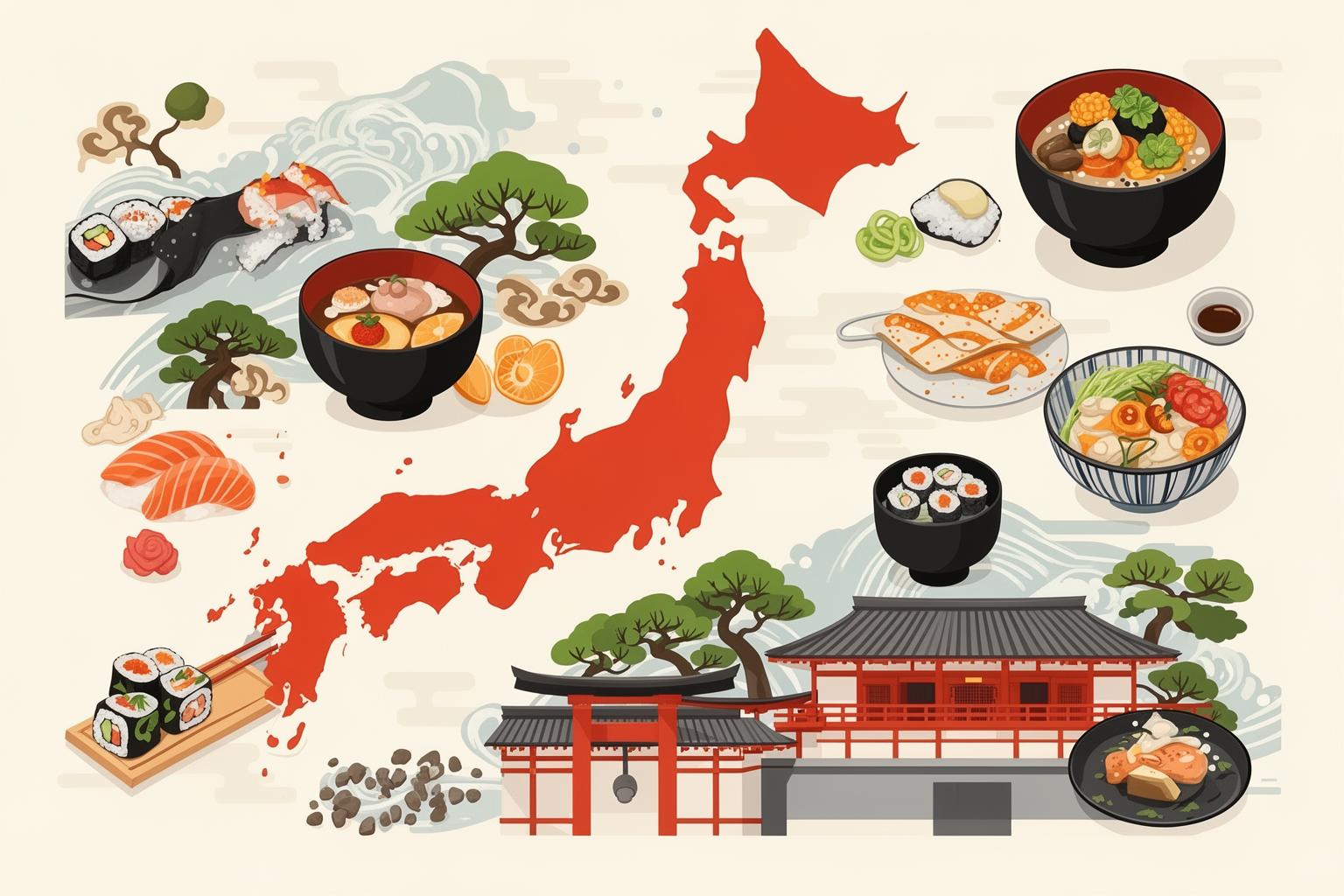
To fully appreciate the significance of a Michelin-starred ramen shop, you must first recognize how far ramen has evolved. The entire concept is quite astonishing when you consider it—it’s akin to a humble hot dog stand earning three Michelin stars. Ramen’s transformation from an inexpensive, post-war meal for laborers into a globally celebrated gourmet dish exemplifies a uniquely Japanese cultural and culinary evolution. This transformation wasn’t a slow, gentle refinement; it was a rapid ascent driven by obsession, media hype, and an unwavering pursuit of perfection that characterizes much of modern Japanese craftsmanship. The quiet, almost temple-like ambiance of today’s highest-end ramen shops directly reflects this progression. Ramen had to prove its seriousness, and it achieved that by reinventing itself, meticulously refining each element one component at a time. The story of ramen illustrates how Japan takes a simple foreign concept, refines it, elevates it, and obsessively perfects it until it becomes entirely new and distinctively its own.
A Brief, Gritty History of a Working-Class Hero
Ramen’s beginnings are modest. It descends from Chinese lamian (pulled noodles in soup), introduced to Japan by Chinese immigrants in the late 19th or early 20th century. For decades, it remained a niche dish called Shina soba (Chinese soba). Its breakthrough came in the desperate, hungry years following World War II. Japan was struggling, and a large influx of cheap wheat flour from the United States provided the foundation for a new national obsession. Ramen was the ideal post-war food: hot, salty, fatty, and both cheap and filling. It fueled the country’s reconstruction. During this era, ramen was associated with the yatai, mobile food carts near train stations serving steaming bowls to tired salarymen late into the night. The atmosphere contrasted sharply with that of a Michelin-starred restaurant: it was loud, boisterous, somewhat grimy, and fundamentally communal. Diners slurped noodles shoulder-to-shoulder with strangers, united by the need for a quick, affordable, and satisfying meal. It was unpretentious, practical, and deeply woven into working-class daily life. For a long time, this defined ramen—delicious, undoubtedly, but distinctly lowbrow. No one was deconstructing its flavors or penning poetic tributes to its broth; it was simply the people’s food.
The Rise of Kodawari: The Obsession with Perfection
So how did ramen evolve from a gritty street-side cart to a silent, minimalist temple of flavor? The answer lies in a singular, potent Japanese term: Kodawari (こだわり). This word is difficult to translate precisely. It conveys ideas like ‘relentless pursuit of perfection,’ ‘meticulous attention to detail,’ or ‘obsession.’ It embodies a mindset of profound personal dedication to one’s craft, surpassing what is merely necessary or logical. In the 1980s and 90s, the spirit of kodawari took hold of ramen and never released its grip. A new generation of chefs, dissatisfied with mass-produced noodles and simple broths, began asking, “What if ramen was treated with the same seriousness as kaiseki cuisine or high-end sushi?” This question ignited a revolution. They deconstructed the dish into its core elements and obsessively perfected each one. This marked the birth of artisanal ramen. The goal was no longer simply to feed people, but to create a masterpiece in a bowl—a perfect, harmonious system where every component was the absolute best it could be.
The Broth: The Soul of the Bowl
The obsession began with the broth, the dish’s very foundation. Chefs started experimenting with techniques often seen in French haute cuisine. Instead of merely simmering pork bones for a few hours, they crafted complex dashi (stocks) using a dizzying variety of ingredients. They combined multiple broths—a rich, cloudy tonkotsu (pork bone) base blended with a clear, delicate chintan (chicken or seafood) stock—to achieve unprecedented depth and complexity of flavor. Bones were simmered for days to extract every last drop of collagen and umami. The tare, the concentrated seasoning sauce, became a closely guarded secret, a complex mixture of soy sauces, mirin, sake, dried fish, kelp, and other mysterious ingredients. A chef’s tare was their signature, the distinctive fingerprint that set their ramen apart. The broth transcended mere soup; it became the soul of the dish, the result of days of labor and a lifetime of expertise.
The Noodles: The Perfect Canvas
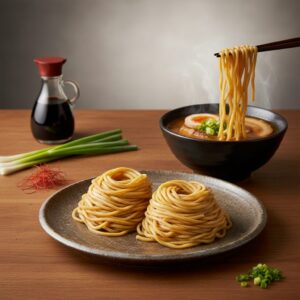
With broth elevated to an art form, the noodles had to match that level of craft. Generic, factory-made noodles became obsolete. Kodawari chefs collaborated with noodle makers or produced their own in-house to craft the perfect complement to their specific broth. They obsessed over every detail: the exact wheat flour blend to balance protein and starch, the precise water content for optimal hydration, and the type and quantity of kansui (alkaline water) to achieve the characteristic springy, chewy texture. They refined thickness, shape (straight, wavy, thick, thin), and texture to harmonize with the broth’s viscosity and flavor. A rich tonkotsu broth required firm, straight noodles capable of standing up to it, whereas a delicate, clear shio (salt) broth called for thinner, more subtle noodles that wouldn’t overpower it. Noodles ceased being mere fillers; they became custom-designed canvases engineered to work in seamless harmony with the broth.
The Toppings: A Curated World
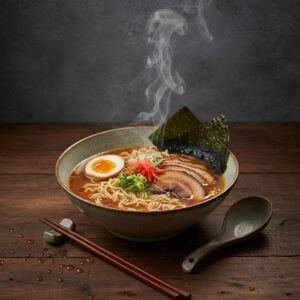
Finally, the toppings, or gu, received the same meticulous attention. The simple slice of braised pork, chashu, was transformed. Chefs began using premium pork cuts like Iberico or Kurobuta, experimenting with cooking methods ranging from traditional simmering to modern low-temperature sous-vide techniques to achieve unmatched tenderness and flavor. The soft-boiled egg, or ajitama, became an art piece itself, with each shop guarding its unique marinade and striving for the perfect, jammy yolk consistency. Even the simplest ingredients were refined: green onions sliced to precise thicknesses, bamboo shoots (menma) marinated in-house, and nori (seaweed) sheets sourced from specific renowned regions. Nothing was an afterthought. Every topping was selected and prepared with the same care as the broth and noodles, adding its own distinct texture and flavor to the final harmonious composition.
The Shokunin Spirit: The Ramen Master as an Artisan
This kodawari-driven evolution gave rise to a new type of chef: the ramen shokunin (職人). A shokunin is more than just a craftsman or cook—it is an artisan devoted to the lifelong pursuit of mastery in a single craft. They live and breathe their work, constantly aiming for incremental improvements, a philosophy known as kaizen. The shokunin spirit lies at the core of Japanese craftsmanship, from swordsmiths to sushi masters, and it now imbues ramen. The ramen shokunin isn’t merely running a business; they are expressing their identity through their work. Their shop is their studio, their sanctuary. This solemn atmosphere makes sense—when you realize that the person behind the counter has likely sacrificed everything—time, money, family life—to create the perfect bowl, the hushed reverence of the space becomes entirely fitting. You aren’t just eating a meal; you are witnessing the culmination of a deep, personal, lifelong quest for perfection.
Navigating the Michelin Maze: Your Playbook
Alright, so you’re convinced. You understand the silence, you’re ready to slurp, and you admire the craftsmanship. But entering one of these revered ramen establishments means navigating a few uniquely Japanese systems that can be quite confusing for newcomers. The experience begins well before you sit down. It starts with the queue and the notorious ticket machine. These aren’t just quirks—they’re essential components of an efficient system designed to serve the maximum number of customers with minimal hassle and maximum focus on the food. Mastering this process is part of the ritual. It’s your first test of worthiness to enter the ramen sanctuary. Think of it as a game: if you know the rules, you’ll breeze through like a pro and be slurping noodles in no time.
The Ticket Machine Challenge
Usually, you won’t be welcomed by a host but by a machine, the kenbaiki (券売機). It’s a food vending machine. This may seem impersonal, yet it’s a brilliant innovation for a shokunin-driven shop. It removes the need for staff to handle money, allowing them to concentrate fully on food preparation and service. It simplifies ordering, cutting down on lengthy conversations and indecision at the counter. It also guarantees that once you sit, your order is already placed, and the chef can start cooking. First, the essentials: have cash ready, especially 1,000 and 10,000 yen notes and coins, as many older machines don’t accept cards. Second, be decisive. The unspoken rule is to know what you want before you reach the front of the line. Spending five minutes staring at the machine while a queue builds behind you is a major faux pas. Most machines feature pictures, but the buttons are in Japanese. Your best tool here is the Google Translate camera feature. The top-left button is almost always the shop’s signature dish or the ‘special’ with all toppings. When uncertain, go for that one. After you pay and make your selection, the machine will dispense a small ticket (or several tickets, one per item). Don’t lose this ticket—it’s your golden pass to ramen paradise.
The Silent Queue Etiquette
Queueing is a fundamental part of Japanese life, accompanied by a deep, ingrained etiquette. At a popular ramen shop, waiting in line is unavoidable, and your conduct matters. The rules are simple but strict. First, find the end of the line and join it; don’t linger near the door. Second, line up in single file, keeping the queue neat and close to the building’s wall so you don’t block pedestrian traffic. Third, stay quiet. Silence often extends to the line itself; it’s not the place for loud phone calls or catching up with friends. Fourth, no saving spots. Everyone in the group must be present to join the line. Having one person hold a place for others arriving later is a cardinal sin. The queue operates as a fair and democratic system where everyone waits their turn. Frequently, a staff member will come out to collect tickets or manage the line—just follow their instructions. View the queue not as a chore but as part of the experience; it builds anticipation. It’s a filter that ensures everyone seated truly wants to be there. The shared, patient wait is the first step in creating the focused, communal atmosphere inside.
Inside: Eat, Appreciate, Depart
When a seat becomes available, you’ll be invited inside. Take your designated spot at the counter, place your ticket before you, and wait. The chef will take your ticket, and the final stage of the performance begins. Your bowl will arrive shortly. Take a moment to admire its beauty—the presentation, the colors, the aroma. This is what you’ve been waiting for. Now, eat—and eat with intention. This is not the time to scroll through your phone or chat; your focus should be on the bowl. Slurp the noodles. Savor the broth. Appreciate the varied textures of the toppings. Give the bowl the respect it deserves. The general expectation is to finish your meal within 10-15 minutes. Once done, don’t linger. There is a line of hungry, eager customers outside who were once in your shoes. It is polite to vacate your seat promptly so the next person can enjoy their meal. Place your empty bowl on the counter, offer a slight nod or a soft ‘gochisousama deshita‘ (thank you for the meal) to the chef, and exit. This quick turnover isn’t the chef being rude or rushing you; it’s a key part of the system’s fairness and efficiency. It’s a gesture of consideration to your fellow ramen pilgrims, the final act in upholding the Wa of the ramen-ya.
The Takeaway: Is It Worth the Hype?

After enduring the long queue, the silent room, the confusing ticket machine, and the pressure to slurp quickly and leave, you have to wonder: is it truly worth it? Is a bowl of noodle soup, no matter how expertly made, worth all this ritual and social maneuvering? The answer, if you seek more than just a meal, is an emphatic yes. But if you’re simply after a casual, social dinner, this might not be the right place. Visiting a Michelin-starred ramen shop isn’t about having a party—it’s about engaging in a culture. You’re paying not only for the exceptionally high-quality ingredients and the chef’s technical mastery but for the experience of kodawari itself. You’re securing a front-row seat to a display of dedication, a tangible taste of the shokunin spirit. The entire process—the queue, the silence, the focus—is designed to eliminate distractions and leave you with a pure, unfiltered appreciation for the craft. It compels you into a rare state of mindfulness in today’s world. It’s a cultural immersion you can savor. It may not be comfortable or familiar, and it certainly won’t resemble any noodle bar you’ve visited at home. But it will be authentic. It will be unforgettable. And it will offer you a compact, profound insight into the mindset that makes Japan endlessly captivating. It’s the answer to the question “Why is Japan like this?”, served hot, fresh, and in a single, perfect bowl.