Alright, let’s get real for a sec. You’ve been doomscrolling through the weird side of the internet, and you’ve seen them: the clips of that Japanese hotel room with a bed that spins like a confused Roomba, the room with a full-on carousel horse, or the one that’s a perfect replica of a doctor’s office, which is, like, a whole vibe I guess. And now, the final boss: a room with a life-sized, animatronic T-Rex head roaring over the king-sized bed. Your first thought is probably, “Okay, Japan, you’re doing too much.” Your second thought is, “Is this even real?” And your third, most important question is, “…But why, though?”
Look, I get it. From the outside, the Japanese love hotel scene looks like a fever dream cooked up by a set designer with an unlimited budget and zero supervision. It’s peak chaotic energy. And yeah, it’s 100% real. But to just write it off as “lol, Japan is so wacky” is to miss the point entirely. These places, in all their gaudy, neon-soaked glory, aren’t just hotels. They’re a cultural phenomenon, a masterclass in social problem-solving, and a legit window into the Japanese psyche. They are the physical manifestation of the need for privacy and fantasy in a society that often provides very little of either. This isn’t just about a place to hook up; it’s about a place to escape. To understand the spinning beds and the dinosaurs, you have to understand the pressures they’re spinning away from. So buckle up, fam. We’re about to dive deep into the world of Japanese love hotels, and trust me, it’s way more profound than a revolving mattress suggests. It’s not just kitsch; it’s a crucial escape hatch.
To truly grasp the unique cultural logic behind these fantastical escapes, one must also consider other uniquely Japanese phenomena, such as the nation’s obsession with a bubbly, fluorescent green drink.
The “Why” Behind the Wild: Privacy is the Ultimate Luxury
Before addressing the obvious T-Rex in the room, we need to discuss the single most valuable commodity in Japan, especially in its megacities: privacy. You might think you understand what a lack of privacy feels like because your roommate overhears your calls, but try living in a Japanese family home. It’s an entirely different experience and the fundamental reason love hotels exist.
The Home Situation: Paper Walls and Crowded Living
First, let’s consider architecture. The traditional image of a Japanese house includes sliding doors made of wood and paper, right? These are called `fusuma` (opaque) and `shoji` (translucent). They look elegant, peaceful, and excel at airflow. What they are not is soundproof. You can hear a whisper from the next room, your dad sipping tea, or your grandma watching her historical dramas. There’s no acoustic separation. Living in such a space is essentially open-plan, whether you like it or not.
Now, layer on the social structure. Multi-generational households remain very common. It’s not unusual for young adults to live with their parents, and sometimes even grandparents, into their 20s or 30s. The cost of living in cities like Tokyo is sky-high, so moving out isn’t as simple as saving for a few months. As a result, multiple generations are living under one roof, separated by walls you could practically punch through. Now imagine trying to bring a date home or have an intimate, private moment with your partner when your whole family is just a few feet away, awkwardly ignoring the fact they can hear you breathing. It’s a non-starter—both culturally and practically impossible.
This generates a huge societal demand for a third space. Not home, not work, but a private, affordable, and anonymous place where couples can simply be together. This is the essential purpose of love hotels. They are not viewed as seedy or sordid as motels might be in the West. Rather, they serve a practical function. They’re like a public library for intimacy—you go there, get what you need, and leave. No judgment, no questions asked.
A Social Escape Valve
The demand for such an escape grows even stronger against the social backdrop. Japanese culture revolves heavily around `tatemae` and `honne`. `Tatemae` is the public face you show to the world—polite, conforming, harmonious. `Honne` represents your true inner feelings and desires, which are generally kept hidden. You spend your entire day maintaining your `tatemae`, being a good employee, student, or citizen. It can be exhausting. Love hotels offer a space where you can fully drop your `tatemae`. It’s a `honne`-zone.
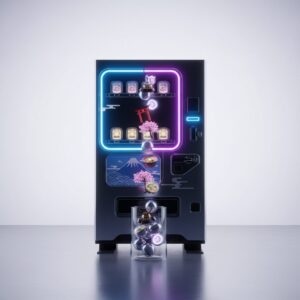
To support this, the entire system is designed for maximum discretion and minimal human contact. You don’t approach a smiling concierge at a brightly lit front desk to request a room—that would be mortifying. Instead, you enter a discreet lobby, often with separate entrances and exits, and face a large, illuminated panel with photos. Each photo shows a room. If lit, the room is available. You press the button for your chosen room, a key is dispensed or the door number lights up, and you go straight to the room. Payment is usually handled via a machine in the room or a pneumatic tube system that sends cash to an unseen cashier. You might not see a single employee during your entire visit. It’s a smooth, anonymous process.
This anonymity is crucial. It removes social anxiety and judgment, creating a true sanctuary. It’s a place where you are free from the gaze of family, neighbors, and society. In a culture that prizes group harmony and public perception, this kind of temporary, complete privacy is not just a convenience—it’s psychologically essential.
From Functional to Fantastical: The Birth of the Theme Room
Love hotels originally began as a purely practical solution. The earliest versions, known as `tsurekomi yado` (“bring-along inns”), which emerged after World War II, were little more than simple rooms with a bed. They fulfilled their function, but they were hardly inspiring. So how did the transition occur from a basic room with a futon to an elaborate medieval dungeon complete with a rotating bed?
The Bubble Economy and the Race for Kitsch
Two words: Bubble Economy. Japan’s 1980s saw unprecedented economic prosperity. The stock market skyrocketed, real estate prices surged, and people suddenly had more disposable income than ever before. This influx of cash affected every industry, including the love hotel sector. With abundant funds and fierce competition, hotel owners faced a crucial question: how do we stand out? How do we get couples to pick our hotel instead of the ten others on the same block?
The solution was to stop selling just a room and start selling a fantasy. This sparked an extravagant arms race of amenities. It began modestly: one hotel installed a larger TV, the next added a jacuzzi, then karaoke machines appeared, followed by vibrating beds. Eventually, a visionary took it further by installing a spinning bed. And everything changed.
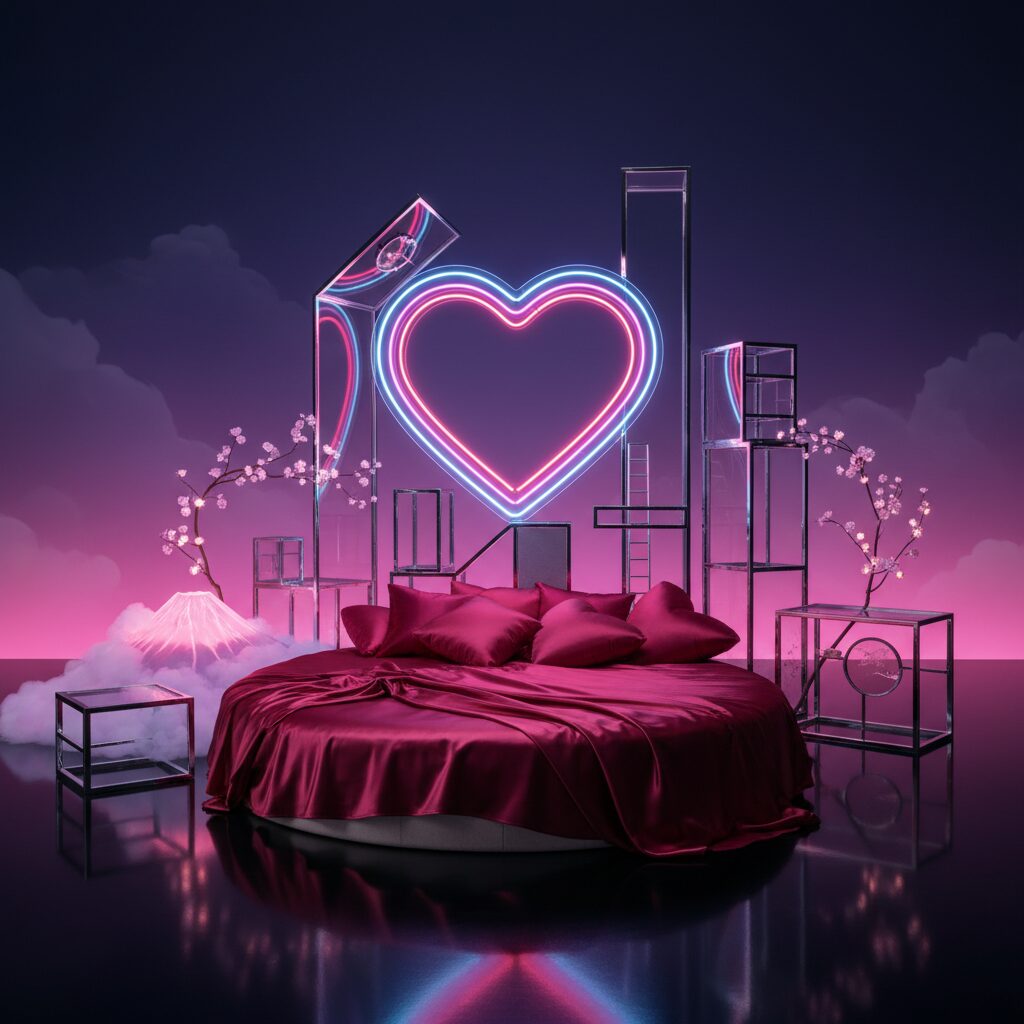
No longer just about providing space, love hotels became about delivering an experience. The themes grew more elaborate and owners poured millions of yen into crafting immersive, outrageous environments. Want a room shaped like a Greek temple? Done. A UFO cockpit? No problem. A Hello Kitty-themed wonderland? Absolutely. The goal was to create an environment so removed from the mundane reality of a small Japanese apartment that it felt like entering another dimension. The more fantastical, the better. This was more than decoration; it was spectacle. The buildings themselves became architectural landmarks—castles with glowing turrets, gleaming futuristic spaceships, Venetian palaces squeezed into tiny urban lots in Shibuya or Shinjuku.
The Spinning Bed: A Mechanical Symbol
Pause to appreciate the spinning bed, arguably the ultimate love hotel gimmick. It’s bulky, probably a bit noisy, and serves no practical purpose ergonomically. Yet, it is a stroke of genius. The spinning bed perfectly symbolizes the allure of love hotels. It embodies pure novelty. You’ll never have one at home—you can’t just pick up a revolving mattress platform at IKEA. Its very presence declares: “You’re not in your everyday life anymore. The usual rules of practicality and taste don’t apply here.”
It signifies a complete departure from the ordinary. For a few hours, you become someone who owns a spinning bed. It transforms a simple room into a carnival ride. It’s ridiculous, over-the-top, and absolutely unforgettable. This single piece of furniture captures the entire philosophy of the Bubble Era love hotel: why settle for functional when you can have fabulous? It’s not about comfort; it’s about a story to tell later. It’s about forging a memory as strange as it is intimate.
Themed Rooms as Immersive Playgrounds
Themes went far beyond mere decoration. They became interactive stage sets designed to inspire fantasy and role-play. A room mimicking a high school classroom, complete with desks and a chalkboard, isn’t just a quirky design—it’s a direct reference to a popular anime and manga trope. It offers couples a ready-made story to step into. The same applies to doctor’s office, subway car, or prison cell themes. These rooms instantly ignite the imagination.
This aligns perfectly with a culture rich in visual storytelling. From anime and manga to video games, Japanese pop culture is full of archetypes and distinct settings. Love hotels simply physicalized these virtual fantasies. They became adult playgrounds, spaces where you could enact a scene from your favorite story or create a new one. The sheer variety is astounding. You’ll find rooms catering to every niche: a traditional Japanese `ryokan` with a private outdoor bath (`rotenburo`), a futuristic cyberpunk apartment, a pirate ship cabin, or an elegant European library. Each room acts as a portal, offering a unique form of escapism. It’s a choose-your-own-adventure for intimacy.
Enter the Dinosaurs: When Escapism Gets Prehistoric
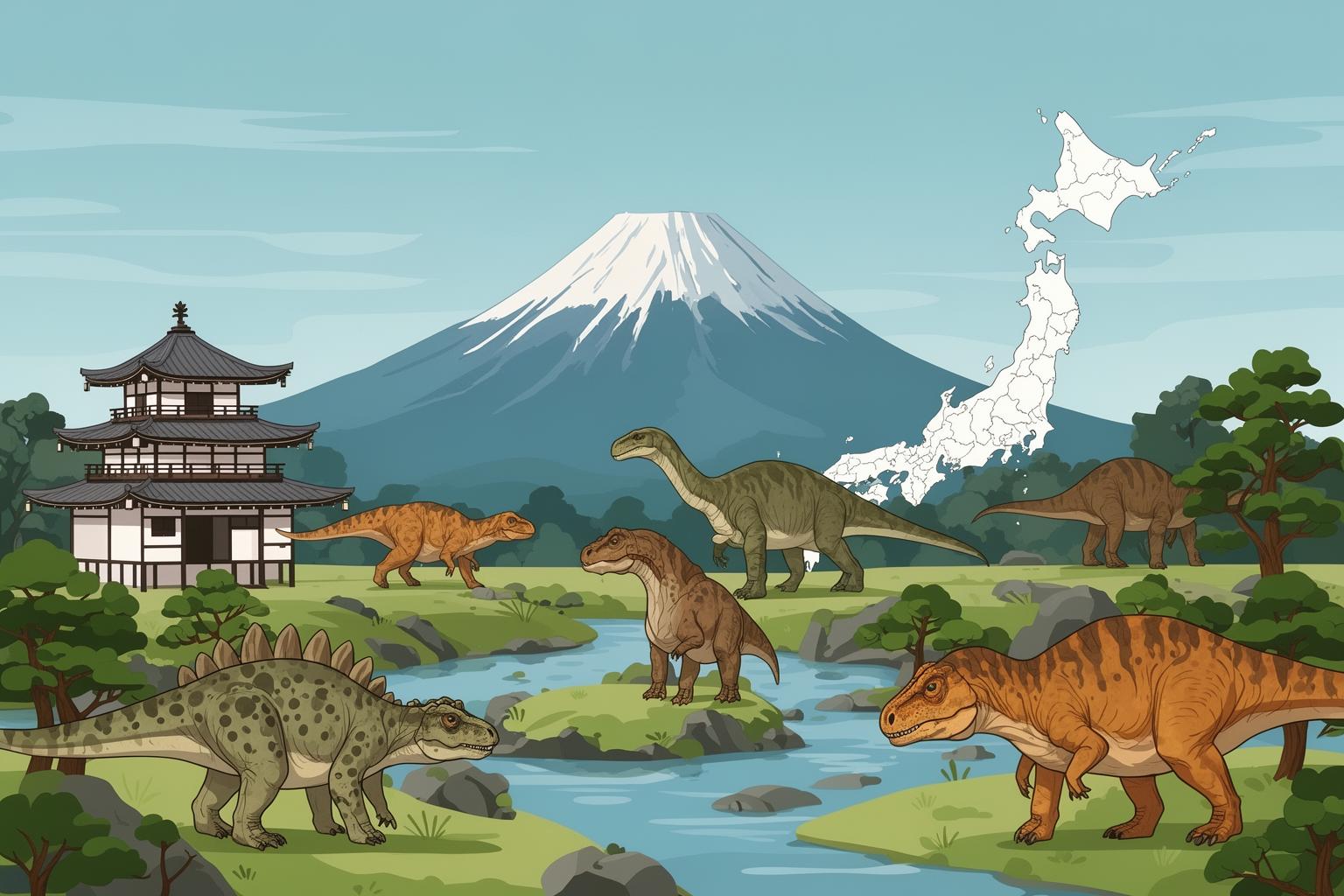
The Bubble burst, the economy cooled down, and for a time, the love hotel industry stagnated. Many of the old, castle-themed hotels fell into neglect. The younger generation—Gen Z and millennials—weren’t as captivated by the shag carpets and mirrored ceilings popular in the 80s. The industry had to evolve or face extinction. It needed to find relevance in the internet era.
The Modern Love Hotel: Competing with TikTok and Netflix
Today’s love hotels compete not only with each other but also with Netflix, video games, and the endless scroll of social media. The experience must be more than just private; it has to be entertaining and, above all, shareable. The idea of `Insta-bae,` or being Instagram-worthy, has become a key driver in design. A hotel room is no longer just a room; it’s a content creation studio.
This shift has also expanded the customer base. While couples remain the primary audience, love hotels have become hugely popular for `joshi-kai,` or girls-only parties. Consider this: for a fraction of the cost of a typical hotel suite, a group of friends can rent a huge room with a large jacuzzi, a professional-grade karaoke system, a giant TV for movies, and enjoy room service. It’s the ideal spot for a birthday or bachelorette party. Cosplayers also flock to themed rooms for photoshoots, using elaborate sets as ready-made backgrounds. Some hotels have even rebranded themselves as “leisure hotels” or “boutique hotels” to attract a broader audience, including tourists seeking something unique.
So… Why a T-Rex in the Bedroom?
That brings us to the dinosaur. The animatronic T-Rex represents the logical culmination of this evolution. Is a roaring dinosaur above your bed romantic? Not really. Is it sexy? That’s debatable. But is it memorable? Shareable? Something that will make your friends say, “WTF, where is that?!” Absolutely. The dinosaur isn’t meant to set a sensual mood. It’s there for the ‘gram. It’s a viral marketing tactic built into the room’s architecture.
In a world flooded with experiences, you need to offer something truly unique to stand out. A spinning bed is cool, but it’s been done. A room with a life-sized, roaring dinosaur? That’s next-level. It’s the ultimate gimmick. It’s a story. The hotel isn’t just selling a night’s stay; it’s selling a piece of content—a memory so absurd it becomes legendary. You don’t just stay in that room; you conquer it.
This shift also mirrors a transformation in the nature of fantasy itself. The fantasies of the 80s were often tied to wealth and glamour—European palaces, high-tech spaceships. Today’s fantasies focus more on surreal, meme-worthy experiences. It’s less about romantic escapism and more about experiential absurdity. The goal is to collect unique experiences that can be shared on social media. The dinosaur room perfectly fuses the love hotel’s original purpose (escapism) with the demands of the modern digital age (content). It’s the final boss of unforgettable.
The Nuts and Bolts: How It Actually Works
Beyond the extravagant themes, the operational side of love hotels is a finely tuned system crafted for maximum convenience and flexibility. Grasping this system is essential to understanding their place in Japanese society.
The “Rest” vs. “Stay” System
Love hotels do not follow the typical check-in/check-out routine of regular hotels. Instead, they offer two main options, clearly displayed at the entrance:
Rest (休憩, `kyuukei`): This is a short-term rental, usually lasting 2-4 hours. Prices are lower, and it’s typically available throughout the day and early evening. This classic option is ideal for a midday break or a quick meeting after work. Some hotels even provide a “free time” service, allowing stays at a fixed price over an extended period, such as from 6 AM to 5 PM.
Stay (宿泊, `shukuhaku`): This is the overnight option. It generally begins at a set time, around 9 PM or 10 PM, and continues until the next morning, roughly 10 AM or 11 AM. While the cost is higher than a “rest,” it’s often still much cheaper than a typical business or tourist hotel, especially considering the room size and included amenities.
This adaptable pricing model makes love hotels extremely versatile. They can accommodate a couple for a few hours in the afternoon, for an entire night, or even a solo business traveler who needs a quiet place for a nap and shower between meetings—a surprisingly common scenario. The system is designed to sell privacy by the hour, catering to a wide range of needs beyond the obvious.
The Amenity Overload
If the themes attract guests, the amenities keep them loyal. The level of service and abundance of complimentary items in a well-equipped love hotel room are astonishing. The approach embodies the spirit of `omotenashi` (Japanese hospitality), but taken to an almost humorous extreme. You can arrive with only your wallet and still be completely comfortable.
A standard room typically includes:
A Spacious Bathroom: Often larger than a bedroom in a Tokyo apartment. It almost always features a jacuzzi tub, frequently equipped with built-in TVs and colorful therapeutic lights (chromotherapy). The shower offers multiple heads and settings.
A Full Range of Toiletries: Not just a small bar of soap and a single shampoo bottle, but full-sized bottles of premium shampoo, conditioner, body soap, face wash, makeup remover, lotion, and more, often from well-known brands like Shiseido or Pola. Dental kits, razors, shaving cream, hairbrushes, hair ties, and even contact lens solution are commonly provided.
Salon-Quality Hair Tools: A powerful hairdryer is standard, along with a hair straightener and curling iron, ensuring guests can leave looking as polished as when they arrived.
Entertainment Systems: A large flat-screen TV—often 60 inches or larger—is standard, featuring an extensive video-on-demand (VOD) library with hundreds of movies (including a substantial adult selection). Karaoke machines with vast songbooks are also typical. Many newer hotels include PlayStation 5 or Nintendo Switch consoles for guest use.
A Well-Stocked Mini-Fridge: Usually contains a couple of complimentary bottles of water or tea. There is always a comprehensive room service menu available 24/7, offering everything from ramen and curry to steak and elaborate parfaits, all delivered discreetly through a small service hatch, so guests never need to open their door to another person.
This meticulous attention to detail is part of the fantasy. The aim is to anticipate every possible need so guests never have to disrupt the illusion by worrying about practical matters. It creates a seamless, stress-free environment where all needs are met, allowing complete immersion in the experience.
More Than Just a Meme Hotel
So, we’ve come full circle—from paper-thin walls to animatronic dinosaurs. It’s easy to view the wild, kitschy exterior of a Japanese love hotel as merely a joke or another example of “Weird Japan.” But that’s only a superficial interpretation. When you look closer, you see that these establishments aren’t a sign of eccentricity, but rather a brilliantly inventive response to a complex set of social and spatial challenges.
They arise from a universal human need for privacy, which is especially pronounced in Japan’s dense, conformist urban environments. Fueled by the explosive, fantasy-driven wealth of an economic boom, they evolved from simple functional spaces into extravagant playgrounds. Today, they’ve adapted again, becoming social media-savvy entertainment hubs vying for our fragmented attention.
The spinning bed isn’t merely a gimmick; it’s a mechanical prayer wheel of escapism. The classroom theme isn’t just decoration; it’s a tangible gateway into the world of manga. And the T-Rex in the bedroom? It stands as the ultimate symbol of the experience economy—a surreal monument to the quest to create memories loud enough to cut through the noise of modern life.
These hotels serve as a masterclass in grasping a culture’s unspoken desires and then crafting a wildly profitable, architecturally eccentric business to fulfill them. They showcase the Japanese talent for combining extreme pragmatism with boundless imagination. So next time you see a clip of a hotel room with a waterslide from the bedroom to a private pool, don’t dismiss it as simply silly. Recognize it for what it truly is: a serious, thoughtful, and deeply cultural answer to the challenge of finding a little fantasy and plenty of privacy in a world that offers scarce amounts of either. It’s quintessential Japan: practical, creative, and just the right measure of gloriously, unapologetically over-the-top. Mad respect.