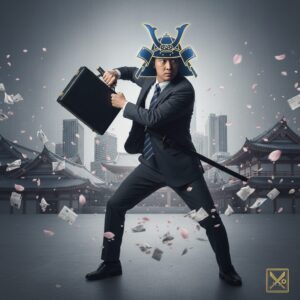
Yo, what’s the deal? It’s Keiko, coming at you straight from the concrete jungle of Tokyo. So, you’ve been scrolling the web, maybe deep in a YouTube rabbit hole, and you see it. A scene that’s totally surreal. Rows of Japanese office workers, decked out in their crisp suits and sensible shoes, standing outside their high-rise building. Then, a tinny, upbeat piano tune kicks in from a loudspeaker, and they all start… stretching. In perfect, unnerving unison. Arms up, bend to the side, rotate the hips. It’s like a flash mob, but the only thing they’re promoting is… lumbar support? You’re sitting there thinking, “Is this for real? Is this some kind of cult? Why are they doing this?” It feels like a scene straight out of a Wes Anderson movie, but I promise you, it’s a real, legit part of the daily grind for a whole lot of people here. This synchronized morning ritual is called Radio Taiso, or Radio Calisthenics, and it’s one of those things that’s peak Japan: seemingly bizarre on the surface, but with layers of history, social pressure, and cultural meaning that run super deep. It’s not just a random workout; it’s a living, breathing artifact of Japan’s journey through the last century. Before we unpack this whole wild situation, let’s get a feel for the stage where this daily performance often unfolds: the bustling business districts of Japan. Think of places like this, where thousands of workers pour out of the stations every morning, ready to start their day… with a group stretch.
To understand the broader context of these uniquely Japanese corporate phenomena, you might also be interested in exploring the culture behind Japan’s ubiquitous vending machines.
The What and the How: Deconstructing the Morning Ritual
Let’s break down the actual scene. What does this Radio Taiso routine really look like up close? Forget your high-intensity interval training or serene yoga flows—this is something entirely different. The whole practice is led by a broadcast, traditionally from the national public broadcaster, NHK. It’s been airing forever, and the music is instantly recognizable to virtually everyone in Japan. The tune features a vintage, slightly nostalgic piano melody reminiscent of an old-timey film. It’s cheerful in a way that feels almost obligatory.
There are two main versions: Radio Taiso Dai Ichi (Number 1) and Dai Ni (Number 2). Number 1 is the classic, the one everyone remembers from childhood. It’s a gentle, full-body routine made to be accessible for all ages, from little kids to great-grandparents. The movements are simple: raising arms, rotating shoulders, bending forward and backward, twisting the torso, and light knee bends. It’s very methodical and controlled. A calm, authoritative male voice counts off: “Ichi, ni, san, shi… go, roku, shichi, hachi.” (One, two, three, four… five, six, seven, eight). Each motion is perfectly timed to the music’s beat. The entire set lasts about three minutes.
Now, for the vibe check. Online videos often show smiling, energetic participants, but the reality can be quite different. In many corporate environments, especially older, more traditional companies, the energy is less “let’s get pumped for the day!” and more “let’s just get this over with.” You’ll find a sea of blank faces, with people going through the motions with minimal effort. A manager at the front might perform with some enthusiasm, setting an example, but further back, the energy fades quickly. You’ll spot half-hearted arm circles, shallow bends, and people checking their phones as soon as the music ends. It’s a performance of participation. The goal isn’t necessarily a good stretch; it’s about being seen taking part alongside everyone else. It’s a physical symbol of clocking in—a signal that you’re now officially part of the collective for the day. This disconnect between the ritual’s ideal purpose (health, unity, energy) and the often lackluster reality is what makes it so intriguing. It’s a ritual that’s lost some of its spiritual meaning but remains due to institutional inertia and social pressure. It’s a shared experience, though not always a joyful one. It’s a quiet understanding that this is just part of the deal—one of many unspoken social rules upheld to keep the system running smoothly.
Unpacking the “Why”: A Trip Down Memory Lane
Alright, so why does this ritual exist and continue today? To understand, we need to rewind time. This isn’t an ancient samurai practice; rather, it’s a 20th-century import that underwent a complete Japanese transformation. Its origins are surprisingly American, but its essence is entirely Japanese. The story of Radio Taiso encapsulates modern Japan: a narrative of borrowing, adapting, and perfecting to build a unified, healthy nation.
The Original Influencer: Radio Taiso’s Pre-War Beginnings
The tale begins in the 1920s. Two officials from Japan’s postal life insurance bureau traveled to the United States on a business trip. There, they witnessed something astonishing: the Metropolitan Life Insurance Company (MetLife) was sponsoring radio broadcasts that guided listeners through morning exercises. The goal was straightforward: improve Americans’ health, thereby reducing insurance claims for MetLife—a win-win situation. Inspired, the Japanese officials thought, “We can do this, but make it uniquely ours.”
Back home, they pitched the concept, and in 1928, to commemorate Emperor Hirohito’s coronation, NHK broadcast the first “National Health Exercises.” The project was deeply nationalistic. At a time when Japan was rapidly industrializing and militarizing, the government aimed to cultivate a physically fit, disciplined, and unified populace. Radio Taiso was the ideal instrument—a top-down public health campaign delivered directly into homes, schools, and factories via the cutting-edge medium of radio. Designed by experts, the movements were scientific and standardized, offering a government-approved way to stay healthy. It wasn’t just about individual health; it was about strengthening the nation. Participating in morning Radio Taiso was a small act of patriotism, establishing a daily rhythm that literally synchronized the nation. This foundation is crucial: Radio Taiso originated not as a grassroots fitness trend but as a centralized tool of social engineering with genuinely positive health intentions.
The Post-War Transformation: From National Duty to Corporate Culture
World War II changed everything. Following the war, the Allied Occupation, led by Americans, banned Radio Taiso, viewing it as tied to the militaristic, collectivist system they sought to dismantle. The synchronized movements felt too reminiscent of military drills, so the broadcasts ceased for several years.
However, people missed it. By then, it had become a familiar routine. In 1951, with the occupation ending, NHK revived it with a fresh, rebranded image. Militaristic and nationalistic tones were removed. The focus shifted to health, leisure, and fostering a new, democratic community. Enter corporate Japan. As the economy recovered rapidly, a unique corporate culture emerged. Companies began to see themselves not merely as employers but as families. This was the era of lifetime employment—joining a company after university and staying until retirement. The company (kaisha) became the center of social life, providing security, identity, and community.
Within this context, Radio Taiso was an ideal morning ritual—a way for the corporate family to start the day together. It became a daily practice in factories and large companies, used to energize employees, reduce workplace injuries, and most importantly, nurture unity and shared purpose. It physically embodied the slogan, “We’re all in this together.” The morning chōrei, or assembly where the day’s agenda was presented, often began with three minutes of Radio Taiso. It signaled that individual identities were temporarily replaced by the collective identity of company workers. It served as the ultimate icebreaker, smoothly transitioning people from home life to work life, all in perfect synchrony with colleagues and supervisors.
The Group Comes First: Grasping Shūdan Ishiki
To understand why companies require synchronized stretching, it’s essential to grasp a core aspect of Japanese society: shūdan ishiki (集団意識), or group consciousness. This is fundamental. Unlike many Western cultures where individual achievement, expression, and rights take center stage, Japan traditionally places priority on the group. Harmony (wa, 和) within the group is paramount, and individuals are expected to act in ways that support that harmony. Being a “team player” is not just preferable; it’s the norm.
Radio Taiso embodies shūdan ishiki in physical form—an exercise in collectivism. When participating, you are no longer an individual but a small, moving part of a larger, coordinated whole. Your personal rhythm yields to the group’s rhythm, set by the piano and the radio announcer. This low-stakes environment prepares you for the high-stakes teamwork of the workday ahead. Success isn’t measured by perfect form or the best stretch; it’s all about synchrony. By moving together—bending, stretching, rotating—everyone is reminded of their place within the unit. For those three minutes, hierarchy blurs—the CEO and the intern, in theory, perform the same movements simultaneously. It’s a daily, physical affirmation of belonging. That’s why refusing to participate is so significant; it’s not merely skipping exercise but rejecting the group’s activity, a small rupture in the fabric of unity. This collective mindset is key not only for understanding Radio Taiso but also many facets of Japanese life, from meeting decision processes to orderly train queues. The group always comes first, and Radio Taiso is the morning warm-up for that ethos.
The Modern-Day Vibe Check: Is Corporate Calisthenics Still a Thing?
Given what we understand about its historical and cultural origins, what is the status of corporate calisthenics in the 21st century? Is it merely a dusty relic, or does it remain an essential part of the Japan Inc. experience? The answer is complex. This practice has become a significant cultural dividing line, underscoring the widening gap between traditional Japan and the younger generation. Attitudes toward Radio Taiso today vary greatly depending on whom you ask and where you look.
The Generational Divide: Boomers vs. Millennials & Gen Z
Speak to a manager in their 50s or 60s—someone from the Baby Boomer or Gen X generation who came up during Japan’s economic bubble—and they will likely defend Radio Taiso passionately. For them, it’s simply… normal. It’s just what you do. They sincerely highlight its benefits: it wakes you up, helps your back, and fosters team spirit. Having grown up with it in school and practiced it daily at their first job, they view it as a positive and productive tradition. To them, refusing to participate seems odd, antisocial, and a bit selfish. Why wouldn’t you take three minutes to do something beneficial for yourself and the team?
Now, ask a 25-year-old software developer who recently joined the company, and their viewpoint is likely to be very different. Many younger Japanese workers, raised in a different economic environment and more influenced by global culture, might find the practice anywhere from mildly embarrassing to deeply problematic. They could see it as a pointless, performative ritual or a relic of a past era of corporate loyalty that no longer applies. They might question the science behind it or feel that decisions about their own body at work should be their choice. Being required to exercise, even gently, can feel like an overextension of corporate authority. It may represent the rigid, hierarchical corporate culture they are eager to leave behind. This generational conflict unfolds across offices in Japan: the older generation views it as a unifying tool, whereas the younger generation often sees it as a means to enforce conformity.
Startup Culture vs. Old-School Giants
This generational split is mirrored in the corporate environment itself. You won’t find Radio Taiso in a trendy tech startup in Shibuya or a hip creative agency in Daikanyama. These companies aim to challenge traditional Japanese work culture norms. They promote flexible hours, remote work, and prioritize individual output over collective presence. Requiring synchronized stretches would feel completely out of place; it would be seen as cringe-worthy or laughable. Their goal is to attract talent that values autonomy and creativity, and Radio Taiso represents the exact opposite.
In contrast, visit the headquarters of a large, established corporation in Marunouchi—a bank, insurance firm, or major manufacturer—and the scene is very different. The same is true for construction sites and factories, particularly outside the biggest cities. Tradition and hierarchy still strongly influence these places. Radio Taiso is often a mandatory part of the daily routine, institutionalized with built-in loudspeakers and expected participation. In these settings, the ritual reinforces the company’s enduring culture and values. It signals that this is a place where things are done in a particular way—a method that has been effective for decades. The presence or absence of Radio Taiso has become a surprisingly accurate indicator of corporate culture. If it’s there, the company likely prioritizes tradition, seniority, and group harmony; if not, you’re probably in a more modern, individualistic, and arguably more chaotic environment.
The Health Argument: Legit Workout or Just Going Through the Motions?
Setting cultural factors aside, is Radio Taiso actually beneficial? From a purely physiological perspective, the answer is a qualified yes. When performed properly, the exercises are quite sound. They were developed by medical experts to systematically warm up major muscle groups, increase blood flow, and boost flexibility. The routine includes movements that counteract the negative effects of prolonged desk sitting—stretching the back, opening the chest, and mobilizing joints. For an increasingly sedentary workforce, a mandated three-minute break to stand and move is objectively positive. Japanese doctors and physical therapists often praise Radio Taiso as a well-balanced, low-impact workout.
However, the catch is that benefits only come if you actually perform it. As mentioned, the reality is often a crowd going through the motions half-heartedly. A weak bend won’t help your spine, and a limp arm circle won’t boost circulation. The compulsory, group nature frequently strips the routine of its intended health advantages. It becomes a task to be completed rather than an exercise to be embraced. So, while the potential for health benefits exists, the actual effects on the ground are often negligible. It’s a classic example of promising theory but messy execution. This underscores a recurring theme in Japan: the form (kata) of an activity can sometimes overshadow its substance. Participating together is the primary goal; physical benefits are a secondary, often unrealized, bonus.
The Unspoken Rules and Social Stakes
To truly immerse yourself in the experience of corporate calisthenics, you need to understand the subtle social dance that surrounds it. Like many things in Japan, the real significance lies not in the official rules, but in the unwritten ones. Taking part in Radio Taiso is a masterclass in navigating social expectations and the art of “reading the air” (kūki wo yomu), which is the crucial, almost intuitive ability to grasp a situation and respond appropriately without being explicitly told what to do.
The Performer’s Dilemma: How to Participate “Correctly”
There is definitely a “correct” way to do Radio Taiso in a corporate setting, and it has very little to do with flawless technique. It’s all about social tuning. You can’t be overly enthusiastic. If you’re out there stretching with great energy, a big smile on your face, fully engaged, you will stand out. You’ll be seen as a ishiki takai kei (a try-hard, someone too conscious of their image) or perhaps just a weirdo. You’re breaking the unwritten rule of collective nonchalance. People will notice—and not necessarily in a positive way.
Conversely, you can’t be too lazy or defiant. If you’re just standing there with your arms crossed or performing the movements with clear disdain, you’re also sending a strong message. You’re signaling that you’re not a team player, that you consider yourself above the group. This is a much riskier stance. The sweet spot, the socially acceptable way to participate in the ritual, lies somewhere in the middle. You do the movements, follow along, but maintain a neutral, slightly bored expression. You put in about 70% effort. This shows you’re a compliant member of the group, willing to take part in the shared ritual, yet cool enough not to be overly earnest. It’s a subtle act of conformity—a way of checking the box, fulfilling your social duty, and then moving on. Mastering this calibrated participation is a key skill not just for Radio Taiso but for navigating the entire Japanese corporate world.
Opting Out: The Silent Rebellion
So what if you simply… don’t do it? What if you choose to stay at your desk or hide in the bathroom during those three minutes? In most companies, there are no formal penalties. Your boss won’t reprimand you for skipping the morning stretch. Your salary won’t be reduced. The consequences are much more subtle, and in many ways, more impactful.
Opting out makes a statement. It’s a small act of rebellion that won’t go unnoticed. Your colleagues might not confront you directly, but they will take note. It marks you as “different.” It can lead to a kind of low-level social exclusion. You might be seen as someone who doesn’t value teamwork or respect company traditions. You might be quietly left out of conversations or after-work socializing. In a culture where group harmony is essential, intentionally excluding yourself, even slightly, is a significant act. It can affect your reputation and relationships with coworkers in ways that are difficult to define but undeniably real. This enormous, unspoken pressure to conform is why the vast majority simply go along with it, even if they think it’s silly. The social cost of opting out is often perceived as greater than the personal cost of spending three minutes doing a ridiculous synchronized exercise. It’s a daily micro-lesson in the power of social pressure within the Japanese workplace.
Beyond the Office: Radio Taiso’s Enduring Legacy
While our attention has largely been on the corporate environment, it’s crucial to recognize that Radio Taiso extends far beyond just the workplace. Its influence touches nearly every aspect of Japanese life, and outside the office, its presence is often more wholesome and less complex. Experiencing it in these different settings helps provide a more complete understanding of why it holds such sway over the national psyche.
The Summer Vacation Tradition
For generations of Japanese people, the sound of Radio Taiso piano music signals the start of summer vacation. During the summer break, children across the country gather early each morning, usually at local parks or schoolyards, to exercise together. It’s a coordinated community event. Kids receive stamp cards, and each day they participate, they earn a stamp. At summer’s end, a filled card can be exchanged for small prizes like snacks or stationery. This is a brilliant strategy, embedding the habit of Radio Taiso from a very young age and linking it with friends, sunshine, and the freedom of summer. Additionally, it serves a practical purpose: encouraging kids to begin their day with structure during the long break and providing motivation to get outside. For many, these are treasured memories—a shared experience connecting generations, a cultural landmark everyone relates to. This positive early exposure plays a major role in why the practice has lasted so long.
Community for Older Adults
If you stroll through a park in any Japanese neighborhood on a morning, you will likely encounter another group practicing Radio Taiso: senior citizens. For numerous retirees, these daily gatherings provide a crucial part of their social life. It’s a chance to leave home, engage in gentle exercise, and chat with neighbors. In a country with an aging population where social isolation among the elderly is a serious concern, these morning exercise groups fulfill an important community role. The routine is familiar and soothing, the movements are safe and beneficial for older bodies, and the social connection is just as vital as the physical activity. In this setting, Radio Taiso is free from corporate pressure and nationalistic origins. It becomes a simple, joyful practice for health and community. This is a wonderful example of how a ritual can adapt and take on new, positive significance in a different social context.
So when you watch a video of office workers stretching together, it’s easy to laugh or cringe. And honestly, sometimes it does seem a bit absurd. But it’s never merely exercise. It’s a three-minute expression of Japanese culture and history, reflecting the lasting power of group cohesion, the tension between tradition and modernity, and the subtle, unspoken pressures shaping daily life here. Originally designed to forge a healthy, unified nation, it was later adapted to cultivate loyal corporate workers, and now lives on as a divisive workplace ritual, a cherished childhood memory, and an important community activity for seniors. It’s strange, it’s complex, and it’s quintessentially Japanese. Understanding the “why” behind it means you’re not just comprehending an unusual morning exercise—you’re gaining insight into the country itself.