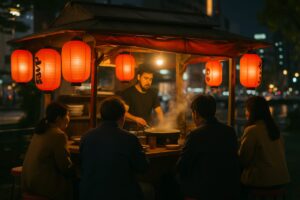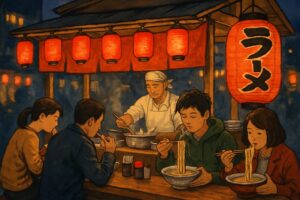
Yo, what’s up, global adventurers! It’s Ami, coming at you live from the electric streets of Fukuoka. Forget what you think you know about Japanese dining—the quiet, contemplative sushi bars, the formal kaiseki experiences. We’re diving headfirst into something raw, real, and ridiculously delicious. We’re talking about yatai, the legendary open-air food stalls that are the absolute lifeblood of this city after dark. Picture this: the sun dips below the horizon, and suddenly, like magic, the riverside and street corners transform. Wooden carts, draped in canvas and hung with glowing red lanterns, unfold into tiny, buzzing restaurants, seating no more than eight or ten people. The air gets thick with the savory steam of grilling meats, simmering broth, and the sound of pure, unadulterated joy. This isn’t just dinner; it’s an experience. It’s a front-row seat to the heart and soul of Fukuoka, a city that has fiercely protected this fading piece of Japanese culture. While other cities have let their yatai scene fizzle out, Fukuoka has held on tight, making it the undisputed capital of street food in Japan. This is where you connect, not just with incredible food, but with the people who make and love it. It’s where salarymen, students, and curious travelers like us all squeeze in shoulder-to-shoulder, united by a love for good grub and good vibes. This is the real Japan, unfiltered and served up hot. Get ready to eat, drink, and soak in the lit atmosphere of Fukuoka’s yatai. It’s a whole mood, and trust me, you’re gonna want in on it.
If you’re looking to explore more of the region’s rich history after experiencing Fukuoka’s vibrant street food, consider taking a day trip to the nearby ancient capital of Dazaifu.
The Vibe: What’s the Real Deal with Fukuoka Yatai?
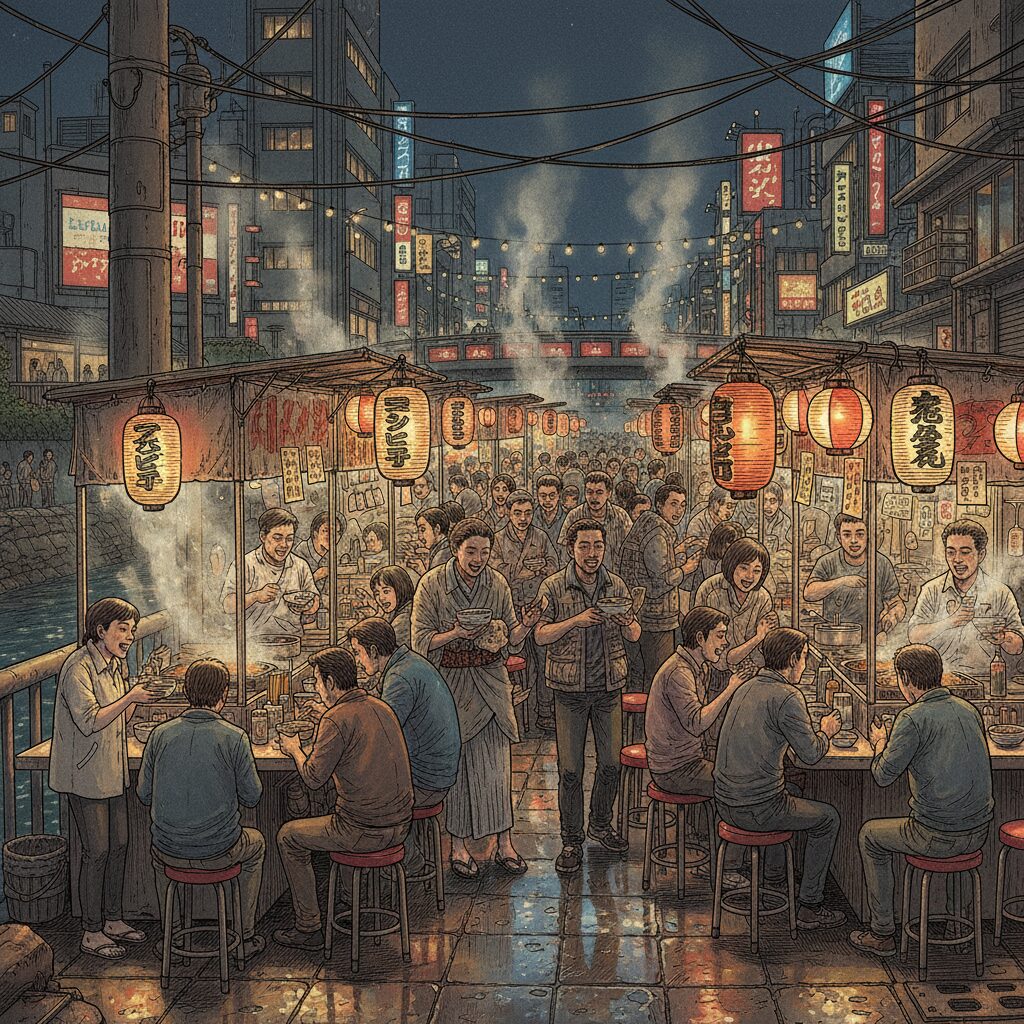
So, what does it truly feel like to dive into the yatai scene? Forget the usual restaurant experience. This is intimate, chaotic, and fully immersive. The first thing that strikes you is the sensory overload—in the best way imaginable. Your eyes are drawn to the warm, inviting glow of the paper lanterns, each displaying the stall’s name or specialty, cutting through the dark city night. Then, the aromas envelop you—the rich, porky scent of tonkotsu ramen broth simmering in a massive pot, the smoky char of yakitori expertly turned over glowing coals, the sharp, savory fragrance of soy sauce sizzling on a hot griddle. It’s a symphony of culinary delights before your first bite. The soundscape is just as lively. You’ll hear the sizzle of gyoza frying, the rhythmic chop of green onions, the cheerful calls of the taisho (the stall owner, usually a charismatic master of their craft), and the gentle hum of conversation and laughter from patrons gathered close.
The magic of a yatai lies in its intimacy. You’re not seated at a distant table in a cavernous room; you’re perched at a counter, mere inches from where your food is crafted. You can watch the taisho’s hands move with practiced ease, a dance refined over years. This closeness creates a rare sense of community. You’ll find yourself squeezed beside a group of local office workers unwinding after a long day, a young couple on a date, or another solo traveler equally curious. Language barriers often fade away in the warm, convivial atmosphere. A simple smile, nod, or an enthusiastic “Oishii!” (Delicious!) can spark a conversation. This is where genuine cultural exchange happens. You’re not just a customer; for a brief hour, you’re part of this small, temporary family.
And then there’s the fleeting beauty of it all. These stalls are temporary structures, carefully set up every evening and completely taken down before dawn. They exist in a magical in-between time, a nightly festival that vanishes with the morning sun, leaving no trace behind. Their transient nature makes the experience feel even more special, as if you’ve stumbled upon a secret gathering the city holds just for those out and about after dark. It’s a raw, authentic, deeply human experience miles away from polished tourist traps. It’s about savoring simple, soul-warming food in a setting that encourages connection and reminds you of the pure joy of sharing a meal.
Yatai Hotspots: Where to Find the Best Action
Fukuoka’s yatai aren’t scattered haphazardly; they’re clustered in a few key areas, each with its own unique character and flavor. Knowing where to go can greatly influence your experience, so let’s break down the main zones. Think of it as picking the perfect stage for your culinary adventure.
Nakasu Island: The Iconic Nightlife Hub
When most people envision Fukuoka’s yatai, they picture Nakasu. This is the big one, the main attraction. Situated on a narrow island between the Naka and Hakata rivers, Nakasu is the city’s premier entertainment and nightlife district. At night, the waterfront promenade along the Naka River lights up with about a dozen yatai, their lanterns beautifully reflected on the water’s surface. The view is iconic, with glowing stalls set against the glittering city skyline and the futuristic Canal City Hakata across the river. The atmosphere here is electric. It’s lively, vibrant, and attracts a large crowd of both tourists and locals. This is the place to see and be seen, and it’s incredibly photogenic—so have your camera ready.
Because it’s the most famous area, Nakasu stalls are experienced in welcoming international visitors. You might find more picture menus or owners who speak a bit of English. The food selection is diverse, offering a greatest-hits lineup of yatai classics. Expect everything from Hakata ramen and yakitori to oden and tempura. It can get crowded, especially on weekend nights, so you might need to queue for a spot at a popular stall. But the wait is part of the fun. Grab a drink, soak in the buzzing atmosphere, and watch the city come alive. It’s the perfect introduction to yatai culture and a must-visit for first-timers.
Tenjin: The Shopper’s Paradise After Dark
If Nakasu is the flashy star, Tenjin is its cooler, slightly more understated cousin. Tenjin is Fukuoka’s downtown core and the center of shopping, fashion, and business. By day, it’s all department stores and offices. By night, yatai emerge along busy streets, especially near the Bank of Japan and the district’s southern end. The vibe here feels different from Nakasu. It’s more integrated into the urban setting, with glowing stalls tucked beneath towering skyscrapers and neon signs. The crowd is a mix of shoppers taking a break, office workers grabbing a late-night bite, and locals in the know.
The stalls in Tenjin are more spread out, and you might find some that are unique or experimental. While all the classics remain, some yatai cater to a younger, modern crowd, offering creative fusion dishes or focusing on specialties like gyoza or tempura. It’s a fantastic spot to explore after a day of shopping. The energy is high, but it feels less like a tourist hotspot and more like an authentic part of the city’s nightly rhythm. If you want to experience Fukuoka like a true local, a yatai in Tenjin is the way to go.
Nagahama: The OG Ramen Spot
For purists, ramen enthusiasts, and those seeking a genuinely old-school yatai experience, there’s only one destination: Nagahama. Located a bit further from the city center near the sprawling fish market, Nagahama is the historic birthplace of the famous Nagahama-style ramen. This area focuses less on variety and more on mastery of a single craft. The vibe is grittier, more utilitarian, and overwhelmingly local. You won’t find the scenic river views of Nakasu or the polished backdrop of Tenjin. Instead, you’ll discover a straightforward dedication to serving some of the best, most authentic ramen in the city.
The history here is tangible. These yatai originally served fish market workers needing a quick, hot, satisfying meal at all hours. This shaped the distinctive Nagahama ramen: an intensely flavorful yet lighter-bodied tonkotsu broth, ultra-thin, firm noodles that cook in seconds, and the clever kaedama system for ordering noodle refills. Visiting a yatai in Nagahama feels like a pilgrimage. The focus is purely on the food—less about lingering and socializing, more about enjoying a perfect bowl of ramen. If you’re serious about noodles, a trip to Nagahama is essential. It’s a taste of authentic Fukuoka food history.
The Ultimate Yatai Food Bible: What to Eat
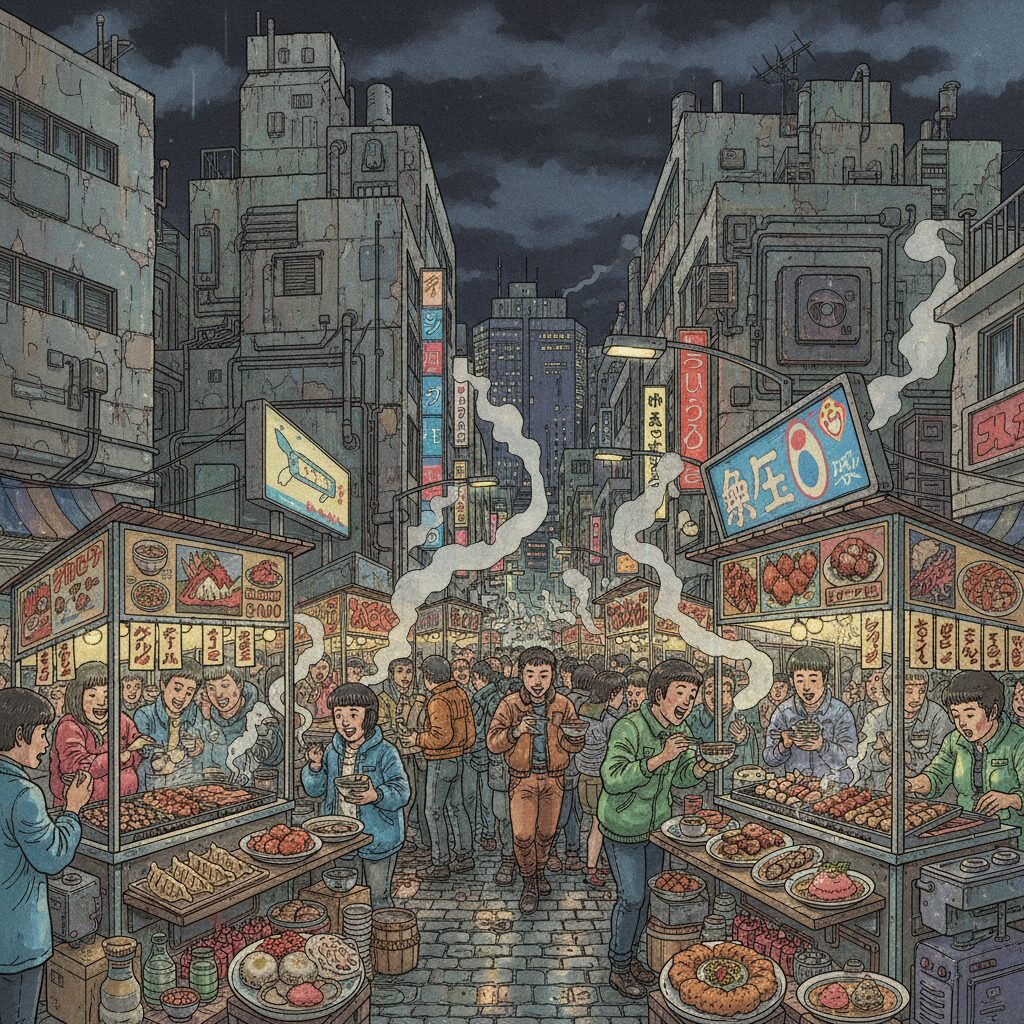
Alright, let’s dive into the heart of the matter: the food. A yatai’s menu is usually small and focused, highlighting just a few dishes that the taisho has mastered to perfection. Exploring the options is part of the fun, but here’s a guide to the essential dishes that embody the Fukuoka yatai experience. Get ready to work up an appetite.
Hakata Ramen: The Crown Jewel of Fukuoka Cuisine
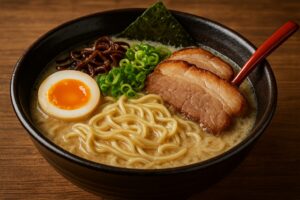
You simply can’t visit Fukuoka without trying Hakata ramen. It’s the city’s most famous culinary export and the unquestioned star of the yatai scene. This isn’t just any noodle soup. It features tonkotsu, a rich, creamy, and deeply savory broth made by boiling pork bones for hours until the collagen and umami are fully extracted. The broth is opaque and milky, bursting with a flavor that’s both intense and comforting. The noodles are another highlight: thin, straight, and firm, meant to cook quickly and hold their texture in the hot broth without becoming soggy.
A distinctive part of Hakata ramen culture is customizing the noodle firmness. When ordering, you can specify your preference: katamen (hard), futsu (regular), or yawamen (soft). Most locals prefer katamen or even barikata (extra hard) for the best bite. Then there’s the kaedama system, a real game-changer. Since the noodles are thin, you get a small portion so they don’t get mushy. When you finish your noodles but still crave that wonderful broth, you can request a refill of noodles by saying, “Kaedama, kudasai!” for a small fee. It’s a perfect way to savor every drop of that liquid gold. Toppings are simple but essential: a few slices of tender chashu (braised pork), finely chopped green onions, and sometimes wood ear mushrooms. On the counter, condiments like pickled red ginger (beni shoga), crushed sesame seeds, and spicy mustard greens (karashi takana) let you personalize your bowl. Eating authentic Hakata ramen at a yatai, surrounded by steam and the joyful sounds of slurping, is almost a spiritual experience for any food lover.
Yakitori: Skewered Delight
Yakitori, or grilled skewers, is another foundational dish at yatai. Its charm lies in its simplicity and range of options. It’s the perfect snack to enjoy with a beer while chatting. The taisho stands before a long, narrow grill loaded with glowing charcoal, skillfully turning skewers until they are perfectly cooked and lightly charred. Although “yakitori” means “grilled chicken,” the term often covers many types of skewers.
Chicken selections include everything from momo (juicy thigh meat) and negima (thigh and green onion) to more daring cuts like kawa (crispy skin), hatsu (heart), and sunagimo (gizzard). A must-try is tsukune, a savory chicken meatball often served with a raw egg yolk for dipping. However, in Fukuoka, the undisputed hero of skewers is butabara, grilled pork belly. These rich, fatty skewers are a local favorite and an absolute must-order. You’ll also find vegetable skewers like shiitake mushrooms, green peppers (piman), and ginkgo nuts (ginnan). When ordering, you’ll usually be asked how you want them seasoned: shio (salt) for a clean and simple taste that highlights the ingredients, or tare (a sweet and savory soy glaze) that caramelizes beautifully on the grill. Trying a mix of both is always a smart choice.
Mentaiko Madness: Fukuoka’s Spicy Signature
Fukuoka is famous for mentaiko, and this ingredient appears in many yatai dishes. Mentaiko consists of sacs of pollock or cod roe cured with salt and marinated in chili peppers and spices. It offers a unique flavor that is salty, savory, full of umami, and finishes with a pleasant spicy kick. It’s incredibly addictive and truly representative of Fukuoka.
A popular way to enjoy it at a yatai is in mentai tamagoyaki, a traditional Japanese rolled omelet filled generously with mentaiko. The creamy, slightly sweet egg pairs perfectly with the salty, spicy roe. Another classic is iwashi mentai, a whole sardine stuffed with mentaiko and grilled. The oily, flavorful fish and the spicy roe are a perfect pairing. Sometimes you’ll even find lightly grilled mentaiko alone, which intensifies its flavor and adds a pleasant texture. It’s an ideal match with sake or shochu. To taste Fukuoka’s true flavor, trying mentaiko is a must.
Gyoza: Bite-Sized Delight
While gyoza (pan-fried dumplings) are beloved throughout Japan, Fukuoka boasts its own style called hitokuchi gyoza, meaning “one-bite gyoza.” As the name suggests, these dumplings are smaller than typical gyoza. They are pan-fried to a crispy golden bottom while remaining soft and steamy on top. Their small size changes the skin-to-filling ratio, making for a lighter, crisper bite. It’s easy to eat a dozen or more without feeling too full.
The filling is a simple yet tasty blend of minced pork, cabbage, and chives. Served piping hot from the griddle, they are incredibly addictive. What sets Hakata-style gyoza apart is often the dipping sauce. Alongside the usual soy sauce, vinegar, and chili oil, many stalls offer yuzukosho, a fiery and fragrant paste made from yuzu citrus peel, chili peppers, and salt. A small dab adds a remarkable aromatic and spicy punch that cuts through the richness and takes the gyoza to the next level.
Oden: The Soulful Hot Pot
On a chilly Fukuoka night, nothing beats a comforting bowl of oden from a yatai. Oden is a Japanese hot pot featuring various ingredients slowly simmered in a light, savory dashi broth. At a yatai, you’ll find a large, partitioned pot bubbling away with an enticing array of items. It’s the ultimate comfort food.
You order by pointing at what catches your eye, and the taisho will fish it out, placing it in a bowl with a ladle of the flavorful broth. A dab of sharp karashi mustard on the side is essential. Classic oden ingredients include thick slices of daikon (radish) soaked with broth flavor, hard-boiled eggs (tamago), various fish cakes like chikuwa (tube-shaped) and hanpen (soft white fish cake), and blocks of konjac jelly (konnyaku). A special treat is kinchaku, a pouch of fried tofu filled with mochi rice cake. As you eat, the warmth of the broth spreads through you, making it the perfect dish for a cold evening. Simple, humble, and deeply satisfying.
How to Yatai Like a Pro: The Unwritten Rules
Yatai have their own distinctive etiquette and rhythm. While not complicated, understanding a few unwritten rules can make your experience smoother and help you blend in like a local. It’s all about respecting the limited space and embracing the communal atmosphere.
Master the Art of Ordering
First and foremost: yatai are very small. Seating is extremely limited, so it’s important to be mindful of how long you stay. These aren’t places to linger for hours with just one drink. The business depends on a steady flow of customers. The unwritten rule is to order at least one food item and one drink per person. Don’t treat it purely as a bar. Once you’ve finished eating, it’s polite to pay your bill and free up your seat for those waiting, especially if you notice a queue forming. The taisho will appreciate your thoughtfulness.
Menus can sometimes seem intimidating since they are often only in Japanese. Don’t be discouraged! Yatai owners are used to tourists. Pointing to something that looks good on the grill or at what your neighbor is eating is perfectly fine and a common way to order. Saying a simple “Kore, kudasai” (“This, please”) will get you far. Learning a few other key phrases like “Sumimasen” (“Excuse me,” to get attention), “Oishii!” (“Delicious!”), and “Gochisosama deshita” (“Thank you for the meal,” said when leaving) will earn you warm smiles from the owner and fellow diners.
Know the Flow
When you arrive at a stall, don’t just sit down without permission. First, make eye contact with the taisho and ask if it’s okay to sit, perhaps gesturing toward the empty stools. They’ll let you know if the seats are free or if you should wait. Once seated, remember that personal space is limited. You’ll be sitting shoulder-to-shoulder with strangers, which is part of the charm. Embrace the closeness and be open to interaction. A simple “Konbanwa” (“Good evening”) to your neighbors is a nice touch.
Bringing outside food or drinks is a major faux pas. Each yatai operates independently, so only consume what you buy there. When it’s time to pay, it’s almost always cash only—credit cards are usually not accepted. Make sure you have enough yen on hand, preferably in smaller bills and coins, to avoid any hassle when paying. Tipping isn’t customary in Japan, so just pay the total on your bill. The most important thing is to relax and enjoy the communal vibe. Starting a conversation with the person next to you can lead to some of the most memorable travel experiences.
Practical Nitty-Gritty
Timing is key when it comes to yatai. Most stalls begin setting up around 6:00 PM and open by 7:00 PM. They usually stay open late, often until 1:00 or 2:00 AM, but closing times can vary. If a stall runs out of its main ingredients, it might close earlier. Remember, yatai are weather-dependent. On days with heavy rain or strong wind, many owners choose not to open at all. It’s also common for several stalls to close one day a week, often Sunday, though this varies. It’s always wise to have a backup plan.
Getting to the main yatai areas is easy thanks to Fukuoka’s excellent subway system. For Nakasu, get off at Nakasu-Kawabata Station. For Tenjin, the Tenjin or Tenjin-Minami stations put you in the heart of the action. Nagahama is a bit further, a longer walk from Akasaka Station or Ohori Koen Station, but well worth it.
From a safety standpoint, as a woman who often travels solo, I’ve always felt very safe and comfortable at Fukuoka’s yatai. The environment is lively and public, with the taisho right in front of you, creating a secure and supervised space. It’s actually one of the best solo dining experiences available. Of course, as with any nightlife spot worldwide, it’s wise to stay aware of your surroundings, but the yatai themselves are welcoming havens of warmth and hospitality.
The Soul of the City: The Story Behind Fukuoka’s Yatai

To truly appreciate the yatai experience, you need to understand its history and why it is so deeply embedded in the fabric of Fukuoka. These modest food stalls are more than just places to eat; they represent a living piece of post-war history and symbolize the city’s resilient and independent spirit. The roots of yatai culture date back to the years following World War II. During a period of scarcity and rebuilding, these mobile stalls arose as an inventive way to provide affordable, quick, and nourishing meals to workers and a recovering population. They were a grassroots solution, reflecting the entrepreneurial spirit of the Japanese people.
In the years that followed, as Japan’s economy flourished, many cities began to see street stalls as unhygienic or as hindrances to modernization. Strict regulations were introduced, causing the number of yatai nationwide to decline sharply. They were on the brink of becoming a thing of the past. However, Fukuoka stood apart. The city and its residents have always possessed a rebellious streak and strong pride in their local culture. They recognized yatai as an essential part of their identity and fought to preserve them.
Thanks to passionate advocacy from stall owners and a progressive approach by the local government, Fukuoka developed a unique system to safeguard and legitimize its yatai culture. Although regulations remain, the city has created a framework that allows new generations of owners to inherit licenses, ensuring the tradition endures. This deliberate effort to protect their heritage is why Fukuoka remains the last yatai haven in Japan. When you sit down at a yatai, you’re not merely following a trend; you’re engaging in a tradition that has been defended and treasured for generations. It is this history that adds extra flavor to the food and profound meaning to the experience. The yatai embody the spirit of Fukuoka’s people: warm, unpretentious, friendly, and fiercely proud of their city’s distinctive soul.
Your Fukuoka Night Awaits
So there you have it—a deep exploration of the captivating world of Fukuoka’s yatai. It’s much more than just a list of foods to try. It’s a rich cultural experience, an opportunity to witness Japan at its most genuine and unpretentious. It’s about the crackle of the grill, the soft glow of lantern light, the flavor of a perfectly made ramen, and the shared laughter with a stranger who becomes a friend for the evening. This is where memories are created, stories are exchanged, and the true spirit of Fukuoka shines brightest.
My advice? Be bold. Be inquisitive. Don’t just stick to the busiest stalls. Wander down the street, peek behind the noren curtains, and find a place that draws you in. Point to something unfamiliar on the grill. Try to use your limited Japanese. The taisho and your fellow diners will value the effort, and you’ll be rewarded with an experience that’s uniquely yours. So, on your next trip to Japan, head to the vibrant island of Kyushu. The real Fukuoka awaits you beneath the glow of a paper lantern, with a steaming bowl of ramen and a seat reserved just for you. Trust me, it’s an adventure you’ll never forget.