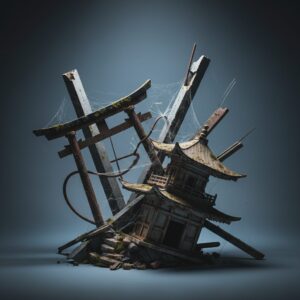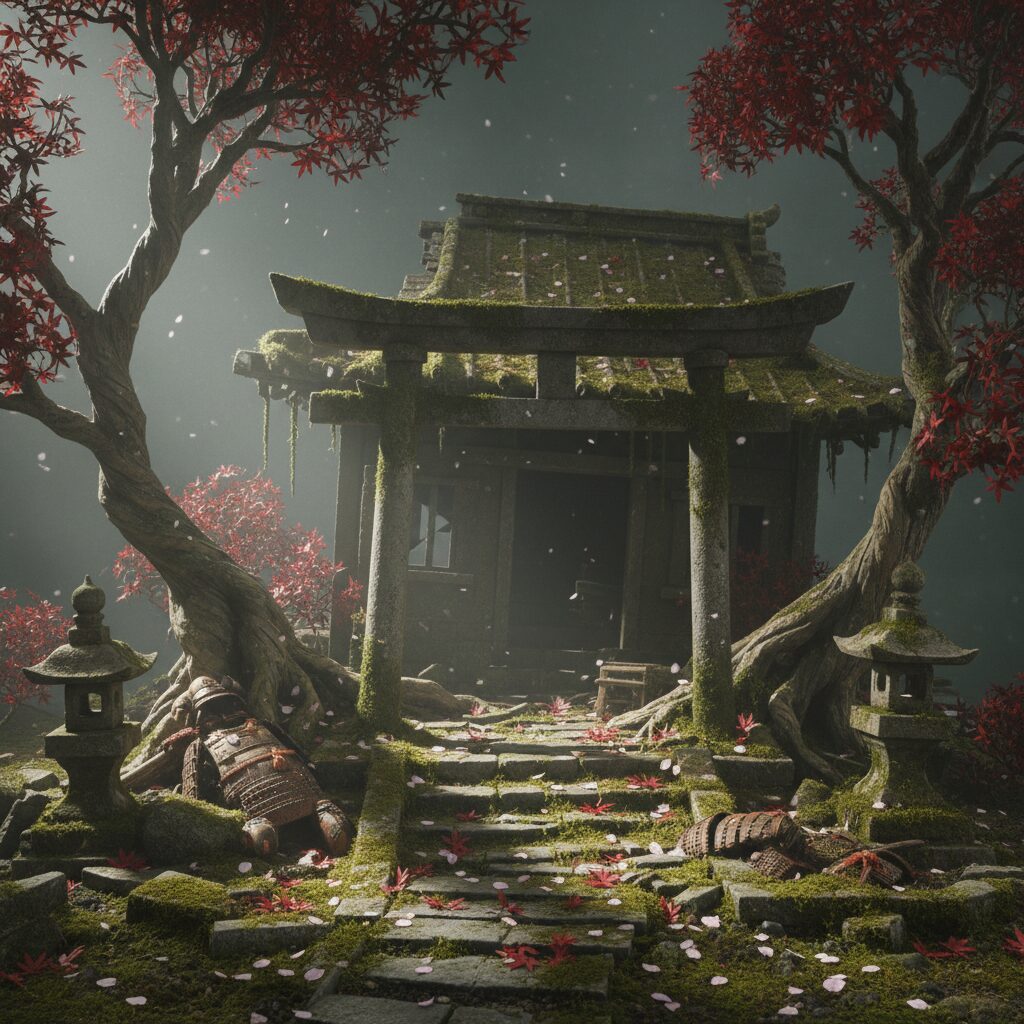
Yo, what’s the deal with Japan and ruins? Seriously. Scroll through your feed, and between the hyper-modern shots of Shibuya Crossing and the serene pics of Kyoto temples, you’re bound to see it: a crumbling building. A vine-choked rollercoaster. An entire abandoned island, looking like a ghost ship on the horizon. These aren’t just any old derelict buildings; they’re photographed with this insane, almost reverent, beauty. They’re called haikyo (廃墟), and the obsession is real. For a lot of people looking in from the outside, it’s a bit of a head-scratcher. In a country known for its pristine cleanliness and cutting-edge technology, why is there such a deep, aesthetic fascination with decay, with things falling apart? It feels like a contradiction, right? You might think, “Is this just some edgy urban exploration thing?” And yeah, on the surface, it is. But if you dig a little deeper, you’ll find that the love for haikyo is plugged directly into a core emotional and philosophical concept that shapes so much of the Japanese vibe. It’s a feeling called Mono no Aware (物の哀れ), and understanding it is like getting a key to a secret door that explains… well, a lot. It’s not about being sad or morbid. It’s about finding a profound, bittersweet beauty in the fact that everything, absolutely everything, is temporary. It’s the gentle ache you feel watching cherry blossoms fall, knowing their beauty is defined by how fleeting they are. This article is your deep dive. We’re going to unpack why these abandoned places hit different, how a deep-seated cultural worldview turns rot and rust into something poetic, and how this vibe echoes through everything from ancient philosophies to your favorite anime. This is the lowdown on the beauty of the breakdown.
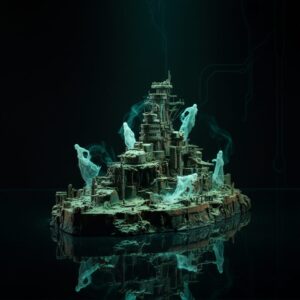
This bittersweet appreciation for transience is powerfully embodied in the haunting beauty of places like the abandoned island of Gunkanjima.
What’s the Deal with “Mono no Aware”? It’s Not Just Sad Vibes
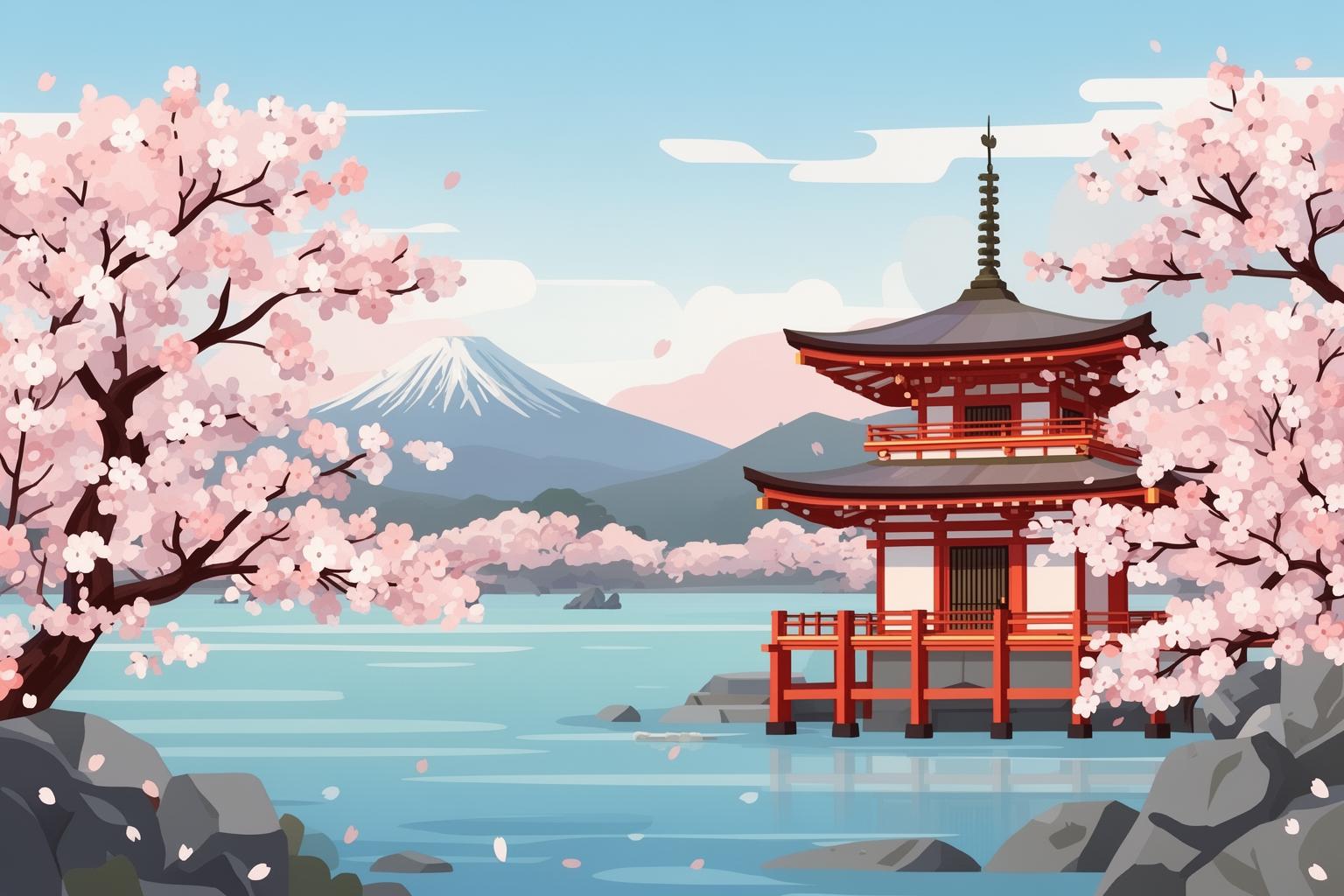
Alright, let’s break it down. Mono no Aware. It’s one of those Japanese phrases that’s incredibly difficult to translate literally because it’s not just a phrase—it’s an entire mood, a worldview. Literally, it translates roughly to “the pathos of things” or “the ah-ness of things.” The word aware (哀れ) in modern Japanese can mean “pity” or “sadness,” but its classical meaning is much wider. It’s a deep, empathetic feeling, a stirring of the heart in response to the fleeting nature of reality. Think of it as a quiet, profound sigh you release when confronted with the beauty of something you know won’t endure. It’s not depression. It’s not nihilism. It’s a bittersweet recognition that life is beautiful because it’s fleeting. The most classic, textbook example is the cherry blossom, the sakura. People in Japan don’t just admire the blossoms because they’re pretty. The entire cultural event of hanami (flower viewing) is infused with mono no aware. The blossoms reach their peak beauty for maybe a week, then they fall. A gust of wind, a spring rain, and it’s over. The ground becomes carpeted in pink. That moment of peak beauty is inseparable from its impending end. That’s the point. The beauty and the sadness are two sides of the same coin. You can’t have one without the other. This contrasts sharply with much of Western thought, which often prioritizes permanence. We build stone monuments meant to last millennia. We value things that are solid, eternal, and unchanging. We resist aging and decay. In the West, a ruin is often seen as a failure, a tragedy, something to be either fenced off or restored to former glory. But mono no aware offers a different outlook. It suggests that the process of decay has its own kind of beauty. A beauty that comes from witnessing the gentle, inevitable flow of time. It’s the feeling of understanding that you are just a small part of this vast, unending cycle of creation and destruction. It’s a mindset less about holding on tightly and more about fully appreciating the moment, knowing it will pass.
Haikyo – More Than Just Urbex Porn
So, how does this profound philosophical idea relate to people climbing through broken windows in remote places? This is where haikyo comes into play. Haikyo (廃墟) is the Japanese term for ruins. While urban exploration (urbex) is a worldwide hobby, Japan’s haikyo scene holds a distinctive character, deeply infused with the spirit of mono no aware. Japan’s abundance of modern ruins is directly linked to its turbulent economic history in the 20th century. After World War II, the nation experienced a remarkable period of rapid economic expansion known as the “Japanese Economic Miracle.” Money flowed freely, and construction was relentless. Futuristic theme parks, sprawling mountain resorts, vast industrial complexes, ambitious housing developments, and entire mining towns sprang up. It was an era filled with boundless optimism and faith in a perpetually bright future. Then the 1990s arrived. The economic bubble burst spectacularly. The stock market crashed, real estate values nosedived, and the money simply stopped flowing. All those grand ventures, symbols of prosperity, became unsustainable almost overnight. Many were abandoned swiftly. What remained was a landscape scattered with the remnants of the recent past. These aren’t ancient castles or samurai estates; these are the ruins of a dream from just a few decades ago—time capsules from the Shōwa era (1926-1989), full of outdated technology, retro furnishings, and the lingering spirit of a future that never quite materialized. Exploring a haikyo in Japan is not merely about the thrill of trespassing or capturing eerie photographs; it is a pilgrimage into a world frozen in time, now gradually and gracefully being reclaimed by nature. It’s about standing in a silent, crumbling hotel lobby and sensing the echoes of thousands of past conversations. It’s about spotting a child’s toy left on the floor of a collapsing apartment and feeling the weight of the life once lived there. This is mono no aware in its most powerful, tangible form: the haikyo itself is the mono (the thing), and the deep, bittersweet feeling evoked by its quiet decay is the aware (the pathos).
Gunkanjima (Battleship Island): The Icon of Haikyo
To truly grasp the essence of haikyo, one must look to its undisputed symbol: Gunkanjima. Officially named Hashima, it’s widely known as Gunkanjima (軍艦島), meaning “Battleship Island,” because its silhouette—crowded with concrete apartment blocks and industrial buildings—resembles a warship cutting through the sea. This site is on a whole other scale. It’s not just an abandoned building but an entire deserted city perched on a tiny rock off Nagasaki’s coast. For nearly a century, from the 1880s to 1974, Gunkanjima operated as a bustling underwater coal mining site run by Mitsubishi. To house thousands of workers and their families, they constructed a fortress of concrete. At one point, it was the most densely populated place on earth, featuring high-rise apartments, a school, a hospital, a movie theater, shops, a pachinko parlor, and a maze of staircases and corridors linking everything together—a completely self-contained vertical city. In the 1960s, however, petroleum began replacing coal as Japan’s main energy source, and coal demand plummeted. In January 1974, Mitsubishi announced the mine’s closure, and within three months, the entire island was evacuated, leaving behind a city filled with belongings. For the following 30 years, Gunkanjima was left to the elements—wind, salt, and typhoons. Visiting Gunkanjima today (only through approved, safe tours, as unauthorized entry is prohibited and dangerous) is utterly surreal. You walk along streets lined with crumbling concrete canyons. You glimpse apartments where old black-and-white TVs and electric fans rust exactly where they were left. You peer into the school, where textbooks lie scattered on the classroom floor, a poignant reminder of the children who once studied there. Nature is fiercely reclaiming the island, with greenery bursting through every concrete crack, a striking visual of the battle between human creation and the natural world. The atmosphere here embodies pure, raw mono no aware. It’s not merely sorrow for a lost city; it’s an overwhelming awe at the scale of human effort and an equally powerful sense of its impermanence. You can almost hear the ghosts—the miners descending into the pits, children playing in the courtyards, families watching TV in cramped apartments. All that life, energy, and history vanished, leaving only this concrete shell to tell its tale. The beauty of Gunkanjima lies not in what remains but in the profound presence of what no longer exists. It stands as a monument to transience, a concrete poem about inevitable decay. It’s no surprise it served as a villain’s lair in the James Bond film Skyfall, possessing an aura both menacing and deeply beautiful.
The Schoolhouse and the Abandoned Onsen: Everyday Mono no Aware
However, the haikyo experience in Japan is not limited to grand, world-famous sites. The most poignant encounters with mono no aware often emerge from more ordinary, familiar places. Across rural Japan, a demographic crisis unfolds as populations age and shrink, with young people migrating to cities for work. This trend has left numerous small towns and villages hollowed out, marked by countless abandoned buildings—most notably, deserted schools (haikou). Schools are places alive with energy and hope for the future, filled with youthful noise, learning, and growth. Thus, an abandoned school serves as an especially powerful symbol of loss. Haikyo explorers entering these sites find scenes frozen in time: desks and chairs arranged in silent rows, blanketed by thick dust; faded student artwork still adorning the walls; a lone piano with some keys permanently depressed, as if playing a silent, eternal chord; chalkboards bearing the last messages left by teachers or students on their final day. These spaces hang heavy with the ghosts of potential and futures that moved elsewhere. The sensation is intensely personal—everyone has memories of school, and witnessing such a universally shared place fall into ruin triggers profound empathy and reflection on the passage of time in our own lives. It is mono no aware for our vanished youth. Equally moving are the abandoned resorts, especially onsen (hot spring) hotels. During the bubble economy, lavish mountain resorts were built, promising luxurious escapes. Many eventually went bankrupt and were left to decay. Walking through a deserted onsen hotel is like wandering through the ruins of leisure and joy. Grand baths once bubbling with life now sit filled with stagnant rainwater and dead leaves. Tatami mats in guest rooms warp and rot, paper screens tear, and peeling wallpaper reveals damp-stained walls beneath. The stark contrast between the building’s original purpose—to offer comfort, happiness, and escape—and its current state of decay is striking. It reminds us that even places of joy are temporary. Good times fade, the party ends, and nature patiently reclaims the dance floor. These smaller, intimate haikyo reveal that mono no aware is not an abstract notion but a deeply felt experience rooted in everyday, familiar objects and places that shape our lives.
So, Why This Vibe? The Cultural Roots of Accepting Impermanence
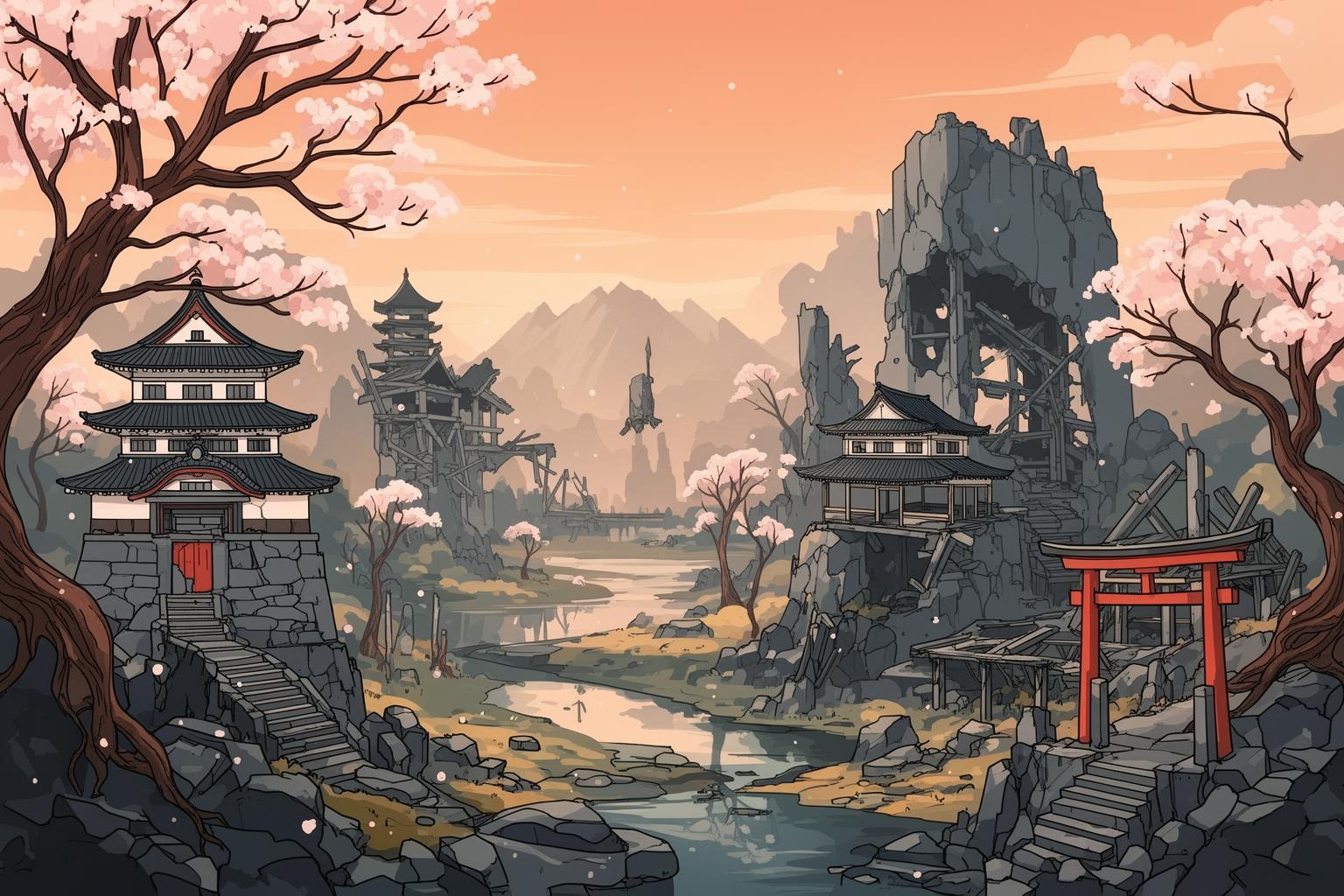
This profound appreciation for the fleeting and imperfect is not a modern invention that suddenly appeared in the 20th century. Rather, it is deeply embedded in the core of Japanese culture, shaped by centuries of philosophical and religious traditions. To truly understand why haikyo resonate so strongly, one must examine the spiritual foundations of Japan: Shintoism and Buddhism.
Shinto: The Way of the Gods and the Natural Cycle
Shinto is Japan’s native religion. As an animistic belief system, it does not worship a single omnipotent deity. Instead, it acknowledges the presence of divine spirits, or kami, in everything: rocks, trees, rivers, mountains, and even natural phenomena like wind and rain. Nature itself is sacred. Central to Shinto is the respect for the continuous cycle of life, death, and renewal. Things are born, grow, die, and from that decay, new life arises. This flow is constant and beautiful. There is no focus on creating eternal, unchanging monuments to honor the divine. In fact, one of Japan’s most revered Shinto sites, the Ise Grand Shrine, is entirely rebuilt every 20 years through a ritual called Shikinen Sengu. The original 1,000-year-old structure is not considered sacred; rather, the sacredness resides in the process—the ritual rebuilding, the preservation of ancient carpentry skills, and the renewal of the shrine itself. This practice powerfully embodies impermanence. It embraces the notion that things must decay and be reborn to maintain purity and vitality. This worldview fosters a cultural acceptance of decay as a natural and even essential aspect of existence, not as a failure or misfortune. Viewed through this lens, a haikyo is simply part of Shinto’s cycle. A human-made structure has reached the end of its life and is now returning to nature, its materials decomposing and reintegrating with the earth. The kami are reclaiming it.
Buddhism: Understanding the Truth of Mujō (Impermanence)
While Shinto forms the foundation, Buddhism offers the philosophical framework. Buddhism arrived in Japan from mainland Asia in the 6th century and profoundly transformed its culture. A key Buddhist principle is the concept of mujō (無常), or impermanence—the doctrine that everything in existence is in constant flux, and nothing endures forever. Our emotions, thoughts, bodies, relationships, and the world itself are all transient. The Buddha taught that suffering stems from our attachment to these impermanent things and our desire to make them last indefinitely. The path to enlightenment involves accepting the reality of mujō and releasing this attachment. Mono no aware can be understood as the aesthetic, emotional response to the philosophical truth of mujō. While mujō is an intellectual realization, mono no aware is the heartfelt feeling of that truth. When you gaze upon a crumbling ruin, you witness mujō unfolding. It’s undeniable proof that all human creations, no matter how grand or sturdy, will eventually fade away. This awareness can evoke sadness but also liberation, placing your life and troubles in a broader perspective. The haikyo becomes a place for meditation, inviting reflection on the passage of time and your own small existence within it.
Wabi-Sabi: Embracing Beauty in the Imperfect
Emerging from these Shinto and Buddhist currents is another key Japanese aesthetic concept: wabi-sabi (侘寂). Like mono no aware, this term is challenging to translate. Wabi refers to a rustic simplicity, tranquility, and an appreciation for a minimalist approach to life. Sabi signifies the beauty that comes with age, the patina that time and use bestow upon an object. Together, wabi-sabi celebrates beauty found in imperfection, impermanence, and incompleteness. It stands in opposition to the polished, symmetrical, and mass-produced. Wabi-sabi honors the crack in a handmade tea bowl, the moss covering an aged stone lantern, the frayed edge of fabric. These “flaws” document the object’s history and imbue it with character and soul. The Japanese art of kintsugi, which repairs broken pottery with gold lacquer, perfectly embodies wabi-sabi. The repair is not concealed but spotlighted; the breakage and restoration are embraced as part of the object’s journey, enhancing its beauty and value beyond its original state. Haikyo are essentially architectural expressions of wabi-sabi. These buildings are no longer flawless; they are weathered, cracked, rusted, and overgrown. Yet in their imperfection, they reveal a new kind of beauty. Peeling paint, water stains on ceilings, weeds sprouting through floors—these are the marks of time, the patina of sabi. A haikyo explorer perceives not just decay, but a story. They discover profound, quiet beauty in the traces of a life once lived and in the gentle process of its return to nothingness.
The Modern Twist: Haikyo in Anime and Games
This isn’t merely some ancient, dusty philosophy. The spirit of mono no aware and the aesthetic of haikyo are very much alive in modern Japanese pop culture, likely where you’ve encountered them without even realizing it. As an anime writer, this is especially fascinating to me because these concepts offer a kind of creative and emotional shorthand that is incredibly impactful. Consider the films of Studio Ghibli. Hayao Miyazaki is a master at this. Laputa: Castle in the Sky revolves around a mythical, floating city that is a stunningly beautiful ruin, a piece of lost technology reclaimed by nature. The silent robots tending the gardens serve as guardians of a vanished world. The entire film is imbued with nostalgia and melancholy for a lost past. In My Neighbor Totoro, the old house the family moves into is rundown and inhabited by soot sprites, but it’s treated with affection and wonder rather than fear. Its age lends it character. Even the world of Spirited Away, the mysterious bathhouse run by gods and spirits, feels ancient and fading, a relic from a time when the spiritual and human worlds were more closely intertwined. The story itself captures a brief, magical moment in a diminishing world, and the ending embodies pure mono no aware—Chihiro must leave, and though she may not remember it, the experience has changed her. It’s a bittersweet farewell to a world she cannot remain in. This aesthetic is even more prominent in post-apocalyptic anime. Series like Girls’ Last Tour follow two young girls wandering through vast, silent, snow-covered ruins of a dead civilization. The series isn’t about action or survival horror; it’s a quiet, contemplative meditation on finding beauty and meaning in humanity’s twilight. The crumbling, layered cityscape is almost a character itself—haunting and serene. Video games have embraced the haikyo aesthetic on a grand scale as well. Nier: Automata is a modern masterpiece of mono no aware. You play as androids engaged in a proxy war for humanity on a future Earth, which is a breathtakingly beautiful ruin. You explore overgrown cityscapes, crumbling desert housing complexes, and a submerged coastal city. The game’s narrative delves deeply into philosophical questions about life and consciousness, but its emotional core is driven by the melancholy beauty of its world. You are constantly surrounded by the ghosts of a long-gone humanity, and the game makes you feel the pathos of their absence. This isn’t mere decoration; the environment tells a story of transience and loss, making the themes hit much harder. These creators use ruins not just as a striking backdrop, but as a way to evoke a specific, complex feeling—a nostalgia for a past you never lived, a sadness for its loss, and an appreciation for the fragile beauty that still remains.
Is It Legal? The Reality of Haikyo Exploration
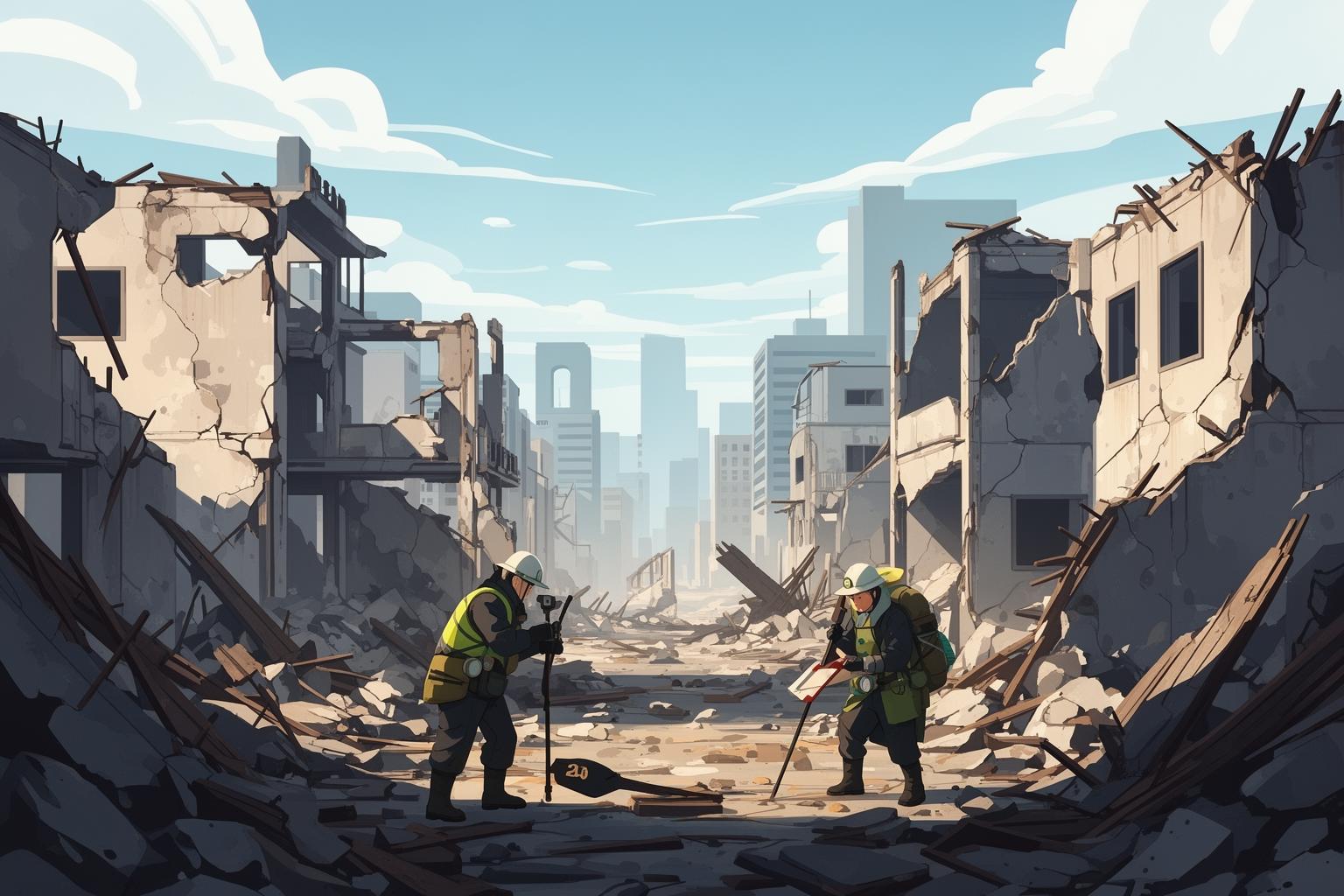
Let’s be honest for a moment. While the photos are stunning and the philosophy profound, it’s important to recognize the reality of haikyo exploration. For most of these sites, entering is illegal—plain and simple, it’s trespassing. Japan enforces property laws strictly, and although enforcement may be lenient in remote areas, getting caught can result in fines or arrest. This is not an officially approved tourist activity. You won’t find these spots listed at tourist information centers. Aside from legal risks, there are serious physical dangers. These buildings have been abandoned for decades. Floors may be rotten, roofs could be close to collapsing, and stairs might suddenly give way. Hazards like exposed rebar, broken glass, and asbestos are common. Every year, explorers suffer injuries, sometimes severe. So, this is far from a casual sightseeing trip. The haikyo community that exists adheres to a strict, unspoken code of ethics: “Take only pictures, leave only footprints.” This reflects deep respect. The aim is not to conquer or vandalize, but to document and absorb the atmosphere. True haikyo explorers don’t break things, spray graffiti, or steal souvenirs, as doing so violates the spirit of these places. It’s about being a silent observer, witnessing the slow, quiet decay. This represents the respectful side. However, the rise of “haikyo tourism” and Instagram culture has attracted visitors who lack this respect, causing vandalism and damage that hasten these fragile sites’ destruction—a source of great frustration for the dedicated community. So, the honest answer to “Is it worth it?” is complex. For most people, the safest and most respectful way to experience haikyo is through the remarkable photography and videography by those who explore ethically, or by visiting authorized ruins like Gunkanjima on official tours.
The Takeaway: It’s Not Sad, It’s Deeply Human
So, we return to the original question: why the obsession? The love for haikyo and the feeling of mono no aware aren’t about morbidity or celebrating decay. In fact, they’re quite the opposite. It’s about being deeply aware of life’s beauty to the extent that you can even find it in its signs of passing. It’s a profound, reflective practice of facing impermanence and discovering peace—and even a peculiar kind of joy—in it. A haikyo serves as a memento mori—a reminder of mortality—but it’s not a grim one. It doesn’t shout, “You’re going to die!” Instead, it quietly says, “Everything passes, and that’s okay. That is part of the beauty.” The feeling evoked by seeing a photo of a vine-covered Ferris wheel belongs to the same emotional family as watching a sunset, finishing a truly great book, or hearing a nostalgic childhood song. It’s that bittersweet ache of a beautiful moment that is, by nature, fleeting. Understanding this sheds light on much of the Japanese aesthetic. It’s why a simple, imperfect tea bowl is cherished. It’s why the brief life of a cherry blossom is the nation’s most beloved natural event. And it’s why a crumbling, abandoned building can be perceived as a site of profound poetry. This worldview urges you to pay closer attention, to appreciate the fragile, transient moments of beauty in your life. You don’t need to trespass in a decaying hotel to feel it—you can find it in the cracks of city pavement, a faded old photo, or the changing seasons. It’s an invitation to see the world not as a collection of static objects but as a series of beautiful, flowing, and ultimately temporary moments. It’s a quiet recognition of the pathos of things. Honestly, that’s the whole vibe.