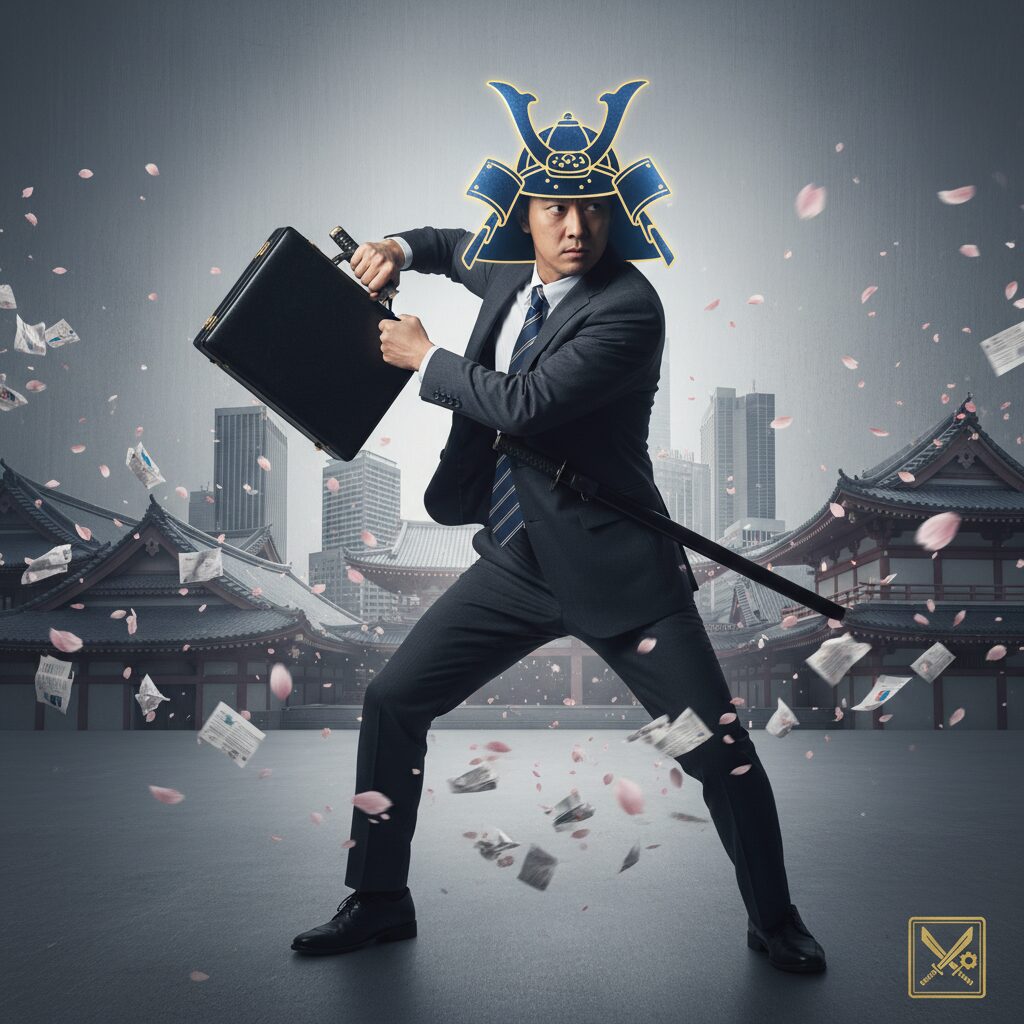
Yo, what’s up. Let’s talk about Japan. You’ve scrolled the feeds, right? Seen the TikToks from Shibuya Crossing, the drone shots over Shinjuku. It’s a whole vibe. You see the neon-drenched streets, the serene temples, the next-level food, and then you see… them. The endless, surging river of people in identical dark suits. It’s a wild sight, a human tide flooding the train stations every morning and evening. You’ve probably wondered, maybe even out loud to a friend, “What is the deal with that?” It looks less like a commute and more like an army mobilizing. Are they clones? Is this a glitch in the Matrix? It’s one of those things about Japan that’s both fascinating and low-key unsettling. You get the sense it’s not just a dress code. It’s a code of a different kind, something deeper, unspoken. You see them, heads bowed, dozing on the last train home, their briefcases clutched like shields. You see them in business districts, marching in perfect sync, never breaking formation. These are the legendary Japanese salarymen, the foot soldiers of Japan Inc., the economic engine of a nation. But calling them ‘office workers’ feels like a massive understatement. It doesn’t capture the intensity, the discipline, the sheer, overwhelming sense of duty you can feel radiating off them. It feels ancient. It feels… samurai. And honestly? That’s not even a stretch. The DNA of the samurai, their code of Bushido, didn’t just vanish when their top-knots were cut and their swords were banned. Nah, it shape-shifted. It put on a suit, swapped a katana for a laptop, and marched right into the corporate world. What you’re seeing on those Tokyo streets isn’t just a workforce; it’s the modern incarnation of a warrior class, governed by an invisible but ironclad code. This is the story of the corporate samurai. We’re about to decode that unspoken Bushido, spill the tea on why Japan’s work culture is the way it is, and figure out what it means to be a corporate warrior in the 21st century. It’s a deep dive, so grab a drink. This is the stuff you won’t find in a travel guide. This is the real Japan, the one that powers the whole machine. Let’s get it.
To truly understand the efficiency and order that defines modern Japanese society, one must also examine innovations like the country’s automated bicycle parking systems.
The Ghost in the Machine: How History Forged the Modern Office Warrior
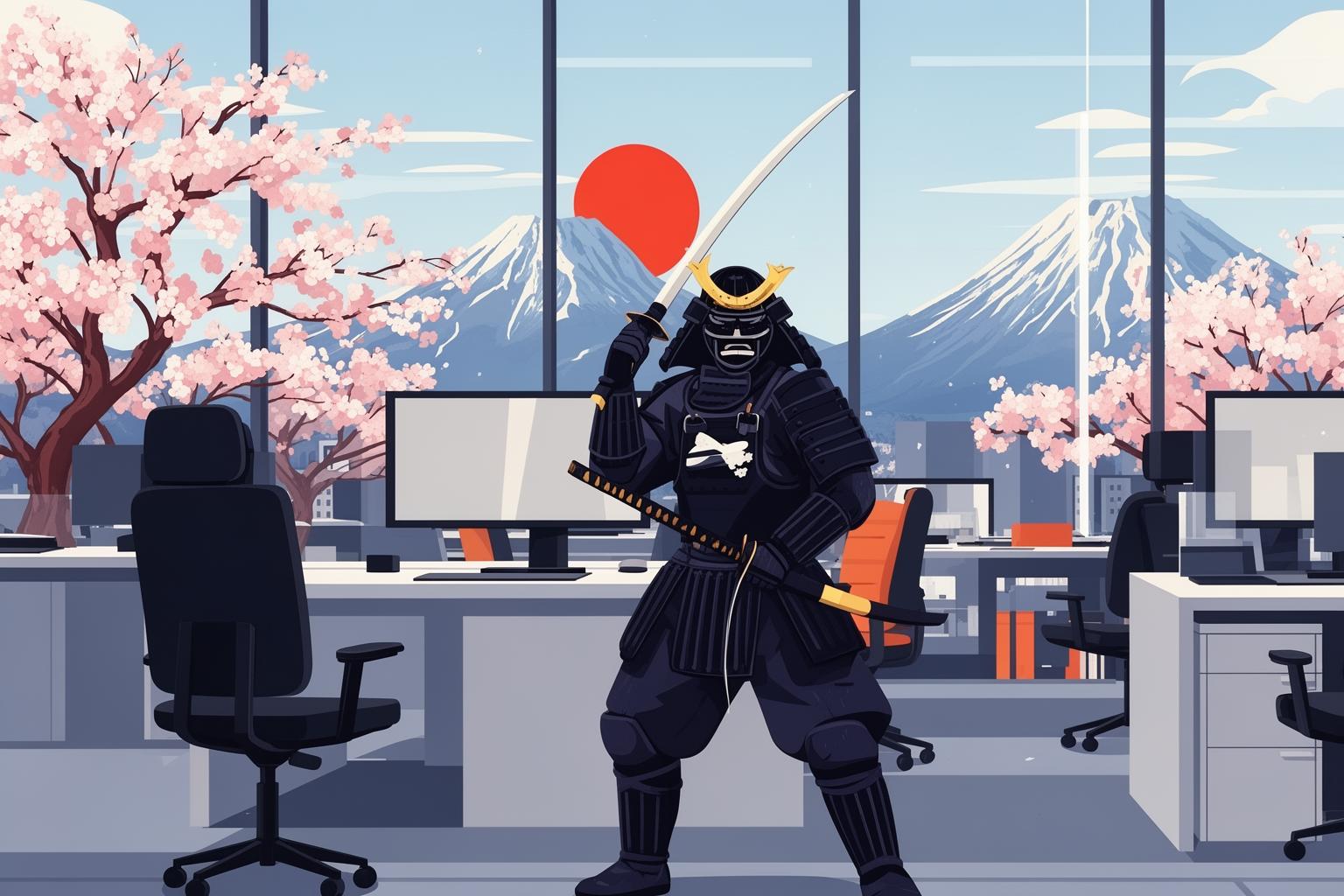
To truly understand the salaryman, you can’t simply start in a modern Tokyo skyscraper. You need to rewind time—far back. Imagine Japan in the mid-19th century, a feudal society ruled by shoguns and powerful lords called daimyo. Enforcing their rule were the samurai, a warrior class bound by a centuries-old code known as Bushido, the Way of the Warrior. This code was their entire operating system, guiding everything from combat to daily life and death. It emphasized loyalty, honor, discipline, and self-sacrifice. A samurai’s life belonged to his lord, not to himself. This was the pinnacle of samurai power and identity—until BAM, the Meiji Restoration in 1868 transformed everything. Japan ended centuries of isolation to embrace the West, dismantling the feudal system. The samurai class? Abolished overnight. They were instructed to cut off their top-knots, lay down their two swords, and find new roles. Imagine belonging to a warrior elite for 700 years, then suddenly facing unemployment. Your entire purpose wiped away.
From Feudal Lords to Corporate Overlords
So, what became of millions of masterless warriors, driven by a strong work ethic and strict code? They didn’t simply vanish. Their energy, values, and worldview had to be redirected. The Meiji government was savvy enough to recognize the power of this warrior spirit and directed it toward building modern Japan. Former samurai became officers in the Imperial Army, bureaucrats in government, and—most relevantly—managers and founders of industrial conglomerates called zaibatsu. These massive family-controlled enterprises—like Mitsubishi, Mitsui, and Sumitomo—essentially forged Japan’s modern economy. Their structure mirrored a feudal domain: the CEO acted as the new daimyo, the company as the new clan, and employees as the new samurai, pledging loyalty and service. The battlefield had shifted from rice fields to factories and boardrooms, but the underlying philosophy remained strikingly similar. The aim was no longer martial honor but bringing profit and prestige to the company through relentless dedication. Bushido’s spirit didn’t vanish; it was simply repackaged for the corporate world.
The Seven Virtues, Reinterpreted for the Boardroom
Bushido traditionally consists of several core virtues, each reflected clearly in the daily life of a Japanese salaryman. It’s like a cultural ghost operating silently behind the scenes.
Gi (義) – Integrity and Justice
For samurai, Gi meant making the right, just choice. In the corporate realm, it’s become a collective sense of justice: what’s “right” is what benefits the group or company. Personal desires take a backseat. Gi means obeying company rules, both explicit and implicit, without hesitation. It embodies the quiet integrity of perfect job execution—not for individual recognition, but out of duty to the collective. It’s the salaryman who stays late to help a colleague finish a report, not because he was asked, but because it’s the ‘right’ action for the team. The group’s success is the ultimate justice.
Yū (勇) – Courage
Samurai courage entailed facing death fearlessly in battle. Corporate Yū involves endurance and mental toughness. It’s the bravery to tackle an insanely difficult project with an impossible deadline. To work 48 hours straight to save a deal. To accept harsh criticism from your boss in front of peers without flinching, replying only with a stoic “Yes, I will improve.” It also means the courage not to complain—a major point. Complaining signals weakness, a lack of Yū. You are expected to endure hardship silently, embodying gaman (我慢), the patience and dignity to withstand the unbearable. The salaryman’s daily grind is a constant trial of gaman and Yū.
Jin (仁) – Benevolence or Compassion
Though it may seem odd in a cutthroat office environment, Jin is present in a specific form. For samurai, it required mercy and using power for good. In business, it translates to corporate paternalism. For decades, the ideal Japanese company functioned like a family. Employees joined right out of university, promised lifetime employment (shūshin koyō). In exchange for unwavering loyalty, the company provided housing, benefits, and a strong sense of belonging. The boss was a father figure—stern and demanding, but responsible for subordinates’ welfare. He mentored, socialized with, and even advised employees on personal matters. Though lifetime employment is now fragile, this ‘company as family’ attitude and the benevolence shown by senior to junior (sempai to kohai) endure in many workplaces.
Rei (礼) – Respect and Politeness
Perhaps the most visible and intricate virtue in practice, Rei originally governed samurai conduct to show respect and uphold social order. In Japanese offices, it shapes every interaction. It’s the precise bow—a subtle 15-degree nod for a colleague, a deep 45-degree bow for a client or superior. It’s the highly polite and hierarchical language called keigo, with verb forms that change based on rank. It’s the business card ritual, meishi: received with both hands, carefully examined as a mark of respect, placed visibly on the table, and never shoved into a pocket—that would be a major misstep. Rei demands knowing your place in the hierarchy and constantly fulfilling that role. This reduces friction and protects group harmony, known as wa (和).
Makoto (誠) – Honesty and Sincerity
For samurai, Makoto meant a man’s word was his bond—written contracts were unnecessary. In business, it becomes a profound sense of duty and reliability. Makoto means doing exactly what you say you will do. It reflects sincere dedication to one’s responsibilities. Unlike a Western concept of blunt truth-telling, which might disrupt harmony, here it centers on earnest effort and fulfilling obligations to the group. A salaryman embodying Makoto is invariably dependable—someone the team can trust to deliver, regardless of personal sacrifice. His sincerity aligns perfectly with the company’s goals.
Meiyo (名誉) – Honor
This is the cornerstone. A samurai’s whole existence was tethered to personal and clan honor; shame was the worst fate. In the corporate world, an employee’s honor is intimately connected to the company’s reputation. Joining firms like Toyota or Sony means representing the brand, not just working there. One’s personal actions reflect on the entire organization. Corporate scandals are thus huge issues; when a CEO appears on TV for a deep, prolonged bow of apology, it’s more than PR—it expresses profound shame for dishonoring the collective: the company, its workers, and customers. Individually, Meiyo means taking pride in your work and avoiding any conduct that could disgrace your team or employer.
Chūgi (忠義) – Loyalty and Devotion
If Meiyo is the aim, Chūgi is the path. This is the foundation of corporate Bushido. A samurai’s loyalty to his lord was absolute and unquestioned. For the salaryman, this unwavering loyalty shifted to the company. For decades, this meant a lifetime commitment to a single firm. It entailed prioritizing company needs over personal interests, hobbies, and often even family. It explains the extreme working hours—not just workload, but a loyalty performance. Leaving before your boss subtly signals betrayal. Skipping after-work drinking parties signals insufficient devotion. This single-minded allegiance was revered as the highest corporate virtue. It is the adhesive holding the system together.
The Uniform of a Warrior: Cracking the Salaryman Dress Code
So, about those suits. That sea of black, navy, and charcoal gray isn’t accidental, nor is it a fashion statement. It’s a uniform, plain and simple. Just as a samurai’s armor (yoroi) symbolized his clan and role, the salaryman’s suit signifies his place in the corporate world. It visually represents his identity as a soldier for Japan Inc. The uniformity is the whole point.
The Sea of Black Suits: More Than Mere Clothing
The driving force behind the suit is the vital concept of wa (和), or group harmony. In a collectivist society like Japan, the group comes first. The well-being of the team, company, and nation takes precedence over individual desires. Standing out or being different is not just discouraged; it can be viewed as selfish and disruptive to group harmony. The proverb “The nail that sticks out gets hammered down” (Deru kui wa utareru) is ingrained in Japanese culture from a young age. Thus, the suit acts as the great equalizer. It removes personal flair and signals that you’re a serious, committed team member. You are a cog in a vast, well-oiled machine, and your appearance should reflect that. It says: “I am here to work. I know the rules. I belong to the group.” During the post-graduation job-hunting season (shūkatsu), university students buy identical “recruit suits” (rikurūto sūtsu) to fit the role. They’re literally donning the uniform to try to join the ranks. It’s a rite of passage.
The Battle Gear: The Briefcase and Beyond
It’s not just the suit; the entire outfit is part of the performance. The salaryman’s ‘battle gear’ aims to project competence, reliability, and readiness. The briefcase is almost always a plain, practical bag in black or brown—no flashy logos, no trendy backpacks. Its purpose is to carry documents, not showcase personality. Inside, you’ll often find a techō, a carefully maintained daily planner. In a culture that values planning and precision, the techō is almost sacred. It testifies to the salaryman’s organizational skills and command over his schedule. Then there are the shoes: dark, leather, conservative, and above all, impeccably polished. Scuffed shoes suggest carelessness and a lack of attention to detail—unacceptable traits for a corporate soldier. Every element, from the simple dark socks to the conservative haircut, is deliberately chosen to portray a man who is disciplined, serious, and prepared to battle in the boardroom.
The Daily Grind as a Dojo: Training, Rituals, and Endurance
The Japanese office is more than just a workplace; it’s a dōjō, a training hall where the corporate samurai sharpens his skills and steels his spirit through daily rituals and trials of endurance. The standard nine-to-five schedule is merely the starting point. True training occurs in the subtle nuances—in the unspoken expectations and demanding standards that mold a salaryman.
Asa-kai and Chōrei: The Morning Rituals
Many Japanese companies begin the day with a chōrei (朝礼), a morning assembly. This can be as simple as a team meeting or as extensive as a company-wide gathering. It’s not merely for sharing business updates; it’s a ritual to synchronize everyone’s energy and reaffirm the group’s mission, akin to a pre-battle rally. The team leader may deliver a motivational speech, and the group might recite the company’s slogan or guiding principles. More traditional firms even include group calisthenics (rajio taisō) or singing the company anthem (shaka). To Westerners, this might appear odd or cult-like, but through the lens of corporate Bushido, it is perfectly logical. It’s a daily ceremony to renew allegiance and immerse everyone in a collective mindset, ready to strive for the company’s objectives. The day starts not as isolated individuals but as a united force.
The Art of the Long Game: Nemawashi and The Silent Consensus
This is a fundamental aspect that often puzzles foreigners doing business in Japan. In the West, meetings are for debating ideas, resolving disagreements, and making decisions. In Japan, meetings often serve merely as a formality to publicly endorse a decision already made behind closed doors. The real groundwork is done through nemawashi (根回し), which literally means “digging around the roots” of a tree before transplanting it, ensuring it survives the shock. In business, it refers to discussing matters with all stakeholders individually and informally before the official meeting. Consensus is built one-on-one, opinions are gauged, concerns addressed, and support secured in a no-pressure setting. By the time the meeting occurs, everyone is already in agreement. There are no surprises, no heated arguments, and importantly, no one loses face by having their ideas publicly rejected. This avoids direct confrontation, a serious taboo. It’s a slow, meticulous process requiring keen social skill and patience but is crucial for preserving group harmony (wa). It is a political chess game, a quiet contest of influence waged in hallways and over coffee, rather than in the open arena of the conference room.
Overtime is the New Sword Practice: The Cult of Zangyō
Here lies the most notorious aspect of salaryman life: the extreme working hours. Zangyō (残業) means overtime, but this term barely captures the reality. It’s not about putting in an extra hour to finish work; it’s about a culture where staying until 10 or 11 PM is routine, and the last trains home are filled with exhausted salarymen sleeping in their seats. Much of this is sābisu zangyō, or “service overtime”—unpaid time. So why do they do it? It’s not always due to an overwhelming workload. Rather, it’s a powerful, unspoken test of loyalty (chūgi) and endurance (gaman). It’s the modern equivalent of a samurai’s harsh sword training, a demonstration of devotion to one’s craft and lord (the company). Leaving on time, even when all work is done, is viewed as betrayal. It suggests you aren’t a team player, that your own time is more important than the group’s collective effort. It signals unwillingness to sacrifice. If your boss and colleagues remain, you must stay as well. You might not even be working—you could be browsing the internet or feigning busyness—but your presence is what counts. It’s a performance of dedication. This culture has a dark side: the ultimate, tragic outcome is karōshi (過労死), meaning “death from overwork.” It is a legally recognized phenomenon in Japan where people in their prime die from strokes, heart attacks, or suicide caused by work-related stress and exhaustion. It is the horrifying extreme of a warrior code applied to the modern office, where the demand for self-sacrifice can literally become a death sentence.
The Battlefield After Dark: Nomikai and the Art of Drinking
The salaryman’s day doesn’t end the moment he leaves the office. Often, the battle shifts to a new setting: the izakaya (a Japanese-style pub). The company drinking party, or nomikai (飲み会), is a deeply rooted and essential part of corporate culture. Make no mistake, it’s far from an optional social gathering. It serves as a mandatory extension of the workday, a different kind of training ground governed by its own intricate rules and rituals.
More Than Just Drinking: The Rules of Nomikai
A nomikai serves two main purposes. On the surface, it’s about fostering team spirit and relieving stress. Beneath that, however, it functions as a vital mechanism for reinforcing office hierarchy and enabling a unique form of communication. Attendance is essentially compulsory. Declining an invitation from your boss is a serious social misstep, signaling disloyalty. These parties both solidify and momentarily loosen the strict office structures. They test your social skills, endurance, and ability to navigate a web of unspoken rules.
Tatemae and Honne: The Two Sides of the Warrior
To grasp the nomikai, one must understand the concepts of tatemae and honne. Tatemae (建前) represents your public facade—the opinions and behaviors you display to maintain harmony. It’s the polite, agreeable, and respectful front you present at the office. Honne (本音), by contrast, refers to your true, private feelings and opinions. In the workplace, only tatemae is visible. But during the nomikai, when fueled by alcohol (which the Japanese view as a truth serum of sorts), these boundaries begin to blur. The party becomes a permitted space where some honne can emerge. You might voice complaints about a project or frustrations with a colleague—things you would never express at work. This acts as a crucial pressure valve in a system demanding immense conformity. Bosses use these occasions to sense the genuine sentiments of their team, while subordinates seize the chance to build more personal ties with superiors. It’s where authentic relationships—and sometimes real resentments—are born.
The Etiquette Challenge
The nomikai is governed by strict etiquette that reinforces the ideals of Rei (respect). Seating arrangements are crucial. The most important person, usually the highest-ranking boss, occupies the kamiza, the seat of honor furthest from the door. The lowest-ranking employees sit at the shimoza, nearest the door, where they are expected to take on tasks like ordering and attracting the staff’s attention. Then there’s the drinking itself—you must never pour your own drink. That’s a rookie error. Your glass should be filled by others, and you are expected to remain attentive to ensure the glasses of your bosses and seniors are never empty. This gesture of pouring a drink, called oshaku, is a fundamental sign of respect. As a junior employee, you’ll spend much of the evening darting around the table with a beer bottle in hand, topping off glasses and engaging in polite conversation. It’s an exhausting display of deference and respect—another trial on the corporate battlefield.
The Modern Samurai’s Dilemma: Cracks in the Armor
For decades, this system of corporate Bushido, despite its flaws, functioned effectively. It fueled Japan’s post-war economic miracle, transforming a devastated nation into a global powerhouse. The salaryman warrior, marked by unwavering loyalty and a readiness for self-sacrifice, was the hero of that narrative. He exchanged personal freedom for lifelong security and a strong sense of belonging. But times have changed. The economic bubble of the 1980s burst, leading to years of stagnation. The promise of lifetime employment has vanished. A new generation is now beginning to reflect on the lives their fathers led and ask a straightforward, revolutionary question: “Is it worth it?”
A New Generation’s Rebellion?
Today’s young people in Japan—the Millennials and Gen Z—hold a different outlook. Raised online and connected to a global culture, they’ve witnessed alternative ways of living and working. They have also observed their fathers returning home exhausted each night, missing family time, only to be unceremoniously “restructured” in their 50s. The old contract—absolute loyalty in exchange for absolute security—is broken. This new generation increasingly values work-life balance, personal fulfillment, and mental health. The idea of sacrificing one’s entire being for a single company feels less noble and more, well, irrational. They are less inclined to tolerate excessive overtime or mandatory drinking parties. This rebellion isn’t loud or angry; it’s subtle. It’s leaving the office at 6 PM. It’s opting for a job at a trendy startup rather than a prestigious but grueling role at an established corporation. It’s a gradual but steady dismantling of the old code.
The Ronin of the 21st Century: Freelancers and Job-Hoppers
In feudal Japan, a rōnin was a masterless samurai, living a life marked by uncertainty and often shame. For a long time, the corporate equivalent—those who quit their jobs or frequently changed companies—were viewed similarly, seen as disloyal, unreliable, and lacking perseverance. But that stigma is rapidly fading. Increasingly, young Japanese are embracing the rōnin lifestyle. They become freelancers, entrepreneurs, or skilled professionals who strategically move between companies to develop their careers and boost their earnings. Their loyalty is to their skills and future, not to a corporation. This signals a radical shift from the corporate Bushido model. They are essentially declaring that their life and honor belong to themselves, not to any company.
Is Corporate Bushido Fading or Simply Evolving?
So, is the era of the salaryman warrior coming to an end? Is the samurai spirit finally being banished from Japanese offices? The answer is complex. The traditional, rigid version is certainly waning. The Japanese government is promoting work-style reforms to limit overtime and encourage healthier work-life balance. However, the core values of corporate Bushido—group harmony, dedication to quality, respect for hierarchy, and a deep sense of duty—are so deeply ingrained in Japanese culture that they won’t vanish overnight. They remain part of the cultural DNA. What we are likely witnessing is not a disappearance, but an evolution. The armor is being redesigned. Loyalty may shift from lifelong bonds to project-based commitments. Honor might transform from corporate sacrifice to individual craftsmanship. The future Japanese workplace may remain a battlefield, but the warriors will fight with new weapons and under new rules. The salaryman still marches through Tokyo’s streets, but for the first time in a long while, he may be questioning where he’s headed and why.