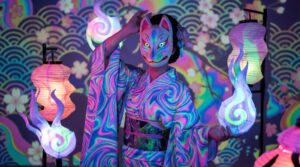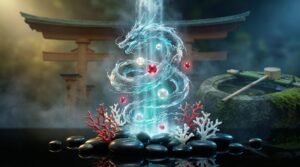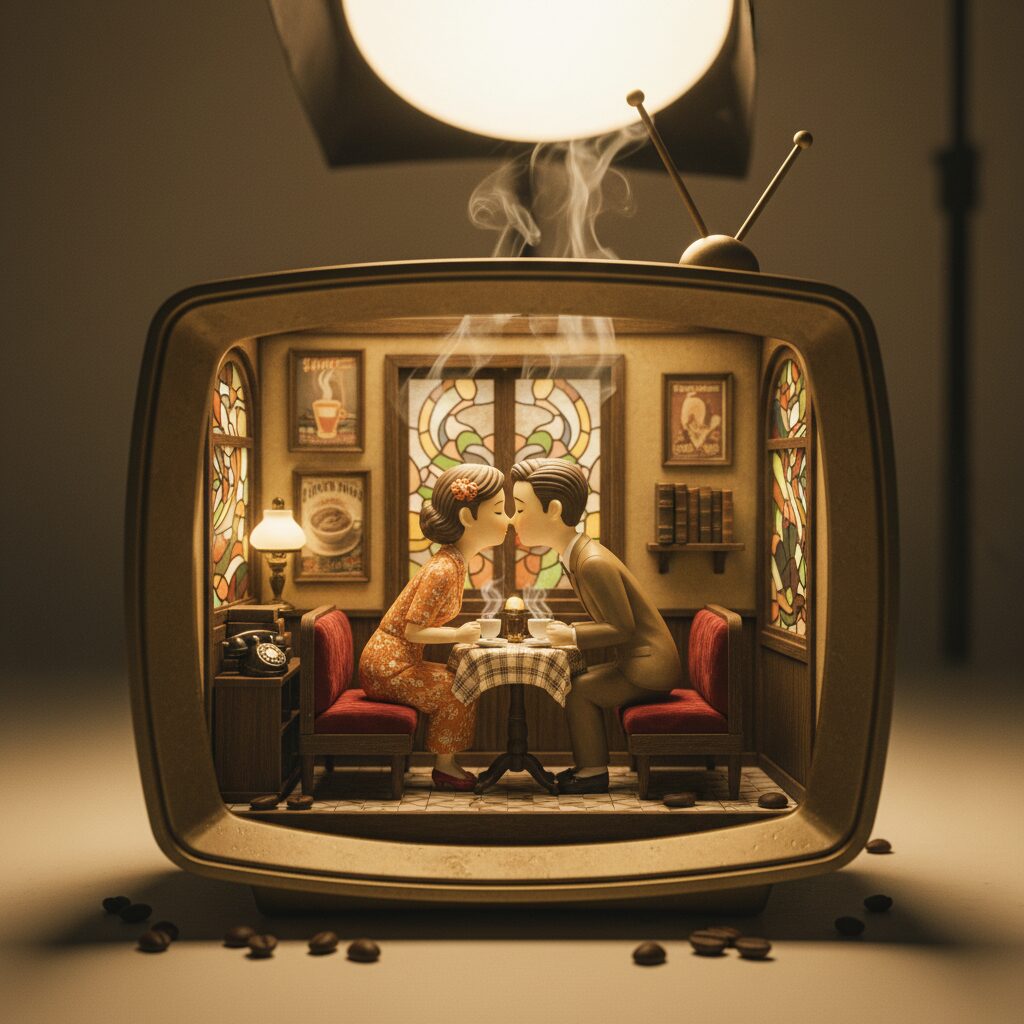
Yo, what’s up. Megumi here, coming at you live from the concrete jungle of Tokyo. So you’ve probably scrolled through Japan on your feed, right? Seen the wild contrast—the neon-drenched, hyper-futuristic cityscapes right next to serene, ancient temples. It’s a whole vibe, but it can be kinda confusing. You might be asking, “Why is Japan like this?” And honestly, that’s the whole mood. It’s a nation of beautiful contradictions.
But let’s go deeper than the usual tourist spots. I want to talk about a specific kind of place, one that doesn’t always make it into the glossy travel mags but holds a vibe so thick you could cut it with a knife. I’m talking about Showa-era kissaten. These are old-school coffee shops, time capsules from a bygone era, decked out in dark wood, velvet seats, and the ghosts of a million cigarettes.
On the surface, they’re just retro cafes. But if you listen closely, you’ll hear the whispers. Ngl, some people are dead serious when they say these spots are legit portals. Gateways to the Yokai world. Yeah, you heard me. The world of Japanese spirits, demons, and supernatural tricksters.
Sounds totally extra, I know. But here’s the tea: this rumor, this feeling, isn’t just some random urban legend. It’s a whole cultural deep dive. It’s a key to understanding a part of the Japanese psyche that loves the mysterious, the ambiguous, and the things that lurk in the shadows. This isn’t about hunting for ghosts with an EMF reader. It’s about decoding an atmosphere, figuring out why these specific spaces feel like the veil between worlds is paper-thin. It’s about answering that core question: why do some old places in Japan feel so… enchanted? Or haunted? Or just plain weird?
To start this journey, we gotta ground ourselves in a location. Think of this map as your entry point, a pin dropped in a district legendary for these time-slip cafes. Let’s get into it.
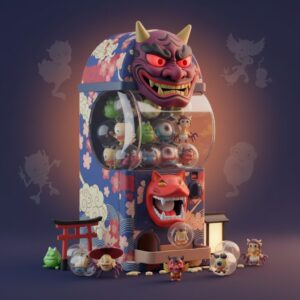
To truly understand this cultural obsession with the supernatural, consider how modern Japan keeps its ancient yokai alive in playful forms like gashapon machines.
The Showa Rewind: Why This Era is a Whole Vibe
Not Your Grandpa’s History Lesson (Unless He’s Japanese)
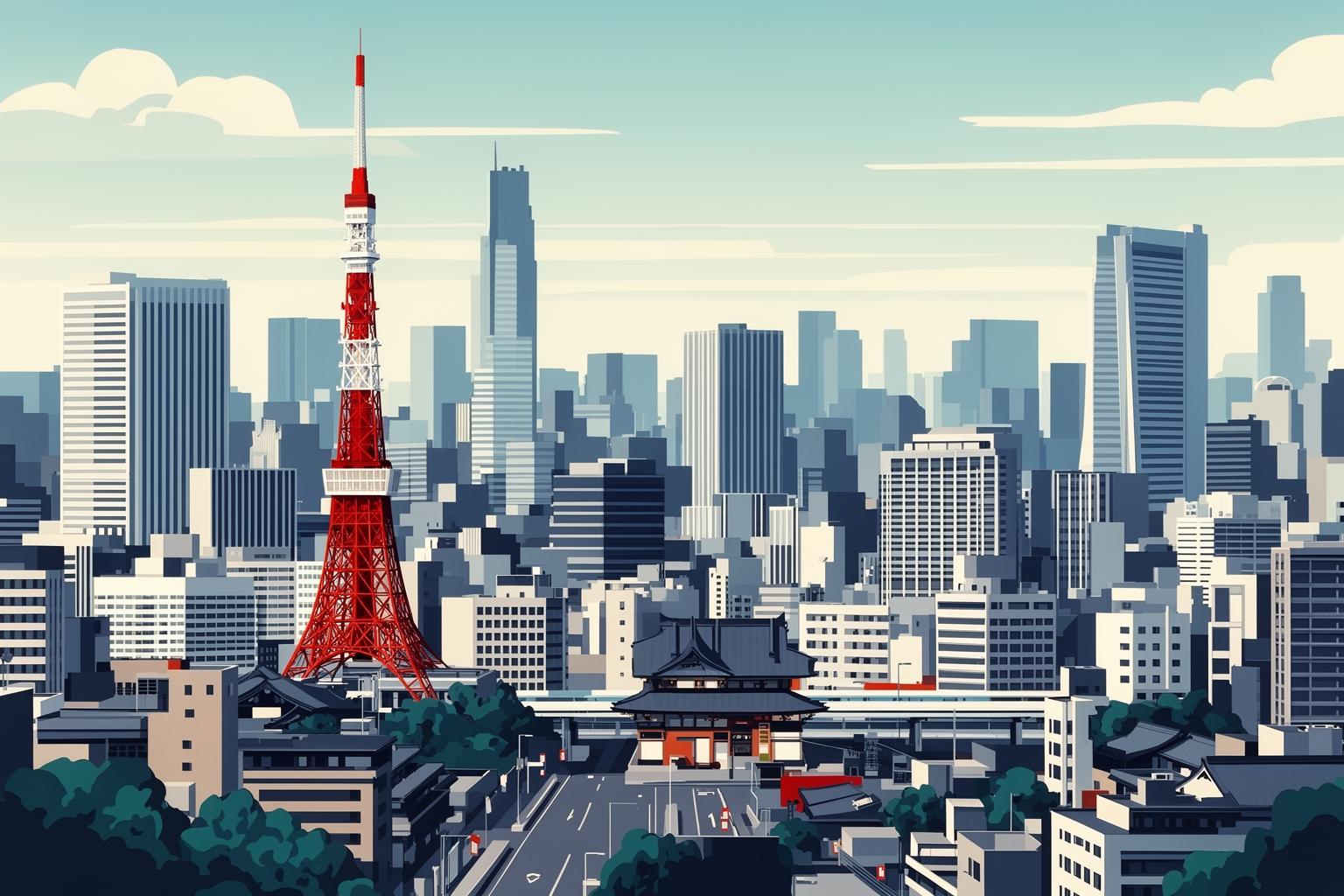
First, to understand why these kissaten are so special, you need to grasp the Showa Era (1926-1989). And no, I’m not going to bore you with a dry history lecture. But it’s crucial to recognize that this period was an absolute rollercoaster for Japan. It began with escalating militarism and a grim chapter leading up to World War II. Then came the devastation of defeat, followed by American occupation. From those ashes arose the ‘economic miracle’—a phase of rapid, phenomenal growth that transformed Japan from a war-ravaged country into a global economic giant. It was chaotic, traumatic, hopeful, and profoundly strange all at once.
This wild blend of events created a distinctive cultural mix. Western influences like jazz, coffee, and Hollywood films flooded in, but rather than replacing Japanese culture, they collided with it, merging to form a unique, hybrid aesthetic. Picture this: a salaryman in a crisp Western suit stepping out of his office, passing an ancient Shinto shrine, and heading into a dimly lit bar to listen to American blues on vinyl. That’s the Showa vibe. It’s a fusion, a continual balancing act between past and future, tradition and the foreign. It’s this unresolved tension, this cultural ‘in-between’ state, that made the era a rich backdrop for tales about portals and spirits. These kissaten were born from that turmoil and still carry its spirit.
Kissaten 101: More Than Just Your Morning Joe
So, what exactly is a kissaten (喫茶店)? The literal translation is ‘tea-drinking shop,’ but that hardly captures it. Don’t think of it as your local Starbucks. Modern cafes are all about speed and efficiency: grab your latte, maybe use free Wi-Fi for a bit, and leave. It’s a transaction. A kissaten is the opposite. It’s a destination. It’s a third space, a public living room where time is meant to be savored, not hurried.
Historically, they offered refuge. In crowded, bustling cities, they were sanctuaries where students, artists, writers, activists, and salarymen lingered between appointments. You could sit for hours nursing a single cup of coffee, read a book, have a quiet, intense conversation, or simply stare into space, enveloped in a haze of cigarette smoke (back then, most were smoking-friendly). The point wasn’t the coffee—it was the atmosphere. It was permission to linger, to be unproductive, to exist outside the relentless pace of Japanese life.
The entire experience is ritualistic. You’re not served by a cheerful barista in a green apron. You’re served by the ‘Master’ (マスター), the often silent, stoic proprietor who’s been running the place for decades. The coffee is often brewed with painstaking care using a siphon—a theatrical, almost scientific process that feels like alchemy. The menu is a time capsule: thick, fluffy buttered toast; Napolitan spaghetti (a uniquely Japanese pasta with ketchup-based sauce); or a bright green Melon Soda float. This isn’t about chasing the latest culinary trends. It’s about preserving a moment in time, specific flavors and feelings. It’s slow culture, a deliberate rebuttal to the fast world outside.
Enter the Yokai: Japan’s OG Supernatural Squad
What Exactly Are Yokai?
Alright, let’s explore the other side of this topic: the Yokai (妖怪). If you try to translate ‘yokai’ into a single English word like ‘ghost,’ ‘monster,’ or ‘demon,’ you’ll miss its true meaning. It’s a much broader, stranger, and more captivating category. Yokai embody the supernatural, the mysterious, the unexplained. They can be frightening, playful, helpful, or simply bizarre.
There are thousands of them. You have well-known figures like the Kappa, a turtle-like river creature fond of cucumbers with a habit of drowning people, or the Tengu, a powerful, red-faced mountain goblin. But then it gets even stranger. For example, the Kasa-obake is an old umbrella that hops around on a single leg. The Akaname is a creature that exists only to lick grime off dirty bathtubs. The Nure-onna is a vampiric sea serpent with a woman’s head. Yokai personify phenomena, fears, and the unexplainable events of life. That sudden chill in a room? A Yokai. The creaking of floorboards in an empty house? A Yokai. The sensation of being watched when you’re alone? Definitely a Yokai.
Importantly, the Japanese relationship with these beings isn’t merely one of fear. It’s a complex blend of fear, respect, awe, and sometimes even affection. Yokai symbolize parts of the world beyond human control or understanding. They remind us that the world is vaster, older, and stranger than we imagine. They’re a fundamental element of cultural imagination, explaining life’s small mysteries long before science could.
The Liminal Attraction: Why Yokai Favor In-Between Spaces
So, where do Yokai typically reside? They’re drawn to what we call liminal spaces—transitional, in-between places and times. Think doorways, bridges, tunnels, crossroads. Or transitional times of day, such as twilight (known as oumagatoki, the ‘hour of meeting demons’) or the dead of night. These are moments and places where the boundaries between the human world and the spirit world grow thin and permeable. It’s where things can slip through.
This is the heart of the theory. Showa-era kissaten are the ultimate urban liminal spaces. Consider this: they exist literally frozen in time, caught in a pocket dimension between the 1960s and today. When you walk inside, you cross a threshold not only into a different room but into a different era. The outside world, with its smartphones, noise, and rush, fades away. You enter a bubble, a seam within the fabric of the city.
The atmosphere is intentionally ambiguous. The lighting lingers in the space between light and dark. The sound is muted, hovering between silence and noise. Patrons are often solitary, absorbed in their own worlds, coexisting yet separate. This environment is prime territory for Yokai. It’s a space defined by what it is not: not an office, not a home, not the present day. It’s an in-between, a momentary pause on reality. And in that pause, anything might happen.
The Anatomy of a Portal: A Vibe Check
So, what are the real, tangible elements inside a kissaten that create this otherworldly, portal-like atmosphere? It’s not just a single factor. Rather, it’s a carefully composed (or serendipitously perfect) symphony of sensory inputs blending to distort your perception of reality. Let’s dissect the anatomy of this unique vibe.
The Gatekeeper: The Master’s Silent Presence
The first thing you notice is the Master. He (and it’s almost always a he) embodies the soul of the kissaten. Clad in a crisp shirt, perhaps with a waistcoat or apron, he moves with practiced precision born of decades of experience. He seldom smiles or engages in small talk. His silence is neither rude nor awkward; it’s a form of presence. It conveys knowing. He’s the guardian of this space—the silent gatekeeper.
This isn’t your casual neighborhood barista inquiring about your day. The Master is an archetype. He’s witnessed it all. He has presided over this little time capsule while the city outside shifts around him. Serving coffee to generations, he has absorbed whispered secrets, witnessed heartbreaks and triumphs, without uttering a word. In our portal metaphor, he’s the ferryman. The coffee he serves is your passage across the river into another realm. You don’t question him. You don’t request oat milk or special orders. You honor the ritual, and he grants you sanctuary. His stoic demeanor sets the tone for the entire venue: this is a serious place, a space for quiet reflection, where conventional social norms are suspended.
The Choir of Clutter: When Objects Acquire Souls
Next, take in your surroundings. Your eyes gradually adjust to the dim lighting, revealing an abundance of… stuff. Mismatched porcelain cups arranged on shelves, a collection of vintage coffee grinders, dusty oil paintings of European scenes, a grandfather clock frozen at 4:15 decades ago, piles of yellowed manga, perhaps even some subtle taxidermy. This isn’t the curated minimalism of a modern cafe. This is curated chaos. What I call ‘sentimental clutter.’
An important Yokai concept plays a role here: the Tsukumogami (付喪神). This belief holds that tools and objects reaching one hundred years of age gain a spirit, or kami, and come to life. They can be mischievous or vengeful if mistreated or discarded carelessly. A Showa-era kissaten serves as a retirement haven for Tsukumogami—a sanctuary for these old, forgotten things. Every item—chipped cup, scratched vinyl record, worn velvet chair—is steeped in history. Each has absorbed the stories and emotions of all who have used it. Sitting in a kissaten means you are not merely surrounded by decorations; you’re enveloped by a silent choir of objects with souls. The collective energy of this ‘clutter’ imparts weight and density to the air. It’s the sensation of not being alone, even when you are the sole patron.
Sensory Overload: Scents, Sounds, and Shadows
Beyond the visual, the kissaten’s portal-like quality is reinforced by a complete sensory immersion. It’s a masterclass in atmospheric craft, meticulously designed to sever your connection from the outside world.
The Scent of Time Travel
Close your eyes and breathe in. The scent of a kissaten is distinctive and unforgettable. It’s not the bright, acidic aroma of a third-wave coffee roaster. Rather, it’s a deeper, more complex bouquet. The main note is the rich, dark fragrance of siphon-brewed coffee. Beneath that lingers the faint smell of decades of cigarette smoke, absorbed into velvet upholstery and wood-paneled walls. It’s subtle—not intrusive, but a ghostly presence. Then comes the scent of aged paper from books and newspapers, a hint of wood polish, and perhaps the sweet aroma of melon syrup in cream sodas. This is a smell absent from the modern world. It’s the scent of accumulated time, instantly transporting you to another era.
The Soundtrack to the Seam
Now, listen closely. What do you hear? Mostly, what’s absent. No blaring pop music. No loud conversations. No frantic order calls. The kissaten’s soundscape revolves around profound, deliberate quiet. Silence is the principal instrument. It’s punctuated by small, intentional sounds: the gentle clink of a porcelain cup on a saucer, the soft hiss of the siphon brewer as water defies gravity, the rustle of turning newspaper pages. Occasionally, background music hums low—carefully chosen to complement rather than disrupt—often mellow jazz or classical, streamed from a crackling vinyl record. This carefully calibrated audio environment is almost hypnotic. It slows your heartbeat, quiets your mind, and creates a space where time itself seems altered.
A Masterpiece of Murk
Lastly, the lighting. It’s never bright or uniform. Instead, it’s a deliberate play of shadows and gloom. The primary illumination comes from low-hanging, ornate lamps—often stained glass or amber-colored plastic—casting warm, isolated pools of light over each table. The rest of the room recedes into comfortable darkness. This lighting isn’t designed to showcase perfect latte art for Instagram. It’s meant for intimacy, for introspection, for secrets. Your eyes adjust, sharpening your other senses. The shadows aren’t empty; they brim with possibility. They invite your imagination to roam. They conceal what prefers not to be seen. From the corner of your eye, a shadow might shift. Was it merely a trick of the light, or something else?
A Walk Through the Veil: Inside “Cafe Garakuta”
Let me set the scene for you. Imagine wandering down a back alley in a neighborhood like Jimbocho or Koenji. There it is: “Cafe Garakuta” (Cafe Junk). The sign is wooden, its characters faded by decades of sun and rain. You hesitate briefly, then push open a heavy, dark wooden door with a small leaded glass window. A tiny brass bell chimes, marking your passage into another world.
The air inside is cool and still. The Master, a man who appears to be around 80, looks up from polishing a glass, offers a single, nearly imperceptible nod, then returns to his task. You settle into a booth in the far corner, the one shrouded in the deepest shadows. The seat is cracked red velvet, worn smooth by countless visitors before you. The table bears a faint, sticky ring left by a long-forgotten coffee cup.
You take up the menu. It’s a single laminated page, its corners softened with age. The choices are few and permanent: ‘Blend Coffee,’ ‘Ice Coffee,’ ‘Cream Soda,’ ‘Toast.’ You opt for the Cream Soda. The Master simply nods once more. You watch as he moves with slow, deliberate grace. He fills a tall, slender glass with ice, pours in a shockingly vibrant green syrup, then tops it with soda water. He completes the drink with a perfect scoop of vanilla ice cream and a bright red maraschino cherry. It looks less like a beverage and more like an alchemical potion.
He sets it before you on a small paper doily. You take a sip. It’s incredibly sweet, artificial, and utterly magical. As you sit, you begin to notice the other patrons. In a booth across the room, an old man carefully reads a newspaper. You glimpse the date on the masthead: 1982. At the counter, a woman in a formal, old-fashioned kimono sits. When she turns her head slightly, she appears almost… transparent. You blink, and she’s solid once more. Just a trick of the dim light, surely.
An hour passes. Or perhaps three. You’ve lost all sense of time. The jazz spinning on the vinyl player seems endless. You haven’t glanced at your phone once. You feel calm, detached, as if floating in a quiet, dark void. You pay the Master; the coins feel heavy and tangible in your hand. He accepts them silently. You push open the heavy door and step back into the alley. The sudden burst of bright sunlight and city noise hits you like a shock. You feel disoriented, as if waking from a deep, strange dream. The experience already feels less like a memory and more like a fabrication of your imagination.
So, For Real Though? Unpacking the Belief
It’s Not Trolling, It’s Ambiguity
By now, you’re likely wondering the key question: “Do Japanese people actually believe these places are genuine portals to the Yokai world?” The answer, typically Japanese, is a beautifully complex yes and no. It’s not about a literal, provable belief in the way a Western perspective might expect. It’s about a cultural ease with ambiguity.
The story of the portal doesn’t need to be factually true to be meaningful. The feeling is genuine. The atmosphere is tangible. The sense of timelessness is real. The rumor and folklore are simply ways of naming that powerful, ineffable experience. It’s a poetic truth rather than a scientific one. In Japan, these things coexist rather than exclude each other. You can be a hyper-rational scientist or engineer by day and still visit a shrine to pray for luck or feel a chill in an old building and attribute it to a spirit. It’s not a contradiction; it’s a different mode of experiencing reality. The ‘portal’ story adds a layer of meaning that makes the world feel richer and more magical.
The Shinto Subtext: Everything Has a Spirit
This comfort with the supernatural isn’t a random quirk. It’s deeply rooted in Japan’s indigenous belief system, Shintoism. The core of Shinto is animism—the idea that kami (gods, spirits, divine essences) inhabit all things. Mountains, rivers, trees, and rocks have kami. By extension, this belief extends into the man-made world as well. If an ancient, majestic tree can hold a spirit, why not a building that’s stood for seventy years and housed thousands of lives? Why not a coffee pot serving a community for generations?
From this viewpoint, the idea of a kissaten as a portal or home to spirits isn’t a wild fantasy. It’s a logical, poetic extension of a foundational cultural worldview. These kissaten become accidental shrines—not dedicated to famous gods of war or fortune, but to the humble, nameless kami of everyday life, nostalgia, and the Showa era itself. They are sacred spaces where the spiritual fabric of the world feels just a bit closer to the surface.
Why We Need the Portals
Ultimately, this urban legend fulfills an essential role in modern Japan. In a society often relentlessly fast-paced, high-pressure, and demanding social conformity, these ‘portals’ offer a crucial escape. They are among the few places in cities like Tokyo where people are allowed—and even encouraged—to disconnect, be unproductive, and be alone with their thoughts.
They represent a quiet rebellion against the tyranny of the new. In a country where buildings are constantly torn down and rebuilt, these kissaten serve as anchors to a vanishing past. The Yokai rumor is, in a way, a form of protection. It elevates these places from simply ‘old’ or ‘outdated’ to ‘magical’ and ‘mysterious.’ It’s a feature, not a flaw. It keeps them from becoming just another retro-themed tourist trap or Instagram backdrop. The hint of the otherworldly preserves authenticity. It’s the ultimate cultural password—a true ‘if you know, you know’ experience. It guarantees that when you push open that heavy wooden door, you’re not just getting a cup of coffee; you’re stepping into a story.