Yo, what’s the deal with Japan and its gachapon obsession? For real. You walk down a random street in Tokyo, and bam, you’re hit with this wall of sound—the clatter of plastic, the rhythmic cranking of a hundred tiny machines. It’s a vibe, for sure, but it’s also a whole mood of organized chaos. You see tourists, kids, and then you see them: full-grown adults in business suits, meticulously feeding 100-yen coins into a machine, their faces a mask of intense concentration, hoping to score a miniature plastic cat wearing a tiny chef’s hat. You see this on social media, you see it in anime, and you might think it’s just a quirky little hobby. But then you step into a dedicated gachapon hall, and the scale of it hits you. It’s not a hobby; it’s an institution. Rows upon rows, sometimes floors upon floors, of these capsule toy vending machines, each promising a tiny, perfect piece of dopamine for a few hundred yen. The big question that hangs in the air, thick as the summer humidity, is… why? Why are adults dropping serious cash on what looks like glorified Cracker Jack prizes? It feels like a throwback, a retro dream you can’t quite place, wrapped in a colorful, pop-art package. This ain’t just about collecting toys; it’s a deep dive into the psychology of Japanese culture, a blend of nostalgia, precision, and the low-key thrill of the gamble. It’s a whole subculture hiding in plain sight, and to get it, you have to look past the cute plastic and understand the grind. It’s a tangible piece of the cultural puzzle, and these halls are the temples where the faithful come to worship. Let’s crank the handle and see what pops out.
This nostalgic, retro dream is part of a larger cultural tapestry, much like the Bubble-era soundtracks that defined a generation.
The Gacha Grind: More Than Just a Toy
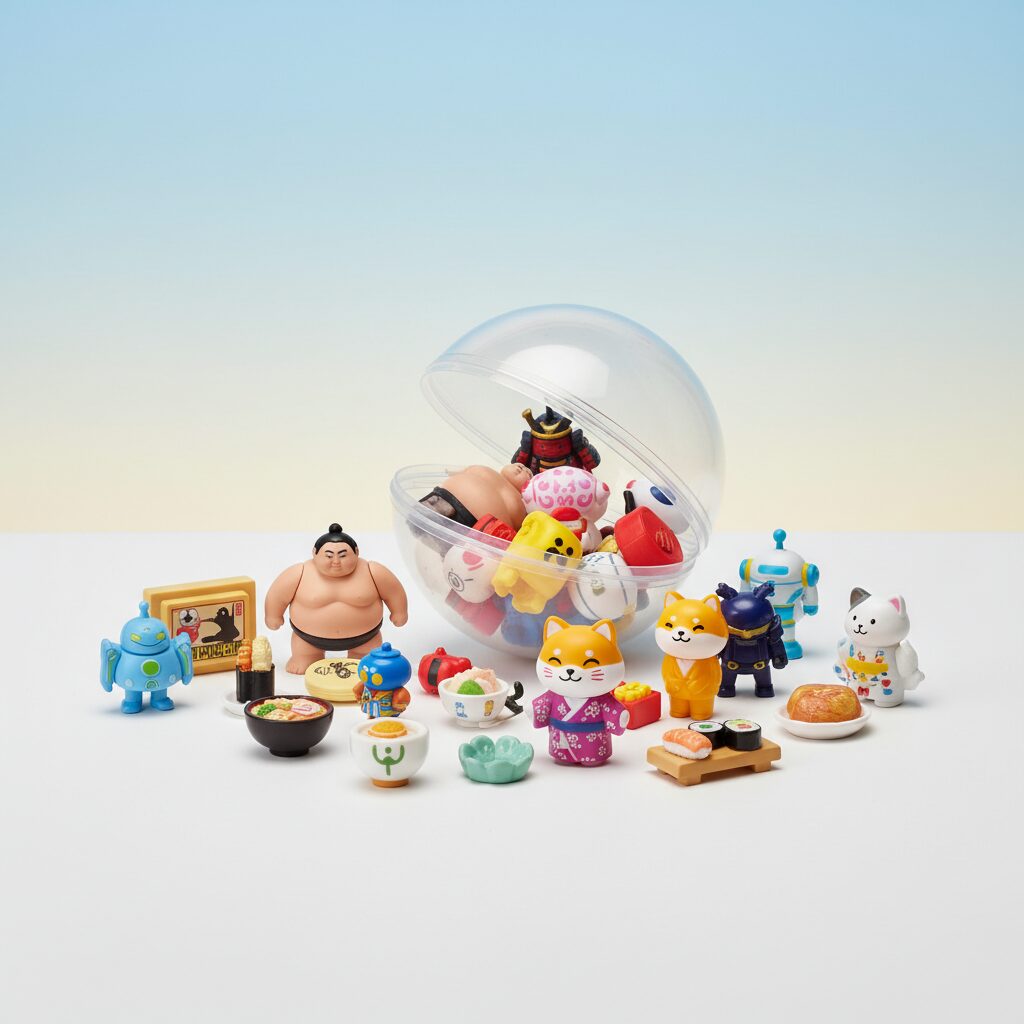
To truly grasp the gachapon phenomenon, you need to understand that the contents inside the capsule often take a backseat to the thrill of obtaining it. The whole experience is deliberately designed to be addictive, creating a perfect cycle of anticipation, surprise, and satisfaction—or the crushing disappointment that instantly urges you to try again. It’s a masterclass in behavioral psychology, encased in a plastic shell. This isn’t merely about children wanting a new toy; it’s a deeply embedded cultural ritual that responds to very particular societal pressures and preferences.
Deconstructing the Capsule: The Psychology Behind the Spin
First, let’s consider the brain chemistry involved. Turning that crank is a gamble, plain and simple. It’s the physical counterpart to the loot box mechanics seen in video games—a concept many outside Japan recognize and often view with caution. But here, the experience is tactile. You insert your coins, feel the handle’s resistance as you turn it—gacha-gacha—and then hear the satisfying thud—pon!—as the capsule drops. That sensory feedback is essential. It’s a ritual. You have no idea which of the six to eight variations displayed on the machine you’ll receive. Will it be the common one? The secret rare? The one you actually wanted?
That moment of uncertainty is where the magic lies. It delivers a dopamine hit directly to the brain. For just 300 to 500 yen (about $2 to $4 USD), you buy a moment of pure, unfiltered suspense. In a society that often values conformity, predictability, and long-term planning, gachapon offers a brief, controlled burst of chaos. It’s a low-stakes, low-cost thrill. You’re not risking your rent money; just the spare change in your pocket. This makes it an incredibly accessible form of entertainment. It’s an affordable indulgence, a brief escape from the monotony of daily life. Had a tough day at work? A 500-yen spin for a miniature, hyper-realistic frog might be just the micro-dose of joy you need.
Then there’s the collector’s mindset, a major driving force behind the industry. Many gachapon series are designed to be completed. This is the notorious “kompu gacha” (complete gacha) model. It’s not enough to get a single cool miniature samurai sword; the real aim is to collect all eight historical models in the series. This taps into a cultural appreciation for completionism and meticulous organization. Japanese culture has a long tradition of this, from ukiyo-e print series to the shokugan (small toys with candy) boom of the 80s and 90s. Completing a set brings a deep sense of accomplishment. Manufacturers understand this well. They purposely make one or two items in a set rarer than the others, fueling the hunt and encouraging repeat plays. It’s a clever, if somewhat predatory, business model that transforms a casual purchase into a dedicated quest.
From Dagashiya Dreams to Akiba Reality: A Brief History
The gachapon machine didn’t originate in the neon-lit streets of modern Tokyo. Its beginnings are far humbler, tracing back to the post-war Showa Era. The concept was imported from the United States in the 1960s, where similar penny toy dispensers were common. In Japan, they found a home outside dagashiya, the small, traditional neighborhood candy shops that served as social hubs for children. At that time, the prizes were cheap, poorly molded plastic trinkets, costing just 10 or 20 yen. They were the quintessential inexpensive thrill for kids with a little pocket money.
For decades, gachapon remained a nostalgic, low-budget part of childhood. The generation raised on those simple machines is now the one with disposable income to fuel the modern industry. The significant shift happened in the 1990s, when a company called Kaiyodo, initially a small model shop, began producing incredibly detailed and accurately sculpted animal figures for their gachapon lines. Suddenly, these toys weren’t just for kids—they became high-quality miniatures appealing to adult collectors and hobbyists. This transformed gachapon from a mere novelty into a legitimate collectible art form.
This evolution aligned perfectly with the rise of otaku culture. As anime and manga gained mainstream popularity in the 80s and 90s, gachapon became one of the most accessible ways for fans to acquire merchandise of their favorite characters. There was no need to visit specialty stores; machines could be found in supermarkets or train stations. This convenience helped solidify gachapon’s place in the cultural landscape. It evolved from a childhood memory into an active, adult-driven market. Meanwhile, the machines themselves moved from dusty corner shops to the brightly lit arcades and specialty stores of districts like Akihabara, the global heart of otaku culture. The story of gachapon mirrors Japan’s own economic and cultural journey, from post-war austerity to becoming a global pop culture powerhouse.
The Vibe Check: Decoding the Gachapon Hall Aesthetic
A gachapon hall is more than just a retail space; it’s an experience, a sensory bombardment crafted to both overwhelm and entice. Its aesthetic is a purposeful fusion of modern pop culture and retro nostalgia, creating an environment that feels simultaneously futuristic and intimately familiar. It serves as a physical embodiment of the internet—a tangible scroll through an endless stream of colorful, often peculiar content. Grasping the design language of these spaces is essential to appreciating their appeal.
Organized Chaos: The Method Behind the Madness
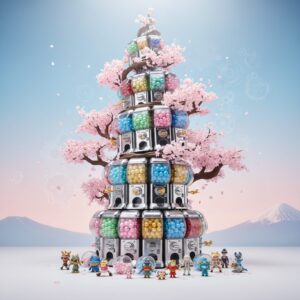
The first thing that strikes you in a gachapon hall is the intense density. Machines are stacked from floor to ceiling, forming narrow corridors filled with plastic treasures and potential. The visual style is loud and unapologetic. Each machine features a display card, or mount, outlining the full collection of prizes with bright, vibrant graphics. These cards play a vital marketing role, designed to grab your attention across the room and spark an immediate urge to collect.
Yet, this chaos is carefully curated. The walls of machines operate like a physical library or gallery. Often, machines are organized thematically. There will be an entire aisle devoted to Sanrio characters, another focused on Studio Ghibli, and yet another showcasing the latest popular anime series. Then there are more niche sections: banks of machines offering only miniature food replicas, corners dedicated to oddly anthropomorphic animals, or areas featuring hyper-realistic insects. This thoughtful curation helps visitors navigate the overwhelming variety and locate their particular interests. It invites exploration and discovery. You might enter seeking a keychain of a beloved character but leave clutching a miniature Showa-era public telephone model.
The auditory environment is equally significant. The constant, overlapping chorus of cranking handles and capsules dropping creates a unique soundscape. It’s the noise of activity, commerce, and the thrill of chance. The word “Gachapon” itself is onomatopoeic: “Gacha” or “Gasha” mimics the crank turning, while “Pon” captures the capsule dropping into the tray. This sound is so iconic that different companies have trademarked their versions (Bandai uses “Gashapon,” while T-Arts prefers “Gacha”). The sound acts as part of the branding—a Pavlovian cue heralding the start of the excitement.
Nostalgia as an Aesthetic: The Retro Pop Movement
The “nostalgic and colorful pop vibe” is no accident; it lies at the heart of the aesthetic. Many gachapon halls are designed as time capsules. They employ bright neon lighting, retro-futuristic fonts, and a color scheme heavily inspired by 1980s and 1990s Japan. This directly targets millennials and Gen Xers, the main consumer base for adult-oriented gachapon. For these groups, this aesthetic is more than stylish—it’s a direct connection to their childhood.
This nostalgia shines most clearly in the products themselves. Entire series are dedicated to evoking the Showa (1926–1989) and early Heisei (1989–2019) eras. Perfectly detailed miniature replicas of classic Famicom and Super Famicom game cartridges abound. Tiny, non-functional models of Sony Walkman cassette players are common. Keychains resemble the packaging of iconic snacks and drinks from the 80s. These items aren’t mere toys; they’re tangible fragments of memory. In a country perpetually rebuilding and rapidly modernizing, these small objects offer a link to a disappearing past. For 400 yen, you can reclaim a little piece of your youth—a physical keepsake of simpler times. This emotional resonance is powerful and explains why adults can be genuinely excited over a tiny plastic model of an old VCR.
The aesthetic also embraces a specific vision of “Cool Japan” that is highly appealing to international visitors. The vibrant, chaotic, and somewhat futuristic atmosphere aligns perfectly with the expectations many tourists have of places like Tokyo. The gachapon hall distills this image into a compact, visually striking experience that offers an affordable, enjoyable souvenir. It provides a self-contained cultural journey that fulfills the promise of a quirky, pop-culture-infused Japan.
The Pilgrimage Sites: Where Gacha is a Religion
Gachapon machines can be found almost everywhere in Japan—from airport terminals to highway rest stops—but some locations have achieved legendary status. These places are more than just stores; they are destinations, pilgrimage sites for devoted collectors. Each offers a unique version of the gachapon experience, reflecting the culture’s evolution from a niche hobby to a mainstream entertainment phenomenon.
Akihabara Gachapon Hall: The Original Sanctuary
If gachapon has a sacred site, this is it. Nestled on a side street in Akihabara, Tokyo’s “Electric Town,” the Akihabara Gachapon Hall is a landmark. It’s neither large nor flashy, nor particularly tidy. Instead, it’s a cramped, narrow space, perpetually filled with a mix of hardcore otaku, curious tourists, and local enthusiasts. That’s exactly its appeal. It feels genuine, raw, and unabashedly dedicated to its craft. With over 500 machines squeezed into its small footprint, the density is truly staggering.
This hall perfectly captures the spirit of Akihabara itself: a place for specialists and obsessives. Its selection is famed for both its diversity and delightful oddities. Alongside the latest releases from popular anime, you’ll find machines catering to the most niche interests imaginable. Think miniature, historically accurate replicas of various Japanese castles, photorealistic mushrooms, tiny models of industrial circuit breakers, or a series of animals posed in formal, apologetic bows. Here you encounter items that make you wonder, “Who on earth would buy this?” only to watch someone excitedly purchase five. The Akihabara Gachapon Hall is a living museum of Japanese subcultures, proving that no interest is too obscure to be immortalized in plastic.
The atmosphere is one of focused intent. People arrive with bags full of 100-yen coins, methodically working through machines to complete sets. Groups of friends trade duplicates on the spot. It’s a community hub, a physical space for shared passion. Visiting this hall feels less like shopping and more like taking part in a cherished ritual.
Gashapon Department Store Ikebukuro: The Sleek Megachurch
If the Akihabara hall is the venerable old temple, the Gashapon Department Store in Ikebukuro’s Sunshine City is the shiny, modern megachurch. Holding the Guinness World Record for the most capsule toy machines in a single venue (over 3,000 as of the latest count), this place operates on a vastly different scale. It’s enormous, brightly lit, immaculate, and meticulously organized. This is gachapon on a corporate level, and that’s not inherently negative.
A place like this signals the culture’s mainstream acceptance. It’s designed to be friendly and accessible to all, not just the hardcore fans. Families with children, couples on dates, and busloads of tourists navigate its spacious aisles. The experience is refined. They have dedicated coin exchange machines, futuristic-looking empty capsule recycling bins, and even a small studio with props for taking professional-style photos of your new finds. They’ve taken the core gacha experience and wrapped it in a premium, customer-focused service model.
The curation is equally impressive. The vast space is divided into themed sections for easy navigation. There’s a large area for popular characters, a section devoted to original and artistic creations, and even a row of vintage machines for a nostalgic hit. This store often hosts exclusive pre-releases and special collaborations, making it a must-visit for serious collectors. The Gashapon Department Store represents the future of gachapon: a globally recognized entertainment form, slickly produced and expertly marketed.
Shinjuku Gashapon Yokocho: The Retro Alley of Chance
Somewhere between Akihabara’s gritty authenticity and Ikebukuro’s polished commercialism is Shinjuku Gashapon Yokocho. The name offers a clue to its style. A yokocho is a narrow back alley, usually lined with tiny, traditional bars and eateries, evoking a nostalgic Showa-era ambiance. By choosing this name, the creators deliberately invoke that retro feeling. The space feels like a fantastical, neon-lit alley straight out of a cyberpunk film.
This location embraces the “weird Japan” aesthetic in a playful, self-aware way. The vibe is impeccable. Retro signage, glowing paper lanterns, and other design touches create an immersive, photogenic environment. This space almost seems designed for Instagram. The focus is often on the most bizarre, humorous, and meme-worthy gachapon series. Here you’ll find things like the “shaky-chin animal” series, keychains depicting sweating, muscular pigeons, or miniature versions of the iconic red plastic soy sauce bottles shaped like fish. It’s a tribute to Japanese absurdity and unique humor.
Shinjuku Gashapon Yokocho recognizes that for many, especially younger visitors and tourists, gachapon is as much about the story and social media share as it is about the items. It offers an ideal backdrop for the experience, representing a third wave of gachapon culture—one deeply entwined with internet culture and global fascination with Japan’s distinctive creative eccentricities. It’s less a store and more an entertainment installation.
The Culture in a Capsule: What Gacha Really Sells
Ultimately, gachapon isn’t merely about selling toys. It offers a complex blend of emotions, cultural values, and aesthetic principles. The small plastic items dispensed by the machines serve as conduits for a much broader cultural dialogue. To truly grasp why this is a multi-billion yen industry, one must examine what is truly contained within those tiny capsules.
Miniaturization Fetish: Japan’s Affection for All Things Small
There is a profound, historical reverence for miniaturization in Japanese art and culture. This is evident in the intricate carvings of netsuke, the carefully tended art of bonsai, the precisely arranged elements of a bento box, and the compact efficiency of urban architecture. Japan has long cherished the ability to distill something large and complex into a small, refined form. Gachapon represents the contemporary, mass-market embodiment of this ideal.
There’s a philosophical aspect to it as well. Crafting a flawless miniature replica of a real-world object demands great skill and meticulous attention to detail, offering a unique satisfaction in witnessing such craftsmanship. Additionally, in a country known for its compact living spaces, collecting small items is simply more practical. While you can’t own ten classic motorcycles, you can collect perfect 1:12 scale models that fit neatly on a single shelf. Gachapon lets people indulge their collector’s drive without being burdened by physical clutter. These toys aren’t just small; they celebrate smallness itself, affirming the idea that beauty and complexity can reside in the most compact forms.
The Hyper-Niche and the Mundane: A Reflection of Society
The unabashed oddity of gachapon offerings is perhaps their most defining trait. The market is so vast and well-developed that it supports products for the most hyper-specific niches, setting it apart from similar items in other countries. You don’t get just generic cats; you get series featuring cats squeezing into cardboard boxes, cats working as sushi chefs, or famous historical figures reimagined as cats. You don’t get mere food replicas; you get collections focused entirely on different types of Japanese pickles or the cross-section of a luxurious beef bowl.
What does this reveal about the culture? It reflects a society that derives immense value and humor from the minutiae of everyday life. Nothing is too ordinary to be celebrated, elevated, and transformed into a coveted object. A series featuring miniature, fully functional office staplers or various types of public manhole covers illustrates a deep appreciation for the design and craftsmanship of commonplace objects. It’s a form of observational humor—a way of viewing the world and finding delight in its smallest, most overlooked details. This culture can produce both profound minimalist art and a plastic keychain of a Shiba Inu stuck in a hedge. The gachapon catalog is a strange and wonderful mirror, reflecting the multifaceted and often contradictory passions of modern Japan.
Ephemerality and Tangibility: Owning a Moment
In an increasingly digital and transient world, gachapon provides something wonderfully tangible. It’s a physical object you can hold in your hand, with weight, texture, and presence. In an age dominated by streaming services and cloud storage, where ownership often feels intangible, a gachapon toy is a distinctly real possession. This tangibility is a key part of its attraction.
Moreover, the gachapon market follows a model of planned ephemerality. The machines’ offerings rotate frequently; a series available today might disappear by next week, possibly forever. This creates urgency—a “get it while you can” mindset that drives impulse buying. It also lends the items a sense of preciousness. Your tiny plastic frog isn’t merely a toy; it’s a souvenir of a particular time and place, a memento of a successful hunt. It’s a limited-edition artifact from the ever-changing landscape of pop culture.
So why the fascination? Because gachapon is never just about the toy. It’s a 300-yen package containing the thrill of chance, the excitement of the hunt, the pleasure of completing a set, a deep respect for craftsmanship, a tangible piece of nostalgia, and a humorous celebration of life’s wonderfully quirky details. It’s a low-cost, high-reward ritual that offers a moment of pure, unfiltered joy in a world that often feels overwhelming. It’s a tiny capsule of culture, and for a few coins, you get to own a small piece of it. That’s a deal that’s hard to resist.